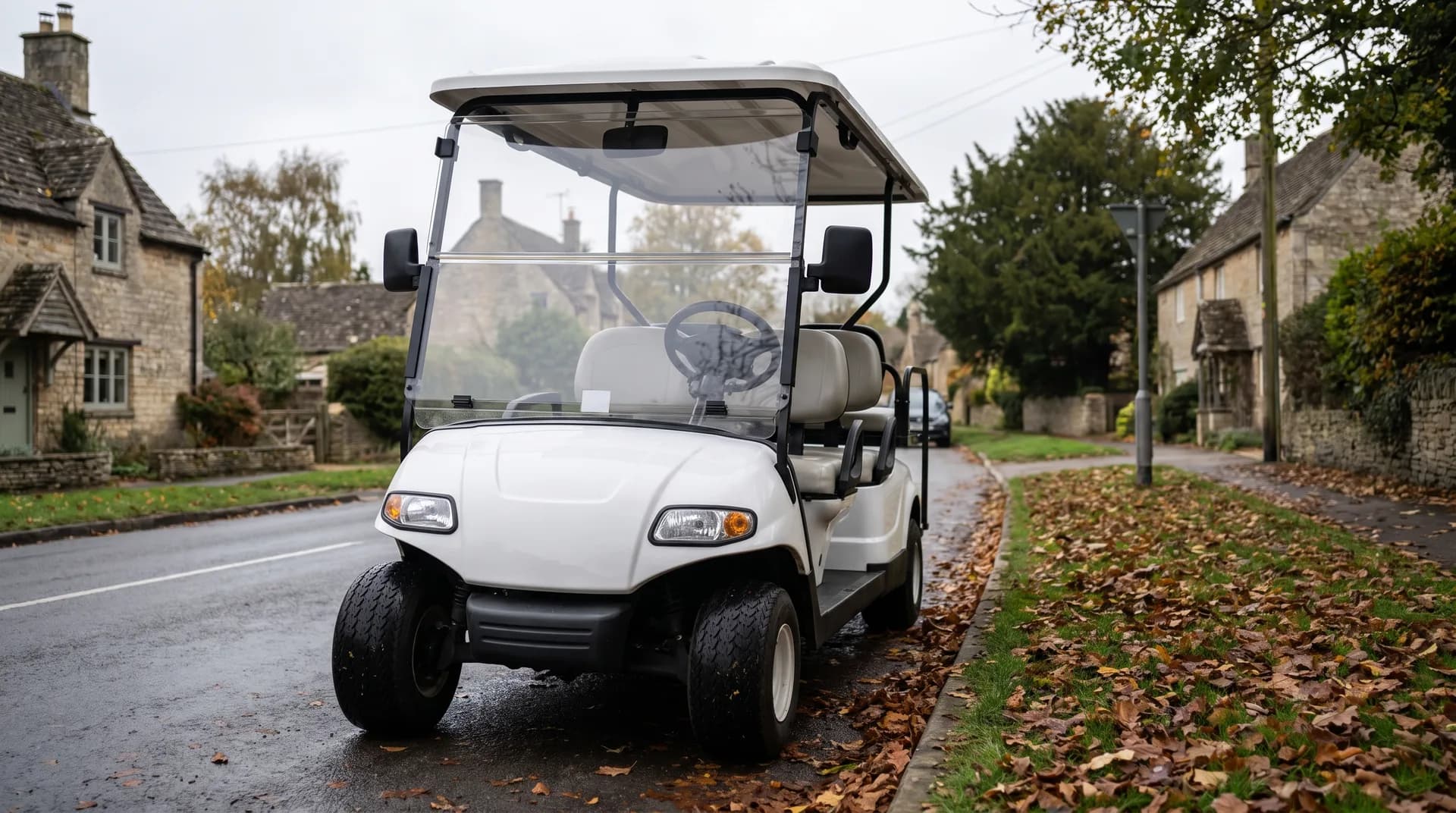
A golf cart spec sheet is a wall of numbers, but only about six of them decide whether the vehicle suits you: seating and payload, battery voltage and amp-hours, motor power in kilowatts, gradeability, overall dimensions and curb weight. The rest is detail, and one figure, the quoted range, needs more scepticism than any other. This guide works down a typical datasheet line by line, explains what each specification actually means in use, and tells you which numbers matter for which job, so you can compare two machines on substance rather than on whichever brochure shouts loudest.
- Payload includes passengers, so a quoted load capacity shrinks fast once seats are filled.
- Battery amp-hours set the fuel-tank size; voltage sets the power the system can deliver.
- Quoted range is measured under manufacturer conditions, so plan on comfortably less in real use.
- Gradeability tells you the steepest slope the cart can climb, usually quoted laden.
- Dimensions and curb weight decide whether it fits your paths, gates, trailer and storage.
Seats, payload and the spec sheet's first trap
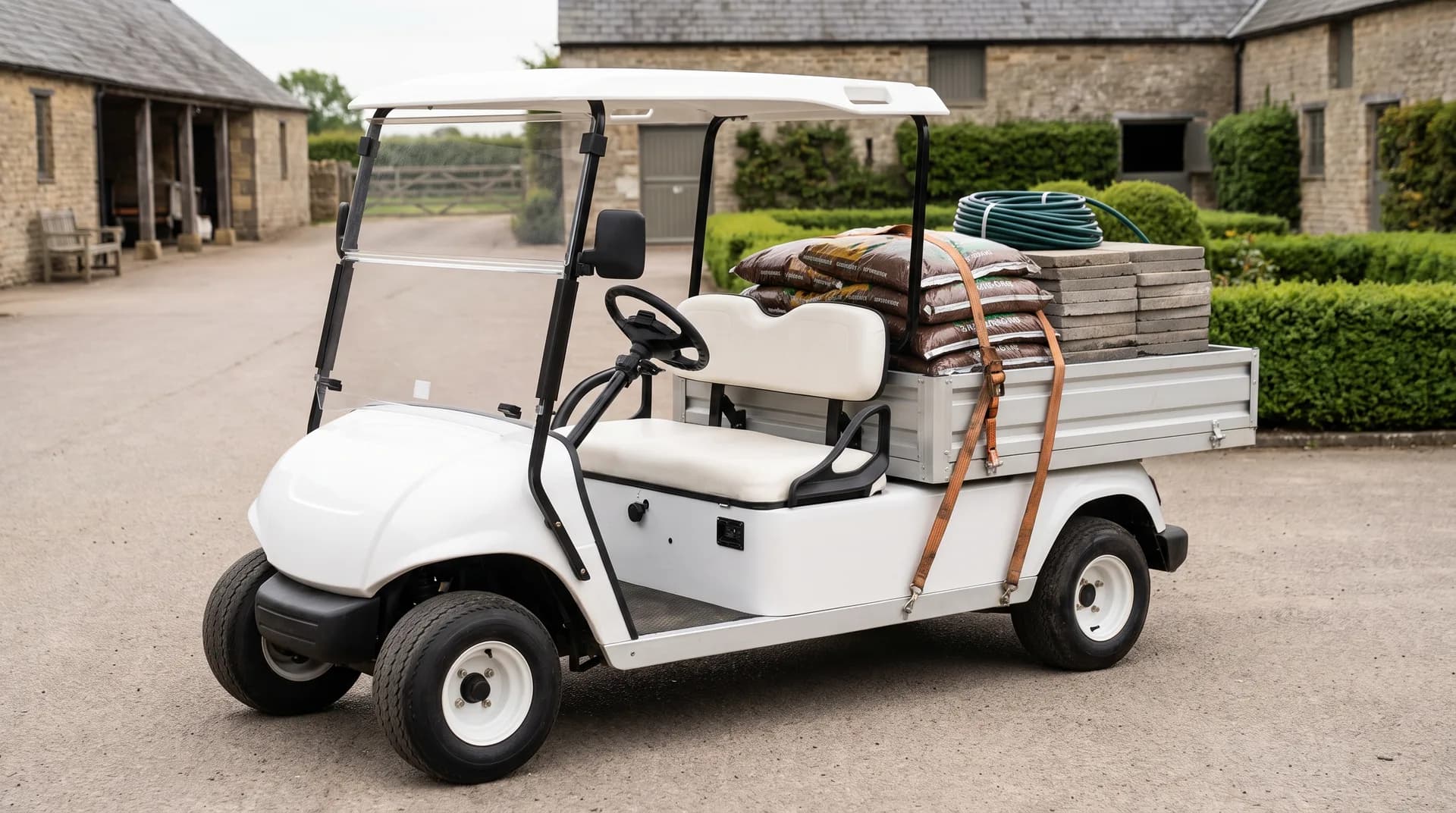
The top of the sheet usually covers seating and payload, and this is where the first misreading happens. Payload is the total the vehicle can carry, and it includes the passengers. A machine quoted at 400 kilograms of payload with four adults aboard has little in hand for bags, tools or anything else. So do the arithmetic for your real load: people at a realistic average weight, plus kit, plus any cargo. For load-carrying use, check whether the sheet separates bed capacity from total payload, and whether a towing capacity is quoted at all, because towing is a separate rating, not something to infer. Our guide on how much weight a golf cart can carry works through the sums, and what size cart you need covers the seating decision.
Battery lines on the spec sheet: voltage, amp-hours and chemistry
The battery section carries three facts. Voltage, commonly 48 V or 72 V on modern machines, sets how much power the electrical system can deliver comfortably; higher-voltage systems generally cope better with hills and heavy loads. Amp-hours (Ah) are the size of the fuel tank: a 150 Ah pack stores more energy than a 105 Ah pack at the same voltage, and all else being equal will travel further. Multiply the two and you get watt-hours, the truest single measure of onboard energy, which is the fairest way to compare packs across brands. Chemistry is the third fact: lithium packs deliver more of their rated capacity in use, charge faster and last more cycles than lead-acid, which is why a smaller lithium number can outperform a bigger lead-acid one. The trade-offs are covered in our lithium versus lead-acid guide.
Then comes the range line, and it deserves its own warning. Quoted ranges are measured under manufacturer conditions: flat ground, moderate speed, light load, mild temperature. Real courses and sites have hills, passengers, cold mornings and stop-start driving, all of which shorten range. Treat the quoted figure as a ceiling, not a promise, and plan your day around comfortably less. Our range guide explains what actually drives the miles you get.
Motor kW, gradeability and the numbers for hills
Motor power is quoted in kilowatts, sometimes as both continuous and peak figures. Continuous power is what the motor sustains all day; peak is a short burst for pulling away or cresting a climb. Compare continuous with continuous, because a generous peak figure flatters a modest motor. Gradeability is the more useful hill number: it states the steepest slope the vehicle can climb, usually expressed as a percentage and normally quoted laden. If your site has a known steep pinch, check the gradeability line against it with margin to spare, and remember that repeated climbing also eats range. IP ratings, where quoted, indicate sealing against dust and water in general terms; a higher second digit means better water resistance, which matters for machines washed down daily or working outdoors year-round.
Dimensions, curb weight and which specs matter for your use
The dimensions block decides practicalities. Overall width against your narrowest gate or path, length against your storage bay, height against any barrier or container, and turning circle against your tightest corner. curb weight matters for trailers and ramps, and lead-acid machines are markedly heavier than their lithium equivalents. Ground clearance matters on rough or rutted ground. Which numbers lead depends on the job: a golfer should weight range, comfort and dimensions; a hotel or events operator should weight seats, gradeability and charge time; a grounds team should weight payload, towing and ground clearance. Compare from-prices only once the specification matches, our range runs from the two-seat S2 at £11,500 through the S4 at £14,900 and S2 Pickup at £15,900 to the S6 at £18,900 and S8 at £23,500, and you can compare full specifications across the range.
Frequently asked questions
What does Ah mean on a golf cart spec sheet?+
Amp-hours, the capacity of the battery, effectively the size of the fuel tank. A higher Ah figure at the same voltage stores more energy. To compare packs across different voltages, multiply volts by amp-hours to get watt-hours, which is the fairest single measure.
Why does my cart not achieve the quoted range?+
Quoted ranges are measured under manufacturer conditions: flat ground, steady moderate speed, light load and mild temperature. Hills, passengers, cold weather and stop-start driving all shorten real-world range, so treat the brochure figure as a ceiling and plan on comfortably less.
What is gradeability?+
The steepest slope the vehicle can climb, quoted as a percentage and normally measured laden. If your site has a known steep section, check it against the gradeability line with margin in hand, and expect repeated climbs to reduce range as well.
Is a higher-voltage cart better?+
Higher-voltage systems, such as 72 V against 48 V, generally deliver power more comfortably on hills and under load. Whether you need that depends on your terrain and payload; on flat ground with light loads, a well-specified 48 V machine serves perfectly well.
Which specification matters most?+
It depends on the job. Golfers should look first at range, dimensions and comfort; passenger operators at seats, gradeability and charge time; grounds and utility users at payload, towing and ground clearance. Decide your duty first, then read the sheet against it.
Match the spec to the job
Tell us your ground, your loads and your daily mileage, and we will specify the right machine and quote it, no spec-sheet guesswork required.
Related solutions
Ready to explore what we build?
See the vehicles and the setting this applies to, or get a tailored quote built around your site.

Ready to find the right golf cart?
Tell us how and where it will work and we will specify a vehicle and a tailored quote built around you. Every build comes with a 3-year warranty and a 24-hour priority call-out.
Our guides are written and reviewed by the Hawke Electric Vehicles team, the people who specify, build, deliver and support the vehicles. We focus on honest, practical advice and flag where a figure depends on the build rather than guessing.
More guides by Hawke