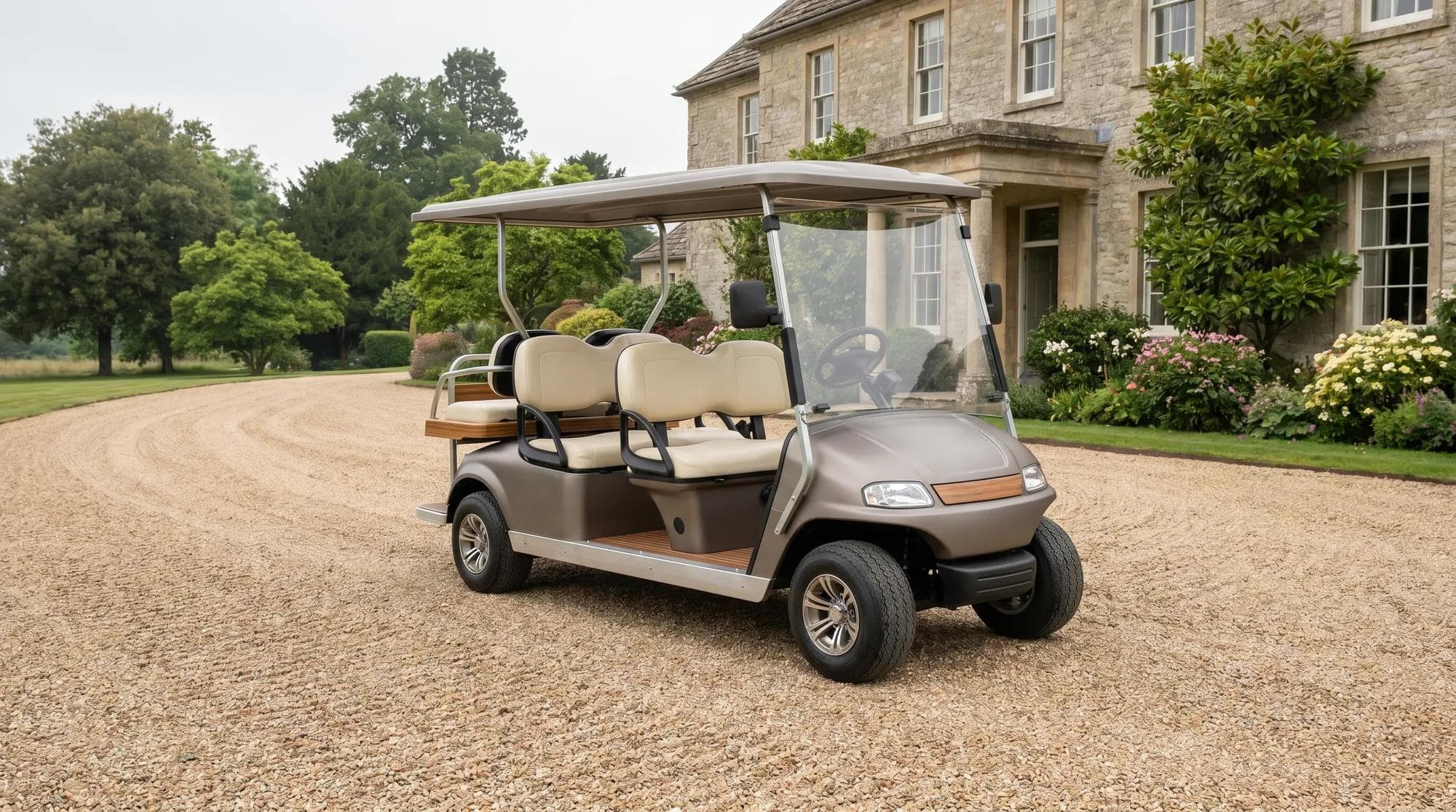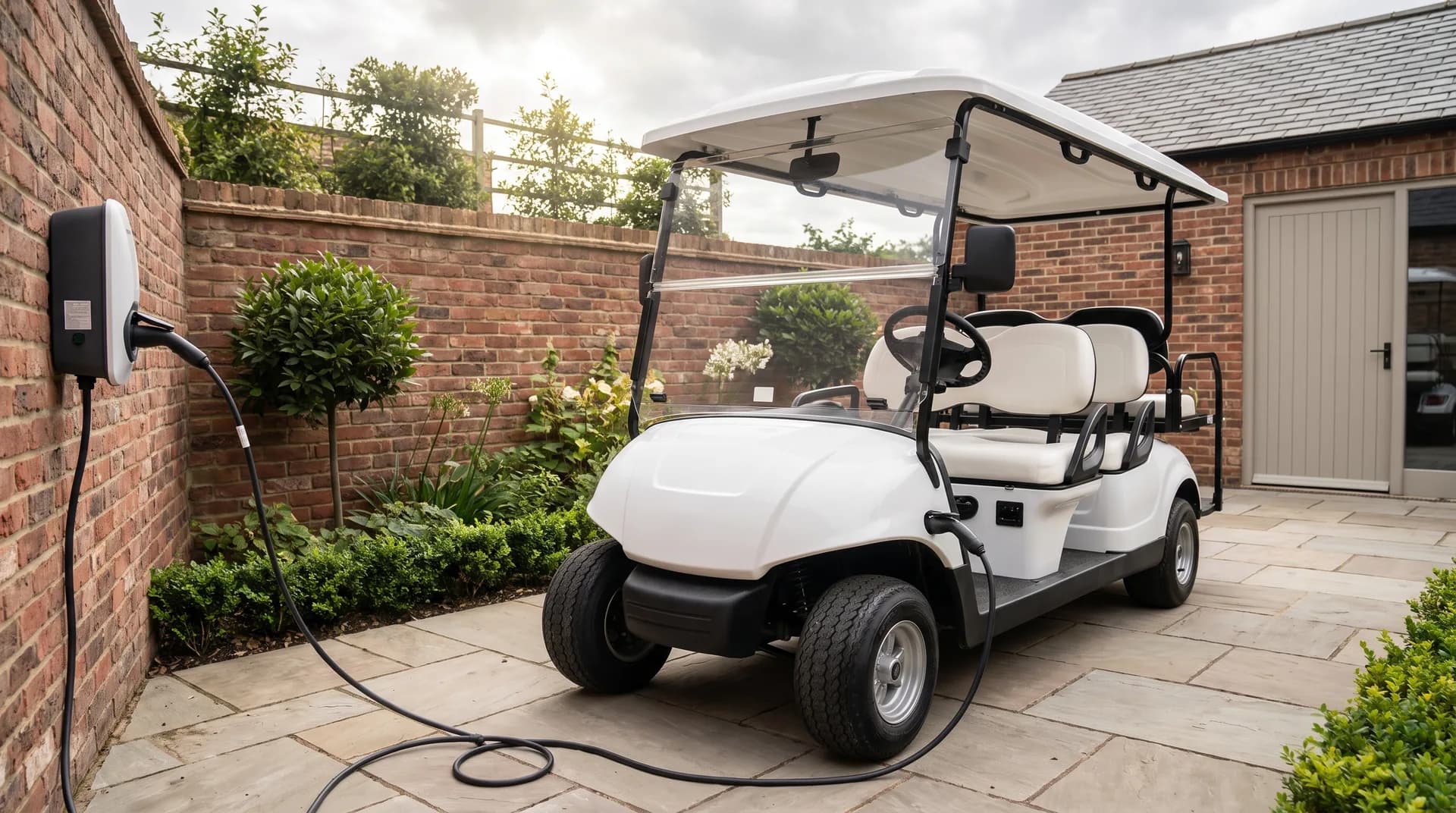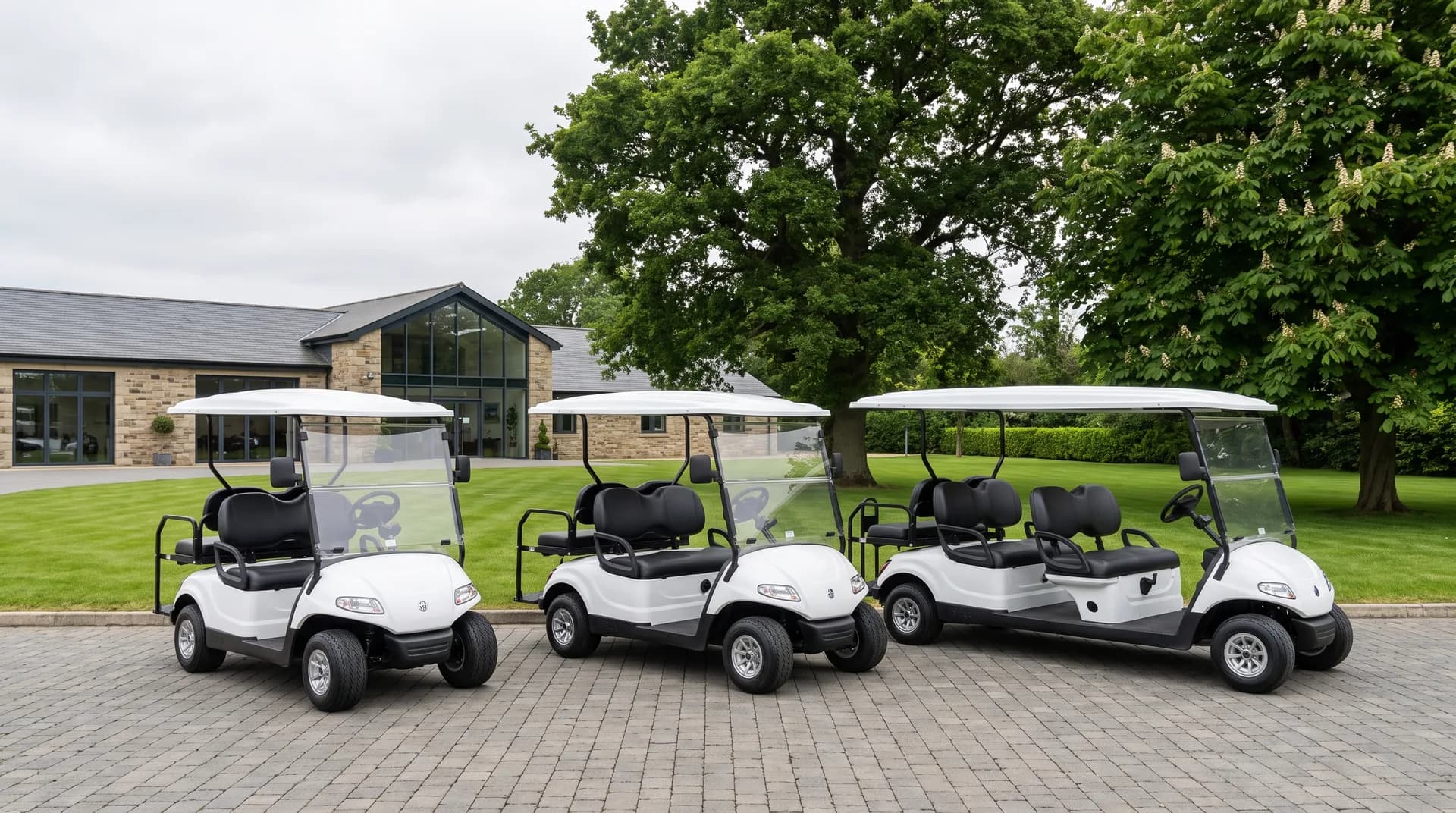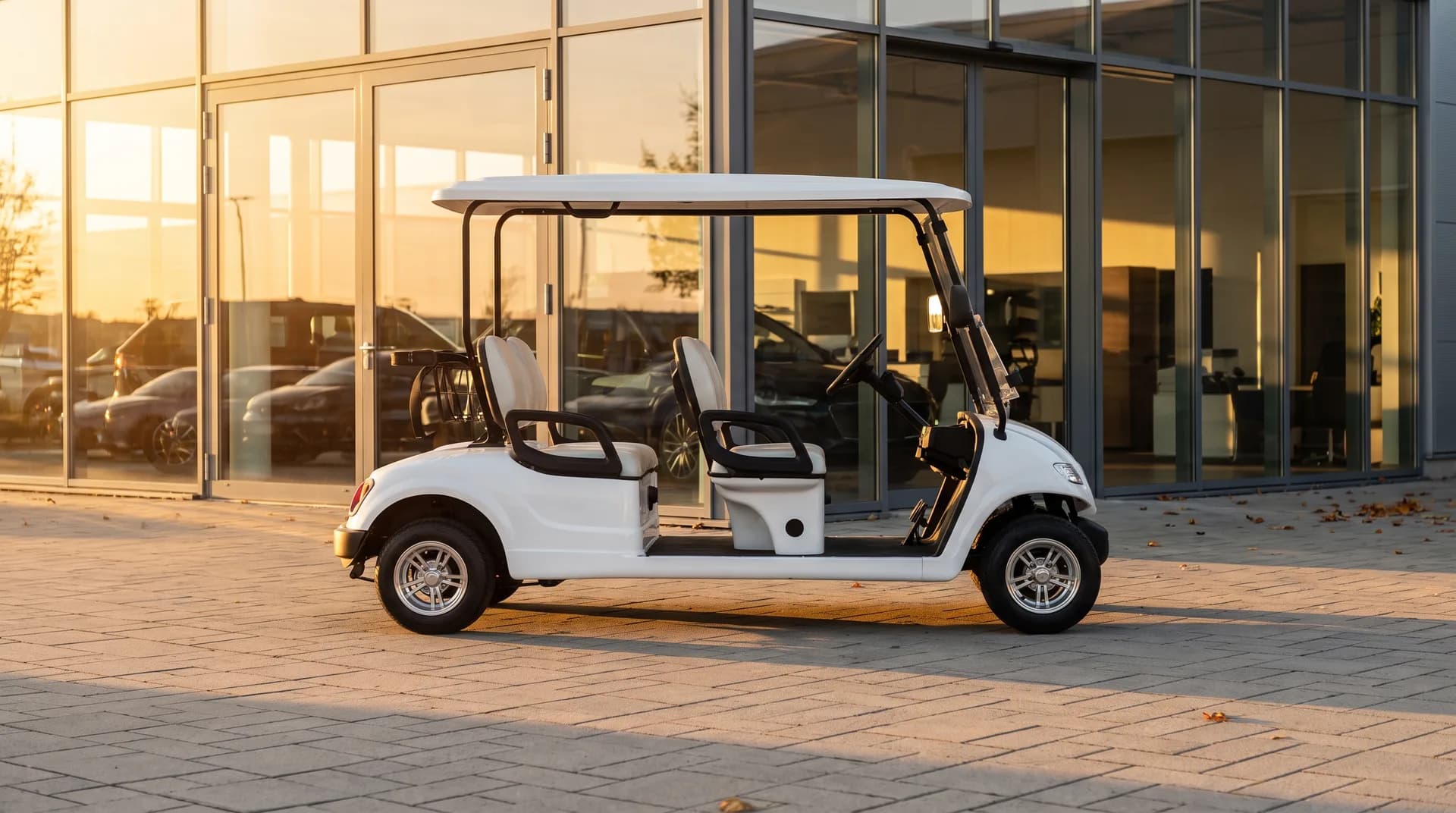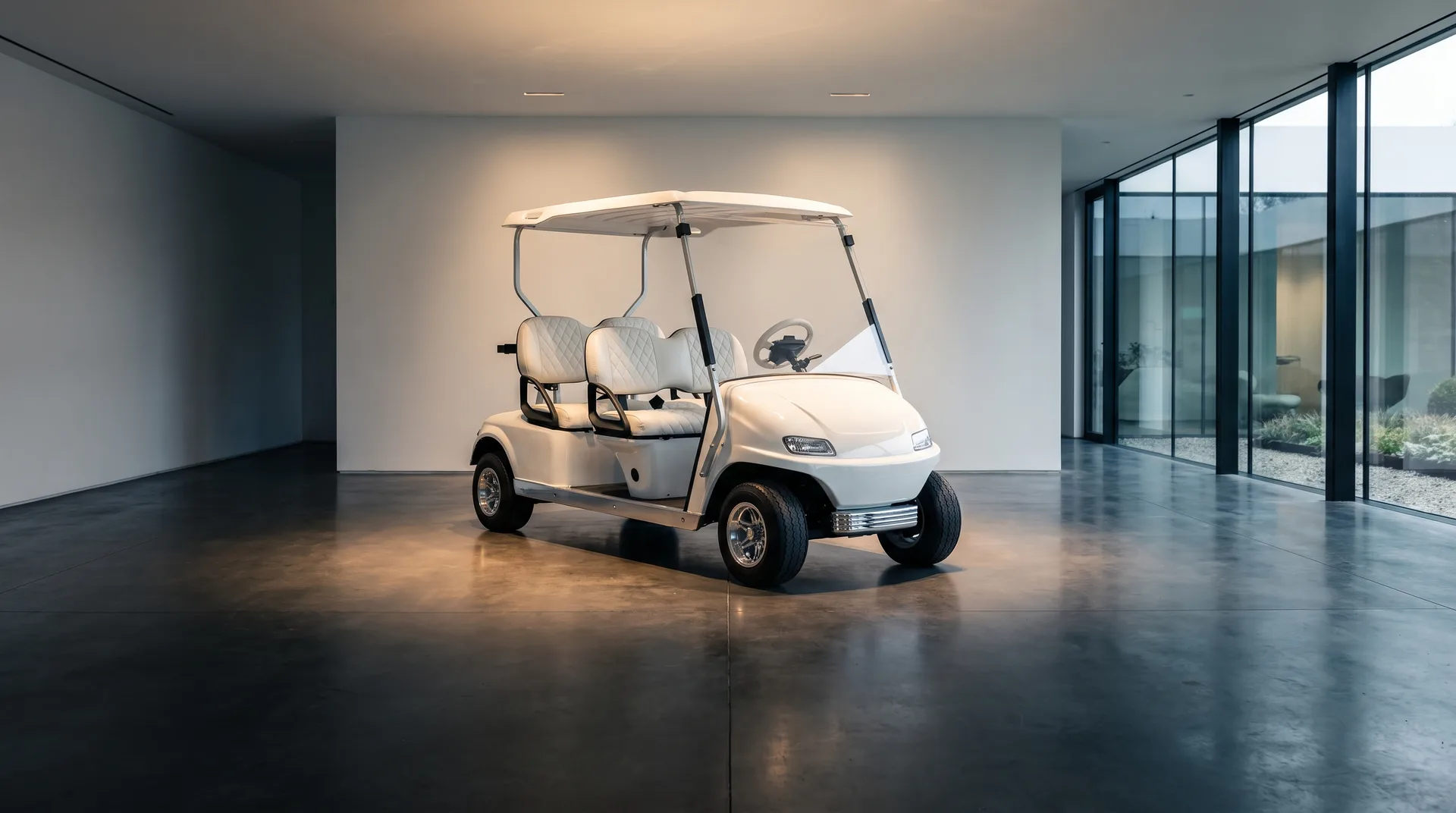
Why are golf carts so expensive? It is a fair question that deserves a straight answer. A machine that looks like a garden shed on wheels costs as much as a decent used car: our own two-seat S2 starts from £11,500, four-seaters like the S4 from £14,900, and larger people-movers climb from there. The price is not arbitrary and it is not mostly margin. It is the sum of a genuinely expensive battery system, low-volume manufacture that enjoys none of the car industry's economies of scale, the freight and compliance costs of moving and certifying vehicles, and the dealer infrastructure, parts, engineers, warranty, that keeps the machine working for a decade. This guide takes the price apart line by line, and explains why the cheapest machines are usually cheap in ways that surface later.
- The battery system is the biggest single line: a quality pack, charger and management system is four-figure territory on its own.
- Golf Carts are built in tiny volumes, so every part carries more overhead than the car industry's millions-scale pricing allows.
- Freight, import duty and compliance certification add real cost before a machine turns a wheel in the UK.
- Dealer support, parts stock, engineers, warranty reserves, is priced in; ultra-cheap machines usually omit exactly this.
- Judged on cost per year over a long service life, a well-supported cart is far less expensive than the sticker suggests.
Why are golf carts so expensive? Start with the battery
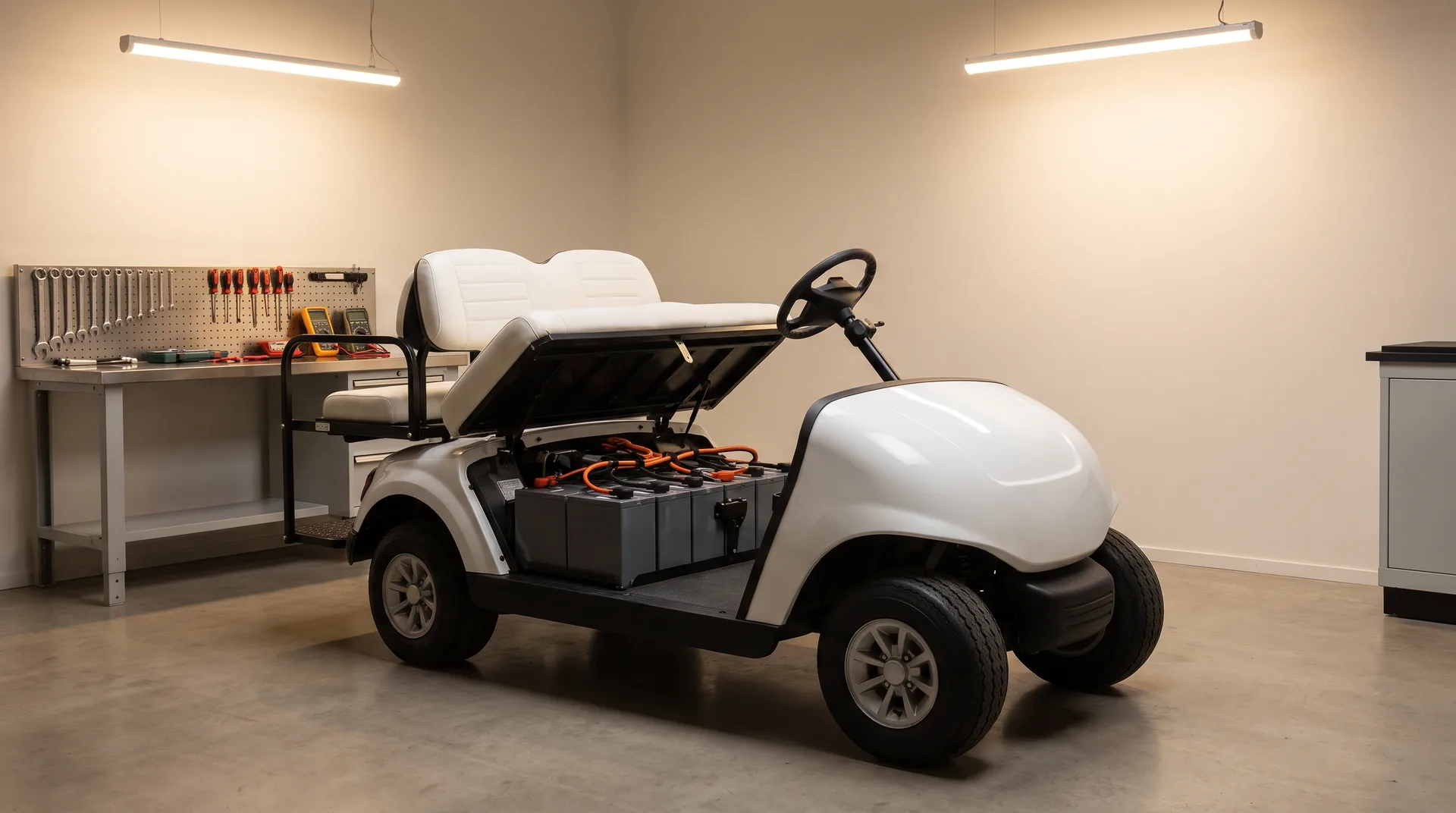
The single biggest reason sits under the seat. A golf cart is an electric vehicle, and like every electric vehicle its battery system dominates the bill of materials. A quality lithium pack with its battery management system, plus a matched charger, is a four-figure item before it is bolted into anything, and even traditional lead-acid sets are a substantial line. It is also where price differences between similar-looking machines hide: pack capacity, cell quality, thermal management and management electronics vary enormously, and none of it shows in a photograph. That is the main lever behind the spread you will see in what an electric cart costs in the UK, and why battery specification, not body style, is the first thing to compare.
Low volume: why a cart cannot be priced like a car
The comparison that generates the sticker shock, it costs nearly as much as a car, is exactly the comparison that explains the price. A mass-market car is produced in the hundreds of thousands on lines that run around the clock, and every panel, loom and bracket is amortised across those numbers. Golf carts are built in a tiny fraction of those volumes. Tooling, design, testing and certification are spread across thousands of units rather than millions, so every machine carries a far larger slice of the fixed costs. Add hand assembly that car plants automated away decades ago, and the surprise is not that a cart costs a good fraction of a car, it is that it does not cost more.
The costs you never see: freight, duty and compliance
Between the factory and your first drive sits a stack of costs that never appears on a specification sheet. Vehicles are bulky, heavy freight, and moving them, in general terms, means shipping, insurance, import duty and handling at each end. Then compliance: machines sold and operated in the UK must meet safety and electrical standards, and putting a vehicle through proper certification, documentation and conformity work costs real money per model and per unit. Batteries add their own layer: lithium cells are regulated cargo with specific packaging and handling requirements. Individually these are unglamorous percentages; together they are a meaningful slice of the final price. When a machine is advertised dramatically below the market, one of these lines is often where the saving was made, and compliance is the worst place for it.
- Dealer-supported cart
- Specified, warranted, managed pack
- Ultra-cheap alternative
- Often the corner most visibly cut
- Dealer-supported cart
- Done and documented
- Ultra-cheap alternative
- Frequently unclear
- Dealer-supported cart
- Stocked and available for years
- Ultra-cheap alternative
- Often no route to parts at all
- Dealer-supported cart
- Multi-year, honoured locally
- Ultra-cheap alternative
- Short, distant or effectively absent
- Dealer-supported cart
- Higher, reflects all of the above
- Ultra-cheap alternative
- Lower, for reasons that surface later
| Dealer-supported cart | Ultra-cheap alternative | |
|---|---|---|
| Battery system | Specified, warranted, managed pack | Often the corner most visibly cut |
| Compliance and certification | Done and documented | Frequently unclear |
| Parts and engineers | Stocked and available for years | Often no route to parts at all |
| Warranty | Multi-year, honoured locally | Short, distant or effectively absent |
| Price | Higher, reflects all of the above | Lower, for reasons that surface later |
The support you are actually buying
A meaningful share of a reputable dealer's price is not the machine at all: it is everything that stands behind the machine. Parts held in stock for models sold years ago. Engineers who can reach a broken-down cart. A warranty with a reserve behind it, honoured without a fight. Advice before the sale and service after it. None of that is free, and it is precisely what the cheapest corners of the market omit, which is how they reach their prices. The pattern is familiar from our guide to the cheap end of the market: the machine is cheap until it needs a part, an engineer or a warranty. Paying for support is buying the difference between a vehicle that works for a decade and one that works until something fails.
The whole-life view: expensive compared with what?
The final piece of the answer is the timescale. A well-built, well-supported cart is a long-lived machine, a decade of service is a reasonable expectation with proper care, and its running costs are low: pennies per charge, minimal servicing, no fuel, as our guide to running costs per year sets out. Spread the purchase across that life and the cost per year of even a premium machine compares well with years of hire fees, gas alternatives, and buying cheap twice. Resale matters too: supported machines from known brands hold value in a way that unsupported bargains never do. The honest summary: golf carts are expensive to buy for structural reasons and inexpensive to own compared with almost every alternative way of doing the same job. If you want to see exactly what the money buys at each level, the current range sets out specifications and from-prices side by side.
Frequently asked questions
Why do golf carts cost as much as small cars?+
Because they carry a car-grade cost, the battery system, without car-industry volumes. A quality pack, charger and management system is four-figure territory alone, and the remaining costs are spread over thousands of units rather than the hundreds of thousands that make car pricing possible.
What is the most expensive part of a golf cart?+
The battery system: cells, battery management and charger together are the biggest single line in the build. It is also where quality varies most between apparently similar machines, which is why battery specification should be the first comparison you make.
Why are some golf carts advertised so much cheaper?+
Usually because something structural was omitted: a smaller or lower-grade battery, unclear compliance, no parts supply, no engineers, or a warranty that is short, distant or effectively unenforceable. The saving is real at purchase and tends to be repaid, with interest, at the first fault.
Do golf carts hold their value?+
Supported machines from established brands hold value respectably, because the used market prices in the parts and service network behind them. Unsupported machines depreciate fastest, since a used buyer inherits the same absence of parts and warranty.
Is a golf cart worth the money?+
Judged over its life, usually yes. A decade of service, very low running costs and reasonable resale mean the cost per year is modest against hire fees or gas alternatives. The proviso is buying a machine with genuine support behind it, which is what most of the price difference between cheap and reputable actually buys.
See exactly what the money buys
Tell us what you need the cart to do and we will quote a specification line by line, battery, warranty and support included, so you can judge the price against what stands behind it.
Related solutions
Ready to explore what we build?
See the vehicles and the setting this applies to, or get a tailored quote built around your site.
Ready to find the right golf cart?
Tell us how and where it will work and we will specify a vehicle and a tailored quote built around you. Every build comes with a 3-year warranty and a 24-hour priority call-out.
Our guides are written and reviewed by the Hawke Electric Vehicles team, the people who specify, build, deliver and support the vehicles. We focus on honest, practical advice and flag where a figure depends on the build rather than guessing.
More guides by Hawke