An electric cart is one of the easiest vehicles you'll ever own to look after. There's no oil to change, no spark plugs, no exhaust. But "low maintenance" isn't "no maintenance", and the few jobs that do matter, mostly the battery and the tires, are the ones that quietly decide how long the cart lasts. The good news: nearly all of it takes minutes. This is a practical golf cart maintenance checklist, sorted by how often each job needs doing.
Why golf cart maintenance works best as a routine
Most problems on a cart don't arrive overnight. A tire loses a pound of pressure a week. A battery left flat for a fortnight starts to sulk. A loose connection works itself looser. Catch these early and they're nothing. Ignore them and they turn into a flat battery on a wet morning or a brake that pulls to one side. A short, regular routine is far less effort than a once-a-year scramble, and it's a lot cheaper than a repair.
How often should you maintain a golf cart?
Think in three layers. Weekly checks are quick eyeball-and-touch jobs you do without tools. Monthly checks take a bit longer and cover the things that drift slowly. Seasonal jobs are the deeper look, especially as you head into winter or back out of it. Here's the schedule at a glance, then the detail for each layer below.
- How often
- Weekly
- How often
- Weekly (or after each use)
- How often
- Weekly
- How often
- Weekly to monthly
- How often
- Monthly
- How often
- Monthly (lead-acid only)
- How often
- Monthly
- How often
- Seasonal
- How often
- Seasonal
- How often
- Yearly
| How often | |
|---|---|
| Check tire pressures and look for damage | Weekly |
| Charge after use; check charge level | Weekly (or after each use) |
| Quick brake and steering feel test | Weekly |
| Wash off mud, grass and salt | Weekly to monthly |
| Inspect battery terminals and connections | Monthly |
| Top up lead-acid cells with distilled water | Monthly (lead-acid only) |
| Check tire tread and wheel nuts | Monthly |
| Full brake, lights and bodywork check | Seasonal |
| Deep clean and protect; check underside | Seasonal |
| Professional service | Yearly |
Weekly checks (five minutes, no tools)
These are the habits that prevent most of the annoyances. None of them needs a spanner, and together they take less time than making a cup of tea.
- Tires. Walk round and check each tire looks properly inflated, with no cuts, bulges or embedded stones. Under-inflated tires drag, which costs you range and battery life.
- Charge. Put the cart on charge after you've used it, rather than leaving it part-flat. Lithium and lead-acid both prefer to sit charged, not drained.
- Brakes and steering. Roll a few feet and test the brake. It should bite cleanly and the cart should pull up straight, with no grinding or pulling to one side.
- A quick look over. Loose trim, a flat-looking tire, anything dragging or rattling. Thirty seconds of looking saves a lot later.
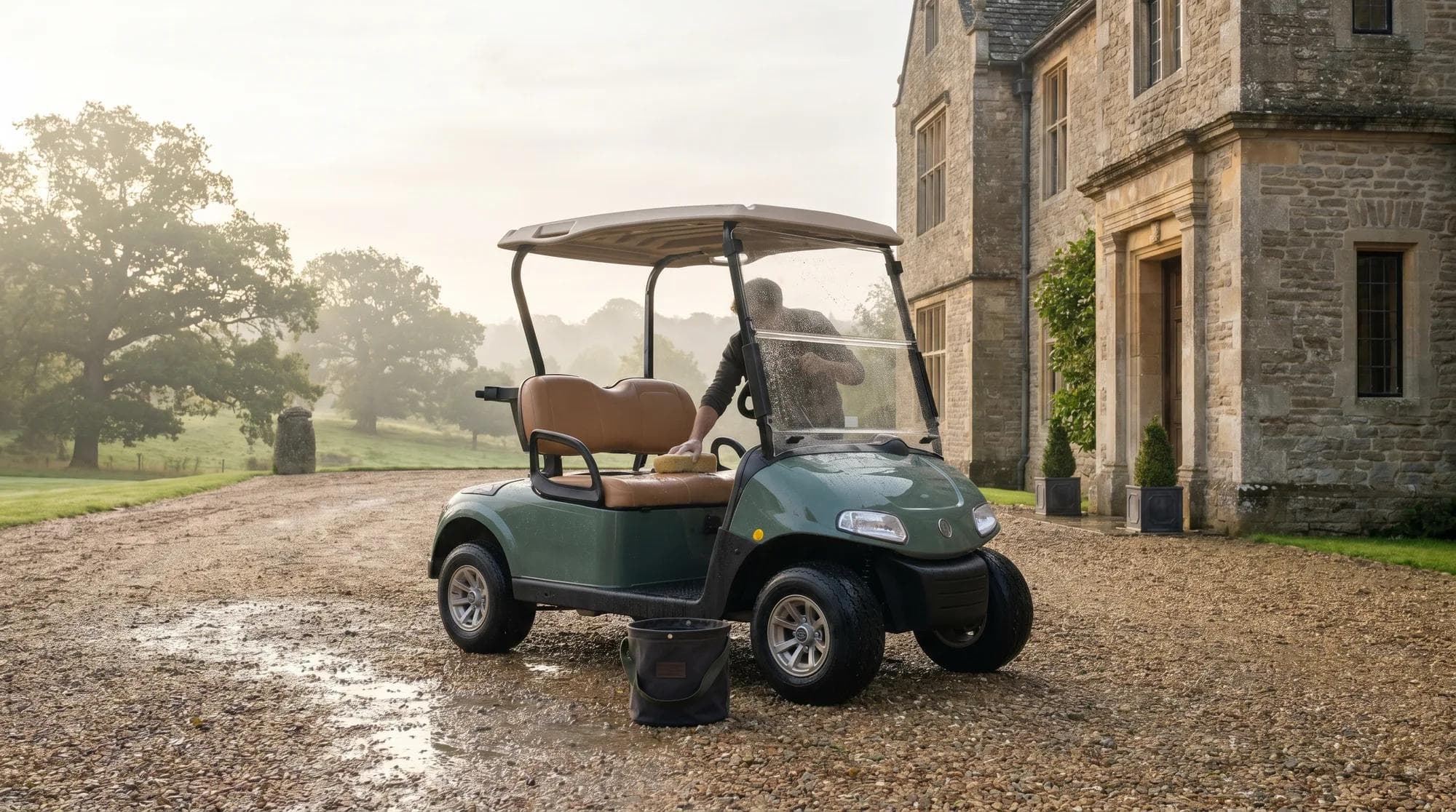
- Wipe the seats and dash if it's been wet or muddy, so grime doesn't set in.
Monthly checks (the slow-drift jobs)
Once a month, give it a bit longer. This is where you catch the things that change too gradually to notice day to day, and it's the heart of looking after the battery.

- Set tire pressures properly with a gauge, to the figure on the tire or in your handbook. Even pressures keep the cart tracking straight and tires wearing evenly.
- Inspect the battery. Look for clean, tight terminals with no white or green powder. Wipe the top of the pack so dirt can't bridge the terminals.
- Lead-acid only: check the cells. Top up with distilled water to the marked level if needed, and never overfill. Lithium packs are sealed and need none of this.
- Check the connections. A wobble in performance is often just a loose or corroded connector working free with vibration.
- Tread and wheel nuts. Check tread depth across each tire and that the wheel nuts are tight.
- Test the lights and horn if your cart has them, so nothing's failed unnoticed.
Seasonal jobs and the winter question
Twice a year, going into winter and coming back out, do the deeper check. Cold and damp are hard on batteries and quick to rust anything left dirty, so this is when a bit of care pays off most. Look properly at the brakes, the underside, the bodywork and the battery, and decide whether the cart is going to keep working through winter or be laid up.
- Deep clean the bodywork, wheels and underside, getting mud, grass and (in winter) road salt off before it eats into anything.
- Check the brakes thoroughly: even bite on both sides, no excessive travel, no grinding. Brakes are the one system worth being fussy about.
- Inspect the frame and underside for rust, knocks or anything working loose.
- Look after the battery for the cold: keep it charged, and if the cart will sit unused, follow a proper winter storage routine rather than just walking away from it.
- Treat and protect clean metalwork and check the roof, screen and seals are sound before the wet sets in.
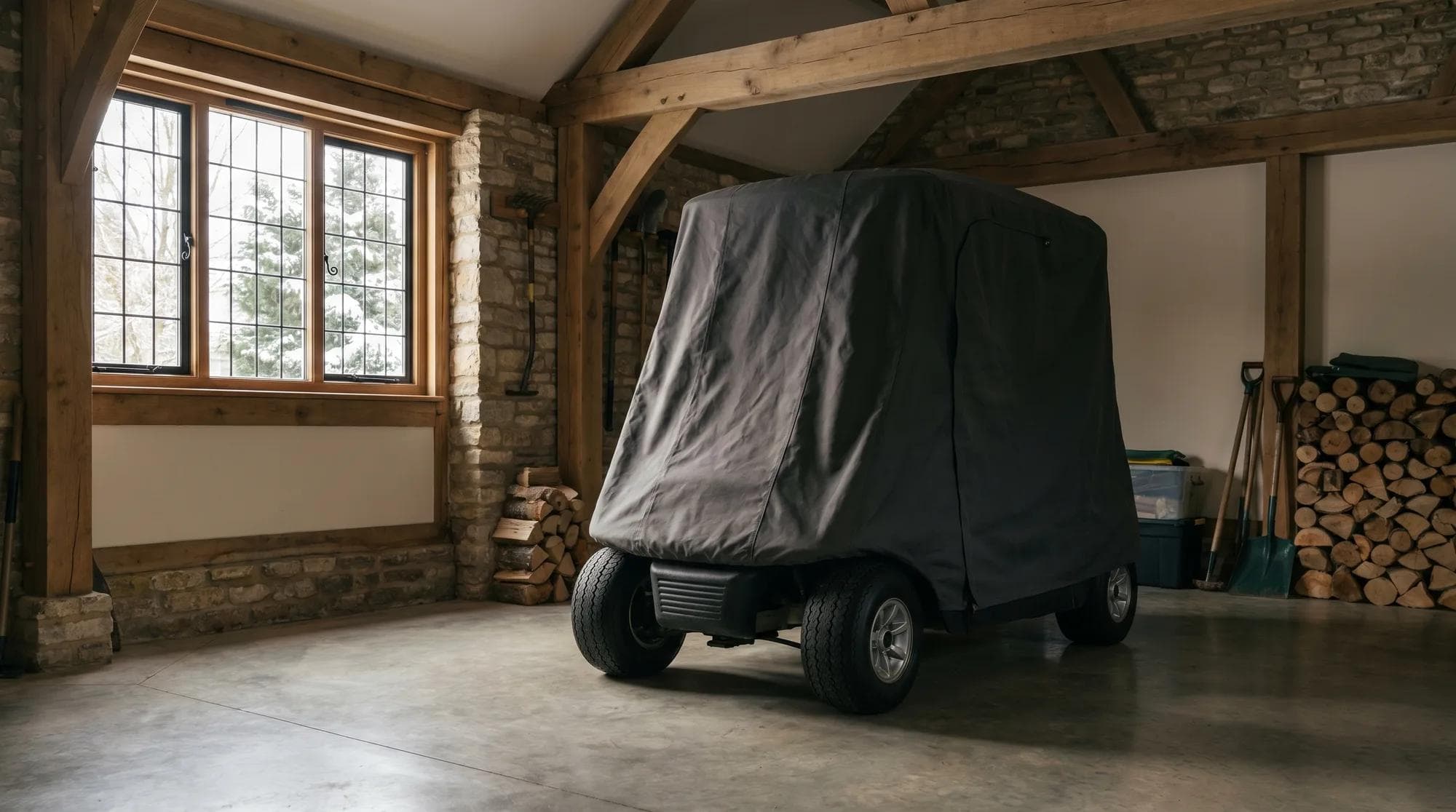
If you're putting the cart away for the season, charging is the thing people get wrong. A battery left flat over winter can be ruined by spring. We cover the full routine, charge level, where to store it and how often to check, in how to store a golf cart over winter. It's worth following to the letter; a winter mistake is the most expensive maintenance miss there is.
Charging habits that protect the battery
The battery is the most expensive part of any electric cart, so the habits around it matter more than anything else on this list. The rules are simple. Charge after use rather than running the pack flat. Use the charger made for your cart, not a generic one. Let an automatic charger finish its cycle. And don't leave a cart sitting drained for weeks. Get this right and a good lithium pack will run for years; get it wrong and you'll be facing a four-figure replacement long before you should.
Nearly all cart maintenance is small, regular and free. The expensive jobs are the ones you skip.
What's worth doing yourself, and what isn't
Tires, cleaning, charging and visual checks are all easy owner jobs, and doing them keeps you in touch with how the cart's behaving. Where we'd draw the line is anything inside the battery management system, the motor controller, or the brakes beyond a basic feel test. Those want the right tools and someone who knows the vehicle. If a cart ever feels off, loses range suddenly, or develops a noise you can't place, it's better looked at sooner than later. Our guide to common golf cart faults in the UK covers the symptoms worth acting on and what usually causes them.
Where a service plan and warranty come in
Doing the weekly and monthly jobs yourself keeps a cart healthy between visits, but a yearly professional service is what catches the things you can't: battery health under load, controller diagnostics, brake wear and a proper safety check. Every cart we build comes with a 3-year warranty and a 24-hour VIP call-out, so if something fails you're not left stranded. A service plan takes the annual check off your plate entirely, and you can see how the cover, servicing and call-out fit together in our guide to servicing, warranty and call-out. Owning one of our golf carts, and what's included, is set out in full on the ownership page.
Keep your cart running its best
Tell us about your cart or fleet and we'll set out a service plan, warranty and call-out cover to match how you use it. Start with a tailored quote.
Frequently asked questions
How do I maintain an electric golf cart?+
Mostly with small, regular checks. Weekly: tires, charge level and a quick brake test. Monthly: battery terminals, proper tire pressures and connections. Seasonally: a deep clean, full brake check and battery care for the cold. Add a yearly professional service and a cart will run reliably for years.
How often should a golf cart be serviced?+
Have a professional service it once a year, with your own weekly and monthly checks in between. The annual service covers battery health, controller diagnostics, brakes and a full safety check that owner checks can't replace. A service plan takes that yearly job off your hands.
What maintenance does an electric golf cart battery need?+
Keep it charged rather than flat, use the correct charger and let it finish its cycle. Check the terminals are clean and tight monthly. Lead-acid packs also need their cells topped up with distilled water; lithium packs are sealed and need none of that. Never store a battery flat over winter.
What tire pressure should a golf cart run?+
Use the figure printed on the tire sidewall or in your handbook, and set it with a gauge rather than by eye. Check weekly and set properly monthly. Even, correct pressures keep the cart tracking straight, save battery range and make the tires last longer.
Can I service a golf cart myself?+
You can do the routine jobs yourself: tires, cleaning, charging and visual checks. Leave the battery management system, motor controller and detailed brake work to a professional with the right tools. If the cart loses range suddenly or develops an odd noise, get it looked at rather than guessing.
How do I look after a golf cart over winter?+
Clean off salt and grime, keep the battery charged, and follow a proper storage routine rather than leaving it flat in a damp shed. A battery left drained over winter is the most common and costly maintenance mistake. Our winter storage guide walks through the full process.
Related solutions
Ready to explore what we build?
See the vehicles and the setting this applies to, or get a tailored quote built around your site.

Ready to find the right golf cart?
Tell us how and where it will work and we will specify a vehicle and a tailored quote built around you. Every build comes with a 3-year warranty and a 24-hour priority call-out.
Our guides are written and reviewed by the Hawke Electric Vehicles team, the people who specify, build, deliver and support the vehicles. We focus on honest, practical advice and flag where a figure depends on the build rather than guessing.
More guides by Hawke