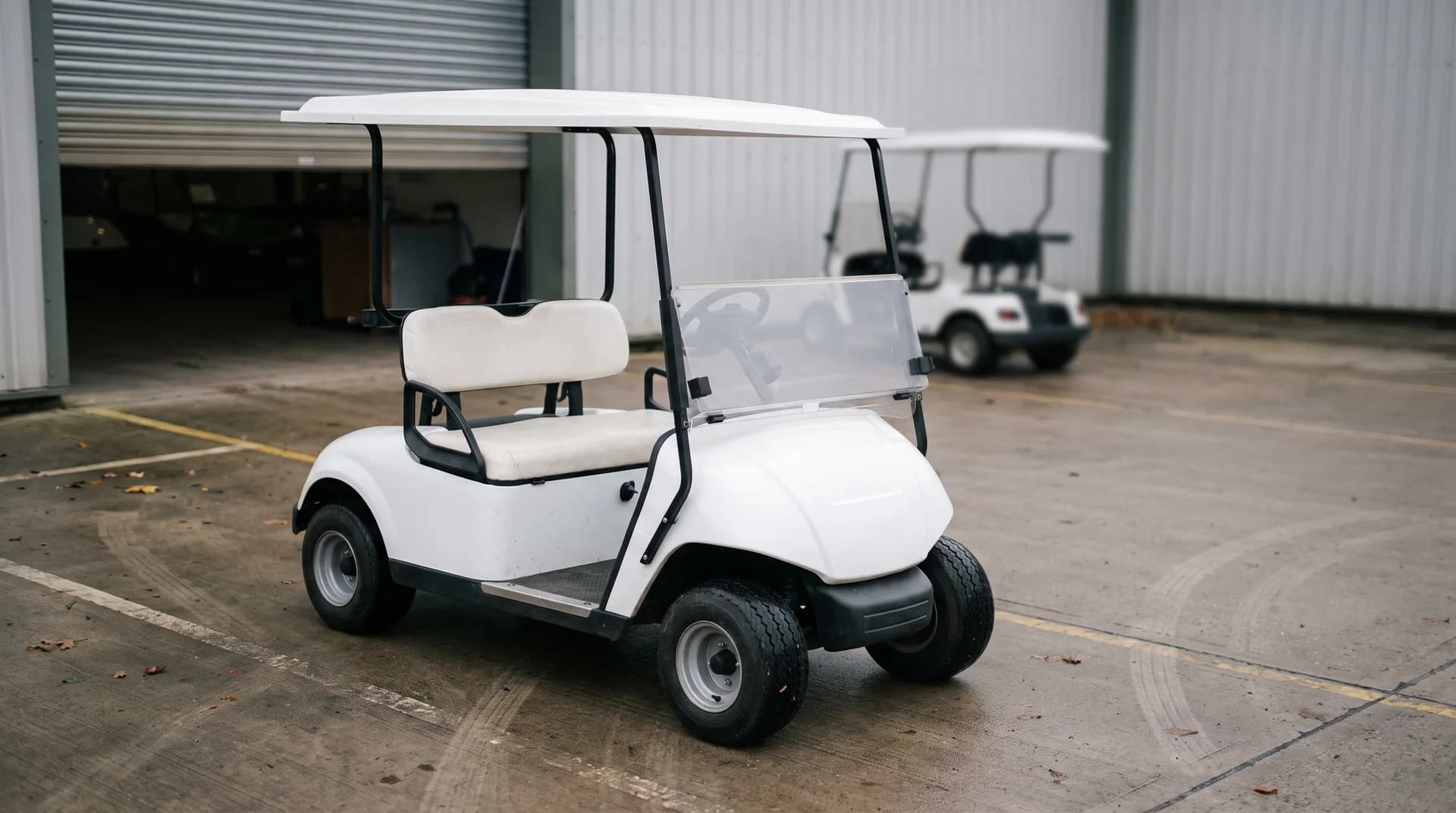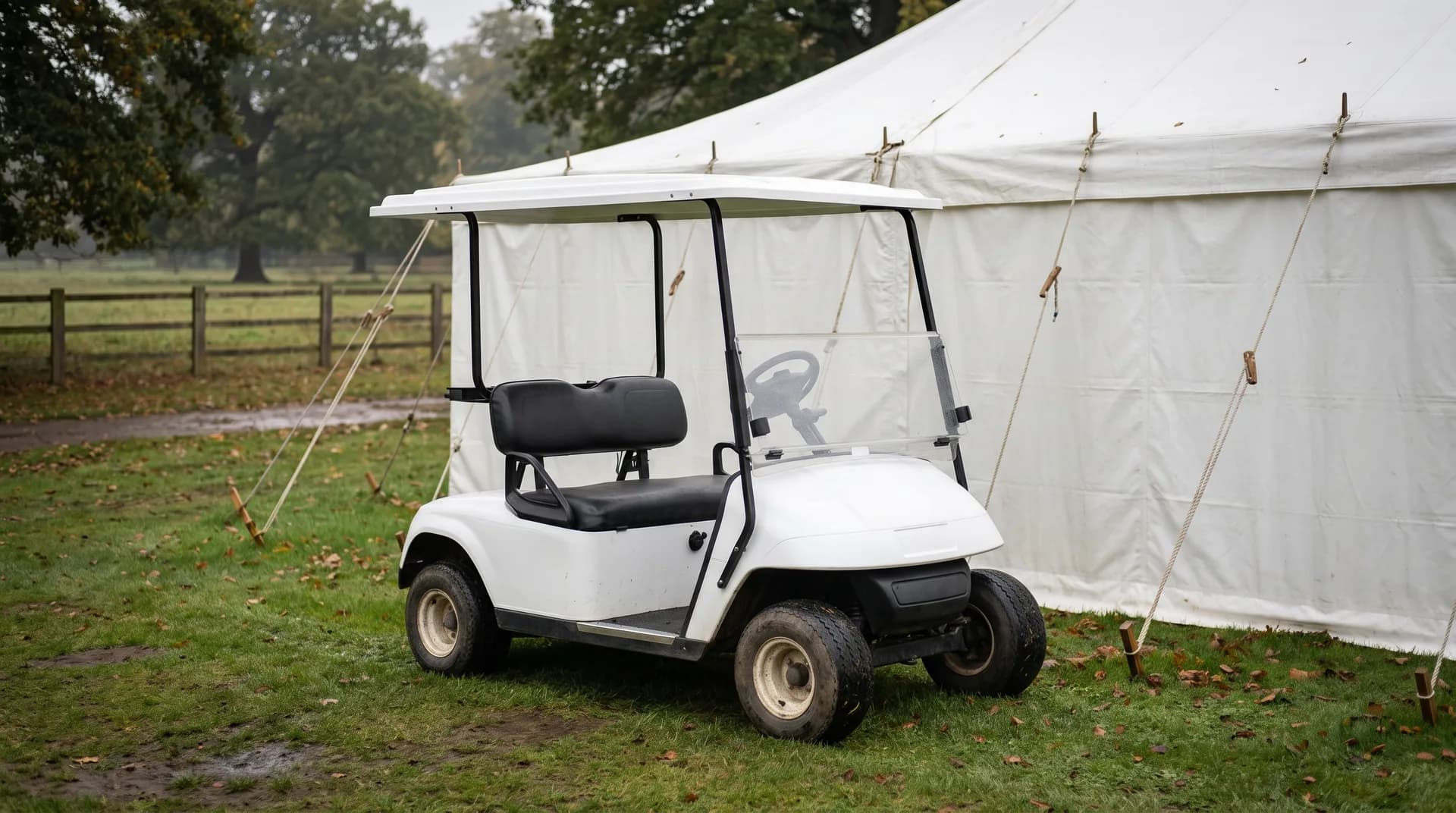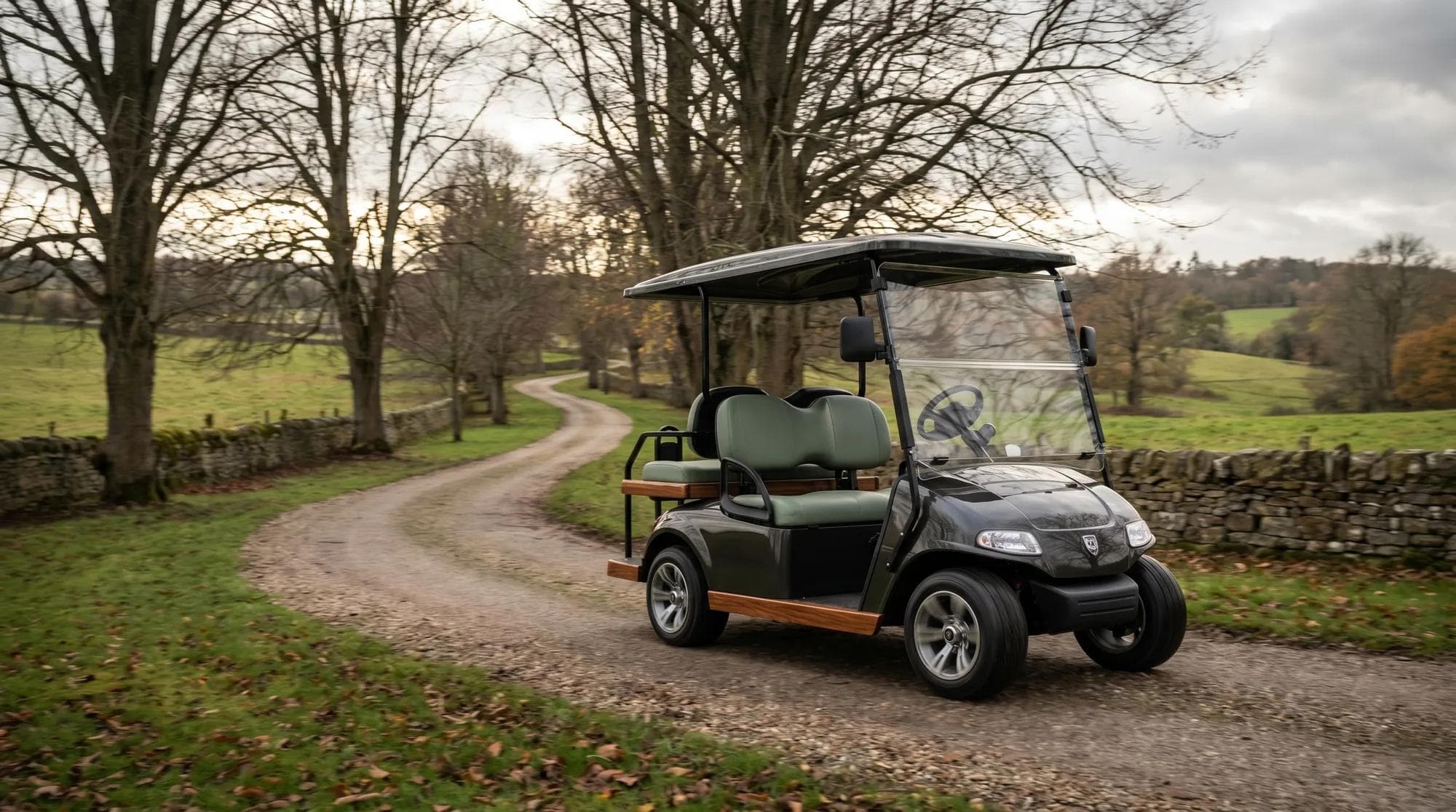
It sounds like a simple question, but the honest answer comes in two parts. A standard golf cart and a road-going one are built to do different jobs, so they run at different speeds. Below are the typical UK speed bands, then a plain explanation of why golf carts are limited and what changes if you want one that goes faster.
How fast does a golf cart go?
Most electric golf carts you'll see on a course or an estate top out at around 12 to 15 mph. That's a comfortable cruise, quick enough to cover ground without rushing, slow enough to feel safe around people, paths and tight turns. Road-going, low-speed versions are built to a different standard and usually manage roughly 20 to 25 mph. Here's how the bands compare.
- Standard cart
- About 12 to 15 mph
- Low-speed road version
- About 20 to 25 mph
- Standard cart
- Private land: courses, estates, sites
- Low-speed road version
- Limited road use plus private land
- Standard cart
- Safety around people and paths
- Low-speed road version
- Built and registered to a road standard
- Standard cart
- A brisk jog
- Low-speed road version
- A gentle town-traffic pace
| Standard cart | Low-speed road version | |
|---|---|---|
| Typical top speed | About 12 to 15 mph | About 20 to 25 mph |
| Built for | Private land: courses, estates, sites | Limited road use plus private land |
| Why it's capped | Safety around people and paths | Built and registered to a road standard |
| Feels like | A brisk jog | A gentle town-traffic pace |
If range matters to you as much as speed, the two are linked: a steadier cruise usually goes further on a charge. Our electric golf cart range guide sets out realistic distances by battery type and UK conditions.
Why are golf carts limited to those speeds?
The cap isn't a flaw, it's the point. A cart spends its life close to people, on paths, near buildings and around tight corners, often carrying passengers with no doors and no seatbelts on the standard models. At 12 to 15 mph it stops short, turns predictably and stays easy to control. Push the same vehicle much faster and it becomes harder to handle and far less forgiving if something goes wrong.
- Safety first. Lower speeds mean shorter stopping distances and more time to react around pedestrians and obstacles.
- Where they're used. Courses, resorts, resort parks and estates are shared, busy spaces, not open road, so a fast vehicle would be out of place.
- How they're built. Standard golf carts are designed and braked for those speeds, not for sustained higher ones.
- Regulation. Going faster on a public road brings legal requirements a private-land cart simply doesn't meet.

The speed limit on a cart isn't holding it back; it's what makes it safe to drive where it lives.
What changes if you want a faster, road-going cart?
Speed and road use go hand in hand, and this is where it gets serious. A standard cart is built for private land and isn't road legal as supplied. A faster, road-going version isn't just the same cart with the limiter raised. It's specified, built and registered to a higher standard from the start, with the right type approval, road lighting and equipment, registration, insurance and the correct licence. Even crossing a public road counts as road use, so it's a decision to flag before you buy, not after.
If road use is on the cards, read are golf carts road legal in the UK for the full picture before you commit. For everything else, from choosing seats and batteries to weather protection, our electric golf cart buyers' guide walks you through it.
How fast do you actually need to go?
For most buyers, the standard 12 to 15 mph is plenty. It moves people and kit across a site quickly without ever feeling unsafe, and it's the right answer for courses, estates, resorts and grounds work. The faster band only matters if your route genuinely uses the road. Tell us how and where you'll drive, and we'll match a cart to it. Browse the full range to see how the sizes line up, then we'll confirm a realistic speed and spec for your day.
Find the right cart for your site
Tell us how and where you'll use it and we'll specify a cart, with the right speed and road spec if you need it, then confirm a tailored quote. Every build comes with a 3-year warranty and a 24-hour VIP call-out.
Frequently asked questions
How fast does a golf cart go?+
A standard electric golf cart tops out at around 12 to 15 mph, a brisk jogging pace. Low-speed road-going versions are built to go faster, roughly 20 to 25 mph. The exact figure depends on the model and how it's set up.
Why are golf carts so slow?+
It's deliberate. Golf Carts spend their lives near people, on shared paths and around tight corners, often with no doors or seatbelts. A lower top speed means shorter stopping distances and predictable handling, which keeps them safe for where they're actually used.
Can you make a golf cart go faster?+
A faster, road-going cart isn't just a standard one with the limiter raised. It has to be built and registered to a higher standard, with the right type approval, lighting, registration, insurance and licence. Speed and road legality are best specified from the outset, not added later.
How fast do golf carts go on a road?+
Low-speed road-going versions typically manage around 20 to 25 mph. A standard private-land cart isn't road legal as supplied, and even crossing a public road counts as road use, so road-going spec is a separate decision.
Is 15 mph fast enough for a golf cart?+
For most uses, yes. At 12 to 15 mph a cart covers a course, estate or resort quickly without ever feeling unsafe around people and paths. The faster band only matters if your route genuinely uses a public road.
Related solutions
Ready to explore what we build?
See the vehicles and the setting this applies to, or get a tailored quote built around your site.
Ready to find the right golf cart?
Tell us how and where it will work and we will specify a vehicle and a tailored quote built around you. Every build comes with a 3-year warranty and a 24-hour priority call-out.
Our guides are written and reviewed by the Hawke Electric Vehicles team, the people who specify, build, deliver and support the vehicles. We focus on honest, practical advice and flag where a figure depends on the build rather than guessing.
More guides by Hawke