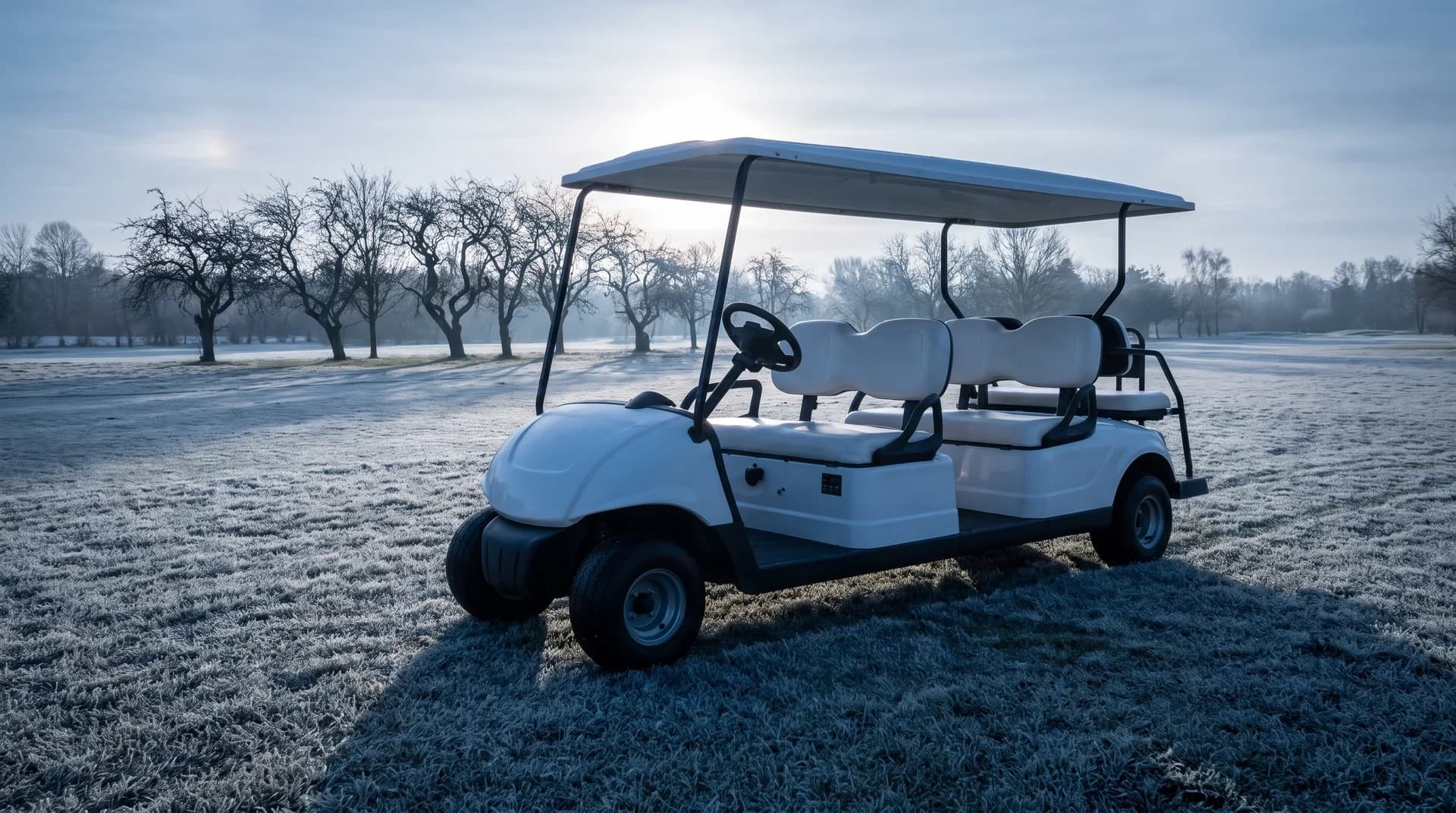
Yes, electric golf carts work in winter, they start reliably in the cold, cope with British winter temperatures, and plenty of estate, site and course golf carts work outdoors all year round. But winter changes three things you need to plan for. Batteries deliver noticeably less range in cold weather, so a cart that comfortably managed your summer rounds has less in reserve in January. Traction and turf care demand a gentler right foot on frosty or saturated ground. And your charging and storage habits matter more, because winter punishes neglect that summer forgives. This guide answers the direct performance question: what actually happens to a cart in the cold, how lithium and lead-acid differ, and the habits that keep a machine healthy through to spring. For the full care routine, our maintenance and winter care guide goes deeper.
- Cold reduces battery range on every cart, plan winter journeys with more reserve than summer.
- Lithium handles cold use better than lead-acid, but most lithium packs must not be charged below freezing, follow the manufacturer's guidance.
- Frosty and saturated turf is where golf carts do damage: slow down, steer smoothly, and respect course closures.
- Store the cart under cover and keep it charged, a flat battery left in the cold over winter is how packs die.
- Many clubs ban golf carts in the depths of winter, so the course, not the machine, is often the real constraint.
Golf cart winter range: what cold does to batteries
The core of winter performance is chemistry. Batteries rely on chemical reactions that slow as temperature falls, so a cold pack delivers less usable energy than the same pack in summer, which you experience as reduced range and, on lead-acid especially, a cart that feels less lively. How much less range depends on the chemistry, the temperature, the terrain and how the cart is stored, so treat any precise percentage you read with suspicion; the honest guidance is qualitative. Expect a noticeable reduction, plan winter use with more reserve than you needed in summer, and remember that winter ground works against you twice: wet, heavy turf increases rolling resistance at exactly the moment the battery has less to give. A cart stored in an unheated shed overnight will also start its day cold, ranges recover somewhat as the pack warms through use, but a January round should never be planned to the last mile of summer range. If your cart is coming up short on winter distance, our guide to a cart not holding charge after winter helps separate seasonal effects from a failing pack.
Lithium vs lead-acid in cold weather
The two chemistries handle winter differently, and it shows. Lead-acid packs lose a larger share of their usable capacity in the cold, self-discharge steadily when parked, and are vulnerable in one specific way worth knowing: a deeply discharged lead-acid battery can freeze and be ruined, which is why the old advice to keep lead-acid golf carts charged through winter is not fussiness but survival. Lithium packs hold their capacity in the cold better and self-discharge far more slowly, which is part of why they suit year-round outdoor work, but they carry their own winter rule: most lithium packs should not be charged below freezing, and quality packs include management systems that protect against it. The practical answer to both chemistries is the same, charge and store the cart somewhere above freezing where you can, and follow the manufacturer's cold-weather guidance for your specific pack. For the full comparison beyond winter, see our lithium versus lead-acid guide.
Traction and frost etiquette on winter turf
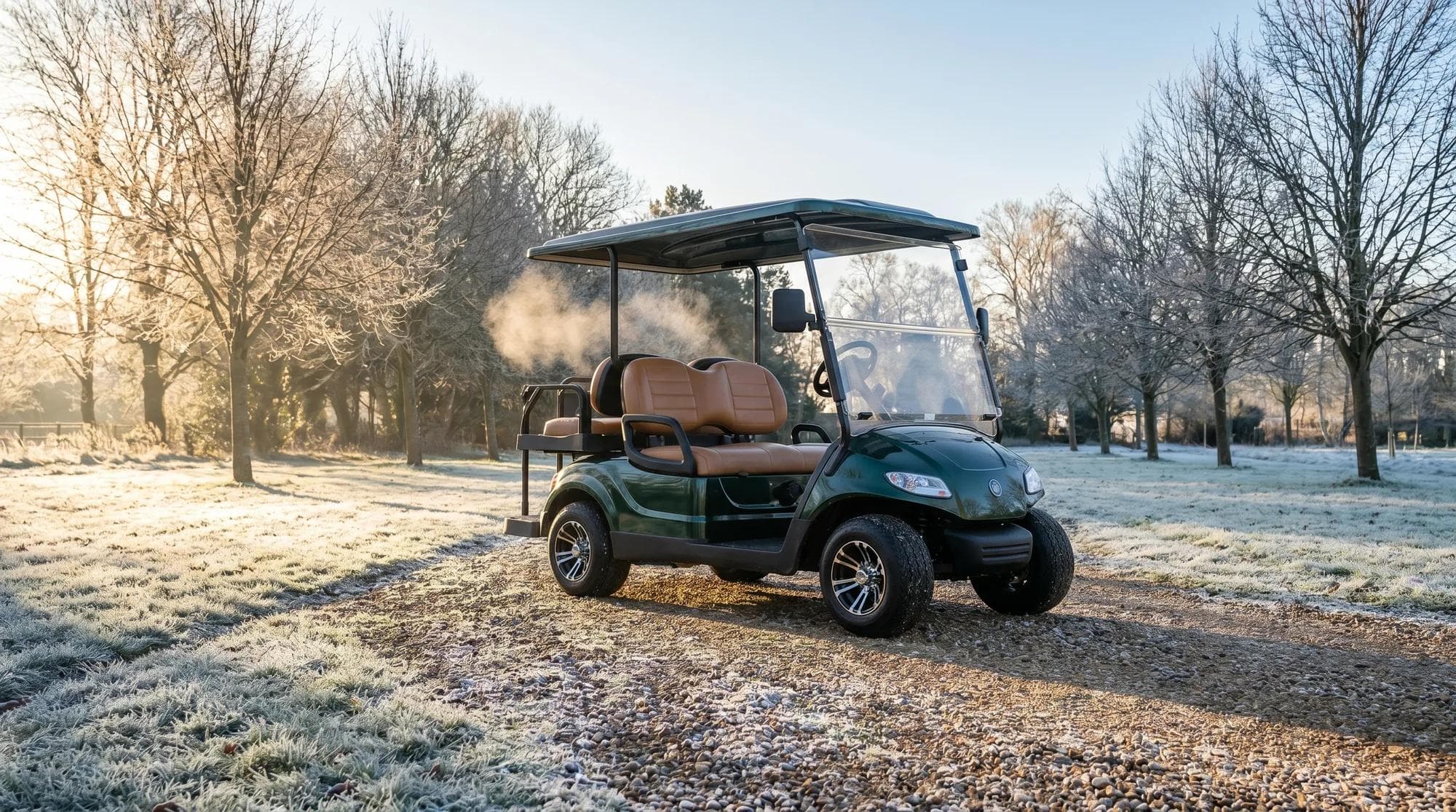
Winter driving is less about whether the cart can cope and more about whether the ground can. Electric golf carts are heavy, and frosty, thawing or saturated turf marks easily: wheelspin on a wet slope tears grass, tight turns scrub soft ground, and tire lines pressed into frosted grass can show for weeks. The winter habits are simple, slow down, accelerate and brake gently, steer in wide smooth arcs, stay off slopes you would hesitate to walk down, and follow whatever path rules and roped areas the course or site has in place. Frost deserves particular respect: driving on frosted or thawing turf damages the grass beneath in ways that only show later, which is precisely why clubs close courses to golf carts on frosty mornings, the damage is real even when the ground feels firm. Braking distances also stretch on wet grass and mud, so leave more room than summer instincts suggest, especially downhill, where a locked wheel on wet grass steers nothing.
Golf cart winter storage, charging habits and course bans
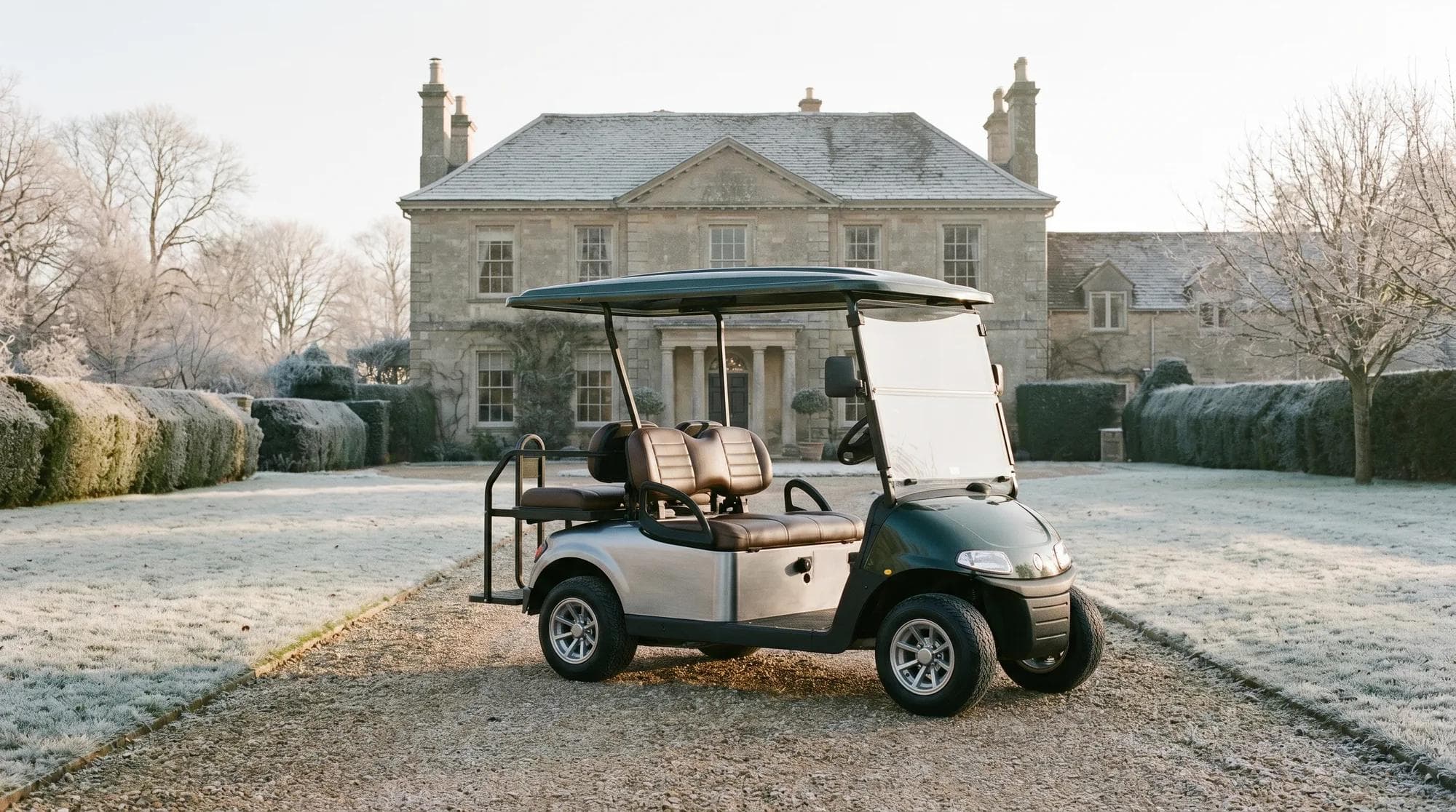
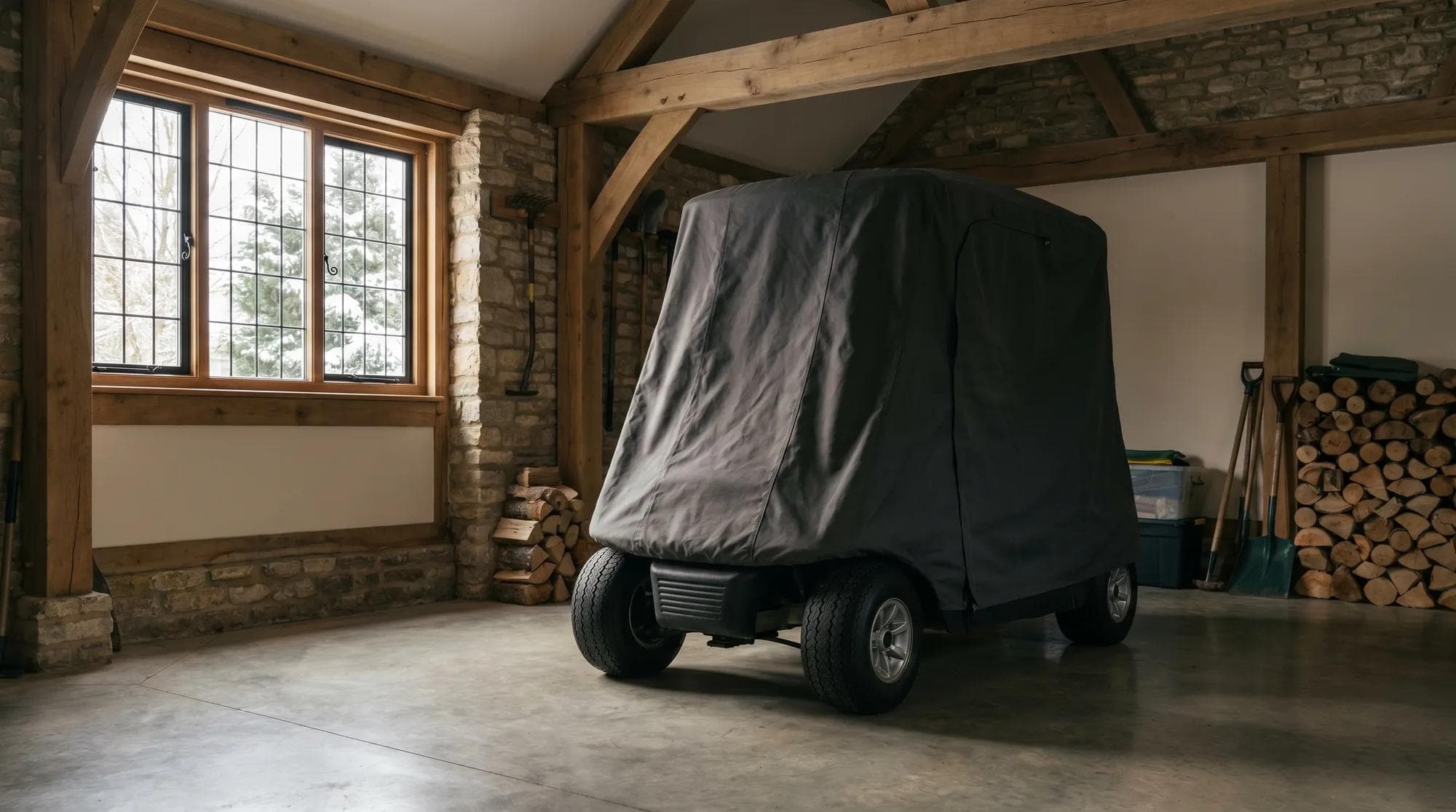
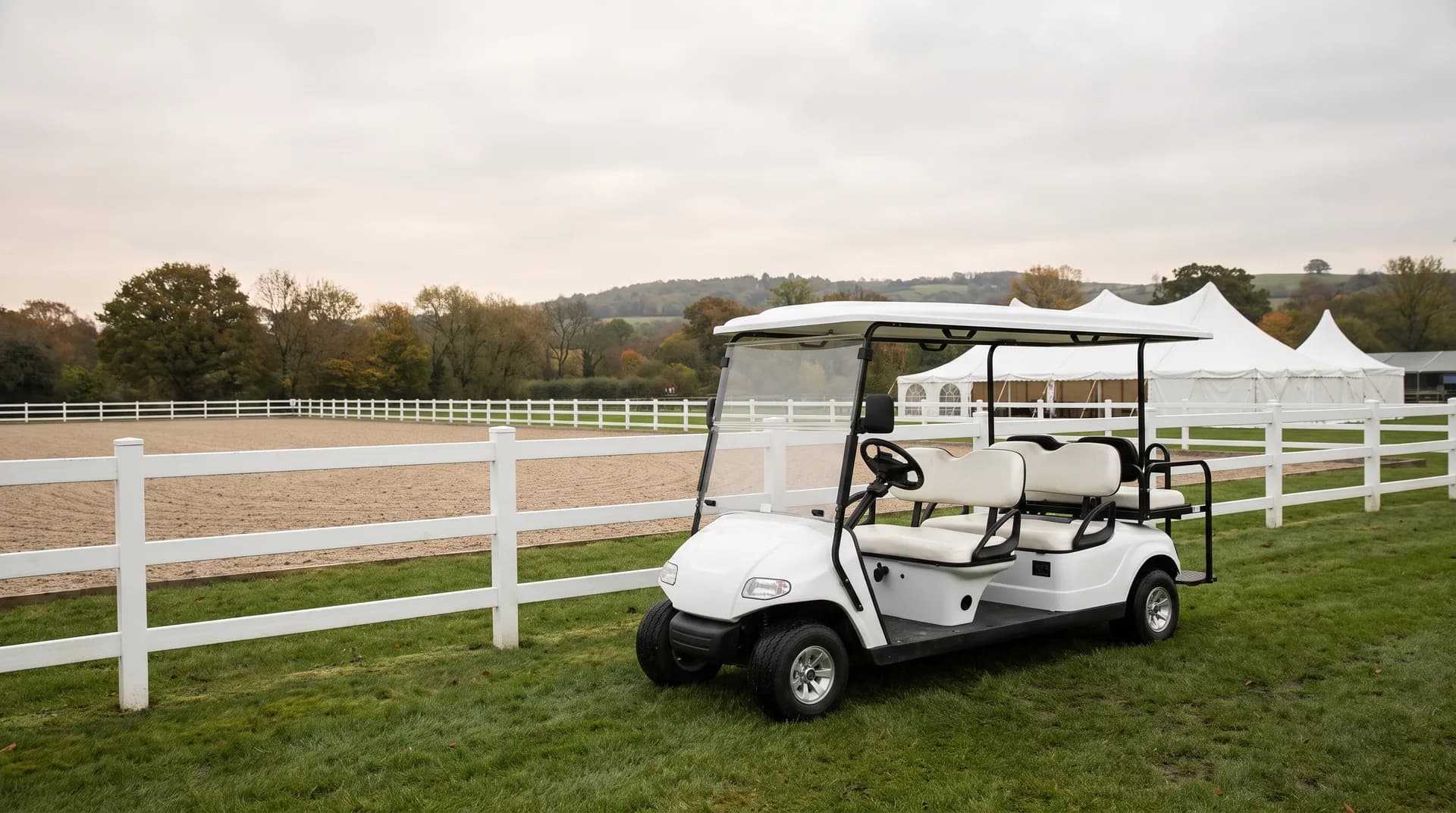
How a cart spends its winter nights decides how it performs, and whether it survives to spring. Under cover beats outdoors, and above freezing beats an open barn; a dry shed or garage with a socket is the ideal. Keep the battery charged: for lead-acid that means regular charging even when the cart is unused, because a pack left flat in the cold sulphates or freezes; for lithium it means storing with charge in the pack and following the maker's guidance on charging temperatures. Check tire pressures more often, cold air lowers them, and give connections and bodywork an occasional rinse if the cart works near gritted paths. If the cart will be parked up for the season entirely, that is a slightly different routine, covered in our winter storage guide. The final winter reality is not mechanical at all: many UK clubs restrict or ban golf carts in the wettest months to protect their turf, so the machine may be willing when the course is not, our guide to winter cart bans explains how clubs decide. Estate and site owners escape that constraint, which is why a well-specified cart works outdoors twelve months a year off the course.
Frequently asked questions
Do electric golf carts lose range in winter?+
Yes. Cold slows battery chemistry, so every cart delivers less usable range in winter, with lead-acid affected more than lithium. Heavy, wet ground adds rolling resistance on top. Plan winter use with more reserve and expect performance to recover as temperatures rise.
Will a golf cart start in freezing weather?+
Electric golf carts generally start reliably in cold weather, there is no engine to struggle. The cold shows up as reduced range and, particularly on lead-acid, reduced liveliness rather than a failure to start. Storage above freezing keeps performance closer to normal.
Can I charge a golf cart in the cold?+
Lead-acid can be charged in the cold and should be kept charged through winter. Most lithium packs must not be charged below freezing, and good packs have management systems that enforce this. Charge under cover where possible and follow the manufacturer's guidance for your pack.
Is it bad to drive a golf cart on frost?+
It is bad for the turf. Driving on frosted or thawing grass damages it in ways that show later, which is why courses close to golf carts on frosty mornings. On hard standing and tracks, frost mainly demands gentler driving and longer braking distances.
Why does my club ban golf carts in winter if golf carts work in the cold?+
Because the constraint is the ground, not the machine. Saturated and frosted turf is easily damaged by cart traffic, so clubs restrict or ban golf carts to protect the course. Policies vary by club and by conditions, so check before you travel.
Specify a cart for all four seasons
Lithium power, weather protection and the right tires make a cart a year-round machine. Tell us where it will work and we will build the specification around your winters as well as your summers.
Related solutions
Ready to explore what we build?
See the vehicles and the setting this applies to, or get a tailored quote built around your site.
Ready to find the right golf cart?
Tell us how and where it will work and we will specify a vehicle and a tailored quote built around you. Every build comes with a 3-year warranty and a 24-hour priority call-out.
Our guides are written and reviewed by the Hawke Electric Vehicles team, the people who specify, build, deliver and support the vehicles. We focus on honest, practical advice and flag where a figure depends on the build rather than guessing.
More guides by Hawke