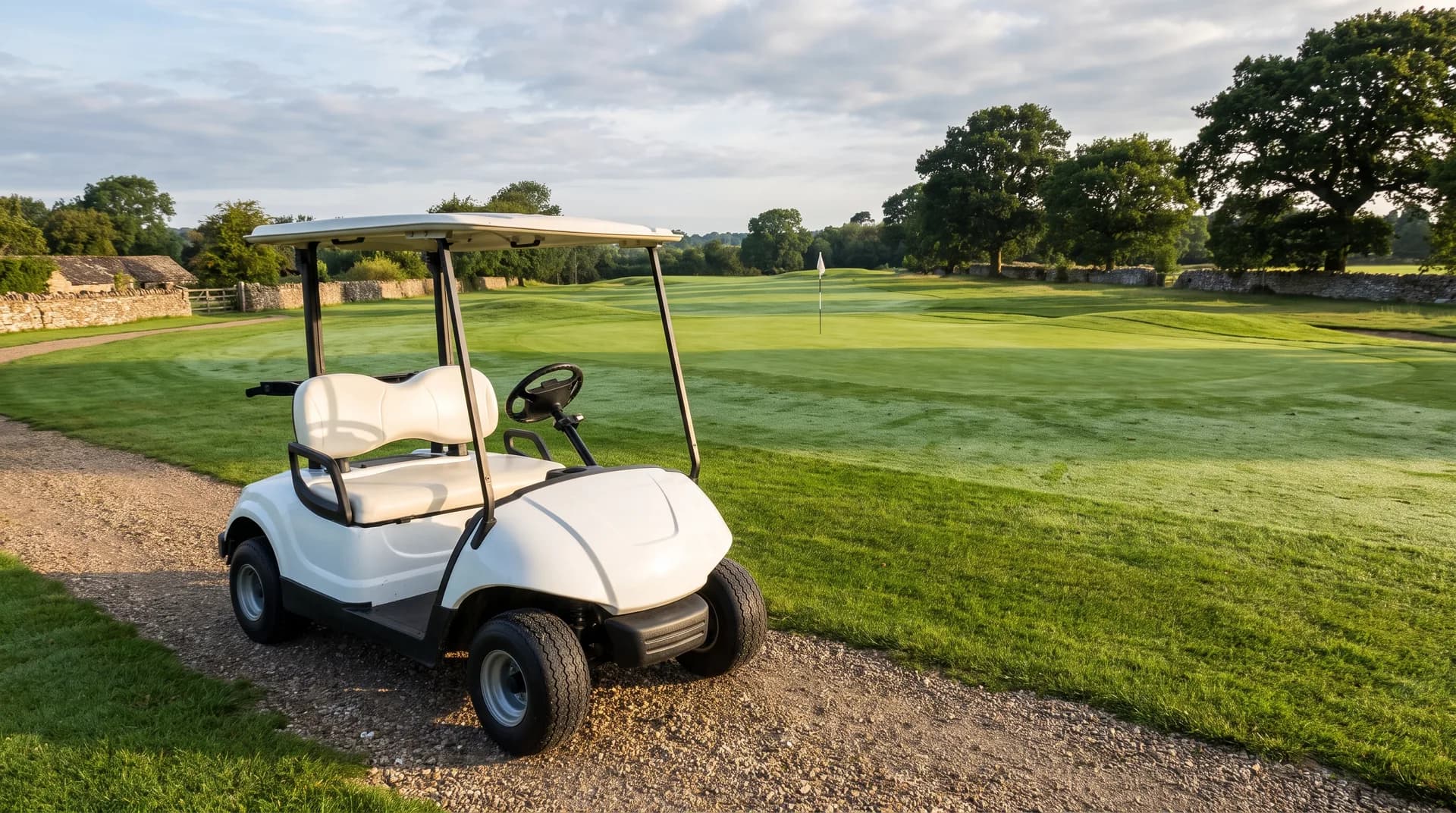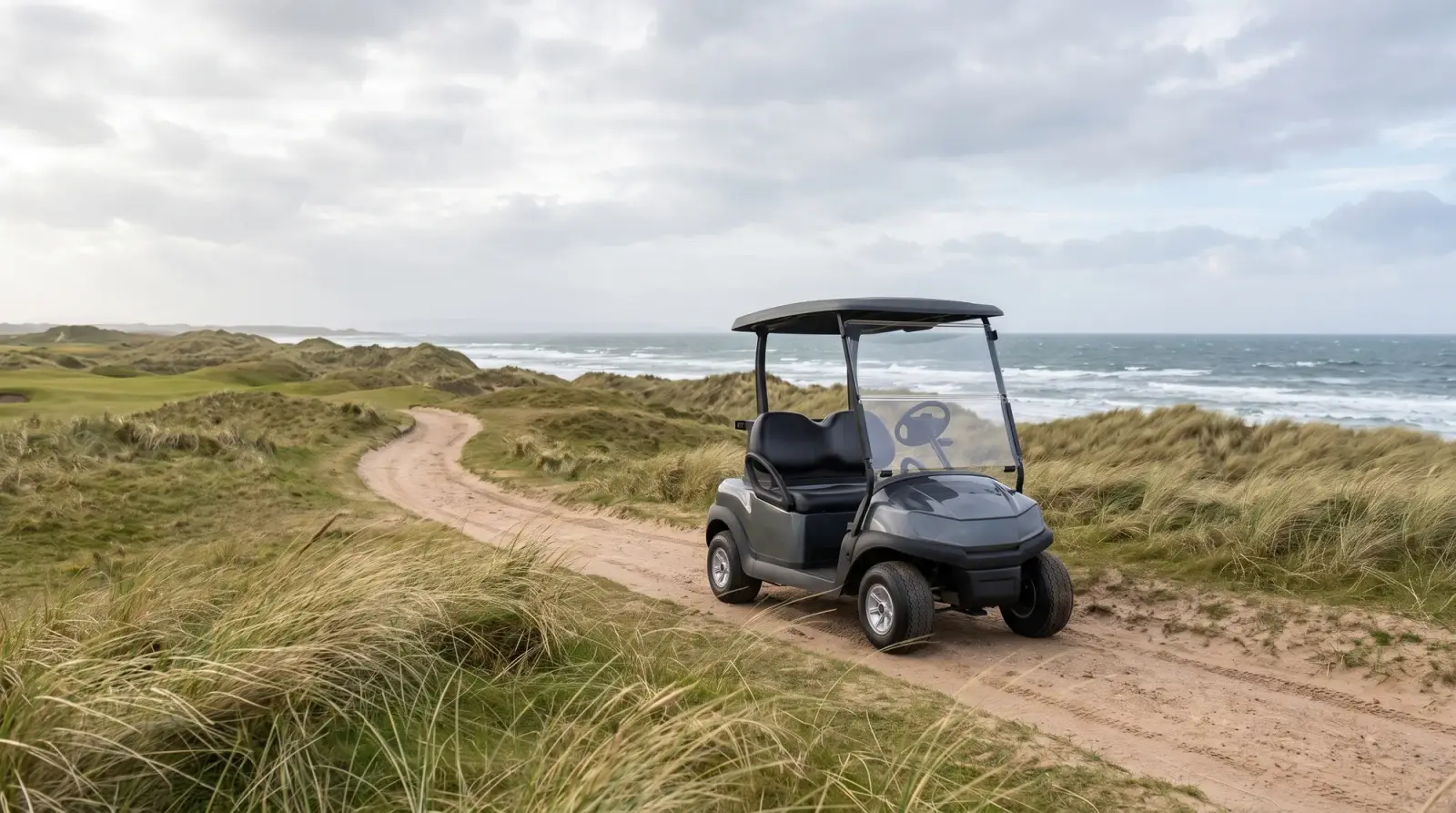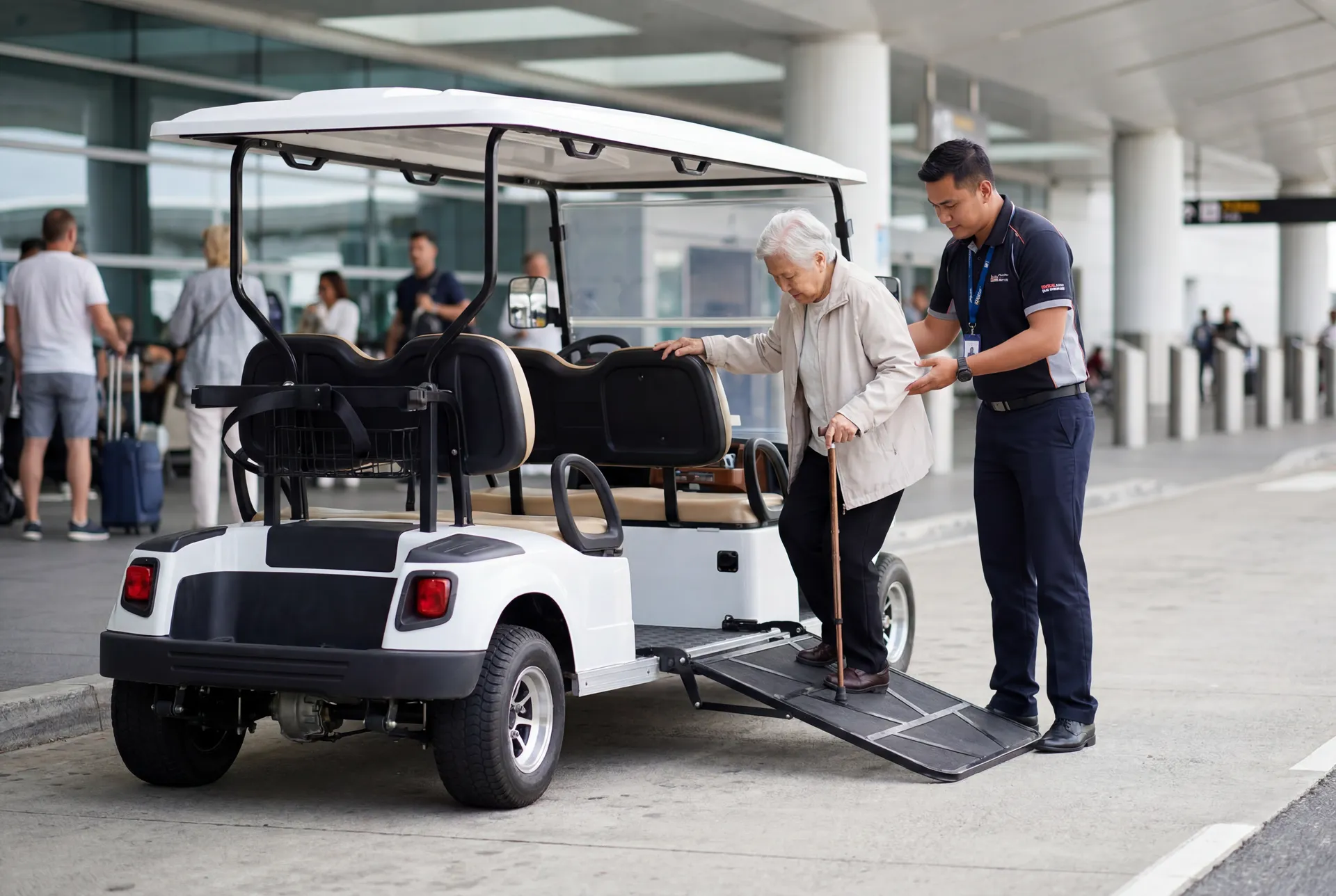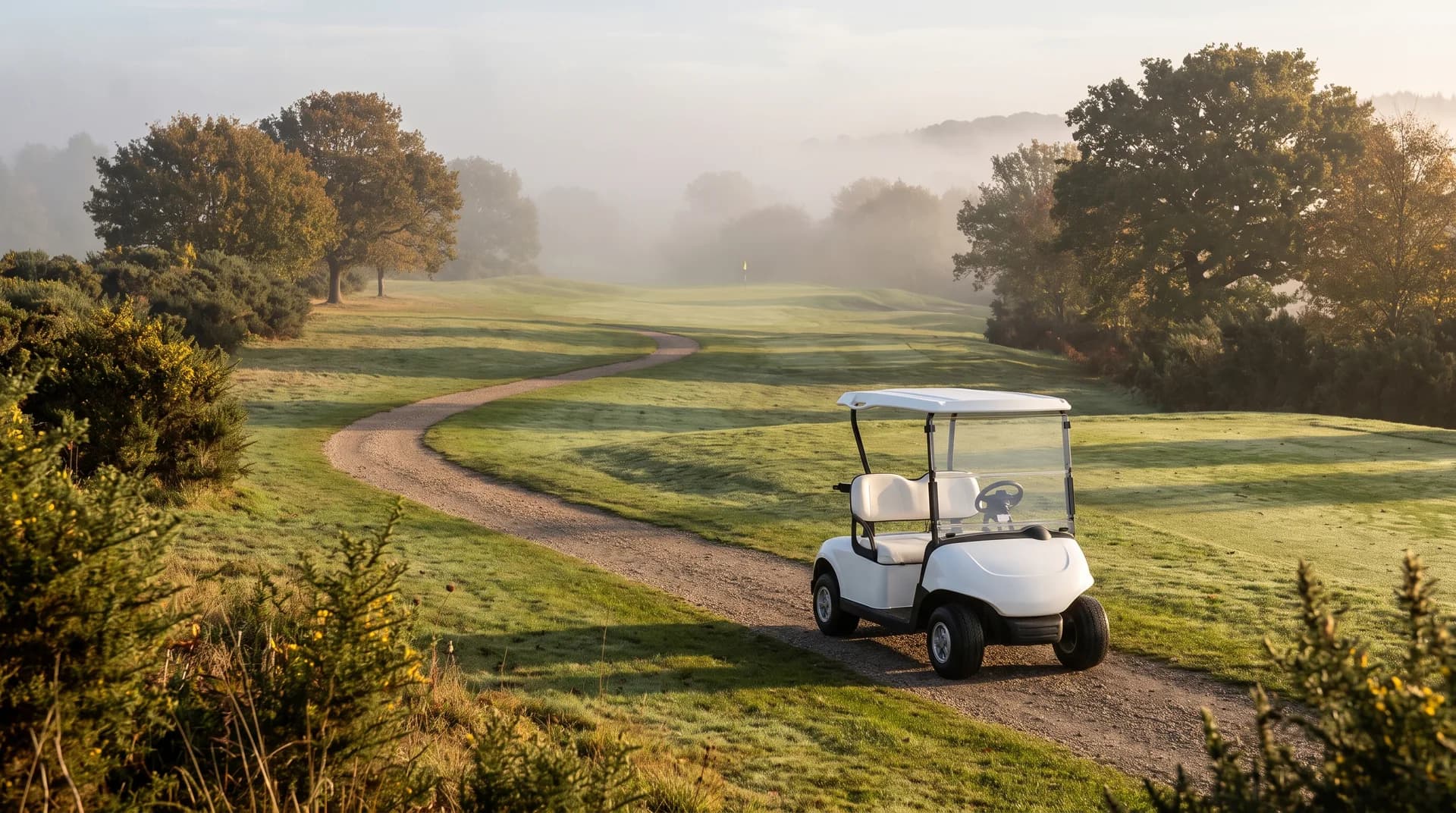
Should you take a cart or walk the course? The honest answer is that neither side of this old clubhouse argument is simply right. Walking is better exercise, full stop, and many golfers feel it connects them to the course in a way riding never quite does. A cart preserves energy for the shots that decide your score, keeps golf open to players whose bodies no longer forgive eighteen holes on foot, and turns a wet November round from an ordeal into a game. This guide weighs the two honestly, pace, energy, exercise, weather, hills, accessibility and etiquette, so you can decide round by round rather than by tribe. Most golfers who think it through end up doing both: walking when the day and the body allow, riding when they do not.
- Exercise is walking's genuine, unarguable win, a walked round is a serious amount of healthy activity.
- A cart's clearest benefit is energy late in the round, when tired legs start costing shots.
- Pace depends on the course and the rules in play; golf carts are not automatically faster.
- For golfers with mobility or health limits, a cart is not a luxury, it is what keeps them playing.
- Weather and terrain swing the decision: hills and heat favour the cart, and clubs restrict golf carts in the wet.
Golf cart vs walking: pace of play
The assumption that a cart makes you faster deserves scrutiny, because it is only sometimes true. Two players sharing a cart whose balls finish on opposite sides of the fairway spend the round shuttling sideways, and on a course where golf carts are confined to paths, the walk from path to ball and back can eat most of the time the wheels saved. Cart-path-only rules after rain are common, and on those days walkers often keep pace comfortably. Where the cart genuinely speeds things up is on courses with long green-to-tee transfers, big elevation changes, or spread-out layouts designed with riding in mind, and for players whose walking pace has slowed, where the cart quietly removes the gap. The etiquette point matters more than the machinery: a cart driven thoughtfully, dropped ahead of the green, parked toward the next tee, following the club's rules on where it may go, helps pace, and one driven carelessly hurts it. Our cart etiquette guide covers the habits that keep a riding group quick and welcome.
Energy, scoring and the exercise question
Here is the honest trade at the heart of the choice. Walking a full course is a genuinely large dose of exercise, hours of continuous movement, often over rolling ground, and for many golfers that walk is half the reason they play. If exercise is a primary goal of your golf, walking wins and nothing in this guide should talk you out of it. The cart's counter-argument is about scoring and enjoyment rather than fitness: fatigue late in the round is real, and tired legs and a tired mind show up in exactly the swings and decisions that settle a card. Riding preserves that energy, which is why some golfers walk social rounds and ride competitive ones, and why in hot weather or on heavy ground the cart can be the difference between finishing well and merely finishing. There is no dishonesty in either camp, walking is better for the body, riding is kinder to the back nine, and which matters more is a personal call that can change week by week.
Golf cart vs walking on hills, in wet weather, and for accessibility
Terrain and weather move the decision more than most arguments do. On a flat parkland course in dry June, walking asks little; on a steep course, or in July heat, or through a soft winter, the cart earns its keep, and our guide to golf carts for hilly and wet courses covers what the machine itself needs for that work. Wet weather cuts both ways, though: this is when clubs restrict or ban golf carts to protect saturated turf, so the day the ride is most tempting can be the day it is not allowed, check before you travel, especially in winter. Links courses have their own traditions and policies, our guide to UK links courses that allow golf carts maps them. And then there is the consideration that outranks all of this: accessibility. For golfers with mobility limits, joint problems, heart or lung conditions, or simply years that have accumulated, the cart is not the soft option, it is the difference between playing and not playing. No one should feel apologetic about riding for that reason, and clubs are generally supportive; our guide for golfers with disabilities covers the practical side.
- Walking
- The clear winner, a walked round is substantial activity
- Cart
- Minimal, you still swing but the miles are gone
- Walking
- Fatigue can cost shots on the closing holes
- Cart
- Preserved, the strongest scoring argument for riding
- Walking
- Steady, unaffected by path-only rules
- Cart
- Course-dependent, quick on spread layouts, slower under restrictions
- Walking
- Unrestricted, but a slog in heavy conditions
- Cart
- More comfortable, though clubs may restrict golf carts to protect turf
- Walking
- Demanding, and a genuine workout
- Cart
- Takes the climbs out of the round entirely
- Walking
- Not always possible
- Cart
- Keeps golfers with mobility limits playing
- Walking
- Nothing beyond your legs
- Cart
- Hire fees per round, or ownership costs
| Walking | Cart | |
|---|---|---|
| Exercise | The clear winner, a walked round is substantial activity | Minimal, you still swing but the miles are gone |
| Energy late in the round | Fatigue can cost shots on the closing holes | Preserved, the strongest scoring argument for riding |
| Pace of play | Steady, unaffected by path-only rules | Course-dependent, quick on spread layouts, slower under restrictions |
| Wet and winter days | Unrestricted, but a slog in heavy conditions | More comfortable, though clubs may restrict golf carts to protect turf |
| Hilly courses | Demanding, and a genuine workout | Takes the climbs out of the round entirely |
| Accessibility | Not always possible | Keeps golfers with mobility limits playing |
| Cost | Nothing beyond your legs | Hire fees per round, or ownership costs |
Cost, etiquette and making the call
Walking is free, and a cart never is, whether as a per-round hire fee or the costs of owning your own machine, so frequency belongs in the decision. An occasional rider hires; a golfer riding several times a week starts to do a different sum, which our hire versus buy guide works through properly. Etiquette rounds out the picture: whichever you choose, the obligations are the same, keep up with the group ahead, respect the course, and follow the club's rules on where golf carts may go, ropes, path rules and wet-day restrictions exist to protect the turf everyone plays on. The sensible conclusion is to garbage the tribal version of this argument. Walk when the day, the course and your body make walking a pleasure. Ride when heat, hills, health or a competitive card make riding the smarter play. And if riding is becoming your regular game, it may be time to look at a cart of your own.
Frequently asked questions
Is it faster to play golf with a cart?+
Sometimes. On spread-out or hilly courses a cart saves real time; under cart-path-only rules, or with two players sharing across opposite sides of the fairway, walkers often keep pace. Driving thoughtfully matters more than the machine itself.
Do you lose the exercise benefit if you use a cart?+
Largely, yes, and it would be dishonest to claim otherwise. A walked round is hours of continuous activity; a ridden one is not. If exercise is a main reason you play, walk when you can and save the cart for the days you need it.
Should I use a cart in competitions?+
That is between you, your energy levels and the competition's rules, so check the conditions of play. Many golfers ride competitive rounds precisely to stay fresh over the closing holes, and where a cart is used for a medical reason, clubs are generally supportive.
Can I always get a cart at my club in winter?+
No. Clubs commonly restrict or ban golf carts on saturated or frosty ground to protect the course, so the wettest days are the likeliest to be walking days. Check the club's cart policy before you travel.
When does owning a cart make more sense than hiring one?+
When you ride regularly enough that per-round hire fees start approaching ownership costs, typically a question for frequent players with somewhere to store and charge a machine. Our hire versus buy guide sets out how to run the numbers.
Riding more rounds than you walk?
If the cart has become your regular game, owning the right machine changes the economics. Tell us about your course and your golf and we will specify honestly.
Related solutions
Ready to explore what we build?
See the vehicles and the setting this applies to, or get a tailored quote built around your site.
Ready to find the right golf cart?
Tell us how and where it will work and we will specify a vehicle and a tailored quote built around you. Every build comes with a 3-year warranty and a 24-hour priority call-out.
Our guides are written and reviewed by the Hawke Electric Vehicles team, the people who specify, build, deliver and support the vehicles. We focus on honest, practical advice and flag where a figure depends on the build rather than guessing.
More guides by Hawke