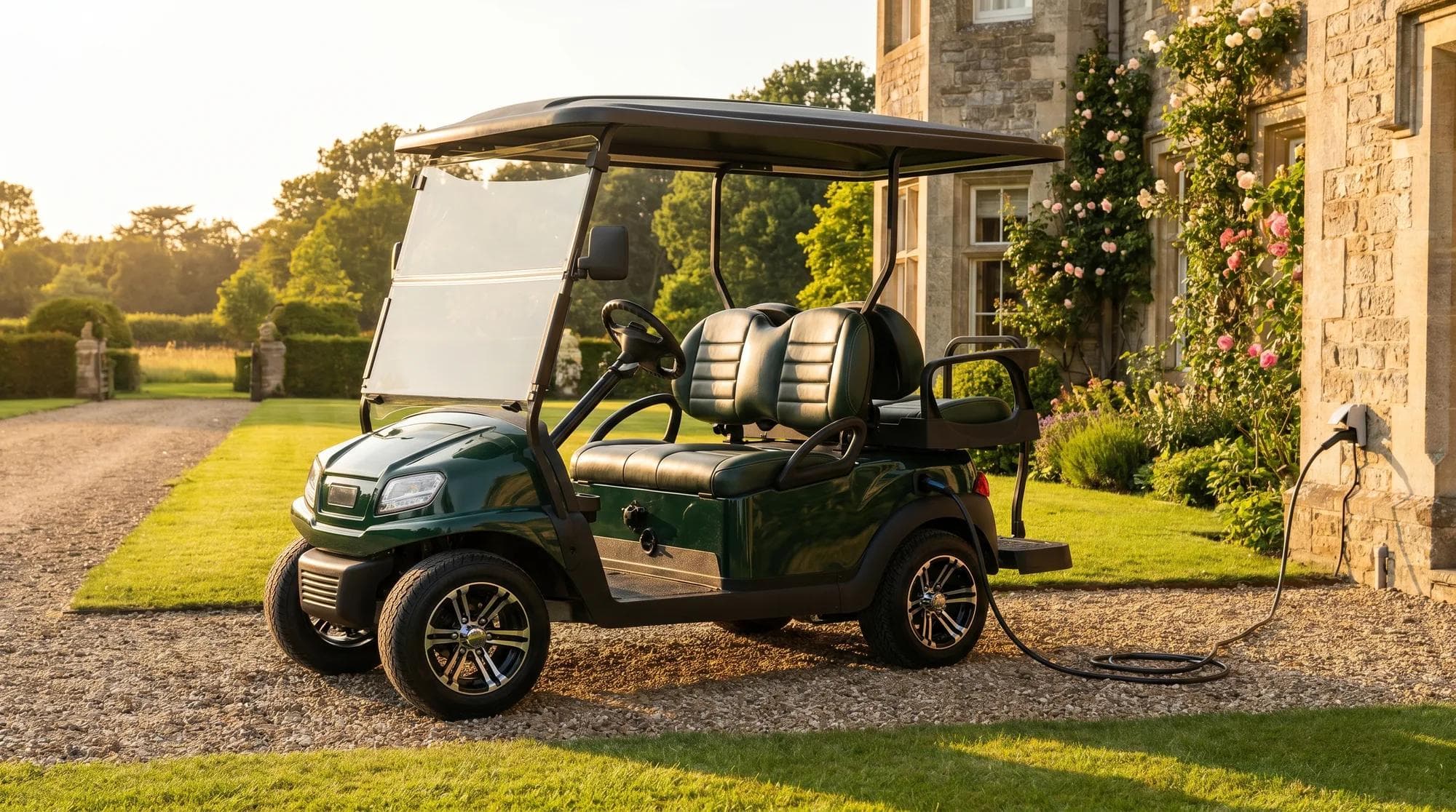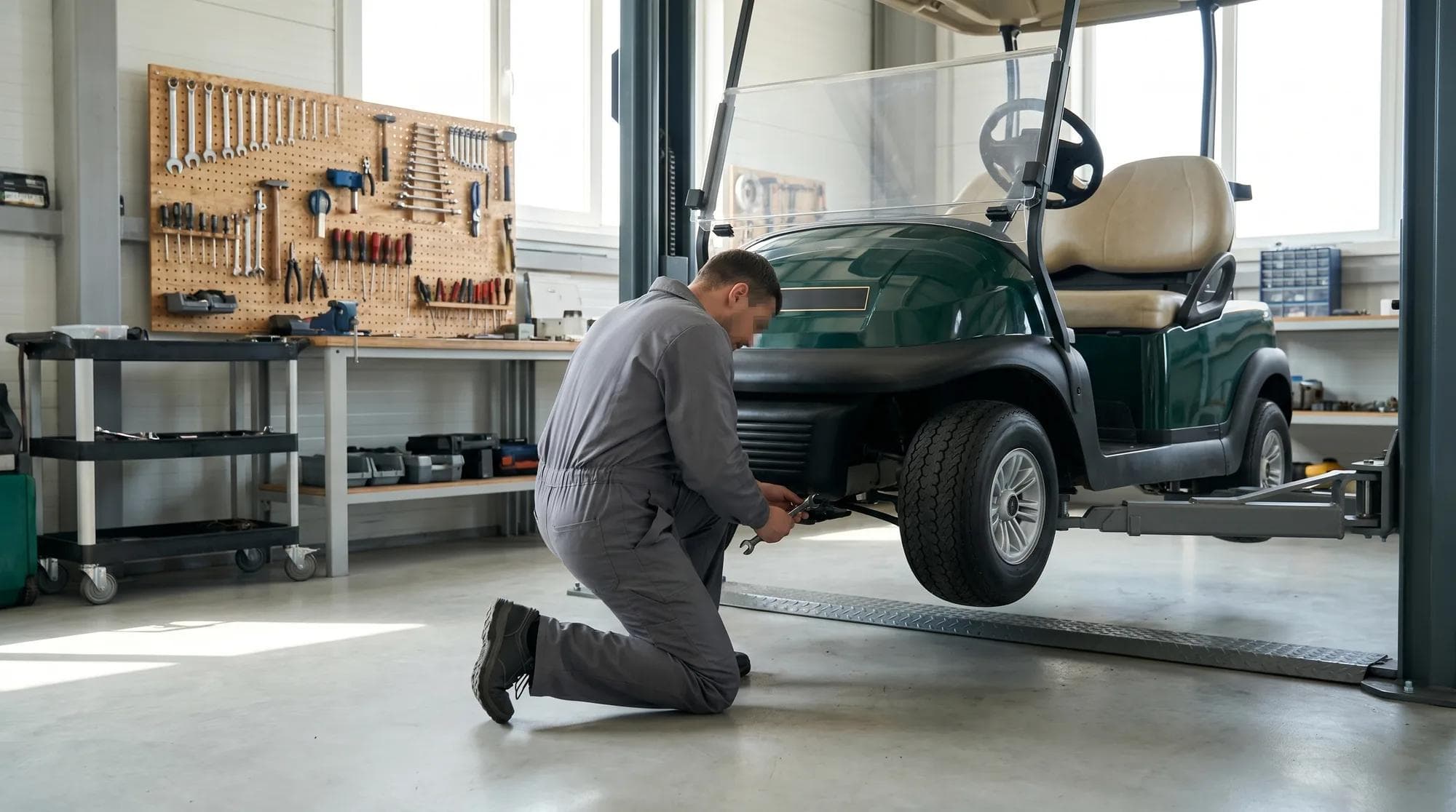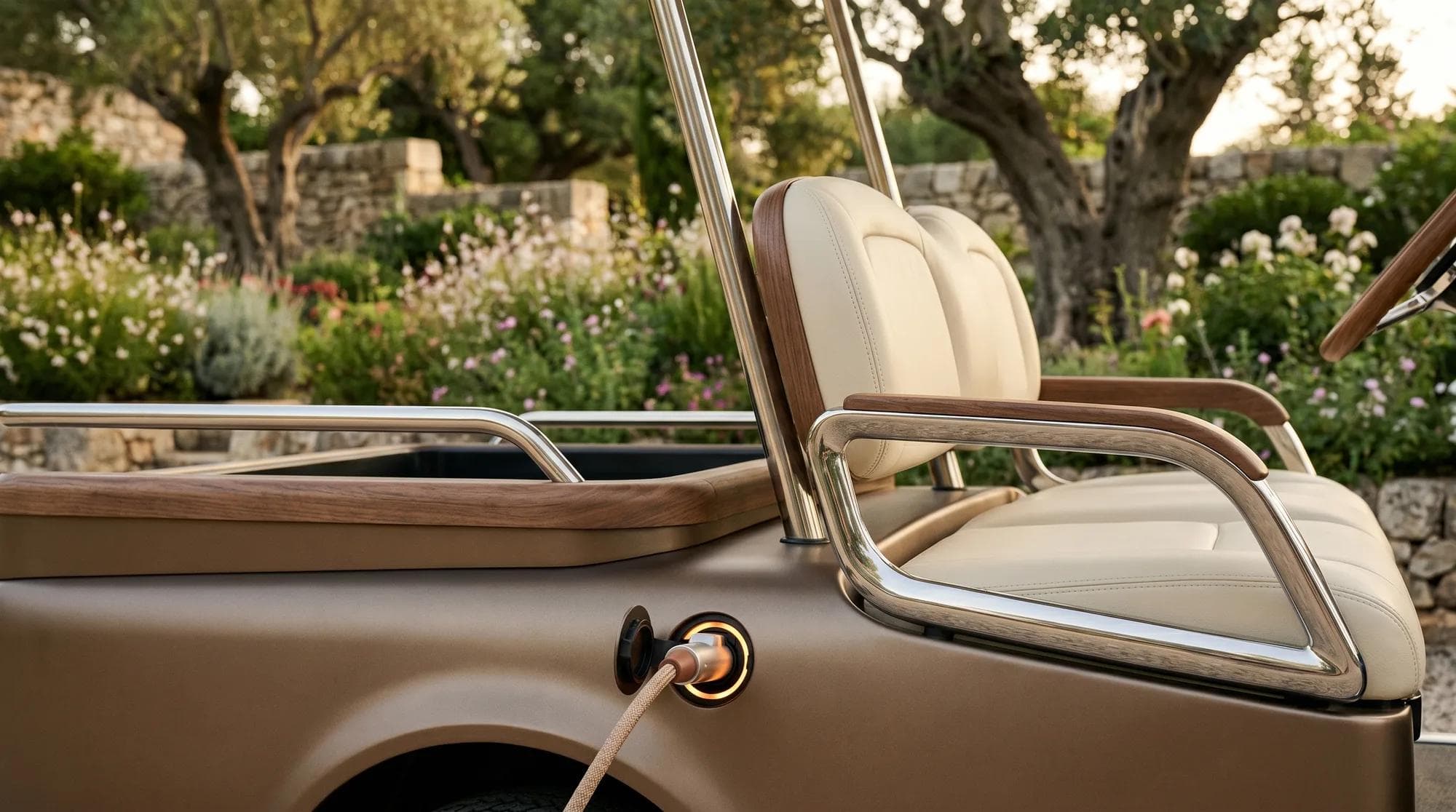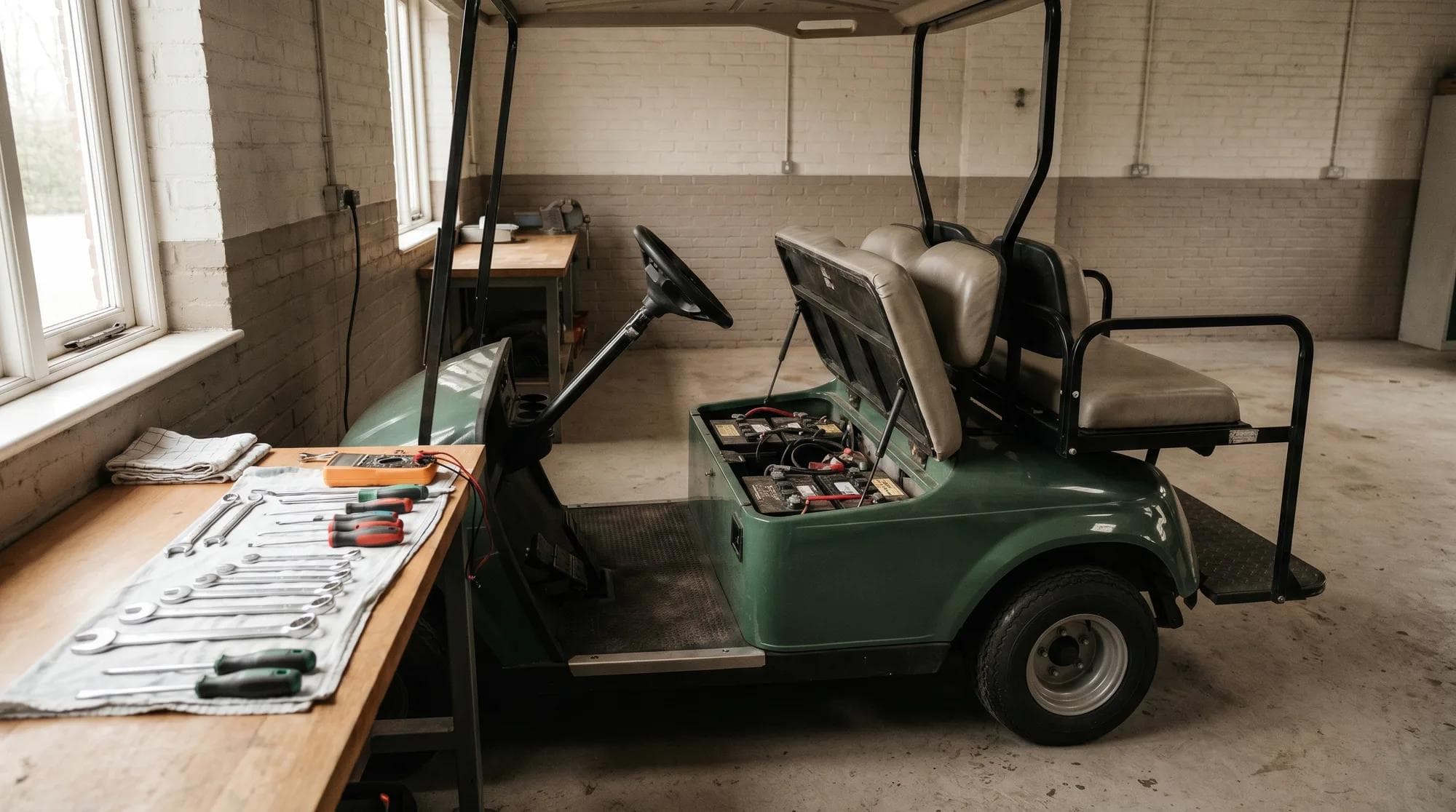
Looking after a golf cart is mostly about routine: charge it properly, keep an eye on the tires and brakes, and give the battery extra care when the weather turns cold. Most problems are avoidable with a few simple habits, and the cold months are when a little attention pays off most, because batteries behave differently in low temperatures. This guide covers routine maintenance through the year, then the specific steps that keep a cart healthy over winter, whether it stays in use or is stored.
- Charge after use and keep the battery stored charged, not flat.
- Check tires, brakes and connections on a regular schedule.
- Keep it clean and dry, and store it under cover over winter.
- Lithium is more forgiving of cold and irregular charging than lead-acid.
- A simple seasonal routine adds years to a cart's life.
What routine maintenance does a golf cart need?
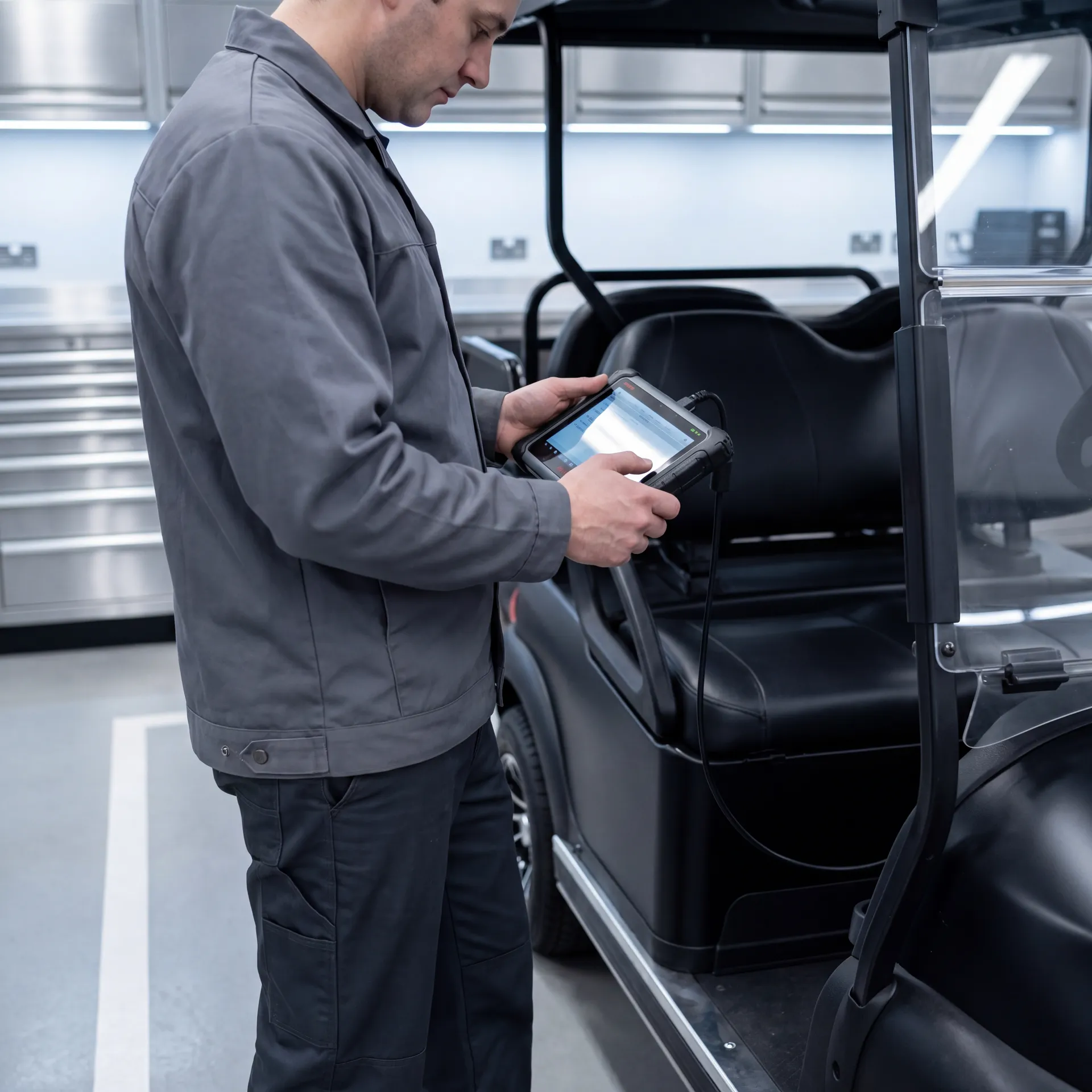
Electric drivetrains have far fewer moving parts than gas engines, so maintenance is lighter and more predictable, but a cart in regular use still needs regular attention. A short check before use catches most issues early, and keeping on top of the basics keeps the vehicle safe, efficient and presentable.
- Charge after use rather than letting the battery sit flat
- Check tire pressures and tread, as soft tires cut range and grip
- Test the brakes for firm, even stopping
- Keep the bodywork and seats clean, and attend to scuffs promptly
- Look over the lights, connections and any roof or canopy fittings
- Keep a note of when each formal service is due
How do I look after a golf cart battery in winter?
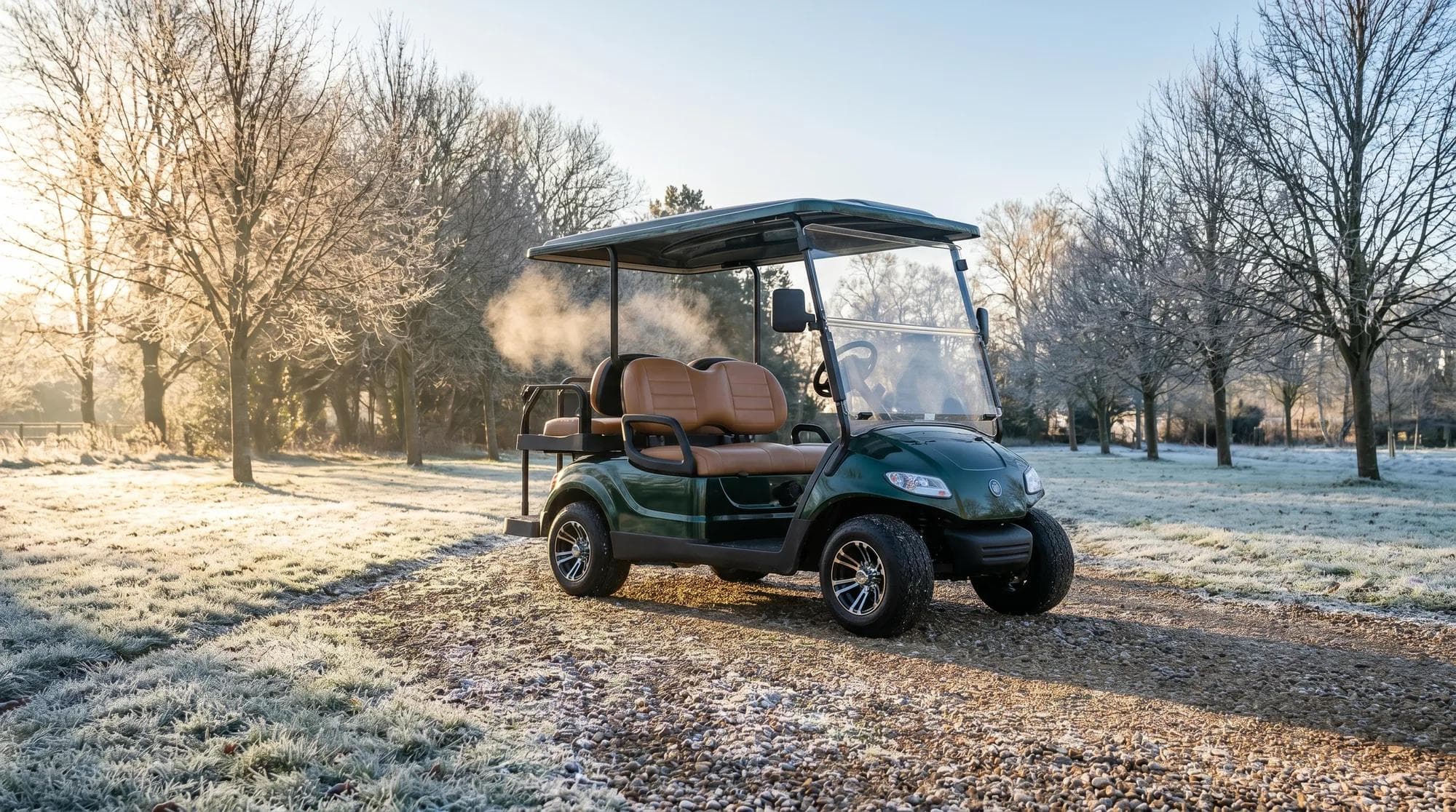
Cold weather is the hardest season for any battery. Low temperatures reduce the range a cart will give and slow charging, so expect a little less from a full charge in the depths of winter, which is normal rather than a fault. The most important habit is to keep the battery charged: a partly or fully discharged battery left standing in the cold is far more vulnerable than a full one. Charge after each use, and if the cart sits idle, keep the pack topped up rather than letting it drain. Where you can, charge and store the vehicle somewhere sheltered rather than in hard frost.
Lithium and lead-acid in cold weather
Both chemistries give less range in the cold, but they behave differently. Lithium handles low temperatures better overall, holds its charge well when standing and recovers its performance as conditions warm. Lead-acid is more sensitive to cold and to being left partly discharged, so it needs more diligent charging through winter and is more easily damaged if neglected. Whichever you run, the winter rule is the same: keep it charged and, ideally, sheltered.
- Lead-acid
- More sensitive
- Lithium
- Better
- Lead-acid
- Self-discharges faster
- Lithium
- Holds charge well
- Lead-acid
- Higher
- Lithium
- Lower, still avoid
- Lead-acid
- Charge diligently
- Lithium
- Keep topped up
| Lead-acid | Lithium | |
|---|---|---|
| Cold tolerance | More sensitive | Better |
| Standing idle | Self-discharges faster | Holds charge well |
| Risk if left flat | Higher | Lower, still avoid |
| Winter care | Charge diligently | Keep topped up |
Tires and brakes
Cold air lowers tire pressures, so check them more often through winter, as correct pressures protect range, grip and handling on wet or frosty ground. Inspect the tread and look for any damage from harder winter surfaces. Test the brakes regularly for firm, even stopping, since wet and cold conditions ask more of them. These are safety items as much as maintenance, so attend to anything that feels soft or uneven promptly.
Storing a cart over winter
If the cart will not be used for a spell, store it properly so it is ready in spring. Clean it first, charge the battery fully, and keep it somewhere dry and sheltered out of hard frost. Top the battery up periodically rather than leaving it to drain over the months, take the weight off the tires where you can, and protect the bodywork and seats from damp. A cart put away well needs little more than a check and a charge before it goes back into use.
- Clean the vehicle and dry it before storing
- Charge the battery fully and keep it topped up through the months
- Store somewhere dry and sheltered, out of hard frost
- Check tire pressures and protect the seats and trim from damp
- Give it a full check and charge before returning it to use
When should a golf cart be serviced?
Service intervals depend on how hard the cart works: a vehicle used most days needs attention more often than one used occasionally. As a general guide, an annual service suits light use, with more frequent checks for heavy or commercial use, and the turn of the seasons is a natural point to book one. A service plan keeps the formal work on schedule, and our 24-hour VIP call-out means a fault is attended to quickly rather than leaving a vehicle off the road. The right interval for your own vehicle is best confirmed against how it is used.
Most cart problems are avoidable. Charge it properly, check the tires and brakes, and give the battery extra care when it turns cold.
Whether you run one cart or a fleet, a service plan tied to how you use the vehicles keeps the routine work on schedule and the call-out cover in place. Tell us what you run and we will put a plan together, and our ownership guidance sets out how servicing, warranty and care fit alongside each other.
Keep your cart in good order
Put a service plan in place that fits how you use your vehicles, with the warranty and 24-hour call-out built in.
Frequently asked questions
How do I look after a golf cart in winter?+
Keep the battery charged rather than letting it stand flat, check tire pressures more often as the cold lowers them, store the vehicle somewhere dry and sheltered out of hard frost, and expect a little less range from a full charge in low temperatures.
Can I leave a golf cart unused over winter?+
Yes, if you store it properly. Clean and dry it, charge the battery fully and keep it topped up through the months, store it sheltered out of frost, and give it a full check and charge before returning it to use.
How often should a golf cart be serviced?+
It depends on use. An annual service suits light use, with more frequent checks for heavy or commercial use. A service plan keeps the work on schedule, and a 24-hour VIP call-out covers urgent faults.
Related solutions
Ready to explore what we build?
See the vehicles and the setting this applies to, or get a tailored quote built around your site.

Ready to find the right golf cart?
Tell us how and where it will work and we will specify a vehicle and a tailored quote built around you. Every build comes with a 3-year warranty and a 24-hour priority call-out.
Our guides are written and reviewed by the Hawke Electric Vehicles team, the people who specify, build, deliver and support the vehicles. We focus on honest, practical advice and flag where a figure depends on the build rather than guessing.
More guides by Hawke