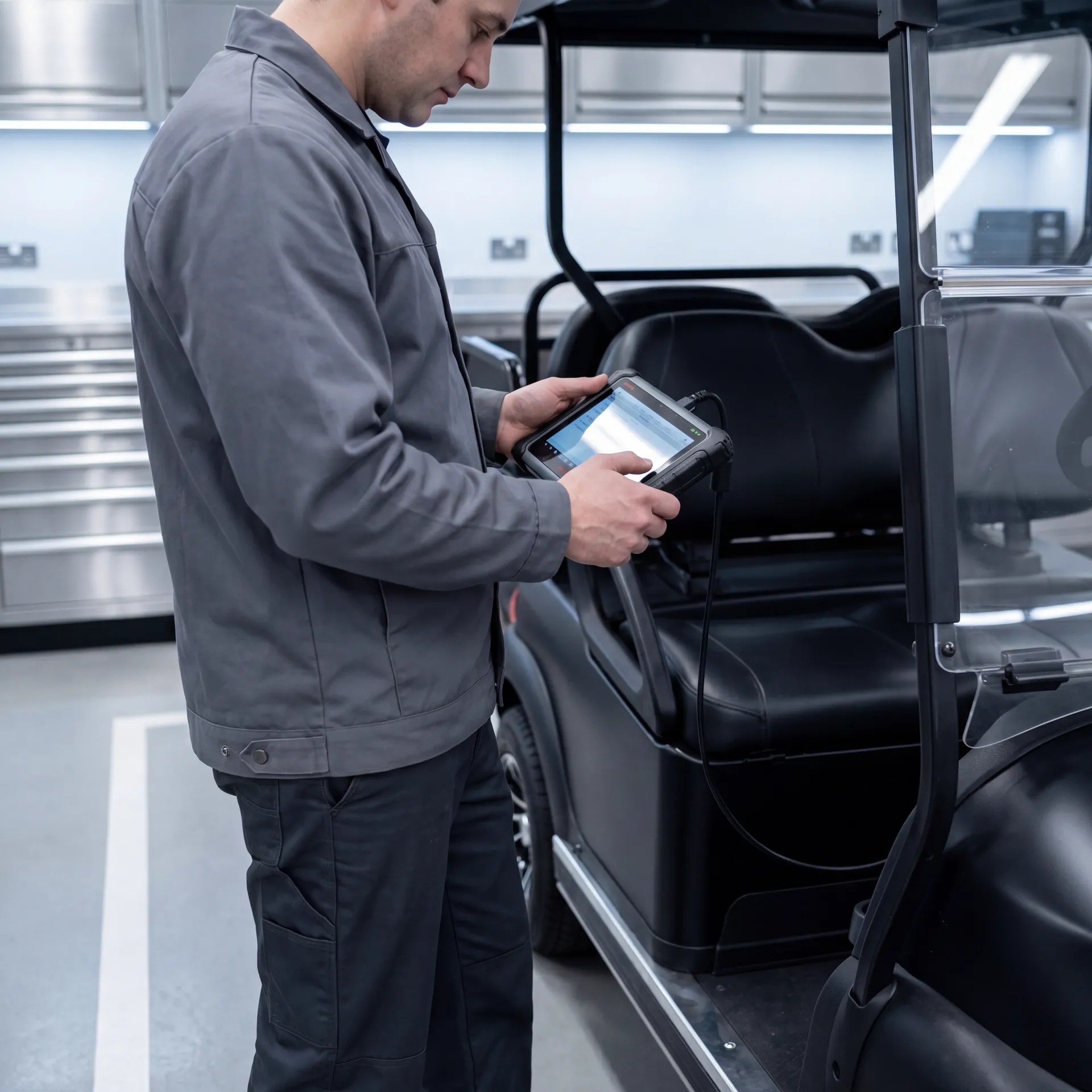
Every spring brings the same phone call: the cart went into the shed running in November, and now it will not charge, will not wake, or dies after half its usual range. Nothing broke over winter; the pack simply stood and discharged, and a deeply flat battery behaves in ways that look like a major fault. This guide covers the battery side of the problem: why a flat pack refuses to accept charge, what a lithium BMS lockout is, what months of standing flat does to lead-acid, and how to bring a laid-up cart, or golf cart as half the internet calls it, back into use safely. If the cart did not stand over winter and simply will not charge, start instead with our guide to a charger that is not working, which walks the charger-side checks from the wall socket inward.
- Packs self-discharge while standing; a spring-dead cart is usually flat, not broken.
- A deeply flat pack can sit below the level at which a smart charger will engage.
- Lithium packs may be in BMS protection lockout; leave the charger connected for a few hours, and never bypass the BMS.
- Lead-acid left flat for months sulphates, and some of that capacity loss is permanent.
- Charger-side faults are a different guide; this one is about the pack.
Why a flat pack refuses to charge
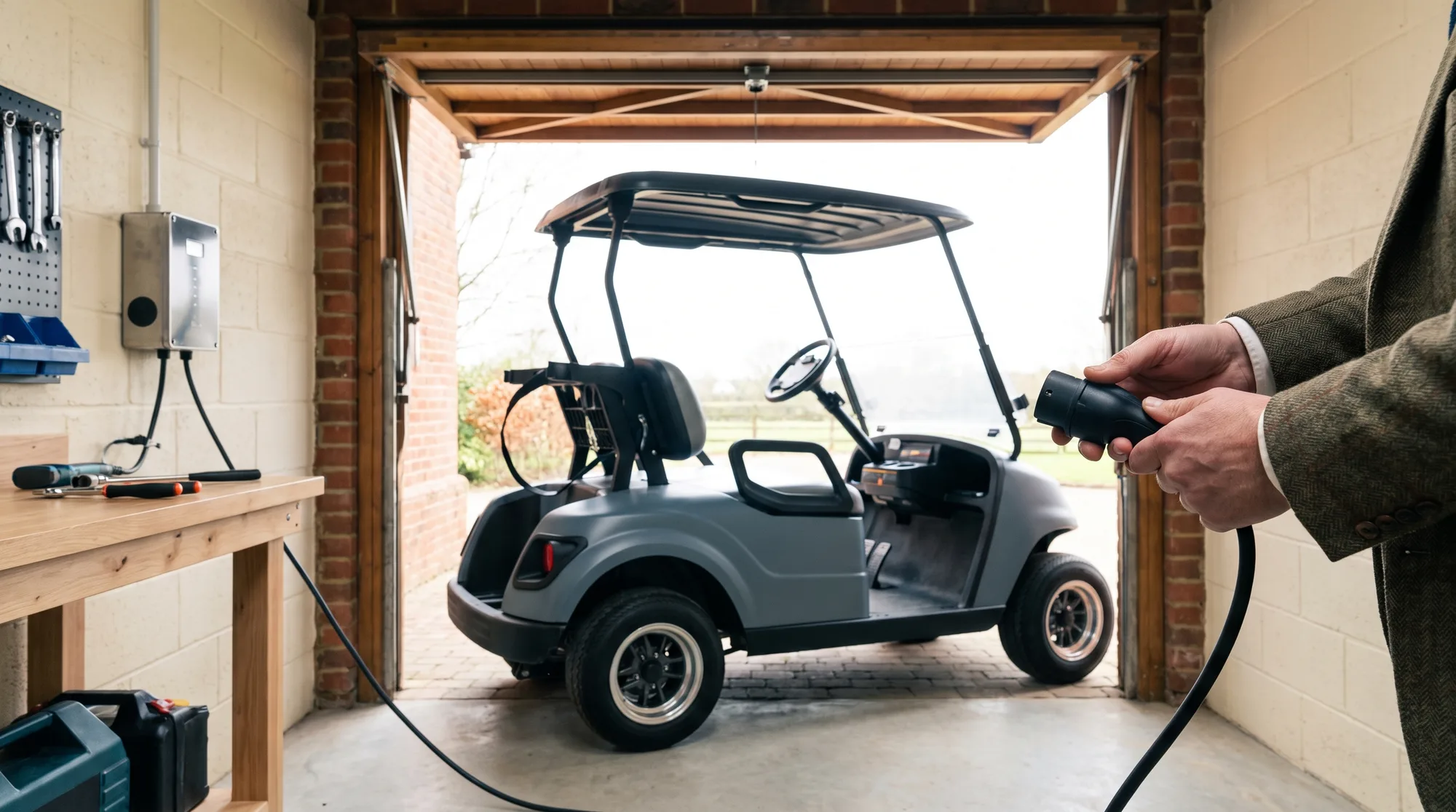
Modern smart chargers check the pack before they start, and a pack that has drained far below normal can fall beneath the threshold the charger needs to see, so it declines to engage and everything looks dead. This is deliberate caution on the charger's part rather than a fault. The first move is patience: connect the charger, confirm the connector is fully seated and the pins are clean and dry, and leave it for a few hours rather than judging in five minutes. A very flat pack can take a while to creep back to the point where charging begins in earnest.
Lithium: the BMS may have locked out
A lithium pack carries a battery management system that disconnects the cells to protect them when charge falls too low, and after a long winter of standing it may have done exactly that. A locked-out pack reads as completely dead. Leave the charger connected for a few hours, as many BMS units wake once they see the charger; if your battery's manual describes a reset procedure, follow it exactly, and if it does not, stop there. Never attempt to bypass, jump or force-feed a BMS: it is the pack's safety system, and defeating it risks the cells. If a few hours connected changes nothing, the pack needs an engineer with the right test kit.
Lead-acid: standing flat causes sulphation
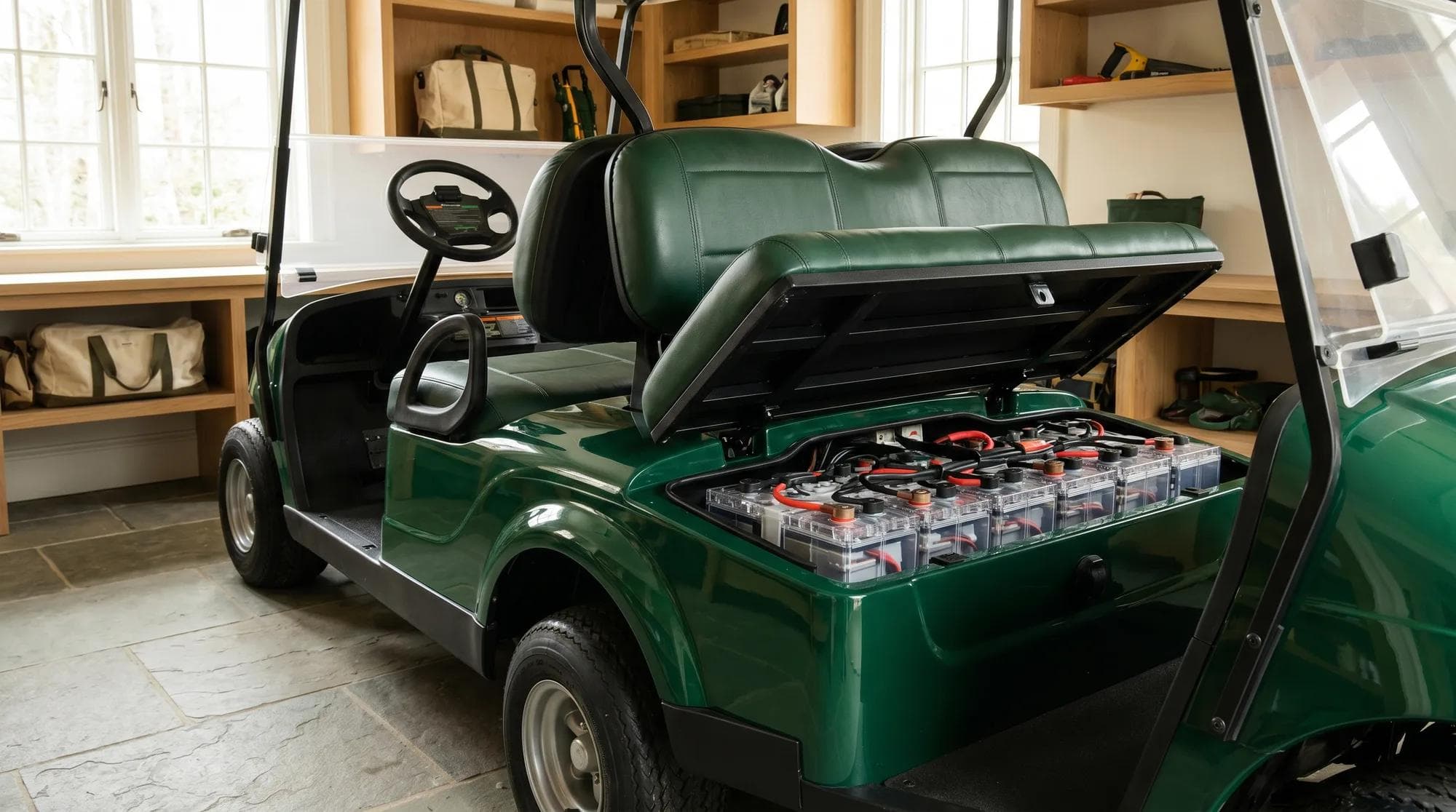
Lead-acid chemistry punishes standing discharged. Sulphate crystals harden on the plates over the idle months, and the longer and flatter the stand, the more capacity is permanently lost, which is why a lead-acid cart revived in spring often charges up yet delivers noticeably less range than it did in autumn. A recovered pack that covers your day's work is fine to run on; one that no longer does has told you its future. Repeated hard charging of a badly sulphated pack achieves little beyond heat, so if the first full charges show weak range, move to testing rather than repetition.
Check what it stood with all winter
A damp shed works on the metalwork while the chemistry works on the plates. Before and during recovery, look over the terminals and the interconnect straps between batteries for the white and green fur of corrosion, and for any connection the winter has loosened; a corroded joint can block charging as effectively as a flat cell, and it will make heat under load later. Wipe light surface dirt with everything switched off, but leave anything more, and all high-current cables, to an engineer. While you are there, check for damp under the pack and any swollen or weeping battery, which are covered in our guide to battery warning signs.
Bringing the cart back into use
Once the pack wakes, do not go straight to work. Let the charger take it to a genuine full charge and finish on its own, then treat the first outing as a test: tire pressures back up to the figure on the tire wall, brakes checked gently at low speed, lights and controls proven, and range judged on an easy run rather than the season's hardest job. A pack that recovers well will show it quickly. And for next winter, the whole problem is avoidable: store the cart charged, topped up periodically through the layup, as our winter care guide sets out.
Recover or replace?
The honest test is simple: after a proper recovery charge, does the cart cover a normal day's work? If yes, run it, charge it after use and store it better next winter. If range is clearly down and the pack is several years old, the winter has likely finished what age had started, and money spent nursing it is better put towards a new pack, often with a lithium upgrade that shrugs off exactly this failure mode. Our guides on battery lifespan and replacement costs cover the decision, and a load test from our engineers settles it in one visit.
Frequently asked questions
Why won't my golf cart charge after winter storage?+
The pack has usually self-discharged so deeply that the smart charger will not engage, or a lithium BMS has locked out to protect the cells. Connect the charger, check the connector is clean and seated, and give it a few hours; if nothing wakes, have the pack tested.
How do I reset a lithium cart battery's BMS?+
Leave the charger connected for a few hours, as many BMS units wake when they see the charger. If the battery manual describes a reset, follow it exactly; if not, stop there and book an engineer. Never bypass or jump a BMS.
My cart charges but the range is much worse than last year. Why?+
Lead-acid batteries left standing flat over winter sulphate, and some of that capacity loss is permanent. If a proper full charge no longer covers your day's work, have the pack load-tested and weigh replacement.
Is it the charger or the battery?+
If the cart stood flat all winter, suspect the pack first. If the charger shows no life on a known-good socket, or the cart did not stand idle, work through our charger troubleshooting guide, which covers the wall-to-cart checks.
How do I stop this happening next winter?+
Store the cart charged, top the pack up periodically through the layup, keep it dry and under cover, and use the run/tow switch or isolator to limit standby drain. A pack never left flat comes out of winter the way it went in.
Cart flat after the layup?
We will wake the pack safely, load-test it and give you an honest recover-or-replace answer. Book servicing or an engineer visit.
Related solutions
Ready to explore what we build?
See the vehicles and the setting this applies to, or get a tailored quote built around your site.

Ready to find the right golf cart?
Tell us how and where it will work and we will specify a vehicle and a tailored quote built around you. Every build comes with a 3-year warranty and a 24-hour priority call-out.
Our guides are written and reviewed by the Hawke Electric Vehicles team, the people who specify, build, deliver and support the vehicles. We focus on honest, practical advice and flag where a figure depends on the build rather than guessing.
More guides by Hawke