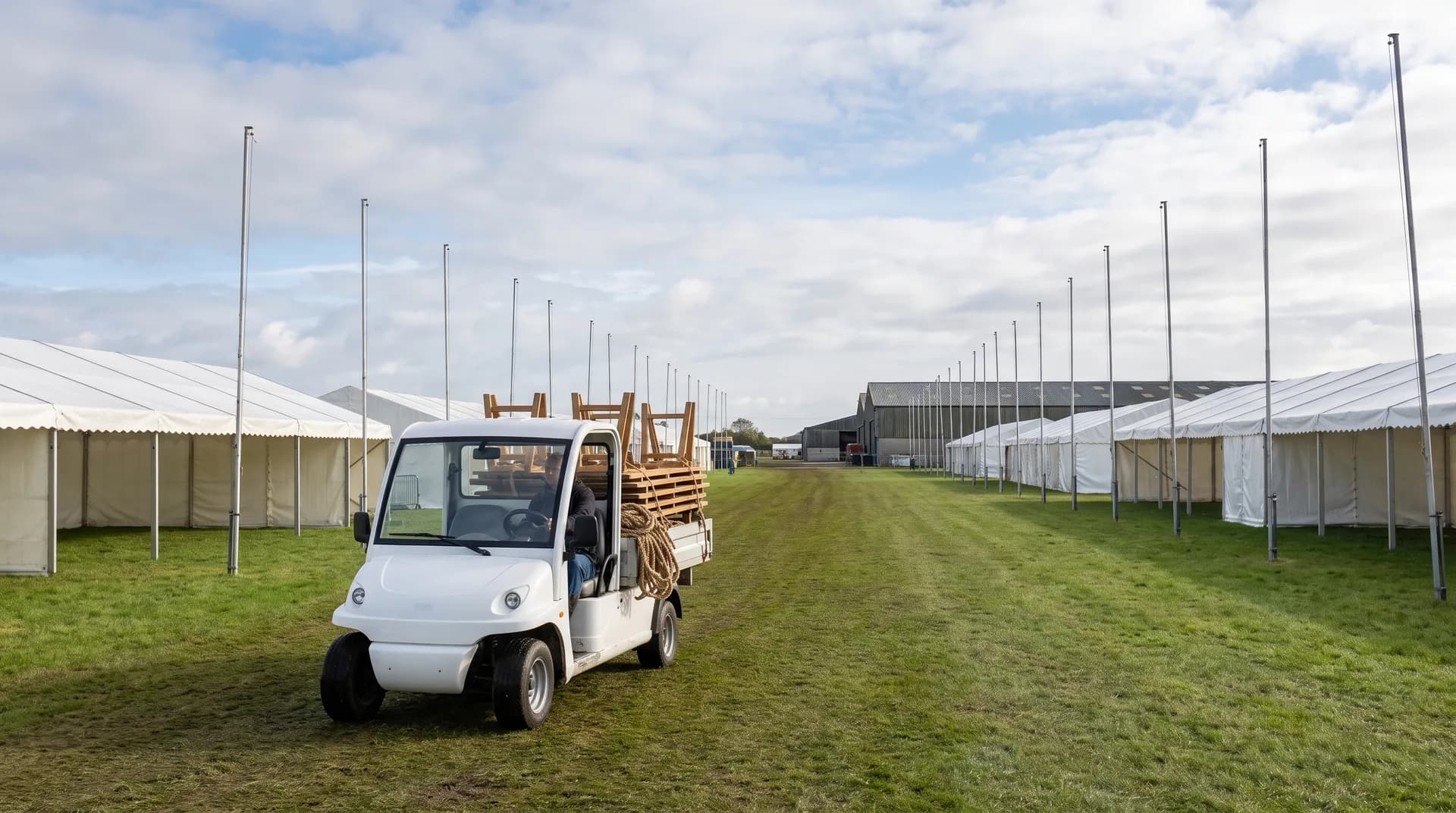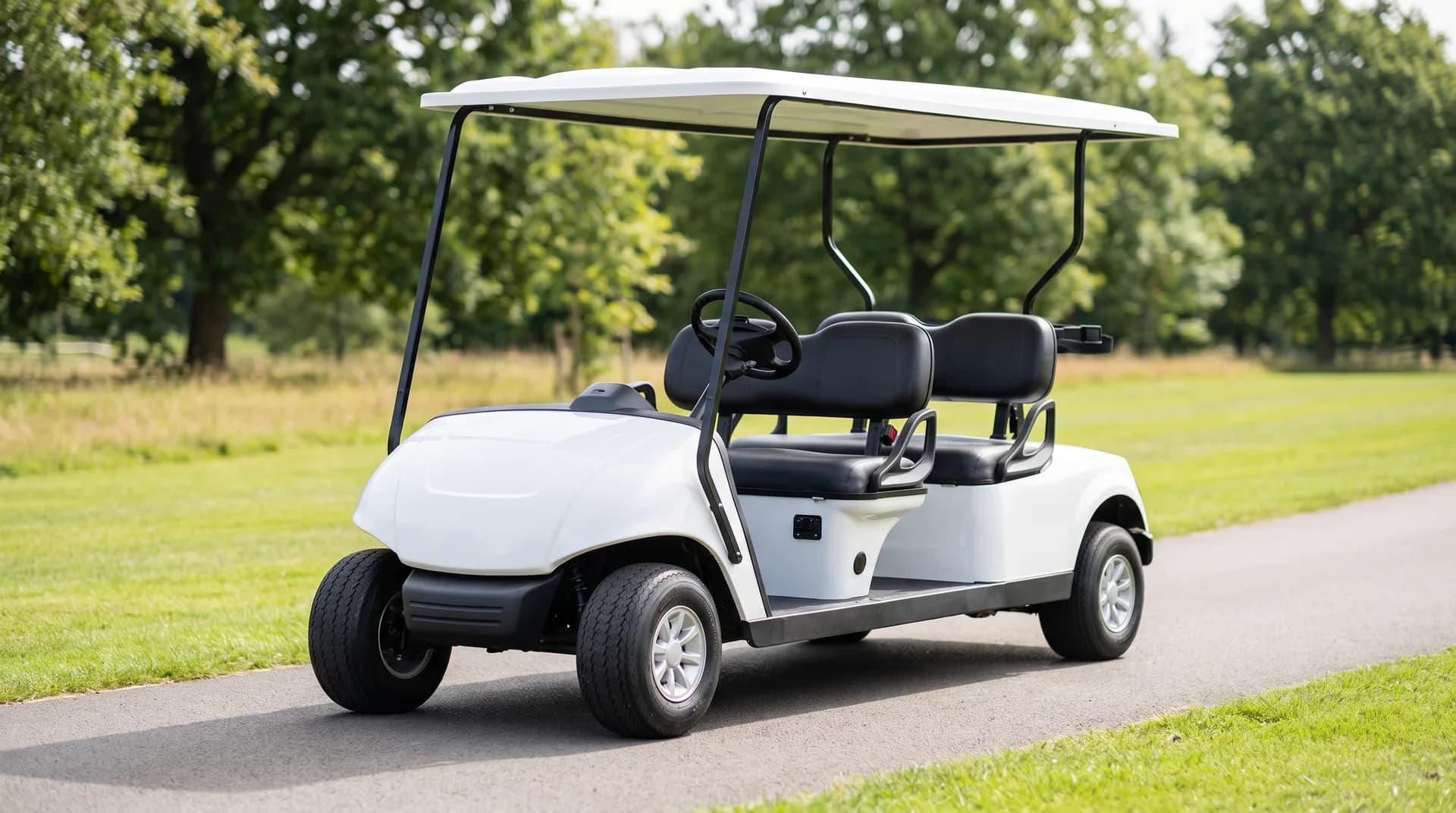
Yes, golf carts are automatic, and electric ones are about as automatic as a vehicle can be. There is no gearbox, no clutch and nothing to shift on the move: a switch or dial selects forward or reverse, the right pedal makes the cart go, the left pedal makes it stop, and that is the whole system. If you can operate a bumper car you already understand the layout. This guide explains what each control does, why electric drive needs no gears at all, how gas golf carts differ slightly, and the couple of habits worth learning before your first drive.
- Electric golf carts have no gears and no clutch: a forward/reverse selector, an accelerator and a brake.
- The electric motor delivers its pull from zero revs, so no gearbox is needed, even on hills.
- Gas golf carts are automatic too, using a belt-driven CVT rather than a manual box.
- Most golf carts also have a parking brake, and many electric models hold themselves on a slope.
- Anyone comfortable in an automatic car adapts to a cart in minutes, but read the venue's rules first.
Are golf carts automatic? The short answer
Every modern golf cart, electric or gas, drives like an automatic. The driver never selects a gear ratio: direction is chosen with a forward/neutral/reverse selector, usually a rocker switch, key position or dial on the dash or seat panel, and speed is controlled purely with the accelerator pedal. Release the pedal and the cart slows; press the brake and it stops. Reversing is the same action with the selector flipped, and most golf carts sound a warning tone in reverse so people nearby know which way you are about to move. There is no hill start to master and no stalling, because there is no clutch to balance.
The controls, one by one
A typical electric cart has fewer controls than a ride-on mower. The key or keypad wakes the vehicle. The direction selector chooses forward, neutral or reverse. The accelerator is a speed demand, not an on/off switch: press gently for a walking pace, further for full speed. The foot brake works on all wheels, and a separate parking brake, sometimes a latch on the brake pedal itself, sometimes a switch, holds the cart when parked. Beyond that you are into equipment rather than driving controls: lights, horn, indicators on road-specification models, and a display showing battery charge. Our step-by-step guide to driving an electric golf cart walks a first-timer through the sequence from switch-on to parking up.
Why electric golf carts need no gears at all
A gas engine only produces useful pull within a band of engine speeds, which is why cars need gearboxes to keep the engine in that band. An electric motor is different: it delivers its strongest pull from zero revs, exactly when you are pulling away, and stays effective across its whole speed range. One fixed reduction drive between motor and axle is therefore all a cart needs, for pulling away, for cruising and for climbing. That is also why an electric cart feels so responsive from a standstill and climbs steadily without hunting for a lower gear. The controller manages how much current reaches the motor, smoothing the power so the pedal feels progressive rather than jumpy; the rest of what happens under the floor is covered in our guide to how electric golf carts work.
What about gas golf carts?
Gas golf carts are automatic too, but they achieve it differently, with a centrifugal clutch and a belt-driven CVT, a continuously variable transmission, the same idea a scooter uses. Press the accelerator and the engine spins up, the clutch engages and the belt system varies the ratio smoothly as speed builds. From the driver's seat the experience is similar, though gas models pause momentarily while the engine picks up, idle with engine noise and vibration, and creep less precisely at low speed, which is one reason quiet, instant electric drive has become the default choice for courses, venues and estates.
- Electric cart
- None needed, fixed reduction drive
- Gas cart
- Belt-driven CVT with centrifugal clutch
- Electric cart
- Instant, silent, no revving
- Gas cart
- Engine revs up, clutch engages
- Electric cart
- Full pull from zero revs
- Gas cart
- CVT adjusts ratio as the engine works
- Electric cart
- Very precise creep
- Gas cart
- Less precise, engine must stay engaged
- Electric cart
- Selector, accelerator, brake
- Gas cart
- Selector, accelerator, brake
| Electric cart | Gas cart | |
|---|---|---|
| Transmission | None needed, fixed reduction drive | Belt-driven CVT with centrifugal clutch |
| Pulling away | Instant, silent, no revving | Engine revs up, clutch engages |
| Hills | Full pull from zero revs | CVT adjusts ratio as the engine works |
| Low-speed control | Very precise creep | Less precise, engine must stay engaged |
| Driver inputs | Selector, accelerator, brake | Selector, accelerator, brake |
Braking, hills and holding still
Two behaviours surprise new drivers pleasantly. First, many electric golf carts slow noticeably as soon as you lift off the accelerator, motor braking that steadies the vehicle downhill without the brakes doing all the work, and some models add controlled hill-descent so a slope cannot run away with you. Second, holding still: alongside the parking brake, many electric models hold themselves stationary on a gradient when stopped, so a slope-side pause is undramatic. Neither replaces the parking brake when you leave the seat, setting it should become as automatic as the driving is.
Driving one for the first time
Treat the first five minutes as familiarisation. Check the direction selector before pressing anything, pull away gently to learn how the pedal responds, and try a stop from walking pace early so the brake feel is no surprise. Corner at sensible speeds, golf carts are stable machines driven sensibly, but they are open vehicles with a shortish wheelbase, and keep hands and feet inside. Venues set their own rules on who may drive, and clubs commonly require adult supervision or minimum ages, which we cover in our guide to age rules for golf carts. Every cart in our own line-up, from two-seaters to eight-seat shuttles, drives on exactly the controls described here; you can compare them across the full range.
Frequently asked questions
Do golf carts have gears?+
No driver-selected gears. Electric golf carts use a fixed drive with a forward/reverse selector, and gas golf carts use an automatic belt-driven CVT. In both cases the driver only chooses direction and presses the accelerator or brake.
Is a golf cart hard to drive?+
No. With no clutch, no gears and only two pedals, most people are comfortable within minutes. The skills that matter are gentle pedal control, sensible cornering speeds and setting the parking brake when you leave the seat.
Do you need a driving licence for a golf cart?+
Not on private land such as a golf course or estate, though venues set their own age and supervision rules. Public-road use is a separate matter involving registration and equipment, and most golf carts are not road-registered as standard.
Why does a golf cart beep when reversing?+
A reverse buzzer sounds whenever reverse is selected so pedestrians and other golf carts know you are about to move backwards. It is a standard safety feature, not a fault.
Can a golf cart roll back on a hill?+
Electric models with hill-hold resist rolling when stopped on a slope, and motor braking steadies descents. Even so, always use the parking brake when parked on a gradient, exactly as you would in a car.
Want a cart that anyone on site can drive?
Tell us who will be driving and where, and we will recommend the right model, with the simple controls, speed settings and safety equipment to suit your site.
Related solutions
Ready to explore what we build?
See the vehicles and the setting this applies to, or get a tailored quote built around your site.
Ready to find the right golf cart?
Tell us how and where it will work and we will specify a vehicle and a tailored quote built around you. Every build comes with a 3-year warranty and a 24-hour priority call-out.
Our guides are written and reviewed by the Hawke Electric Vehicles team, the people who specify, build, deliver and support the vehicles. We focus on honest, practical advice and flag where a figure depends on the build rather than guessing.
More guides by Hawke