The best golf cart for hilly courses is not the one with the biggest headline speed; it is the one with strong motor torque for the climbs, a controller that actively brakes the motor on the way down, four wheels on a wide track, and tires that grip wet grass. Plenty of golf carts that feel identical in a flat car park separate dramatically on a 1-in-8 wet slope, and the differences are buried in the specification rather than the styling. This guide sets out what genuinely matters on gradients, how battery chemistry behaves under sustained load, and which configuration suits which kind of hilly ground, so you can shortlist on the right criteria.
- Torque and controller behaviour matter far more on hills than top speed.
- Hill-descent control, the motor braking the cart downhill, is the single most valuable slope feature.
- Four wheels and a wide track are non-negotiable on serious gradients; avoid high, narrow layouts.
- Lithium batteries hold voltage better under sustained climbing load than tired lead-acid packs.
- Every cart has limits: laden weight, wet grass and side-slopes deserve genuine respect.
What makes the best golf cart for hilly courses
Start with torque, the twisting force that actually gets a laden cart up a climb. Electric motors deliver torque from a standstill, which is why even modest golf carts pull away smartly, but sustained gradients with two adults and bags aboard expose the difference between a motor and controller sized generously and a pair sized to a price. Ask suppliers about gradeability, the gradient the vehicle is rated to climb laden, rather than top speed, which is close to irrelevant on a hilly course. Then look at the controller's descent behaviour. A good system holds the cart back electronically on downhills, so you are not riding the mechanical brakes from the top of the hill to the bottom. That single feature transforms both safety and brake life on hilly ground, and it is worth asking every supplier to demonstrate it on a real slope before you buy.
Batteries under load: chemistry shows on the climbs
Hills are where battery weaknesses surface. A climb pulls heavy current, and a lead-acid pack past its best sags under that load, which drivers experience as a cart that storms the first hill of the day and crawls up the fourteenth. Lithium packs hold their voltage more consistently under sustained draw and give up a far smaller share of their capacity to hard work, so on genuinely hilly courses the chemistry choice is a performance decision, not just a running-cost one. Expect any cart's range to drop meaningfully on hilly ground compared with the flat-course figure, and size the battery accordingly. If a cart you already own has started struggling on climbs it once managed, that pattern is diagnostic, our guide to why a cart loses power uphill works through the likely causes.
Wheels, track and tires: the stability package
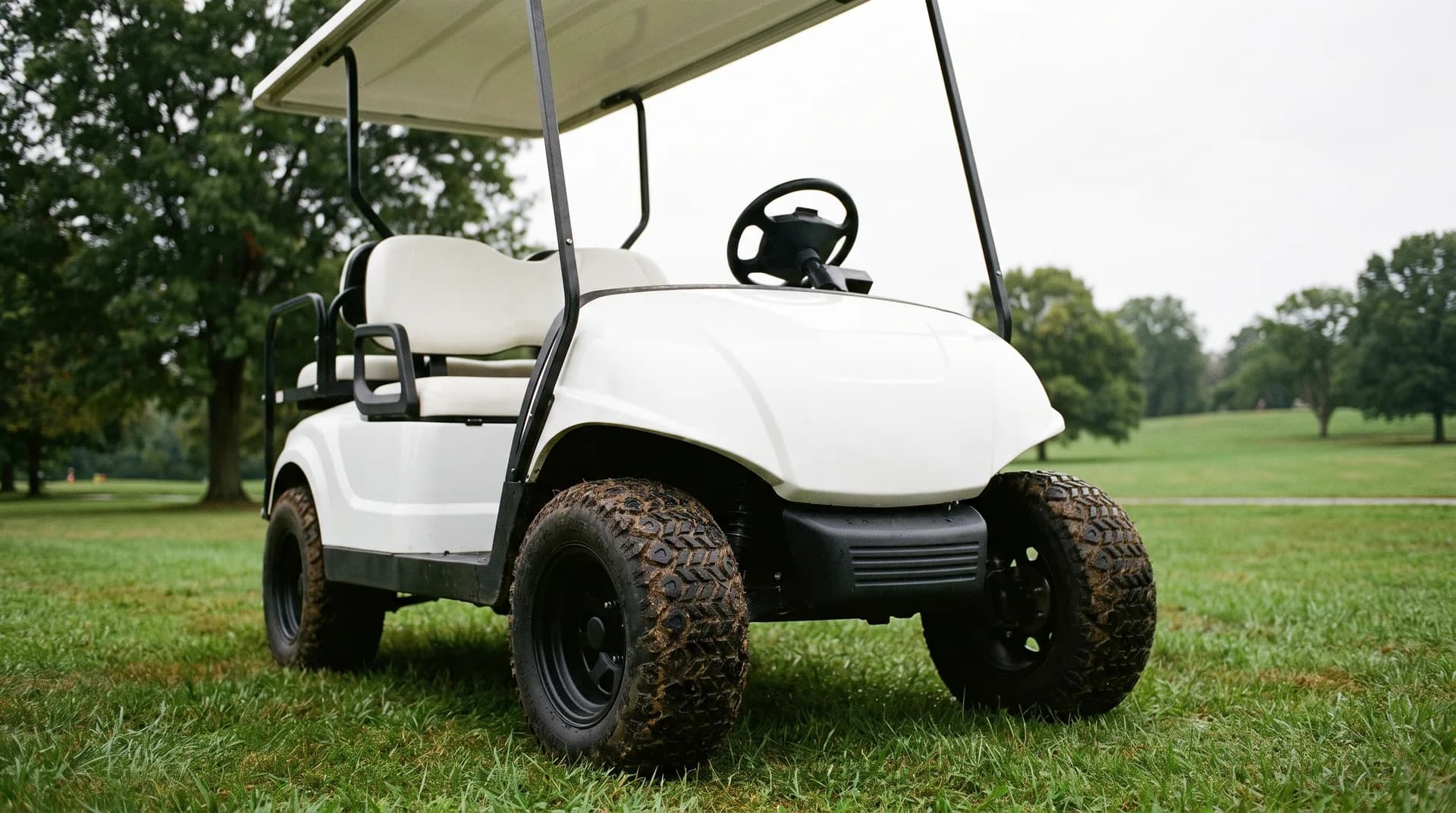
Gravity does not only resist climbing; it pulls golf carts sideways on cambers, and that is where layout matters most. Four wheels are the baseline for hilly ground, and beyond wheel count, look at track width and seat height together: a wide, low machine stays planted where a narrow, tall one gets nervous, and nothing about styling tells you which is which, so read the dimensions. Tires finish the package. Turf tires with a proper tread pattern grip wet grass in a way that worn or road-pattern tires cannot, and correct pressures matter more on slopes than anywhere else, an over-inflated tire shrinks its contact patch exactly where you need it largest. Our guide to golf cart tires covers the types; for hilly courses, treat tire condition as a safety item, not a cosmetic one.
Picks by scenario
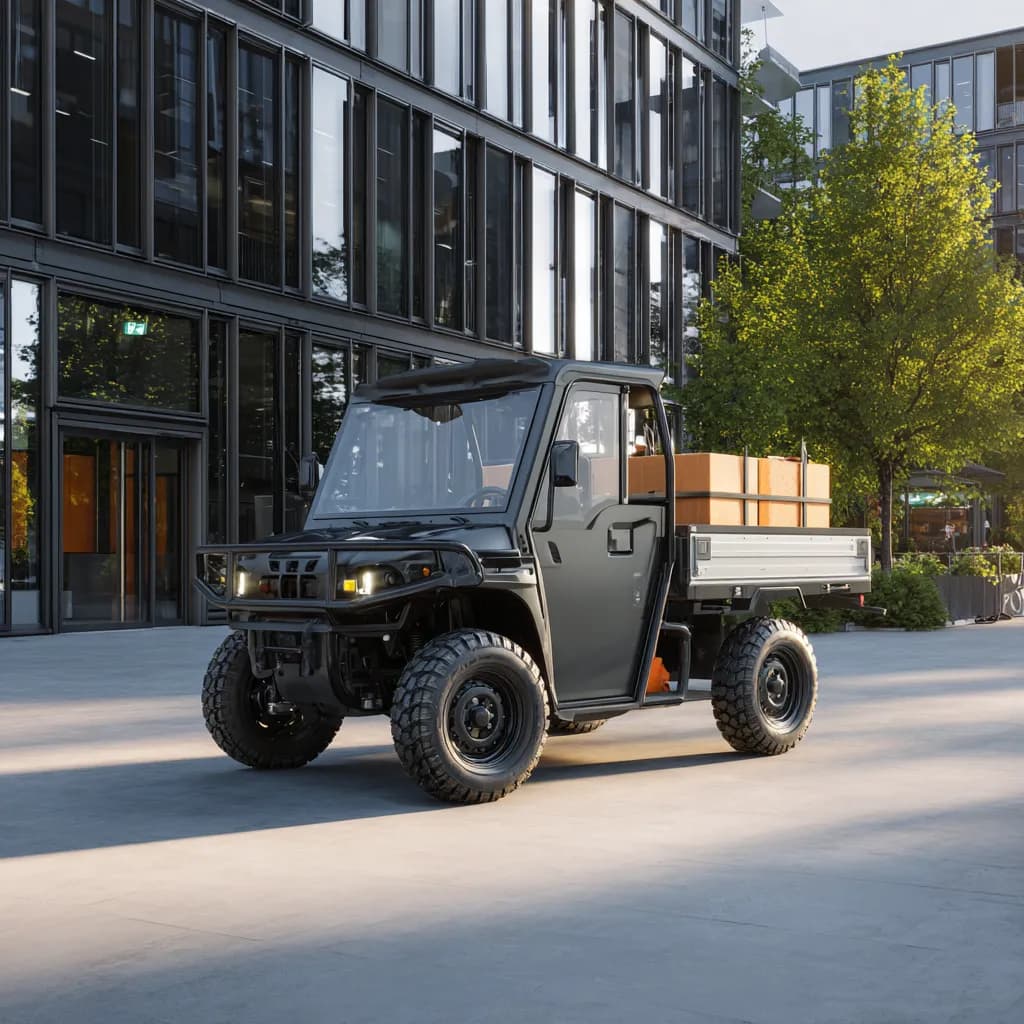
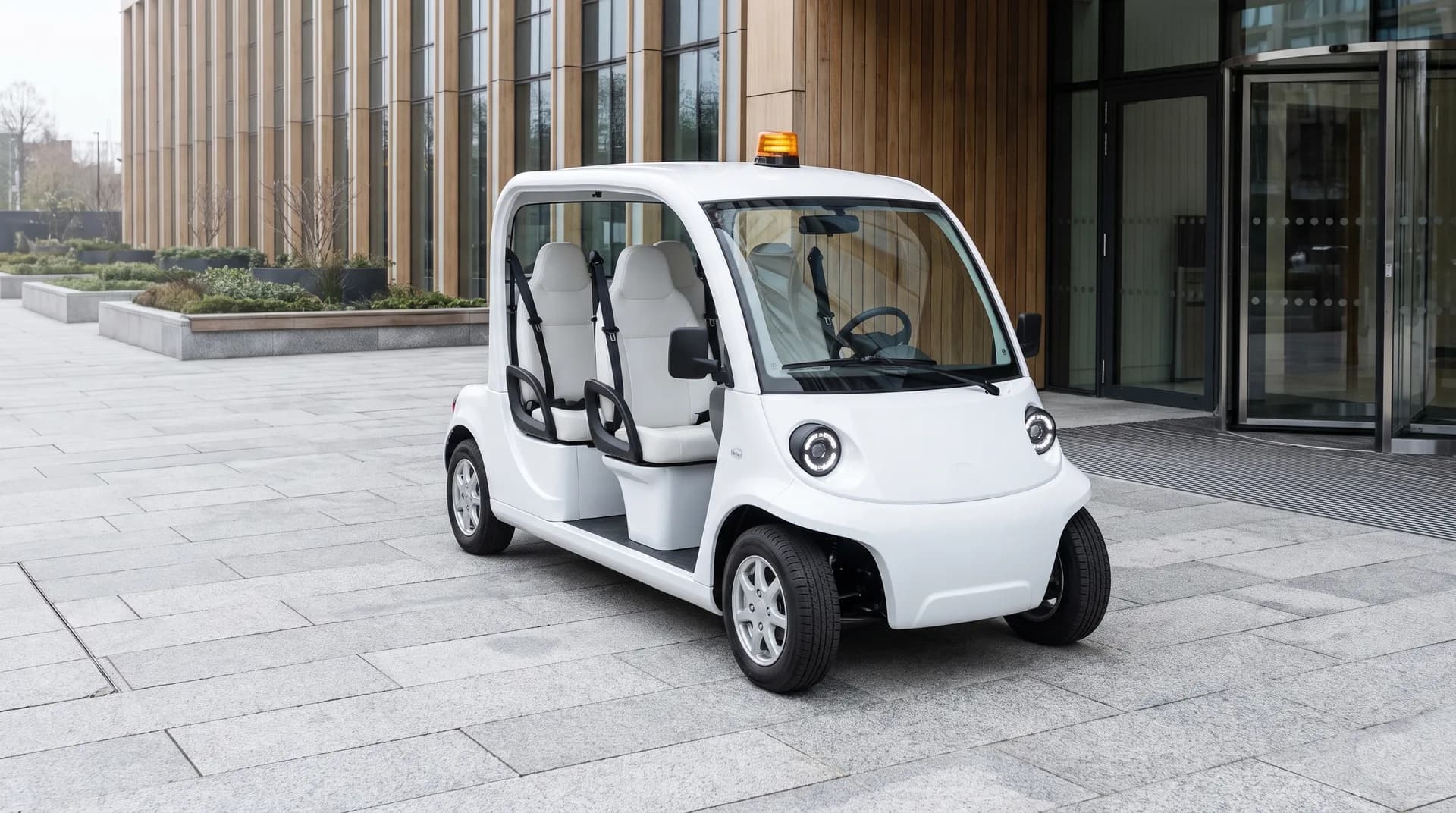
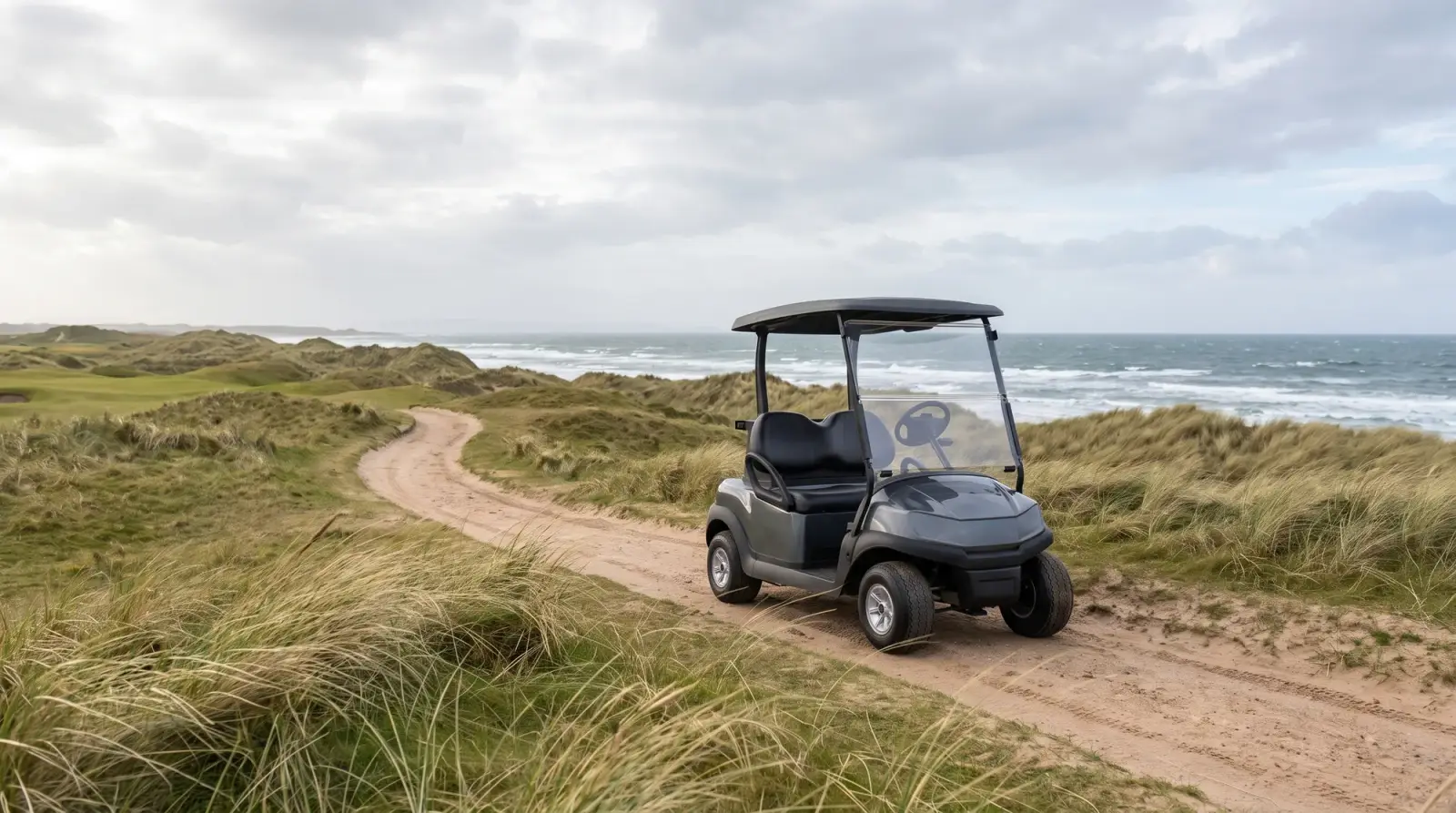
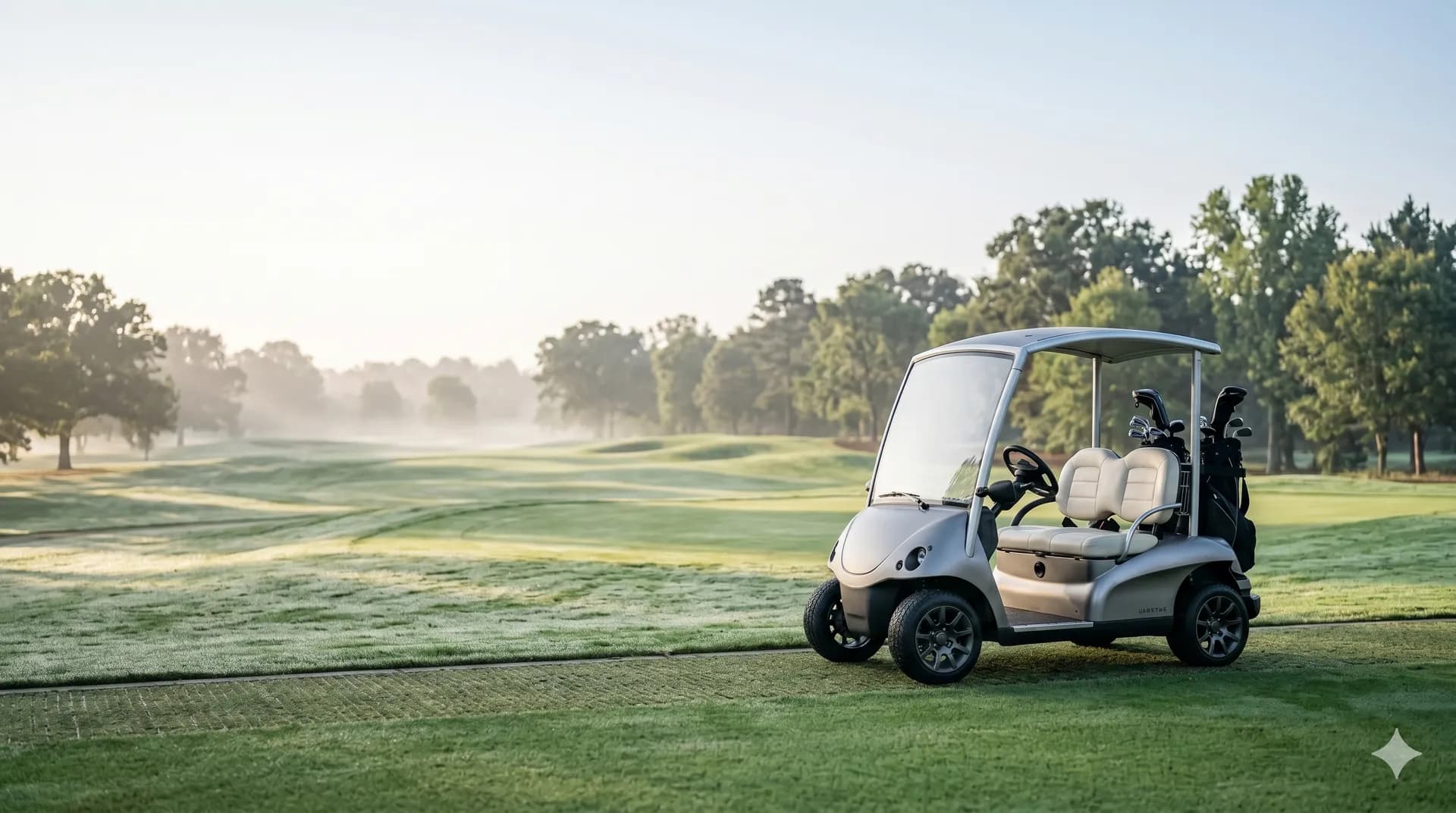
For a hilly parkland course, the sweet spot is a two-passenger with lithium power, hill-descent control and turf tires, compact enough for cart paths, strong enough for repeated climbs; our S2, from £11,500, is specified along exactly these lines, and you can compare it with the rest of the electric golf cart range. For steep estates and courses where the cart also does errands beyond the fairways, step up in motor and consider a utility body; the extra torque margin serves both jobs. For exposed links ground, wind is the extra factor: a lower profile and secured screens help more than power, and cart policies vary sharply by course, as our guide to UK links courses that allow golf carts shows. If passengers are involved, hills multiply the caution: a four or six-passenger laden on gradients needs the larger motor option where one is offered, and drivers who load the vehicle sensibly. In every scenario, buy the demonstration: any supplier confident in a cart's hill behaviour will happily prove it on the steepest slope you can find.
Honest limits and safe driving on slopes
No cart repeals physics, and the best slope feature of all sits behind the wheel. Drive straight up and straight down gradients rather than across them, because side-slopes are where vehicles tip; brake before a descent rather than during it; and slow right down for wet grass, which can halve the available grip. Respect the laden difference, a cart carrying two adults and bags behaves like a different vehicle on the same hill. And take posted cart-path routes seriously: they usually exist because the direct line has caught someone out before. Manufacturer gradient ratings assume dry ground and sensible driving, so treat them as ceilings, not targets. None of this makes hilly-course cart golf risky; it simply rewards the machine bought on the right criteria and the driver who understands what it can and cannot do.
Frequently asked questions
What is the best golf cart for a hilly course?+
One with strong rated gradeability, a controller with hill-descent braking, four wheels on a wide and low layout, lithium power and turf tires in good condition. Top speed is largely irrelevant; torque and descent control are what hills actually test.
Can electric golf carts handle steep hills?+
Well-specified ones, yes: electric motors deliver full torque from a standstill, which suits climbing. The limits are the motor and controller's sizing, the battery's ability to hold voltage under load, and grip. Ask for the laden gradeability figure and a demonstration on a real slope.
Is hill-descent control worth it?+
On hilly ground it is the most valuable feature on the sheet. It uses the motor to hold the cart back on descents, keeping speed controlled without riding the mechanical brakes, which improves safety and cuts brake wear substantially.
Do hills reduce a golf cart's range?+
Yes, meaningfully. Climbing pulls heavy current, so expect noticeably less range on a hilly course than the flat-ground figure, with tired lead-acid packs affected worst. Size the battery for your actual course, not the brochure conditions.
Are three-wheel golf carts safe on hills?+
Three-wheeled machines are the least stable layout on gradients and cambers, and we would not recommend one for a genuinely hilly course. Four wheels, a wide track and a low seating position are the configuration slopes reward.
Prove it on your own slopes
Tell us about your course or estate and we will recommend the right motor, battery and tire package, and demonstrate it on the steepest ground you can offer.
Related solutions
Ready to explore what we build?
See the vehicles and the setting this applies to, or get a tailored quote built around your site.
Ready to find the right golf cart?
Tell us how and where it will work and we will specify a vehicle and a tailored quote built around you. Every build comes with a 3-year warranty and a 24-hour priority call-out.
Our guides are written and reviewed by the Hawke Electric Vehicles team, the people who specify, build, deliver and support the vehicles. We focus on honest, practical advice and flag where a figure depends on the build rather than guessing.
More guides by Hawke