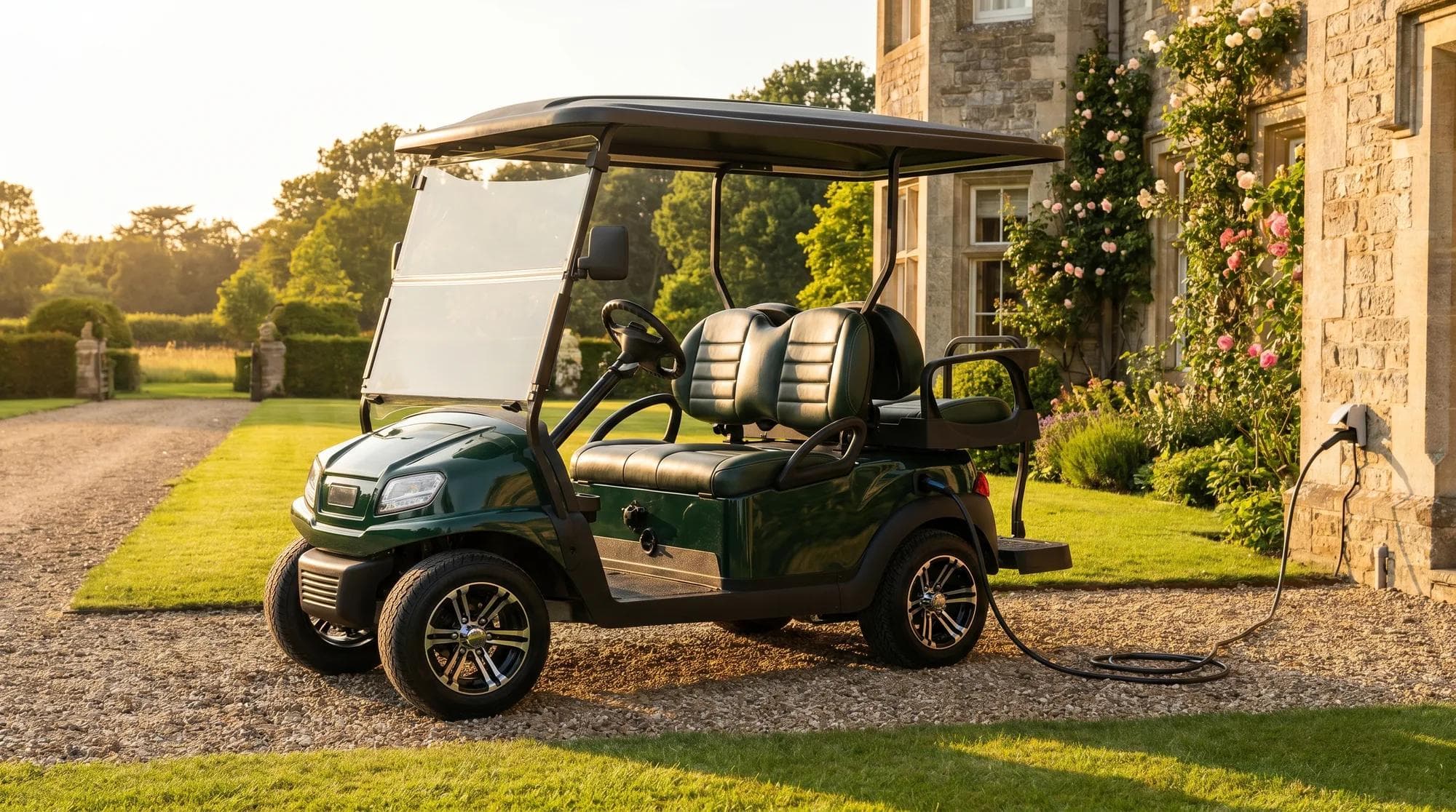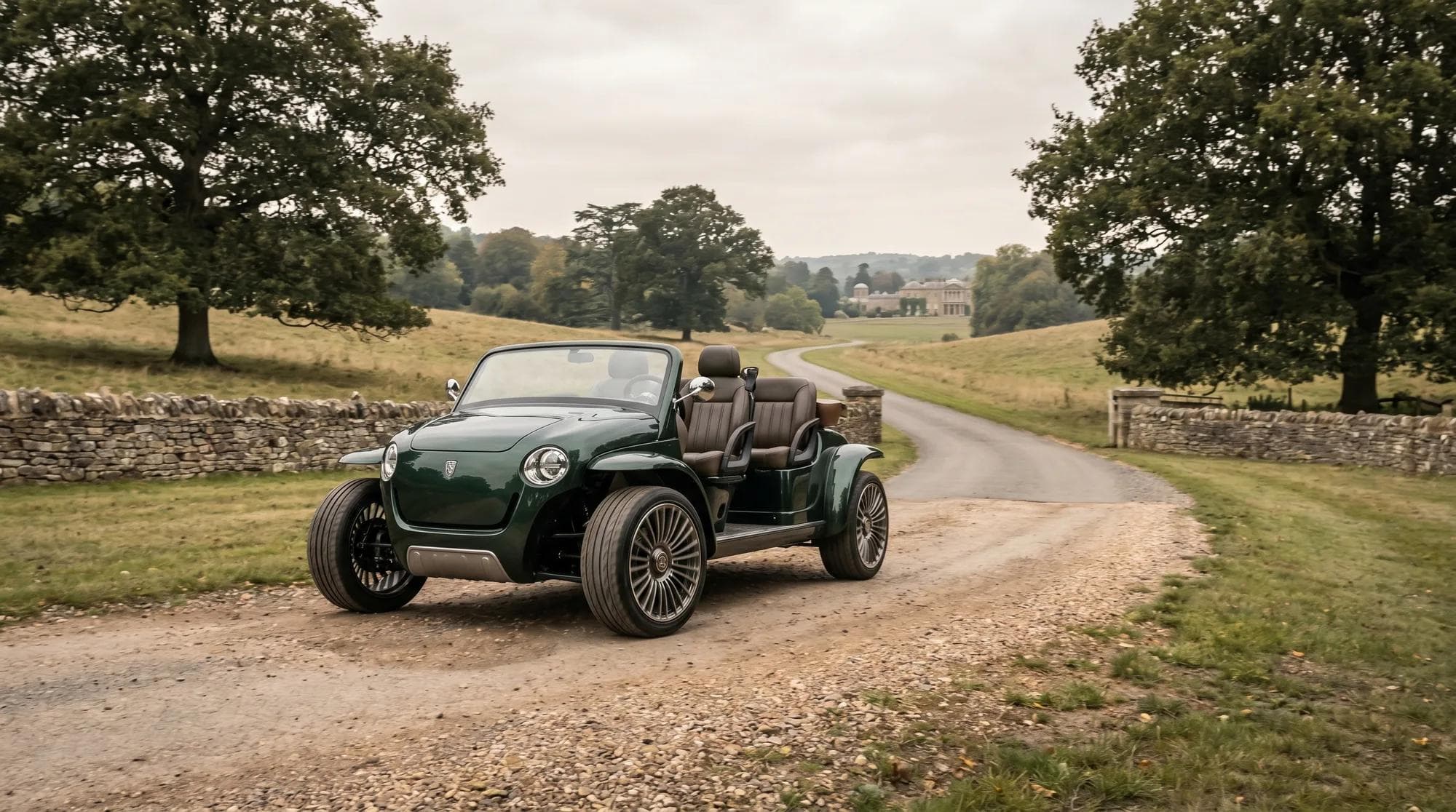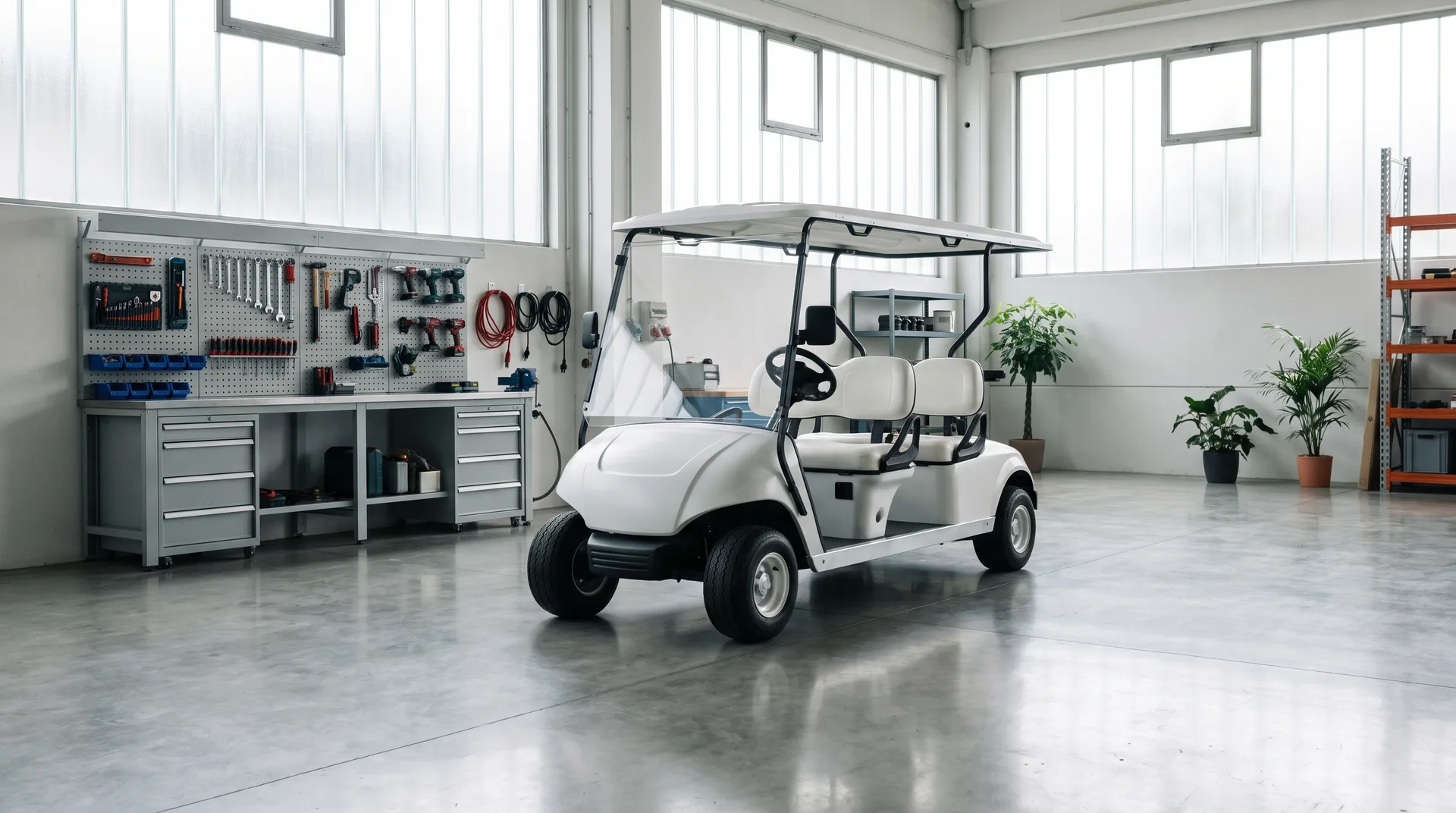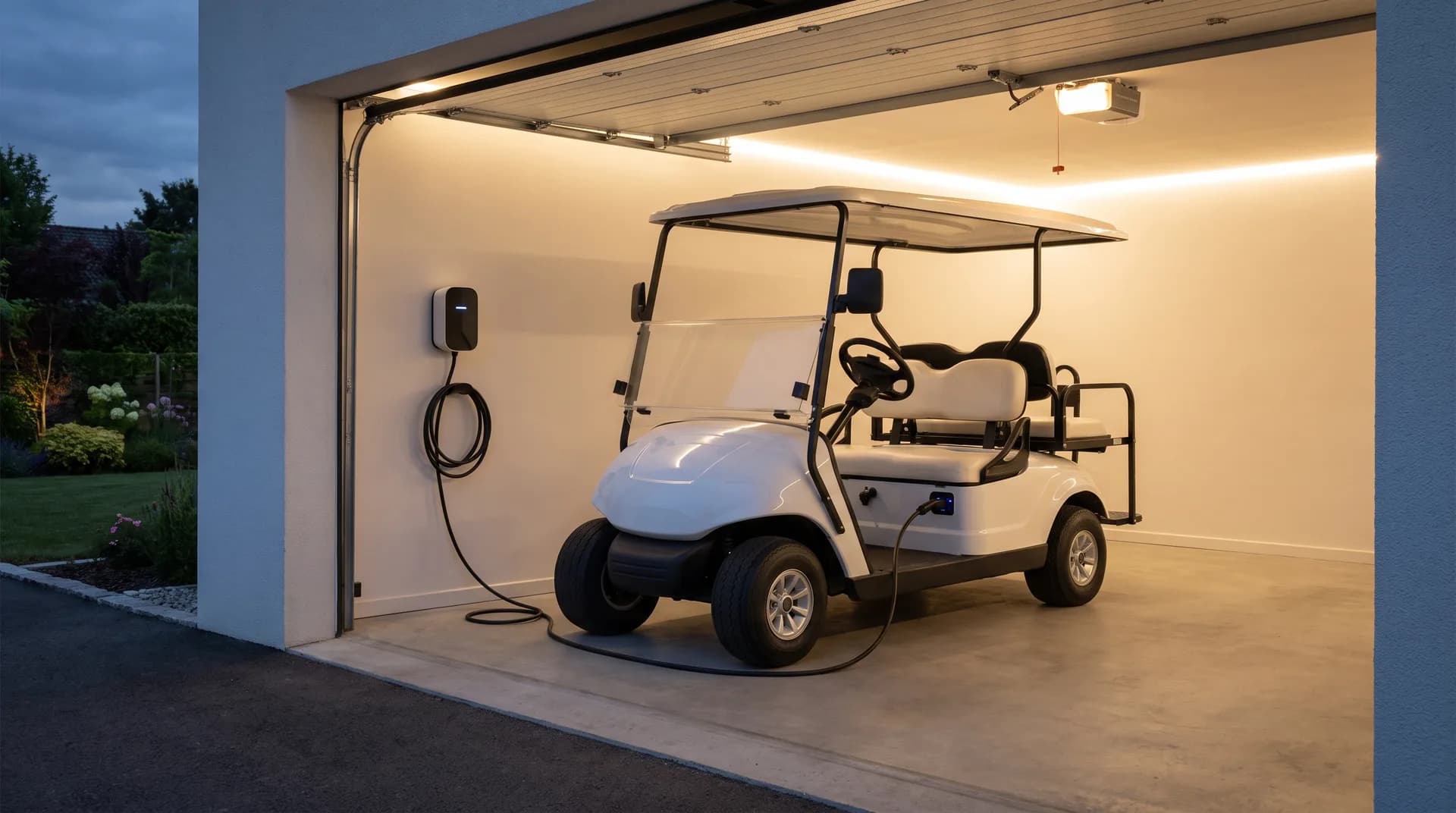
An electric golf cart is refreshingly simple compared with a gas one. There is no engine, no gearbox in the usual sense and no fuel system; instead a battery stores the energy, a motor turns it into movement, and a controller manages how much power reaches the motor when you press the pedal. Understanding those few parts explains both how the cart drives and why it needs so little maintenance. This guide walks through them in plain terms.
- A battery stores the energy and is charged from a standard supply.
- An electric motor turns that energy into movement, with full torque from a standstill.
- A controller manages the power between pedal and motor for a smooth ride.
- Far fewer moving parts than a gas engine means less to service and less to fail.
- Regenerative braking on some setups returns a little energy on the overrun.
The battery
The battery is the fuel tank of an electric cart, storing the energy that drives it. It charges from a standard supply, usually overnight, and its chemistry, lithium or lead-acid, affects range, charging and lifespan. The battery is the most significant component and the one worth choosing carefully, which our guide on lithium versus lead-acid covers in full.
The motor and controller
The motor converts stored electrical energy into the turning force that moves the cart, and because electric motors deliver full torque from a standstill, the cart pulls away smoothly and climbs well even under load. Between the pedal and the motor sits the controller, which meters the power so the response is smooth and controlled rather than abrupt. Together they replace the engine, gearbox and much of the complexity of a gas drivetrain.
Why simplicity means low maintenance
The reason an electric cart is cheap to run and reliable comes straight from this simplicity. With no oil, filters, spark plugs or fuel system, and far fewer moving parts than an engine, there is simply less to wear and less to go wrong. That is why servicing is lighter and downtime lower, as our maintenance costs guide explains.
Frequently asked questions
How does an electric golf cart work?+
A battery stores energy charged from a standard supply, a motor turns that energy into movement with full torque from a standstill, and a controller meters the power between the pedal and the motor for a smooth ride. There is no engine, gearbox or fuel system.
Do electric golf carts have gears?+
Not in the way a gas vehicle does. The electric motor delivers power smoothly across its range, so a conventional gearbox is not needed, though there is usually a forward and reverse selector.
Why are they so low-maintenance?+
Because the drivetrain is simple: no oil, filters, spark plugs or fuel system, and far fewer moving parts than an engine. Less to wear and less to go wrong means lighter servicing and lower downtime.
What is the controller?+
The controller sits between the pedal and the motor and meters how much power the motor receives, so the cart responds smoothly and predictably rather than abruptly.
Does it recover energy when braking?+
Some setups use regenerative braking, which returns a little energy to the battery on the overrun. The main energy source remains the overnight charge.
Find the right cart for you
Tell us how you will use it and we will specify the right battery, motor and configuration, and prepare a quote around it.
Related solutions
Ready to explore what we build?
See the vehicles and the setting this applies to, or get a tailored quote built around your site.
Ready to find the right golf cart?
Tell us how and where it will work and we will specify a vehicle and a tailored quote built around you. Every build comes with a 3-year warranty and a 24-hour priority call-out.
Our guides are written and reviewed by the Hawke Electric Vehicles team, the people who specify, build, deliver and support the vehicles. We focus on honest, practical advice and flag where a figure depends on the build rather than guessing.
More guides by Hawke