An electric buggy is one of the simplest vehicles to drive: there are no gears to change and no clutch, just a key, a forward-and-reverse selector, an accelerator and a brake. Most people are comfortable within a few minutes. This beginner's guide walks through the controls and how to drive smoothly and safely, so a new driver or a member of staff can get going with confidence. It covers operating the vehicle; where and whether you may drive it on public roads is a separate legal question, noted at the end.
- Turn the key on, select forward or reverse, then press the accelerator gently.
- There are no gears or clutch: it is accelerator and brake only.
- Steer as you would a car; the buggy turns tightly at low speed.
- Ease off the accelerator and brake gently; do not stamp.
- Apply the parking brake and remove the key when you stop.
The controls
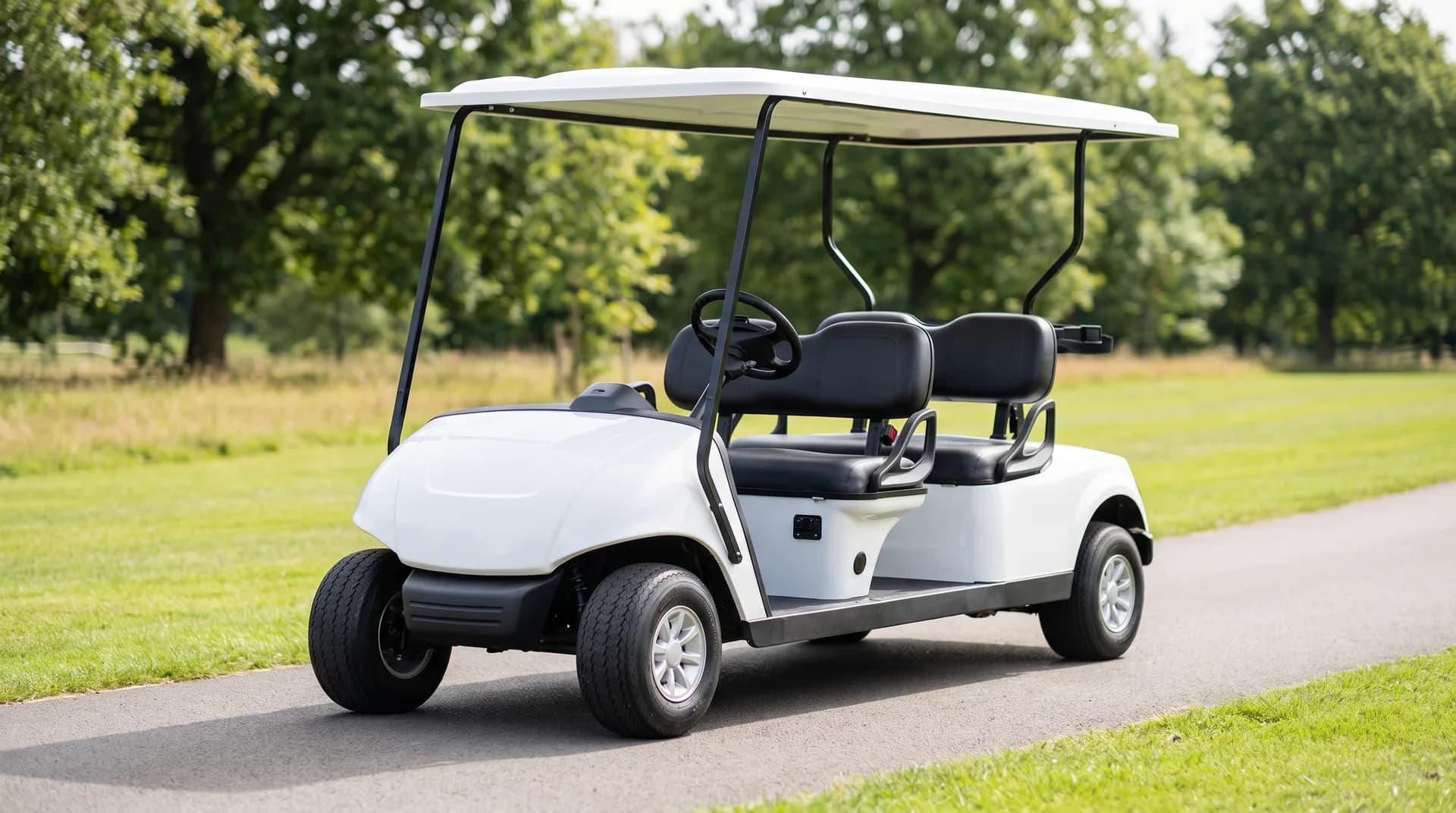
The controls are few and familiar. A key switch turns the buggy on. A forward-neutral-reverse selector, usually a small lever or switch, sets the direction. An accelerator pedal makes it go, and a brake pedal stops it, just like a car but without a clutch or gears. There is a steering wheel, a parking brake, and lights and indicators where fitted. Understanding how it all works underneath is covered in our guide on how electric buggies work.
Starting off and driving
To move off, turn the key on, select forward, check it is clear around you, and press the accelerator gently. The buggy pulls away smoothly, because the electric motor delivers its power evenly. Steer as you would a car; at low speed it turns tightly. Keep to a sensible pace, especially near people, and remember it is built for control, not speed, as our guide on how fast buggies go explains. Ease off the accelerator to slow, and use the brake gently rather than stamping.
Stopping and parking
To stop, ease off the accelerator and brake gently to a halt. When you park, put the selector in neutral, apply the parking brake, and remove the key so the buggy cannot be driven off. On a slope, the parking brake matters, so make sure it is firmly on. A few good habits when stopping keep the buggy safe and ready for the next driver.
Driving safely, and a note on the road
Safe driving is mostly common sense: a sensible pace, awareness of people and obstacles, and no overloading. Our guide on safety features covers specifying the vehicle for safe use. One important point: whether you may drive a buggy on a public road, and any licence, age, insurance or registration requirements, is a separate legal question that depends on the vehicle and where it is used. This guide covers operating the buggy, not road legality; for that, see our road-legal guide and confirm your position before driving on any public road.
Frequently asked questions
How do you drive an electric golf buggy?+
Turn the key on, select forward or reverse, check it is clear, and press the accelerator gently. There are no gears or clutch, just accelerator and brake. Steer as you would a car, keep a sensible pace, and brake gently. Apply the parking brake and remove the key when you stop.
Is an electric buggy hard to drive?+
No. With no gears or clutch and smooth, even power, most people are comfortable within a few minutes. It is one of the simplest vehicles to operate.
How do I stop and park it?+
Ease off the accelerator and brake gently to a halt, put the selector in neutral, apply the parking brake, and remove the key. On a slope, make sure the parking brake is firmly on.
Do I need a licence to drive one?+
On private land, generally not, but driving on a public road brings separate legal requirements around licence, age, insurance and registration that depend on the vehicle and where it is used. This is a legal question to confirm before any road use; see our road-legal guide.
How fast will it go?+
It is a low-speed vehicle built for control, not pace, with a modest top speed that can be limited further for a site. Our guide on how fast buggies go covers this.
Find the right buggy to drive
Tell us how you will use it and we will specify the right buggy and any driver features, and prepare your quote.
Related solutions
Ready to explore what we build?
See the vehicles and the setting this applies to, or get a tailored quote built around your site.

Ready to find the right buggy?
Tell us how and where it will work and we will specify a vehicle and a tailored quote built around you. Every build comes with a 3-year warranty and a 24-hour priority call-out.
Our guides are written and reviewed by the Hawke Electric Vehicles team, the people who specify, build, deliver and support the vehicles. We focus on honest, practical advice and flag where a figure depends on the build rather than guessing.
More guides by Hawke