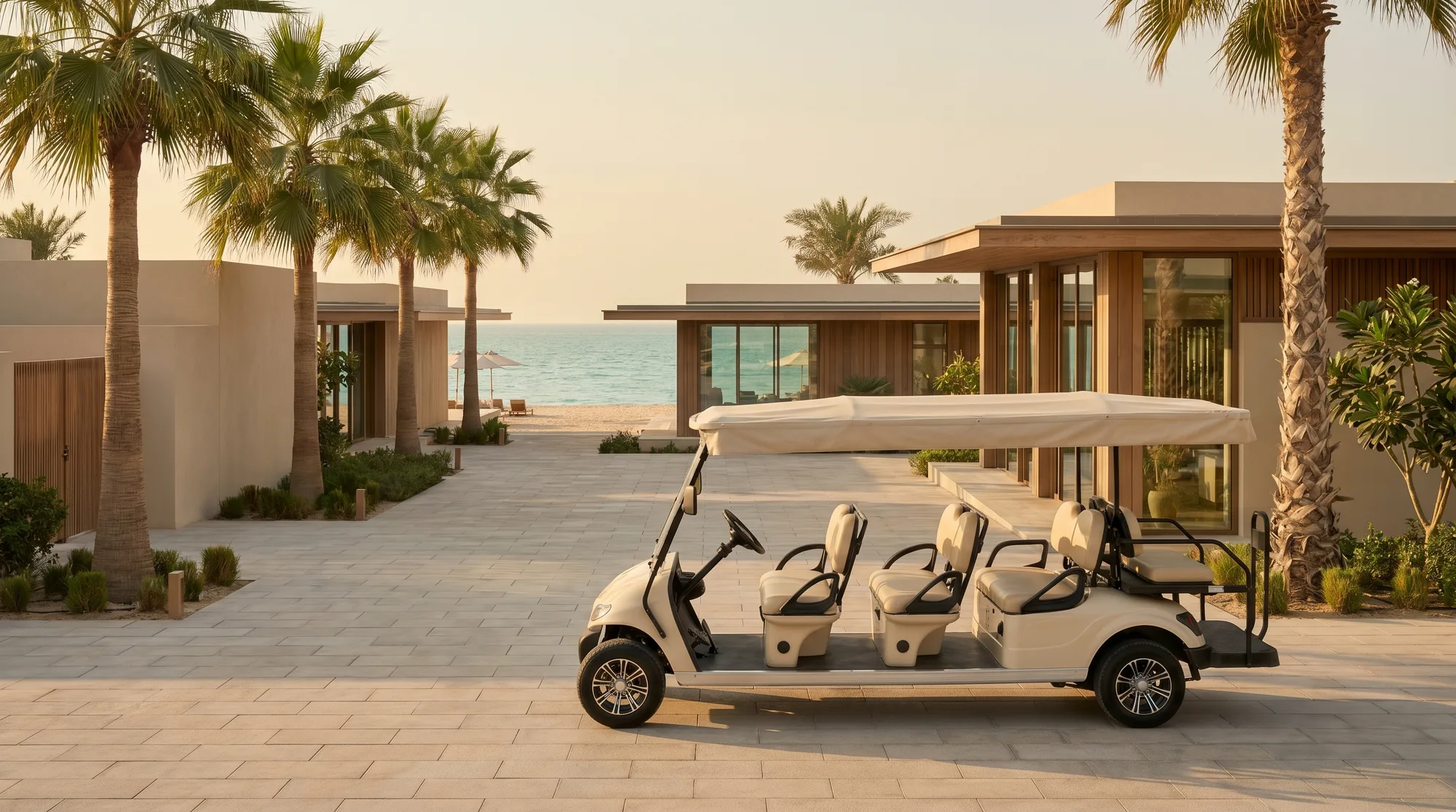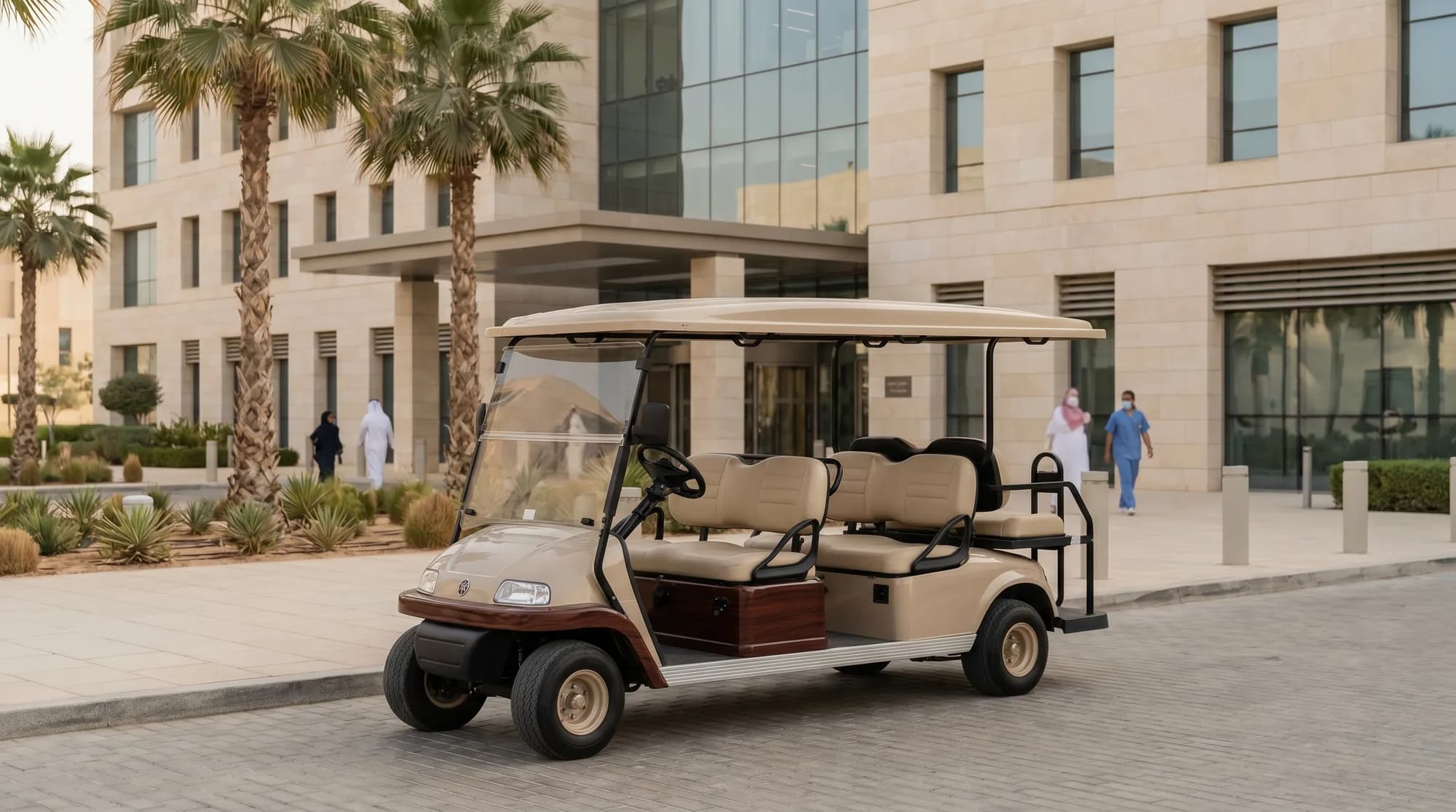
A modern UAE hospital or healthcare campus is large by design, with separate buildings for outpatients, specialties, diagnostics, administration and parking spread across a site that is exhausting to cross on foot, and impossible for many of the people who most need to. A golf buggy quietly solves a string of those problems at once: it brings a patient from a distant car park to the entrance, moves a visitor between buildings, carries supplies between stores and wards, and gets staff across the campus without losing half an hour to the heat.
But healthcare raises the bar. The buggy is often carrying someone who is unwell, elderly or in pain, it must be available when it is needed rather than off the road, and it operates where hygiene and dignity matter. This guide treats the buggy as healthcare infrastructure, covering the use cases, the specification, the reliability and the total cost that a hospital operation actually requires.
What a buggy does on a healthcare campus
The use cases stack up quickly. The most visible is patient and visitor transport: bringing someone who cannot easily walk from the car park or a drop-off point to the right entrance, or between buildings on a multi-block site. Then there is internal logistics, moving supplies, samples, linen and equipment between stores and departments. Staff transport across the campus saves time on every shift. And accessibility runs through all of it, because a healthcare site has more people with mobility needs than almost any other.
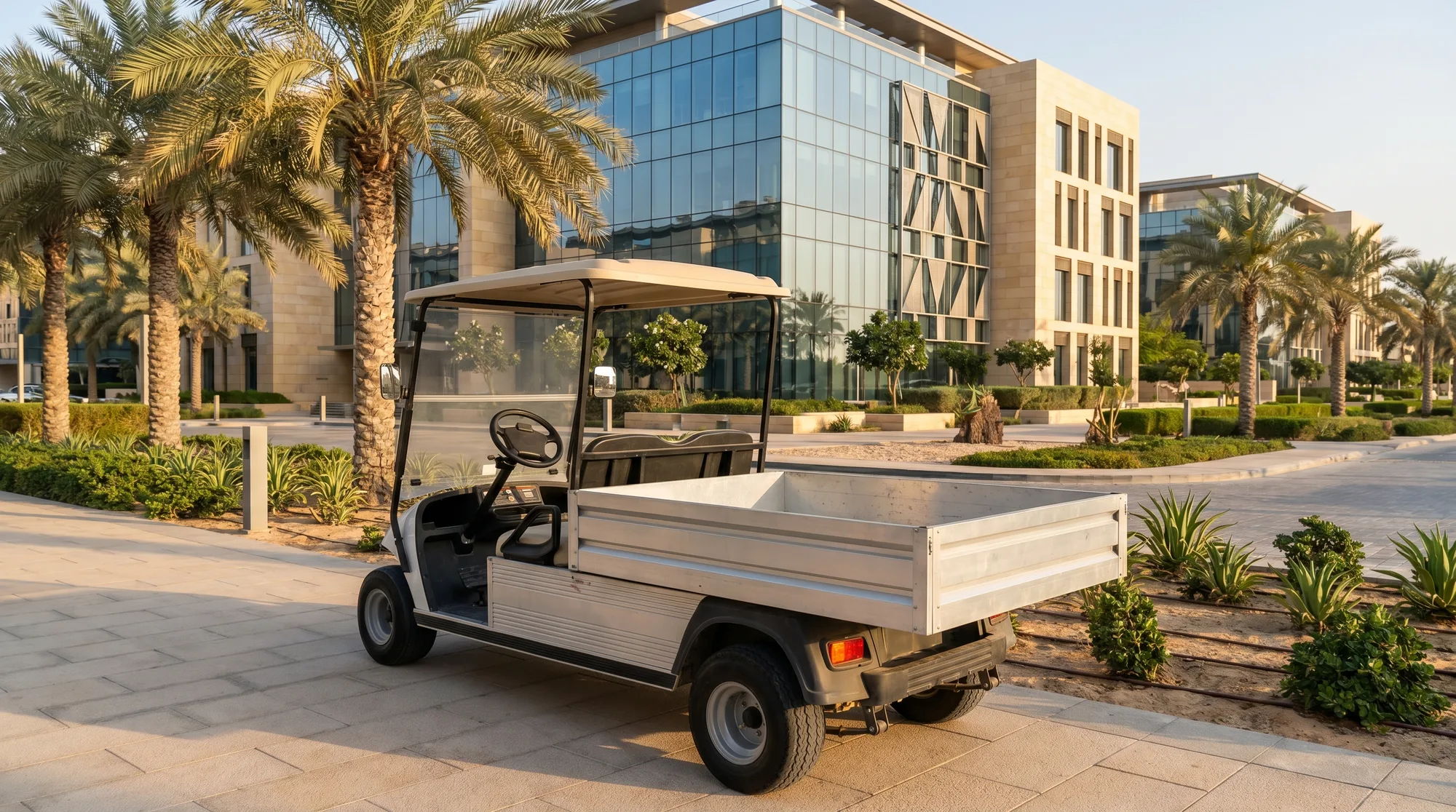
Because the roles are mixed, the fleet usually is too: comfortable passenger buggies for people and rugged utility buggies for supplies. What unites them is that, in a hospital, the buggy is part of how care is delivered, and that raises the standard for comfort, hygiene and reliability well above a leisure vehicle.
Specifying for patients
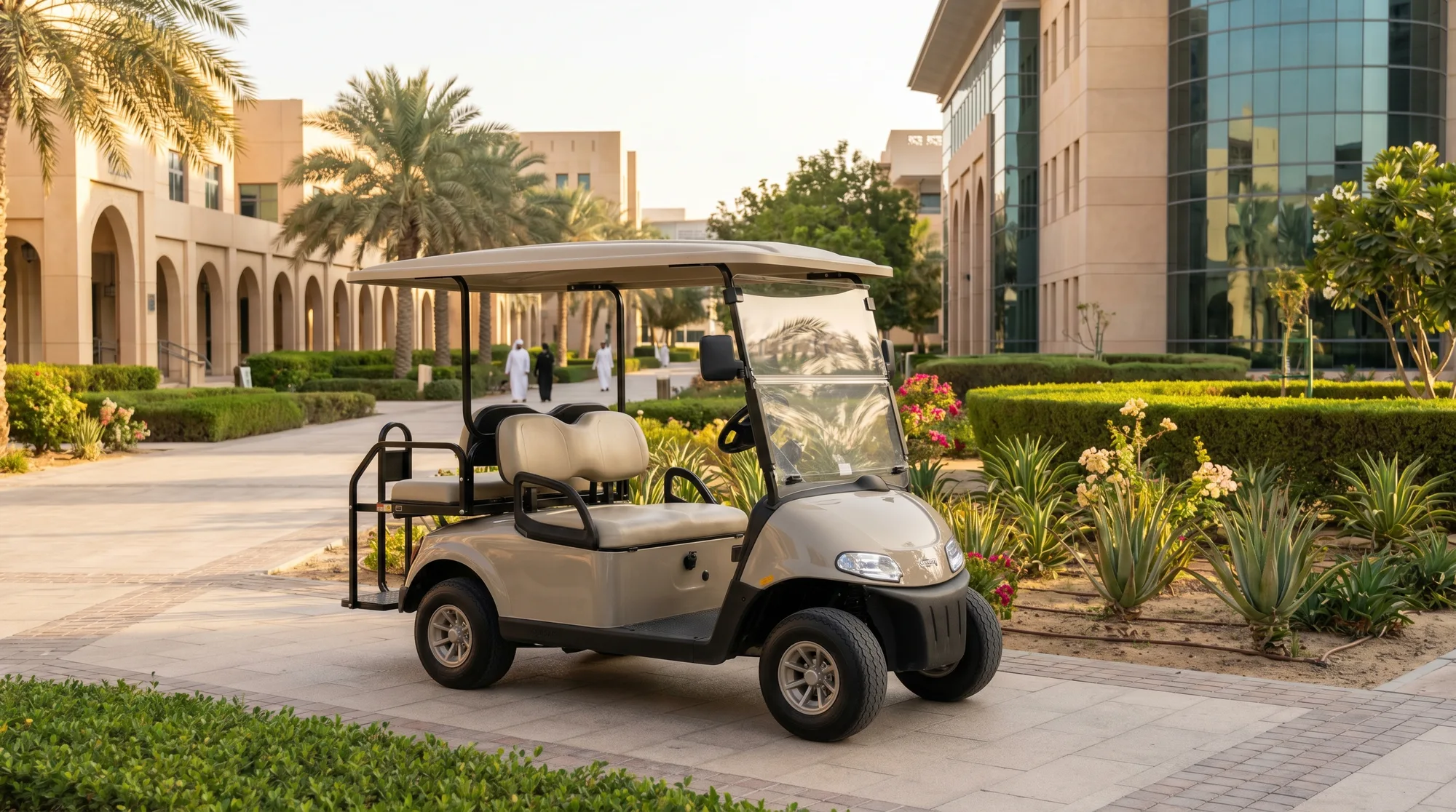
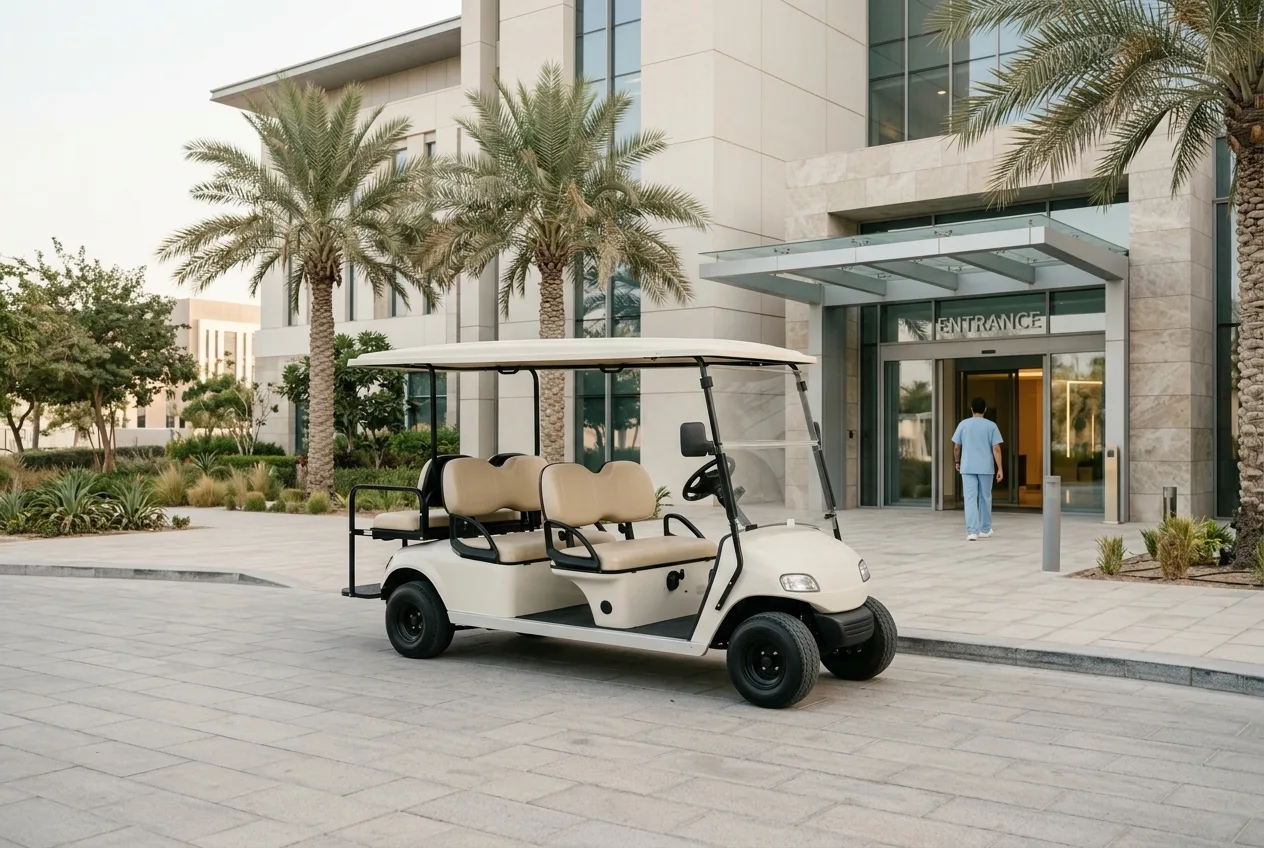
A patient buggy is not a golf buggy with a logo. The person aboard may be elderly, in pain, recovering or anxious, and the buggy should make their journey easier, not harder. That means a low, easy step-in so people do not have to climb, comfortable and supportive seating, a smooth ride that does not jolt, a canopy and shade against the sun, and seatbelts for security. Small details, grab handles, a gentle ride over kerbs and ramps, a calm driver, add up to a dignified experience for someone who is already having a difficult day.
Hygiene and the build
A healthcare environment puts demands on a buggy that no resort does. Seating and surfaces should be wipeable and easy to keep clean, materials should stand up to regular cleaning agents, and the build should be durable enough for the constant, all-day use a hospital generates. None of this is exotic, but it does need to be specified deliberately, because the standard leisure trim that suits a villa is not the right choice for a vehicle carrying a stream of patients through a working day.
Add the Gulf climate on top, sustained heat, UV and fine sand, and the case for a properly specified, durable buggy is overwhelming. The combination of healthcare-grade hygiene and climate-grade durability is exactly what separates a buggy that serves a hospital well from one that becomes a liability.
Reliability and uptime
In most settings a buggy off the road is an inconvenience. In a hospital it can mean a patient left waiting at a distant entrance in the heat, or supplies not reaching a ward on time. Reliability is therefore not a nice-to-have; it is the core requirement. That means specifying durable buggies with lithium batteries suited to heavy daily use, sizing the fleet with a duty allowance so capacity survives buggies being on charge or in service, and running a planned maintenance contract that keeps the fleet available.
- Leisure buggy
- Standard step-in
- Healthcare buggy
- Low, easy step-in for unwell or elderly passengers
- Leisure buggy
- Comfort trim
- Healthcare buggy
- Wipeable, hygienic, supportive seating
- Leisure buggy
- Helpful when working
- Healthcare buggy
- Mission-critical; uptime planned and maintained
- Leisure buggy
- To average use
- Healthcare buggy
- To peak demand plus a duty allowance
| Leisure buggy | Healthcare buggy | |
|---|---|---|
| Access | Standard step-in | Low, easy step-in for unwell or elderly passengers |
| Seating | Comfort trim | Wipeable, hygienic, supportive seating |
| Reliability | Helpful when working | Mission-critical; uptime planned and maintained |
| Fleet sizing | To average use | To peak demand plus a duty allowance |
Sizing the fleet and charging
Healthcare demand peaks predictably: clinic start times, visiting hours, shift changes, discharge waves. Size the fleet to those peaks and to the geography of the site, not to a quiet average, and always include buggies that will be charging or in service. Charging at fleet scale needs enough points on adequate circuits where buggies park, an overnight schedule, and in the Gulf, charging in shade and cooler hours to protect packs and chargers. The fleet-sizing and charging logic in our facilities management guide applies directly to healthcare campuses.
On a healthcare campus the buggy is part of how care reaches people. The only acceptable standard is that it is comfortable, clean and there when it is needed.
Total cost and where to start
Healthcare buggies work long, demanding days and carry vulnerable people, so durability, hygiene-ready trim and a maintenance plan matter more than a low sticker price. Lithium batteries suit the all-day use, and a serviced fleet protects the reliability the operation depends on. Treat any figure as indicative and in AED only, and judge on total cost of ownership. Tell us your campus, your patient-transport and logistics needs and your peaks, and we will scope a fleet built for healthcare. For pricing context see how much a golf cart costs in the UAE.
Scope a healthcare-grade buggy fleet
Tell us your campus, your patient-transport and logistics needs and your peaks, and we will scope a comfortable, hygienic, reliable fleet with current pricing.
Frequently asked questions
How do hospitals use golf buggies in the UAE?+
For patient and visitor transport between car parks and buildings, internal logistics moving supplies and equipment, staff transport across large sites, and accessibility for people who cannot easily cross a hot, sprawling campus on foot.
What makes a good patient-transport buggy?+
Easy low step-in access, comfortable and supportive seating, a smooth ride, a canopy and shade, seatbelts and grab handles. The aim is a dignified, calm journey for someone who may be unwell, elderly or in pain.
Can healthcare buggies be kept hygienic?+
Yes, when specified for it. Wipeable seating and surfaces, materials that tolerate regular cleaning, and a durable build suited to constant use let a buggy meet healthcare hygiene expectations rather than leisure trim that is not designed for it.
How do you ensure a hospital buggy is always available?+
Plan for uptime: durable buggies with lithium batteries, a fleet sized to peak demand plus a duty allowance for charging and servicing, and a planned maintenance contract. In healthcare, an unavailable buggy can leave a patient waiting.
Are golf buggies road-legal on a healthcare campus?+
No. Under RTA rules they are not road-legal and are for use on the private campus roads only, not public highways. Confirm any site-specific requirements with the facility.
Related solutions
Ready to explore what we build?
See the vehicles and the setting this applies to, or get a tailored quote built around your site.

Ready to find the right buggy?
Tell us how and where it will work and we will specify a vehicle and a tailored quote built around you. Every build comes with a 3-year warranty and a 24-hour priority call-out.