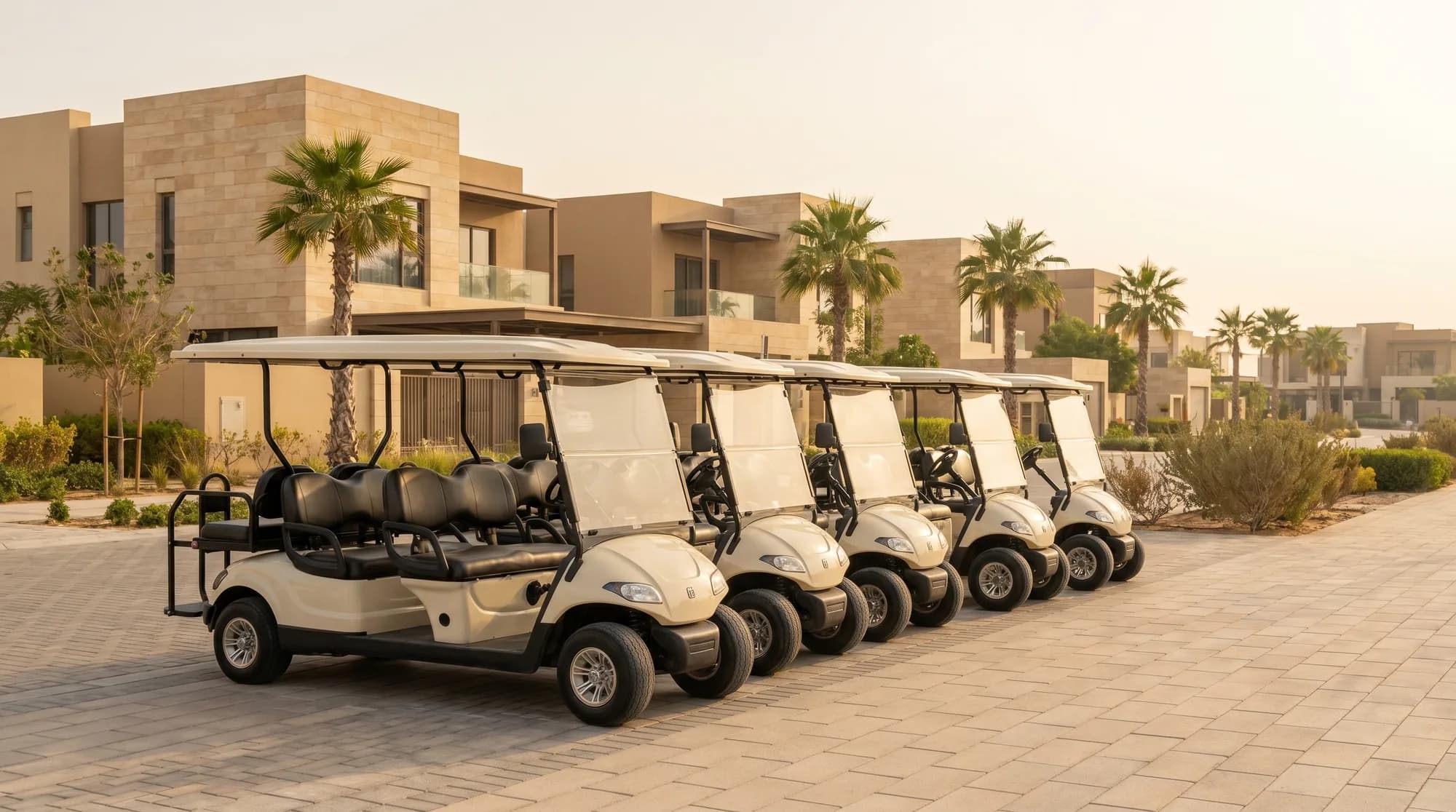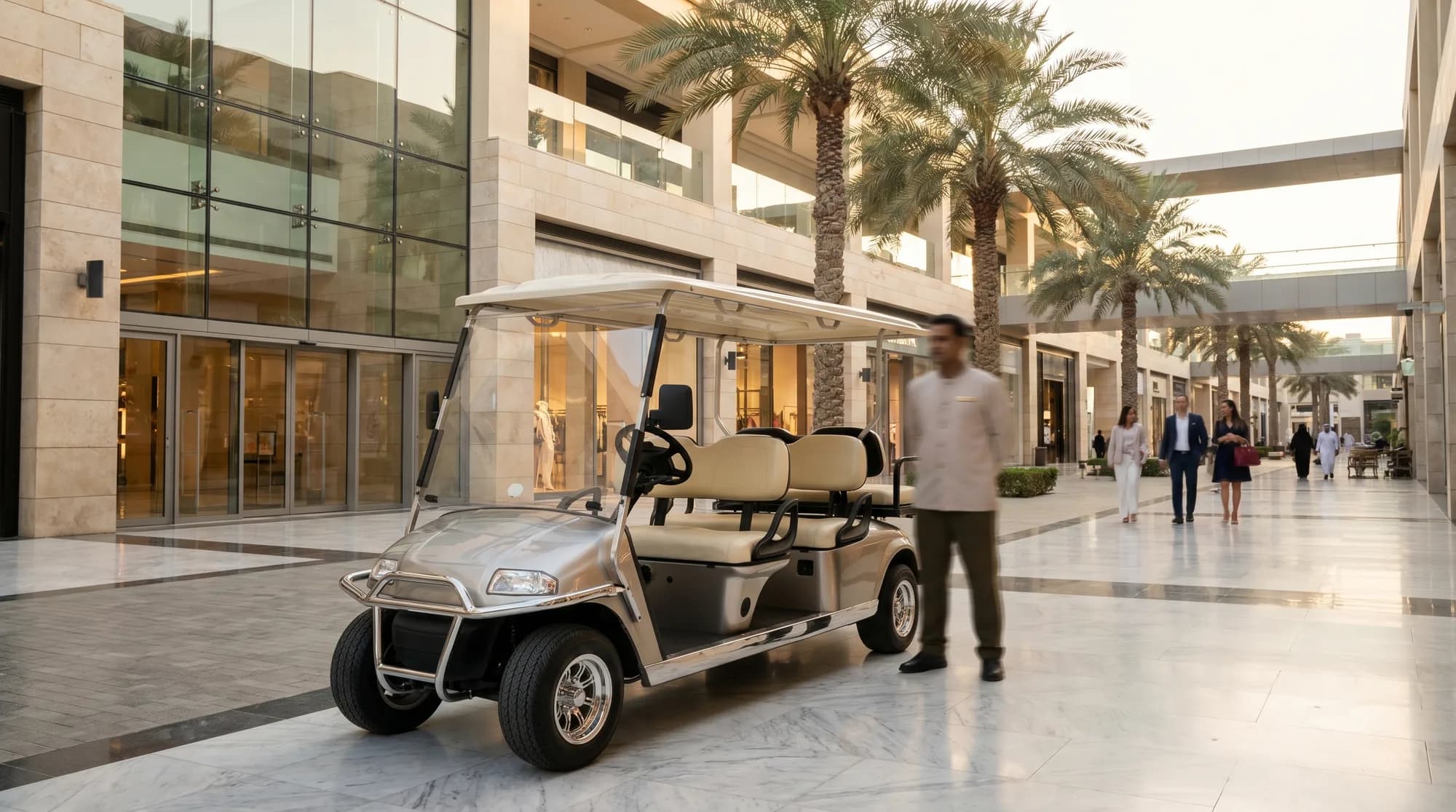
UAE malls and retail destinations are vast, and that scale is the point. A flagship mall, an outlet village or a waterfront retail district draws huge crowds across enormous footprints, with car parks far from entrances and concourses that take real time to walk. A golf buggy works quietly through all of it: shuttling guests from distant parking, helping shoppers with mobility needs or heavy bags, moving stock and waste back-of-house, and supporting the cleaning, security and facilities teams who keep the place running.
In retail, though, the buggy is never just a vehicle. It is in front of paying customers, often carrying the destination's name, so it is part of the brand and the guest experience as much as it is a piece of equipment. That dual role, polished and customer-facing on the concourse, rugged and practical in the service yard, shapes how a retail operator should specify and run a fleet. This guide covers both.
- Retail buggies do two jobs: guest-facing service and shuttles out front, and logistics and facilities work back-of-house.
- Front-of-house buggies are part of the brand: specify premium, branded, comfortable and quiet, because customers are watching.
- Indoor and outdoor use differ: smooth, quiet, non-marking operation indoors; durable, heat-ready build outdoors.
- Safety around crowds is essential: low speeds, audible warnings, good visibility and trained drivers.
- Size to peak footfall, plan charging logistics and judge on total cost; lithium suits long retail trading hours.
Two jobs, one fleet
The defining feature of retail buggies is that the same operation needs two very different kinds. Out front, the buggy carries guests and the destination's brand, so it must look the part, ride smoothly and run quietly. Behind the scenes, the buggy hauls stock, waste and cleaning equipment through service corridors and yards, where utility and durability matter far more than polish. Trying to make one buggy do both jobs usually produces a vehicle that is too rough for the concourse and too precious for the yard.
The smart approach is a mixed fleet, with presentable passenger buggies for guest-facing roles and rugged utility buggies for logistics, all specified to suit where they actually operate. Getting that split right is the single biggest decision a retail operator makes about buggies.
Front-of-house: the buggy as brand
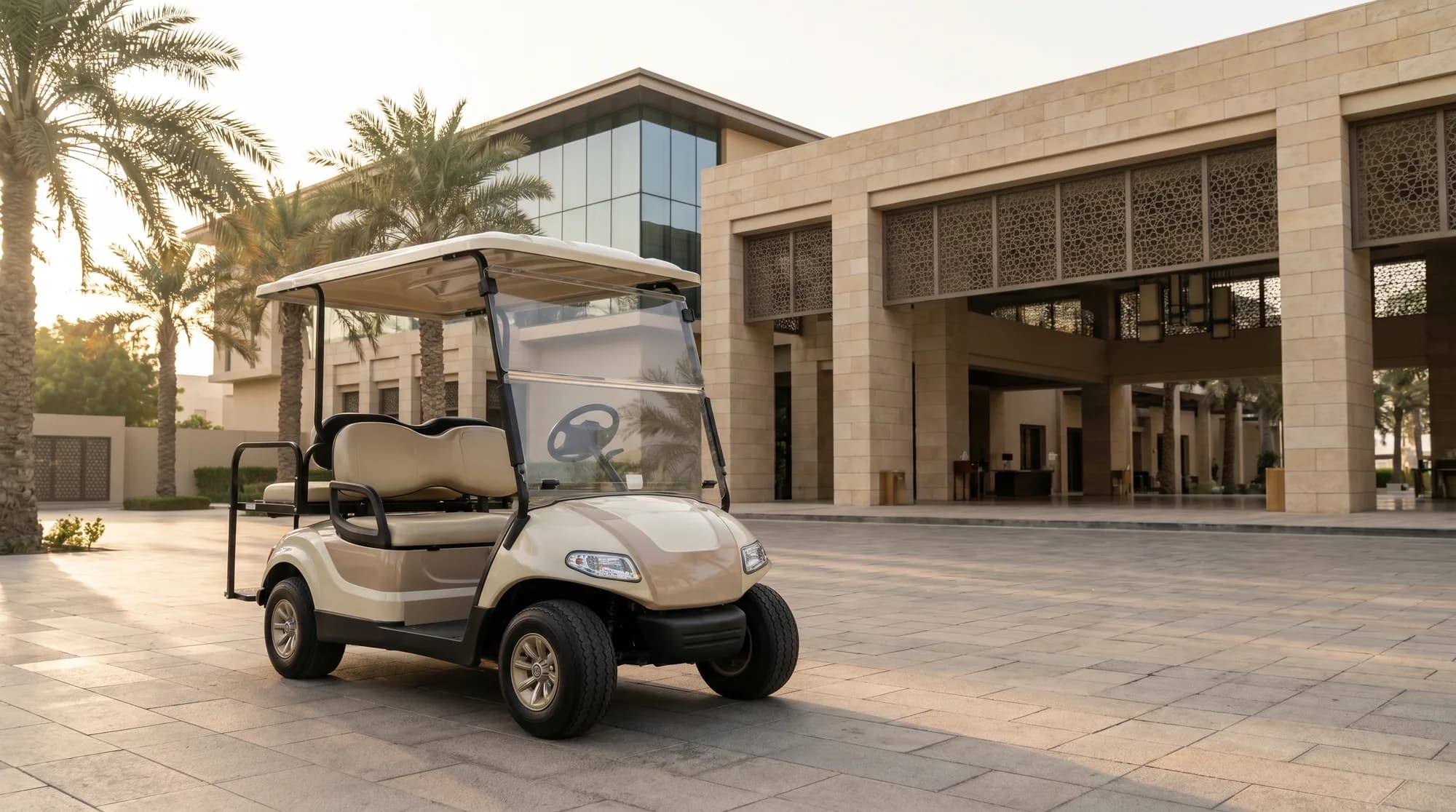
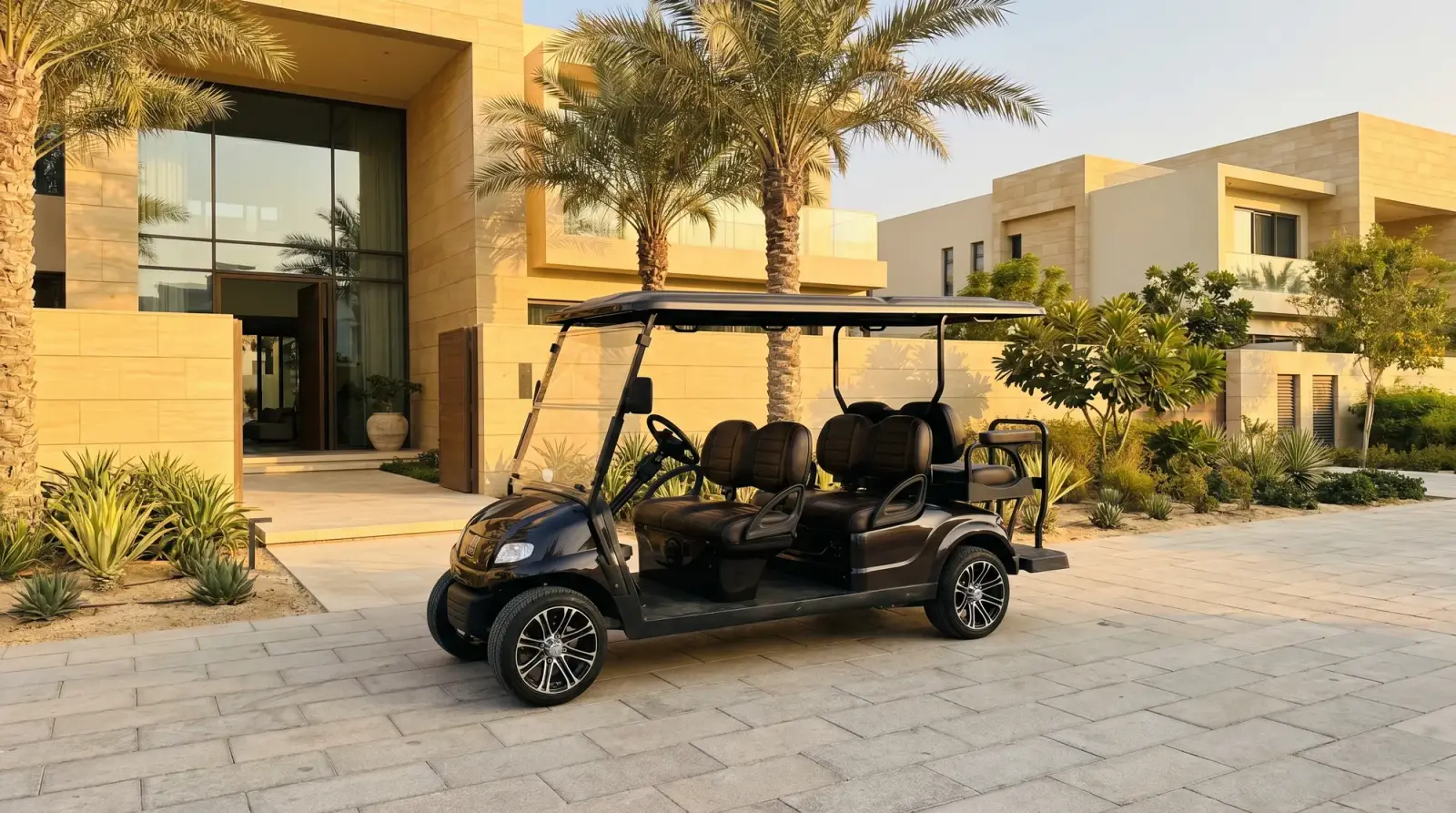
A guest-facing buggy at a premium UAE destination is a moving piece of the brand. It picks up a family from a distant car park, helps an elderly shopper to the door, or shuttles a VIP, and it does so in full view of thousands of people. That means it should be branded to the destination's identity with a finish that survives the climate, comfortable and shaded for the guests aboard, and quiet and smooth so the experience feels considered rather than industrial. Our guide to golf cart customisation and branding in the UAE covers how to make that livery survive the Gulf sun.
- Premium, branded livery in UV-stable film or fade-resistant paint so it stays sharp.
- Comfortable seating, a canopy and shade for guests, with easy step-in for older or less mobile shoppers.
- Quiet, smooth operation that suits a polished retail environment.
- Clear, presentable finish and clean fleet consistency across all guest-facing buggies.
- Sensible speed limiting and good visibility for safe movement through crowds.
Back-of-house: logistics and facilities
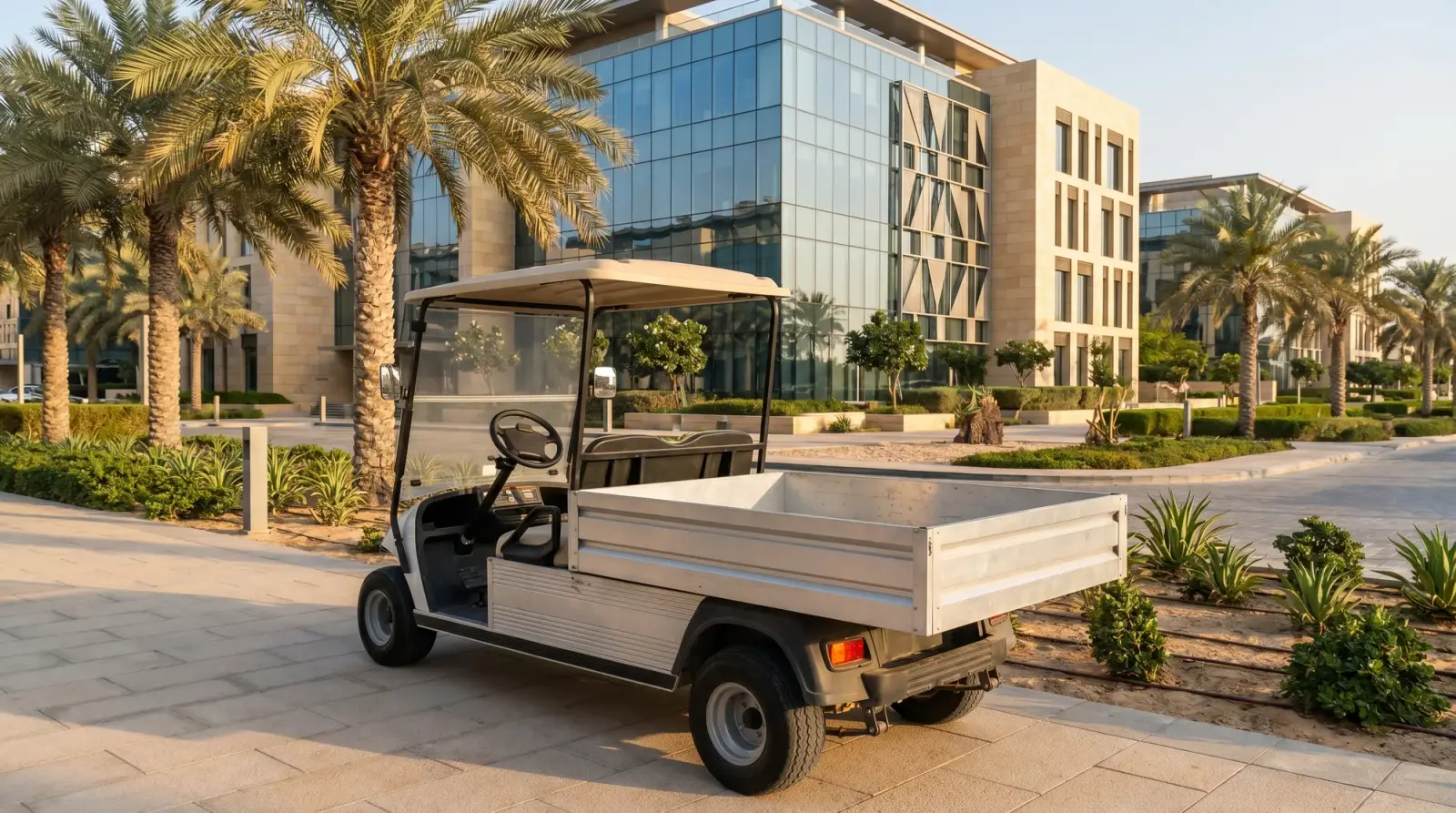
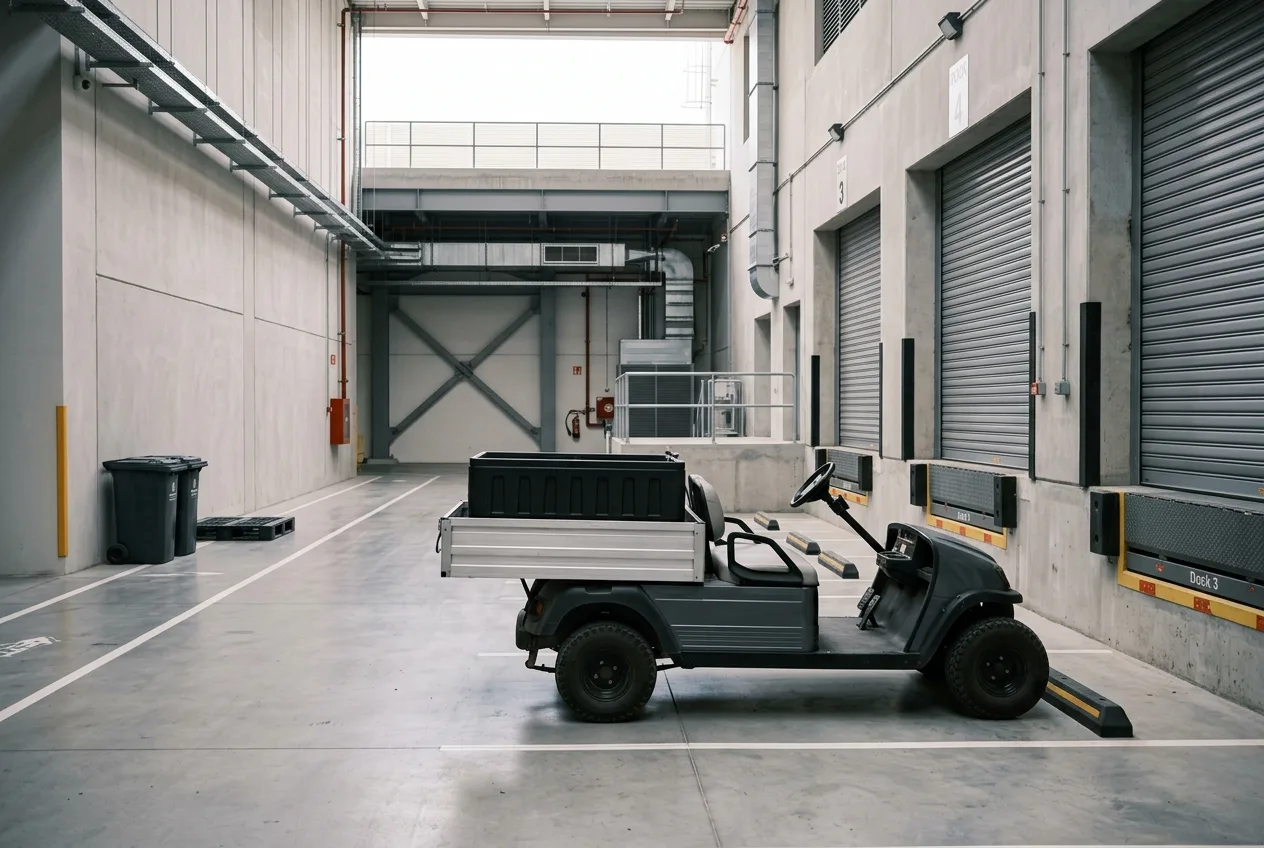
Away from the shop floor, the retail buggy becomes a workhorse. It moves stock from loading bays to stores, carries waste to compactors, supports cleaning teams across a huge floor area, and ferries security and facilities staff through back corridors and yards. Here the priorities flip entirely: cargo capacity, durability, manoeuvrability in tight service areas and reliability under constant use matter, while polish does not. These buggies are essentially facilities-management vehicles, and the same logic applies; our facilities management guide covers utility specification and fleet sizing in depth.
Specifying these buggies for the climate still matters, because service yards are outdoors and brutally hot in summer, and fine sand and dust find their way everywhere. Lithium batteries, sealed components and durable trim keep back-of-house buggies reliable through long retail trading days.
Safety in a crowd
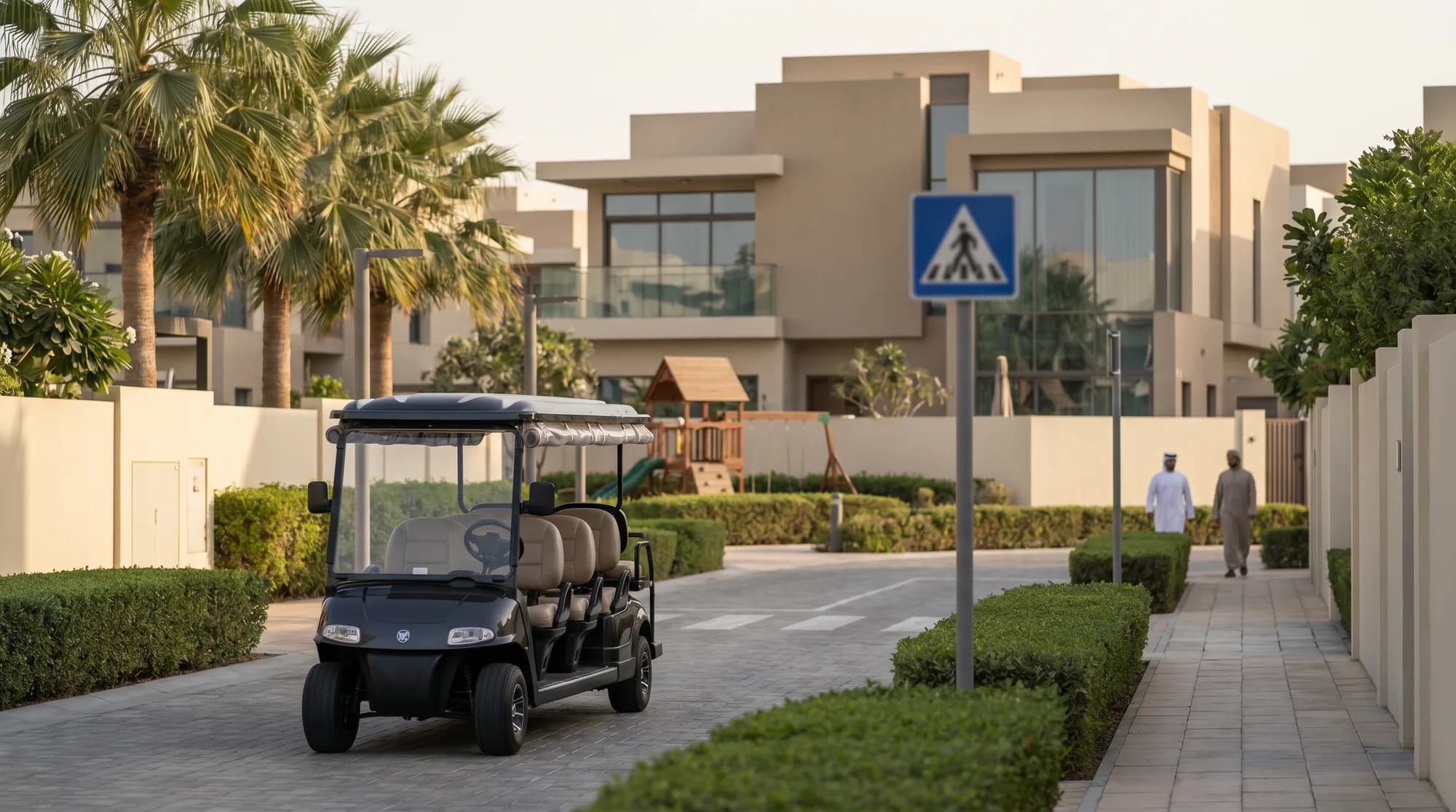
Retail destinations are some of the most crowded environments a buggy operates in, and crowds are unpredictable. The safety rules are non-negotiable: very low speeds around shoppers, audible warnings, good visibility, trained and authorised drivers, and routes that avoid the busiest pinch points at peak times. A quiet buggy moving through a distracted crowd is exactly the situation that demands the most caution, and a single careless moment in front of customers is both a safety failure and a brand failure.
- Guest-facing
- Brand and comfort
- Logistics
- Capacity and durability
- Guest-facing
- Premium branded livery
- Logistics
- Robust, practical, high-visibility
- Guest-facing
- Quiet, smooth, very low speed
- Logistics
- Manoeuvrable, reliable under heavy use
- Guest-facing
- Concourse and entrances
- Logistics
- Service yards, corridors, car parks
| Guest-facing | Logistics | |
|---|---|---|
| Priority | Brand and comfort | Capacity and durability |
| Finish | Premium branded livery | Robust, practical, high-visibility |
| Operation | Quiet, smooth, very low speed | Manoeuvrable, reliable under heavy use |
| Environment | Concourse and entrances | Service yards, corridors, car parks |
In retail a buggy is judged twice: once as a service that helps a guest, and once as a moving billboard for the destination. It has to pass both tests at once.
Sizing, charging and total cost
Retail demand peaks hard at weekends, holidays and sale events, so size the fleet to peak footfall, not the quiet midweek average, and allow for buggies on charge or in service. Charging across a large site is a logistics exercise: enough points on adequate circuits where buggies park, an overnight schedule sized to long trading hours, and in the Gulf, charging in shade and cooler hours. Long opening hours make lithium and durability the sensible choice, so judge on total cost of ownership. Treat any figure as indicative and in AED only, and tell us your destination, your peaks and your front and back-of-house needs to scope a fleet. For pricing context, see how much a golf cart costs in the UAE.
Scope a retail buggy fleet that serves and impresses
Tell us your destination, your peak footfall and your front and back-of-house needs, and we will scope a branded, durable fleet with current pricing.
Frequently asked questions
How do malls and retail destinations use golf buggies?+
For guest shuttles from distant car parks, helping shoppers with mobility needs or heavy bags, and back-of-house logistics moving stock and waste and supporting cleaning, security and facilities teams across a large footprint.
Should retail buggies be branded?+
Guest-facing buggies should be, because they are part of the brand and the experience in front of customers. Specify UV-stable livery so it survives the Gulf sun. Back-of-house buggies prioritise utility and visibility over polish.
Can golf buggies be used indoors in a mall?+
Yes, with the right specification: quiet, smooth, non-marking operation and very low speed around shoppers. Indoor concourse buggies are specified differently from the durable, heat-ready buggies used outdoors in car parks and yards.
How do you keep buggies safe in crowded retail areas?+
Very low speeds around shoppers, audible warnings, good visibility, trained and authorised drivers, and routing that avoids the busiest pinch points at peak times. In a crowd, caution protects both people and the brand.
How big a buggy fleet does a retail destination need?+
Size to peak footfall at weekends, holidays and sale events, not the quiet average, and allow for buggies on charge or in service. Splitting the fleet between guest-facing and logistics roles gives the most efficient mix.
Related solutions
Ready to explore what we build?
See the vehicles and the setting this applies to, or get a tailored quote built around your site.
Ready to find the right buggy?
Tell us how and where it will work and we will specify a vehicle and a tailored quote built around you. Every build comes with a 3-year warranty and a 24-hour priority call-out.
Our guides are written and reviewed by the Hawke Electric Vehicles team, the people who specify, build, deliver and support the vehicles. We focus on honest, practical advice and flag where a figure depends on the build rather than guessing.
More guides by Hawke