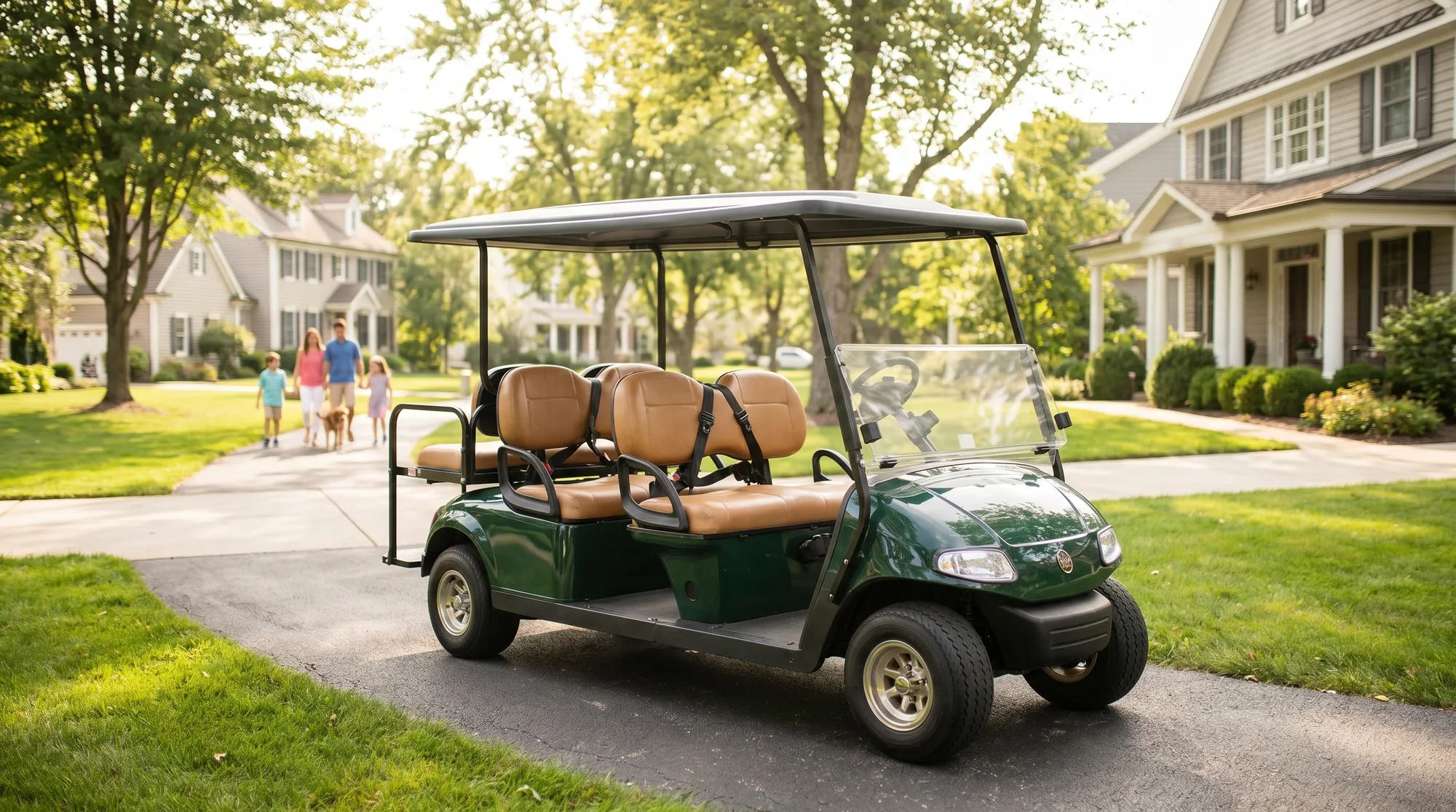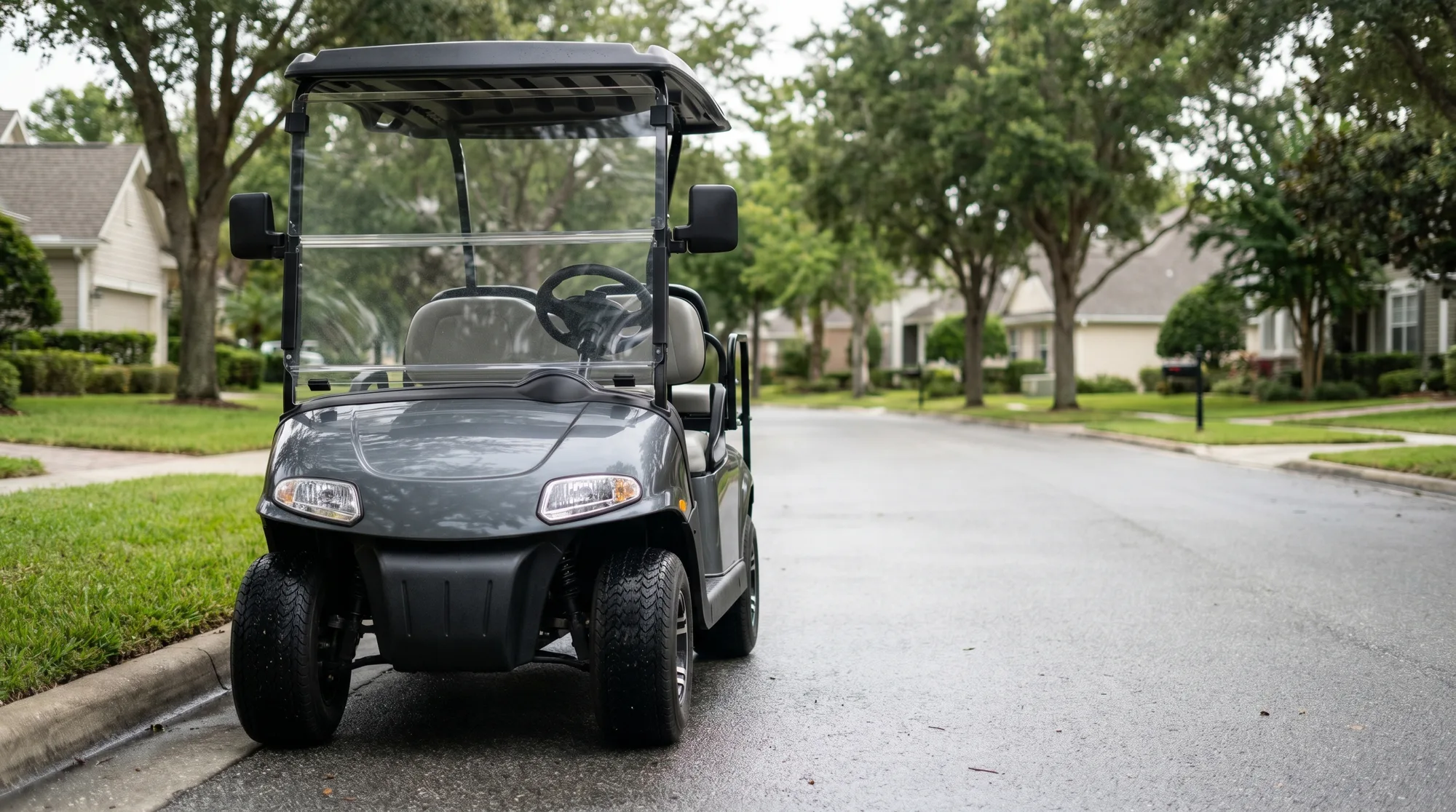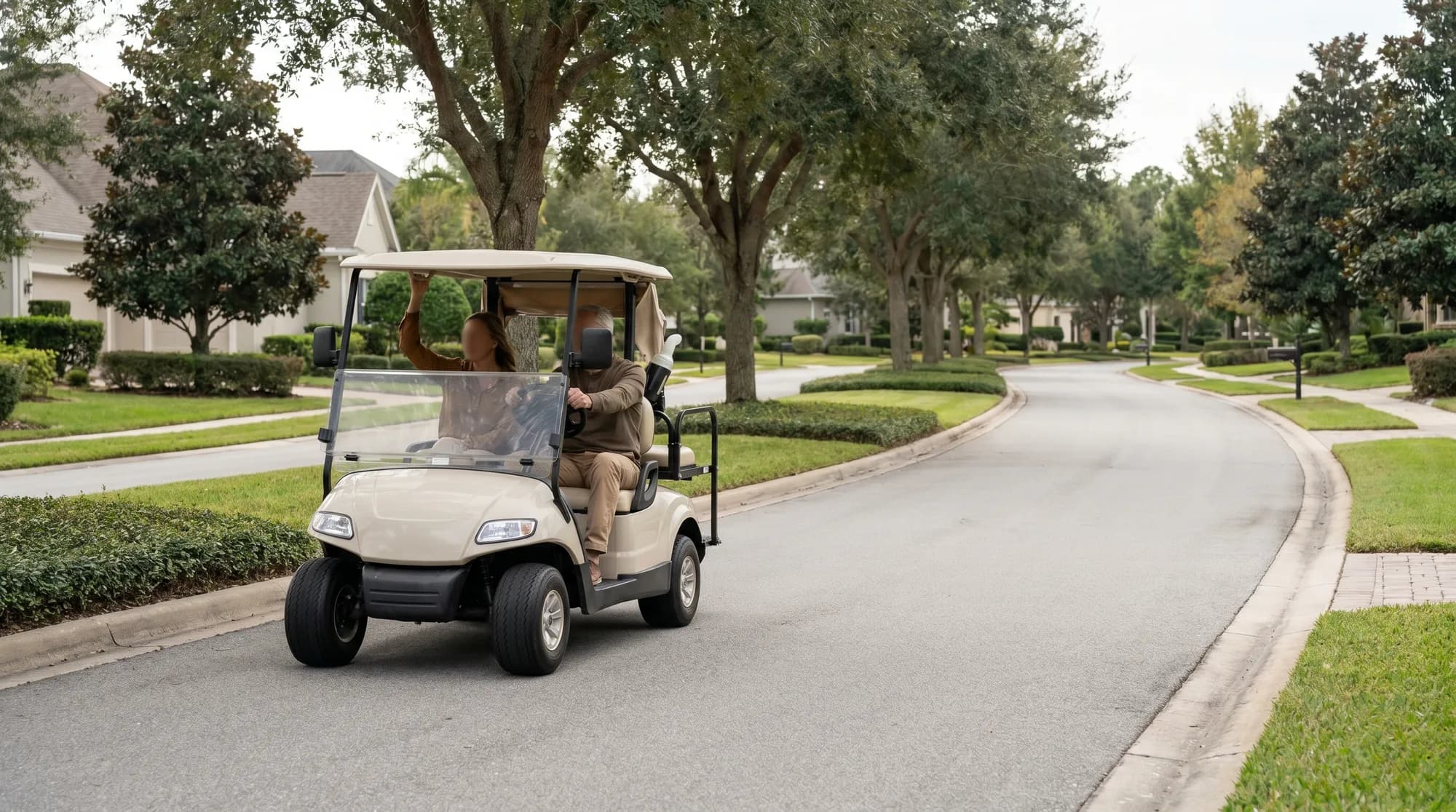
Golf carts look harmless. They are slow, open and familiar, which is exactly why their safety record surprises people. Tens of thousands of golf cart injuries are treated in U.S. emergency rooms every year, and a large share involve children, falls and ejections rather than collisions with other vehicles. The gap between how safe a cart feels and how it actually behaves, especially on a turn or a slope, is where accidents live. None of this means carts are dangerous toys to be feared. It means they are real vehicles that reward a handful of sensible habits. This guide covers the genuine causes of cart accidents and the practical steps that prevent them.
What actually causes golf cart accidents
When people picture a cart accident they imagine a crash with a car. In reality, the majority of serious golf cart injuries do not involve another vehicle at all. They are falls and ejections: an occupant thrown from the cart during a turn, a passenger stepping or falling off while it moves, a child losing their grip. Because carts are open and most have no doors, no restraints in standard trim and a high center of gravity relative to their narrow track, a maneuver that would be trivial in a car can pitch a person out of a cart.
Understanding this changes what you focus on. The biggest safety wins are not about avoiding collisions; they are about keeping people in the cart and keeping the cart upright. Almost everything below follows from those two goals.
Tip-overs: the turn and the slope
A golf cart rolls far more easily than its low speed suggests. The combination of a narrow track, a relatively high center of gravity, and weight that shifts when loaded means a sharp turn taken even slightly too fast can lift two wheels. Add a slope, a curb, or a lifted cart with bigger tires, and the threshold drops further. Many tip-overs happen at speeds the driver felt were perfectly safe, on a familiar turn, because the cart's limits are lower and arrive more suddenly than a car's.
The fixes are simple and effective: slow down well before turns, never swerve sharply, take slopes straight up and down rather than across the face where possible, and be especially careful with a loaded or lifted cart. If you drive on real grades, our guide to the best carts for hills and off-road covers how terrain raises the stakes.
Passengers, children and how people get hurt
Children are dramatically over-represented in cart injury statistics, and the reasons are predictable. Kids ride in laps, stand on the back, hold on poorly and are more easily thrown than adults. Carts are also driven by people too young or inexperienced to judge the cart's limits. Passenger behavior is one of the single biggest factors in serious injuries, because a cart with no doors offers nothing to stop an occupant who is not seated properly from coming out in a turn.
- Only carry as many people as there are proper seats, never more, and never in laps or on the cargo bed.
- Keep every occupant fully seated and holding on before the cart moves, especially children.
- Do not let underage or untrained people drive; cart limits are easy to misjudge.
- Be extra cautious of small passengers on turns and slopes, where they are most easily ejected.
- Stop completely before anyone gets on or off, and count heads before you accelerate.
If your cart is mostly a family vehicle around a community or property, our dedicated golf cart safety for families guide goes deeper into rules for kids and household habits that prevent the most common injuries.
Speed, blind spots and shared roads
Speed multiplies every other risk. A faster cart corners worse, stops over a longer distance and gives the driver less time to react, while making any ejection more severe. Many neighborhoods and properties set cart speed limits for exactly this reason. Where carts share roads or paths with cars, the dangers shift: drivers in cars may not see a low, quiet cart, and intersections, driveways and reversing vehicles become blind-spot hazards. A cart is small, low and easy to miss.
- Risk factor
- Tip-over
- What prevents it
- Slow well before turning
- Risk factor
- Rollover
- What prevents it
- Take grades straight, go slow
- Risk factor
- Ejection
- What prevents it
- Seats only, all seated and holding
- Risk factor
- Longer stops, worse crashes
- What prevents it
- Obey limits, slow in traffic
- Risk factor
- Cars not seeing you
- What prevents it
- Lights, eye contact, caution
| Risk factor | What prevents it | |
|---|---|---|
| Sharp, fast turns | Tip-over | Slow well before turning |
| Slopes and curbs | Rollover | Take grades straight, go slow |
| Extra passengers | Ejection | Seats only, all seated and holding |
| High speed | Longer stops, worse crashes | Obey limits, slow in traffic |
| Sharing roads | Cars not seeing you | Lights, eye contact, caution |
Seatbelts, training and rules that work
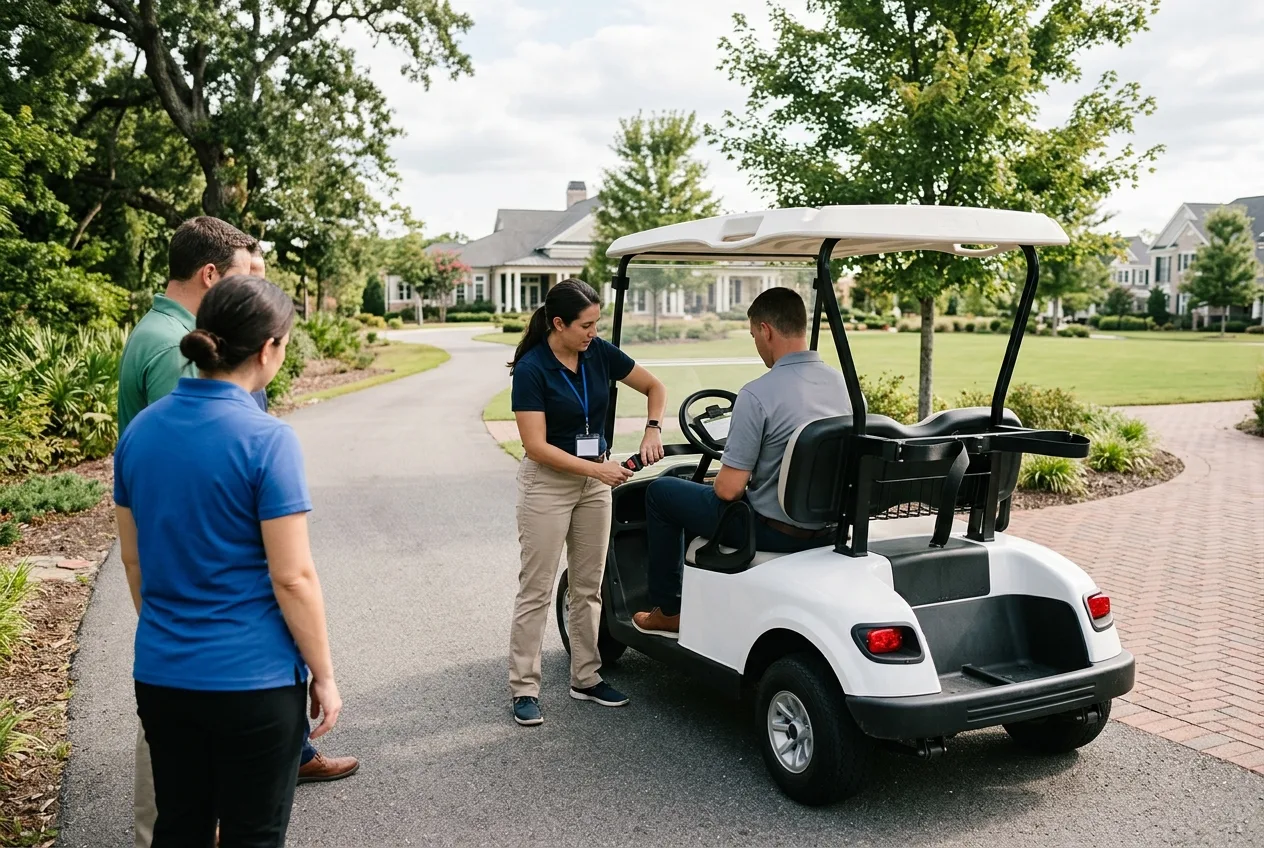
Two interventions punch above their weight. The first is restraints: carts fitted with seatbelts, particularly faster or road-going models, dramatically reduce ejection injuries, and they are worth specifying or retrofitting where the cart's design supports them. The second is training. A short, deliberate briefing for every regular driver, covering cornering, slopes, passenger rules and braking distance, prevents far more accidents than any sticker. On commercial sites, simple written cart rules and a quick orientation for new users are among the cheapest safety measures available.
Insurance is part of the safety picture too, both as protection and as a prompt to take risk seriously; our golf cart insurance guide explains what cover actually does. And a cart that is mechanically sound is a safer cart, so the brakes and tires in our maintenance and repair basics directly affect whether you can stop and steer when it counts.
Almost every serious cart injury we hear about comes down to three things: too fast into a turn, too many people aboard, or someone not properly seated. Fix those and you remove most of the risk.
So what should you do?
Treat the cart as the real vehicle it is. Slow down before every turn, take slopes carefully, carry only as many people as there are seats, keep everyone seated and holding on, and never let untrained or underage drivers loose. Fit and use seatbelts where the cart supports them, keep the lights and brakes working, and give every regular driver a short safety briefing. None of it costs much, and together it removes most of the danger. If you want a cart specified with safety features matched to how and where you drive, we are glad to help with honest advice.
Want a cart specified for safe use?
Tell us who will drive it and where, and we will recommend a build with the right safety features, lighting and seating, at an honest price.
Frequently asked questions
What causes most golf cart accidents?+
Most serious golf cart injuries come from occupants falling or being ejected during turns, not from collisions with other vehicles. Sharp or fast cornering, slopes, carrying too many passengers and improperly seated children are the leading factors behind tip-overs and ejections.
Why do golf carts tip over so easily?+
Carts have a narrow track and a relatively high center of gravity, so a sharp turn taken even slightly too fast can lift two wheels. Slopes, curbs, heavy loads and lift kits lower that threshold further, and the limit often arrives more suddenly than in a car.
Should golf carts have seatbelts?+
Where the cart's design supports them, seatbelts significantly reduce ejection injuries, especially on faster or road-going models. They are worth specifying or retrofitting, and on any cart the most important rule is that everyone stays fully seated and holding on while it moves.
Are golf carts safe for children?+
Children are heavily over-represented in cart injuries. Kids should always be seated in a proper seat, never in laps or on the cargo bed, always holding on, and should not drive until old enough and trained. Extra caution is essential on turns and slopes where children are most easily ejected.
How can I prevent golf cart accidents?+
Slow down before turns, take slopes carefully and straight, carry only as many people as there are seats with everyone seated and holding on, obey speed limits, keep lights and brakes working, fit seatbelts where possible, and give every regular driver a short safety briefing.
Related solutions
Ready to explore what we build?
See the vehicles and the setting this applies to, or get a tailored quote built around your site.
Ready to find the right buggy?
Tell us how and where it will work and we will specify a vehicle and a tailored quote built around you. Every build comes with a 3-year warranty and a 24-hour priority call-out.