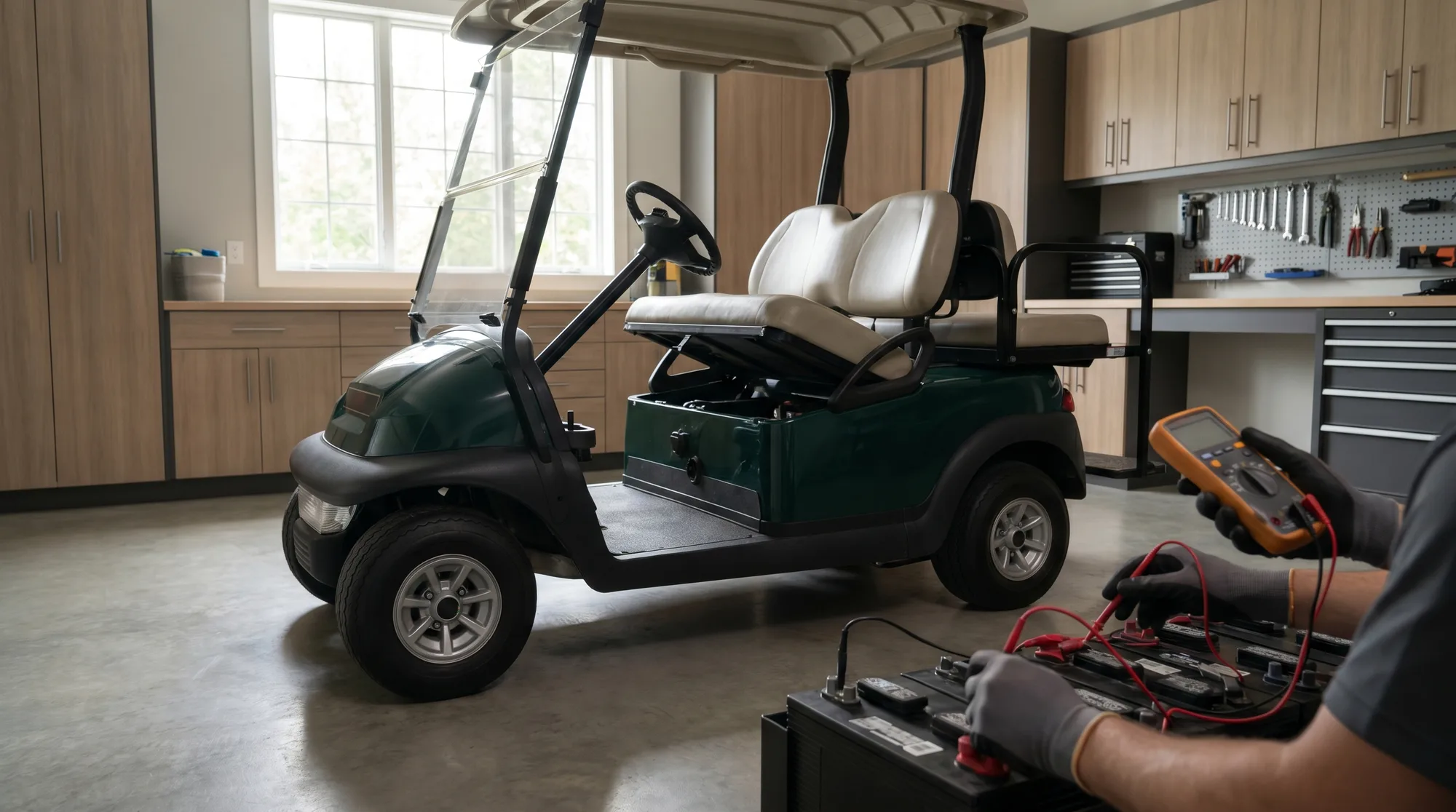
When a golf cart loses power, the battery pack is usually the culprit, but the actual cause ranges from a loose terminal you can fix in five minutes to a dead cell that needs a new set. The trick is to diagnose in order rather than guessing and throwing money at it. This guide walks the common battery symptoms in plain language, the checks that isolate the fault, the basic voltage tests that confirm it, and the point where replacement is the honest answer. Work safely: this is acid and serious current.
Safety before you start
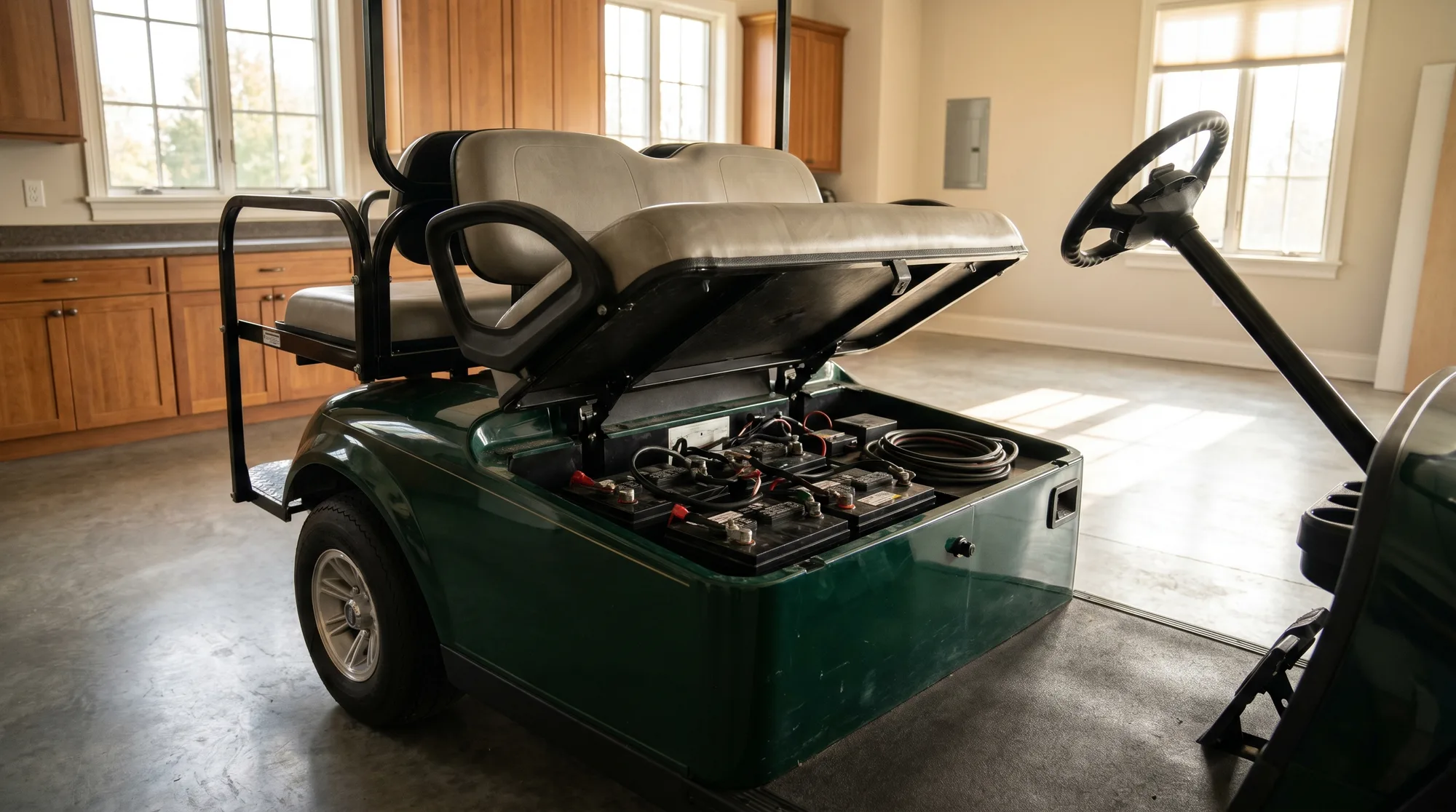
Battery work involves acid and high current. Wear eye protection and gloves, remove rings and watches, and keep metal tools from bridging terminals. Work in a ventilated space because flooded lead-acid vents gas. When disconnecting, take the negative terminal off first; when reconnecting, do negative last. If you are not comfortable, our maintenance and repair basics guide and a qualified technician are the safe route.
Symptom: the cart will not move at all
A completely dead cart is usually the simplest to diagnose because it is often a connection or a flat pack rather than a failed battery. Check the obvious before anything else.
- 01
Check the key, switch and tow/run lever
Confirm the key is on, the forward/reverse switch is set, and any tow/maintenance switch is in run, not tow. This catches more dead carts than anything.
- 02
Inspect all connections
Look for loose, corroded or burnt terminals across the whole pack. A single bad connection breaks the circuit. Clean and tighten as needed.
- 03
Check state of charge
Read pack voltage. If it is far below the expected full figure, charge fully and retest before suspecting a battery.
- 04
Test the charger
If it will not charge, the charger or its connection may be the fault, not the batteries. See the charging section below.
Symptom: dies fast or weak on hills
A cart that charges fully but loses power quickly, or crawls up hills it used to climb, almost always has a tired pack or one failing battery. Because the batteries are wired in series, the whole string is only as strong as its weakest member, so a single bad battery makes the entire cart feel flat. This is where a voltage test earns its keep.
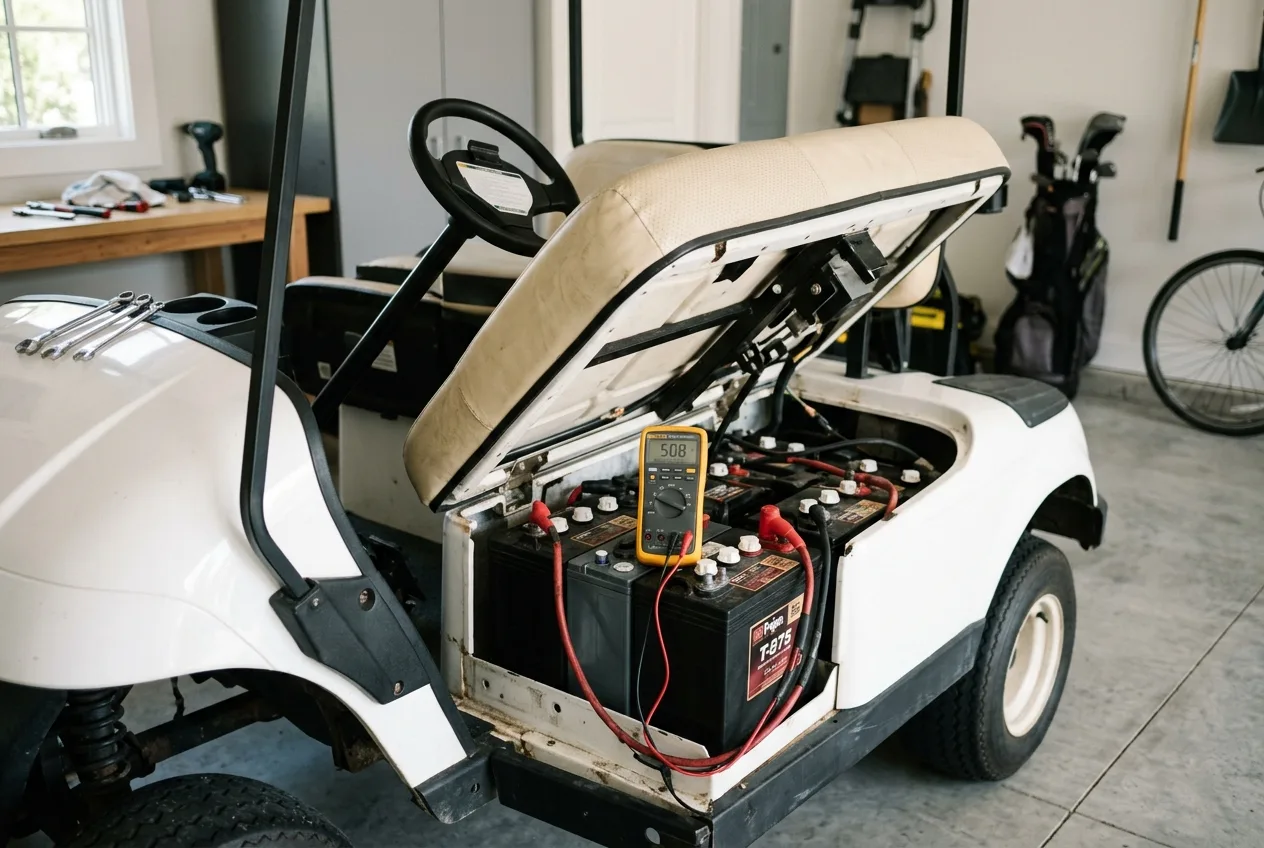
How to test the pack
A basic multimeter test isolates a failing battery quickly. Test at rest first, then under load, because a weak battery often reads fine sitting still and collapses the moment it has to work.
- 01
Fully charge first
Charge the pack completely and let it rest an hour. Testing a flat pack tells you nothing useful.
- 02
Measure each battery at rest
Read voltage across each individual battery. They should be close to one another. A battery reading notably lower than its siblings is suspect.
- 03
Measure under load
Have a helper press the pedal, or use a load tester, and watch each battery. The weak one sags hard while the healthy ones hold. That is your failed unit.
- 04
Check water and temperature
On flooded cells, a low or hot battery often points to the same failing unit. Top up after charging with distilled water.
- Most likely cause
- Connection, tow switch, flat pack
- First action
- Check switches and terminals
- Most likely cause
- Aging pack or one weak battery
- First action
- Load test each battery
- Most likely cause
- Weak battery or low charge
- First action
- Charge fully, then test
- Most likely cause
- Charger, connection or dead cell
- First action
- Test charger and voltage
- Most likely cause
- Failing battery
- First action
- Replace, test the set
| Most likely cause | First action | |
|---|---|---|
| No power at all | Connection, tow switch, flat pack | Check switches and terminals |
| Dies fast after full charge | Aging pack or one weak battery | Load test each battery |
| Slow on hills only | Weak battery or low charge | Charge fully, then test |
| Will not charge | Charger, connection or dead cell | Test charger and voltage |
| One battery hot or swollen | Failing battery | Replace, test the set |
Symptom: the cart will not charge
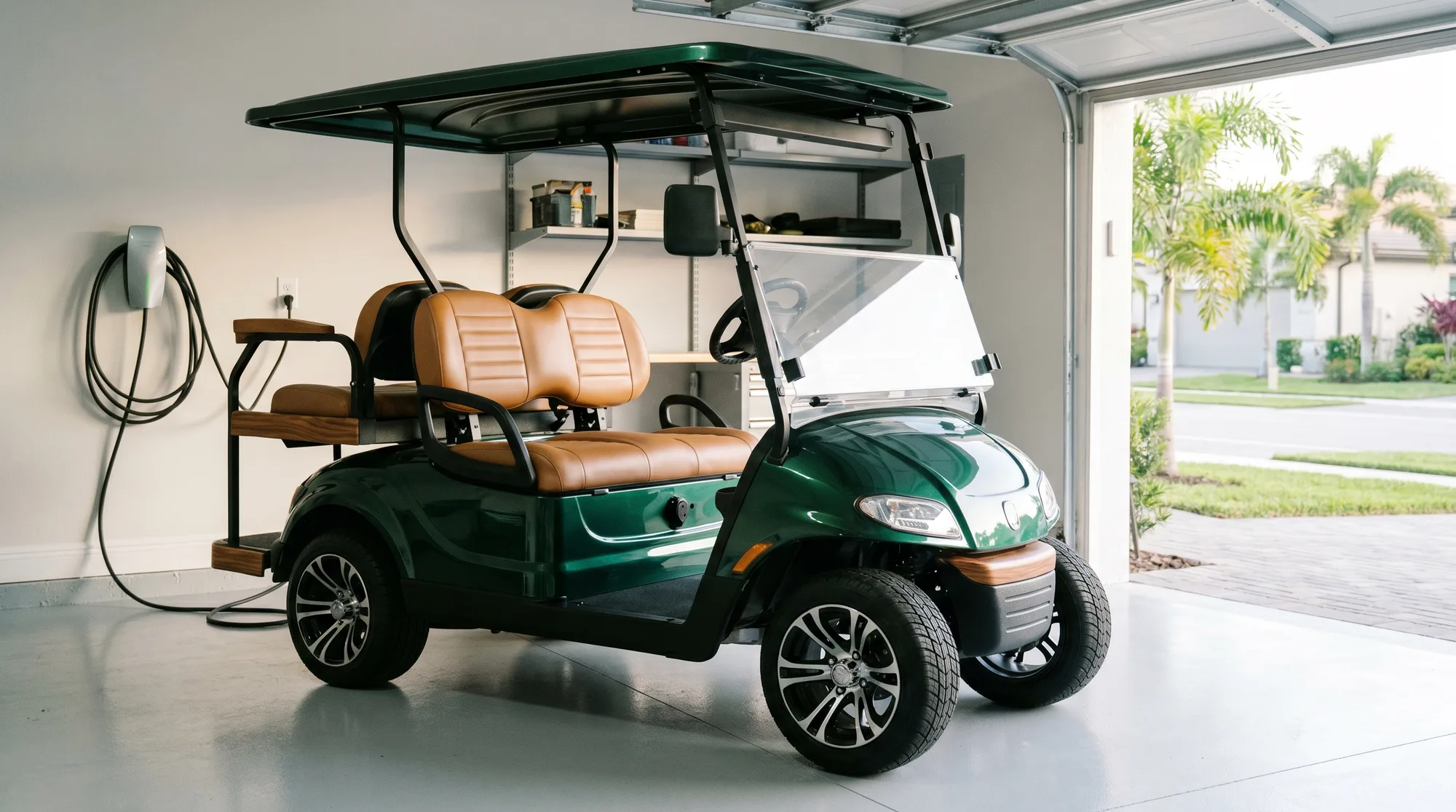
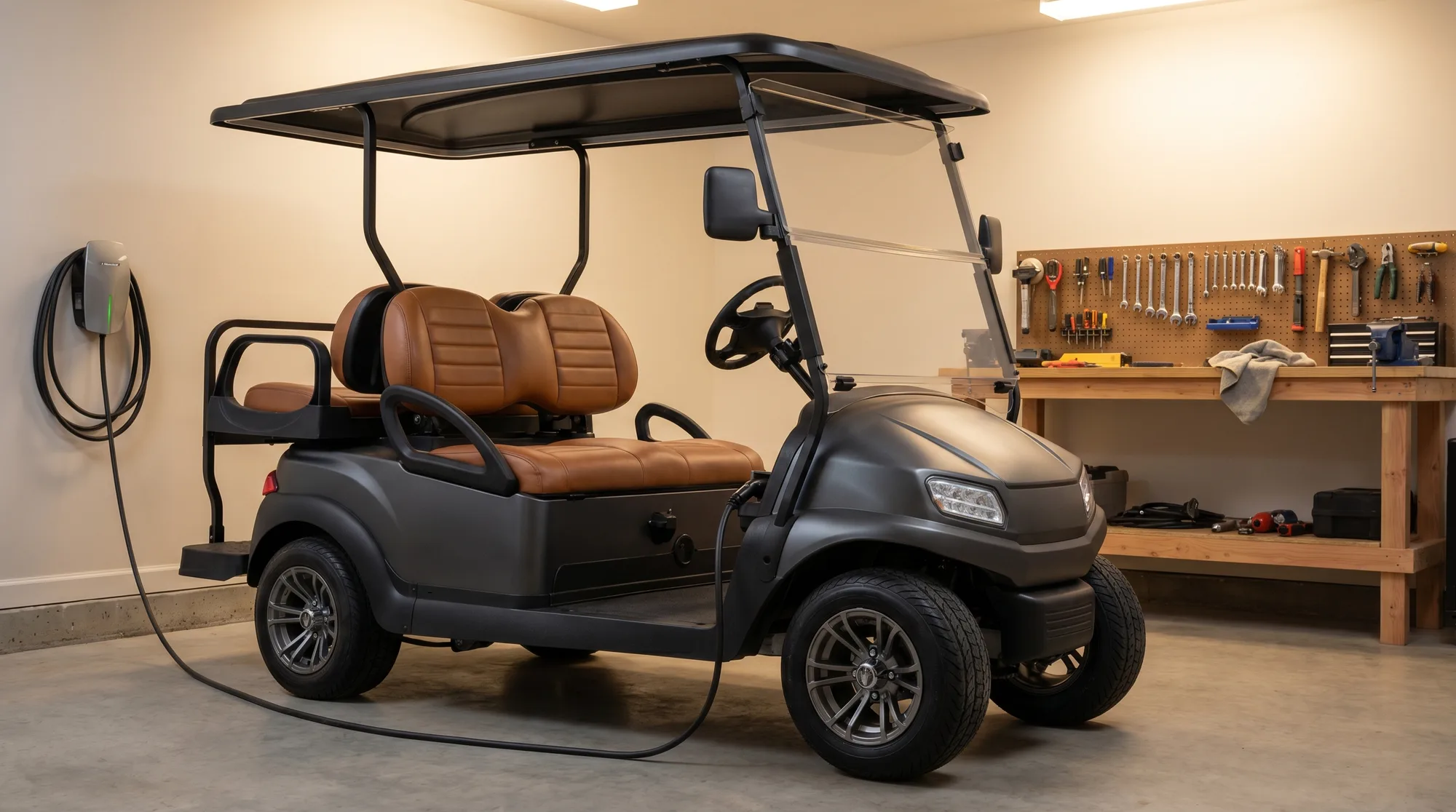
If the charger will not bring the pack up, work out whether the fault is the charger, the connection or a battery so flat the charger refuses to start. Many automatic chargers will not begin charging a pack below a threshold voltage, which makes a deeply discharged pack look like a charger fault.
- Confirm the outlet is live and the charger plug and cart receptacle are clean and seated.
- Listen and look for the charger starting; many show a fault light or no current if the pack is too low.
- Check pack voltage; a pack discharged too far may need a careful manual or recovery charge.
- Inspect the charger leads and the cart's charging port for corrosion or damage.
- If the charger is confirmed good and a battery still will not take charge, that battery is likely dead.
When to repair versus replace
One failed battery in a young, healthy set can sometimes be replaced alone, but in an older set a single new battery mixed with tired ones rarely lasts and can stress the new one. As a rule, if the pack is past the middle of its life, replace the whole matched set together. Our battery care and lifespan guide and how long batteries last help judge where your pack sits, and if you are replacing, lithium versus lead-acid is worth reading before you buy.
The owner who tests in order saves money. The one who guesses buys parts the cart never needed. Connections, charge state, then individual batteries under load. That sequence solves most of it.
So what is the plan?
Start with safety, check connections and switches, confirm state of charge, then load-test each battery to find the weak one. Replace whole sets when the pack is aging, and consider lithium if you want a longer-lived solution. If a fault is beyond a confident DIY, a technician is the safe call, and we are happy to help spec a replacement pack with honest numbers.
Get a replacement pack specified
Tell us your cart and symptoms, and we will recommend a battery solution with an honest price.
Frequently asked questions
Why does my golf cart die so fast after charging?+
Usually an aging pack or one weak battery. Because the batteries are wired in series, a single failing battery drags the whole pack down. Load-test each battery to find it.
How do I test golf cart batteries?+
Charge fully and rest, then read each battery's voltage at rest and again under load. A battery that reads low or sags hard under load while the others hold is the failed unit.
Can I replace just one golf cart battery?+
Sometimes, in a young healthy set. In an older set, a new battery mixed with tired ones rarely lasts, so replacing the whole matched set together is usually the better call.
Why will my golf cart not charge?+
Check the outlet, the charger and the cart's charging port first. Many automatic chargers refuse to start on a deeply discharged pack, which can look like a charger fault. A battery that will not take charge with a known-good charger is likely dead.
Is it safe to jump-start a golf cart?+
No, do not jump a golf cart pack from a car, and be careful recovering a deeply flat pack. Both can damage batteries or create a hazard. Seek advice for a severely discharged pack.
Related solutions
Ready to explore what we build?
See the vehicles and the setting this applies to, or get a tailored quote built around your site.

Ready to find the right buggy?
Tell us how and where it will work and we will specify a vehicle and a tailored quote built around you. Every build comes with a 3-year warranty and a 24-hour priority call-out.