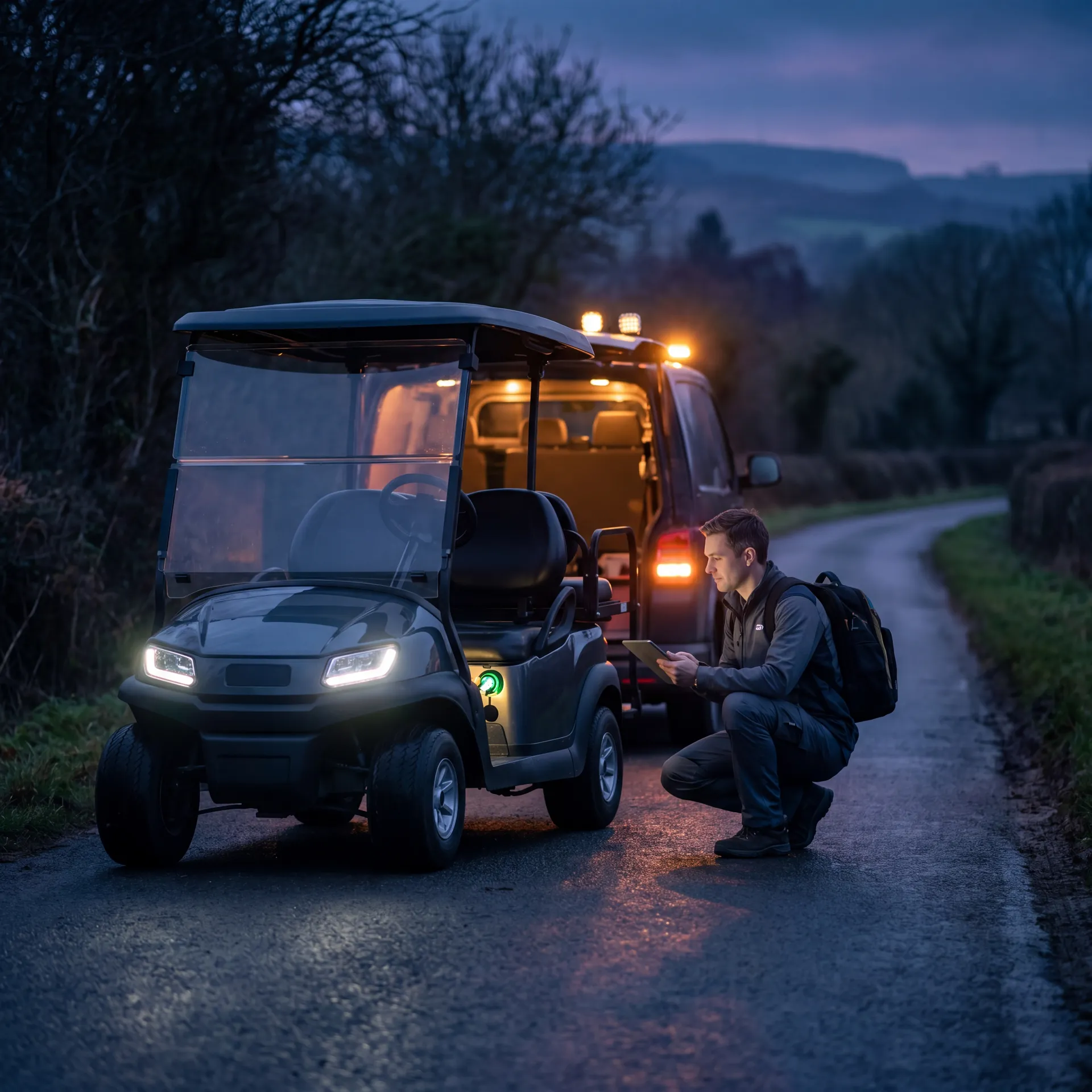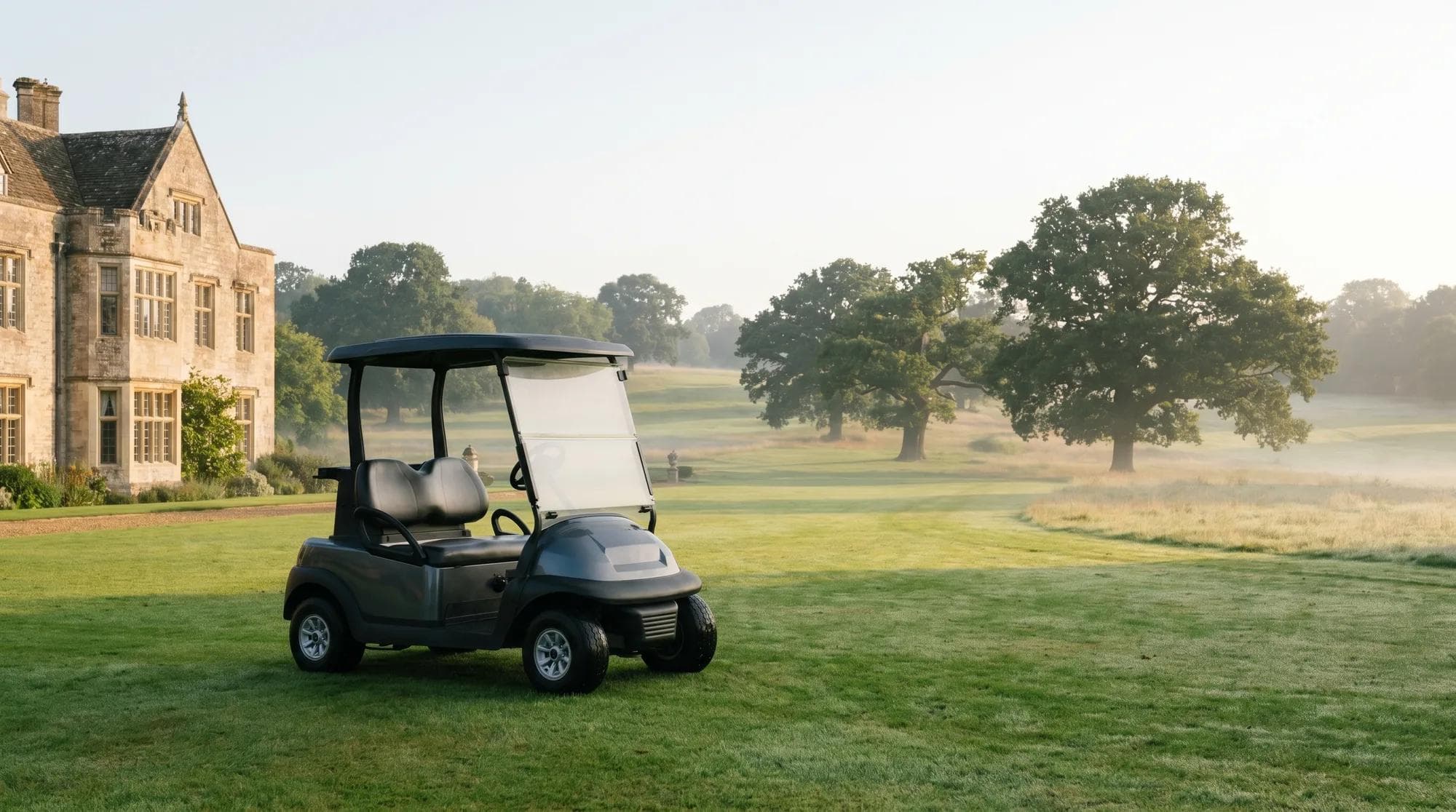
It's one of the first things people ask before they buy, and the honest answer is: it depends entirely on where the buggy will be driven. On your own land the rules are simple. The moment a public road is involved, they change completely. This guide pulls the compliance questions together in one place so you can see exactly what applies, and when.
Do you need a golf buggy licence on private land?
No. If the buggy stays on private land, you don't need a driving licence, road tax, an MOT or DVLA registration to use it. That covers almost every reason people buy one: a golf course, a large garden, an estate, a holiday park, a resort, a working site. Private land means land that the public doesn't have a right to use, and where you have the landowner's permission. There's no minimum legal age to drive on truly private land either, though common sense and your own insurance still apply.
This is why a standard buggy is built for private land as supplied. It does the job it's bought for without any of the road paperwork. If you want the wider picture on where these vehicles can and can't go, our guide on whether golf buggies are road legal in the UK is the place to start.

When do the rules change?
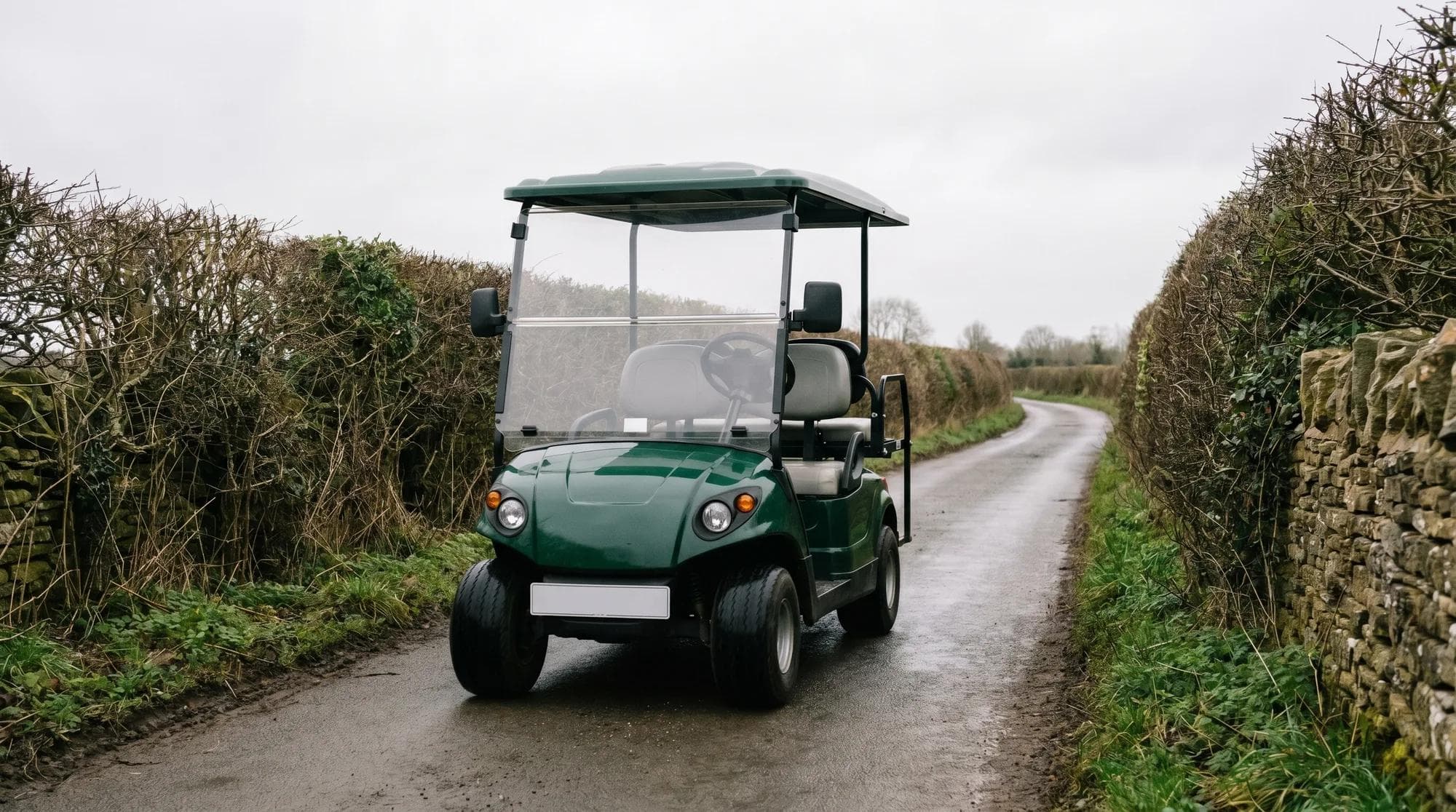
As soon as any part of a journey uses a public road, the buggy is treated as a road vehicle and a different set of rules applies. This is the part people miss. It isn't only about driving along a road. Crossing one to get from one part of a site to another counts as road use too. So does a short link between two private areas if the link itself is a public highway. If your route touches a public road at all, even briefly, you're in road-use territory and need to comply.
Even crossing a public road counts as road use, and that changes everything.
Licence, tax and MOT: private land vs public road
Here's the same set of questions answered for both situations, side by side. Use it as a quick reference, then confirm the detail for your specific vehicle.
- On private land
- Not required by law
- On a public road
- Required (usually a full driving licence; confirm the category for your vehicle)
- On private land
- Not required
- On a public road
- Required (the rate depends on the vehicle and may be a low or nil band; confirm with the DVLA)
- On private land
- Not required
- On a public road
- Usually required once the vehicle reaches MOT age; confirm for your category
- On private land
- Not legally required, but strongly advised
- On a public road
- Required by law (valid motor insurance)
- On private land
- Not required
- On a public road
- Required (the buggy must be registered with a number plate)
- On private land
- Not required as supplied
- On a public road
- Required (usually MSVA approval, plus road lighting, indicators, mirrors and other equipment)
| On private land | On a public road | |
|---|---|---|
| Driving licence | Not required by law | Required (usually a full driving licence; confirm the category for your vehicle) |
| Vehicle tax (VED) | Not required | Required (the rate depends on the vehicle and may be a low or nil band; confirm with the DVLA) |
| MOT | Not required | Usually required once the vehicle reaches MOT age; confirm for your category |
| Insurance | Not legally required, but strongly advised | Required by law (valid motor insurance) |
| DVLA registration | Not required | Required (the buggy must be registered with a number plate) |
| Type approval and equipment | Not required as supplied | Required (usually MSVA approval, plus road lighting, indicators, mirrors and other equipment) |
What road use actually requires
Making a buggy genuinely road legal is more than fitting a number plate. The vehicle has to be built and approved to a much higher standard before the DVLA will register it. In most cases that means passing Motorcycle Single Vehicle Approval (MSVA), being placed in the correct vehicle category, and carrying the right road equipment: lights, indicators, reflectors, mirrors and so on. Then it needs registration, valid insurance, vehicle tax and, once it's old enough, an MOT, and you need the correct licence to drive it.
So which do you actually need?
Start with one question: will the buggy ever touch a public road? If the honest answer is no, you need none of the road paperwork, though we'd still insure it. If the answer is yes, even for a single crossing, you'll need a road-specified, registered and insured vehicle and the right licence to drive it. When you tell us how and where the buggy will be used, we'll specify the right one and flag exactly what applies. You can read the road-specific detail in our guide on driving a golf buggy on the road in the UK.
Not sure which rules apply to you?
Tell us how and where you'll use the buggy and we'll specify the right vehicle, confirm what's legally required and set out a tailored quote. No guesswork.
Frequently asked questions
Do you need a licence to drive a golf buggy?+
Not on private land. There's no legal requirement for a driving licence to use a buggy on your own land or other private land where you have permission. You only need a licence once the buggy is driven on a public road, and you should confirm the correct licence category for your specific vehicle.
Do you need to tax and MOT a golf buggy?+
Only if it's used on a public road. On private land a buggy needs no vehicle tax and no MOT. For road use it must be registered with the DVLA, taxed (often at a low or nil rate, but confirm with the DVLA) and, once it reaches MOT age, put through an MOT for its category.
Can you drive a golf buggy on the road in the UK?+
Only if it's been built and registered for the road. A standard buggy is for private land and isn't road legal as supplied. Road use usually needs MSVA approval, the correct vehicle category, DVLA registration, road lighting and equipment, insurance and the right licence. Even crossing a public road counts.
Does crossing a road count as road use?+
Yes. Driving across a public road, even briefly to link two private areas, is treated as using the buggy on the road, so all the road-use requirements apply. If your route touches a public highway at any point, plan for a road-legal, registered and insured vehicle.
Do you need insurance for a golf buggy on private land?+
It isn't legally required on private land, but it's strongly advised. A buggy is a real vehicle and accidents, theft and damage happen off-road too. On a public road, valid motor insurance is required by law. Our golf buggy insurance guide explains the cover worth having either way.
Is there a minimum age to drive a golf buggy?+
On genuinely private land there's no legal minimum driving age, though your own insurance and good sense still apply, and many sites set their own age rules. On a public road the normal licensing and age rules for that vehicle category apply, so confirm them before anyone drives on a road.
Related solutions
Ready to explore what we build?
See the vehicles and the setting this applies to, or get a tailored quote built around your site.

Ready to find the right buggy?
Tell us how and where it will work and we will specify a vehicle and a tailored quote built around you. Every build comes with a 3-year warranty and a 24-hour priority call-out.
Our guides are written and reviewed by the Hawke Electric Vehicles team, the people who specify, build, deliver and support the vehicles. We focus on honest, practical advice and flag where a figure depends on the build rather than guessing.
More guides by Hawke