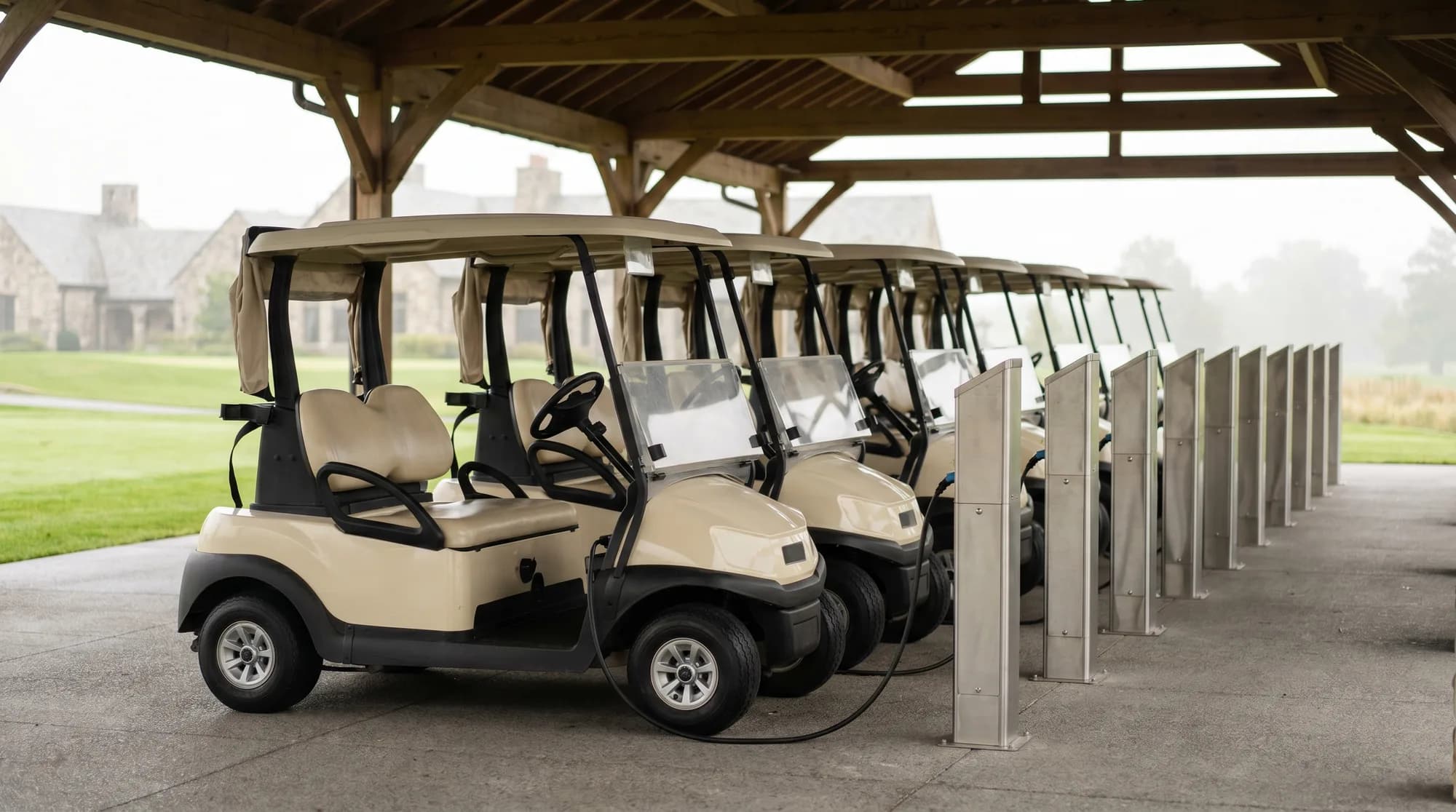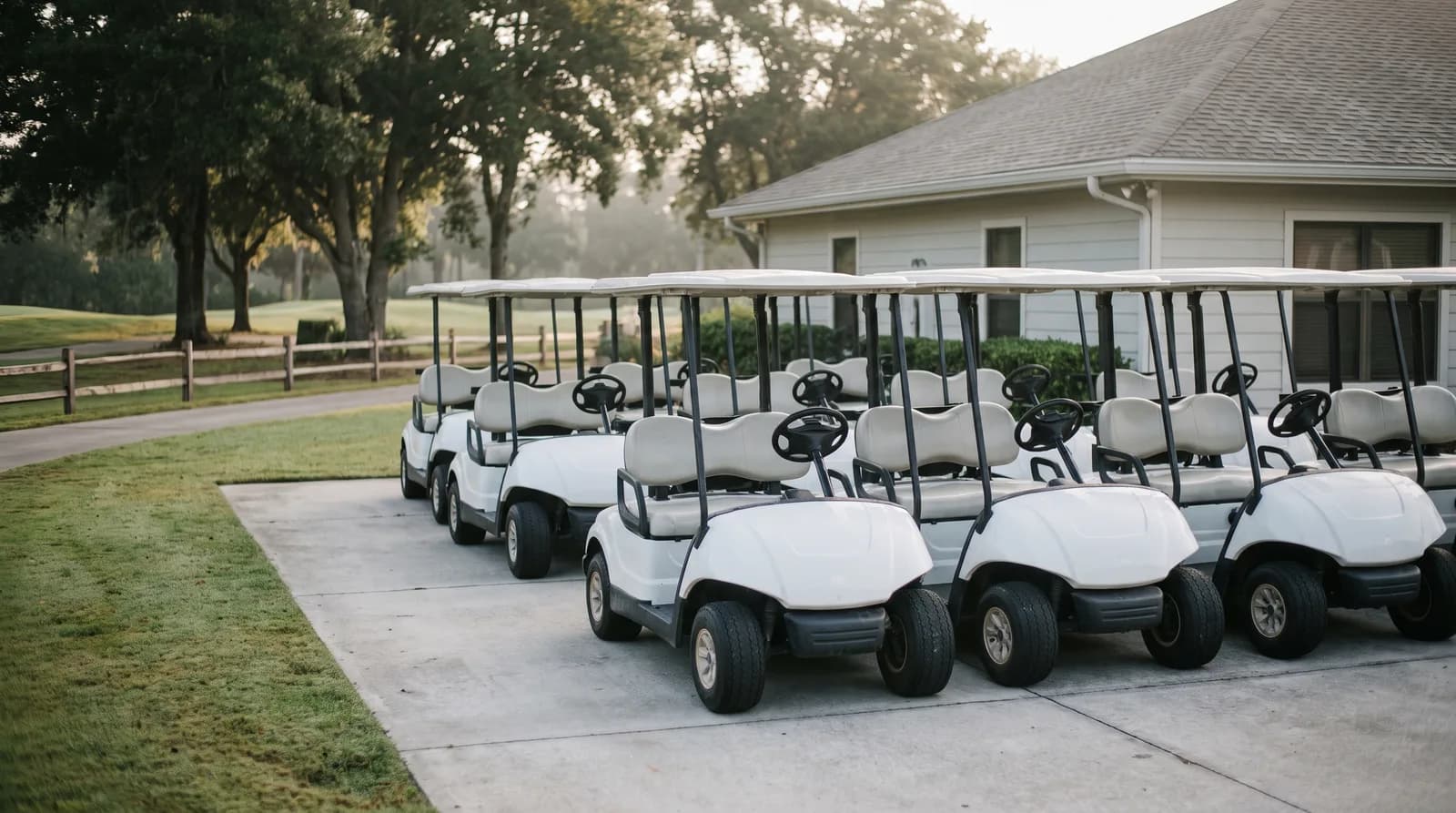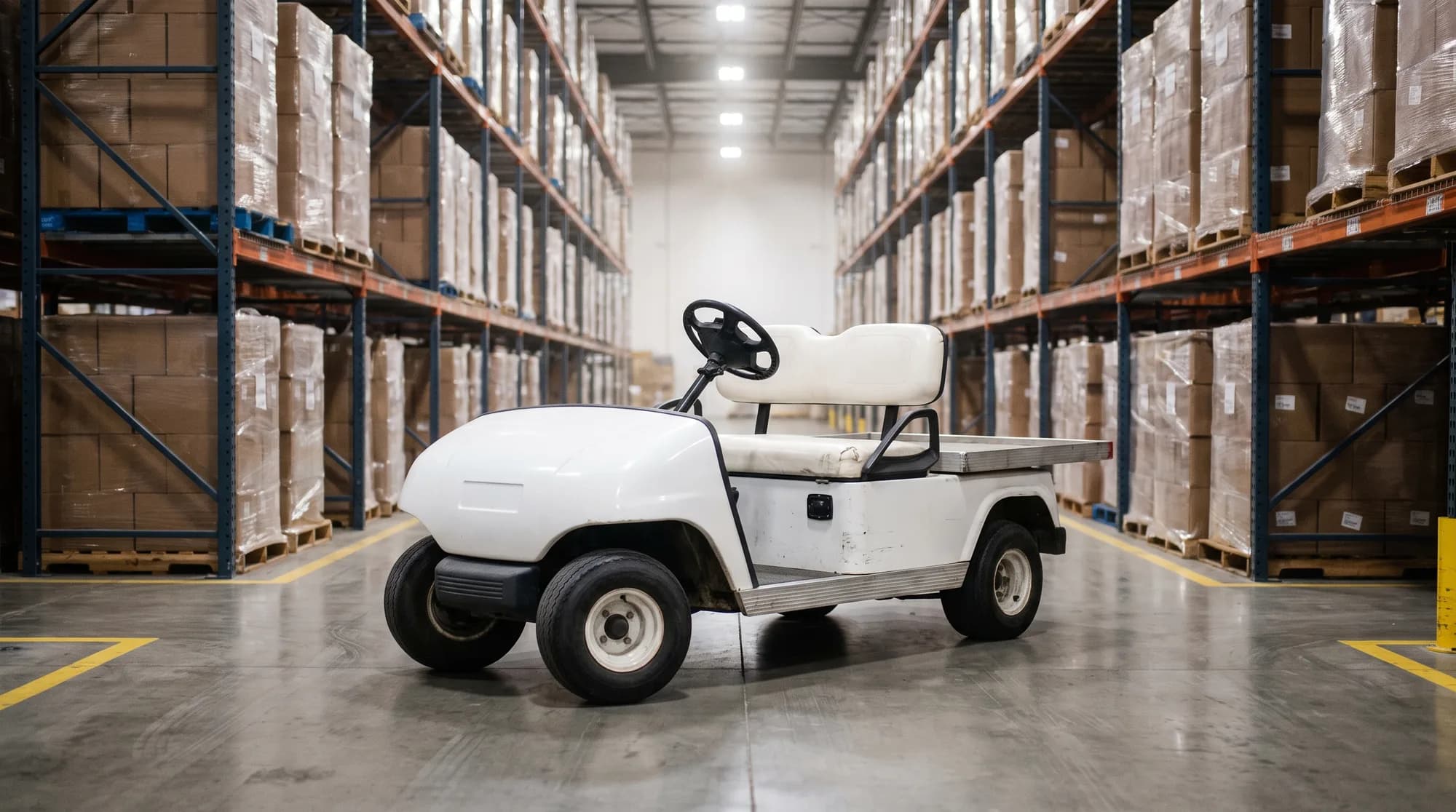
In a large warehouse, distribution center or manufacturing plant, walking is wasted time. A personnel or burden cart turns a fifteen-minute trek across a million square feet into a two-minute ride, moves tools and parts to where the work is, and lets supervisors, maintenance and material handlers cover ground that would otherwise grind productivity to a crawl. But an industrial cart is a different animal from a golf cart. It runs hard duty cycles indoors, often across multiple shifts, shares aisles with forklifts and pedestrians, and lives or dies on uptime. This guide is for the operations manager who needs the fleet to move people and burden reliably, safely and economically.
- Match the cart to the duty: a personnel cart moves people, a burden cart moves loads, and few sites need only one.
- Indoor operation raises the safety bar; speed limiting, visibility, alarms and pedestrian awareness are essential in shared aisles.
- Charging is an operations problem; multi-shift sites need a charging plan that never starves the floor of carts.
- Uptime drives ROI; a cart down during a shift is lost labor across everyone who relied on it.
- High-utilization permanent sites usually buy; flexible or peak-season operations often lease.
Personnel, burden, or both
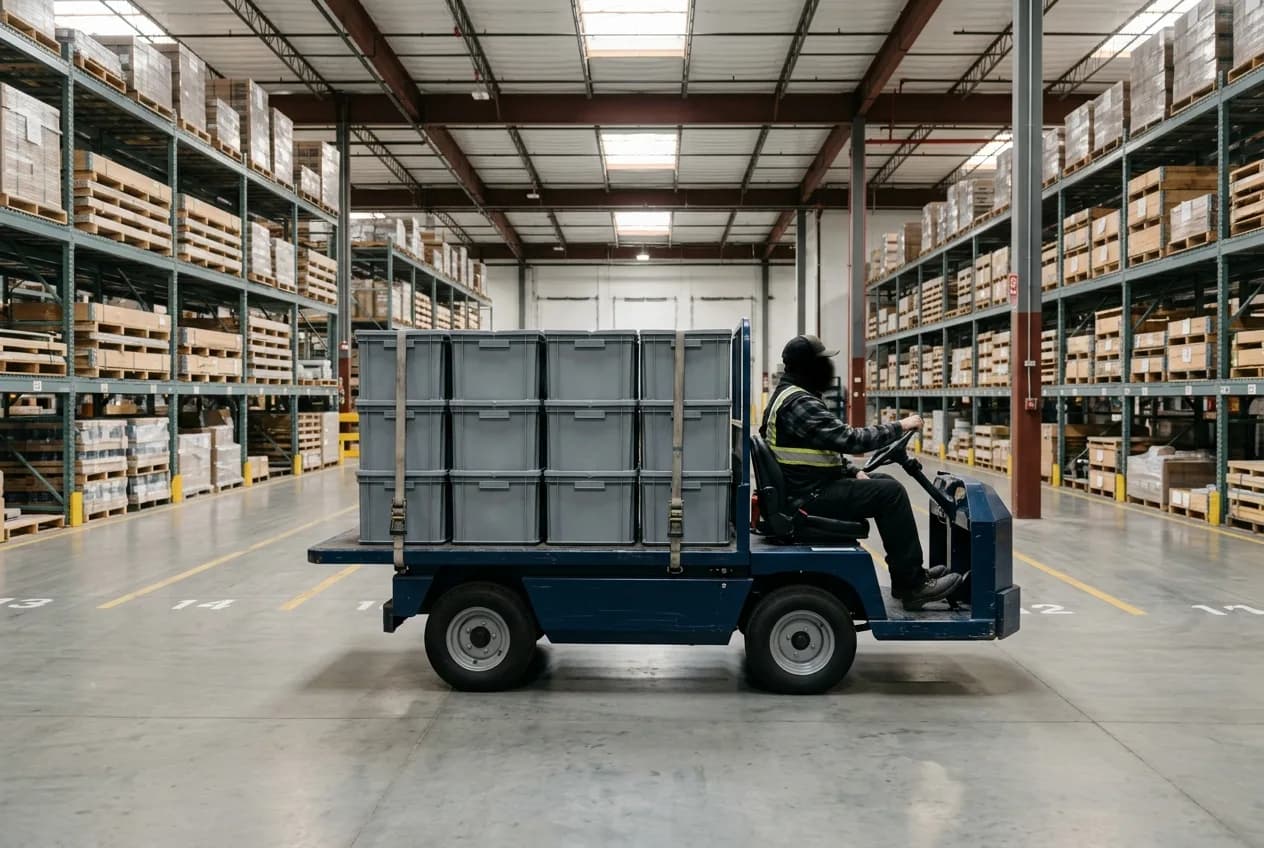
The first decision is what the cart carries. A personnel carrier moves people, supervisors walking the floor, maintenance techs reaching a downed line, material handlers covering zones; it prioritizes seating and a quick, nimble drive. A burden carrier moves loads, with a flatbed or stake bed for parts, tools, totes and supplies, prioritizing payload and a flat cargo area. Many plants need both: people-movers for the staff and burden carriers for the materials. Choosing the wrong type, a personnel cart pressed into hauling or a heavy burden carrier used to shuttle a single supervisor, wastes money and capacity. Match the cart to the job, and our guide to what size cart you need helps you right-size seating and bed.
Indoor safety is non-negotiable
An industrial cart shares aisles with forklifts, pallet jacks and people on foot, often around blind corners, so safety spec is not optional. Electric carts are the obvious choice indoors, since they produce no exhaust, but the safety story goes further. Specify speed limiting suited to the aisle environment, good all-round visibility, a reversing alarm and a horn, bright lighting and high-visibility markings, and consider blue spot or pedestrian warning lights where the site uses them on forklifts. Drivers should be trained to the same standards as your forklift operators, because a cart at speed around a blind corner is just as dangerous as any other powered vehicle on the floor.
Charging logistics for a working floor
A warehouse cart that is plugged in is a cart not doing work, and on a multi-shift floor that gap can stall a whole zone. The charging plan has to keep carts available across every shift the floor runs.
- 01
Map runtime against the shift
Work out how long a cart lasts on a charge under real duty, and compare that against the length of your shifts to find the gap.
- 02
Choose a charging strategy
Either rotate carts to a charging bay between shifts, or use opportunity charging during breaks so packs are topped up without leaving the floor short.
- 03
Site the charging bay sensibly
Put chargers where carts naturally end a shift, with enough ventilated outlets for the whole fleet and clear of forklift traffic.
- 04
Favor faster-charging packs for hard duty
Lithium packs tolerate opportunity charging and multi-shift use far better than flooded lead-acid, reducing how many spare carts you need.
Sizing the fleet to the floor
Fleet size in industry is a function of the area to cover, the number of people who need mobility, the volume of burden to move and the shift pattern. A single large building with a few supervisors and a maintenance team needs a handful of carts; a sprawling multi-building distribution operation running three shifts needs a planned fleet with charging spares built in. As with any hard-duty fleet, size to the busiest shift's simultaneous demand, then add carts so charging and the occasional breakdown never leave the floor short. Burden and personnel needs should be counted separately so one does not cannibalize the other.
- Personnel carrier
- Move people fast
- Burden carrier
- Move loads
- Personnel carrier
- Seating
- Burden carrier
- Flatbed or stake bed
- Personnel carrier
- Nimble, quick
- Burden carrier
- Payload, stability
- Personnel carrier
- Supervisors, maintenance
- Burden carrier
- Material handlers
- Personnel carrier
- People needing mobility
- Burden carrier
- Volume of burden
| Personnel carrier | Burden carrier | |
|---|---|---|
| Primary job | Move people fast | Move loads |
| Layout | Seating | Flatbed or stake bed |
| Drive priority | Nimble, quick | Payload, stability |
| Typical user | Supervisors, maintenance | Material handlers |
| Sizing driver | People needing mobility | Volume of burden |
Accessibility on the industrial floor
Accessibility matters in industry too. A large facility may employ staff with mobility limitations who need a reliable way to cover distance, and a personnel cart can be the accommodation that keeps a valued worker effective across a huge site. Speccing part of the fleet with a low step and grab handles, and making a cart available to staff who need it, supports both your obligations and your retention. It is a small spec consideration with a real human payoff.
Uptime, ROI and the lease-versus-buy call
The ROI on an industrial cart is mostly recovered labor: every minute staff are not walking is a minute spent on value-adding work, multiplied across a shift and a fleet. That is why uptime dominates the economics; a cart down for a shift erases the productivity gain for everyone who relied on it. Build a maintenance routine, keep a spare, and choose packs suited to your duty cycle. On lease versus buy, a permanent high-utilization site usually buys and maintains a fleet, spreading the cost over years of hard work, while a peak-season warehouse or a flexible operation often leases to match capacity to demand without owning idle assets. Our guides to cost, commercial leasing and fleet management cover the numbers and the upkeep.
The cart pays for itself in steps not taken. Every shift a worker rides instead of walks across the floor is labor returned to the work that matters.
So what should you do?
Match personnel and burden carts to the jobs, treat them as powered industrial trucks with full indoor safety discipline, build a charging plan that keeps the floor supplied across every shift, size to the busiest shift with charging and maintenance spares, and choose lease or buy on utilization and seasonality. If you would like help speccing an industrial cart fleet to your facility, duty cycle and shift pattern, with honest numbers, we are glad to help.
Spec an industrial cart fleet to your floor
Tell us your facility size, your duty cycle and your shift pattern, and we will recommend a personnel and burden fleet with the uptime you need at an honest price.
Frequently asked questions
What is the difference between a personnel cart and a burden cart?+
A personnel carrier is built to move people quickly, prioritizing seating and a nimble drive, while a burden carrier is built to move loads, with a flatbed or stake bed and payload capacity. Many industrial sites need both, counted and sized separately so one duty does not eat the other's capacity.
Are golf carts safe to use inside a warehouse?+
Yes, when treated as powered industrial trucks. Use electric carts for zero exhaust, apply speed limiting, defined routes, pedestrian-priority crossings, reversing alarms and high-visibility markings, and train drivers to forklift standards. Most indoor cart incidents are speed-and-blind-corner events that this discipline prevents.
How do I charge carts across multiple shifts?+
Either rotate carts to a ventilated charging bay between shifts or use opportunity charging during breaks so packs top up without leaving the floor short. Compare real runtime against shift length to find the gap, and favor faster-charging lithium packs, which handle multi-shift duty far better than flooded lead-acid.
How big should my industrial cart fleet be?+
Size to the busiest shift's simultaneous demand for both people-movers and burden carriers, counted separately, then add carts so charging and the occasional breakdown never leave the floor short. Area to cover, people needing mobility, burden volume and shift pattern all drive the number.
Should a warehouse lease or buy its carts?+
A permanent, high-utilization facility usually buys and maintains a fleet, spreading the cost over years of hard work. A peak-season or flexible operation often leases to match capacity to demand without owning idle assets. The right call depends on your utilization and seasonality.
Related solutions
Ready to explore what we build?
See the vehicles and the setting this applies to, or get a tailored quote built around your site.

Ready to find the right buggy?
Tell us how and where it will work and we will specify a vehicle and a tailored quote built around you. Every build comes with a 3-year warranty and a 24-hour priority call-out.
Our guides are written and reviewed by the Hawke Electric Vehicles team, the people who specify, build, deliver and support the vehicles. We focus on honest, practical advice and flag where a figure depends on the build rather than guessing.
More guides by Hawke