If your cart sleeps through the winter, how you put it away decides what you wake up to in spring. The single most common springtime call is a dead battery pack that was perfectly healthy in the fall, ruined by months of neglect in the cold. Winterizing a golf cart is not complicated, but it is a sequence of small steps that protect the most expensive and vulnerable parts: the batteries, the fluids and the cart itself. Do them properly and the cart fires up in spring exactly as you left it. Skip them and you could be buying a new pack before the first warm weekend. This guide walks the whole process, then how to wake the cart up again.
Why winter is so hard on a stored cart
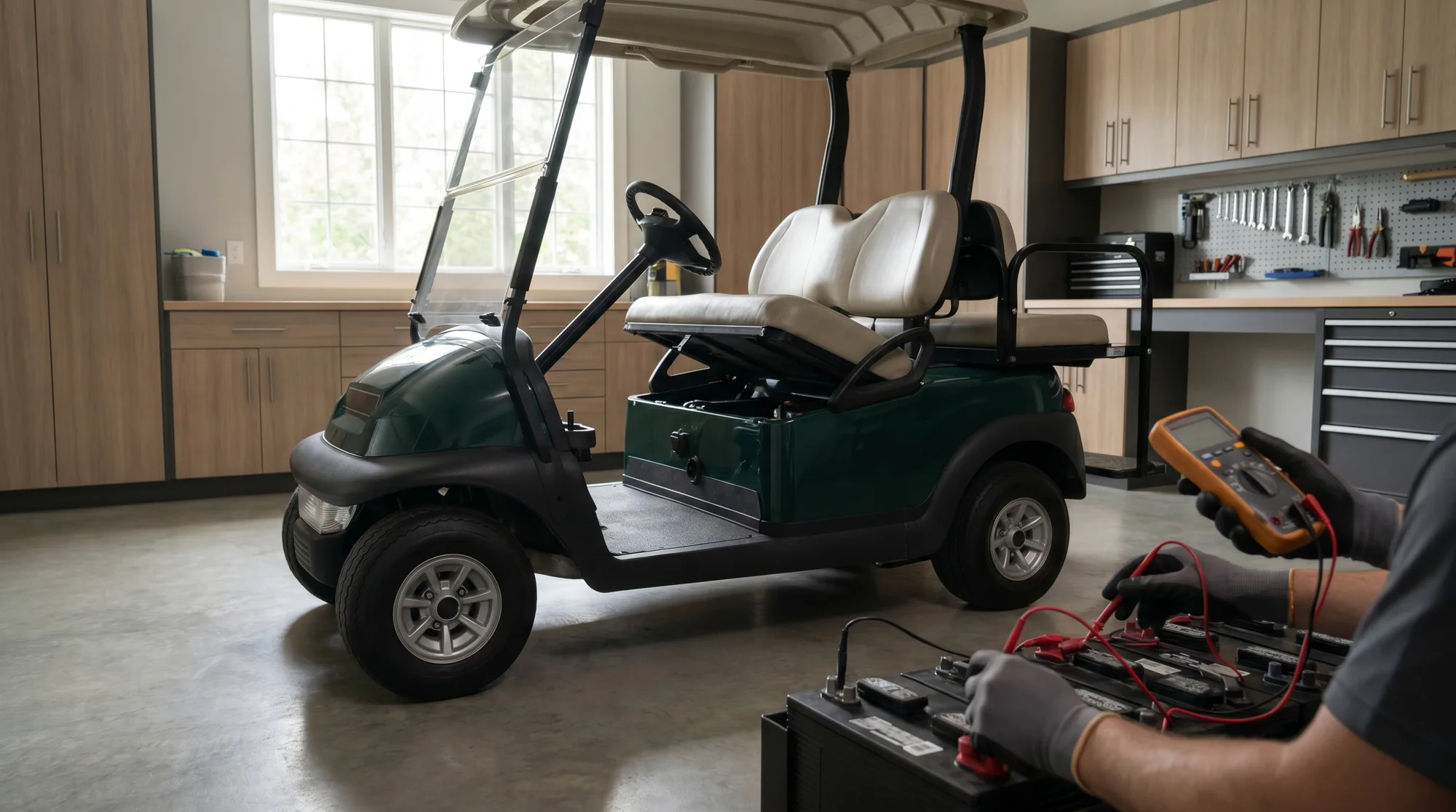
Two things happen to a cart left over winter. First, the battery slowly self-discharges, and cold makes a low battery worse: a flat or near-flat lead-acid battery can actually freeze and crack its case in deep cold, while sitting discharged for months causes sulfation that permanently reduces capacity. Second, everything else gets cold, damp and still: fluids settle, seals dry, tires develop flat spots, and moisture and pests find an undisturbed cart inviting. The whole job of winterizing is to counter those two processes.
Cold also temporarily reduces battery performance even on a healthy pack, which is why spring range can feel low until things warm up. For owners who actually drive in the cold rather than store the cart, our cart heaters and cold-weather guide is the companion to this one, and our battery care and lifespan guide explains the chemistry behind these habits.
Step by step: putting the cart away
Work through these in order at the end of the season. The exact details vary by model, so check your manual, but the logic holds for any cart.
- 01
Fully charge the battery pack
Bring the pack to a full charge before storage. A fully charged battery resists freezing and rides out the winter far better than a low one.
- 02
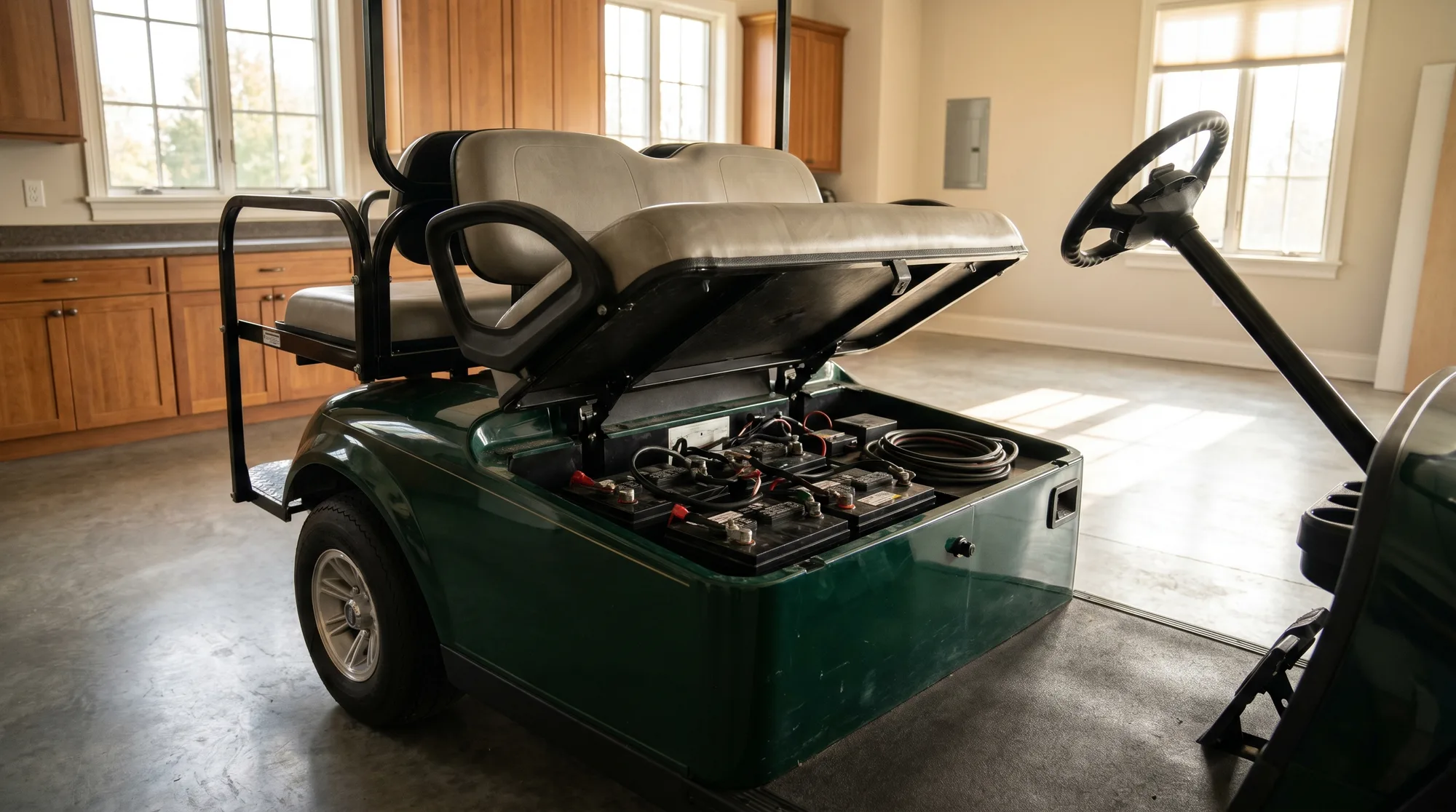
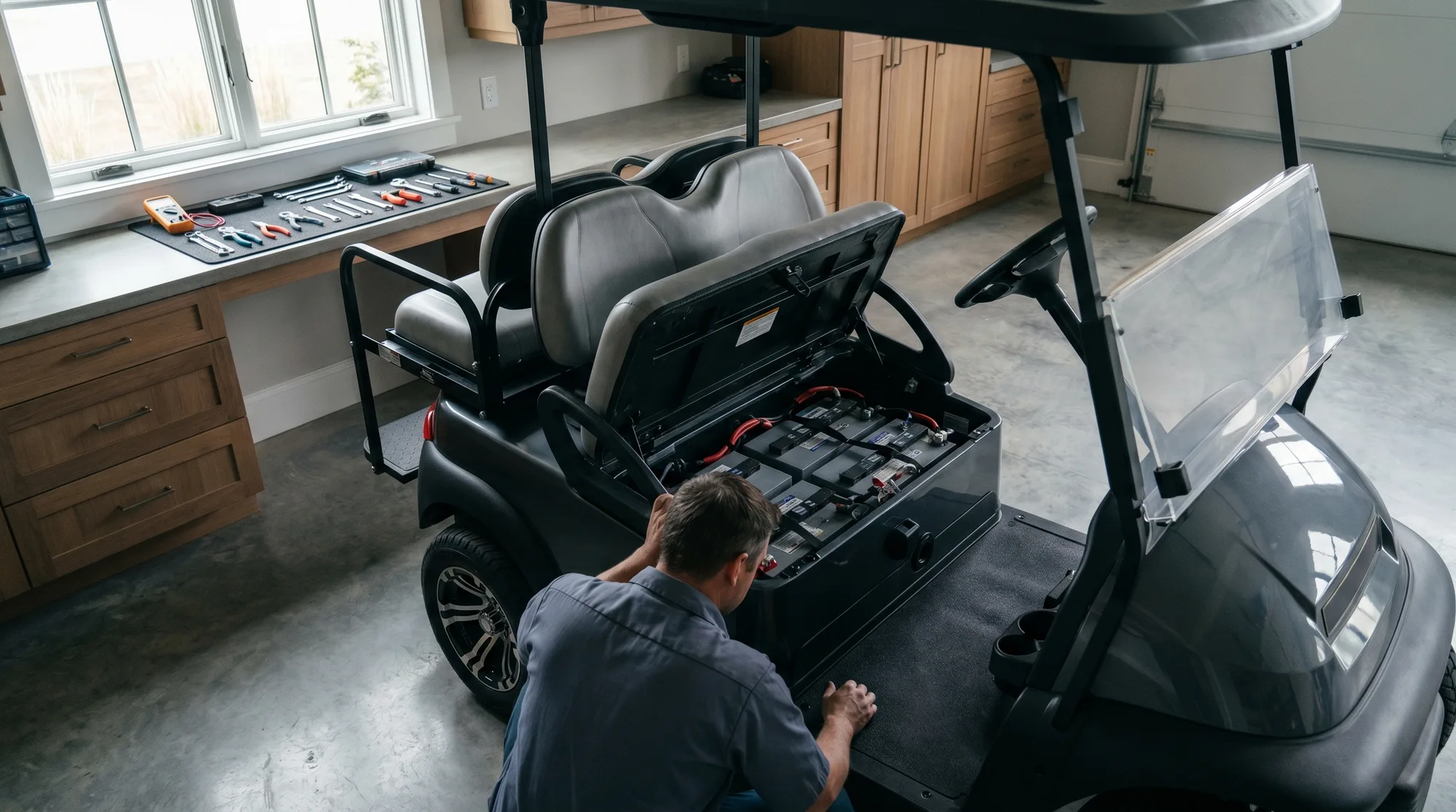
Top up and clean lead-acid cells
Check and top up flooded cells with distilled water to the correct level, then clean and protect the terminals against corrosion.
- 03
Decide how to maintain the charge
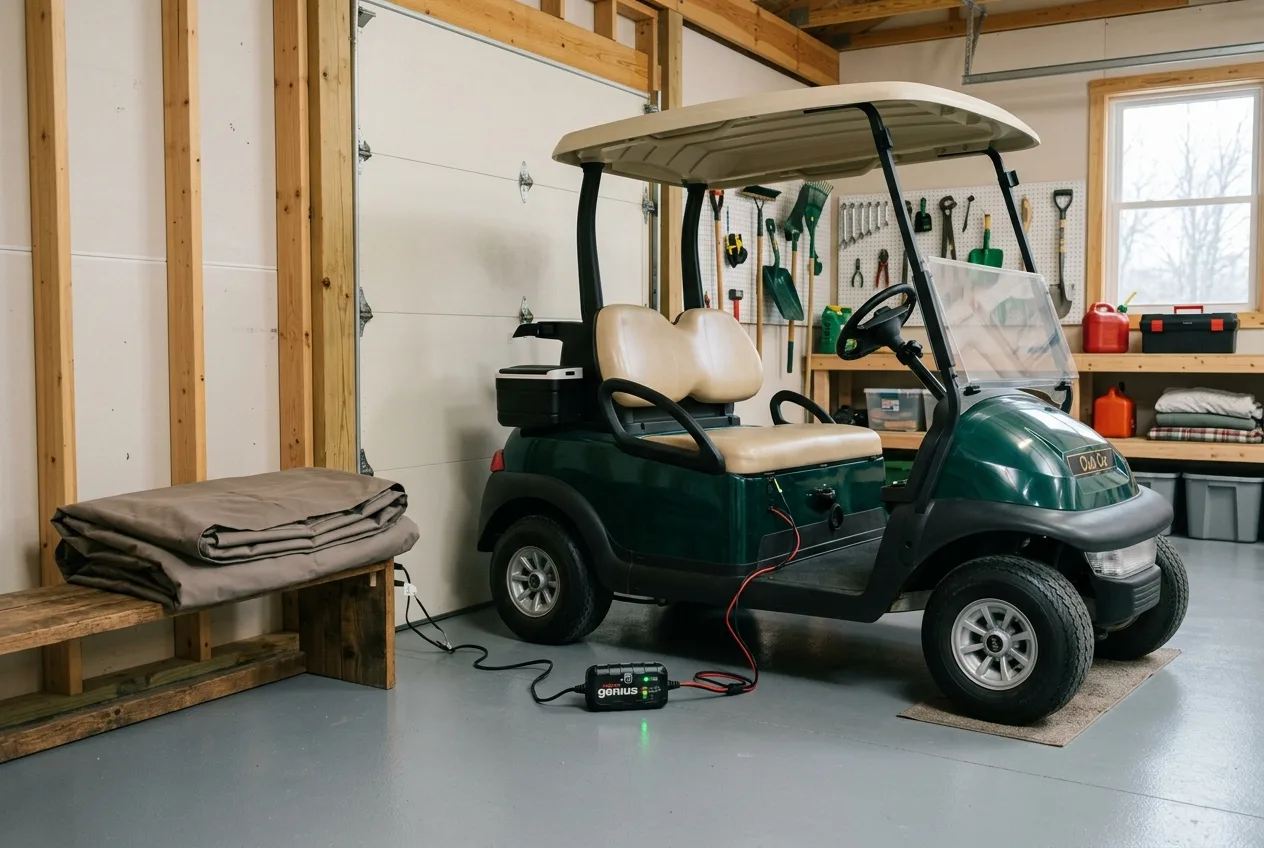
Use a quality maintenance or trickle charger suited to your battery type, or plan to charge the pack periodically through the winter. Do not just leave it.
- 04
Clean, dry and lubricate
Wash and fully dry the cart, lubricate per the manual, and clean out anything that traps moisture. A dry cart stores far better than a dirty, damp one.
- 05
Set the tires and storage spot
Inflate tires to spec, and store the cart dry, covered and ideally off bare cold concrete on boards or a mat to reduce the chill and damp transfer.
Battery storage: maintainer or periodic charge
The battery is the heart of winterizing, so it deserves a clear decision. You have two good options and one bad one. The bad one is leaving the pack alone all winter; it will slowly self-discharge and may not survive. The good options are a maintenance charger matched to your battery chemistry, which keeps the pack topped without overcharging, or charging the pack fully every few weeks yourself. Lithium packs self-discharge much more slowly and tolerate cold storage better, but should still be stored at a sensible charge level per the manufacturer, not left full or empty for months.
- Approach
- Slow self-discharge
- Outcome
- Often a dead pack by spring
- Approach
- Charge fully every few weeks
- Outcome
- Works if you are disciplined
- Approach
- Keeps pack topped automatically
- Outcome
- The safest, easiest option
- Approach
- Slow self-discharge, cold-tolerant
- Outcome
- Store per maker, do not leave full/empty
| Approach | Outcome | |
|---|---|---|
| Leave it alone | Slow self-discharge | Often a dead pack by spring |
| Periodic top-up charge | Charge fully every few weeks | Works if you are disciplined |
| Maintenance charger | Keeps pack topped automatically | The safest, easiest option |
| Lithium, stored mid-charge | Slow self-discharge, cold-tolerant | Store per maker, do not leave full/empty |
Where and how to store the cart
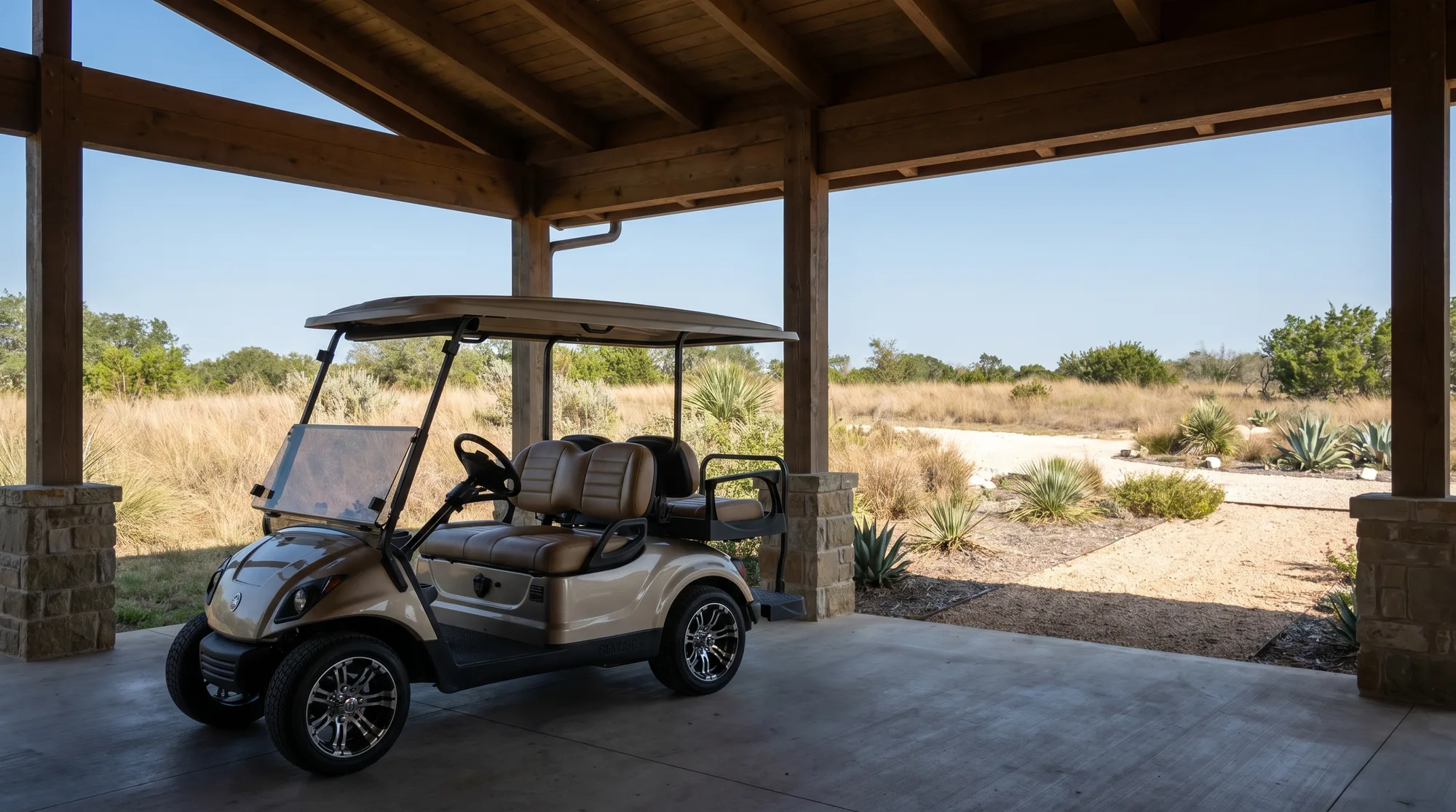
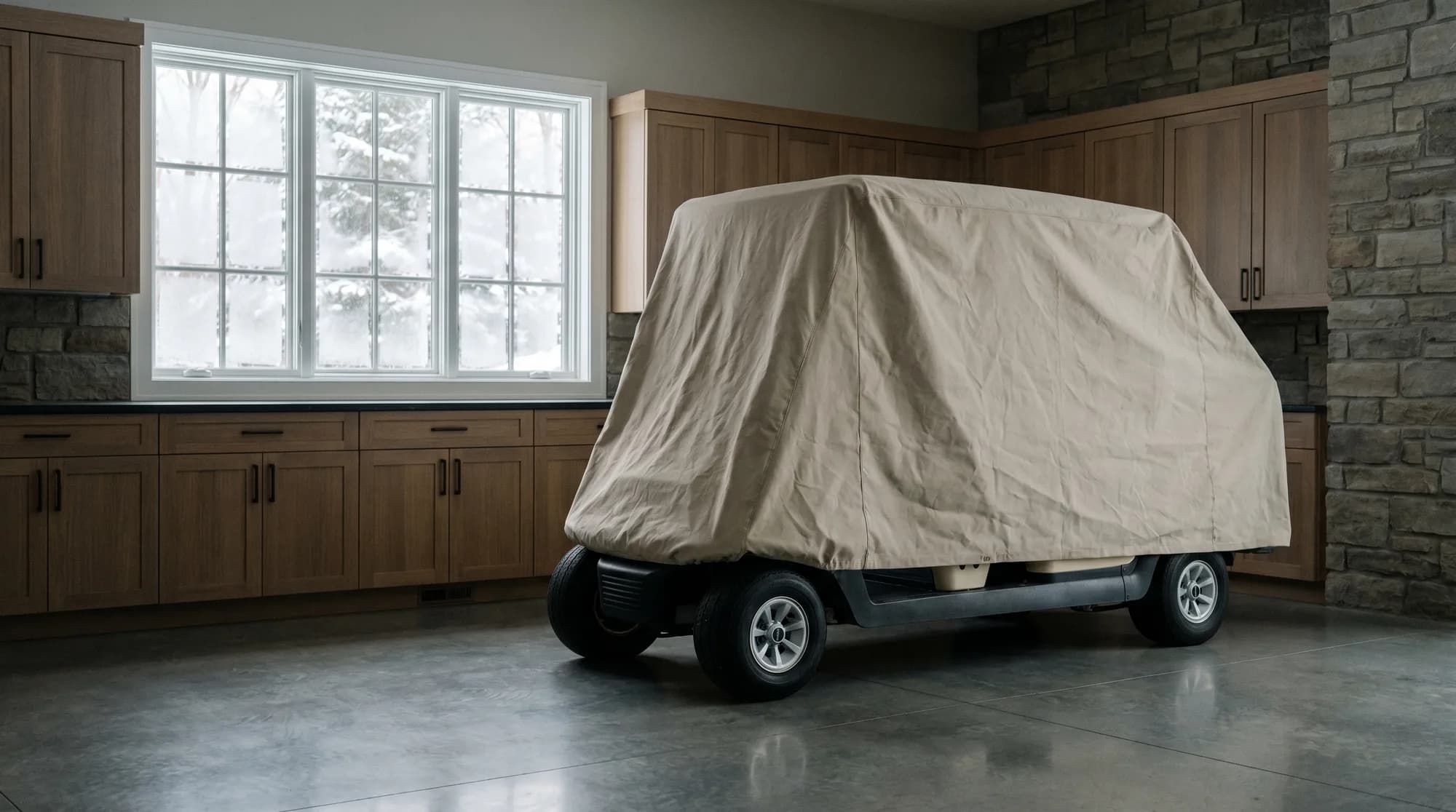
Where the cart sleeps matters almost as much as how you prep it. A dry, sheltered space is ideal: a garage, a barn or a covered area protects it from snow, ice and the freeze-thaw cycle. If you must store outdoors, a quality breathable cover is essential to keep snow and moisture off without trapping condensation. Lift or rotate tires if you can to avoid flat spots over a long winter, and deter pests, which love to nest in a still cart and chew wiring. Our covers and storage guide goes deeper on doing this without trapping damp.
- Choose a dry, sheltered spot; a garage or barn beats the open every time.
- If outdoors, use a breathable cover, not a plastic sheet that traps condensation.
- Store off bare cold concrete on boards or a mat to limit chill and moisture.
- Deter rodents, which nest in idle carts and chew through wiring.
- Set tires to spec and consider lifting or rotating them to prevent flat spots.
Waking the cart up in spring
A good winterizing job is only half the work; the spring wake-up confirms it paid off. Do not just jump in and drive. Run a quick checklist so any winter issue surfaces in the driveway, not on the road.
- 01
Inspect and charge
Check the battery pack, top up flooded cells, clean terminals and give it a full charge before the first drive.
- 02
Check tires and fluids
Reset tire pressures, look for flat spots, and check any fluids and lubrication per the manual.
- 03
Test brakes and controls
Confirm the brakes hold on a slope and feel firm, since drum brakes can corrode over a long sit, then test lights and accessories.
- 04
Take a gentle first run
Drive a short, easy loop and listen for new noises before trusting the cart with a full load or a long trip.
Spring tells you whether you really winterized or just parked it. The owners who keep the pack charged all winter are the ones driving in April, not battery shopping.
So what should you do?
Charge the pack fully, keep it maintained through the cold, top up and protect the cells, clean and lubricate the cart, set the tires and store it dry and sheltered. Then run the spring checklist before you trust it again. If your old cart did not survive the winter or its pack is finished, we are glad to help you choose a reliable replacement, or a battery upgrade, with honest numbers.
Cart didn't survive the winter?
If the pack or the cart is finished, tell us how you use it and we will recommend a dependable replacement with a real price.
Frequently asked questions
How do I winterize a golf cart battery?+
Charge the pack fully, top up flooded cells with distilled water and clean the terminals. Then keep it maintained through the winter with a maintenance charger or by charging it fully every few weeks. Never store the pack flat, as a discharged battery can freeze and lose capacity.
Can a golf cart battery freeze in winter?+
Yes. A flat or near-flat lead-acid battery can freeze and crack its case in deep cold, while a fully charged battery resists freezing. This is the main reason you should always store the pack charged and keep it topped up through the winter.
Do I need to charge my golf cart over winter?+
Yes, unless you remove and store the batteries on a maintainer. Leaving the pack alone lets it slowly self-discharge and risks a ruined battery by spring. Use a maintenance charger or charge it fully every few weeks. Lithium packs self-discharge more slowly but should still be stored at a sensible charge.
Where should I store my golf cart in winter?+
In a dry, sheltered space such as a garage or barn, off bare cold concrete on boards or a mat. If you must store outdoors, use a breathable cover rather than plastic, set tires to spec to avoid flat spots and deter rodents that chew wiring.
What should I check when I take the cart out in spring?+
Inspect and fully charge the battery, top up flooded cells and clean terminals, reset tire pressures, check fluids, test that the brakes hold on a slope and feel firm, and take a gentle first run listening for new noises before trusting it with a full load.
Related solutions
Ready to explore what we build?
See the vehicles and the setting this applies to, or get a tailored quote built around your site.
Ready to find the right golf cart?
Tell us how and where it will work and we will specify a vehicle and a tailored quote built around you. Every build comes with a 3-year warranty and a 24-hour priority call-out.