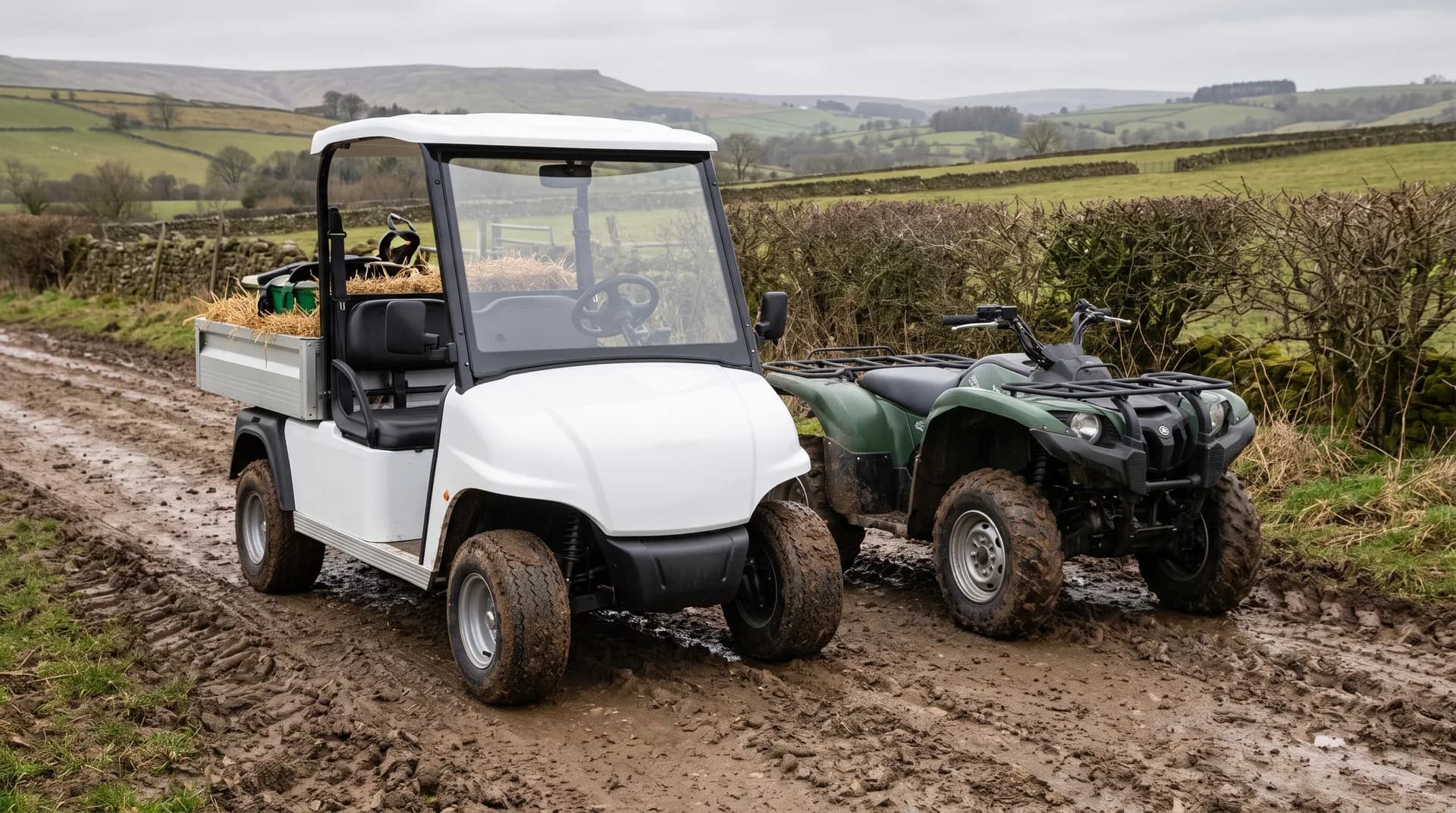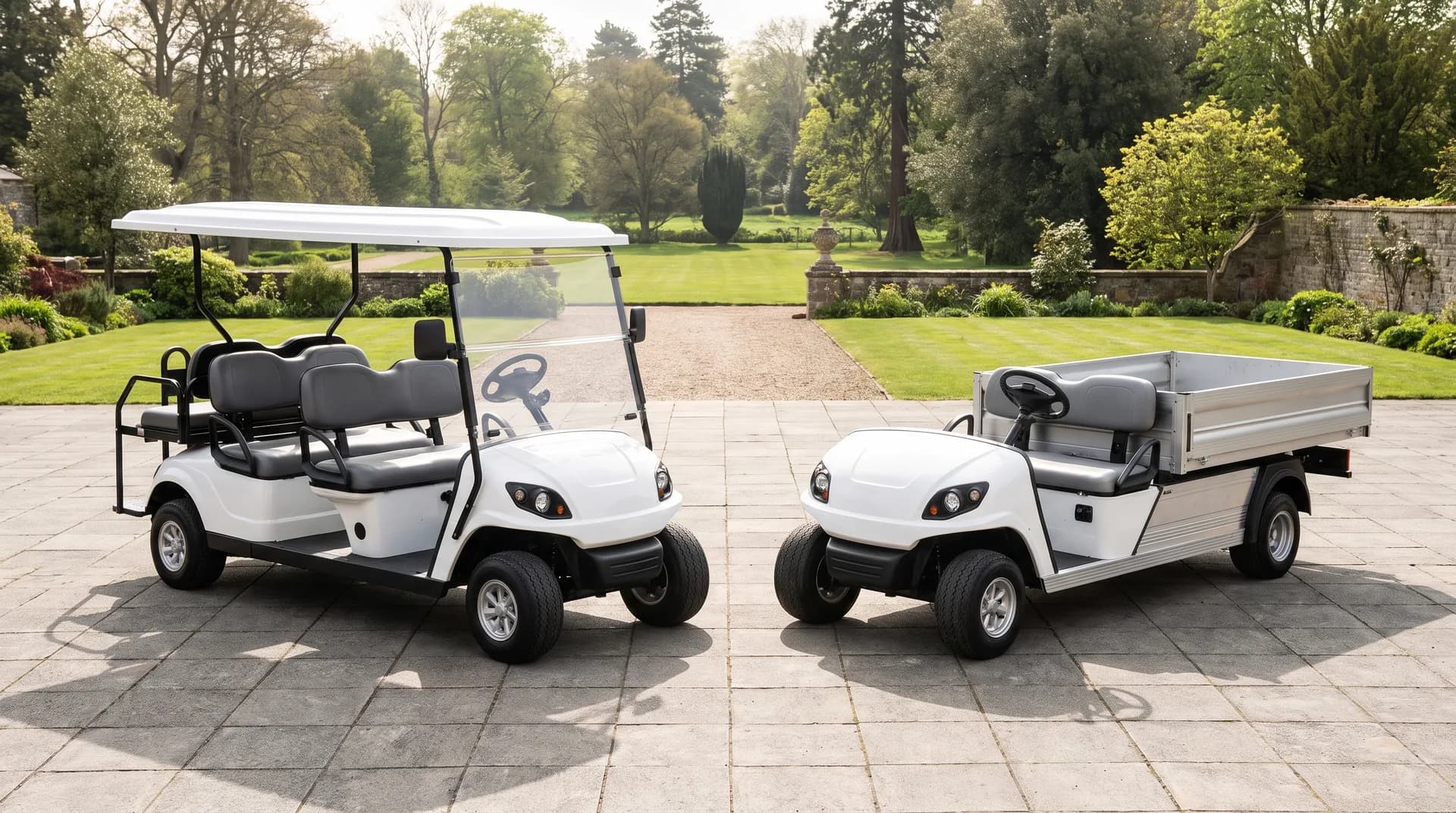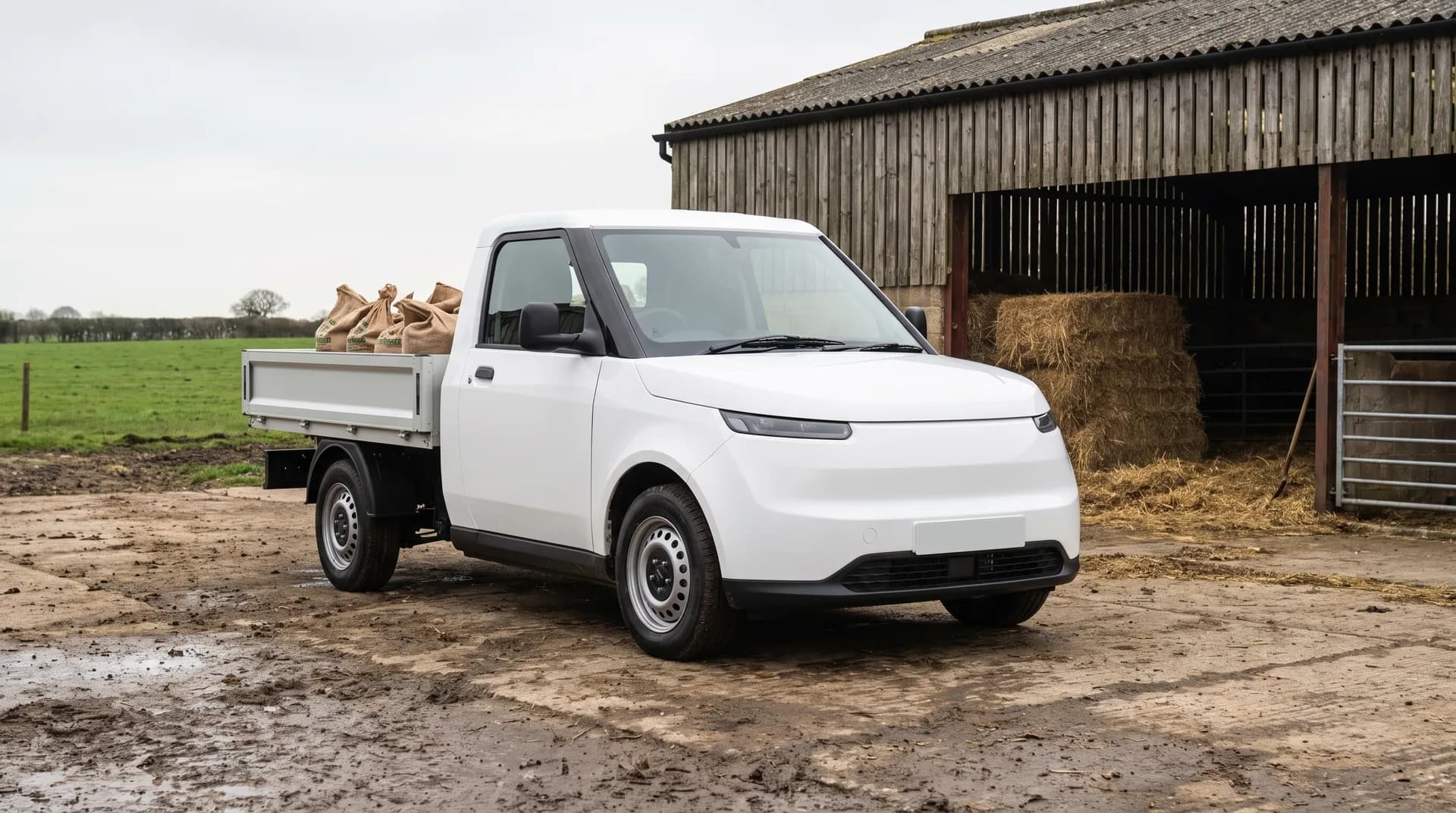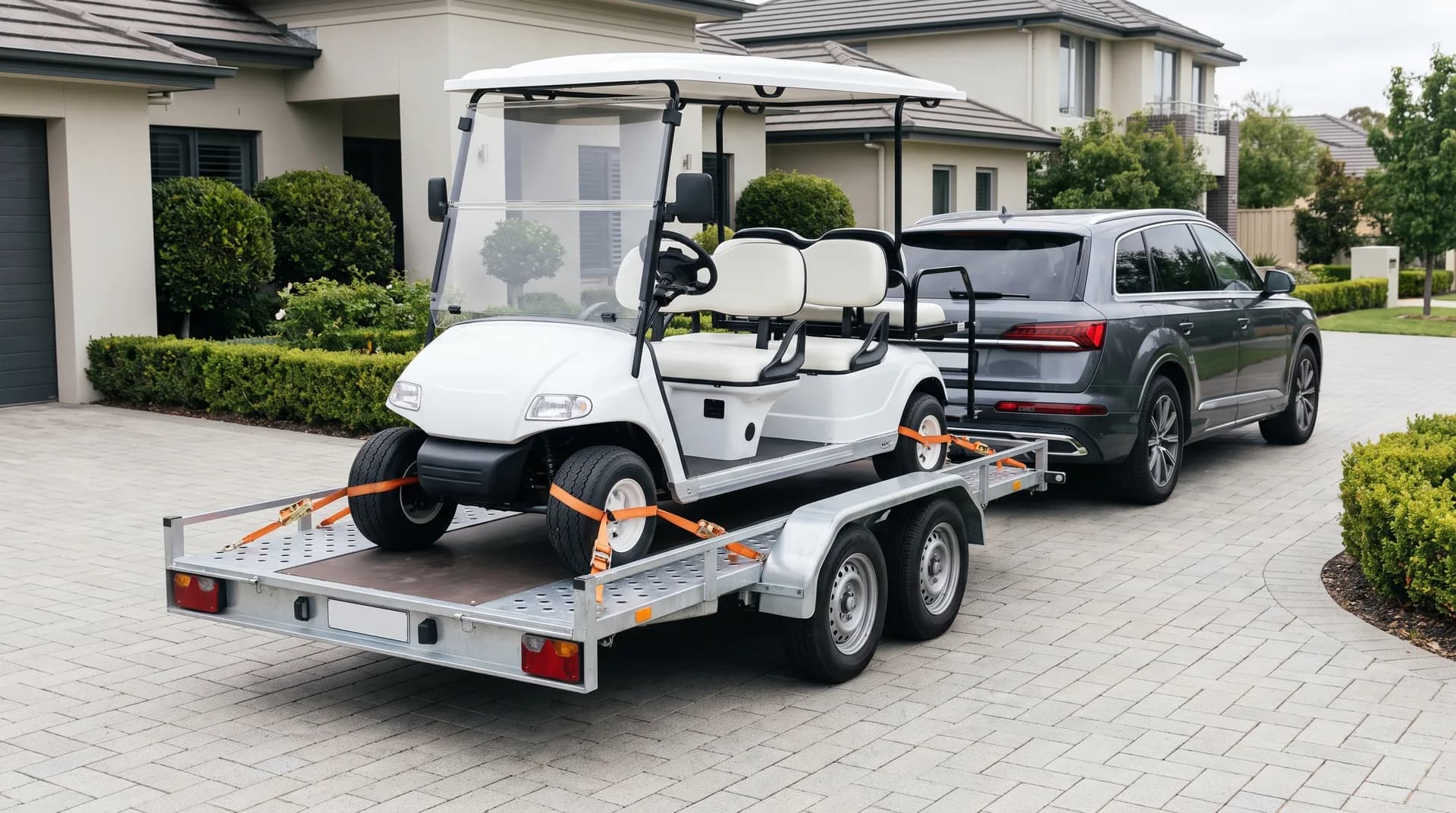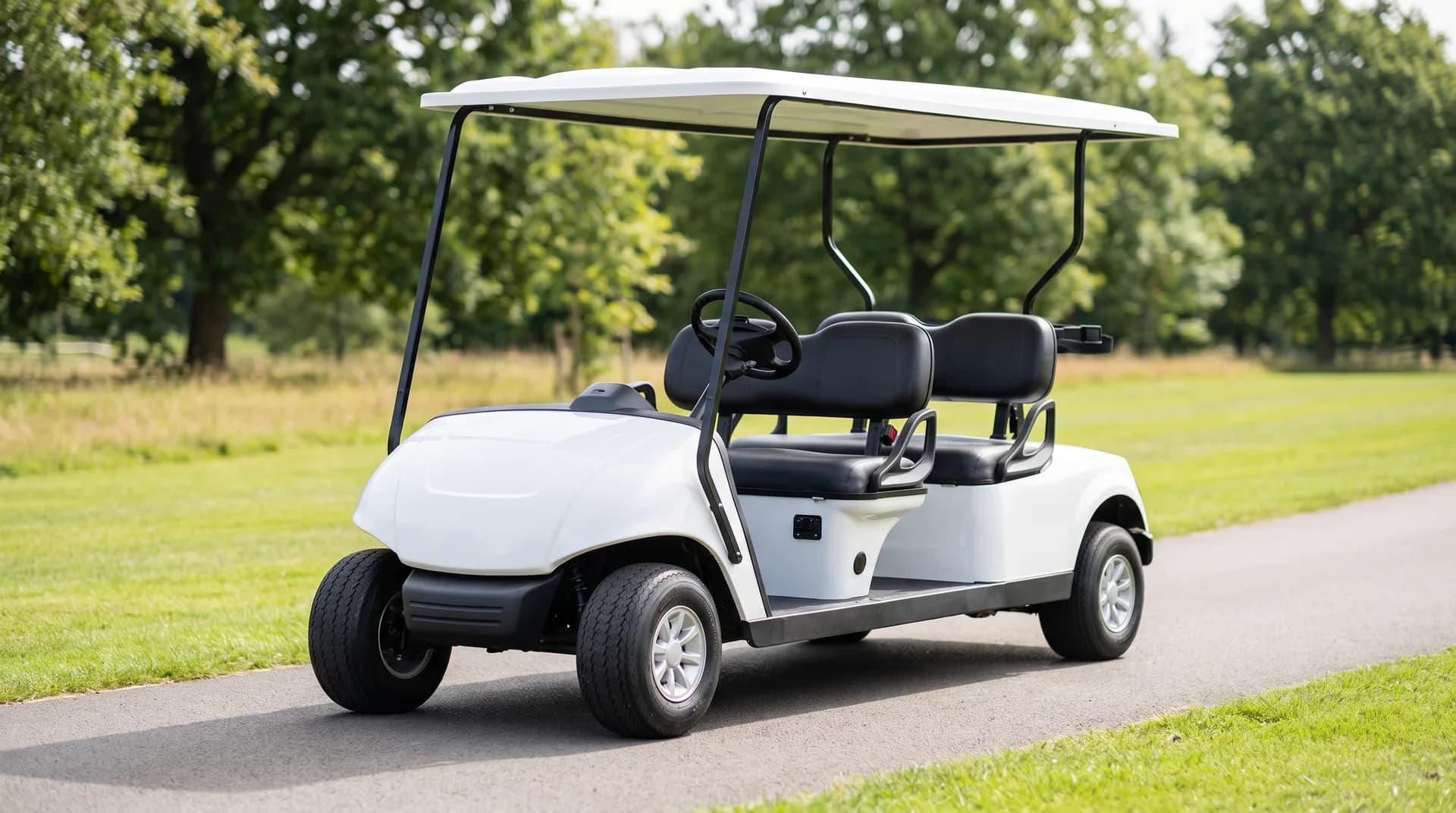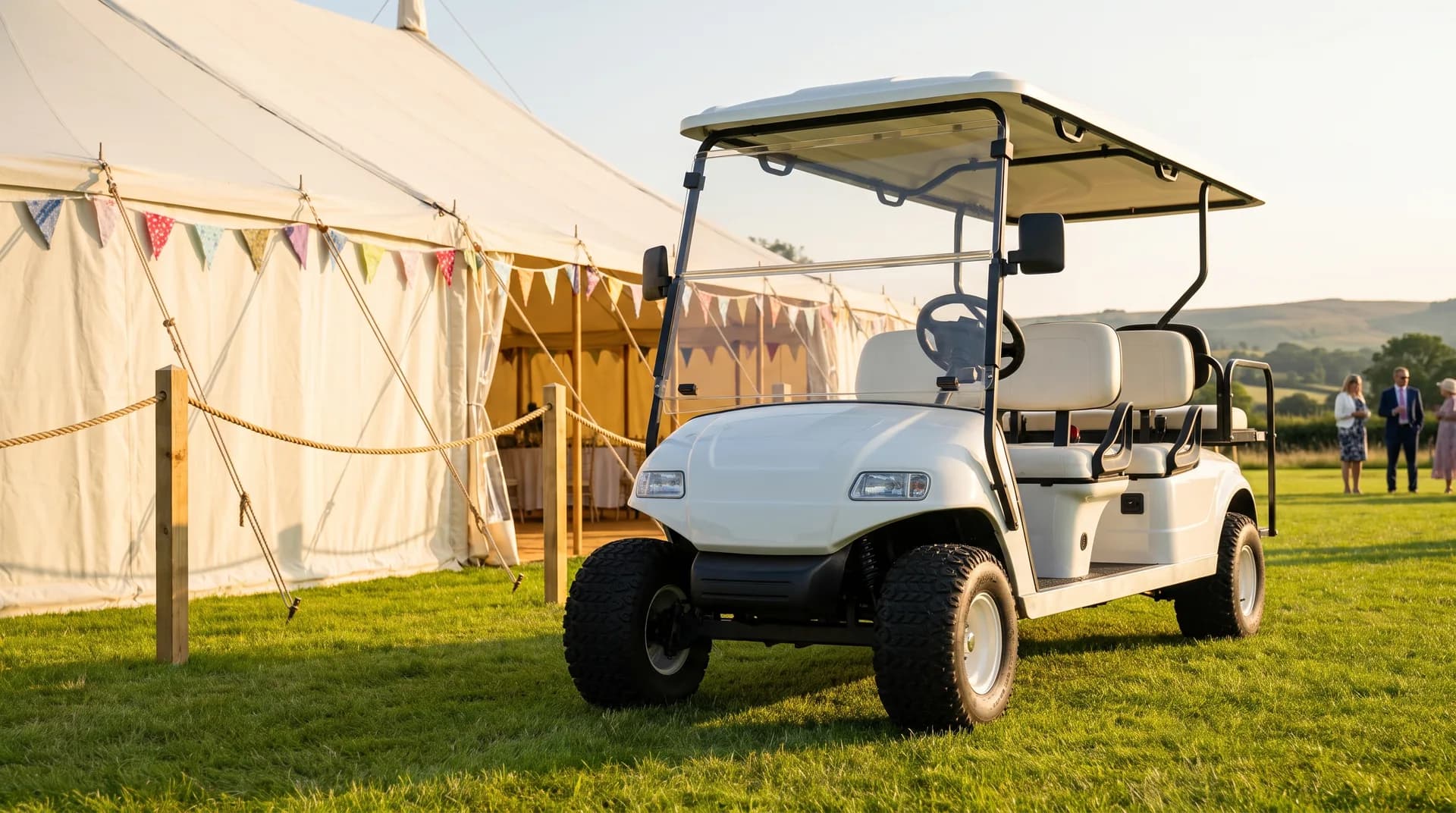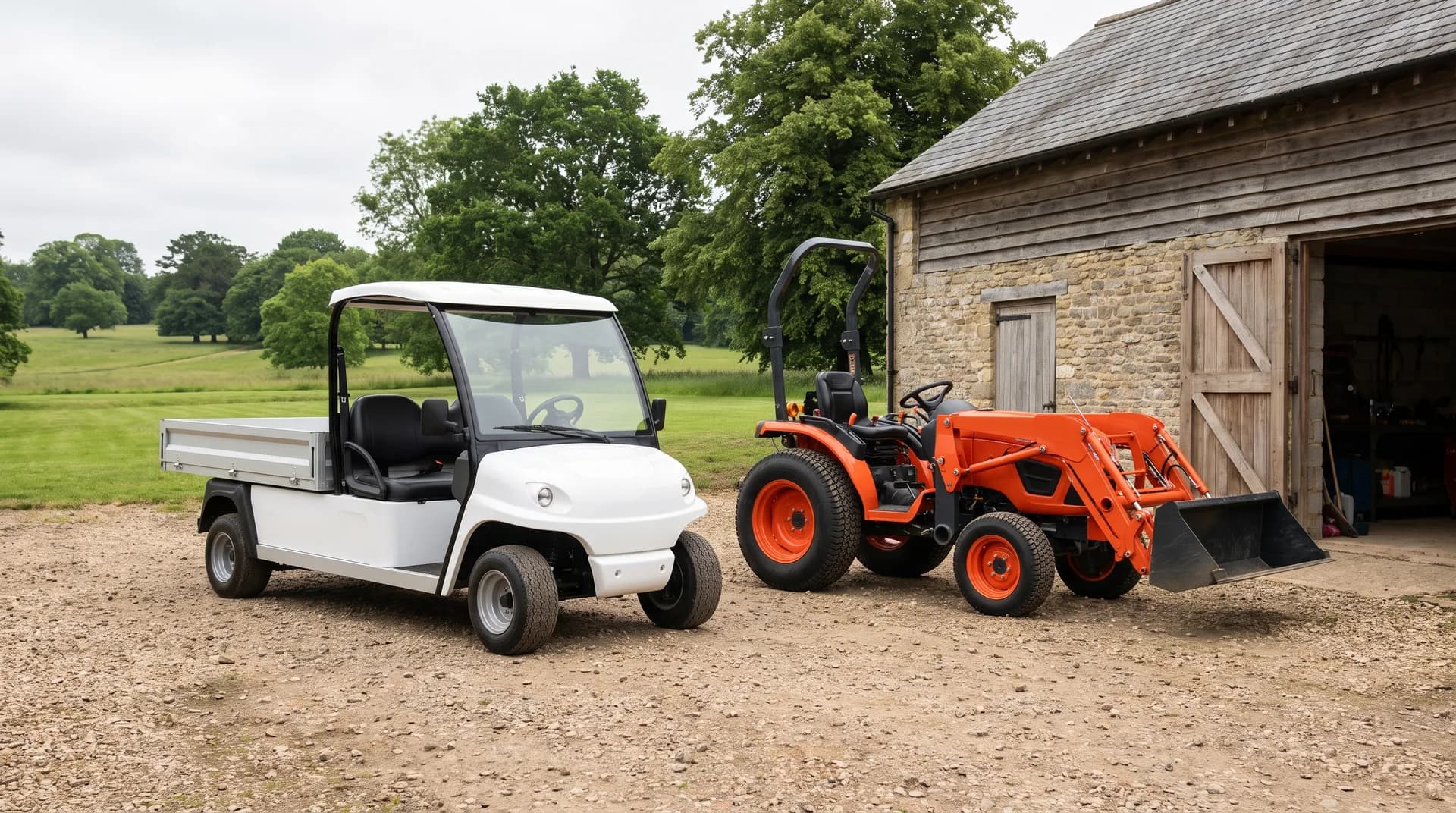
Grounds teams weighing a utility vehicle against a compact tractor are usually asking one machine to answer two different questions. A UTV, the electric utility cart class we build, exists to move people, tools and loads around a site quickly and cleanly. A compact tractor exists to power attachments: mowing decks, flails, chippers and loaders driven from its PTO and hydraulics. They overlap at the edges, but they are different tools, and this guide compares them honestly, including where the tractor wins and where a well-run site ends up with one of each.
- A UTV is for transport: people, tools, materials and towing, all day, quietly.
- A compact tractor is for powered work: PTO attachments, loaders and ground engagement.
- Most grounds days contain far more transport than powered work.
- The UTV is cheaper to run, simpler to drive and kinder to turf and neighbours.
- Larger sites often run both, each doing the work it is built for.
What each machine actually is
The confusion comes from both being small site machines, but the engineering is different. A compact tractor is built around its power take-off and hydraulics: it exists to run a mower deck, a flail, a chipper, a post knocker or a front loader, and to do ground-engaging work. An electric UTV is built around its load bed, seats and drivetrain: it exists to carry a team and its kit, tow within a rated capacity, and cross a site many times a day without noise or fumes, the daily round our grounds and turf keeping work describes.
Where the tractor genuinely wins
Honesty first: if the job is powered attachments, the tractor wins and a UTV is the wrong purchase. Gang mowing, flailing hedgerows and banks, chipping, loader work, heavy ground engagement and multi-metric ton agricultural towing are tractor jobs, full stop. We say the same in our farms guide: a utility cart does not plough and does not pretend to. A site whose week is dominated by that work should buy the tractor first.
Where the UTV wins the everyday
Now count the hours. Most of a grounds day is not powered work; it is getting people, tools, cuttings, materials and waste from one end of the site to the other, repeatedly. For those hours the tractor is a slow, heavy, thirsty taxi that compacts wet turf and annoys the neighbours, while an electric UTV does the same runs quickly, silently and for pennies, on tires chosen to protect the ground, as our tires guide explains. It also needs no tractor-competent driver for every trip, so the whole team can use it. That is why the transport hours belong to the UTV even on sites that own a tractor.
The honest answer for most sites
Small sites with mostly-transport days and a mower already in the shed usually need the UTV, not the tractor. Sites built around powered attachment work need the tractor, and should not kid themselves a UTV replaces it. Larger estates, schools, clubs and parks very often run one of each, the tractor parked until there is tractor work, the UTV moving all day. Tell us your real week and we will say plainly which case you are, the same honest triage as our cart versus quad guide.
Frequently asked questions
Should I buy a UTV or a compact tractor for grounds work?+
Count your hours. If your week is dominated by powered attachment work, mowing decks, flails, loader work, buy the tractor. If it is dominated by moving people, tools and materials around the site, the electric UTV wins those hours at a fraction of the cost and noise. Many larger sites run both.
Can a UTV replace a compact tractor?+
Only if you do not need PTO attachments or ground-engaging work. A UTV does not run a flail, a chipper or a loader, and we will not pretend otherwise. It replaces the tractor's transport hours, which on many sites is most of them.
Can a UTV tow what a tractor tows?+
No. A UTV tows within its rated capacity, small trailers and wheeled kit, covered in our towing guide, while multi-metric ton agricultural towing is tractor work. We quote honest ratings so you plan on facts.
Which is cheaper to run?+
The electric UTV, by a wide margin, for transport work: charging costs pennies against diesel, servicing is light, and any team member can drive it. A tractor earns its costs only when it is doing tractor work.
Which is better for the turf?+
For routine crossing, the UTV: it is lighter, on turf-friendly tires, and does not compact wet ground the way a tractor does. Keep the tractor to the work that needs it and the ground stays better all year.
Tell us your real week
Describe the work your grounds team actually does and we will say honestly whether it is a UTV, a tractor, or both, and quote the part we build.
Related solutions
Ready to explore what we build?
See the vehicles and the setting this applies to, or get a tailored quote built around your site.
Ready to find the right golf cart?
Tell us how and where it will work and we will specify a vehicle and a tailored quote built around you. Every build comes with a 3-year warranty and a 24-hour priority call-out.
Our guides are written and reviewed by the Hawke Electric Vehicles team, the people who specify, build, deliver and support the vehicles. We focus on honest, practical advice and flag where a figure depends on the build rather than guessing.
More guides by Hawke