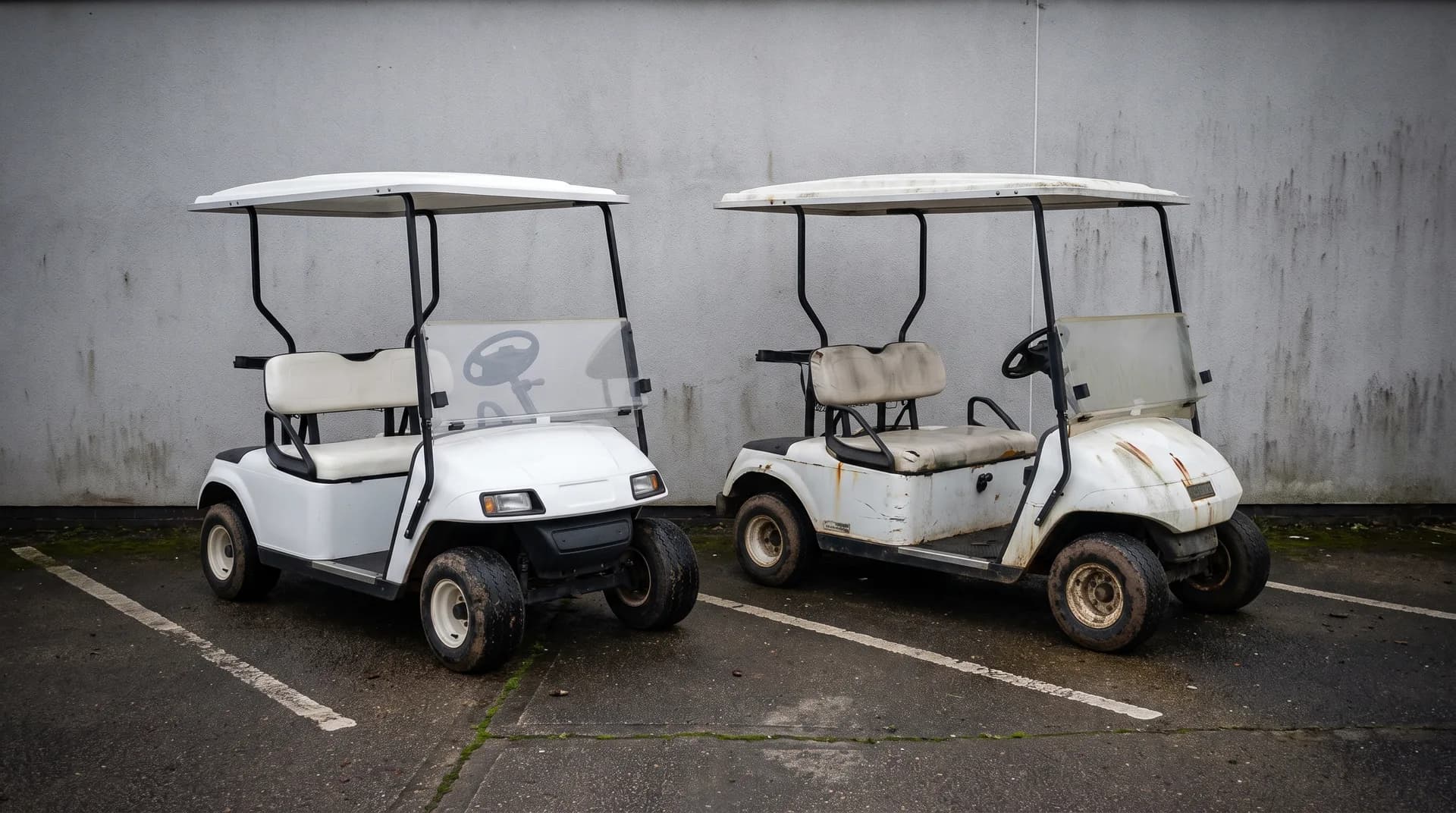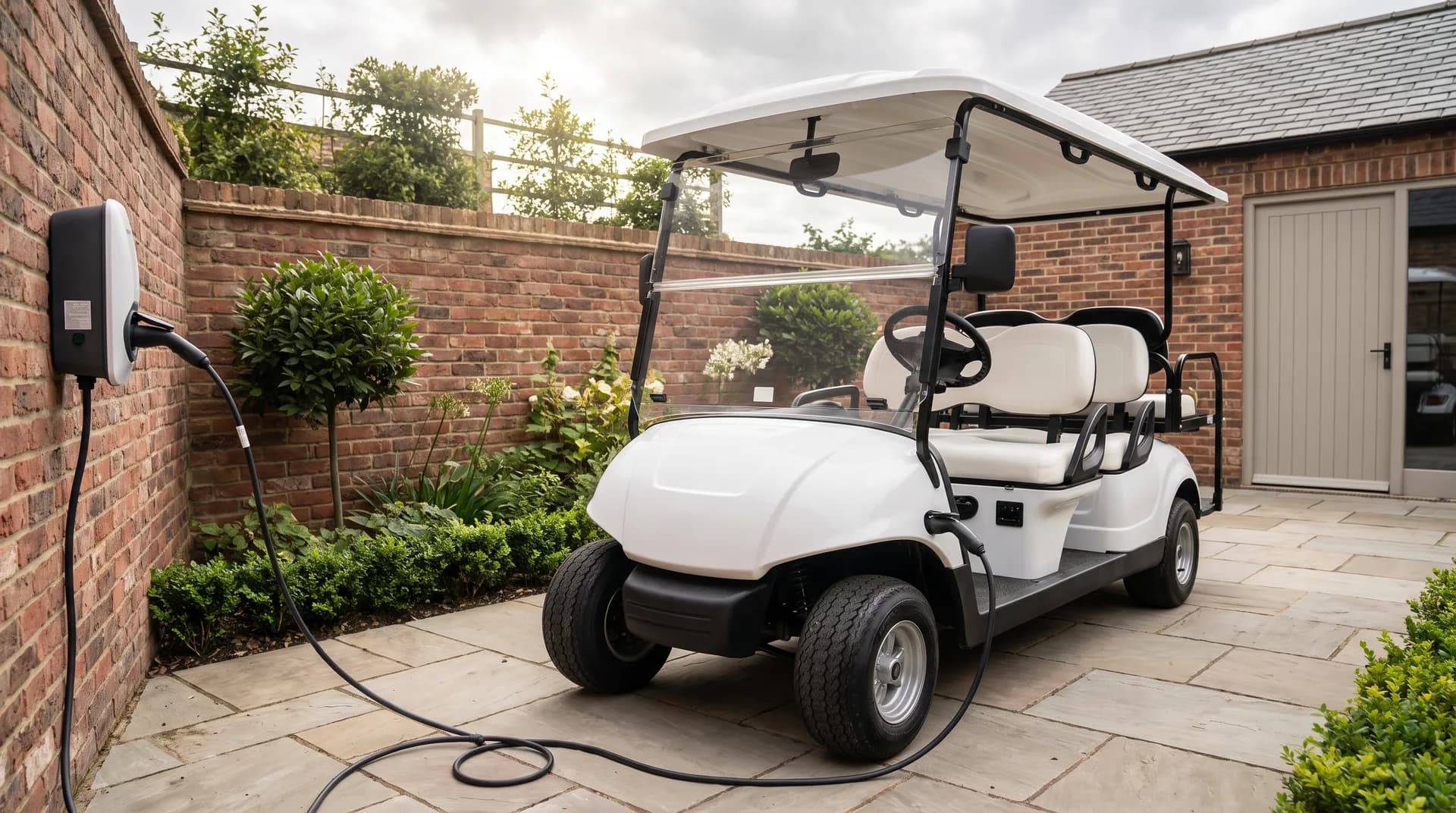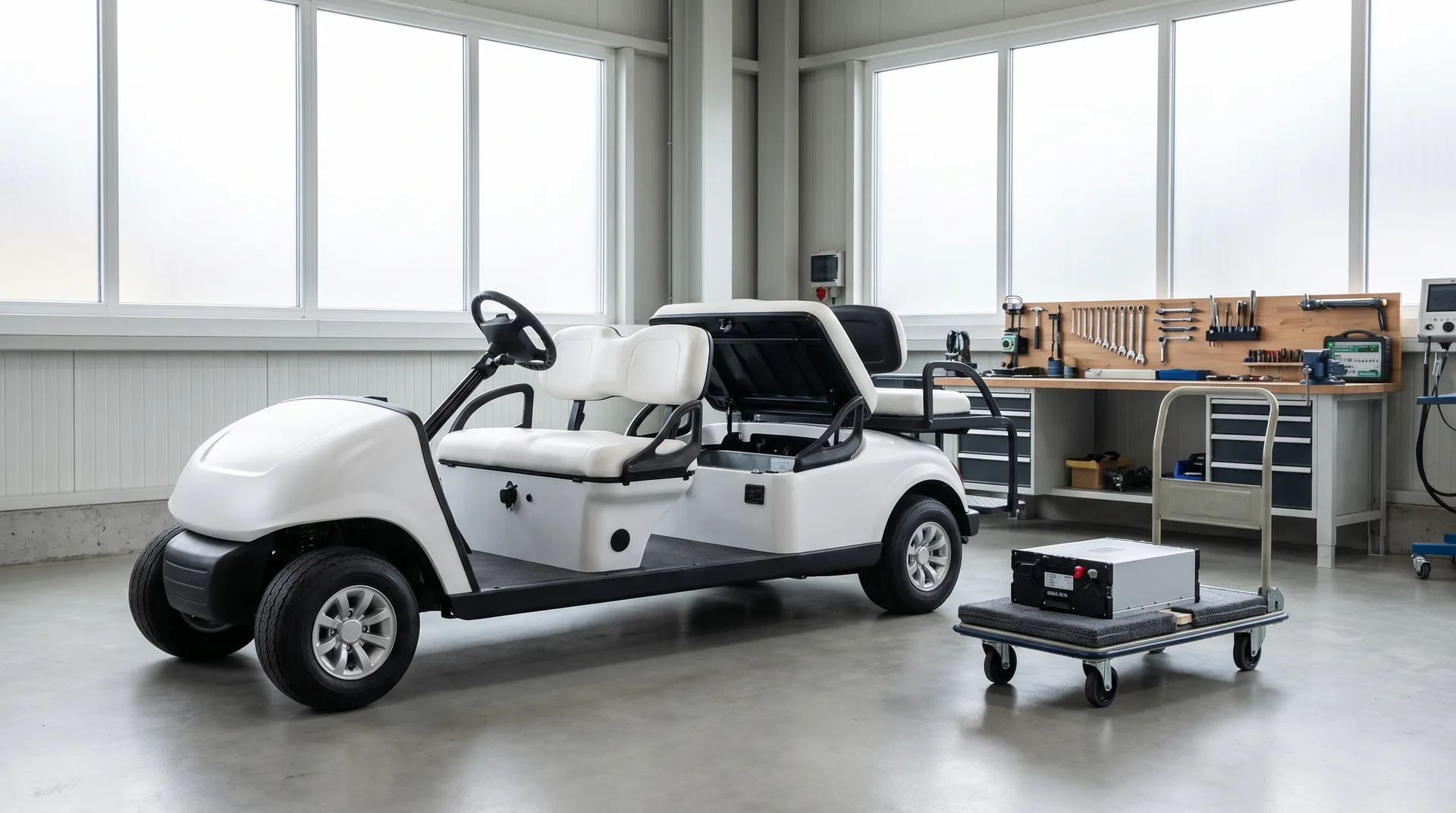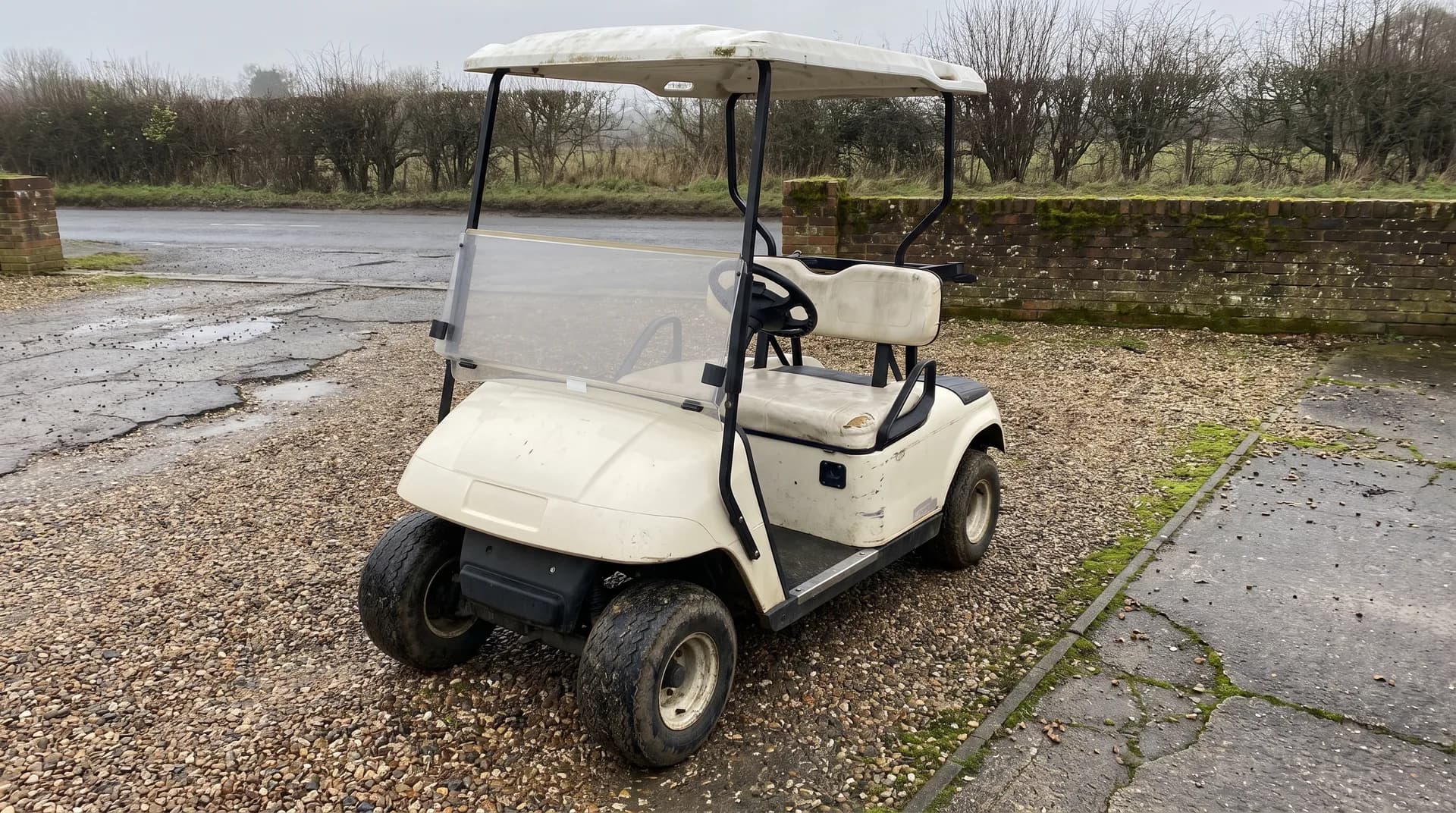
The case for buying used is that you save a meaningful sum against a new build. That is true. What decides whether it was a good decision is everything that happens afterwards, and on a used vehicle that list is longer and less predictable than on a new one. This guide sets out the full ownership picture so you can compare a used purchase against a new one, or against hire, on the same basis.
- Battery replacement is the largest single ownership cost and is often inherited with a used buy.
- Servicing is modest on an electric cart but not zero, and deferred servicing gets expensive.
- Tires, brakes and a charger are predictable near-term costs on any high-hours vehicle.
- Storage and charging arrangements are real costs that buyers routinely forget.
- Warranty cover is the difference between a known cost and an unknown one.
The battery, and when you inherit it
Start here, because it dominates. A traction pack has a finite life measured in charge cycles and degrades on a calendar as well, so every used cart comes with a proportion of its most expensive component already spent. If you buy a vehicle with a pack fitted last season you have bought most of a battery. If you buy one with an original pack of unknown age you have very likely bought a replacement due sooner than you would like. Either is fine as long as it is priced in, and our guide to golf cart battery replacement cost sets out what that involves. The mistake is treating it as an unexpected repair when it is a scheduled consumable.
Servicing and maintenance
An electric golf cart is mechanically simple and its servicing needs are correspondingly light: brake checks and adjustment, tires, bearings, suspension, charging system checks and battery care. That is genuinely cheaper than running a small gas vehicle, but it is not nothing, and it compounds badly when skipped. Brakes left unadjusted wear unevenly, bearings left dry fail expensively, and a lead-acid pack that is not watered and charged properly loses capacity permanently rather than temporarily. On a used vehicle with unknown history, budget for a proper first service on arrival regardless of what you were told, because it is the cheapest way to establish a baseline.
- Frequency
- Once per pack life
- Notes
- The dominant cost, plan the timing rather than react to it
- Frequency
- Annually, or by hours
- Notes
- Modest, and disproportionately expensive to skip
- Frequency
- Every few years
- Notes
- Often due on ex-fleet vehicles at purchase
- Frequency
- Periodic
- Notes
- Cheap parts, safety-critical, easy to defer wrongly
- Frequency
- Ongoing
- Notes
- Genuinely low against a gas equivalent
- Frequency
- Annual
- Notes
- Depends on use and where the vehicle operates
- Frequency
- Ongoing
- Notes
- Dry, secure and near power, and frequently overlooked
| Frequency | Notes | |
|---|---|---|
| Battery pack replacement | Once per pack life | The dominant cost, plan the timing rather than react to it |
| Routine servicing | Annually, or by hours | Modest, and disproportionately expensive to skip |
| Tires | Every few years | Often due on ex-fleet vehicles at purchase |
| Brakes | Periodic | Cheap parts, safety-critical, easy to defer wrongly |
| Charging electricity | Ongoing | Genuinely low against a gas equivalent |
| Insurance | Annual | Depends on use and where the vehicle operates |
| Storage | Ongoing | Dry, secure and near power, and frequently overlooked |
The costs buyers forget
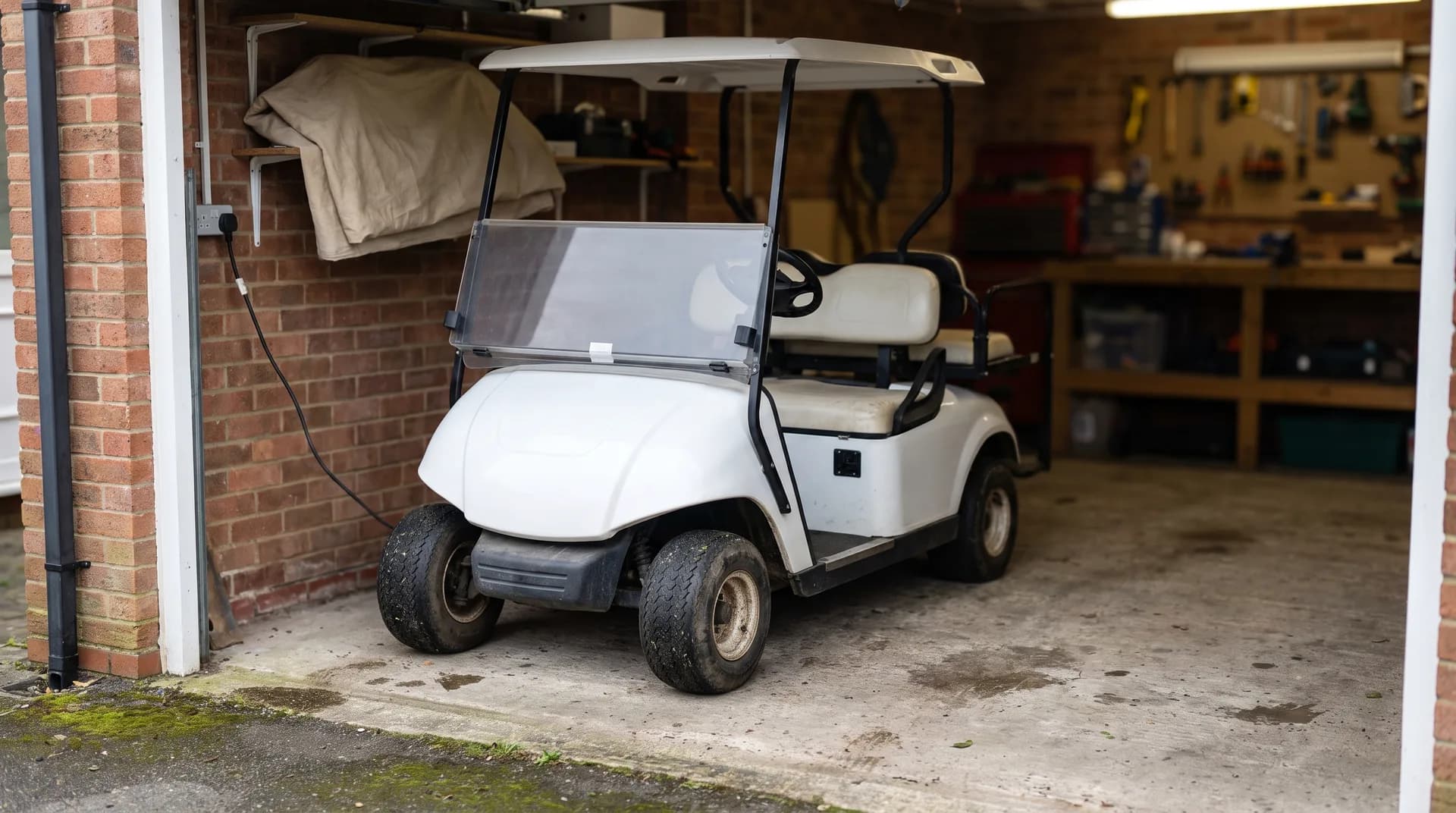
Three in particular. Storage is the first: a cart needs somewhere dry and secure, ideally near a socket, and if you do not already have that space the cost of creating or renting it is a real part of the decision. Charging is the second, not the electricity, which is modest, but the socket itself. A vehicle that has to be charged somewhere inconvenient gets charged inconsistently, and inconsistent charging is exactly what shortens pack life. The third is transport: a cart that needs to move between sites needs a trailer and something to tow it, and hiring that repeatedly adds up quickly.
Used against new, honestly
Over a full ownership period the gap between used and new narrows considerably, because the new vehicle arrives with a full battery life, a warranty covering the expensive components, and no deferred maintenance. The used vehicle saves you a large sum on day one and then asks for some of it back over the following seasons. Used usually still wins on total cost, particularly on a well-chosen ex-fleet vehicle bought with the pack costed in. What used does not give you is predictability, and for some buyers, especially those running vehicles commercially where downtime costs money, predictability is worth paying for. Our comparison of new against used works through the trade in detail.
And against hire
The third option is not to own at all. For seasonal, occasional or event use, hire removes every line in the table above and replaces it with a day or week rate, which for anything under a certain level of use is simply cheaper. The crossover is genuinely a matter of arithmetic rather than principle: work out how many days a year you actually need a vehicle, be honest about it, and compare. Our golf cart hire pages set out the rates if you want to run that comparison properly before committing to a purchase.
Frequently asked questions
What does it cost to run a golf cart in the UK?+
Electricity for charging is modest, and the meaningful costs are periodic: battery pack replacement above all, plus servicing, tires, brakes, insurance and storage. On a used vehicle you also inherit whatever proportion of the pack's life has already been used.
How often do golf cart batteries need replacing?+
It depends on chemistry, use and how well the pack has been charged and maintained, and lithium generally outlasts lead-acid substantially. Treat it as a scheduled consumable with a finite cycle life rather than an unexpected repair.
Is a used golf cart cheaper than a new one overall?+
Usually yes on total cost, particularly a well-chosen ex-fleet vehicle bought with the battery costed in. What you give up is predictability, which matters more if the vehicle is working commercially and downtime costs you money.
Do I need insurance for a golf cart on private land?+
Requirements depend on how and where the vehicle is used, and use on or across a public road brings additional obligations. Establish which applies to your intended use before buying, and confirm your position rather than assuming.
Is it cheaper to hire than to own?+
For seasonal, occasional or event use, usually yes, because hire replaces every ownership cost with a day or week rate. Regular year-round use tends to favour ownership. Work out the days you genuinely need and compare.
Work out whether owning makes sense
Tell us how often you need a vehicle and what for, and we will give you an honest comparison of buying used, buying new and hiring, including when not buying is the right answer.
Related solutions
Ready to explore what we build?
See the vehicles and the setting this applies to, or get a tailored quote built around your site.
Ready to find the right golf cart?
Tell us how and where it will work and we will specify a vehicle and a tailored quote built around you. Every build comes with a 3-year warranty and a 24-hour priority call-out.
Our guides are written and reviewed by the Hawke Electric Vehicles team, the people who specify, build, deliver and support the vehicles. We focus on honest, practical advice and flag where a figure depends on the build rather than guessing.
More guides by Hawke