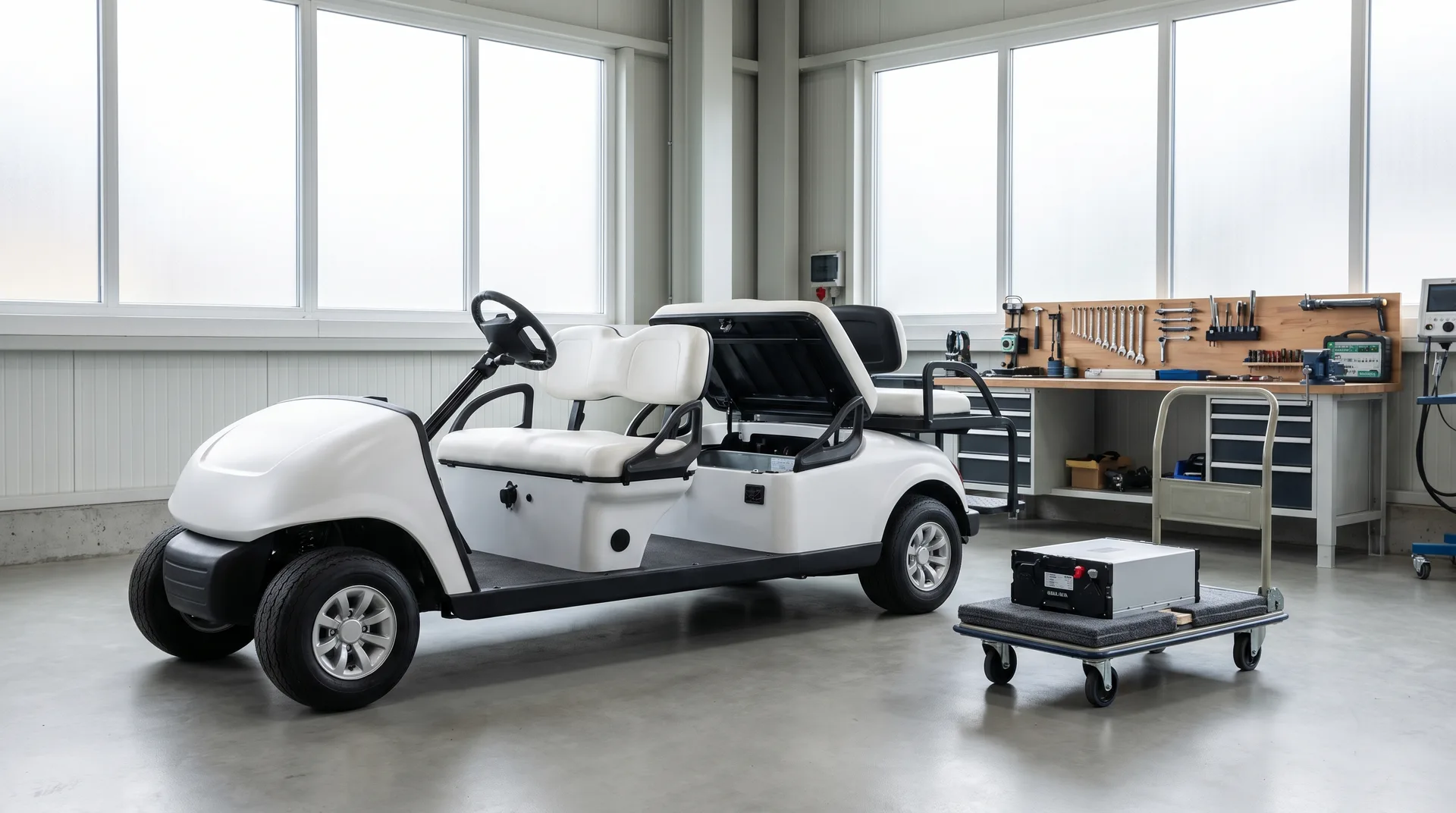
This guide is about the battery in a ride-on electric cart, the vehicle, not the small battery in a push-along golf trolley. The battery is the one significant planned cost in a cart's life: it lasts years, then it needs replacing, and doing that well gives the vehicle a second life. Knowing the signs, the choices and what actually drives the cost lets you plan it rather than be surprised by it. Because the right answer depends on your vehicle and use, we quote replacements to the vehicle rather than publish one-size prices, and this guide explains what moves that figure.
- A battery is due when range and power fade despite full, healthy charging.
- Replacement gives a good vehicle a second life at a fraction of a new cart.
- The main cost drivers: chemistry, capacity, the vehicle and fitting.
- Replacing lead-acid with lithium is often the moment to upgrade.
- Never attempt a battery replacement yourself; it is an engineer's job.
The signs a battery is due
Batteries fade rather than fail overnight. The signs are a shrinking range, the cart feeling weaker on slopes it used to climb, charge not holding as it did, and the vehicle needing charging noticeably more often for the same work. If the cart is otherwise sound, those symptoms point at the battery reaching the end of its life, which our guide on how long golf carts last puts in context. A health check confirms it before you commit.
What drives the cost
Four things do most of the work. Chemistry: lithium costs more than lead-acid up front and usually less over its life. Capacity: a bigger pack for more range costs more. The vehicle: different models take different packs, and access and fitting time vary. And fitting itself: a battery must be installed, configured and the old one disposed of properly, which is skilled work. Because these interact, we quote to your vehicle, honestly, rather than advertise a headline that grows on the day.
The lithium question
If your cart runs lead-acid, replacement time is the natural moment to consider stepping up to lithium: more usable range, faster charging, less maintenance and a longer life, for a higher up-front cost that regular use usually repays. Our lithium versus lead-acid guide works the decision through properly. For light, occasional use, like-for-like lead-acid can still be the sensible economy.
Have it done properly
A battery replacement is an engineer's job, not a home one: packs are heavy, carry real electrical risk, and need correct installation, charger configuration and legal disposal of the old unit. Done properly, the vehicle comes back with its performance restored and the work warranted. Our maintenance guide covers how servicing and this kind of work fit together.
Frequently asked questions
How much does a golf cart battery replacement cost in the UK?+
It depends on the chemistry, the capacity, the vehicle and fitting, which is why we quote to your vehicle rather than publish a one-size figure. Lithium costs more than lead-acid up front and usually less over its life. A quote against your cart gives the real number.
How do I know the battery needs replacing?+
Shrinking range, weaker performance on slopes, charge not holding and more frequent charging for the same work, on an otherwise sound vehicle. A health check confirms the battery is the cause before you commit.
Is it worth replacing the battery on an old cart?+
If the vehicle is otherwise sound, usually yes: a new battery gives it a second life at a fraction of the cost of a new vehicle. If the cart itself is worn out, the money is better put toward replacing it, and we will tell you honestly which case you are in.
Should I switch to lithium when I replace?+
Often, yes. Replacement is the natural moment to upgrade: more range, faster charging and a longer life for a higher up-front cost that regular use tends to repay. For light occasional use, like-for-like lead-acid can still make sense.
Can I replace a cart battery myself?+
No. Packs are heavy, carry real electrical risk, and need correct installation, charger configuration and proper disposal of the old unit. It is a job for a qualified engineer, and done properly the work is warranted.
Get a battery quote for your cart
Tell us your vehicle and how it is used, and we will check the battery honestly and quote the right replacement.
Related solutions
Ready to explore what we build?
See the vehicles and the setting this applies to, or get a tailored quote built around your site.

Ready to find the right golf cart?
Tell us how and where it will work and we will specify a vehicle and a tailored quote built around you. Every build comes with a 3-year warranty and a 24-hour priority call-out.
Our guides are written and reviewed by the Hawke Electric Vehicles team, the people who specify, build, deliver and support the vehicles. We focus on honest, practical advice and flag where a figure depends on the build rather than guessing.
More guides by Hawke