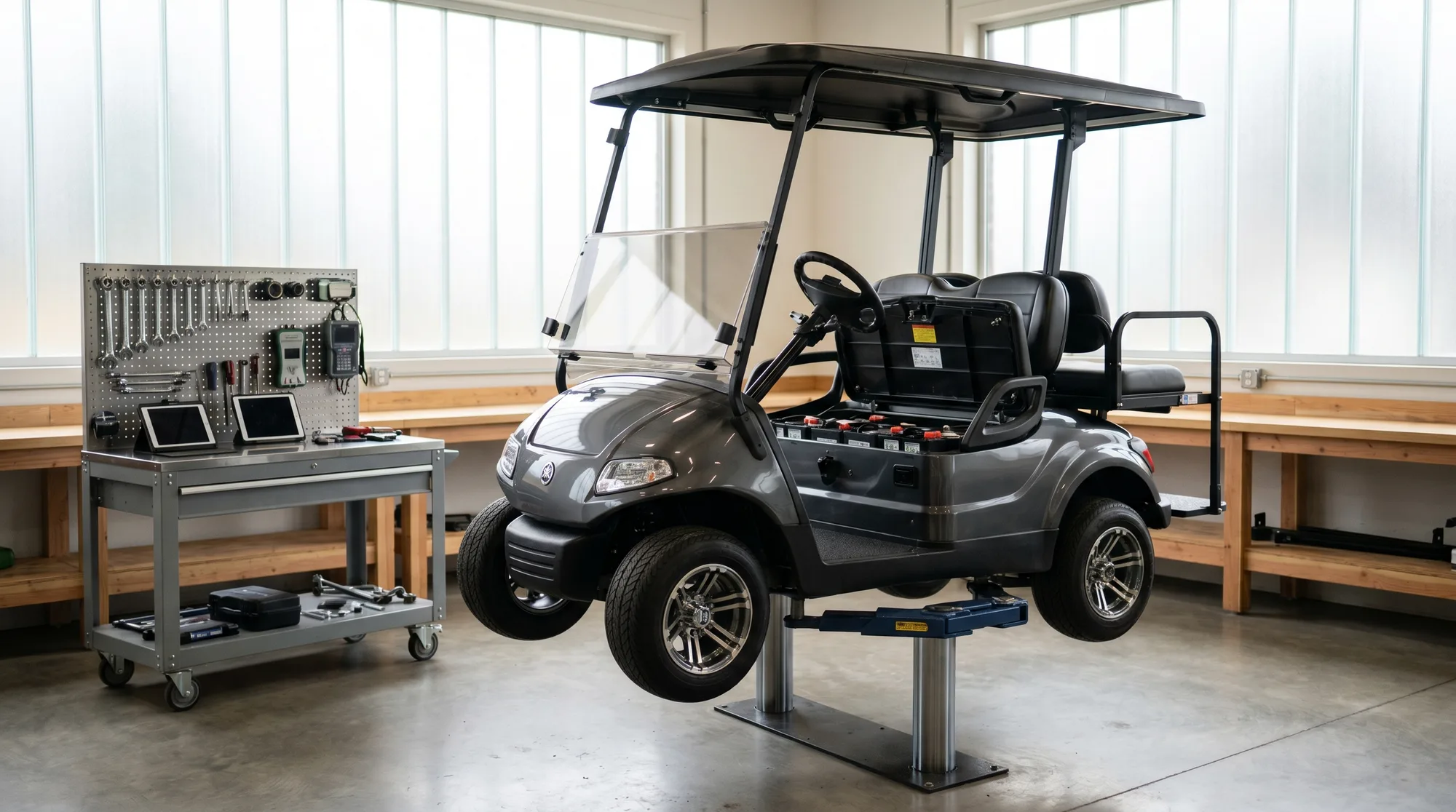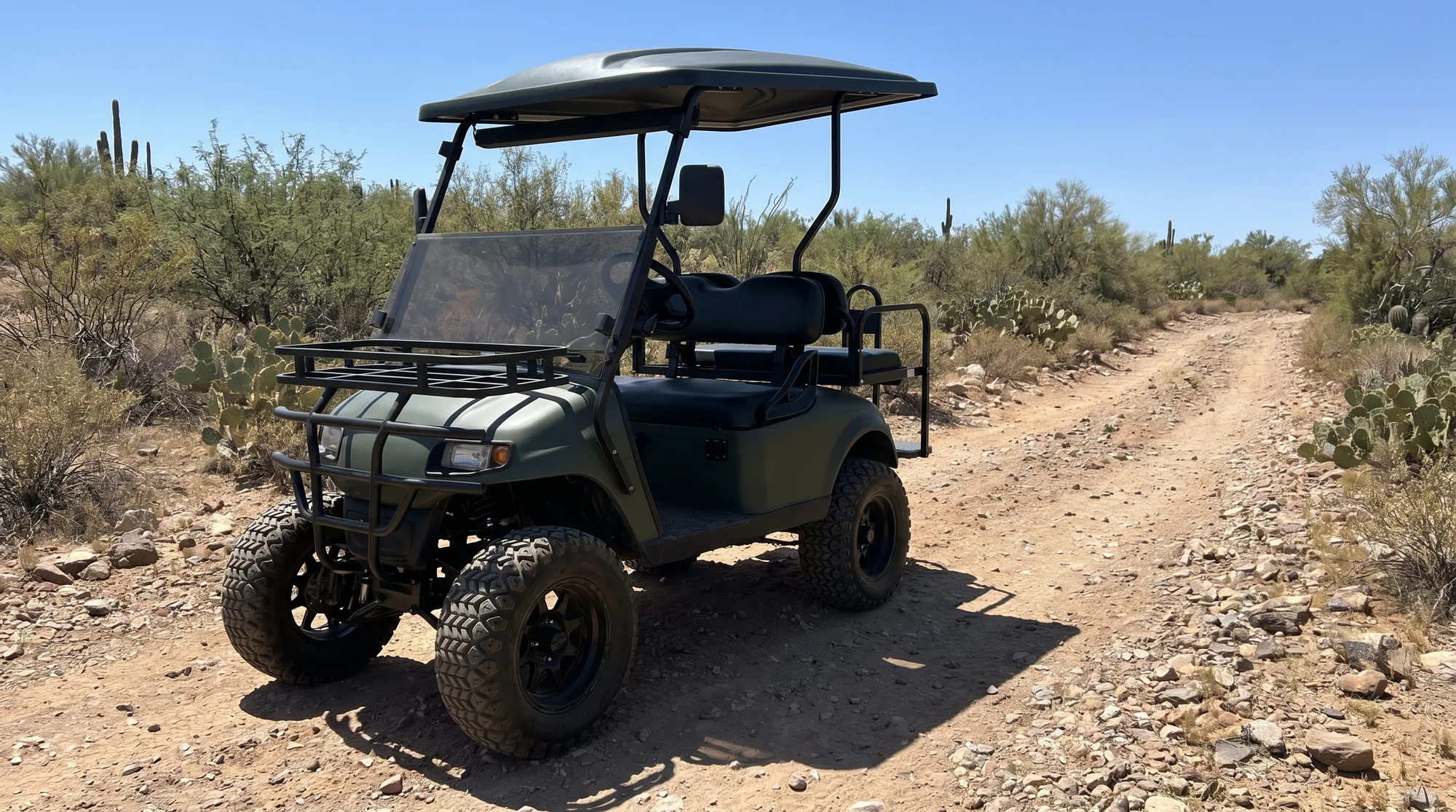
Making a golf cart faster is genuinely possible, and the upgrades are well understood. What is less understood is that speed is a system. Add power without upgrading the brakes, tires and cooling and you have built something that goes well but stops badly, and a cart that out-runs its braking is dangerous. There are also warranty and legality consequences that catch owners out. This guide explains the real ways to gain speed, in roughly the order of value, and the limits you must respect so the result is fast and safe rather than fast and reckless.
Understand where speed comes from
A golf cart's speed is set by how much power the controller lets through, how the motor turns it into torque and rpm, the gear ratio, the pack voltage and the rolling diameter of the tires. Most carts ship deliberately limited well below their potential for safety and warranty reasons. That means the first gains often come not from raw power but from raising the limit the controller imposes. Knowing this order saves money: people frequently buy a big motor when a controller and a gear change would have done the job.
The upgrades, in order of value
1. Controller
The controller decides how much current reaches the motor and often enforces the factory speed limit. A higher-amperage controller, or a programmable one that raises the limit, frequently delivers the best speed-per-dollar improvement, especially on acceleration. Because the controller governs current, it must be matched to the motor and pack so you do not overheat either.
2. Motor
A higher-performance motor adds top speed, torque or both depending on its design. High-speed motors trade some hill-climbing torque for pace; high-torque motors do the reverse. A motor swap is a bigger job and usually wants a matching controller to feed it, so the two are often upgraded together.
3. Gearing
Changing the gear ratio in the differential trades torque for speed or speed for torque. A higher-speed ratio raises top end but makes hills harder and acceleration softer. Gearing is a relatively clean mechanical change and pairs well with a motor or controller upgrade.
4. Battery voltage
Raising pack voltage, for example moving from a lower-voltage system to a higher one or switching to lithium that holds voltage under load, can increase speed and keep it up as the pack drains. This is a deeper change that affects the whole drivetrain and must be done with compatible components. Our lithium conversion guide covers the battery side.
5. Tires
Taller tires roll farther per turn and raise top speed for free, but they cost low-end torque and make hills harder, and they throw the speedometer off. A lift kit is often paired with bigger tires; see lift kits explained and the tires and wheels guide for the trade-offs.
- Gains
- Acceleration, raised limit
- Cost to watch
- Heat if mismatched
- Gains
- Top speed or torque
- Cost to watch
- Bigger job, pairs with controller
- Gains
- Higher top end
- Cost to watch
- Less torque, weaker hills
- Gains
- Speed and held pace
- Cost to watch
- Deep change, compatibility
- Gains
- Free top-speed bump
- Cost to watch
- Less torque, off speedometer
| Gains | Cost to watch | |
|---|---|---|
| Higher-amp controller | Acceleration, raised limit | Heat if mismatched |
| Performance motor | Top speed or torque | Bigger job, pairs with controller |
| Speed gearing | Higher top end | Less torque, weaker hills |
| Higher voltage / lithium | Speed and held pace | Deep change, compatibility |
| Taller tires | Free top-speed bump | Less torque, off speedometer |
The safety upgrades you must add
This is the part that separates a sensible build from a dangerous one. More speed needs more stopping, more grip and more cooling. Treat these as part of the speed upgrade, not optional extras.
- 01
Upgrade the brakes
Stock brakes are sized for stock speed. A faster cart needs upgraded brakes that can stop the extra energy repeatedly without fading. This is non-negotiable.
- 02
Fit appropriate tires
Higher speed needs tires rated and shaped for grip at that pace, not bald turf tires. Good rubber is also part of stopping.
- 03
Manage heat
More current means more heat in the motor and controller. Ensure adequate cooling and avoid sustained high-load running that cooks components.
- 04
Check stability
Speed plus a tall lift raises rollover risk. Keep the center of gravity sensible and corner with respect.
Warranty, legality and insurance
Performance changes have consequences beyond the workshop. Altering voltage, the controller or the motor commonly voids the manufacturer warranty, so confirm the position before you commit. Legality matters too: a street-legal low-speed vehicle is capped by law, and exceeding that cap can take it out of legal LSV territory. An incident on a modified, illegal or unsafe cart can also affect any insurance claim.
Anyone can make a cart go faster. The skill is making it stop, grip and stay cool at the new speed, and knowing the legal line you should not cross. Build the whole system or leave it stock.
So how should you approach it?
Decide your real goal, more acceleration, higher top speed or better hills, because they pull in different directions. Start with the controller and gearing for value, add a motor or voltage upgrade if you need more, and upgrade brakes, tires and cooling to match every time. Confirm warranty and local legality before you commit. If you want a build that is genuinely faster and genuinely safe, tell us your goal and we will spec it properly with honest numbers.
Spec a safe performance build
Tell us your speed goal and use, and we will design a matched, safe build with an honest price.
Frequently asked questions
What is the cheapest way to make a golf cart faster?+
Usually a controller upgrade or a programmable controller that raises the factory limit, often paired with a gear change. These give strong speed-per-dollar without a full motor swap, but must be matched to the motor and pack.
Will making my cart faster void the warranty?+
Often, yes. Changing the voltage, controller or motor commonly voids the manufacturer warranty. Confirm the exact position with the maker before you modify anything.
Do I need better brakes if I add speed?+
Yes, always. Stock brakes are sized for stock speed. A faster cart must have upgraded brakes and suitable tires to stop the extra energy safely; this is not optional.
Do bigger tires make a golf cart faster?+
Taller tires raise top speed because they roll farther per turn, but they reduce low-end torque, make hills harder and throw off the speedometer. They are a trade-off, not free speed.
Is it legal to make a street-legal cart faster?+
A registered low-speed vehicle is capped by law, often around 25 mph. Exceeding that can make it illegal for the road and affect insurance. Check your local rules before exceeding the cap.
Related solutions
Ready to explore what we build?
See the vehicles and the setting this applies to, or get a tailored quote built around your site.

Ready to find the right golf cart?
Tell us how and where it will work and we will specify a vehicle and a tailored quote built around you. Every build comes with a 3-year warranty and a 24-hour priority call-out.