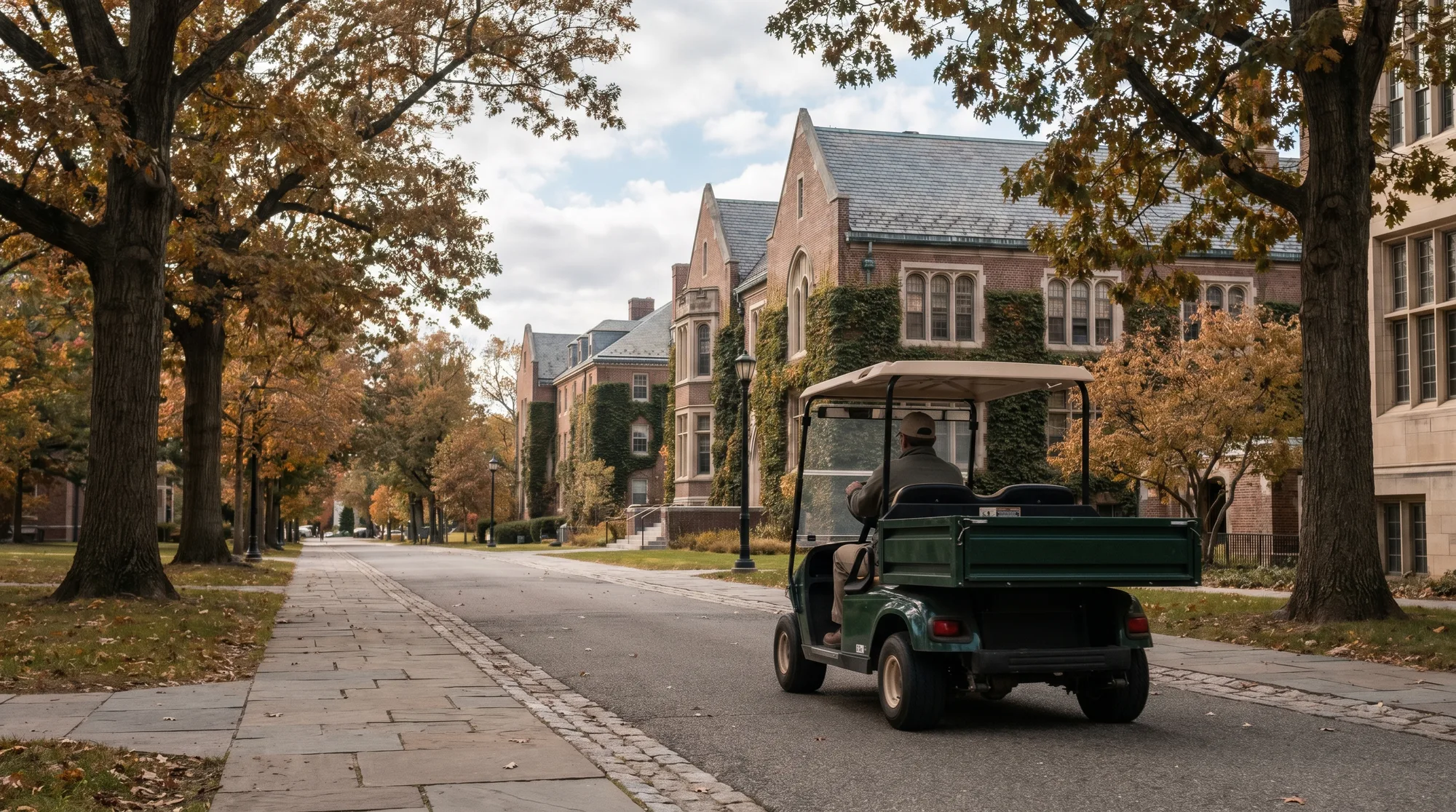
For a security team covering a campus, a gated community, a large parking structure or an industrial site, a patrol cart is a force multiplier. It lets one officer cover ground that would take an hour on foot in minutes, carries the equipment a patrol needs, gives a visible presence that deters problems before they start, and gets help to an incident fast. But a patrol cart is not a golf cart that happens to have a guard in it. It runs long shifts, often around the clock, in all weather and after dark, and an unreliable one strands an officer at the worst moment. This guide covers speccing, sizing and running patrol carts so the fleet actually supports the mission.
What a patrol cart has to do
Start with the mission, because it drives every spec choice. A patrol cart provides presence, the visible deterrent of a marked vehicle moving through the property. It provides mobility, covering large areas quickly so officers are everywhere and nowhere. It provides response, getting an officer and their equipment to an incident faster than on foot. And it provides a working platform, carrying lighting, first-aid, signage, traffic cones and whatever else the post requires. A cart that does these well is worth far more than its cost in officer effectiveness.
Speccing for visibility and response
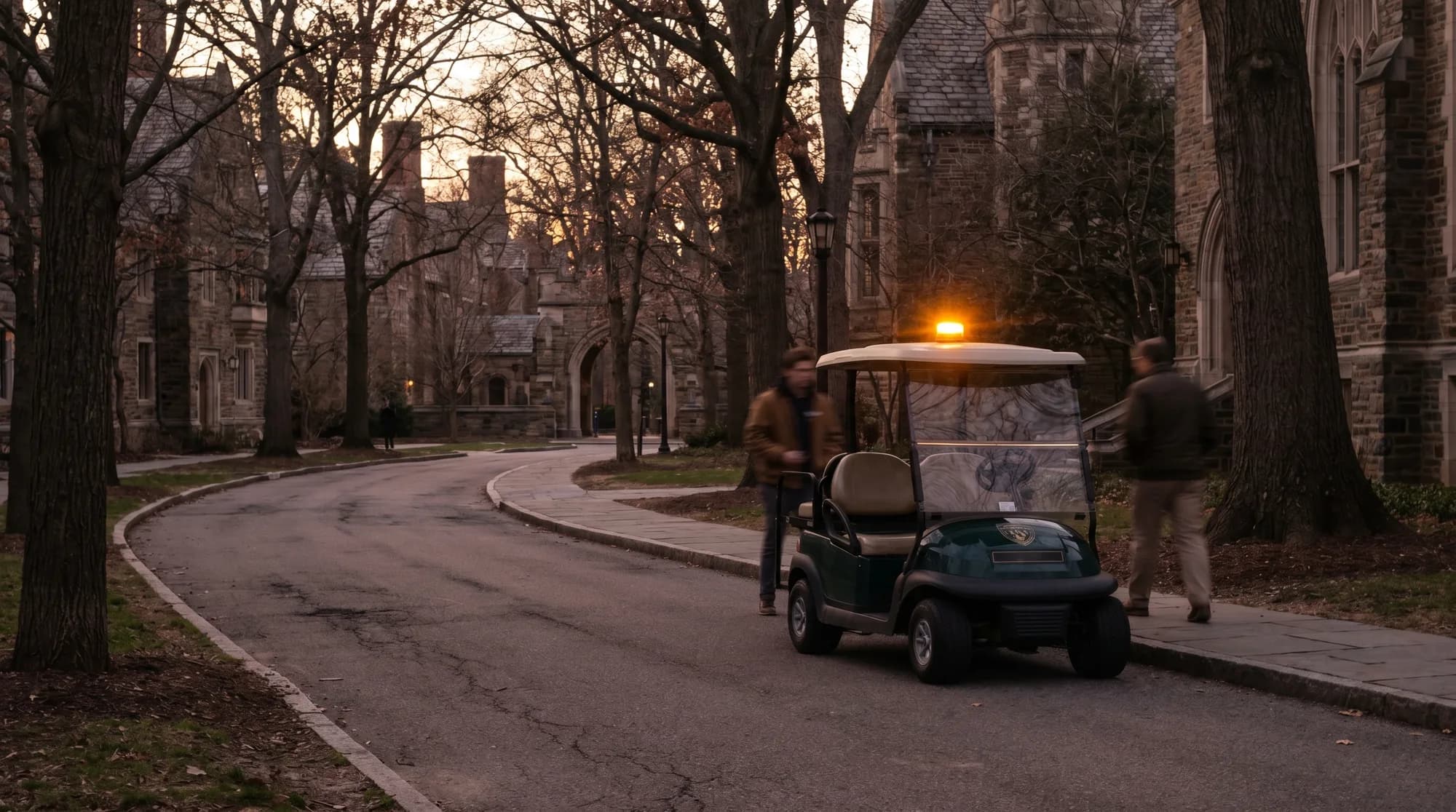
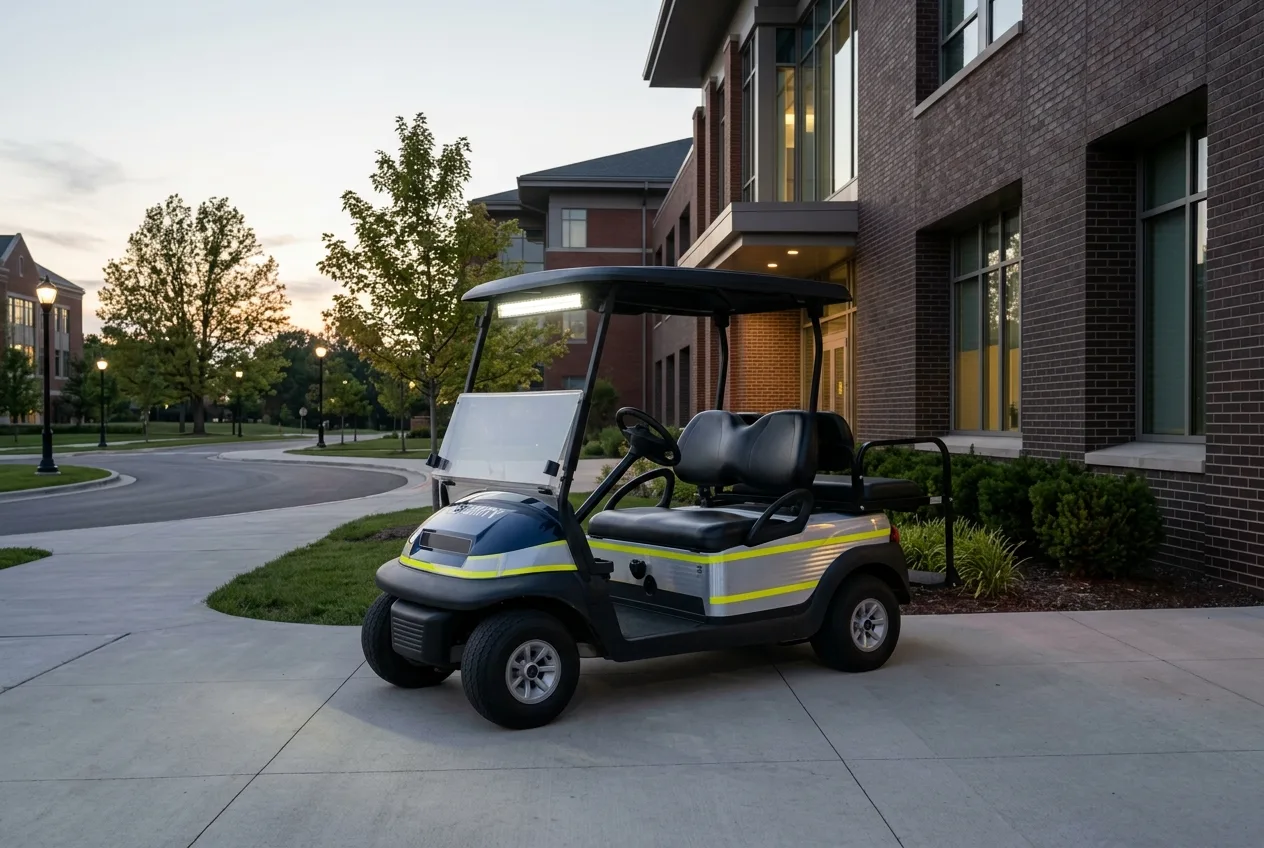
A patrol cart earns its keep partly by being seen. Specify it so it reads as official and is visible day and night: clear security markings and reflective striping, a roof beacon or amber light bar where local rules allow, strong headlights and a forward work light to illuminate an incident, and a horn that commands attention. Inside, build for the job: secure storage for equipment, a clipboard or mounting for a radio and devices, weather protection so officers can patrol in rain and cold, and seating that suits a long shift. A confident, responsive drive matters too, since an officer responding to a call needs to get there without nursing a sluggish cart.
Sizing the fleet to coverage, not headcount
The instinct is to buy one cart per officer, but patrol fleets that run long or round-the-clock shifts need more than that, because a cart that is charging is a cart out of service. Size to the coverage you must maintain at all times, then add the carts needed so charging never leaves a post uncovered.
- 01
Define the posts and zones
Map how many carts must be patrolling at once across your zones during your busiest shift. That is your minimum in-service number.
- 02
Layer in the shift pattern
If carts run two or three shifts a day, a single cart cannot cover them all without a charging gap; plan for that gap.
- 03
Add charging-rotation carts
For round-the-clock duty, add enough carts so one can charge while another covers the post. Faster-charging lithium reduces how many spares you need.
- 04
Keep a maintenance spare
A cart will eventually be in for service; a spare keeps coverage intact when it is, rather than leaving a zone exposed.
Uptime is the whole game
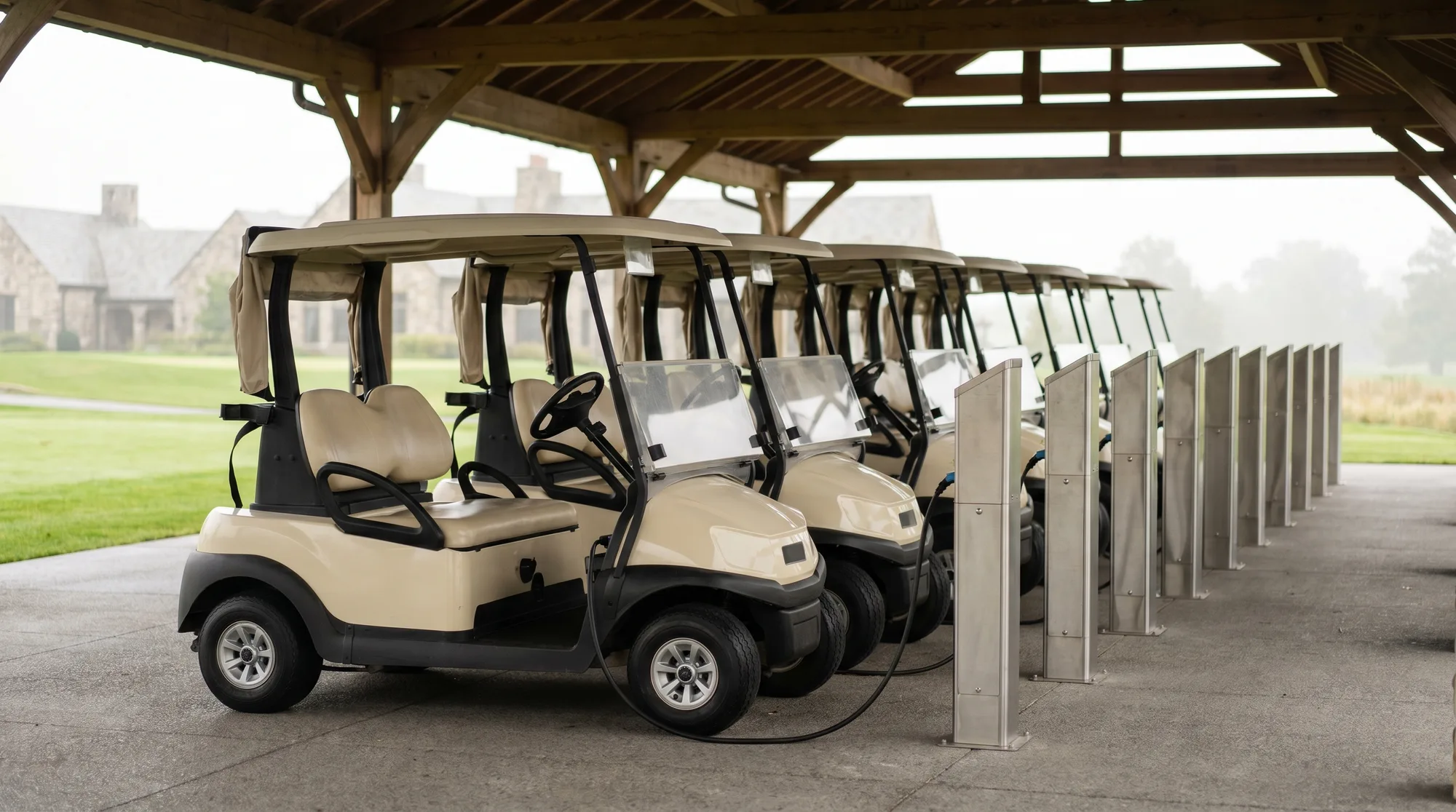
For most fleets a breakdown is an inconvenience. For a patrol fleet it is a hole in your coverage and a stranded officer, so uptime is the single most important operating metric. That means a disciplined maintenance routine, a charging rotation that never leaves a post without a charged cart, and quick access to spares and service. Lithium packs help, since they charge faster, tolerate the partial top-ups that fit between patrols and avoid the watering and voltage-sag issues that plague tired lead-acid packs on hard duty. Our fleet management guide covers building the maintenance and charging discipline that keeps uptime high.
- Standard cart
- Basic or none
- Patrol-spec cart
- Headlights, work light, beacon
- Standard cart
- Plain
- Patrol-spec cart
- Security livery, reflective
- Standard cart
- Occasional
- Patrol-spec cart
- Long or round-the-clock
- Standard cart
- Minimal
- Patrol-spec cart
- Secure equipment storage
- Standard cart
- Overnight
- Patrol-spec cart
- Rotation to keep posts covered
| Standard cart | Patrol-spec cart | |
|---|---|---|
| Lighting | Basic or none | Headlights, work light, beacon |
| Markings | Plain | Security livery, reflective |
| Duty cycle | Occasional | Long or round-the-clock |
| Storage | Minimal | Secure equipment storage |
| Charging plan | Overnight | Rotation to keep posts covered |
Accessibility and the wider role
On many sites the security cart doubles as the after-hours help vehicle: the officer who jump-starts a car, escorts a lone worker to their vehicle, or assists a visitor with limited mobility. It is worth speccing at least part of the fleet so an officer can offer a safe ride to someone who cannot walk far, with a low step and a grab handle. This crossover role is common on campuses and medical sites; if your patrol fleet also serves a healthcare setting, our guide to carts for hospitals and medical campuses covers the accessibility and access nuances there, and gated communities can see our HOA and gated-community guide.
Lease or buy for a security operation
Permanent in-house security at a fixed site usually does best owning a maintained fleet, since the carts work hard for years and ownership gives full control over spec, livery and availability. A contract security provider working short or rotating contracts often prefers leasing, which keeps capital free and lets the fleet move with the work. As an indicative guide, a patrol-spec cart with lighting and storage runs into the mid four figures USD depending on build, while leasing turns that into a predictable monthly cost. Our guides to cost and commercial leasing lay out the trade-offs.
A patrol cart is judged on one number above all: the percentage of the shift it was actually available. Everything else is secondary to keeping the post covered.
So what should you do?
Spec for visibility and response, size to the coverage you must maintain at all times with charging-rotation carts on top, treat uptime as mission-critical with a disciplined maintenance and charging routine, confirm your local rules on warning lights, and choose lease or buy based on whether the site is permanent. If you would like help speccing a patrol fleet to your site and shift pattern, with honest numbers, we are glad to help.
Spec a patrol fleet that stays on post
Tell us your site, your shift pattern and your coverage zones, and we will recommend a patrol-spec fleet with the uptime you need at an honest price.
Frequently asked questions
How many patrol carts does a security team need?+
Size to the coverage you must maintain at all times, not your officer headcount. Count how many carts must be patrolling at once during your busiest shift, then add carts so charging never leaves a post uncovered, plus a maintenance spare. Round-the-clock duty needs the most spares.
What lights can a security golf cart have?+
Amber beacons and light bars are widely permitted for security vehicles, along with headlights, a work light and a horn. Never use red or blue lights reserved for emergency services, and confirm your state and local rules before fitting a beacon or driving on public roads.
Why does uptime matter so much for patrol carts?+
A patrol cart that dies mid-shift leaves a hole in your coverage and strands an officer, so it is a safety failure, not just an inconvenience. Keeping uptime high needs a disciplined maintenance routine, a charging rotation, and quick access to spares, which is easier with faster-charging lithium packs.
Should a security operation lease or buy carts?+
Permanent in-house security at a fixed site usually does best owning a maintained fleet for control and longevity. Contract providers on short or rotating contracts often prefer leasing, which keeps capital free and lets the fleet follow the work.
How much does a patrol-spec golf cart cost?+
Indicatively, a patrol cart with security lighting, markings and secure storage runs into the mid four figures in USD depending on build, while leasing converts that into a predictable monthly figure. For a price matched to your spec and fleet size, request a quote.
Related solutions
Ready to explore what we build?
See the vehicles and the setting this applies to, or get a tailored quote built around your site.
Ready to find the right golf cart?
Tell us how and where it will work and we will specify a vehicle and a tailored quote built around you. Every build comes with a 3-year warranty and a 24-hour priority call-out.