A hospital or medical campus is one of the most demanding environments a golf cart fleet can serve. Patients arrive unwell, anxious and often unable to walk far from a vast parking structure to the right entrance. Visitors are stressed and lost. Staff move between buildings on a sprawling site at all hours. And every vehicle that touches a patient sits inside an infection-control regime that an ordinary cart fleet never has to think about. Get the shuttle service right and you remove friction at the worst moment of someone's day; get it wrong and you add distress to people already struggling. This guide covers running a medical-campus fleet with the accessibility, hygiene and reliability the setting demands.
- Patients are the priority: many arrive unable to walk from parking, so accessible shuttles are core, not optional.
- ADA accessibility is essential and legally required; spec carts that carry wheelchairs and mobility devices safely.
- Hygiene matters here as nowhere else; specify wipe-clean surfaces and build cleaning into the operating routine.
- Uptime is patient-care critical; a missing shuttle can mean a frail patient cannot reach their appointment.
- Large permanent medical campuses almost always own and maintain a managed fleet.
Who the fleet serves, and why it is harder
A medical campus fleet serves three groups with high stakes. Patients, often elderly, post-operative, in pain or using a wheelchair, who must get from a distant lot to the right door. Visitors and families, frequently distressed and unfamiliar with the site. And staff, who cover a large campus between shifts and buildings around the clock. What sets the medical setting apart is that the people being moved are frequently vulnerable, the environment is hygiene-controlled, and a failure is not an inconvenience but a barrier to care. Every spec and operating decision should start from that reality.
Accessibility is the heart of the spec
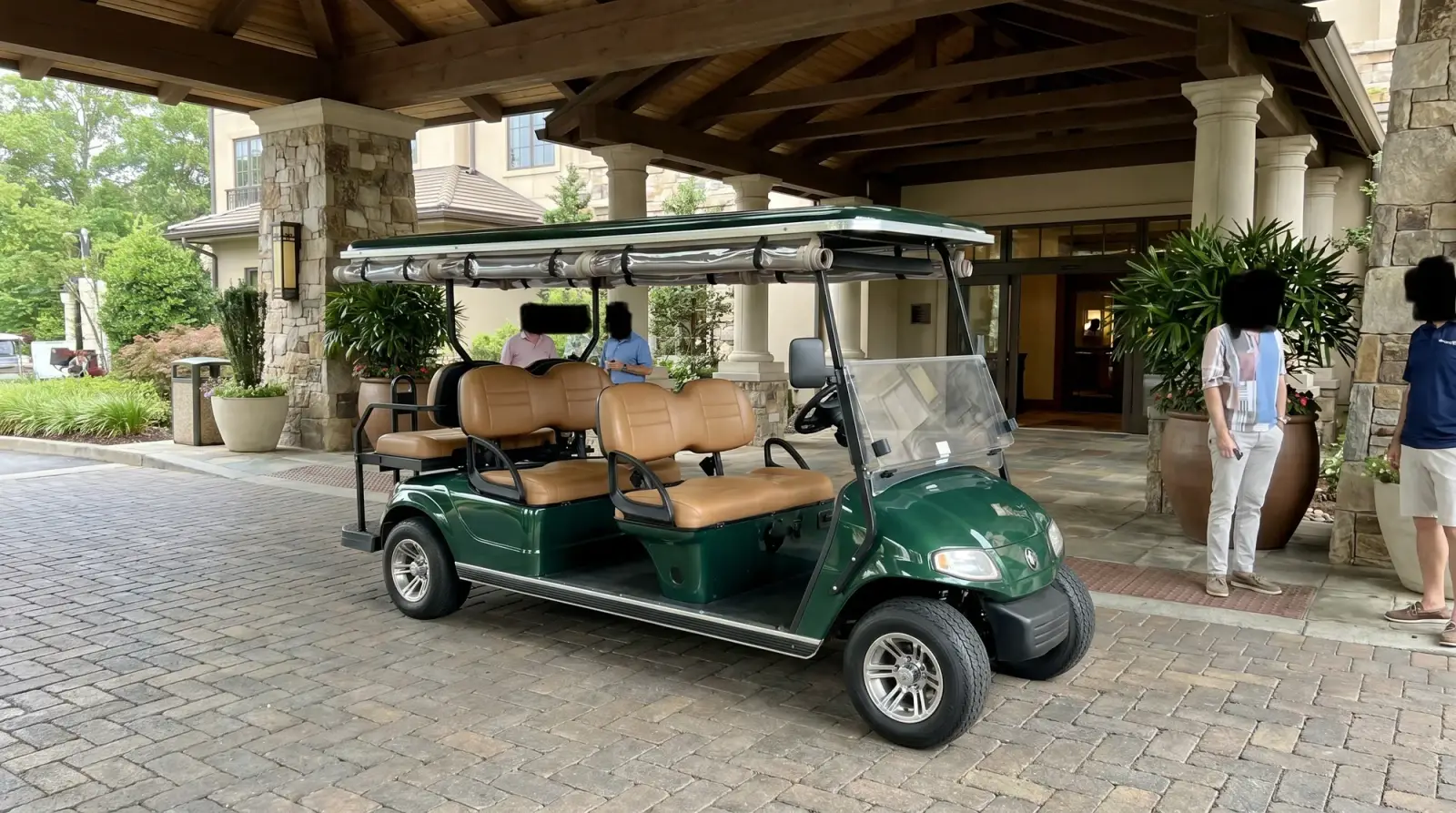
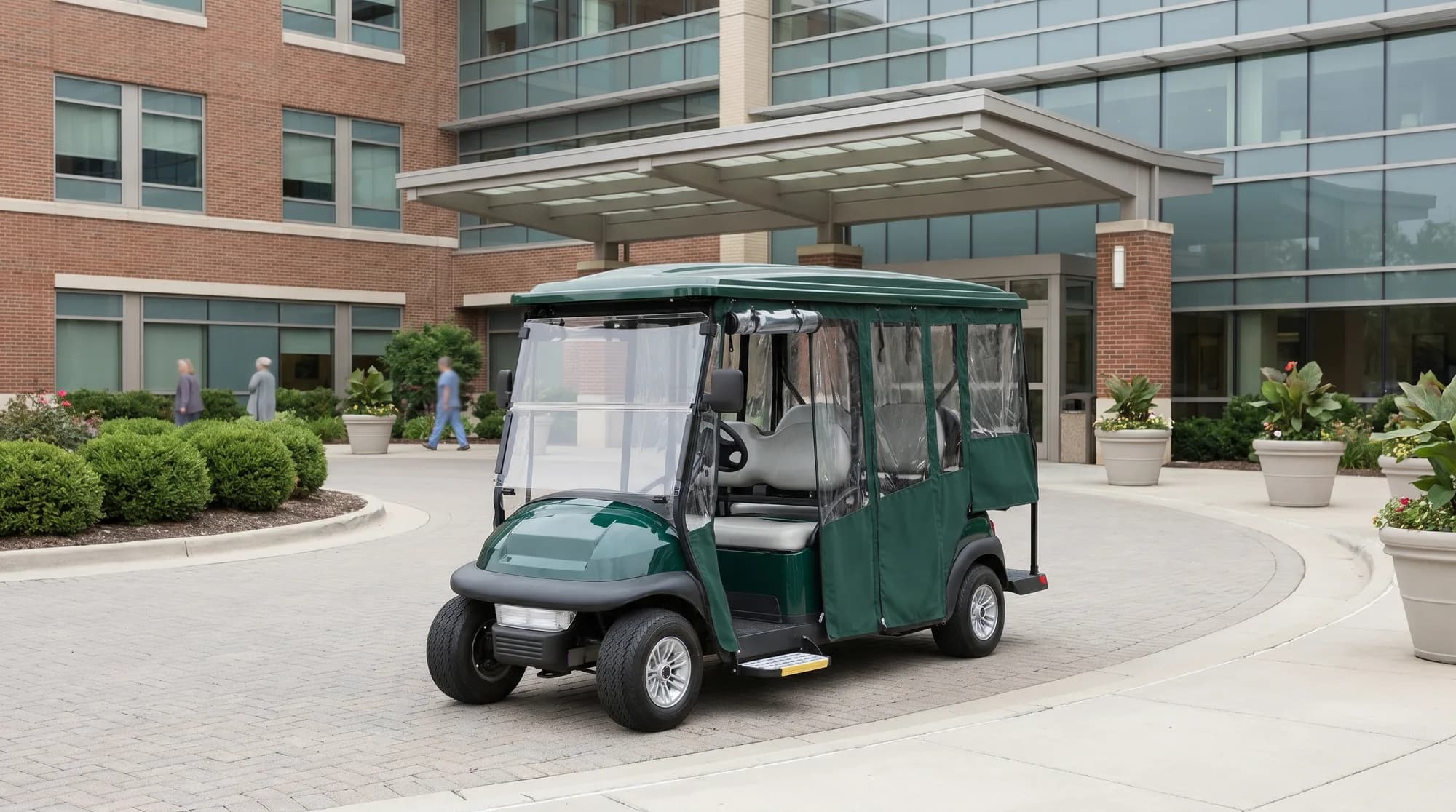
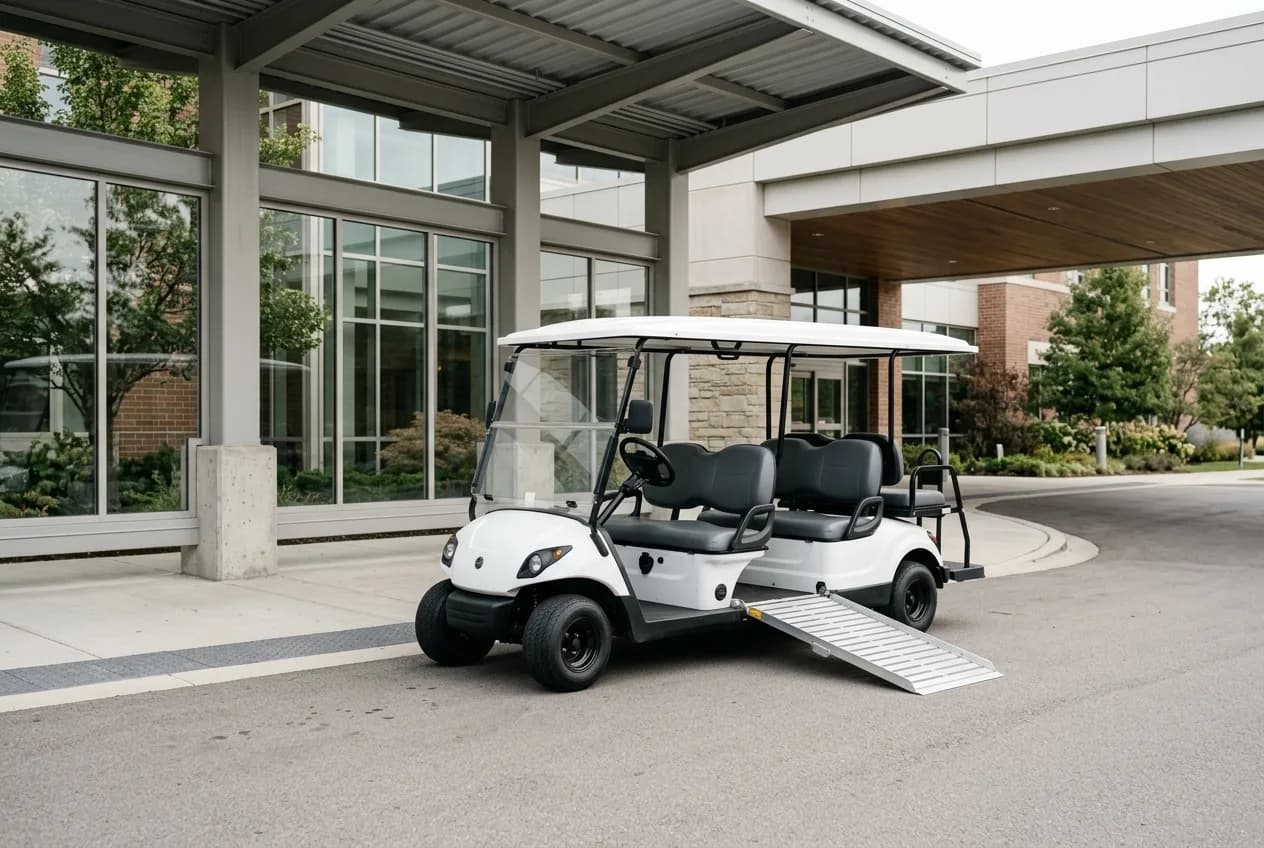
On a hospital campus, accessibility is not a feature of one cart; it is the central design requirement. A meaningful share of the people you carry cannot manage a step, cannot walk far, or use a wheelchair or mobility scooter. Spec shuttles with low, easy entry, sturdy grab handles, stable seating for frail passengers, and the ability to safely accommodate a wheelchair or a folding mobility device. Weather protection matters because patients should not arrive cold or wet for care. This is both a duty under accessibility law and the basic decency the setting calls for. The accessibility thinking overlaps closely with campus paratransit, covered in our college and corporate campuses guide.
Hygiene and infection control
No other cart application carries the infection-control burden of a hospital. Carts move people who may be immunocompromised or carrying infection, so the fleet has to fit the campus hygiene regime. Specify wipe-clean, non-porous seating and surfaces rather than absorbent fabric, avoid hard-to-clean nooks, and consider hand-sanitizer stations on the carts. Then build cleaning into the operating routine, with carts wiped down on a defined schedule and after any incident, to the standards your infection-control team sets. A cart that cannot be cleaned properly does not belong in a patient-facing role.
Parking and wayfinding logistics
Much of a medical shuttle's value is solving the parking problem. Hospital parking structures are large, confusing and often far from the entrance a patient needs, and a shuttle that runs a clear, frequent loop between parking and the main doors removes a genuine source of distress. Plan the routes and stops around how patients actually arrive, signpost them clearly, and run the service frequently enough that a patient is not left waiting in discomfort.
- 01
Map arrival pain points
Identify where patients struggle: the far corners of parking structures, the gap between drop-off and the right entrance, transfers between buildings.
- 02
Design clear, frequent loops
Set shuttle routes and stops that solve those pain points, signpost them, and run them frequently enough to avoid long waits.
- 03
Size to peak clinic times
Outpatient clinics create arrival surges; size and schedule the fleet to those peaks, not the quiet hours.
- 04
Keep an accessible cart always free
Reserve accessibility capacity so a wheelchair user is never told to wait while accessible carts run general loops.
Uptime is patient-care critical
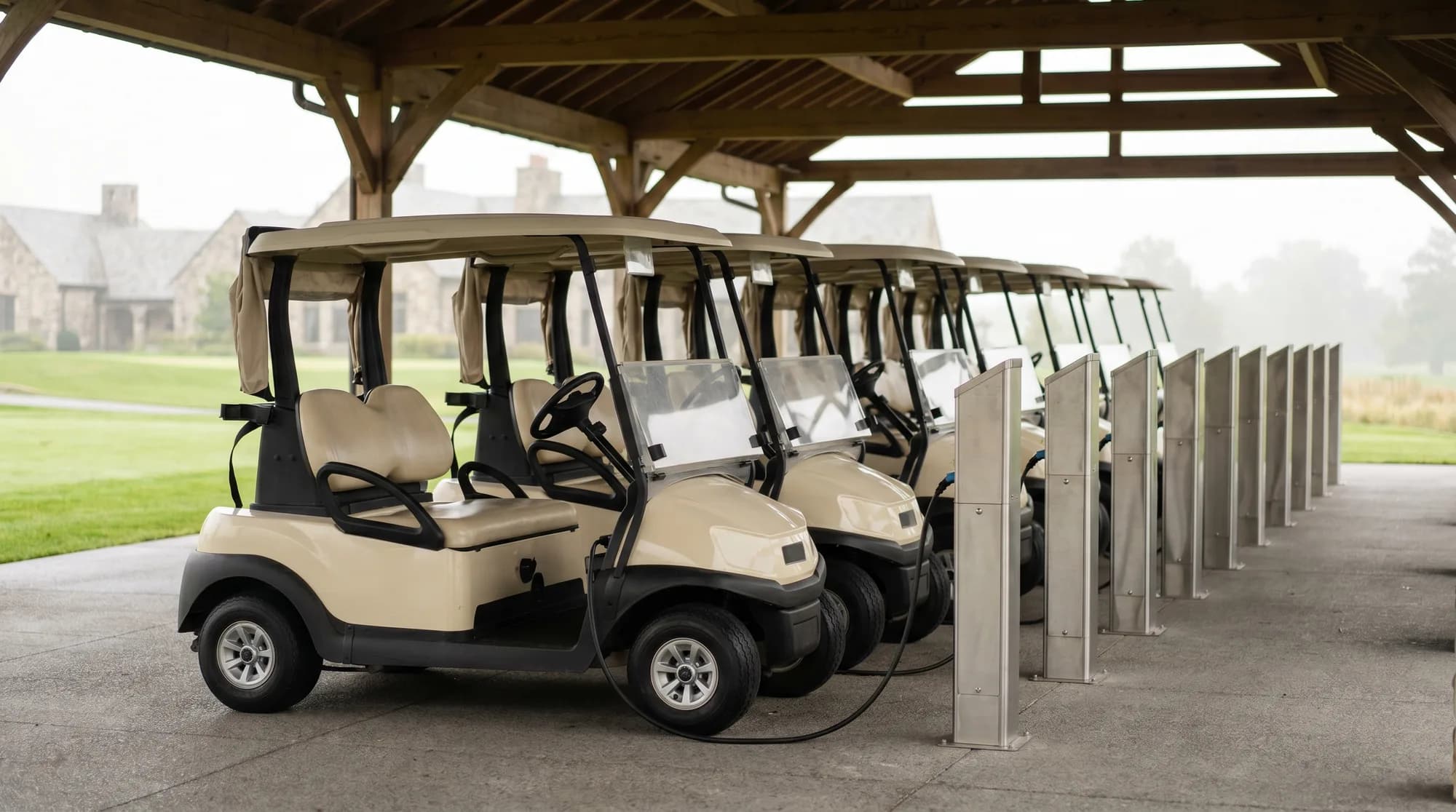
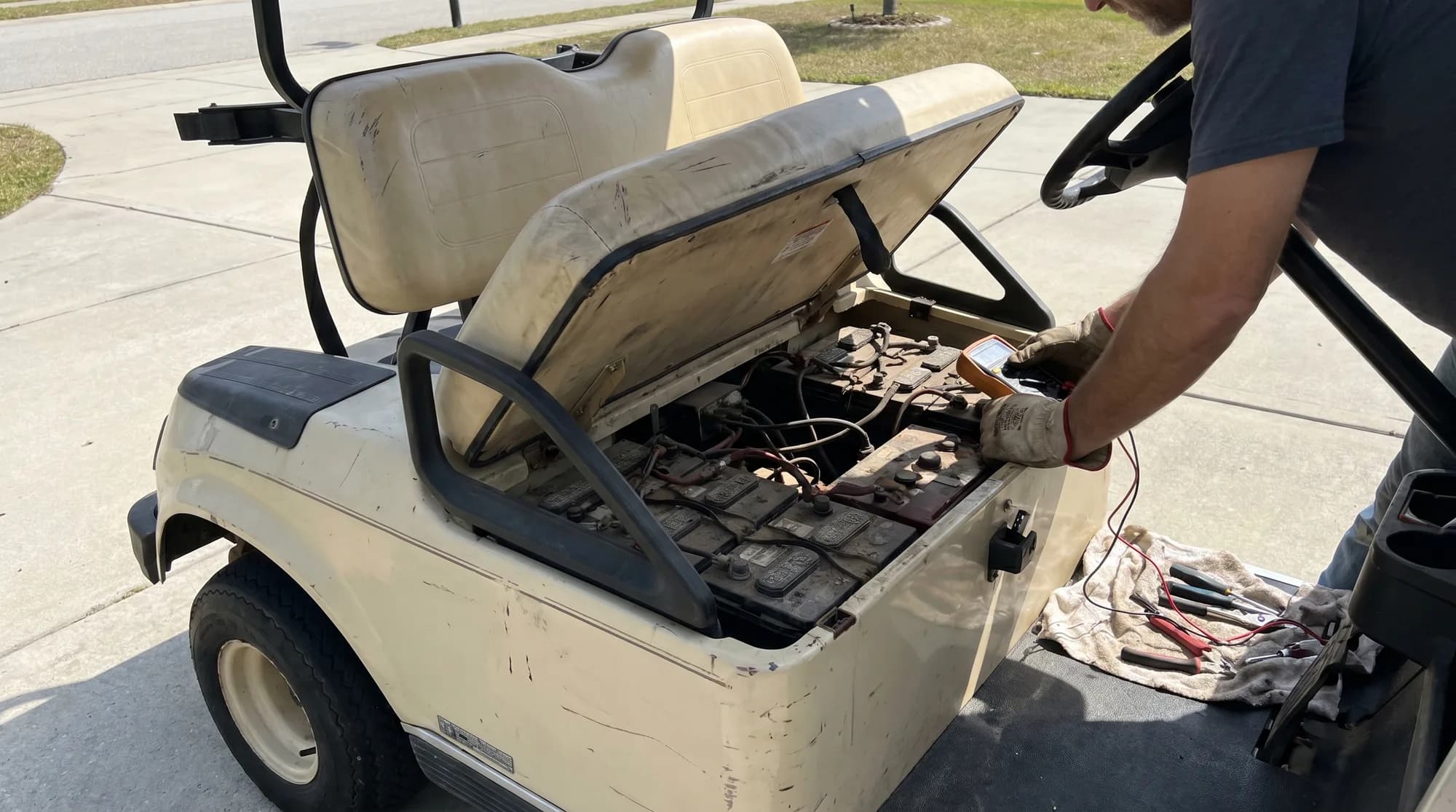
When a shuttle is part of how patients reach care, uptime stops being an operational metric and becomes a patient-care one. A cart out of service can mean a frail patient cannot get to their appointment, or waits in pain. The fleet therefore needs the same reliability discipline as any critical campus system: scheduled maintenance, a charging rotation that keeps shuttles running through the day and into the evening, and spares so a breakdown never empties a route. Faster-charging lithium packs suit the long daily hours of a medical shuttle and the partial top-ups that fit between loops, and they avoid the watering and sag problems of large lead-acid fleets on hard duty.
- Standard fleet
- Able-bodied
- Medical campus fleet
- Often frail, wheelchair users
- Standard fleet
- Nice to have
- Medical campus fleet
- Required and central
- Standard fleet
- Routine
- Medical campus fleet
- Infection-control regime
- Standard fleet
- Inconvenience
- Medical campus fleet
- Barrier to patient care
- Standard fleet
- Daytime
- Medical campus fleet
- Long, often round-the-clock
| Standard fleet | Medical campus fleet | |
|---|---|---|
| Passengers | Able-bodied | Often frail, wheelchair users |
| Accessibility | Nice to have | Required and central |
| Hygiene | Routine | Infection-control regime |
| Cost of downtime | Inconvenience | Barrier to patient care |
| Operating hours | Daytime | Long, often round-the-clock |
Lease or buy for a medical campus
Large, permanent medical campuses almost always own and maintain a managed fleet, because the service runs every day for years, reliability is paramount, and ownership gives full control over spec, hygiene and availability. Leasing can suit a temporary need, such as covering a construction phase or a satellite clinic, but the core patient-shuttle service is usually best owned and run as a dependable in-house operation. As an indicative guide, an accessible, well-finished medical shuttle cart runs into the mid four figures USD and up depending on accessibility features and finish; for a figure matched to your campus, request a quote. Our guides to cost and fleet management cover the economics and upkeep.
On a hospital campus the cart is not a convenience. For the patient who cannot walk from the parking structure, it is the difference between making the appointment and missing it.
So what should you do?
Put accessibility at the center of the spec, fit the campus infection-control regime with wipe-clean surfaces and a cleaning routine, design the patient journey end to end around parking and wayfinding, size to peak clinic surges, and treat uptime as patient-care critical with managed maintenance, charging and spares. Most large medical campuses own and maintain the fleet. If you would like help speccing a hospital shuttle fleet with the accessibility and hygiene the setting demands, with honest numbers, we are glad to help.
Spec a hospital shuttle fleet that puts patients first
Tell us your campus, your patient arrival pattern and your accessibility needs, and we will recommend an accessible, hygienic fleet with an honest price.
Frequently asked questions
Why do hospitals use golf carts?+
Hospital campuses are large and parking is often far from the right entrance, so carts shuttle patients, visitors and staff to remove a real source of distress at a difficult moment. The most important role is carrying patients, many of whom arrive unwell or unable to walk far, from parking to the doors they need.
Do hospital golf carts need to be wheelchair accessible?+
Yes. A meaningful share of patients use wheelchairs or cannot manage a step, and accessibility is both a legal requirement and a basic necessity here. Spec shuttles with low entry, grab handles, stable seating and the ability to safely carry a wheelchair or folding mobility device, and keep accessible capacity always available.
How do you keep medical campus carts hygienic?+
Specify wipe-clean, non-porous seating and surfaces rather than absorbent fabric, avoid hard-to-clean nooks, consider on-board hand sanitizer, and build cleaning into the routine, wiping carts down on a defined schedule and after any incident to your infection-control team's standards.
Why is uptime so critical for hospital carts?+
When a shuttle is part of how patients reach care, a cart out of service can mean a frail patient cannot get to their appointment. Uptime becomes a patient-care metric, demanding scheduled maintenance, a charging rotation that runs through the day and evening, and spares so a breakdown never empties a route.
Should a hospital lease or buy its carts?+
Large permanent medical campuses almost always own and maintain a managed fleet, because the service runs daily for years and reliability is paramount. Leasing can suit a temporary need such as a construction phase or satellite clinic, but the core patient-shuttle service is usually best owned and run in-house.
Related solutions
Ready to explore what we build?
See the vehicles and the setting this applies to, or get a tailored quote built around your site.

Ready to find the right golf cart?
Tell us how and where it will work and we will specify a vehicle and a tailored quote built around you. Every build comes with a 3-year warranty and a 24-hour priority call-out.
Our guides are written and reviewed by the Hawke Electric Vehicles team, the people who specify, build, deliver and support the vehicles. We focus on honest, practical advice and flag where a figure depends on the build rather than guessing.
More guides by Hawke