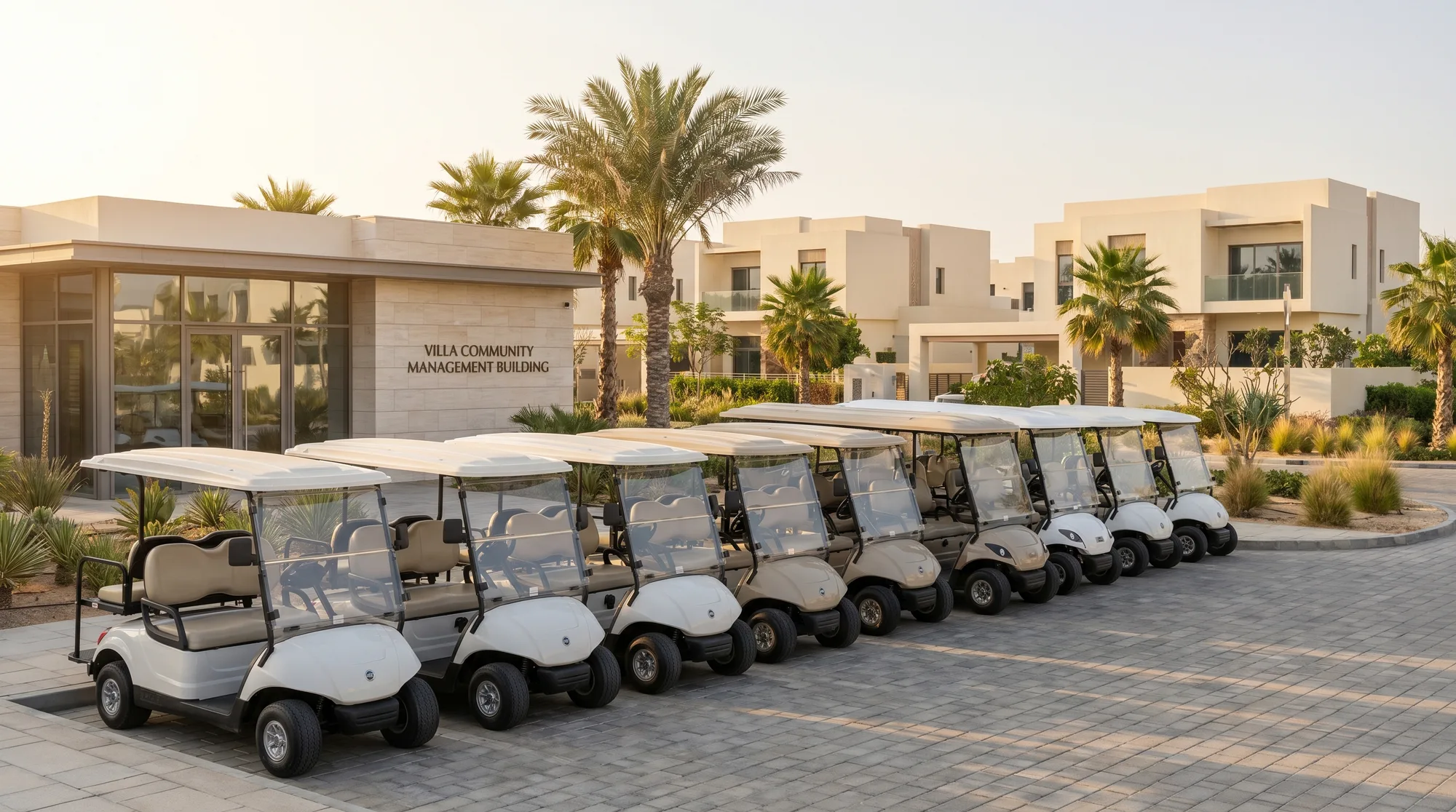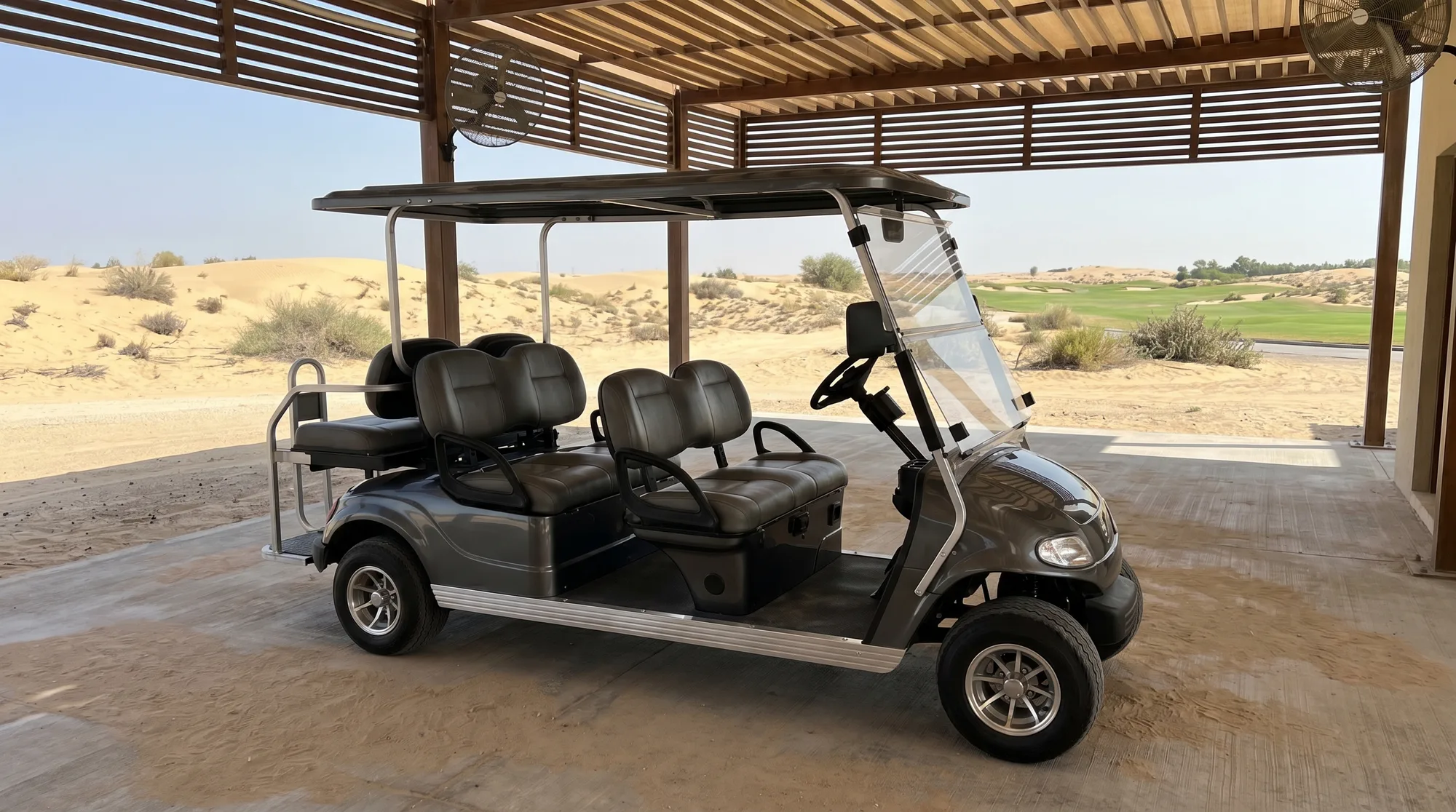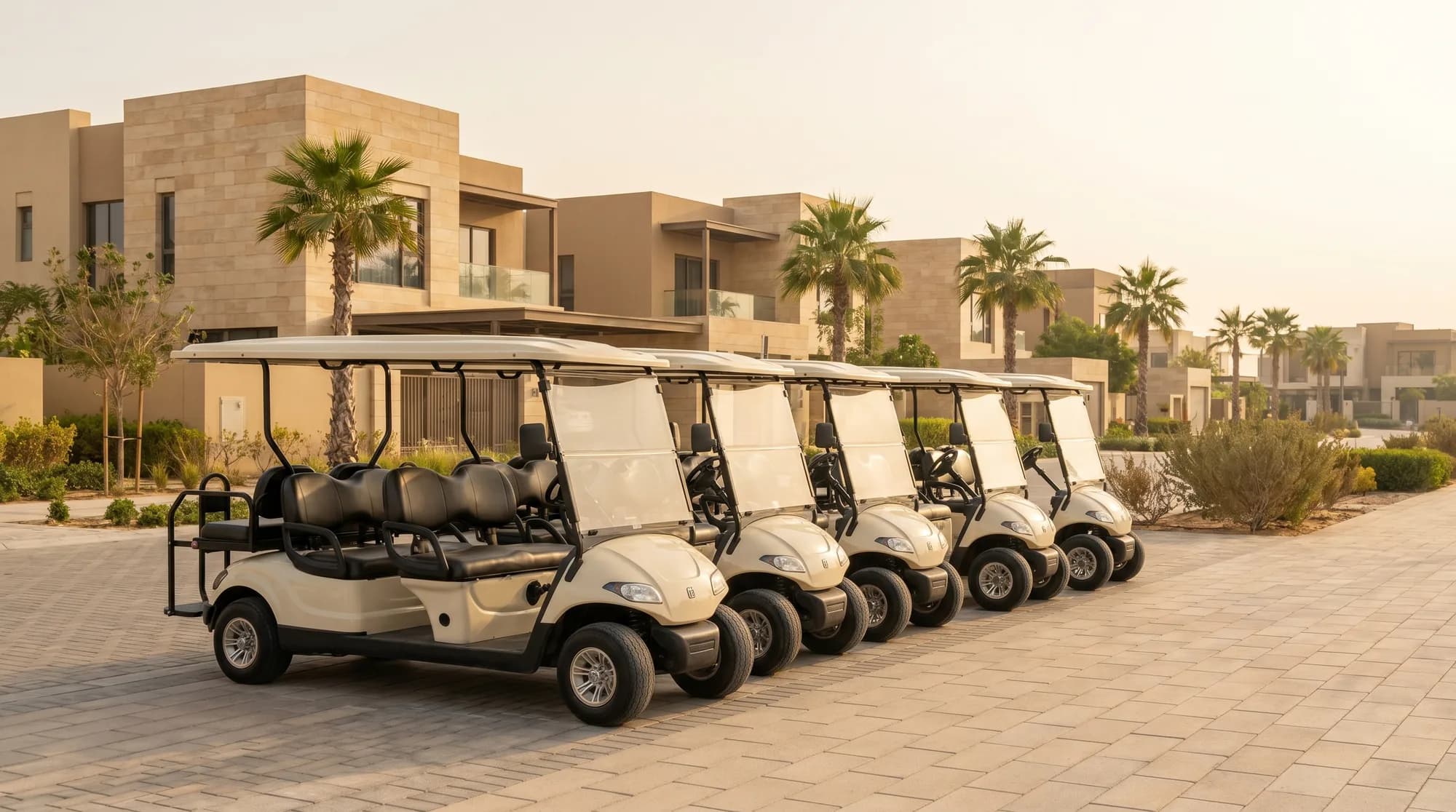
When a master developer completes a community and hands it over to the owners' association or facilities operator who will run it, everything that community depends on changes hands at once: the landscaping, the amenities, the management arrangements and, increasingly, a fleet of electric golf carts that move residents, security and maintenance around the development. Get that fleet handover right and the community inherits a reliable, well-documented asset. Get it wrong, with under-specified vehicles, no charging infrastructure, no maintenance contract and no records, and the new operator inherits a problem that surfaces within months as golf carts fail in the heat with nobody quite responsible.
A handover fleet is a different proposition from a fleet you buy for your own use, because the people who specify it are not the people who will live with it. That makes documentation, durability and governance even more important: the developer has to hand over not just vehicles but a complete, working, supportable system that a new operator can run from day one. This guide sets out how to specify, document and hand over a cart fleet so it becomes a legacy the community values rather than a liability it resents.
Specify for the operator, not the launch
The temptation at handover is to specify a fleet that looks impressive at the launch event and costs as little as possible to buy. That is exactly the wrong incentive, because the developer moves on and the operator lives with the consequence. A handover fleet should be specified for the people who will run it for years: durable enough to survive UAE heat and sand, supportable through a local maintenance relationship, and sized realistically for the community's actual demand. A cheap, under-specified fleet is a gift that turns into a grievance.
That means the same fleet-management discipline that applies to any operator, applied at the point of specification. The sizing, charging, maintenance and lifecycle thinking in golf cart fleet management for UAE operators is the right foundation, and the community-purchase perspective in buying a community golf cart fleet shows what the inheriting association will value.
Handover specifications that matter
A handover specification is a promise about what the operator is getting. It should pin down the vehicles in concrete terms, the durability features that suit the climate, the battery chemistry and expected life, the charging infrastructure included, and the support arrangement that comes with the fleet. Vague specifications, a number of golf carts with no detail, are where handover disputes begin, because the operator discovers later that what was delivered does not match what the community needs.
- Weak handover
- A count, no detail
- Strong handover
- Defined spec, durability and seat mix for the community
- Weak handover
- Unspecified chemistry
- Strong handover
- Heat-tolerant lithium with stated expected life
- Weak handover
- Left to the operator
- Strong handover
- Infrastructure built in and documented
- Weak handover
- None
- Strong handover
- Maintenance contract or clear supportable plan
| Weak handover | Strong handover | |
|---|---|---|
| Vehicles | A count, no detail | Defined spec, durability and seat mix for the community |
| Batteries | Unspecified chemistry | Heat-tolerant lithium with stated expected life |
| Charging | Left to the operator | Infrastructure built in and documented |
| Support | None | Maintenance contract or clear supportable plan |
Charging infrastructure as part of the legacy
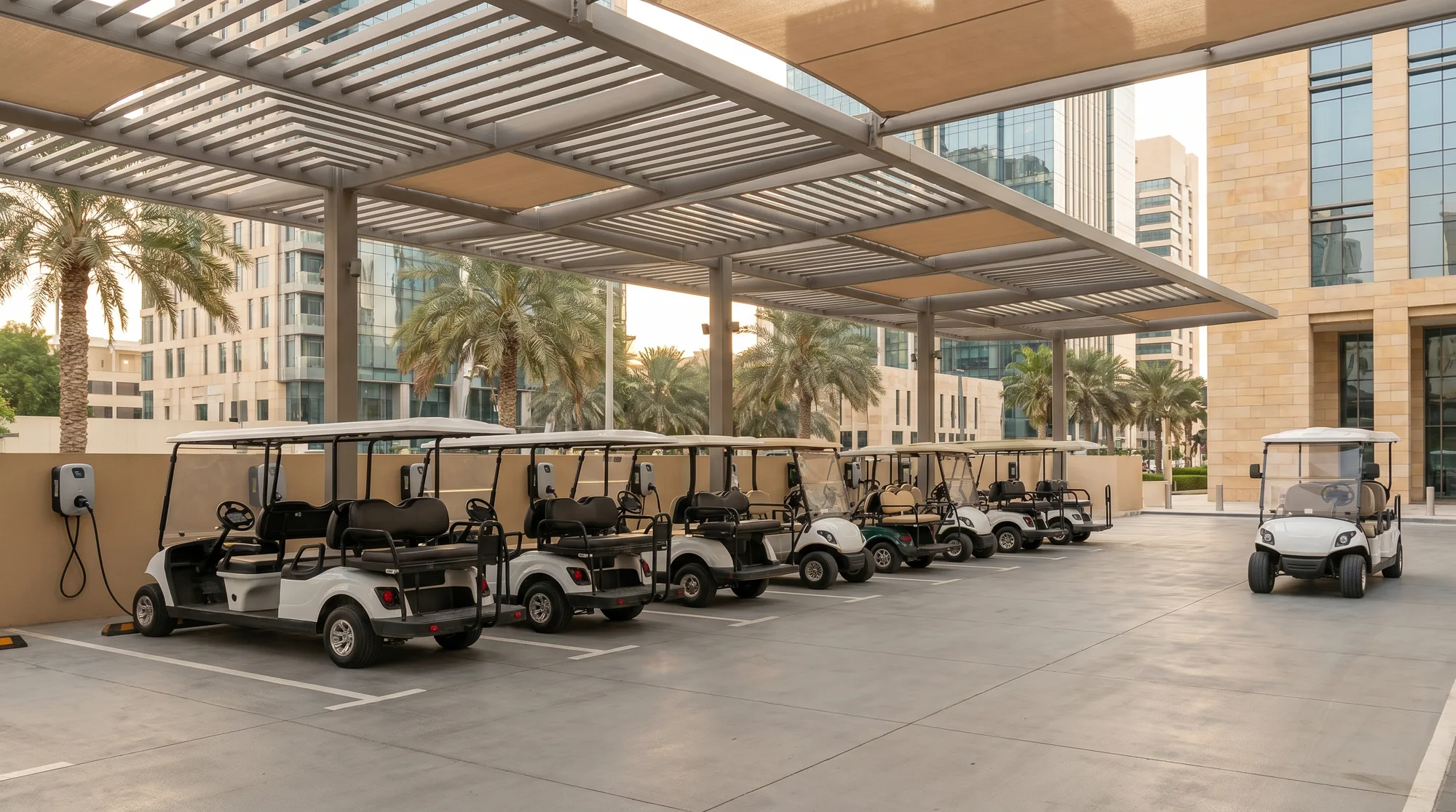
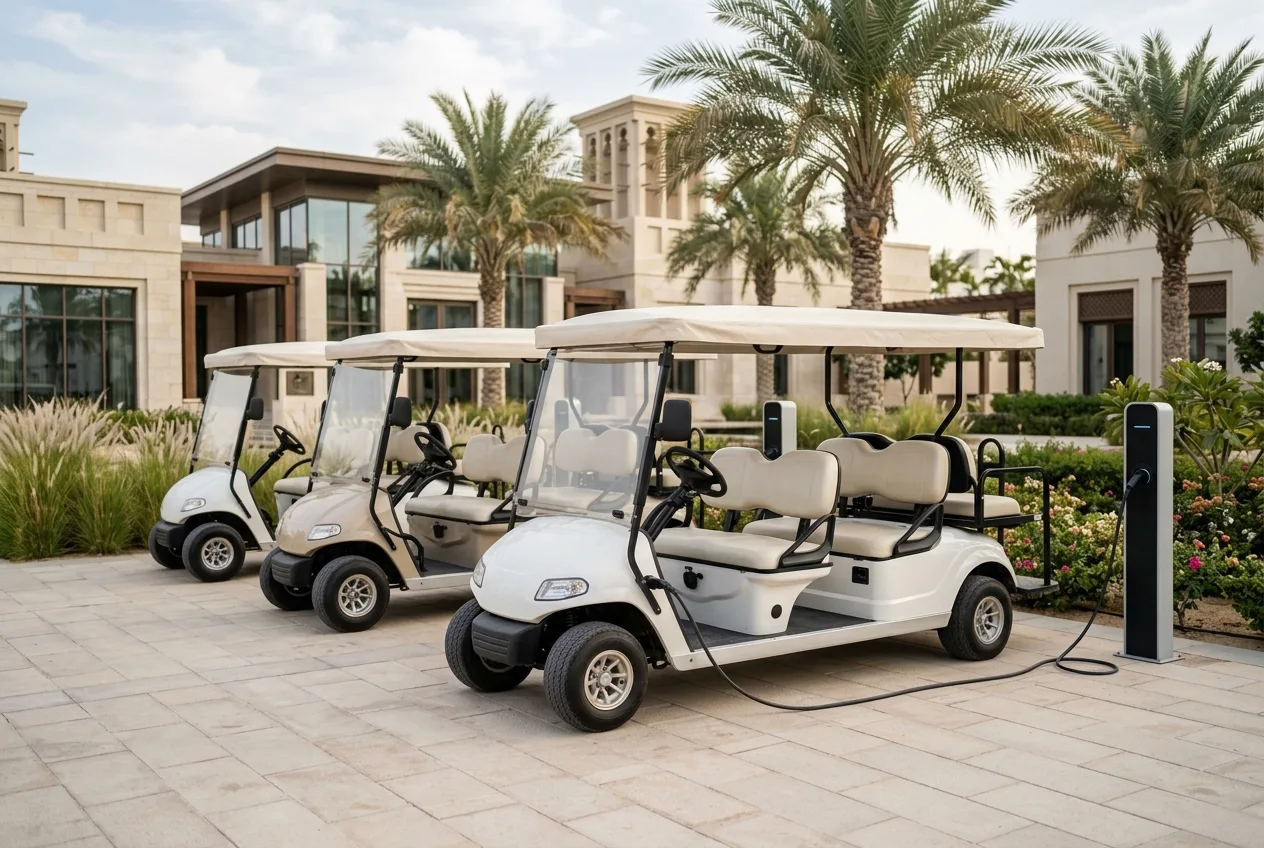
Charging is the part of a handover fleet most often neglected, and the part hardest for a new operator to fix after the fact. A developer building a community can install proper charging infrastructure, at the right capacity, in the right central locations, as part of the build. Leaving it to the operator to retrofit means inadequate charging, queueing golf carts and a fleet that cannot stay available. Building it in is far cheaper and produces a system that actually works.
Specify charging to the whole fleet, not one cart: enough points and capacity to return the fleet to ready without queueing, placed where golf carts naturally pause, and sized for the lithium chemistry the fleet uses. Documenting the charging setup, its capacity and how to run a sensible rotation is part of handing the operator a working system. The chemistry context is in lithium batteries for golf carts in UAE heat.
Maintenance: hand over a plan, not a problem
A fleet handed over with no maintenance arrangement collapses into reactive repairs within months, and the new operator, often inexperienced with golf carts, struggles to keep it running. The developer can prevent this by handing over a maintenance contract or at minimum a clear, supportable plan: a defined service schedule, a parts-and-response relationship with the supplier or a competent local partner, and the maintenance history of the fleet to date. That turns maintenance from a crisis the operator stumbles into a routine they inherit ready-made.
In UAE heat, where batteries and components age faster, this matters even more. A planned maintenance regime is what lets the fleet reach the lifespan the lifecycle costing assumed; without it, the operator faces early failures and unbudgeted replacements. Handing over the plan protects both the fleet and the relationship between developer and community.
Lifecycle costing the operator can budget
An owners' association inheriting a fleet needs to budget for it, and that budget depends on an honest lifecycle cost. The developer should hand over not just the vehicles but a clear picture of the ongoing cost: maintenance, energy, and crucially the battery replacement cycle, which in UAE heat is a significant and predictable future expense. An operator handed a fleet with no cost picture is set up to underfund it and face a shock when batteries reach end of life.
This is another argument for specifying quality at handover. A heat-tolerant lithium fleet with a longer battery life pushes that replacement cost further out and makes it more predictable, which is exactly what an inheriting operator needs. Lifecycle thinking, set out in golf cart fleet management for UAE operators, should shape the specification, not just the handover paperwork. For indicative budgeting figures see how much a golf cart costs in the UAE.
Governance and the compliance position
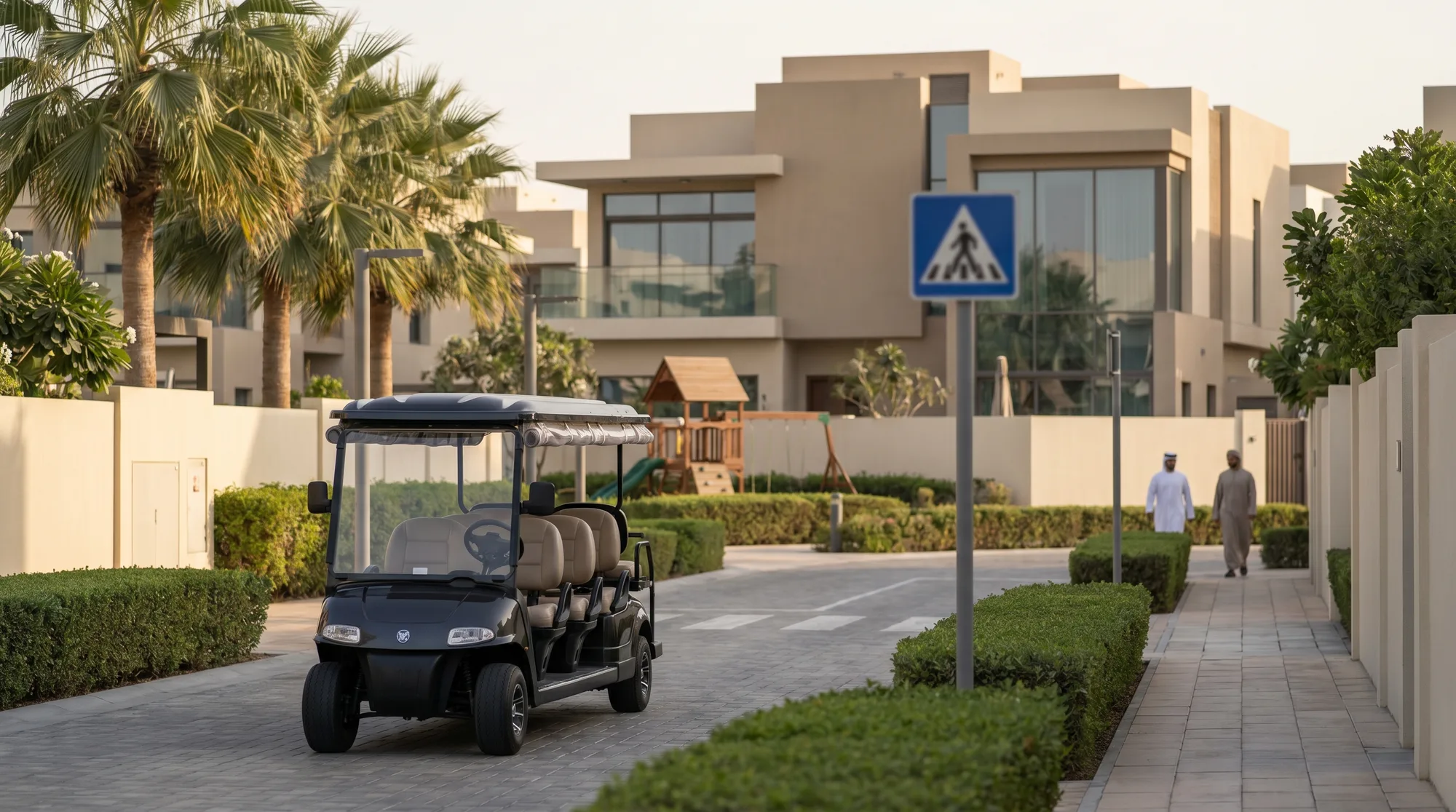
Finally, a handover has to settle who owns and governs the fleet once the developer leaves. That means naming the responsible party, handing over the usage rules and safety standards, and clearly stating the compliance position: that the golf carts are not RTA road-legal, where they may run within the community, and what driver standards apply. A fleet handed over without this governance drifts into the same lane-safety and misuse problems that plague any ungoverned community fleet.
Writing governance into the handover means the operator inherits a managed fleet, not just a pile of vehicles. The safety dimension is covered in golf cart safety in gated communities, and the community-purchase view in buying a community golf cart fleet. Confirm the road-legal and site rules with the relevant authority and hand them over in writing.
A master developer hands over a community's future. The cart fleet is a small part of that, but handed over well, with documentation, support and a clear cost, it is a legacy residents value rather than a liability they resent.
Specify a handover-ready fleet
Tell us your development and the community it serves, and we will specify a durable, documented, supportable fleet with current indicative pricing in AED.
Frequently asked questions
What should a master developer include in a cart fleet handover?+
Not just vehicles but a complete working system: defined specifications, durability features for the climate, charging infrastructure built in, a maintenance contract or supportable plan, full documentation and governance, and an honest lifecycle cost the operator can budget.
Why specify durability if the developer hands the fleet over anyway?+
Because a cheap, under-specified fleet fails in the heat within months and becomes the inheriting operator's grievance. Specifying for durability and supportability protects the community, the relationship and the developer's reputation long after handover.
Should charging infrastructure be part of the handover?+
Yes. A developer can build proper charging in at the right capacity and locations far more cheaply than the operator can retrofit it later. Leaving charging to the new operator means inadequate capacity, queueing golf carts and a fleet that cannot stay available.
How does battery replacement affect a handover budget?+
Significantly. In UAE heat, battery replacement is a major, predictable future cost. The developer should hand over a clear lifecycle picture so the operator can budget for it, and specify heat-tolerant lithium to push that cost further out and make it predictable.
Who is responsible for a community fleet after handover?+
Whoever the handover names: usually the owners' association or facilities operator. Good governance hands over a named responsible party, usage and safety rules and the compliance position, confirmed with the relevant authority, so the fleet is managed from day one.
Related solutions
Ready to explore what we build?
See the vehicles and the setting this applies to, or get a tailored quote built around your site.

Ready to find the right golf cart?
Tell us how and where it will work and we will specify a vehicle and a tailored quote built around you. Every build comes with a 3-year warranty and a 24-hour priority call-out.