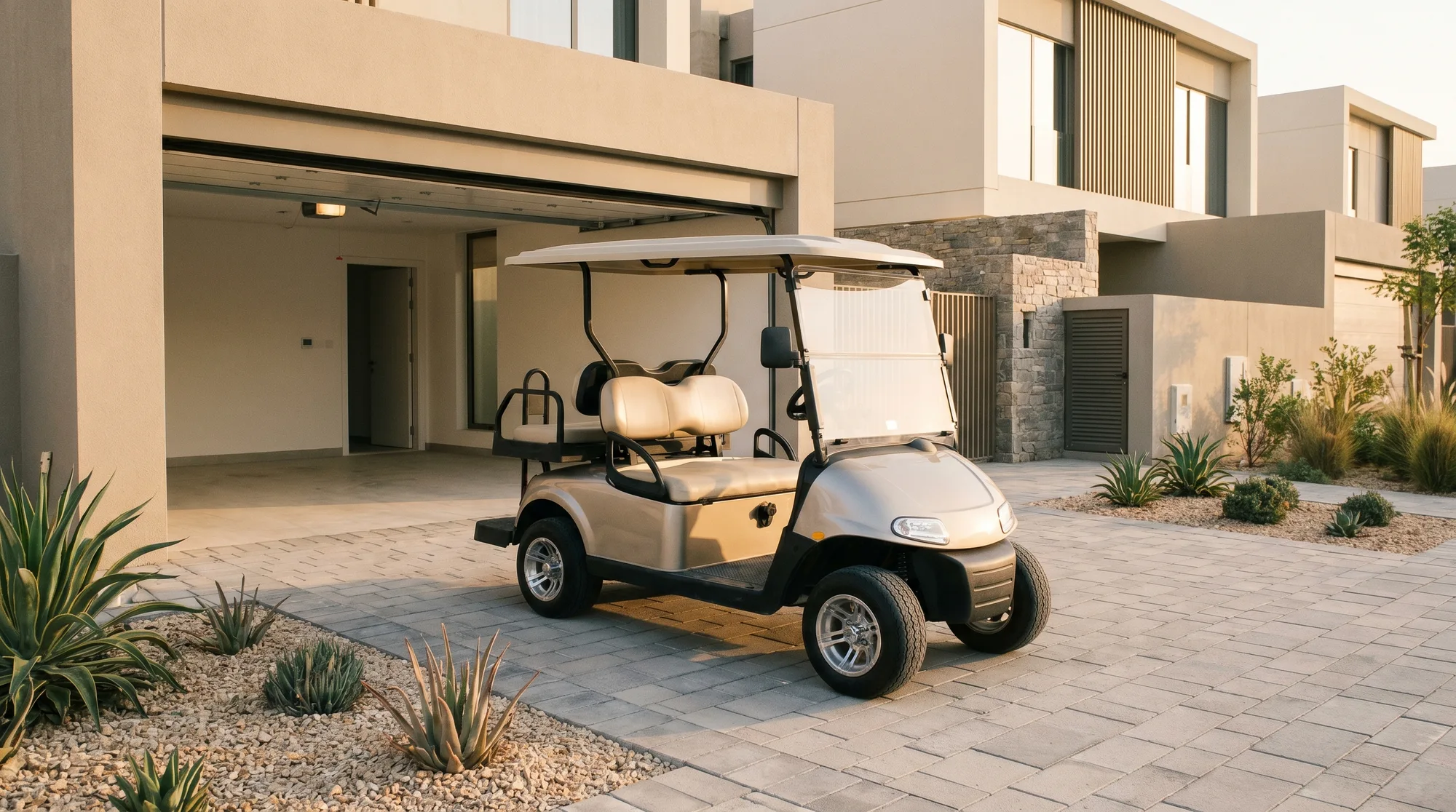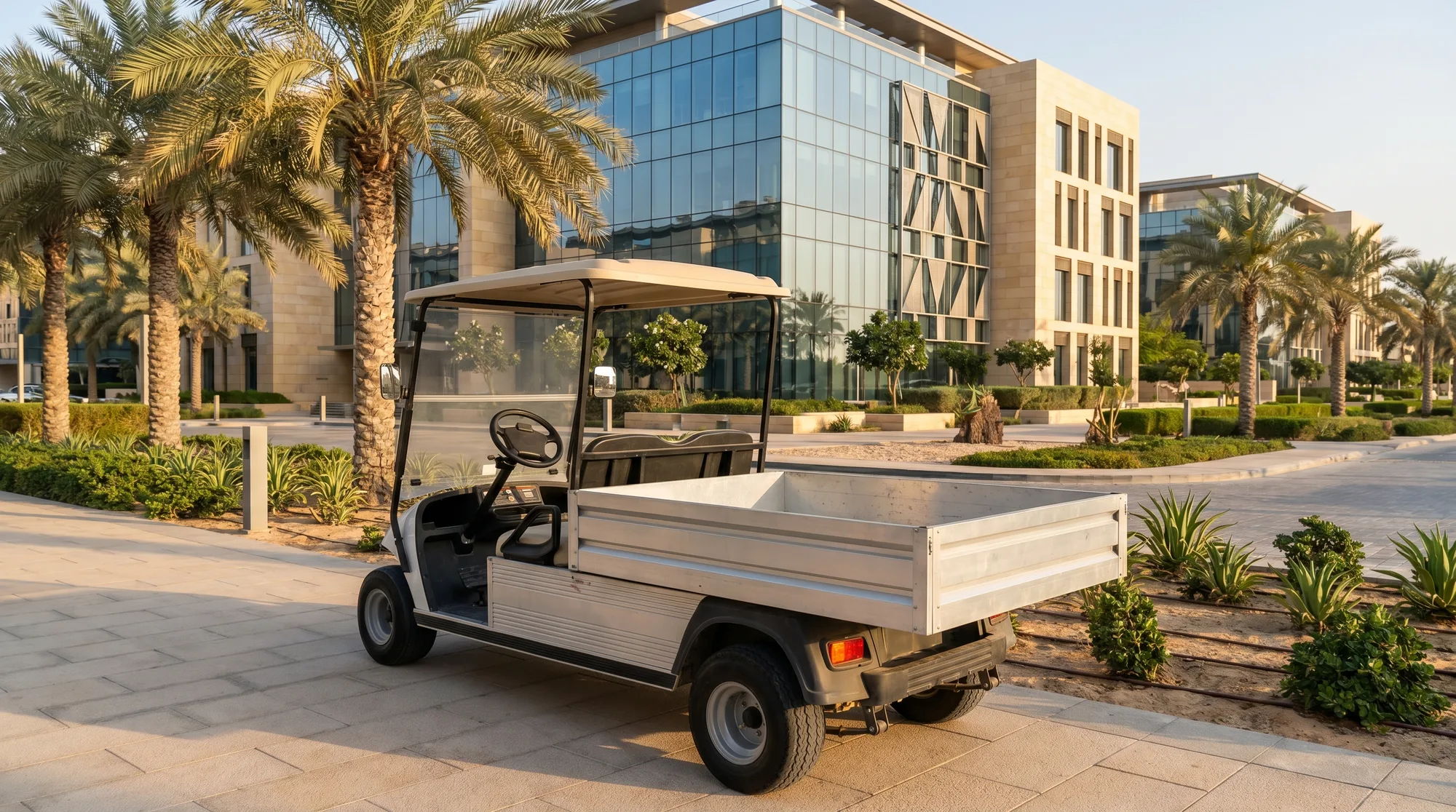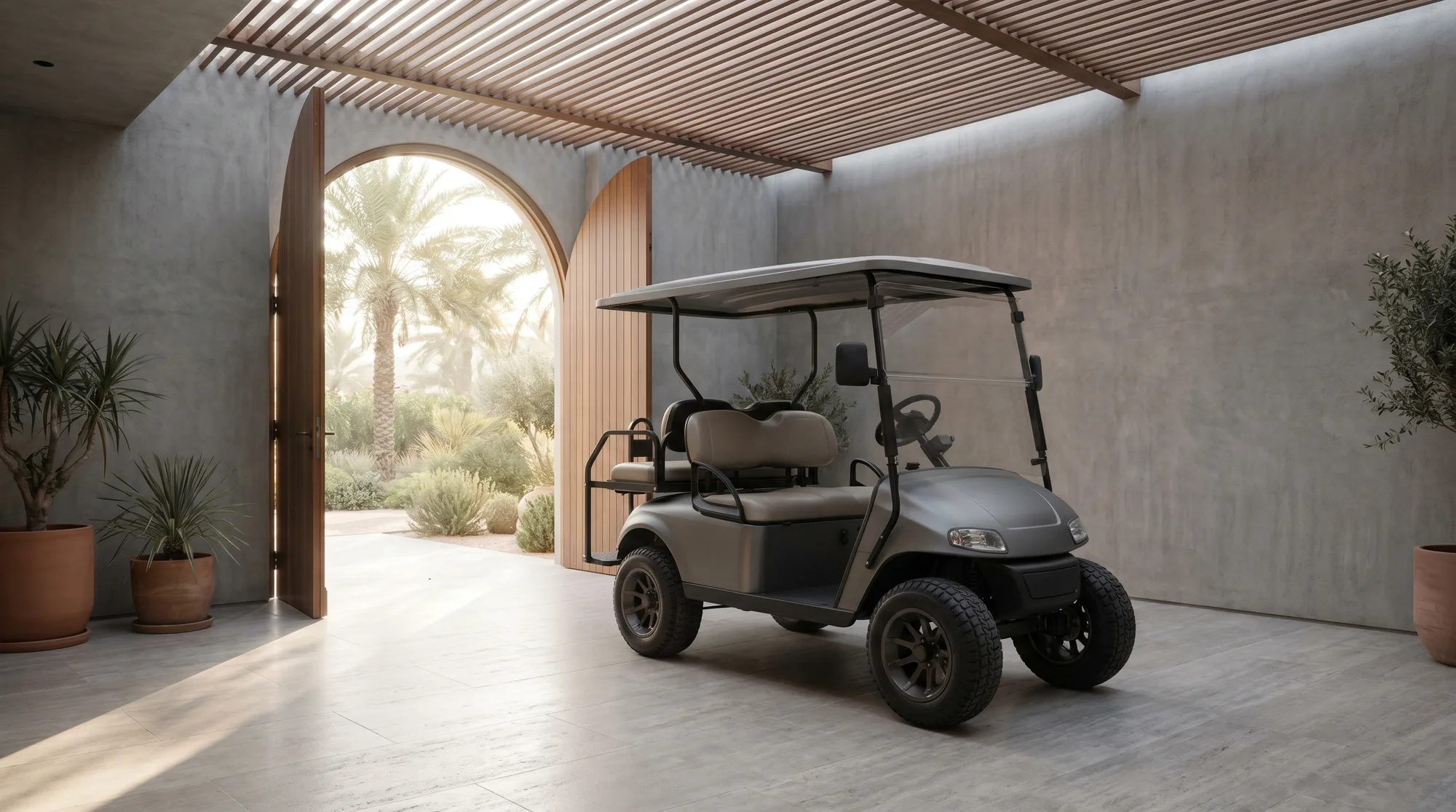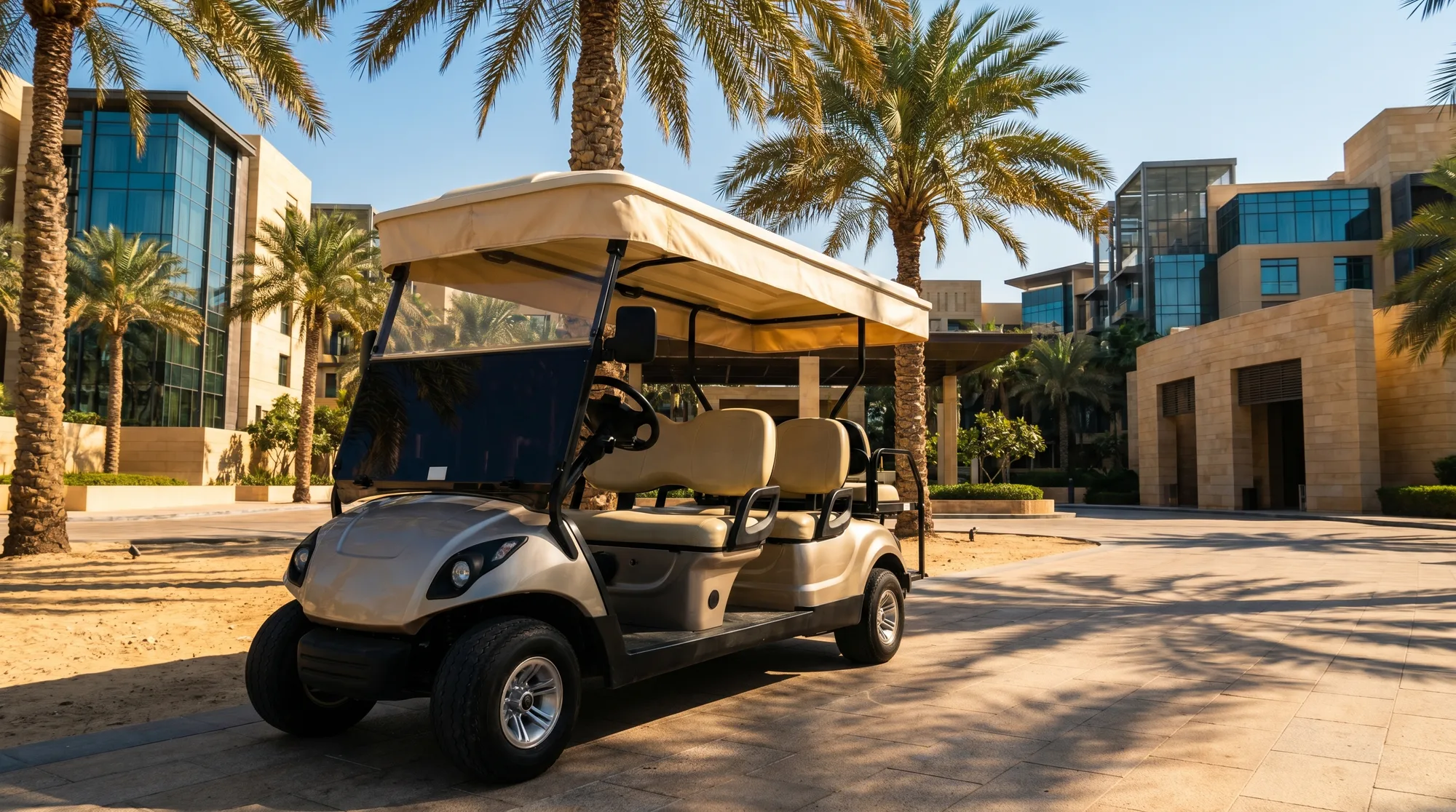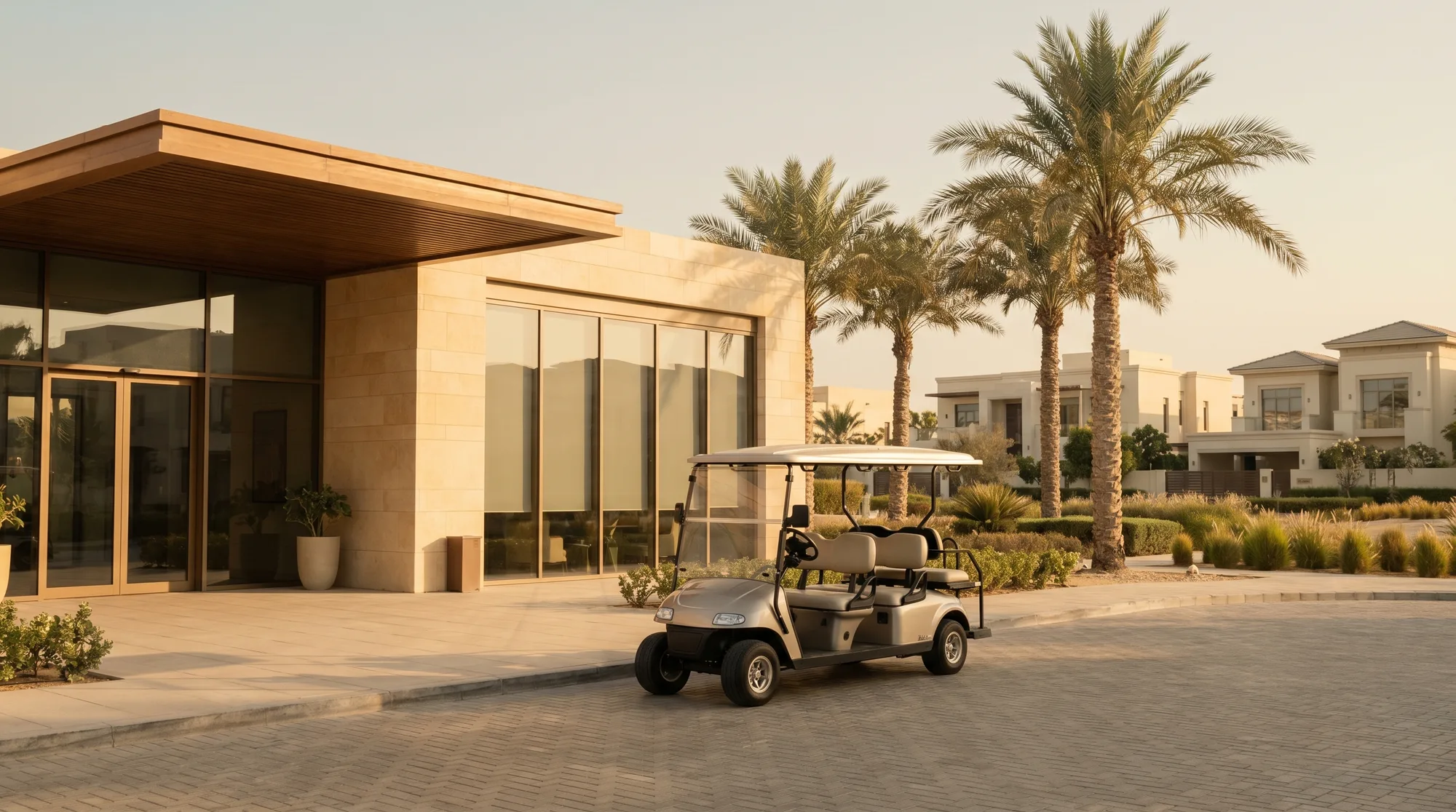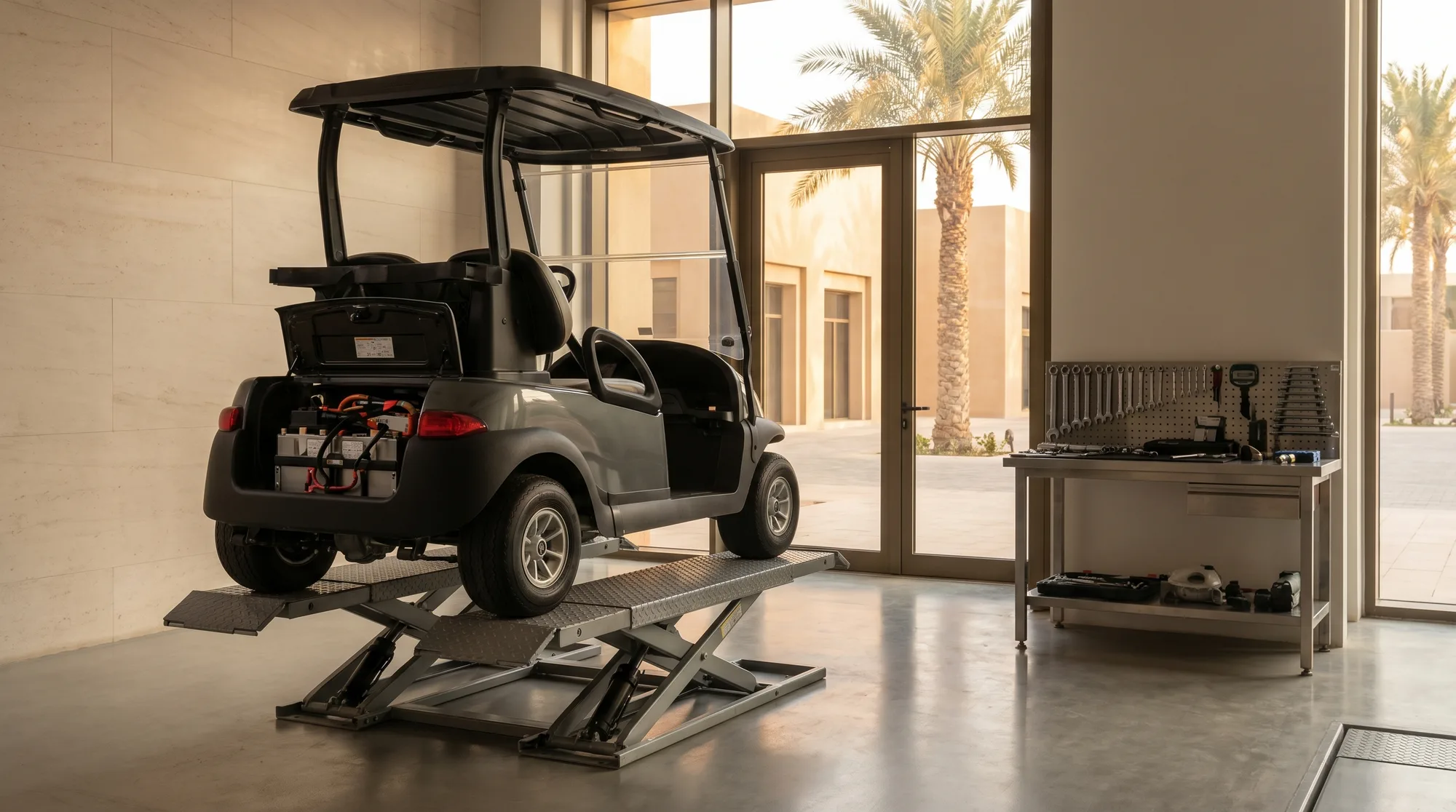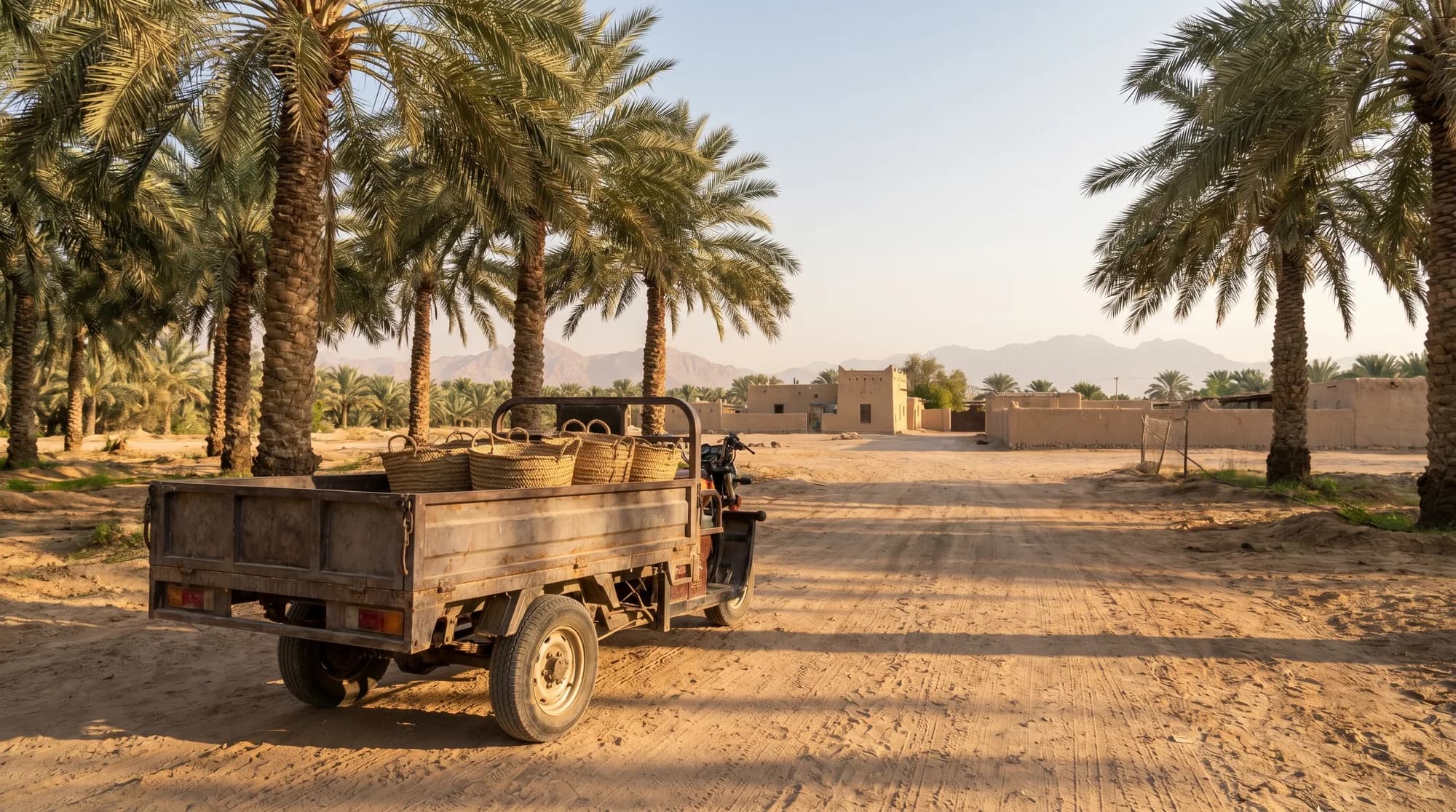
Al Ain is the UAE's garden city, and its date farms, plantations and walled estates are working landscapes measured in hectares rather than metres. Between the palm rows, the irrigation channels, the workers' quarters and the gatehouse, there is a great deal of ground to cover, and covering it on foot in summer heat wastes both time and people. An electric utility cart is the quiet workhorse that closes those distances: it carries a worker and their tools to the far corner of a plantation, brings a crate of dates back to the packing shed, and ferries the owner or a guest across grounds that a car would chew up. It sits between a wheelbarrow and a pickup, and on a farm it earns its keep every single day.
The catch in Al Ain is the environment. Fine inland dust gets into everything, the heat is relentless for much of the year, and the terrain underfoot ranges from compacted track to soft sand and irrigation-softened earth. A cart built for a manicured golf course will struggle here. The cart that lasts is specified deliberately for dust, heat and rough ground, and that specification is what this guide is about. Note too that a farm cart is for private use on your own land; it is not RTA road-legal, so confirm any boundary or shared-road use with the relevant authority first.
Why a utility cart beats a pickup on a farm
The instinct on a large holding is to use a pickup for everything, but a pickup is the wrong tool for most farm journeys. It is too wide for the gaps between palm rows, too heavy for soft or irrigated ground, and too thirsty for the dozens of short hops a working day demands. A utility cart is narrow enough to thread the plantation, light enough not to rut the soil, and cheap enough to run that nobody thinks twice about using it. It is the difference between a vehicle reserved for big trips and one that is always to hand for the small ones that actually fill the day.
The same logic that makes golf carts the default for villa grounds applies, only at larger scale. There is more on grounds use in our guide to golf carts for villa owners in the UAE, and for an operator running staff and equipment across a big site the thinking overlaps with golf carts for facilities management in the UAE.
- Best choice
- Utility cart with cargo bed
- Why
- Narrow, light on soft ground, always available
- Best choice
- 2 or 4-seat passenger cart
- Why
- Comfortable, quiet, easy on the grounds
- Best choice
- Pickup or tipper
- Why
- Capacity and road capability a cart lacks
| Best choice | Why | |
|---|---|---|
| Carrying tools and produce between rows | Utility cart with cargo bed | Narrow, light on soft ground, always available |
| Moving the owner or guests across the estate | 2 or 4-seat passenger cart | Comfortable, quiet, easy on the grounds |
| Heavy single loads or off-site trips | Pickup or tipper | Capacity and road capability a cart lacks |
Beating the dust
Inland Al Ain dust is finer and more pervasive than coastal sand, and it is the single biggest threat to a farm cart's lifespan. It works its way into bearings, into controller housings, into connectors and into the motor, and once there it grinds and overheats. A cart that is going to survive years on a plantation needs sealed electronics, protected wiring connectors, and an air path for any cooling that does not simply inhale grit. The build matters more than the brochure speed.
Specification is only half the answer; routine is the other half. A dusty-environment cart needs regular blowing-out or wiping of connectors, periodic checks of bearings and brakes, and an honest cleaning schedule that someone actually keeps. Build that into the farm's maintenance rhythm from day one and a quality cart lasts; neglect it and even a well-built one fails early.
Heat, lithium and real-world range
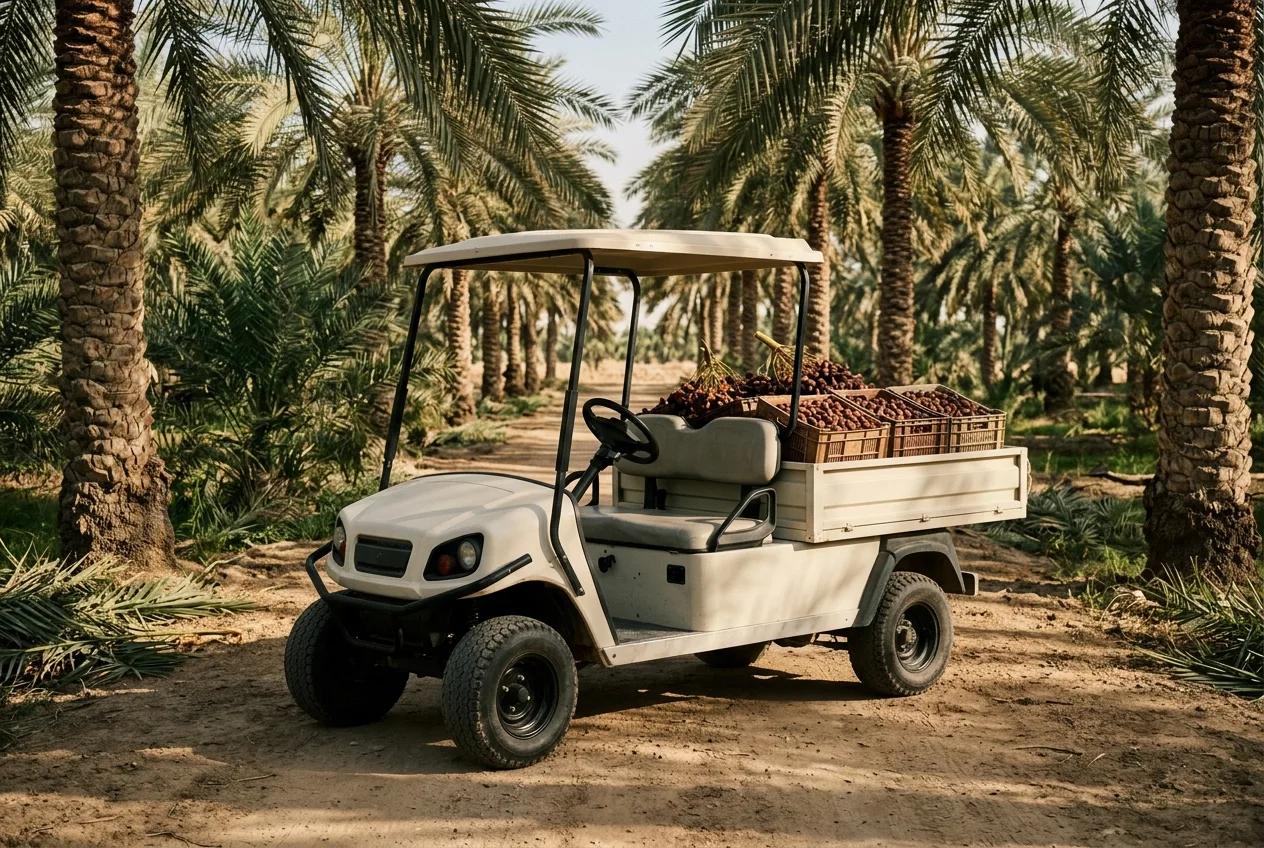
Al Ain summers are punishing, and heat attacks a battery twice: it shortens the range you actually get and it shortens the life of the pack itself. This is exactly where battery chemistry earns its premium. A quality lithium pack holds its usable range far better in high ambient temperatures than lead-acid, tolerates the heat without rapid degradation, and recharges quickly so the cart is back in service between jobs. On a farm where the vehicle works all day in the sun, that difference is the difference between a tool you trust and one you nurse.
Just as important is reading range honestly. A sticker figure is measured on flat, hard ground in mild conditions. On a real farm the cart crosses soft margins, climbs the slope to the gatehouse, carries a load and runs in serious heat, all of which cut range. Specify with comfortable headroom over your longest working loop so you are never stranded at the far end of the plantation. Our guide to lithium batteries for golf carts in UAE heat goes deeper on why chemistry matters here.
Tyres, clearance and rough ground
A farm cart lives on mixed terrain: compacted access track, loose sand at the edges, soft ground near irrigation, and the occasional rut or root. Standard turf tires made for a fairway will spin and sink. Specify tires suited to mixed and soft ground, enough ground clearance to ride over ruts and irrigation lips, and suspension forgiving enough to make a full working day comfortable. Get this wrong and the cart becomes the vehicle that always gets stuck at the worst moment; get it right and it reaches every corner of the holding.
- Tyres rated for mixed track and soft margins, not fairway turf alone.
- Ground clearance to cross ruts, roots and irrigation lips.
- Forgiving suspension for long, comfortable working days.
- Enough torque to pull a loaded bed up the estate's slopes.
Sizing the fleet for a working estate
Most farms and estates do not need a large fleet; they need the right mix. A common pattern is one utility cart as the everyday workhorse for the grounds team, plus a tidier passenger cart for the owner, family or visitors. A larger commercial plantation with several work crews may run two or three utility golf carts and a charging point central enough that topping up is never a detour. Size to the number of simultaneous tasks and the geography, not to the headcount, and always keep a little capacity in reserve for the busy harvest period when everything is needed at once.
Think about charging placement as carefully as the vehicles. A single point at the packing shed or the main building, where golf carts naturally pause, keeps the fleet topped up without anyone making a special trip. On a big holding, two well-placed points beat one central one that forces a long drive back to charge.
Running cost and the long view
The case for an electric farm cart is its running cost over years, not its purchase price. There is no fuel bill, far fewer moving parts to fail than a gas vehicle, and minimal servicing when the build resists dust and heat. Against the labour saved by not walking the grounds and the produce moved efficiently at harvest, a well-specified cart pays for itself and keeps paying. For indicative budgeting see how much a golf cart costs in the UAE, and to price a configuration built for your land, share the details via /request-a-quote rather than working from a fixed figure.
Specify a farm or estate cart
Tell us your holding size, the work it does and your terrain, and we will configure a dust and heat-ready utility cart with current indicative pricing in AED.
Frequently asked questions
Can I drive a farm cart on the road in Al Ain?+
No. A farm or estate cart is a private-use vehicle for your own land and is not registered for RTA road use. If your holding borders a public road or shared track, confirm permitted use with the relevant authority before relying on it.
Will a golf cart cope with dust on a date farm?+
Only if it is specified for it. Inland dust attacks bearings, connectors and electronics, so choose a cart with sealed components and protected wiring, and keep a routine of cleaning and checks. A course-spec cart without that protection fails early.
Should a farm cart use lithium or lead-acid batteries?+
Lithium, for Al Ain heat. It holds usable range far better in high temperatures, degrades more slowly and recharges quickly, which matters when the cart works all day in the sun. See our guide on lithium batteries in UAE heat.
What size cart do I need for a large estate?+
Most estates run a mix: a utility cart with a cargo bed for the grounds team and a passenger cart for the owner and guests. Larger plantations add a second or third utility cart. Size to simultaneous tasks and geography, not headcount.
Can the cart carry loads across soft and rutted ground?+
Yes, if specified for it. Choose tires for mixed and soft terrain, enough ground clearance for ruts and irrigation lips, forgiving suspension and the torque to pull a loaded bed up slopes. Standard fairway tires will sink.
Related solutions
Ready to explore what we build?
See the vehicles and the setting this applies to, or get a tailored quote built around your site.
Ready to find the right golf cart?
Tell us how and where it will work and we will specify a vehicle and a tailored quote built around you. Every build comes with a 3-year warranty and a 24-hour priority call-out.