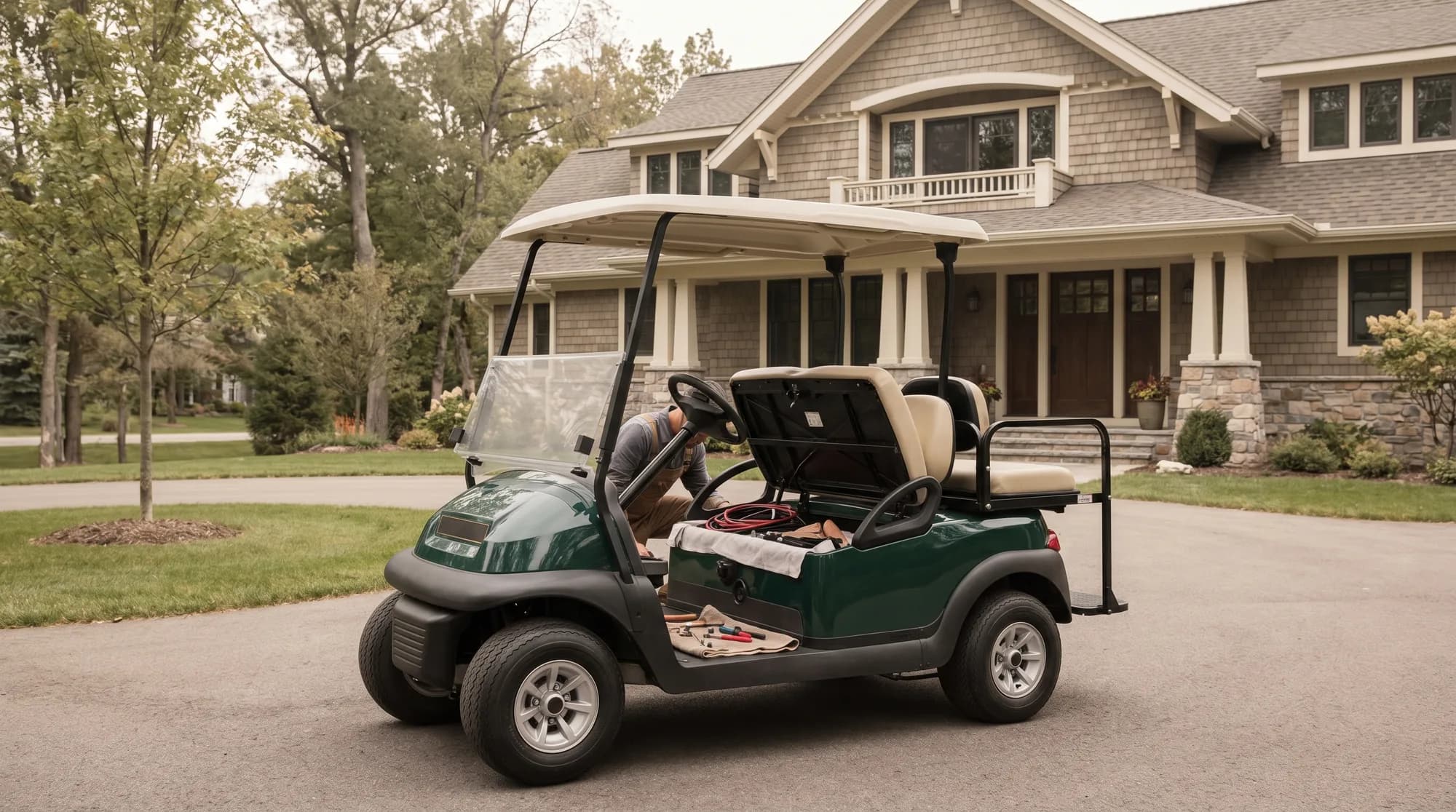
A golf cart that will not move is one of the most stressful faults to face, partly because it usually happens at the worst moment and partly because it feels like something major has failed. The good news is that the reverse is usually true: most no-go faults are small, cheap and diagnosable in your driveway. The trick is to work through the causes in a deliberate order rather than jumping straight to the motor or controller. This guide gives you that order, from the embarrassing interlocks people forget to the genuine faults, with the safe way to test each one and the signs that say stop and call a technician.
First, rule out the things that are not faults at all
Before you assume anything has broken, check the interlocks. A large share of will-not-move calls are not failures; they are the cart doing exactly what it was designed to do because a switch is in the wrong position.
- 01
Unplug and check the charger
Many carts garbage to move while the charger handle is connected, or even if the cart thinks it is still connected. Unplug it and inspect the receptacle.
- 02
Find the tow / run switch
Electric carts have a tow or maintenance switch, often under the seat. In tow position the cart will not drive. Set it to run.
- 03
Look for a popped reset
Many controllers and chargers have a reset button that pops out when overloaded. Press it back in and try again.
- 04
Confirm the key and direction selector
Check the key switch works and the forward/reverse selector is fully in one position, not stuck in between.
Listen at the key: the click tells a story
With the interlocks ruled out, turn the key, select a direction, and press the pedal while you listen. The sound is a free diagnostic.
- One solid click then nothing: the solenoid is trying to engage but power is not reaching the motor, or the solenoid contacts are worn.
- Rapid chattering clicks: the battery pack is too low or unbalanced to hold the solenoid closed.
- Total silence: a dead pack, a failed key switch, a blown main fuse, or an interlock you missed.
- A clunk and a tiny lurch then nothing: possible motor or controller issue, or a very weak pack under load.
Check the battery pack properly
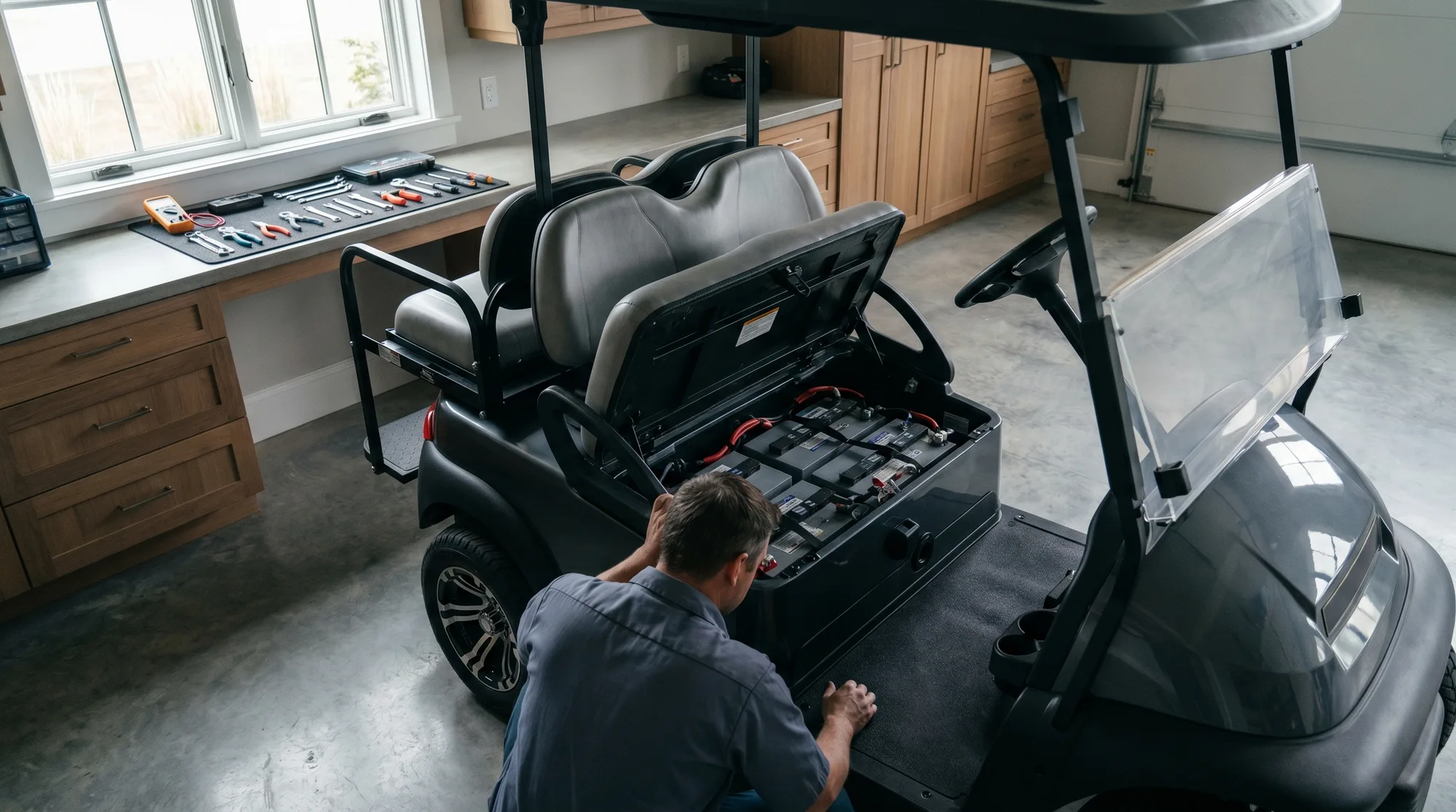
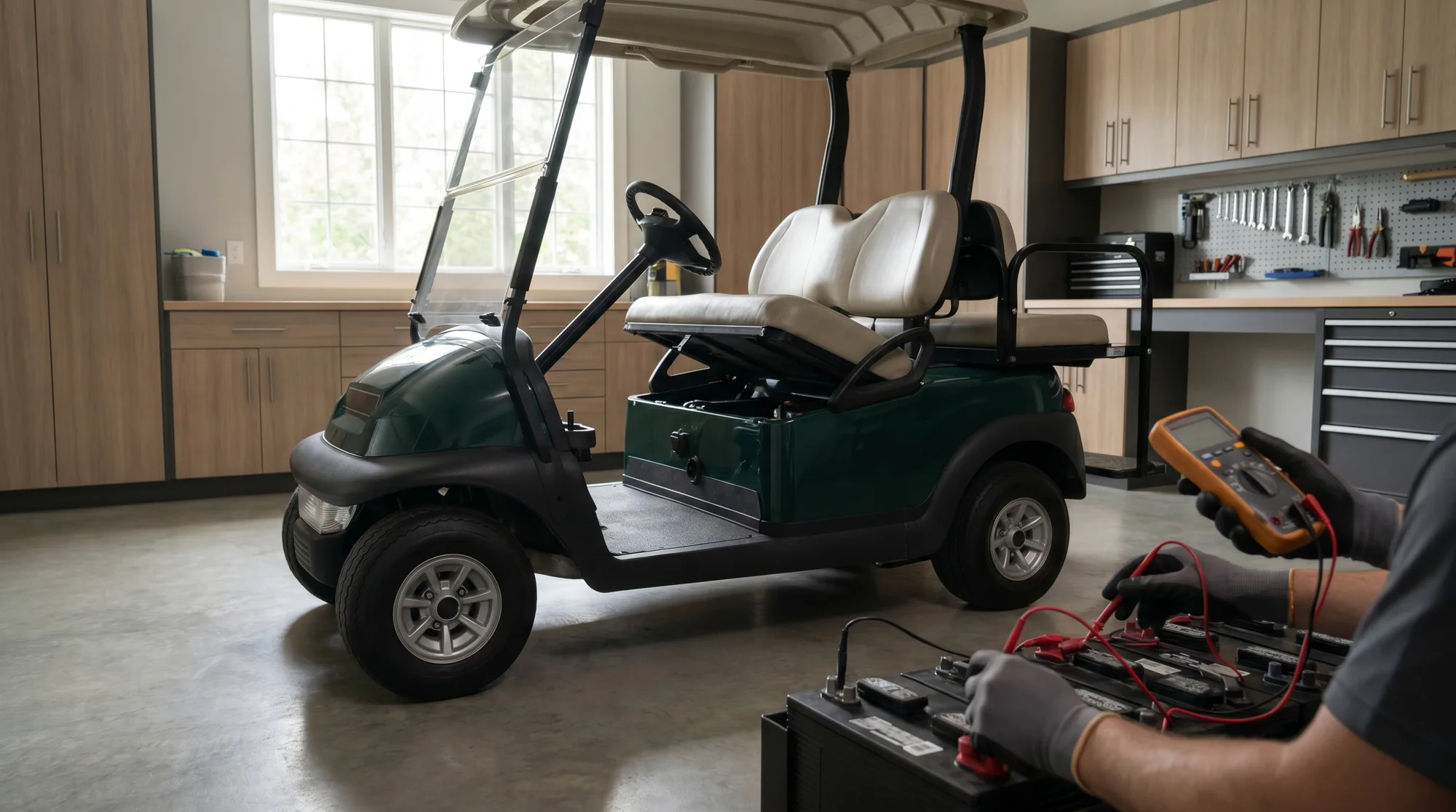
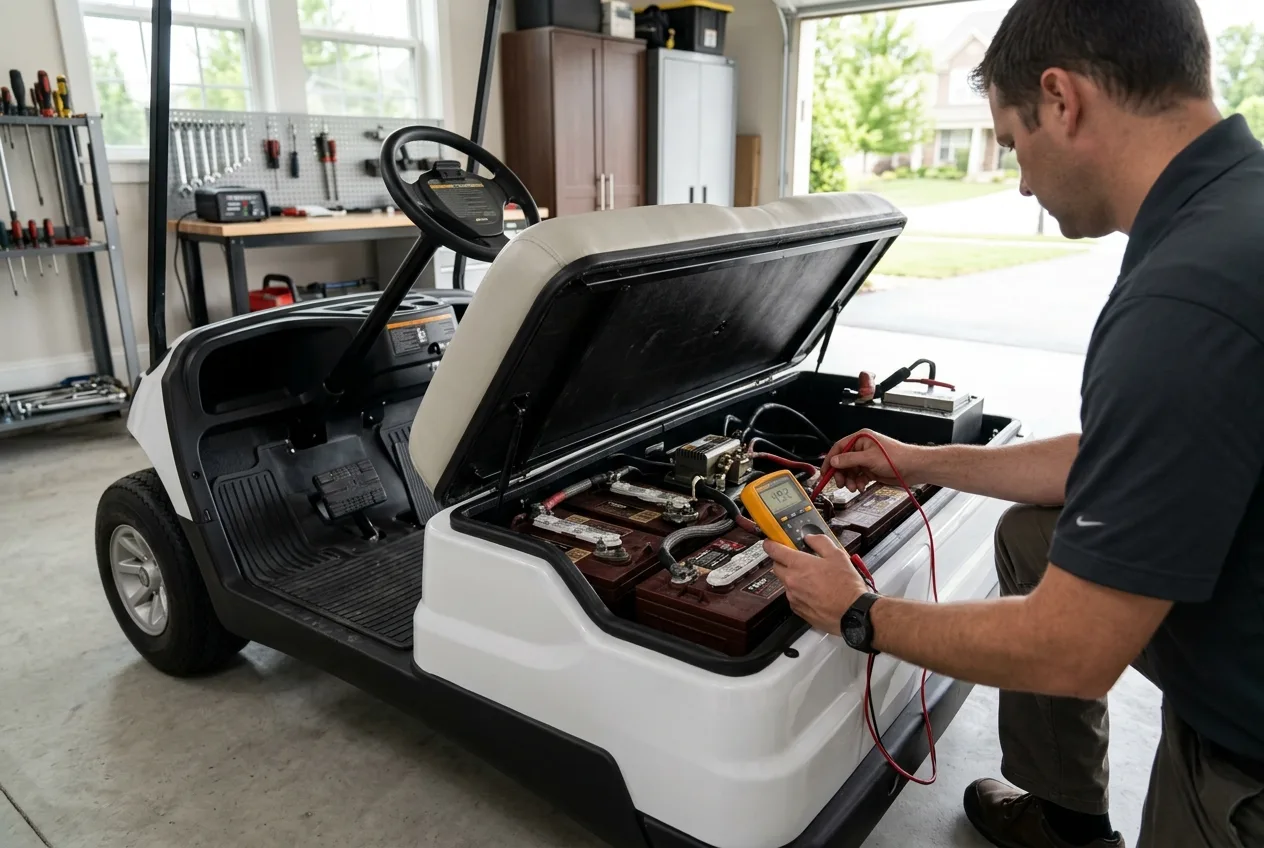
Because the pack causes most no-go faults, test it properly rather than assuming. Use a multimeter to read total pack voltage and each individual battery. A pack reading well below its nominal voltage needs charging; a single battery sitting far lower than its neighbors is dragging the whole string down and may be failing. Corroded or loose terminals cause the same symptoms as a flat pack, so clean and tighten every connection while you are there.
If the pack will not charge, or charges but dies fast, work through our dedicated battery troubleshooting guide; for keeping a healthy pack healthy, the battery care and lifespan guide is the companion piece.
Solenoid, fuses and the key switch
If the pack is healthy and connections are clean but the cart still will not move, move to the next layer. The solenoid is a heavy-duty relay that connects the pack to the motor circuit; worn contacts are a classic failure. You can test it with a multimeter for continuity when energized, and a faulty one is a common, affordable replacement. Check the main fuse too, and confirm the key switch is actually passing power, since these small parts cause big symptoms.
- What you hear
- Solenoid or main power path
- Where to look
- Test solenoid, fuse, connections
- What you hear
- Low or unbalanced pack
- Where to look
- Charge, then test each battery
- What you hear
- Dead pack, key switch, fuse, interlock
- Where to look
- Recheck interlocks and pack
- What you hear
- Motor or controller, weak pack
- Where to look
- Confirm pack, then suspect controller
| What you hear | Where to look | |
|---|---|---|
| One click, no move | Solenoid or main power path | Test solenoid, fuse, connections |
| Rapid clicking | Low or unbalanced pack | Charge, then test each battery |
| Silence | Dead pack, key switch, fuse, interlock | Recheck interlocks and pack |
| Clunk then stops | Motor or controller, weak pack | Confirm pack, then suspect controller |
Motor and controller: real but last
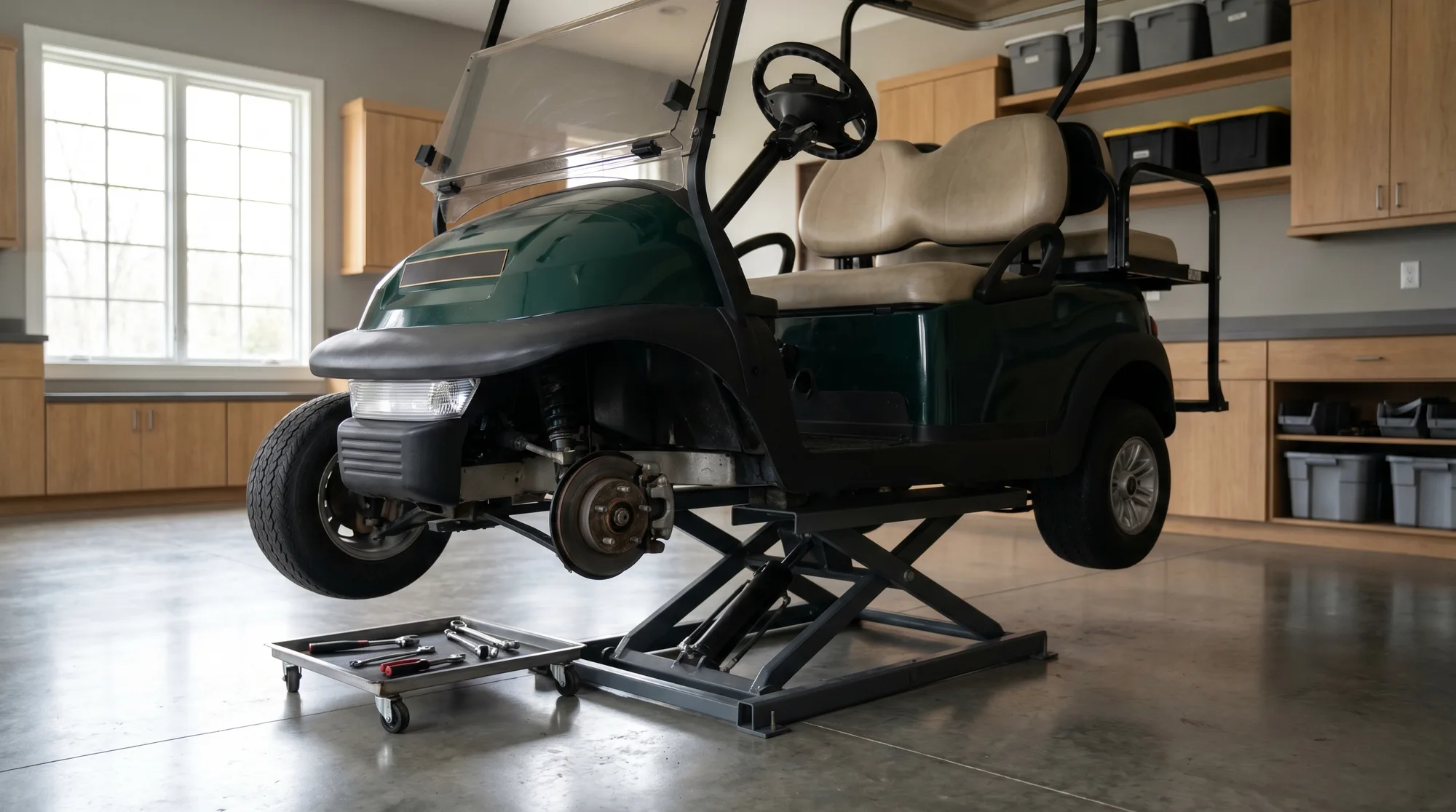
Only after the cheap, common causes are cleared should you suspect the motor or the speed controller. These do fail, but far less often than the parts above, and they are the most serious and expensive. A controller stores charge even with the cart off and handles high current, so it is not a casual DIY area.
Gas carts are a different story
This guide focuses on electric carts, which are by far the most common no-go calls. If you run a gas cart, the no-start logic shifts to fuel, spark, the starter-generator and the ignition rather than the pack and solenoid, though the discipline of working simple to complex is the same. For broader upkeep on either type, see our maintenance and repair basics.
Almost every dead cart we are called to is fixed in the first ten minutes, by checking the interlocks and the batteries. The expensive failures are the exception, not the rule.
So what should you do?
Work the order: interlocks, then listen at the key, then test the battery pack and connections, then the solenoid, fuse and key switch, and only then the motor and controller. Stop and call a technician for anything hot, burnt, melted or unsafe to stop. If a no-move fault turns out to be a worn-out cart at the end of its life, we are happy to help you weigh repair against a reliable replacement with honest numbers.
Cart beyond an easy fix?
If the diagnosis points to a worn-out cart, tell us how you use it and we will recommend a dependable replacement with a real price.
Frequently asked questions
Why won't my golf cart move at all?+
Start with the interlocks: an attached charger handle, a tow/maintenance switch in the wrong position or a popped reset button stop more carts than real failures. After that, a dead or unbalanced battery pack is the most common genuine cause, followed by the solenoid, main fuse and key switch.
My cart clicks but won't go. What is wrong?+
A single click usually means the solenoid is engaging but power is not reaching the motor, often a worn solenoid, a blown fuse or a bad connection. Rapid clicking points to a low or unbalanced battery pack that cannot hold the solenoid closed.
How do I know if my golf cart solenoid is bad?+
Listen for a click without movement, then test the solenoid with a multimeter for continuity across the large terminals when it is energized. No continuity when it should be passing power means worn contacts, which is a common, affordable replacement.
Could a flat battery be why my cart won't move?+
Very likely. A flat, old or unbalanced pack is the single most common reason a cart will not move. Test total pack voltage and each battery, charge it, and clean every terminal, since corroded connections mimic a dead pack.
When should I stop and call a technician?+
Stop if you smell anything hot or burnt, see melted wiring, suspect the controller or motor, or if the cart will not hold on a slope. A no-move fault that also affects braking is a safety problem and should be handled by a professional.
Related solutions
Ready to explore what we build?
See the vehicles and the setting this applies to, or get a tailored quote built around your site.

Ready to find the right golf cart?
Tell us how and where it will work and we will specify a vehicle and a tailored quote built around you. Every build comes with a 3-year warranty and a 24-hour priority call-out.