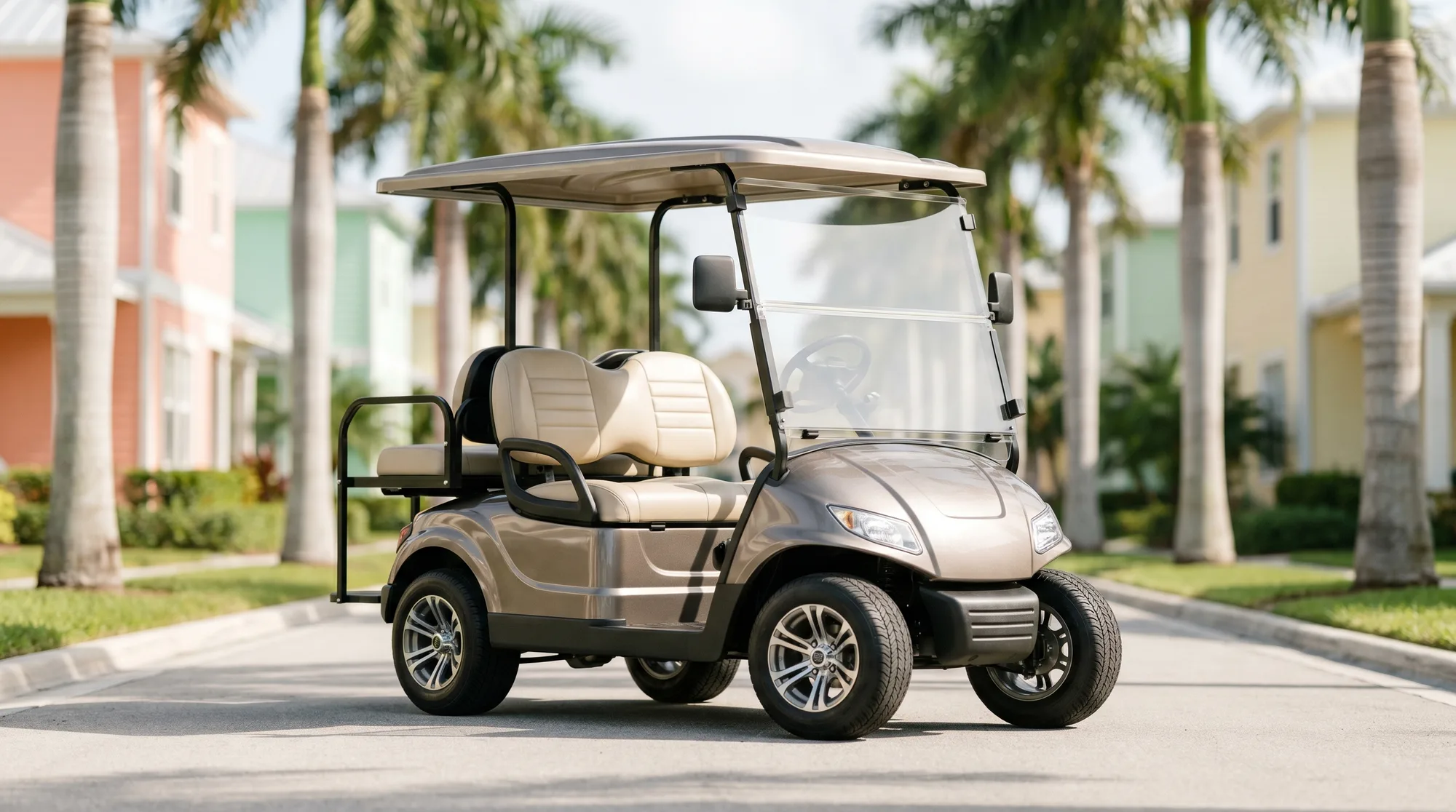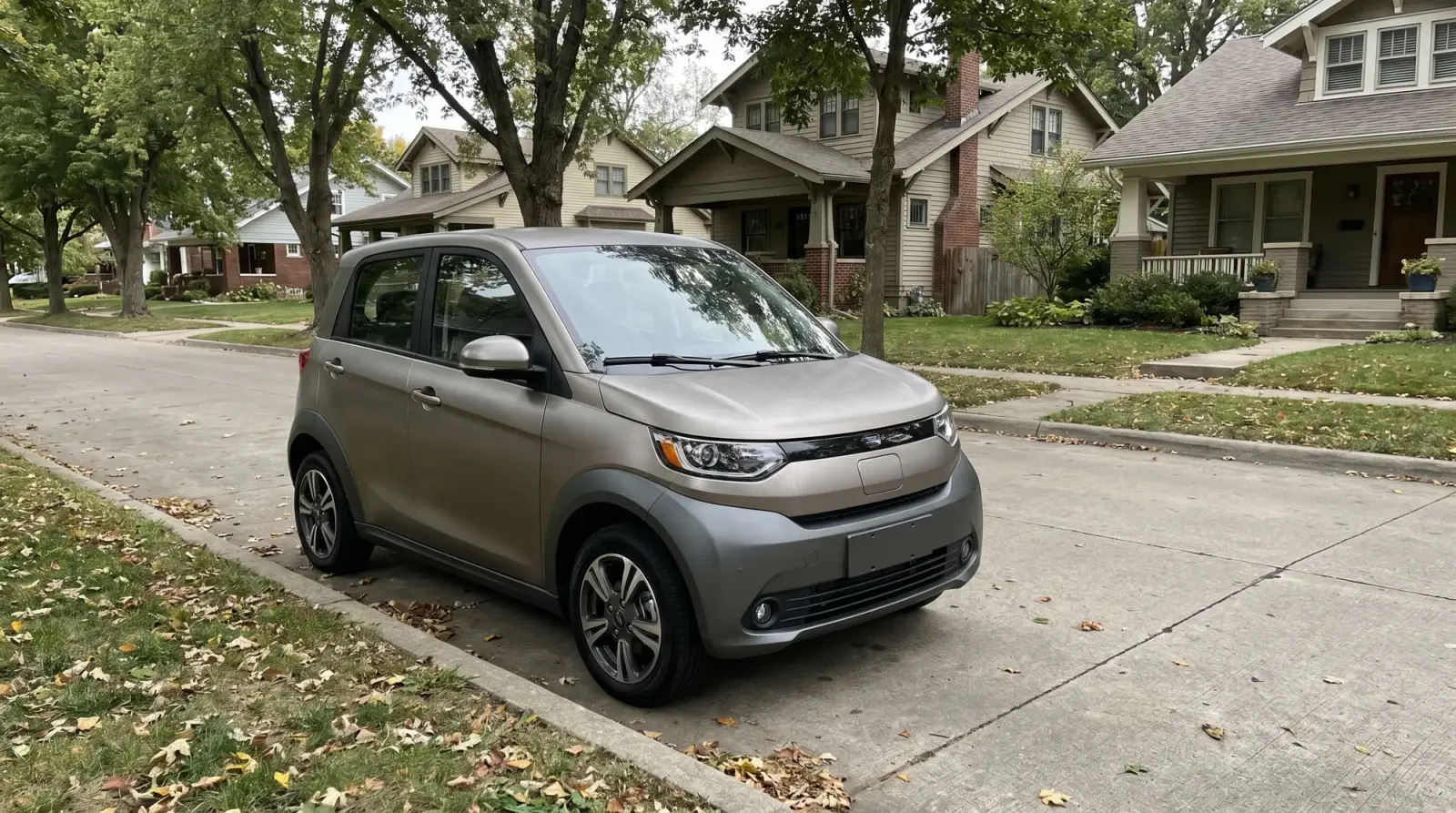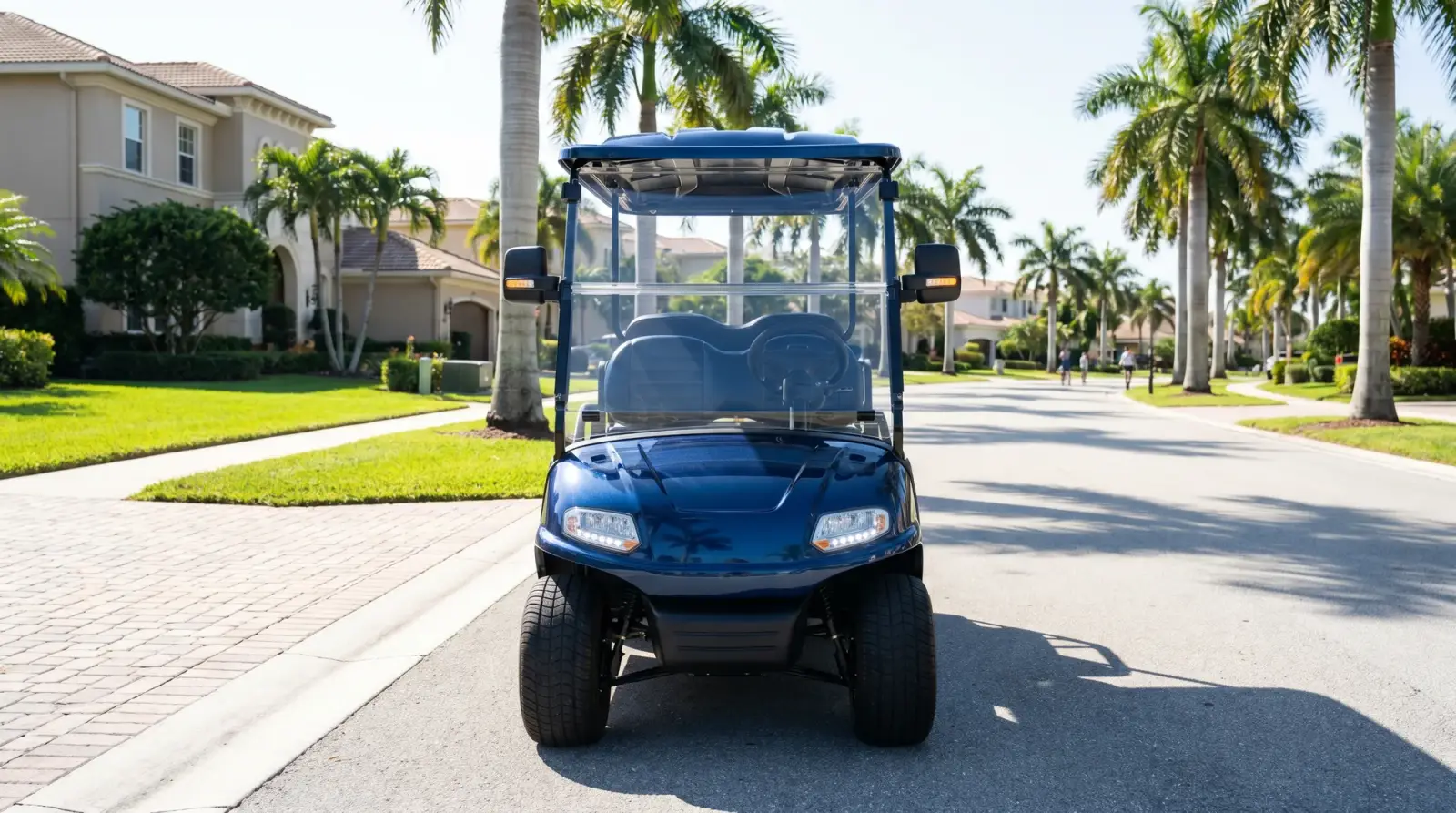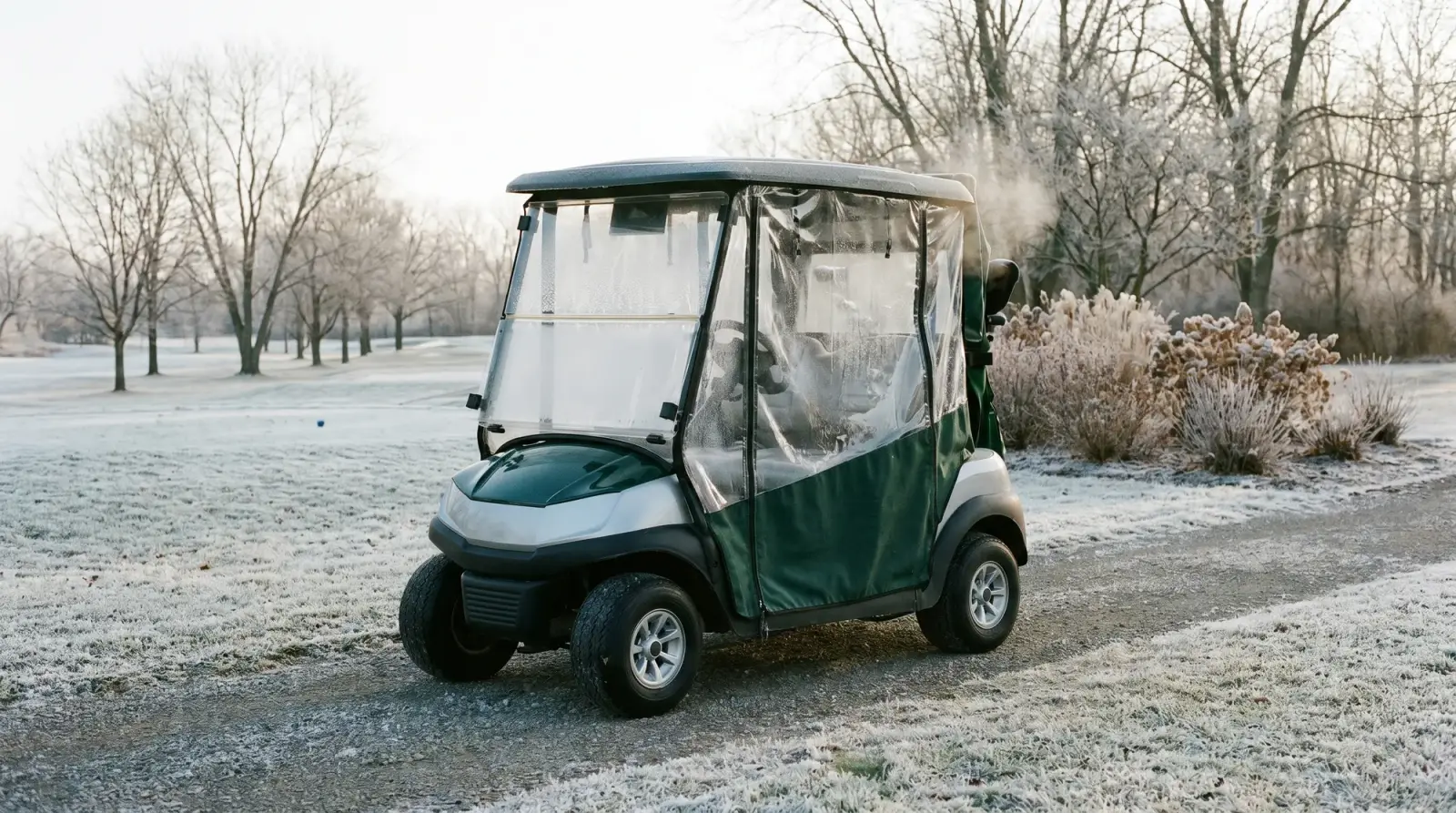
Arizona is one of the best states in the country for living with a low-speed vehicle, which is exactly why so many owners get tripped up by the detail. The state draws a hard line between a plain golf cart and a titled low-speed vehicle, and that line decides whether you can legally cross a public road, drive at night or pull onto a 35 mph street at all. This guide explains how Arizona classifies these vehicles in 2026, where each can go, and the equipment and paperwork you need before you turn the key.
- Arizona separates a golf cart from a low-speed vehicle (LSV); the LSV is the one that gets a title, plate and full road rights.
- An LSV may use public roads posted at 35 mph or less, and may cross faster roads at an intersection.
- A titled LSV needs registration, a VIN, the seventeen safety items (lights, mirrors, belts, windshield) and Arizona liability insurance.
- A plain golf cart has very limited road use and is mostly confined to private land, the course and designated cart areas.
- Rules tighten or loosen by city and HOA, so confirm with your city or county and the Arizona MVD before you drive on the street.
Golf cart versus LSV: the distinction that matters
In Arizona the word that decides your rights is not golf cart but low-speed vehicle. A golf cart is a small vehicle built mainly for the course or a property, usually topping out around 15 to 20 mph. A low-speed vehicle is a federally defined class that goes faster than 20 mph but no more than 25 mph, carries a real VIN and meets a set of federal safety standards. Arizona registers and titles the LSV like a regular vehicle; the bare golf cart it does not.
That single fact shapes everything else. If you want to run errands on neighborhood streets, you almost certainly want an LSV, not a plain cart. For the wider picture on these classes see our explainers on the LSV, NEV and golf cart difference and whether to buy a cart or an LSV.
Where you can drive in Arizona
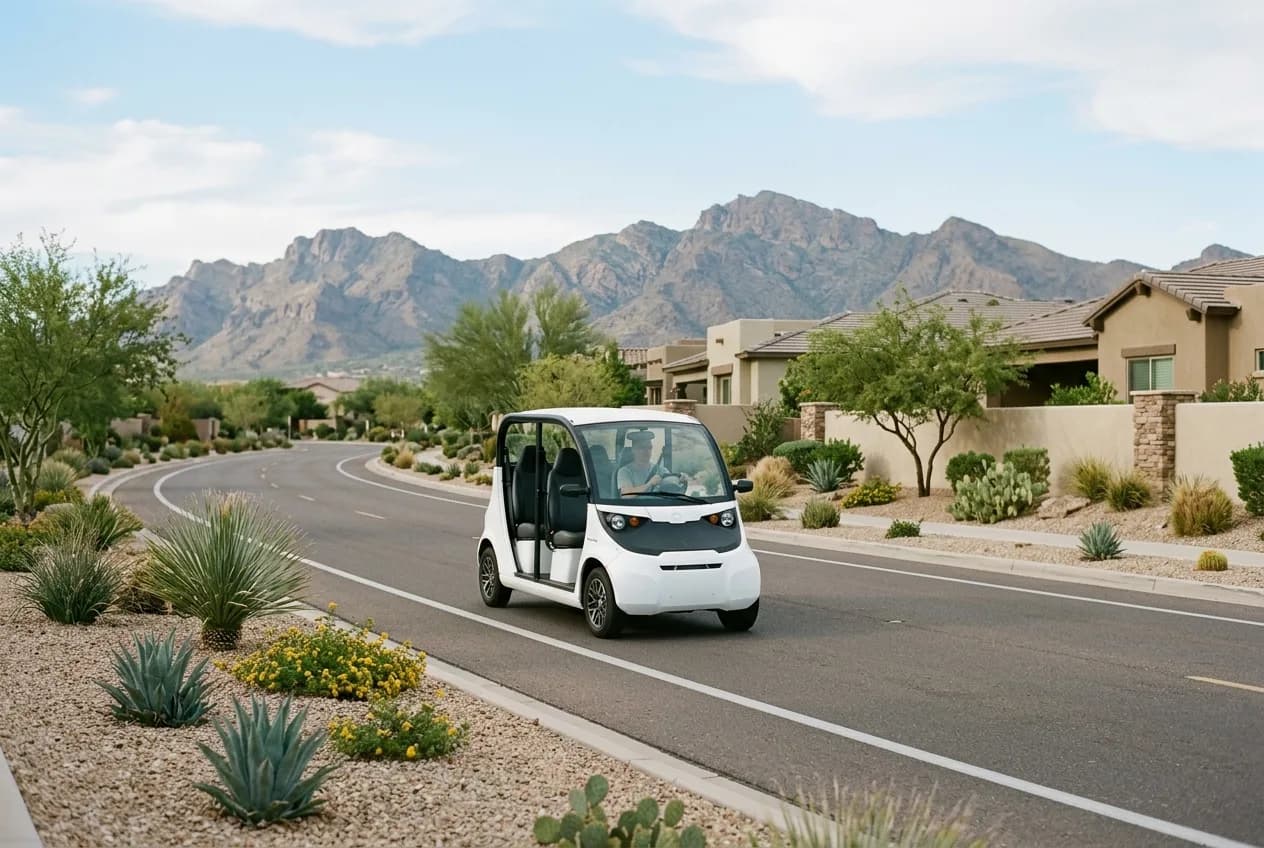
Arizona allows a titled, registered LSV onto any public road posted at 35 mph or less. You may also cross a faster road, such as a 45 mph arterial, at an intersection, which is how most planned communities are stitched together. What you cannot do is travel along a road posted above 35 mph, even briefly.
A plain, unregistered golf cart has far fewer rights. Outside designated golf-cart communities and the course itself, it generally has no business on a public road. Some master-planned areas in the Phoenix and Tucson metros, and retirement communities such as those in the West Valley, have built dedicated cart paths and posted local rules that expand where carts can go, which is exactly why local confirmation matters.
Titling, registration and the equipment list
To use an LSV on Arizona roads you register and title it through the Motor Vehicle Division, just like a car, and it must carry the federal safety equipment for its class. Our registration and titling guide walks the paperwork in detail, but here is the Arizona shape of it.
- 01
Confirm it qualifies as an LSV
It must do more than 20 but no more than 25 mph and carry a 17-digit VIN. A pure golf cart will not pass; see [how to make a golf cart street legal](/guides/how-to-make-a-golf-cart-street-legal-us) if you are upgrading one.
- 02
Fit the required equipment
Headlights, tail and brake lights, turn signals, reflectors, a windshield, mirrors, a parking brake and seat belts. These are the federal items every road LSV needs.
- 03
Get Arizona liability insurance
An LSV on public roads needs at least the state minimum liability coverage. See our [golf cart insurance guide](/guides/golf-cart-insurance-guide-us) for what to look for.
- 04
Title and register at the MVD
Bring proof of ownership, the VIN, your insurance and ID. The MVD issues the title, plate and registration.
License, age and night driving
Because an LSV is a registered motor vehicle, the driver needs a valid driver license, and the usual rules of the road apply. A plain golf cart driven within a community may be governed by that community's own age rules, but the moment a vehicle is on a public street it is a licensed-driver job. Night driving is only legal if the vehicle has the full lighting package, which is one more reason the LSV route is the practical one for street use.
- Plain golf cart
- Private land, course, cart areas
- Titled LSV
- Public roads 35 mph or less
- Plain golf cart
- No
- Titled LSV
- Yes, through the MVD
- Plain golf cart
- Optional but wise
- Titled LSV
- Required liability
- Plain golf cart
- Per community rules
- Titled LSV
- Valid license required
- Plain golf cart
- Generally not on roads
- Titled LSV
- Yes, with full lighting
| Plain golf cart | Titled LSV | |
|---|---|---|
| Road use | Private land, course, cart areas | Public roads 35 mph or less |
| Title and plate | No | Yes, through the MVD |
| Insurance | Optional but wise | Required liability |
| Driver license | Per community rules | Valid license required |
| Night driving | Generally not on roads | Yes, with full lighting |
The local quirks that catch Arizona owners out
Statewide law is only half the story. Arizona cities and HOAs add their own layers, and these vary a lot across the Valley and down to Tucson, Yuma and the river towns.
- Some communities permit plain carts on internal streets but ban them the moment you reach a city-maintained road.
- Cart-path networks in retirement communities often have their own speed and right-of-way rules separate from state law.
- A few cities require a local cart permit or decal on top of any state registration.
- Summer heat is a real factor; many owners spec extra battery capacity and shade, which is a practical rather than legal point.
The owners who never have trouble are the ones who titled an LSV, insured it and learned which roads are genuinely calm. The rules reward planning, not optimism.
So what should an Arizona buyer do?
If you want a vehicle for real neighborhood errands, buy or build a low-speed vehicle, insure it and register it with the MVD. If your use is purely the course or inside a cart-friendly community, a plain cart is fine and cheaper. Either way, check your city, county and HOA rules first. If you would like help matching a build to Arizona use, we are glad to put real specs and numbers against it.
Build an Arizona-ready cart or LSV
Tell us your community and how you will drive, and we will spec a compliant build with an honest price.
Frequently asked questions
Can I drive a golf cart on Arizona roads?+
A plain golf cart has very limited road rights and is mostly confined to private land, the course and designated cart areas. To use neighborhood streets legally you generally need a titled, registered low-speed vehicle (LSV).
What is the fastest road an LSV can use in Arizona?+
An LSV may travel on public roads posted at 35 mph or less, and may cross a faster road at an intersection. It cannot drive along a road posted above 35 mph.
Does an Arizona LSV need insurance?+
Yes. A low-speed vehicle used on public roads must carry at least the state minimum liability insurance, the same basic requirement as any registered vehicle.
Do I need a driver license to drive an LSV?+
Yes. Because an LSV is a registered motor vehicle, the driver needs a valid driver license and must follow the normal rules of the road.
Do cities in Arizona have extra golf cart rules?+
Often, yes. Cities, counties and HOAs can add permits, decals, cart-path rules and street restrictions on top of state law, so always confirm with your city or county and the Arizona MVD.
Related solutions
Ready to explore what we build?
See the vehicles and the setting this applies to, or get a tailored quote built around your site.
Ready to find the right golf cart?
Tell us how and where it will work and we will specify a vehicle and a tailored quote built around you. Every build comes with a 3-year warranty and a 24-hour priority call-out.
Our guides are written and reviewed by the Hawke Electric Vehicles team, the people who specify, build, deliver and support the vehicles. We focus on honest, practical advice and flag where a figure depends on the build rather than guessing.
More guides by Hawke