Golf cart insurance is one of those topics where American advice floods the search results and quietly misleads Canadian owners, because our provinces run very different systems, several with public auto insurers. The honest Canadian answer has three layers: what the law requires (which depends entirely on where the cart drives), what your existing home or farm policy already covers (usually less than you think), and what a specialty policy adds (more than most owners realise, for a modest cost). This guide walks through all three.
- There is no national insurance requirement for golf carts; obligations come from provincial road frameworks and, on private land, from your own risk tolerance.
- Saskatchewan's municipal bylaw route requires at least CA$200,000 in liability insurance for on-road carts; BC's Chase programme requires insurance and a permit; Ontario's golf cart pilot does not mandate insurance provincially.
- Home, cottage or farm policies may extend some liability cover for a cart used on your own property, but physical damage to the cart and any road use are commonly excluded.
- Specialty recreational vehicle cover for a cart typically costs in the low hundreds of dollars per year in Canada, hedged by value, use and province.
- Registered low-speed vehicles are insured like road vehicles: through ICBC in BC, and with the SAAQ registration plus civil liability cover in Quebec.
- Theft and winter storage damage are the claims Canadian cart owners actually make most, so check those perils specifically.
Start with where the cart drives
Insurance requirements in Canada attach to road use, and golf carts mostly do not have road access. On private property (a course, an acreage, a campground, a cottage lot) no province forces you to insure a cart. The moment a cart enters a legal road framework, requirements appear, and they differ sharply by province.
- Insurance required?
- No legal requirement
- Notes
- Liability cover still strongly advisable
- Insurance required?
- Not required provincially
- Notes
- Municipal by-laws can add conditions
- Insurance required?
- Yes, CA$200,000 minimum liability
- Notes
- Set by the SGI-approved framework
- Insurance required?
- Commercial operators: yes
- Notes
- Private users: not provincially mandated
- Insurance required?
- Yes, with village permit
- Notes
- Plus a valid driver's licence
- Insurance required?
- Yes, as a road vehicle
- Notes
- ICBC in BC; SAAQ registration in QC; CA$1M liability in ON
| Insurance required? | Notes | |
|---|---|---|
| Private property (all provinces) | No legal requirement | Liability cover still strongly advisable |
| Ontario golf cart pilot | Not required provincially | Municipal by-laws can add conditions |
| Saskatchewan bylaw route | Yes, CA$200,000 minimum liability | Set by the SGI-approved framework |
| Alberta pilot | Commercial operators: yes | Private users: not provincially mandated |
| BC Chase programme | Yes, with village permit | Plus a valid driver's licence |
| Registered LSV (BC, QC, ON pilot) | Yes, as a road vehicle | ICBC in BC; SAAQ registration in QC; CA$1M liability in ON |
What your home, cottage or farm policy actually covers
Many Canadian home and farm policies extend some liability protection to motorized vehicles used to service the premises, and some insurers treat a golf cart used on your own property, or while golfing, within that extension. But the fine print varies more than any other part of this topic, and three gaps recur. First, physical damage to the cart itself (fire, theft, a tree branch through the roof in storage) is often not covered without a specific rider. Second, any use off your own property, even a neighbour's laneway, can void the extension. Third, carts capable of road registration, or used in any road framework, are commonly excluded outright. The only reliable move is to ask your broker the specific question in writing: is my cart covered, for liability and for damage, in the exact places I use it?
Specialty cart cover: what it adds and what it costs
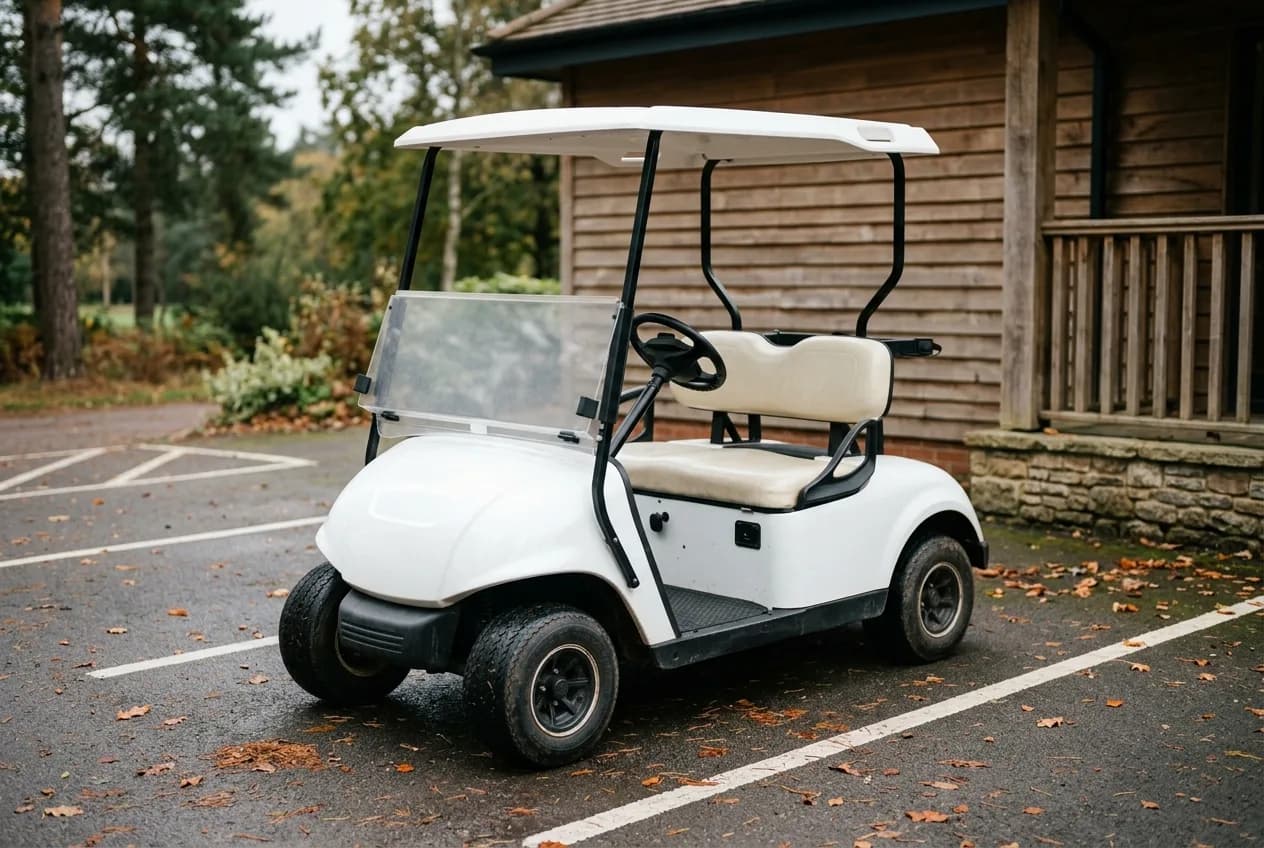
Canadian insurers offer cart coverage either as a rider on an existing property policy or as a standalone recreational vehicle policy, similar to how ATVs and snowmobiles are handled. A decent policy typically bundles liability cover, physical damage on an agreed or replacement value, theft (including from a trailer or storage building) and sometimes transport of the cart between properties. Pricing depends on the cart's value, where it lives and how it is used, but for a typical CA$10,000 to CA$20,000 cart most owners should expect a premium in the low hundreds of dollars per year rather than four figures. Given that a quality lithium cart is a five-figure asset that lives in an outbuilding, theft cover alone often justifies the premium.
Questions worth asking your broker
- Is liability covered on my property, at the golf course, and on any road my municipality permits?
- Is the cart itself covered for theft, fire and storage damage, and at what value?
- Are lithium batteries covered, including charging-related damage?
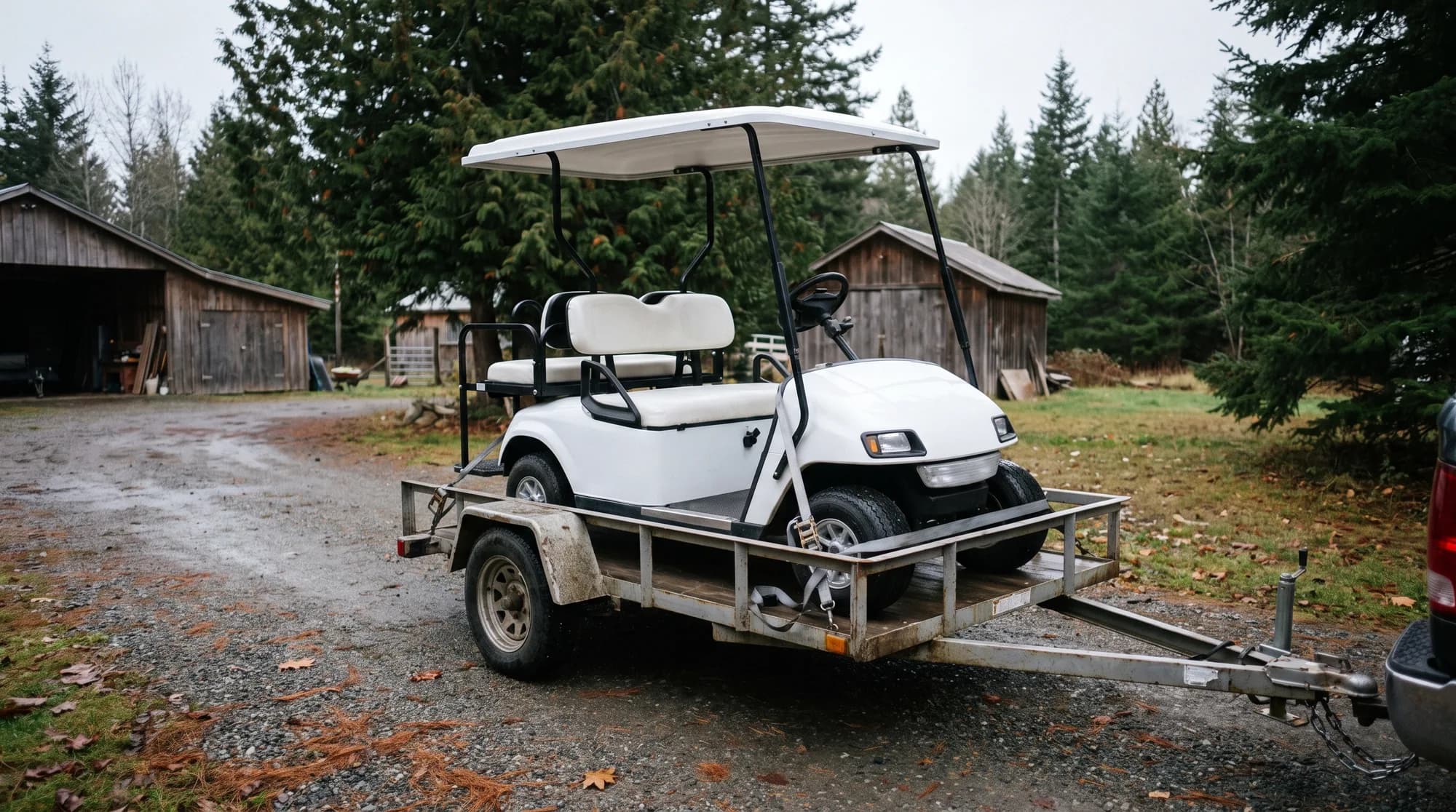
- Does cover continue during winter storage and while trailering?
- Who may drive under the policy, and is there a minimum age?
- If my municipality joins a pilot, does my policy meet the bylaw's minimums?
Public insurers and the LSV difference
Provinces with public auto insurance change the picture in two ways. In BC, an ordinary cart cannot be licensed for road use, so it cannot be ICBC-insured for roads; a certified neighbourhood zero-emission vehicle, by contrast, is registered and insured through ICBC like any vehicle. In Quebec, ordinary carts cannot be registered at all, while compliant low-speed vehicles registered with the SAAQ come under the provincial system, with the public plan addressing bodily injury and owners carrying civil liability cover as with other registered vehicles. In Saskatchewan, SGI sits behind the municipal bylaw framework and its CA$200,000 liability minimum. The pattern to remember: once a vehicle is registered, insurance follows the provincial road system; while it stays an off-road cart, insurance is a private arrangement you choose to make.
The claims Canadians actually make
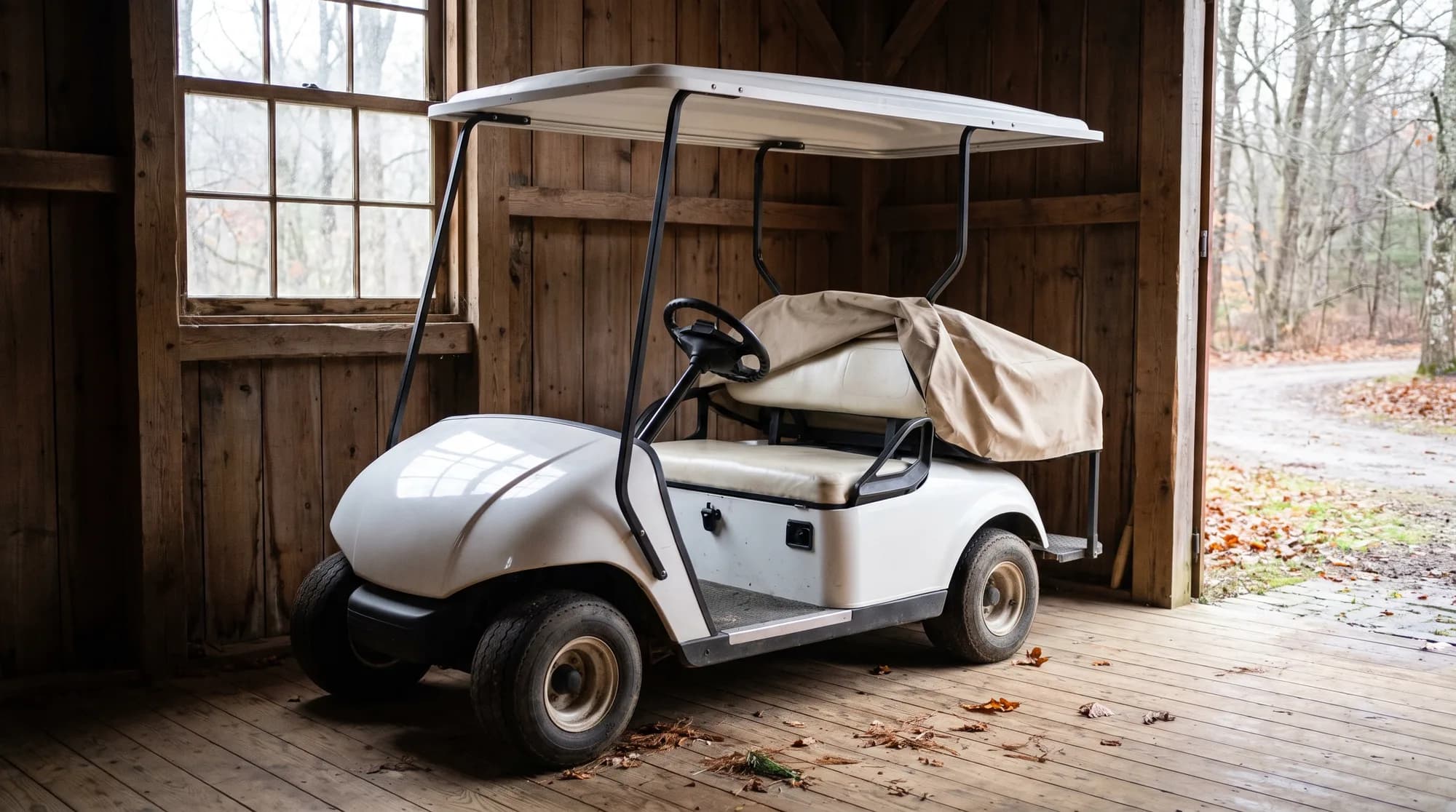
Talk to brokers who handle recreational vehicles and a consistent picture emerges: the frequent cart claims in Canada are not road collisions. They are theft from rural outbuildings, fire and charging incidents, storage-season damage (rodents, frozen and ruined battery packs, roof snow load on a shed) and liability incidents involving guests, often younger drivers, on private land. That list should shape your cover. It is also one more argument for disciplined winter storage: insurers can and do scrutinise a claim for a battery pack destroyed by being left discharged through a prairie winter, and prevention is cheaper than the argument.
One final structural point: keep your documentation tidy. A written purchase invoice, the cart's serial number, photographs of its condition and a note of the battery type make both underwriting and any future claim dramatically smoother. Underinsurance is the quiet failure mode here: owners insure the CA$8,000 cart they bought years ago and forget the CA$3,000 lithium pack and CA$2,000 of accessories added since. Review the insured value whenever the cart changes materially, and after any upgrade season.
Frequently asked questions
Is golf cart insurance mandatory in Canada?+
Not nationally. Requirements attach to specific road frameworks: Saskatchewan's bylaw route requires CA$200,000 liability cover, BC's Chase programme requires insurance with its permit, and registered LSVs are insured as road vehicles. Private property use carries no legal insurance requirement.
Does home insurance cover my golf cart?+
Sometimes, partially. Many home and farm policies extend limited liability cover for a cart on your own property, but damage to the cart, theft and any off-property or road use are commonly excluded. Confirm the specifics with your broker in writing.
How much does golf cart insurance cost in Canada?+
For a typical private cart, specialty cover generally lands in the low hundreds of dollars per year, varying with the cart's value, province, storage and use. Registered LSVs cost more because they are insured as road vehicles.
Do I need insurance under Ontario's golf cart pilot?+
The provincial pilot rules do not require insurance, plates or registration. Municipal by-laws can add conditions, and carrying liability cover is strongly advisable whenever a cart uses a public road.
Is theft of a golf cart covered?+
Only if your policy specifically includes it. Theft from outbuildings and trailers is among the most common Canadian cart claims, so check this peril, the storage conditions your insurer expects, and the insured value of the cart and batteries.
Know what your cart is worth insuring
A written quote with a clear specification makes insuring your cart straightforward. Tell us what you need and we will price a build in CAD, with documentation your broker can work from.
Related solutions
Ready to explore what we build?
See the vehicles and the setting this applies to, or get a tailored quote built around your site.
Ready to find the right golf cart?
Tell us how and where it will work and we will specify a vehicle and a tailored quote built around you. Every build comes with a 3-year warranty and a 24-hour priority call-out.
Our guides are written and reviewed by the Hawke Electric Vehicles team, the people who specify, build, deliver and support the vehicles. We focus on honest, practical advice and flag where a figure depends on the build rather than guessing.
More guides by Hawke