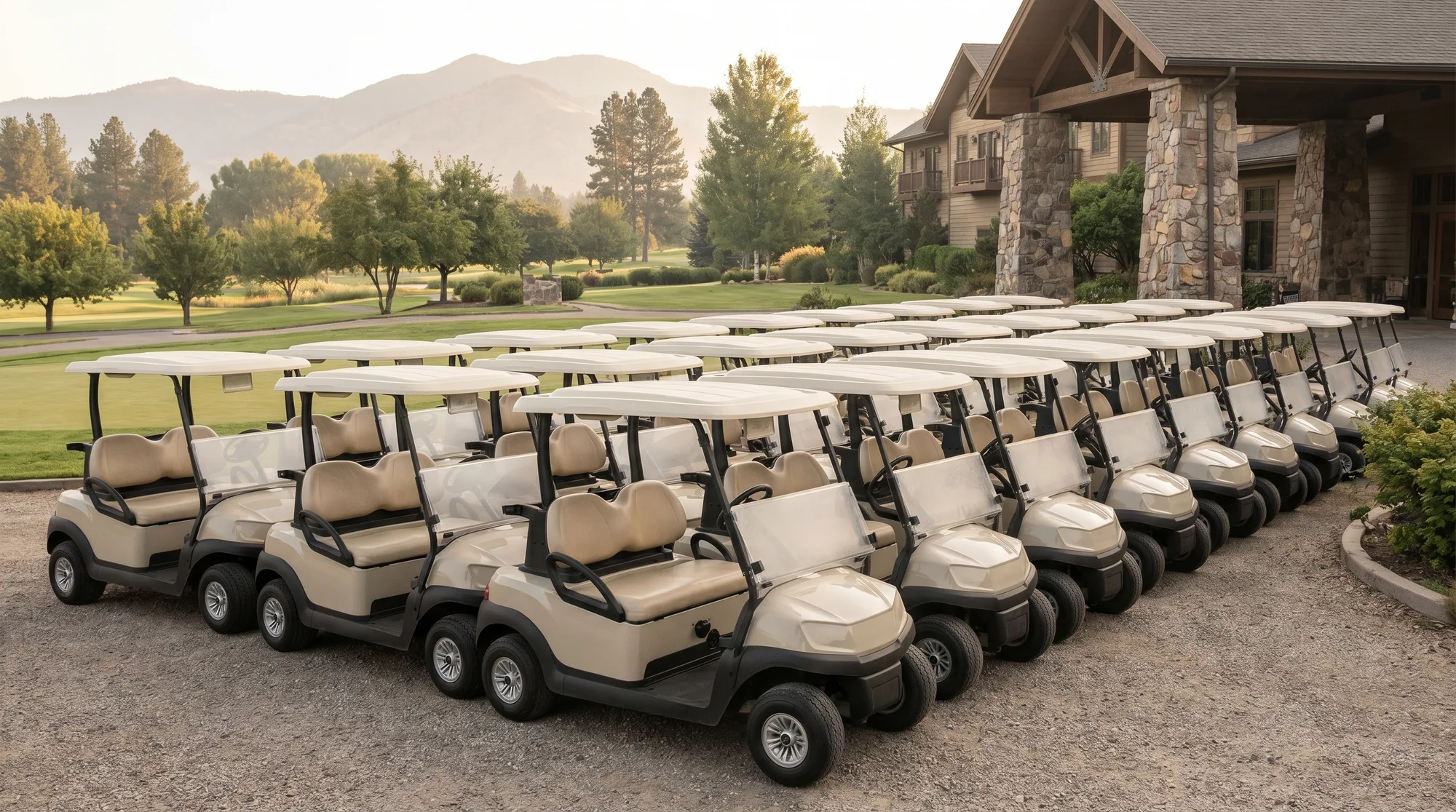
Buying carts is easy. Running a fleet of them well, year after year, at a cost you can predict and an uptime you can rely on, is the hard part, and it is where most operators quietly lose money. A fleet that is managed by reaction, fixing carts when they die and charging them when someone remembers, costs far more in downtime, premature battery replacement and lost productivity than a fleet run on a system. This guide is the operator's playbook: the inventory, maintenance, charging, uptime and cost discipline that turns a pile of carts into a managed asset, plus the telematics and lease-versus-buy decisions that shape the economics. It pulls together the threads that run through every sector application.
Know what you own and how it is doing
Fleet management starts with knowing your fleet. That sounds obvious, but plenty of operators cannot say how many carts they have, where each one is, what state its battery is in or when it was last serviced. Build a simple inventory: every cart numbered and logged, with its model, battery age and type, service history and current condition. From there you can track each cart's availability, the running cost it is racking up, and which carts are nearing the end of their economic life. You cannot manage what you do not measure, and a basic record turns vague impressions into decisions.
Maintenance that prevents instead of reacts
The cheapest maintenance is the kind that stops failures before they happen. A scheduled program, batteries checked and watered or monitored, tires and brakes inspected, connections kept clean, faults caught early, costs a fraction of reactive repairs and keeps carts in service. Reactive maintenance, by contrast, means carts dying at the worst moment, secondary damage from a small fault left to grow, and packs ruined by neglect. Set a schedule appropriate to your duty cycle, assign clear ownership of it, and keep records so patterns surface. The fundamentals are the same as for any cart owner; our maintenance and repair basics guide covers them in depth, scaled up across a fleet.
Charging logistics: the hidden bottleneck
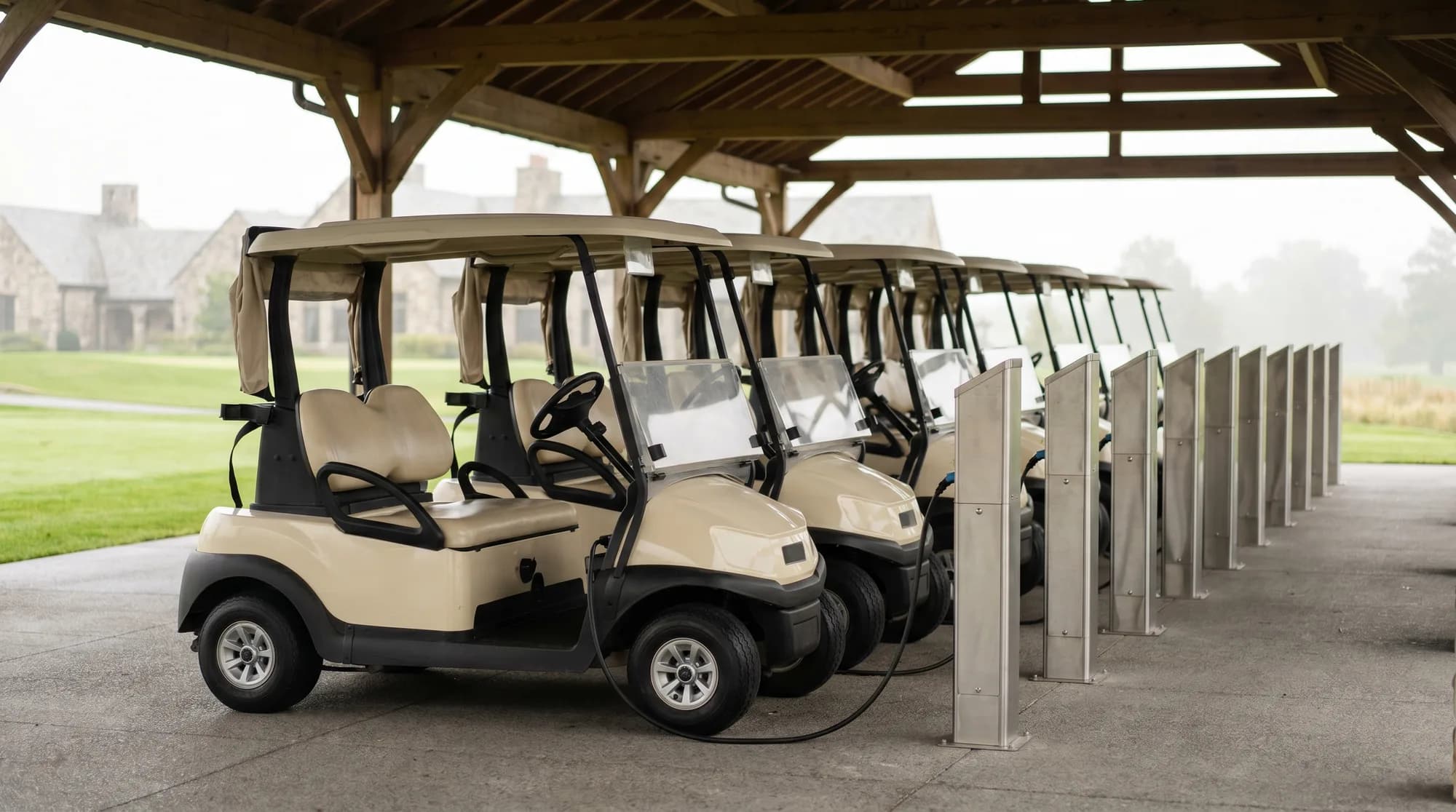
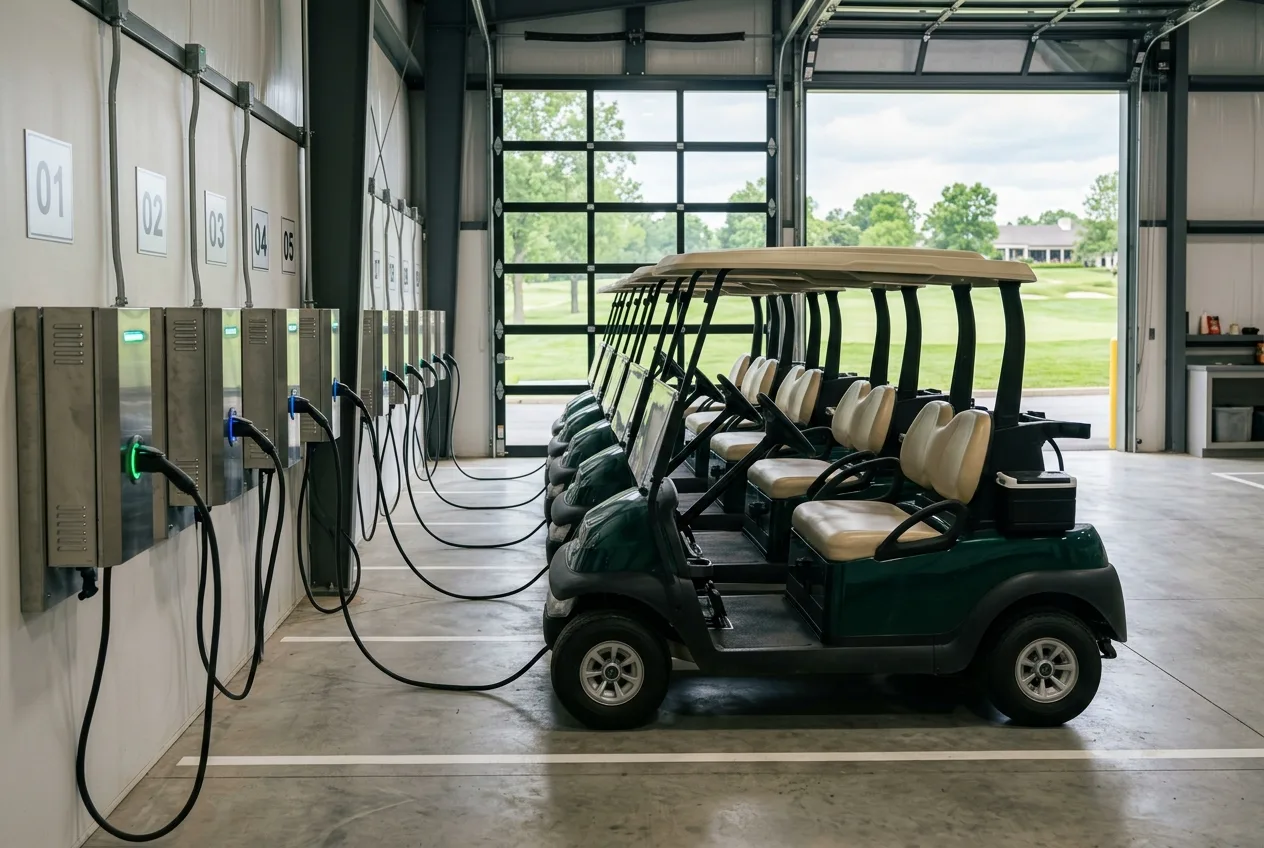
For an electric fleet, charging is often the real constraint on how many carts you can keep in service, and it is the thing operators plan worst. A cart on charge is a cart out of action, so the charging plan has to keep enough carts available whenever you need them.
- 01
Match runtime to demand
Know how long each cart runs on a charge under real duty, and compare that to your operating hours to find where the gaps fall.
- 02
Build the right charging infrastructure
Provide enough ventilated, properly wired charging points for the whole fleet, sited where carts naturally end their work.
- 03
Choose a charging pattern
Overnight charging suits single-shift fleets; multi-shift and round-the-clock fleets need rotation or opportunity charging to stay covered.
- 04
Right-size the chemistry
Lithium charges faster and handles partial top-ups, cutting the number of spare carts a hard-duty fleet needs to stay available.
Maximizing uptime
Uptime, the share of the time your carts are available when needed, is the master metric of fleet management, because almost everything else feeds into it. Preventive maintenance raises it; good charging logistics protect it; the right number of spares insures it; and tracking it tells you where your fleet is failing you. Set a target, measure against it, and investigate the carts and causes dragging it down. An operator who manages to a high uptime target almost automatically does the rest of fleet management well, because you cannot hit the number without the maintenance, charging and spares discipline behind it.
Total cost of ownership, not sticker price
The purchase price is the smallest part of what a cart costs you over its life. The real figure is total cost of ownership: the purchase or lease cost, plus batteries over the life of the cart, maintenance and repairs, charging energy, downtime, and the eventual resale or disposal value. Batteries and downtime usually dominate, which is exactly why maintenance and charging discipline pay off. When you compare carts, or compare leasing with buying, compare total cost of ownership over the years you will actually run them, not the number on the price tag. Our guide to what a golf cart costs breaks down the components, and what size cart you need helps you avoid the cost of over- or under-speccing.
- Reactive
- Fix on failure
- Managed
- Scheduled, preventive
- Reactive
- Ad hoc
- Managed
- Planned rotation
- Reactive
- Unknown, low
- Managed
- Tracked, high
- Reactive
- Cut short
- Managed
- Maximized
- Reactive
- Unpredictable, higher
- Managed
- Predictable, lower
| Reactive | Managed | |
|---|---|---|
| Maintenance | Fix on failure | Scheduled, preventive |
| Charging | Ad hoc | Planned rotation |
| Uptime | Unknown, low | Tracked, high |
| Battery life | Cut short | Maximized |
| Cost | Unpredictable, higher | Predictable, lower |
Telematics and tracking
For larger fleets, telematics turns guesswork into data. GPS and onboard monitoring can show where every cart is, how it is being driven, the state of its battery, and when it is due for service, and can flag faults before they strand a cart. For a campus, resort or industrial site running many carts, this visibility cuts downtime, deters misuse, and feeds the uptime and cost tracking that good management depends on. It is not necessary for a handful of carts, but as a fleet grows, the ability to see it all at once becomes one of the highest-value tools an operator can add.
Lease or buy, for real this time
The lease-versus-buy decision is fundamentally about cash flow and utilization. Owning makes sense when utilization is high and steady, when the carts will work hard for years, and when you want full control over spec and the asset on your balance sheet; the cost per year of use is usually lowest if you maintain them well. Leasing makes sense when demand is variable or seasonal, when you want to preserve capital and keep costs predictable, when you would rather not carry maintenance and disposal risk, or when you want to refresh the fleet regularly. Many operators run a hybrid: own the steady core, lease for peaks and trials. Our commercial leasing guide walks the structures and trade-offs in detail.
The operators who win are not the ones who bought the cheapest carts. They are the ones who measured uptime, respected the batteries and charged on a plan. The fleet rewards discipline.
So what should you do?
Build an inventory and know your fleet, run preventive maintenance on a schedule with battery care at its heart, plan charging so the fleet stays available, manage to an uptime target, judge everything on total cost of ownership rather than sticker price, add telematics as you scale, and make the lease-versus-buy call on your utilization and cash-flow needs. Whether you run carts for a hotel, a campus, a course, a warehouse or a security operation, the management playbook is the same. If you would like help speccing and structuring a fleet to run reliably and economically, with honest numbers, we are glad to help.
Build a fleet that runs on a system
Tell us your operation, your duty cycle and your demand pattern, and we will help you spec, size and structure a fleet for high uptime and a predictable cost.
Frequently asked questions
What is the most important metric in golf cart fleet management?+
Uptime, the share of the time your carts are available when needed. Almost everything else feeds into it: preventive maintenance raises it, good charging logistics protect it, and the right number of spares insures it. Manage to a high uptime target and the rest of good management tends to follow.
How do I reduce the running cost of a cart fleet?+
Focus on total cost of ownership, where batteries and downtime dominate. Run preventive maintenance with disciplined battery care, charge on a plan that protects the packs, keep enough spares to maintain uptime, and consider lithium on hard-duty carts. These cut the costs that swamp the purchase price over a fleet's life.
Should an operator lease or buy a cart fleet?+
Owning suits high, steady utilization where carts work hard for years and you want control and the lowest cost per year of use. Leasing suits variable or seasonal demand, preserving capital, predictable costs and avoiding maintenance and disposal risk. Many operators own a steady core and lease for peaks.
Do I need telematics for my golf carts?+
Not for a handful of carts, but as a fleet grows, GPS and onboard monitoring become high-value. They show location, driving behavior, battery state and service needs, flag faults early, deter misuse and feed the uptime and cost tracking that good fleet management depends on.
How do I plan charging for a large cart fleet?+
Match each cart's real runtime to your operating hours to find the gaps, provide enough ventilated, properly wired charging points for the whole fleet, and choose a pattern: overnight for single-shift, rotation or opportunity charging for multi-shift and round-the-clock duty. Faster-charging lithium reduces how many spares you need.
Related solutions
Ready to explore what we build?
See the vehicles and the setting this applies to, or get a tailored quote built around your site.

Ready to find the right golf cart?
Tell us how and where it will work and we will specify a vehicle and a tailored quote built around you. Every build comes with a 3-year warranty and a 24-hour priority call-out.