The beverage cart is one of the few vehicles that pays for itself directly. On a golf course, at a resort pool, around a festival or across a sprawling venue, a cart that brings cold drinks and food to where people already are turns idle thirst into revenue and lifts the guest experience at the same time. But a beverage or food-service cart is a mobile point of sale and a food-handling environment on wheels, which means it has to satisfy refrigeration, payment, hygiene and food-safety requirements that a passenger cart never faces. This guide is for the operator who wants the cart to make money reliably and pass a health inspection without drama.
- A beverage cart is a profit center; size and route it to where spending happens, then track the revenue per cart.
- Refrigeration and cold-holding are the core spec; product must stay cold and safe through a full shift.
- Mobile point of sale is now expected; card and contactless payment captures sales a cash-only cart loses.
- Food service raises the bar to food-safety compliance: hygiene, temperature control and cleanable surfaces.
- High-revenue, year-round venues buy and maintain; seasonal or one-off operations often rent or lease.
From cooler-on-a-cart to a real profit center
The simplest beverage operation is a cooler strapped to a utility cart, and for a small course it can work. But the moment you take it seriously, the cart becomes a profit center to be managed like any other. That shift changes how you think about it. You route the cart to where spending happens, the back nine at the right time, the pool deck at midday, the busiest corner of the festival. You track revenue per cart so you know which routes and times pay. And you spec the cart so it can actually sell: enough cold product on board to meet demand without constant restocking trips, and a fast way to take payment so you never lose a sale.
Refrigeration and cold-holding
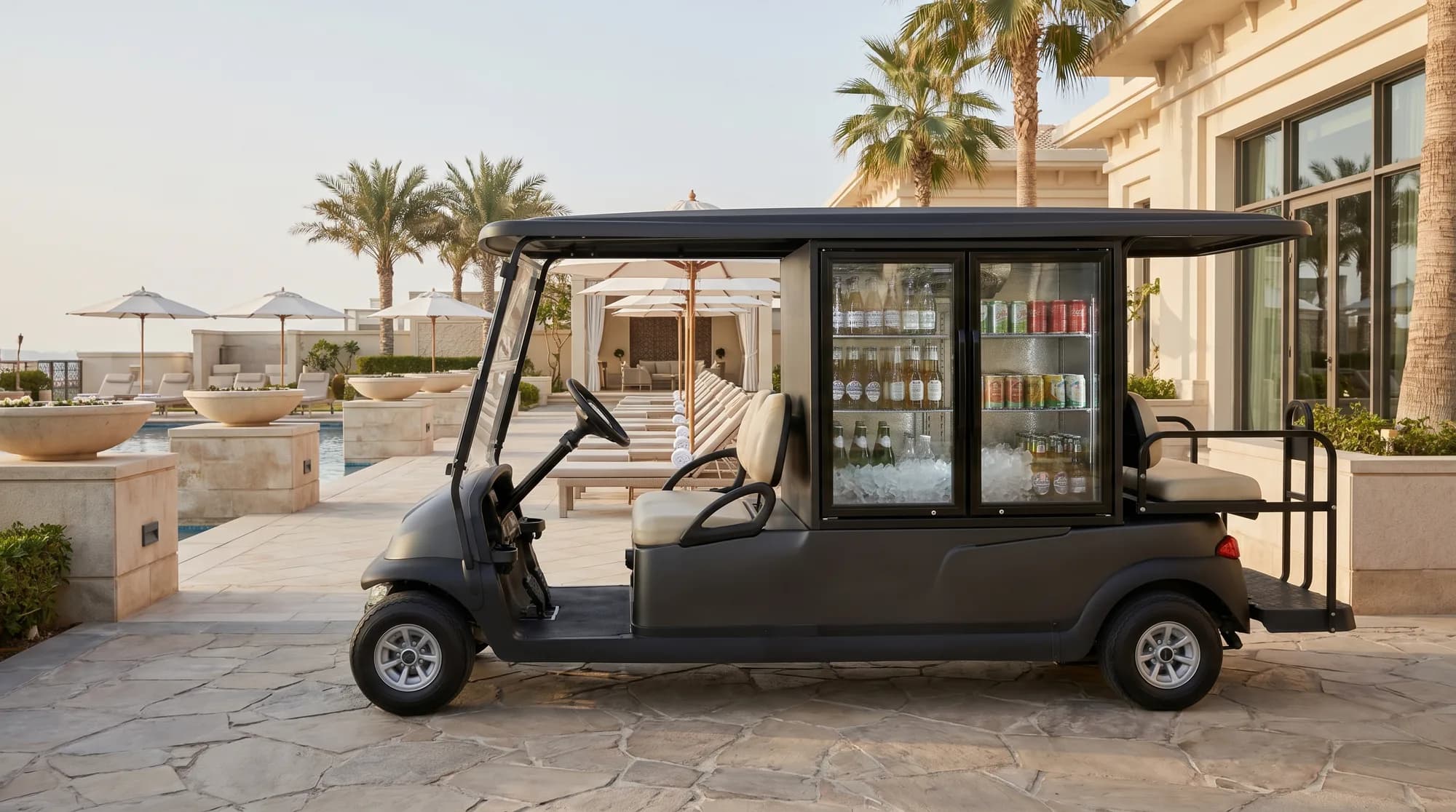
The single most important spec is keeping product cold and safe across a full shift in the heat. For drinks, that can be high-capacity insulated coolers with plenty of ice, but a powered refrigeration unit holds temperature far more reliably and lets you carry perishable food. Powered refrigeration draws on the cart's battery, so this is where electrical capacity matters: size the pack and any auxiliary power so the fridge runs all shift without flattening the cart. For any perishable food, reliable cold-holding is not a convenience, it is a food-safety requirement, since product held in the danger temperature zone becomes a hazard. Plan capacity to the demand so you are not making constant restock runs that take the cart off its money-making route.
Mobile point of sale
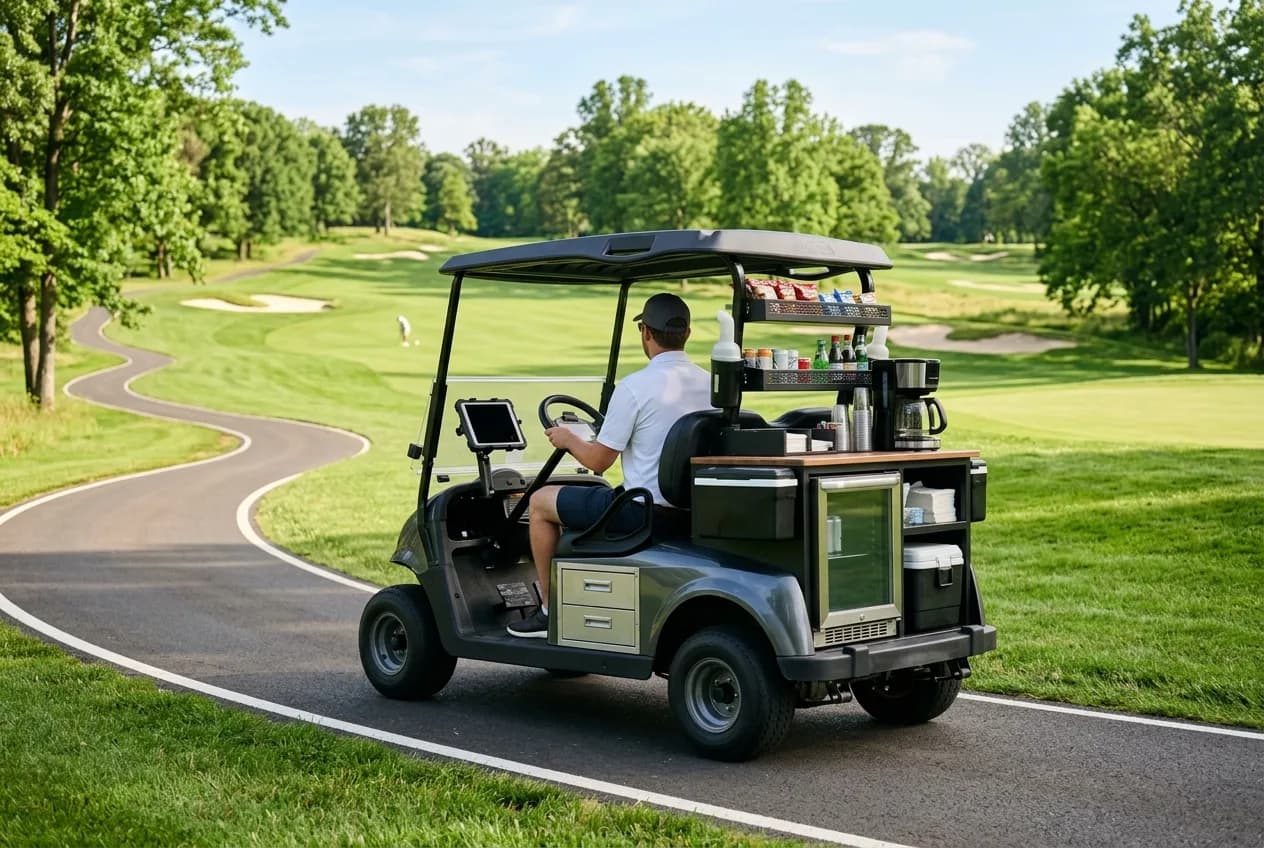
A beverage cart that only takes cash is leaving money on the table. Guests carry less cash every year, and a sale not made because someone has no bills is revenue lost forever. Fit a mobile point-of-sale system that takes cards and contactless and, ideally, ties into your wider sales reporting. Modern tablet or handheld POS units are inexpensive, run on the cart, and pay for themselves quickly in captured sales and cleaner accounting. They also give you the per-cart revenue data you need to route and size the fleet intelligently.
Food safety and hygiene
The moment a cart serves food rather than just sealed drinks, it enters the world of food-safety regulation, and the spec must follow. Surfaces should be non-porous and easy to clean, there should be provision for hand hygiene, hot and cold holding must keep food at safe temperatures, and the whole cart must be cleanable to the standard your local health authority requires. Staff handling food need food-handler training. None of this is exotic, but it is mandatory, and a cart designed as a passenger vehicle and pressed into food service will fail an inspection. Design the food-service cart for food service from the start.
Sizing the operation to demand and revenue
How many service carts you run is a revenue question, not a guess. The right number puts a cart within easy reach of spending customers at peak times without carts idling unprofitably the rest of the day.
- 01
Map where and when people spend
Identify the high-demand zones and times: the turn at a course, midday at a pool, the evening rush at a festival.
- 02
Estimate served customers per cart
Work out how many customers one cart can reach and serve in a peak window, allowing for restock and payment time.
- 03
Add carts to cover the peaks
Add carts until peak demand is comfortably served, then check the revenue-per-cart data so you are not running unprofitable carts.
- 04
Plan restock and charging windows
Schedule restocking and charging in the quiet periods so carts are full and charged when the money is being made.
Uptime and the cost of a cart that quits
A service cart that breaks down or runs flat mid-shift does not just inconvenience anyone; it stops earning and lets product spoil. Uptime here protects both revenue and inventory. Keep the carts maintained, plan charging so a refrigerated cart never runs its pack flat during service, and keep a spare for busy periods. The combination of a powered fridge and a full day's service is demanding on the battery, so packs sized for the duty, and faster-charging lithium where the schedule is tight, keep the operation running and the product cold. Our fleet management guide covers building that reliability.
- Drinks-only
- Coolers or fridge
- Food-service
- Powered fridge, hot hold
- Drinks-only
- Lighter
- Food-service
- Full food-safety rules
- Drinks-only
- Wipe-clean helpful
- Food-service
- Cleanable, required
- Drinks-only
- Basic training
- Food-service
- Food-handler certified
- Drinks-only
- Low to moderate
- Food-service
- High, fridge all shift
| Drinks-only | Food-service | |
|---|---|---|
| Cold holding | Coolers or fridge | Powered fridge, hot hold |
| Regulation | Lighter | Full food-safety rules |
| Surfaces | Wipe-clean helpful | Cleanable, required |
| Staff | Basic training | Food-handler certified |
| Battery demand | Low to moderate | High, fridge all shift |
Rent, lease or buy
A year-round golf course or resort with a proven beverage operation almost always buys and maintains its service carts, since they earn revenue every day and ownership lets you spec refrigeration, POS and branding exactly as you want. A seasonal venue, a festival operator or a caterer with occasional events often rents or leases, matching the carts to the event without owning idle, depreciating assets in the off-season. As an indicative guide, a purpose-built refrigerated beverage cart with POS runs into the mid four figures USD and up depending on refrigeration and finish; for a figure matched to your operation, request a quote. Our guides to cost and commercial leasing cover the math.
Treat the beverage cart like a register, not a vehicle. Route it to the money, take every payment type, keep the product cold, and measure what each cart earns.
So what should you do?
Run the cart as a profit center: spec reliable refrigeration sized to demand, fit a mobile POS that takes cards and contactless, meet food-safety rules if you serve food, size the fleet to where and when people spend, protect uptime so carts keep earning and product stays cold, and choose rent, lease or buy on your seasonality and volume. If you would like help speccing a beverage or food-service cart that earns its keep and passes inspection, with honest numbers, we are glad to help.
Spec a service cart that earns its keep
Tell us your venue, your peak demand and whether you serve food, and we will recommend a refrigerated, POS-ready cart with an honest price.
Frequently asked questions
How much can a beverage cart earn?+
It varies hugely by venue and traffic, but a well-routed beverage cart is a genuine profit center, and that is the point of tracking revenue per cart per shift. Routing the cart to where and when people spend, and taking card and contactless payment, lifts earnings well above a poorly placed, cash-only cooler operation.
Do beverage carts need refrigeration?+
For drinks, high-capacity insulated coolers can work, but a powered refrigeration unit holds temperature far more reliably across a hot shift and is essential if you carry any perishable food. Powered refrigeration draws on the battery, so size the pack to run the fridge all shift without flattening the cart.
What are the food-safety rules for a food-service cart?+
Once you serve food, the cart must meet food-safety regulation: non-porous cleanable surfaces, provision for hand hygiene, hot and cold holding that keeps food out of the temperature danger zone, and trained food handlers. A passenger cart pressed into food service will fail inspection; design it for food service from the start.
Should I rent or buy a beverage cart?+
A year-round course or resort with a proven operation almost always buys and maintains its carts, since they earn daily and ownership lets you spec refrigeration, POS and branding. Seasonal venues, festival operators and caterers often rent or lease to match carts to events without owning idle assets.
How many service carts does a venue need?+
Size to where and when people spend. Map the high-demand zones and times, estimate how many customers one cart can serve in a peak window allowing for restock and payment, then add carts until the peaks are comfortably covered, checking revenue-per-cart data so you do not run unprofitable carts.
Ready to find the right golf cart?
Tell us how and where it will work and we will specify a vehicle and a tailored quote built around you. Every build comes with a 3-year warranty and a 24-hour priority call-out.
Our guides are written and reviewed by the Hawke Electric Vehicles team, the people who specify, build, deliver and support the vehicles. We focus on honest, practical advice and flag where a figure depends on the build rather than guessing.
More guides by Hawke