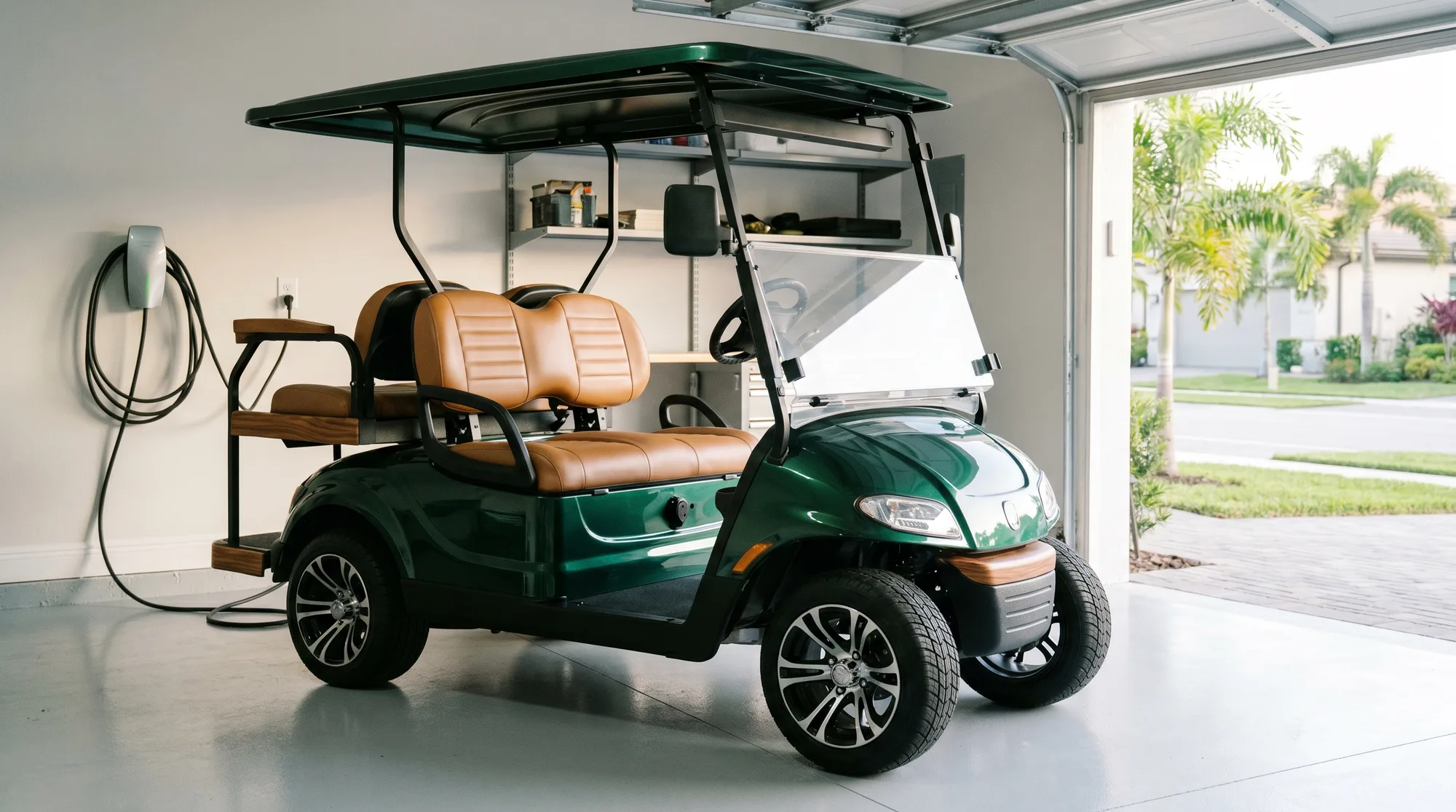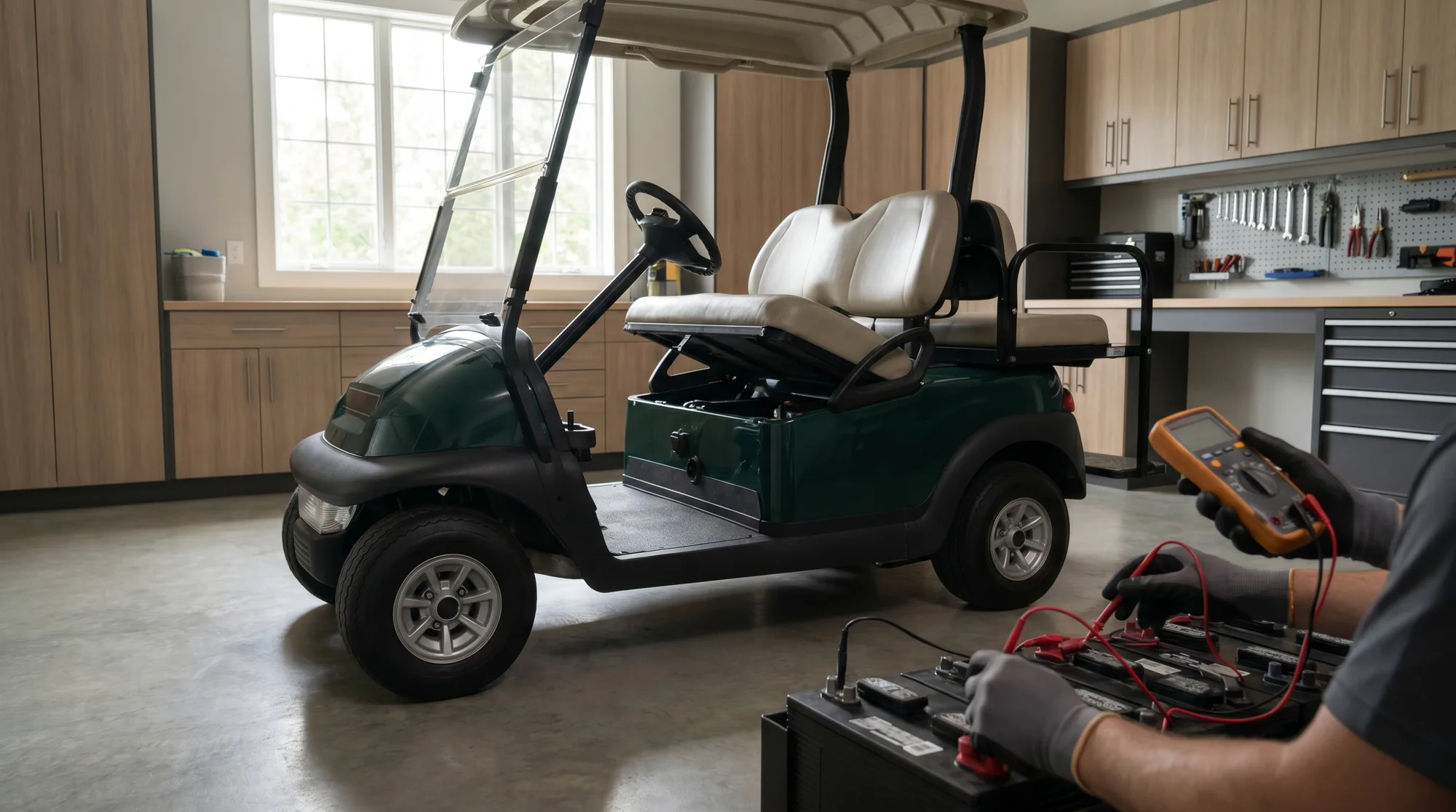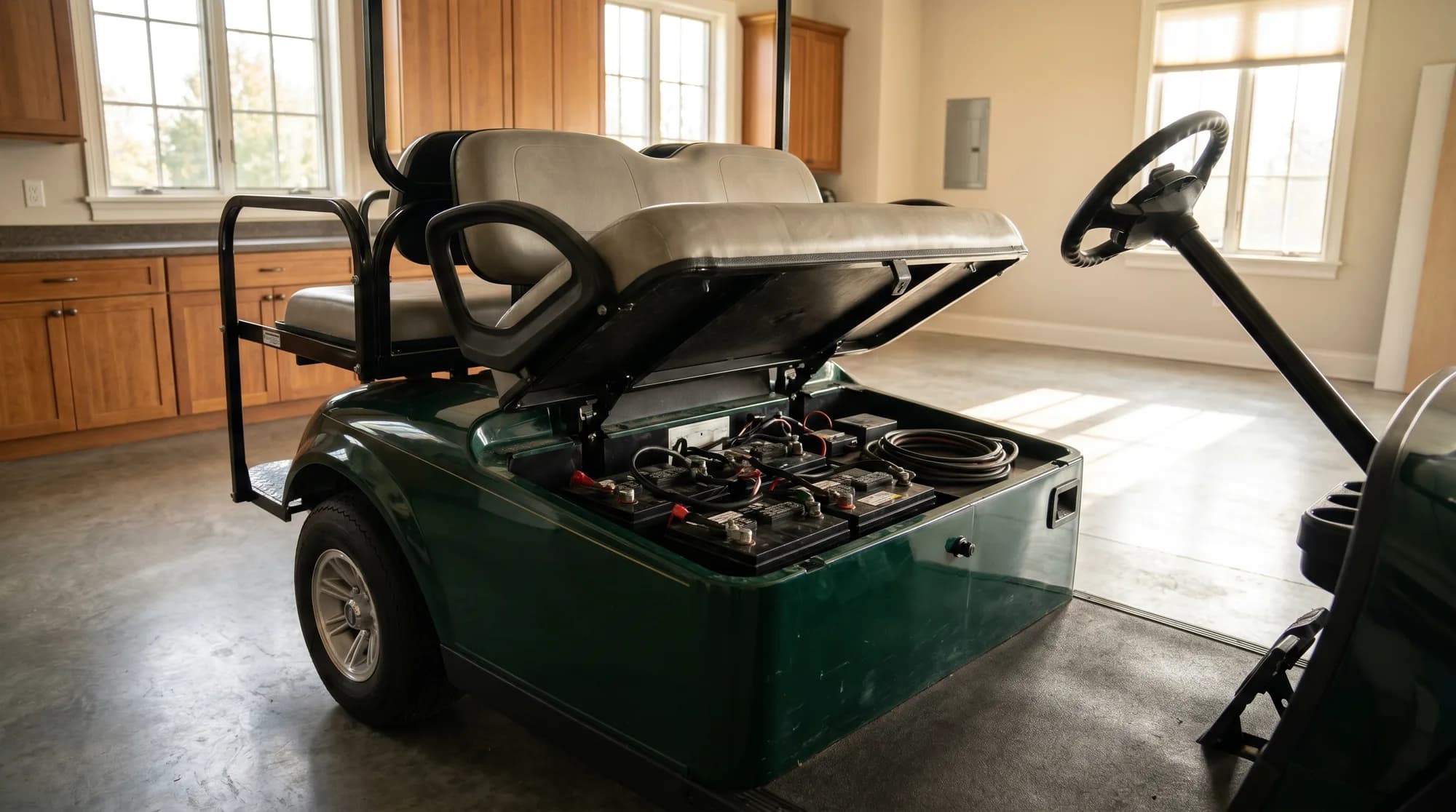
A golf cart battery pack is the most expensive consumable on the vehicle, and it is also the one owners most often shorten through neglect. The difference between a pack that gives three years and one that gives seven usually comes down to a handful of cheap, dull habits: charging properly, keeping water topped on flooded lead-acid, storing the pack right and keeping terminals clean. This guide lays out the routine for both lead-acid and lithium, the lifespan you should realistically expect, and the warning signs that a pack is on its way out.
Realistic lifespan: what to expect
Set expectations first. A well-cared-for set of flooded lead-acid golf cart batteries commonly lasts around four to six years, with neglected packs failing in two or three and exceptional ones reaching seven. Lithium packs typically last far longer, often eight to ten years or more, because they tolerate many more charge cycles. Our dedicated guide on how long golf cart batteries last goes deeper, but the headline is simple: care buys years, neglect costs them.
Charging: the single most important habit
More packs die from bad charging than anything else. Lead-acid batteries want to be returned to a full charge after each use and not left sitting partly empty. A pack stored half-charged sulfates, and that capacity does not come back. Use a quality automatic charger matched to your pack, let it complete its full cycle every time, and avoid the cheap chargers that stop early or boil the cells.
- 01
Charge after every real use
Plug in when you are done for the day, even if you only ran a few miles. Lead-acid prefers full and topped to partly drained.
- 02
Let the cycle finish
An automatic charger conditions and balances at the end of the cycle. Pulling it early leaves the pack uneven and undercharged.
- 03
Use the right charger
Match charger voltage and chemistry to the pack. Never put a lead-acid charger on lithium or the reverse.
- 04
Charge somewhere ventilated
Flooded lead-acid vents gas while charging. Charge in a ventilated space away from sparks and flame.
For the full home setup, including outlets, timing and charger selection, see charging a golf cart at home.
Watering flooded lead-acid
Flooded lead-acid batteries lose water as they charge, and running them low ruins them. The rule is to water with distilled water only, to the correct level, and always after a full charge rather than before, because the electrolyte level rises during charging. Tap water introduces minerals that poison the cells, so distilled is non-negotiable.
Terminals, cleaning and connections
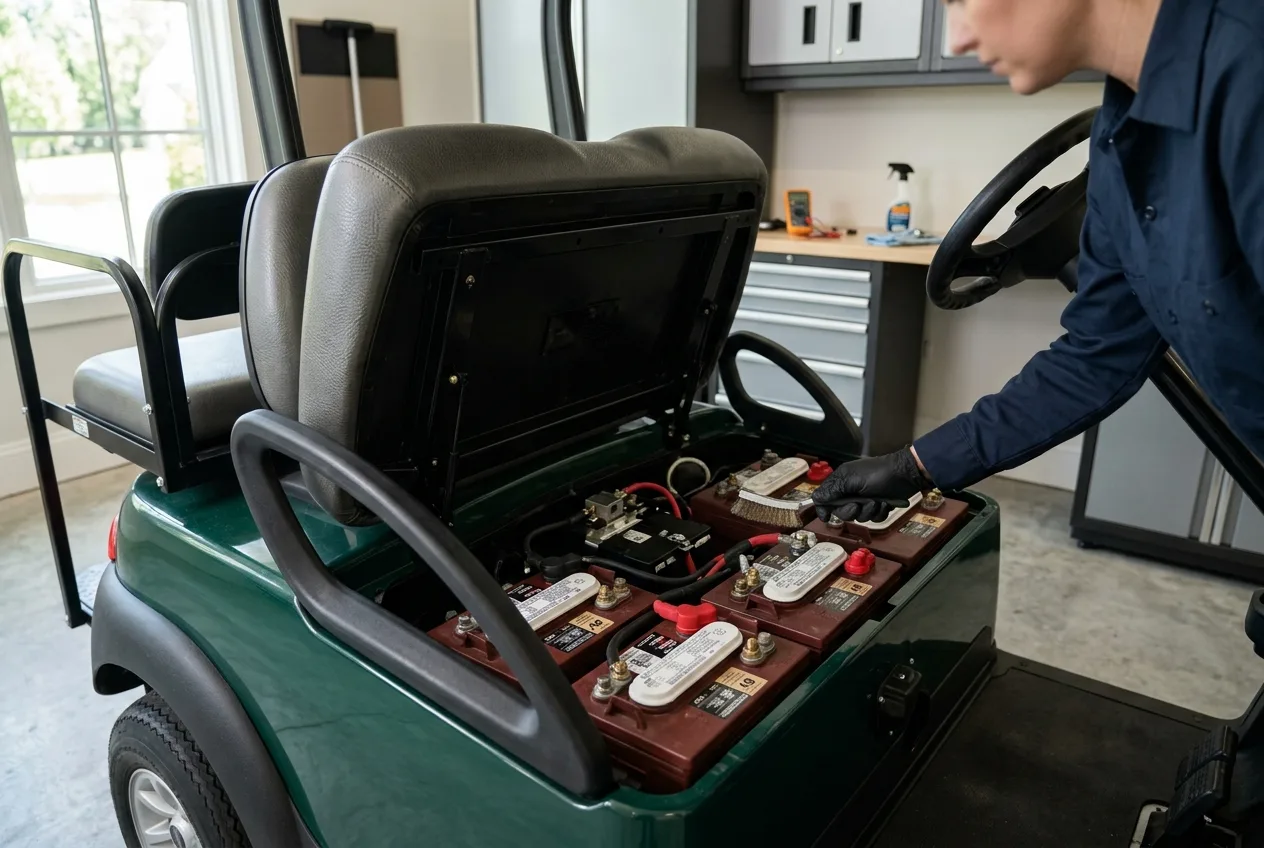
Corroded or loose terminals quietly steal performance. Corrosion adds electrical resistance, which wastes energy as heat and reduces both power and range. Inspect terminals regularly, clean off any white or blue buildup, and keep connections tight. A light protective coating made for battery terminals helps slow corrosion returning.
- Disconnect before cleaning and work negative terminal first to be safe.
- Clean corrosion with a baking soda and water paste, then rinse and dry fully.
- Re-tighten terminals to snug; loose connections arc and heat.
- Apply a terminal protectant to slow new corrosion.
- Keep the battery tops dry and free of dirt that can bridge terminals.
Storage and seasonal layup
Off-season storage ruins more packs than driving ever does. If the cart will sit for weeks or months, store the batteries charged and keep them maintained. For lead-acid, that means fully charging before layup and either using a maintenance charger or charging periodically through the off-season. A pack left low over a cold winter can be flat and sulfated by spring.
- Lead-acid
- Fully charge
- Lithium
- Store mid-to-high charge
- Lead-acid
- Maintain or charge periodically
- Lithium
- Largely self-holds
- Lead-acid
- Vulnerable if left low
- Lithium
- Better, but moderate temps preferred
- Lead-acid
- Top up before charging
- Lithium
- None needed
- Lead-acid
- Charge and inspect
- Lithium
- Charge and check BMS
| Lead-acid | Lithium | |
|---|---|---|
| Charge before storage | Fully charge | Store mid-to-high charge |
| During storage | Maintain or charge periodically | Largely self-holds |
| Cold tolerance | Vulnerable if left low | Better, but moderate temps preferred |
| Water check | Top up before charging | None needed |
| Wake-up | Charge and inspect | Charge and check BMS |
Warning signs a pack is failing
Catching a dying pack early saves you from being stranded and from a single bad battery dragging down the rest. If you spot these, it is time to test and likely replace the whole matched set together. For diagnosis, our battery troubleshooting guide walks the checks.
- Range has dropped sharply even after a full charge.
- The cart slows badly on hills it used to climb easily.
- One battery runs hotter or reads lower voltage than the others.
- Charging finishes much faster than it used to, suggesting reduced capacity.
- Visible swelling, leaking or heavy corrosion on a battery case.
Batteries do not fail randomly. They are killed slowly by partial charges, missed watering and a winter spent flat. Do the dull routine and the pack quietly outlasts everyone's expectations.
So what is the routine?
Charge fully after every use, water flooded cells after charging with distilled water, keep terminals clean and tight, and store the pack charged and maintained. Do those four things and a lead-acid set reaches the top of its lifespan while lithium runs nearly care-free for years. If you would like help choosing a pack or planning a replacement, tell us your cart and use and we will advise honestly.
Plan a battery upgrade or replacement
Tell us your cart, age of pack and how you drive, and we will recommend a battery with an honest price.
Frequently asked questions
How long should golf cart batteries last?+
Cared-for flooded lead-acid commonly lasts about four to six years, while lithium often lasts eight to ten years or more. Charging habits and watering make the biggest difference.
When should I add water to my batteries?+
Always after a full charge, never before, because the electrolyte level rises during charging. Use distilled water only and fill to the indicated level, not above.
Is it bad to leave a golf cart battery partly charged?+
Yes, for lead-acid. Sitting partly charged causes sulfation and permanent capacity loss. Charge fully after each use. Lithium tolerates partial charges without harm.
How do I clean corroded battery terminals?+
Disconnect, scrub corrosion with a baking soda and water paste, rinse and dry, re-tighten the terminals and apply a terminal protectant. Wear gloves and eye protection.
Do lithium batteries need any maintenance?+
Far less than lead-acid. No watering and partial charges are fine, but lithium still prefers moderate temperatures, a compatible charger and a healthy battery management system.
Related solutions
Ready to explore what we build?
See the vehicles and the setting this applies to, or get a tailored quote built around your site.

Ready to find the right golf cart?
Tell us how and where it will work and we will specify a vehicle and a tailored quote built around you. Every build comes with a 3-year warranty and a 24-hour priority call-out.