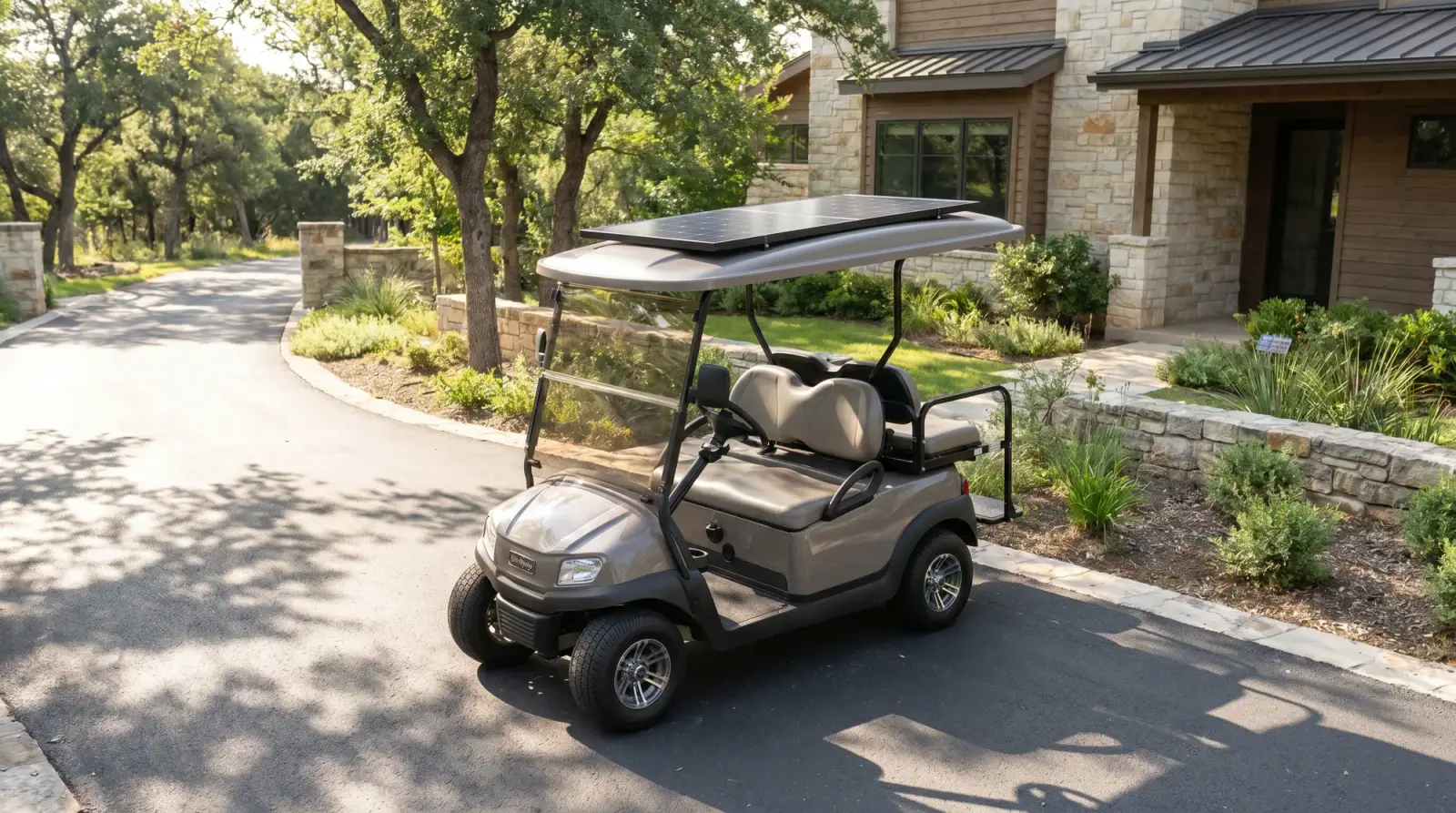
Solar golf cart kits sell a tempting picture: park in the sun and never plug in again. The truth is more nuanced and more useful. A roof panel will not usually replace your wall charger, but it can extend range during the day, slow the rate you drain a pack and keep batteries topped while the cart sits for weeks. Whether that is worth the money depends entirely on how you use the cart. This guide explains what a solar panel actually does on a golf cart, how to size it, and when it earns its place.
- A roof solar panel mostly trickles energy back during the day; it rarely fully recharges a daily-driven cart on its own.
- Solar shines for carts that sit a lot, where it keeps the pack healthy and ready without grid power.
- Panel output is rated in watts, and a typical golf cart roof fits roughly 100 to 400 watts of panel.
- Solar pairs better with lithium, which accepts partial charges happily and has no memory effect.
- Plan around real sun hours, not the panel's peak rating; cloud, shade and angle cut output significantly.
What a solar panel actually does on a cart
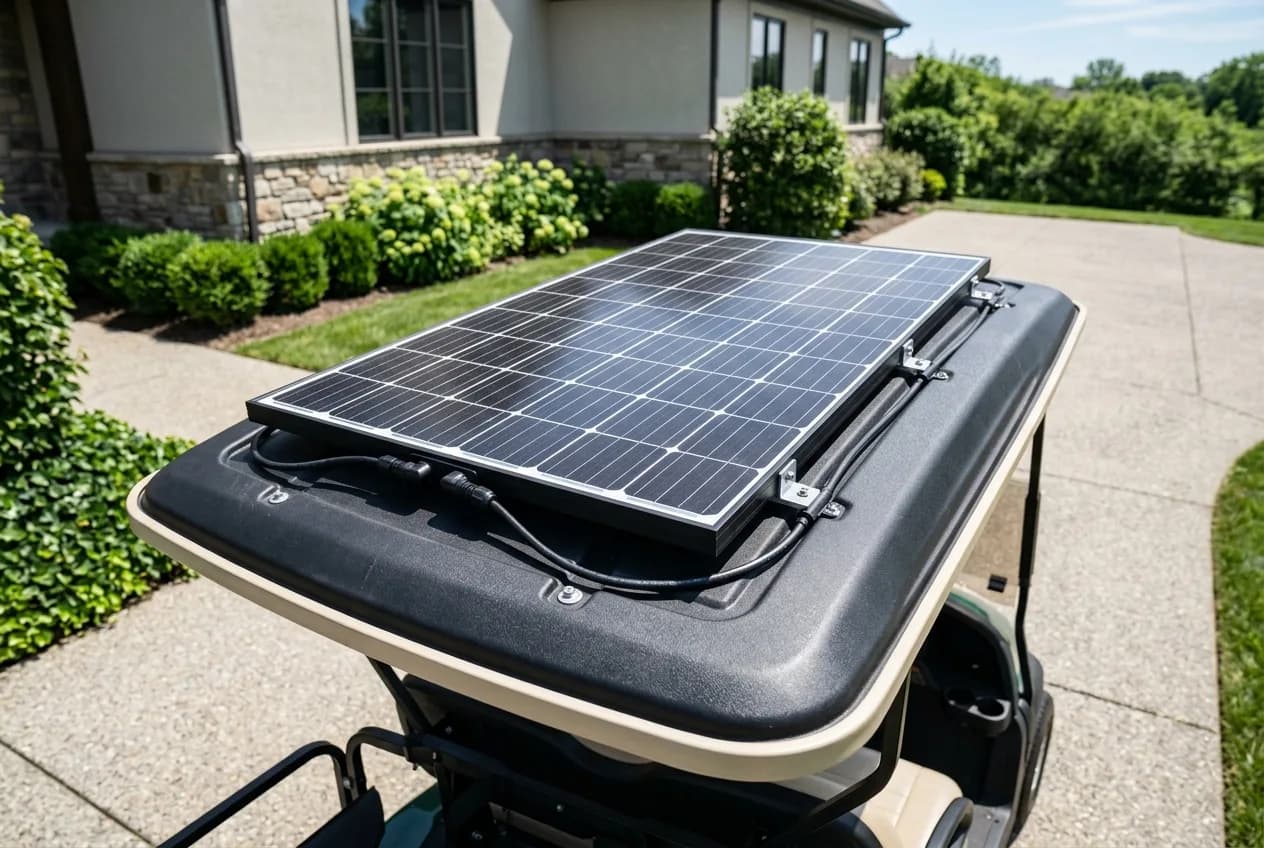
A golf cart solar setup is a roof-mounted panel feeding a charge controller that sends power into the battery pack. The key number to understand is that the panel produces a steady trickle, not a fast charge. Where a wall charger might deliver many amps and refill a pack in a few hours, a roof panel produces a fraction of that and works only while the sun is out. So the honest framing is this: solar does not replace your charger for a cart you drive hard every day, but it does meaningfully reduce how much you draw from the pack and the grid.
Think of it as range extension and maintenance rather than primary charging. On a sunny day, a panel can offset some of what you use as you drive, and while the cart is parked it keeps feeding the pack. For the full primary-charging picture, our charging a golf cart at home guide is the companion to this one.
Trickle topping versus full charging
This is the distinction that decides whether solar will satisfy you. Two very different jobs get called solar charging.
Maintenance and trickle topping
For a cart that sits between weekends, or a seasonal cart stored for months, a modest panel is excellent. It keeps a lead-acid pack from sulfating and a lithium pack at a healthy state of charge, so the cart is always ready and the batteries last longer. This is where almost every owner sees a clear win.
Daily full charging
Replacing your wall charger entirely with solar is hard. To fully refill a cart you drove for miles, from a roof panel alone, you would need large wattage and many uninterrupted sun hours, which is rarely practical on a single roof. Most owners who want that go for a home solar array and charge from the wall as normal, rather than relying on the cart's own roof.
Sizing a solar setup
Sizing comes down to roof space, budget and your goal. A small panel suffices for maintenance; a larger panel and a good controller help with daytime range extension. Use this rough framing.
- Rough panel size
- ~100 W
- Realistic outcome
- Keeps pack healthy, prevents drain
- Rough panel size
- 200-300 W
- Realistic outcome
- Adds modest daily miles in sun
- Rough panel size
- ~400 W
- Realistic outcome
- Noticeable offset, still not full replacement
- Rough panel size
- Not practical
- Realistic outcome
- Use a wall charger instead
| Rough panel size | Realistic outcome | |
|---|---|---|
| Battery maintenance while parked | ~100 W | Keeps pack healthy, prevents drain |
| Light daytime range extension | 200-300 W | Adds modest daily miles in sun |
| Maximum on-roof support | ~400 W | Noticeable offset, still not full replacement |
| Daily full recharge from cart roof | Not practical | Use a wall charger instead |
Why lithium and solar go together
Solar produces an inconsistent, partial flow of energy, and that is exactly the kind of charging lithium handles best. Lithium accepts partial charges with no memory effect and no harm, so every bit of sun is useful. Lead-acid can still benefit, especially for maintenance, but it prefers to be brought fully up and held there, which a small panel struggles to do under daily use. If you are weighing chemistries, see lithium versus lead-acid and the broader lithium conversion guide.
Is solar worth it for you?
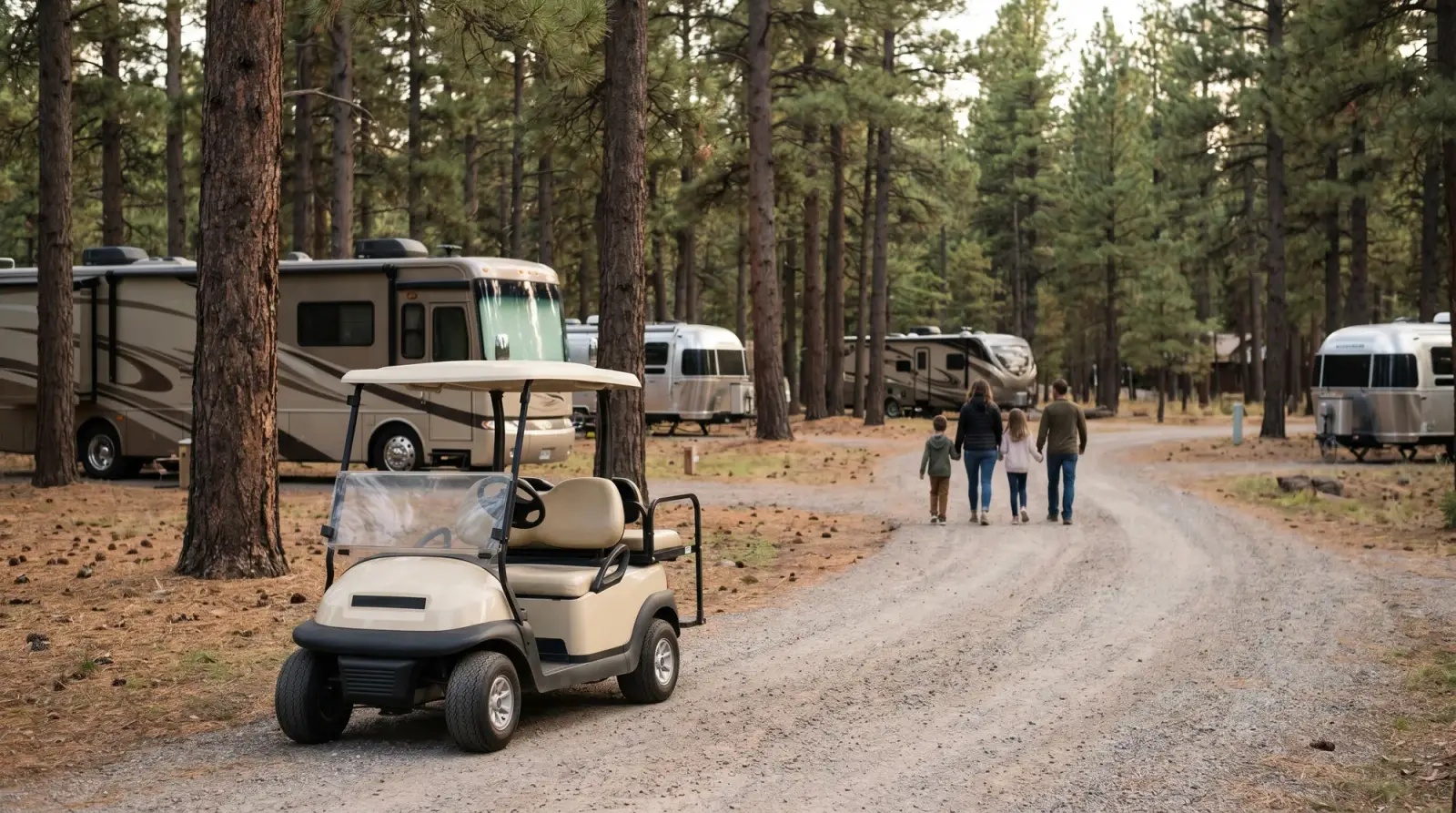
Solar is clearly worth it if your cart sits often, lives somewhere sunny, or you want range insurance away from outlets, such as a property cart or a campground runabout. It is less compelling if you drive hard every day and already charge easily at home, where a wall charger is faster and cheaper per mile gained. Either way it is an add-on to good battery care, not a substitute for it. Pair it with the habits in our battery care and lifespan guide.
Talk through a solar-ready cart
Tell us where and how you drive, and we will advise whether solar fits and spec a build with an honest price.
Frequently asked questions
Can a solar panel fully charge a golf cart?+
Usually not from the cart's own roof. A roof panel trickles energy back and extends range, but fully recharging a daily-driven pack needs large wattage and many sun hours, so most owners still use a wall charger.
What size solar panel does a golf cart need?+
Roughly 100 watts is enough to maintain a parked pack, 200 to 300 watts gives light daytime range extension, and around 400 watts is about the practical maximum on a cart roof.
Is solar better with lithium or lead-acid?+
Lithium pairs best because it accepts partial charges with no harm or memory effect, which suits the irregular flow from a panel. Lead-acid still benefits for maintenance but prefers full charging.
Will solar work on cloudy days?+
It produces far less in cloud or shade. Plan around real peak-sun hours for your region and expect significantly reduced output when the sky is overcast.
Do I need a special charge controller for solar?+
Yes. A solar setup needs a charge controller matched to your pack voltage and chemistry, and on lithium it must work with the battery management system. Confirm compatibility before fitting.
Related solutions
Ready to explore what we build?
See the vehicles and the setting this applies to, or get a tailored quote built around your site.

Ready to find the right golf cart?
Tell us how and where it will work and we will specify a vehicle and a tailored quote built around you. Every build comes with a 3-year warranty and a 24-hour priority call-out.
Our guides are written and reviewed by the Hawke Electric Vehicles team, the people who specify, build, deliver and support the vehicles. We focus on honest, practical advice and flag where a figure depends on the build rather than guessing.
More guides by Hawke