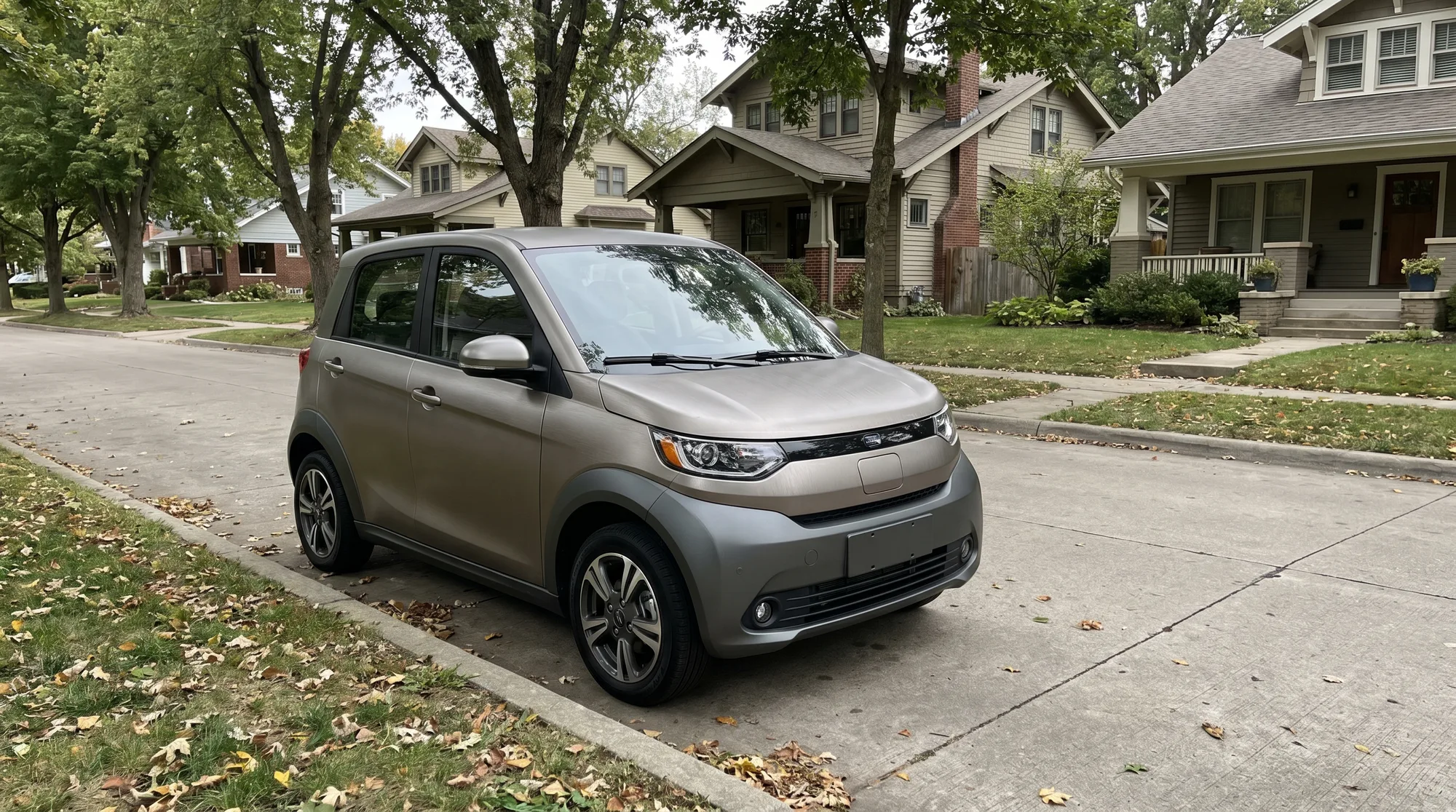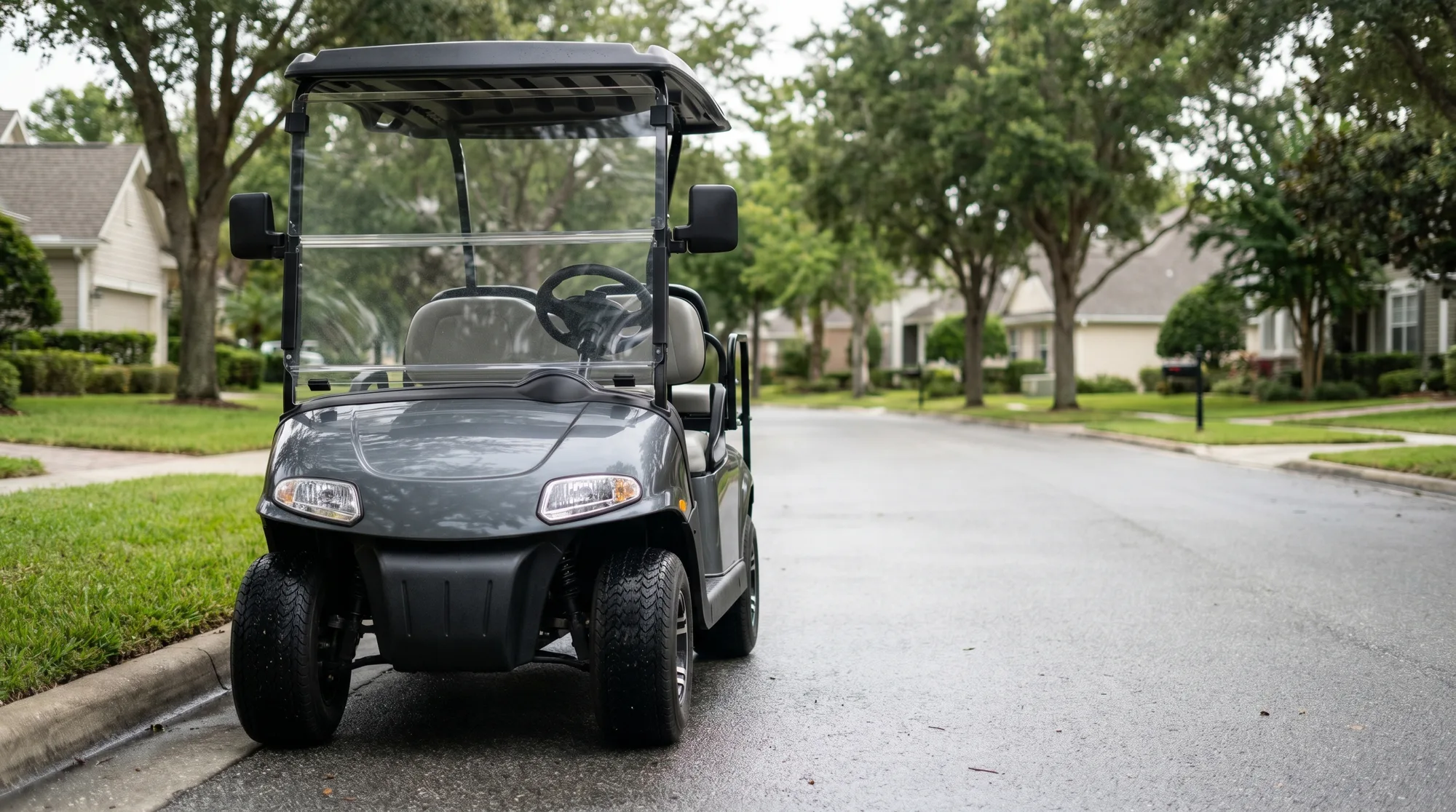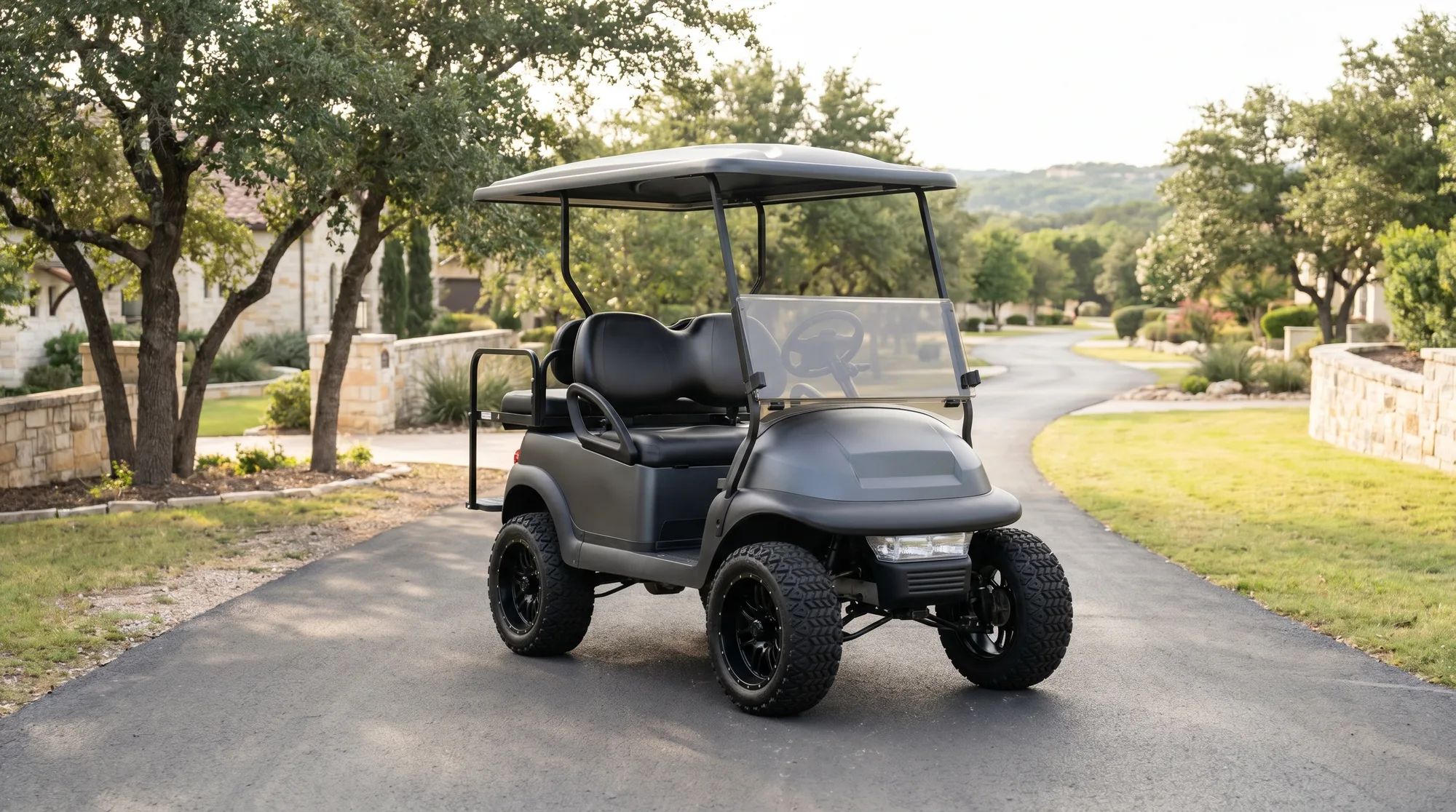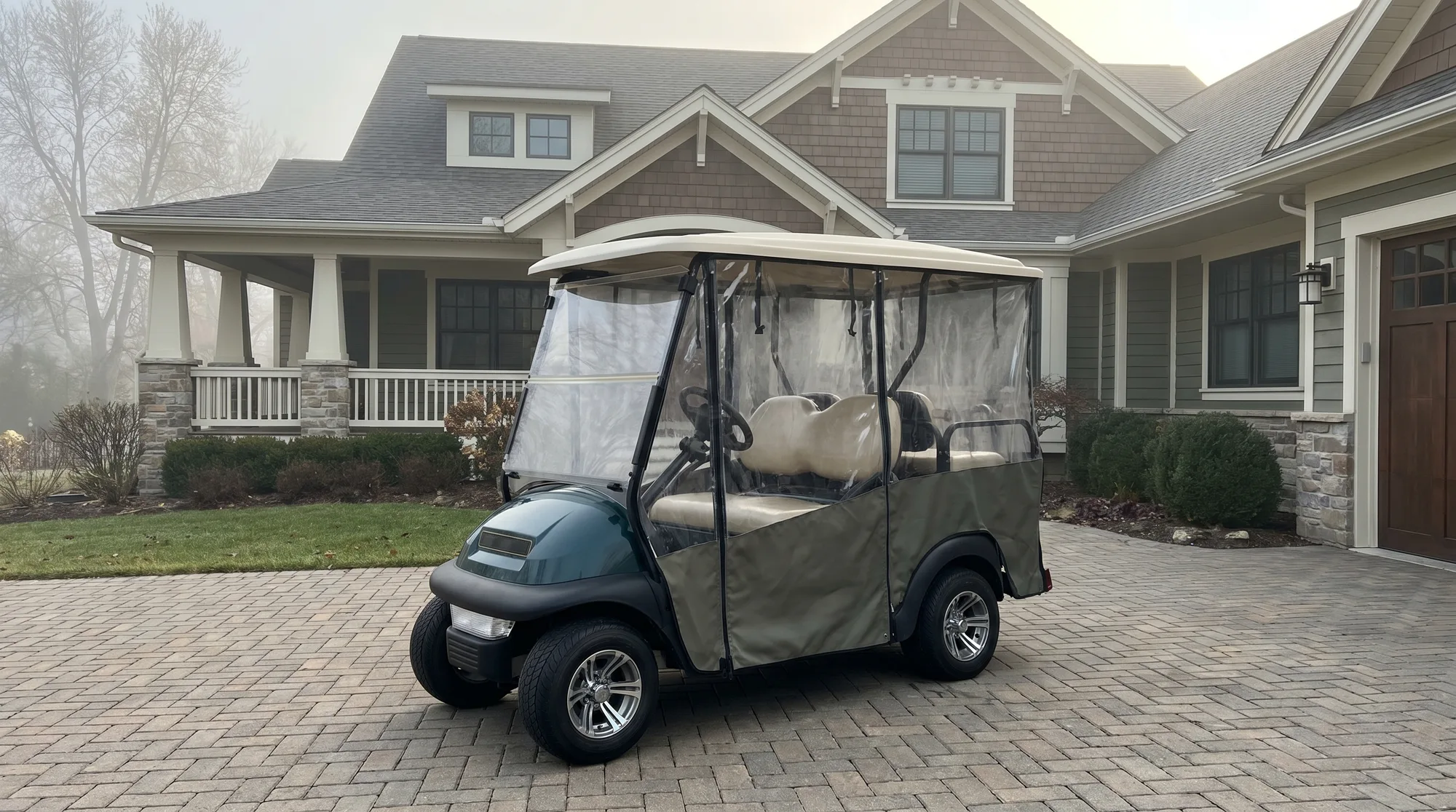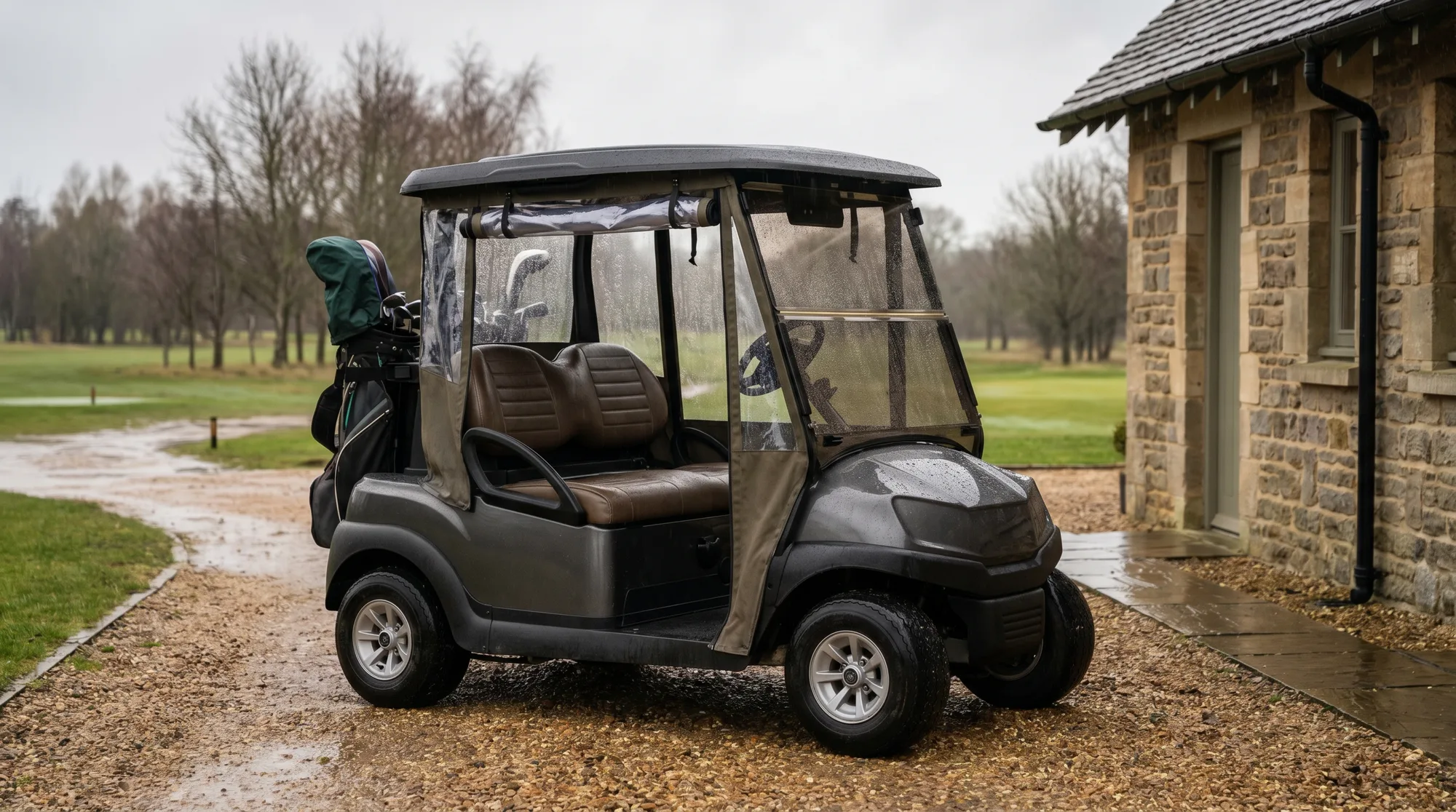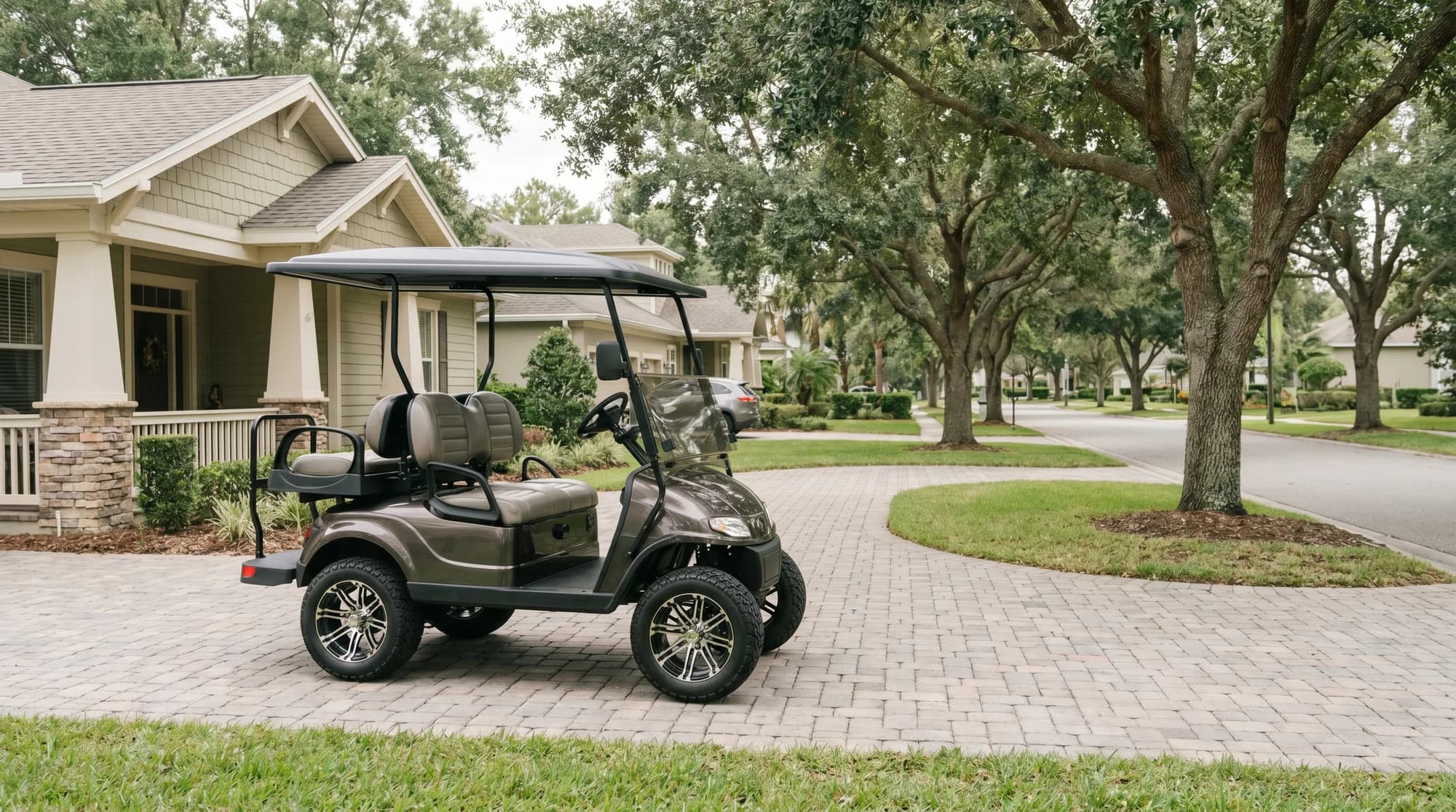
Most car trips in America are short, and a surprising share of them are under a couple of miles: the school run, the coffee shop, the gym, the friend two streets over. A golf cart is built for exactly those journeys, and a growing number of households use one as a genuine second vehicle, a small neighborhood EV that swallows the short trips a car wastes fuel on. This guide looks at when that actually works, what it costs, how charging fits ordinary life, and how to choose between a plain cart and a street-legal one.
The trips a neighborhood cart actually replaces
The honest way to think about a cart as a runabout is to look at your real week. How many of your trips are short, local and slow? For most suburban households the answer is more than they expect: dropping kids at school, the morning coffee, the gym, the post office, dinner at a neighbor's, a run to the small grocery. None of these need a two-ton car, and a cart does them with no fuel and almost no fuss. What a cart does not do is the highway commute, the big-box haul or the long family trip; that is what the car stays for.
Sizing the cart to those trips matters. A two-passenger is perfect for solo errands; a four-passenger earns its keep on the school run and social trips. Our guide on what size cart you need helps you match it to your week.
What it costs to run
The running-cost case is strong. Electricity to move a cart a few miles costs a small fraction of the fuel a car would burn, and a cart has far fewer wearing parts: no oil, no transmission service, no emissions kit. The big-ticket maintenance item is the battery, and a quality lithium pack lasts for years. Set against the fuel and wear you avoid on the car, a neighborhood cart can quietly pay for a chunk of itself over time. For the full purchase picture see our cost guide.
- Car
- Fuel per mile
- Golf cart
- Cents of electricity
- Car
- Oil, service, emissions
- Golf cart
- Battery, tires, brakes
- Car
- Often a hassle
- Golf cart
- Easy, compact
- Car
- Highway, hauling, long trips
- Golf cart
- Short, local, slow
- Car
- Large, heavy
- Golf cart
- Small, light, quiet
| Car | Golf cart | |
|---|---|---|
| Energy cost | Fuel per mile | Cents of electricity |
| Maintenance | Oil, service, emissions | Battery, tires, brakes |
| Parking | Often a hassle | Easy, compact |
| Best trips | Highway, hauling, long trips | Short, local, slow |
| Footprint | Large, heavy | Small, light, quiet |
Charging fits ordinary life
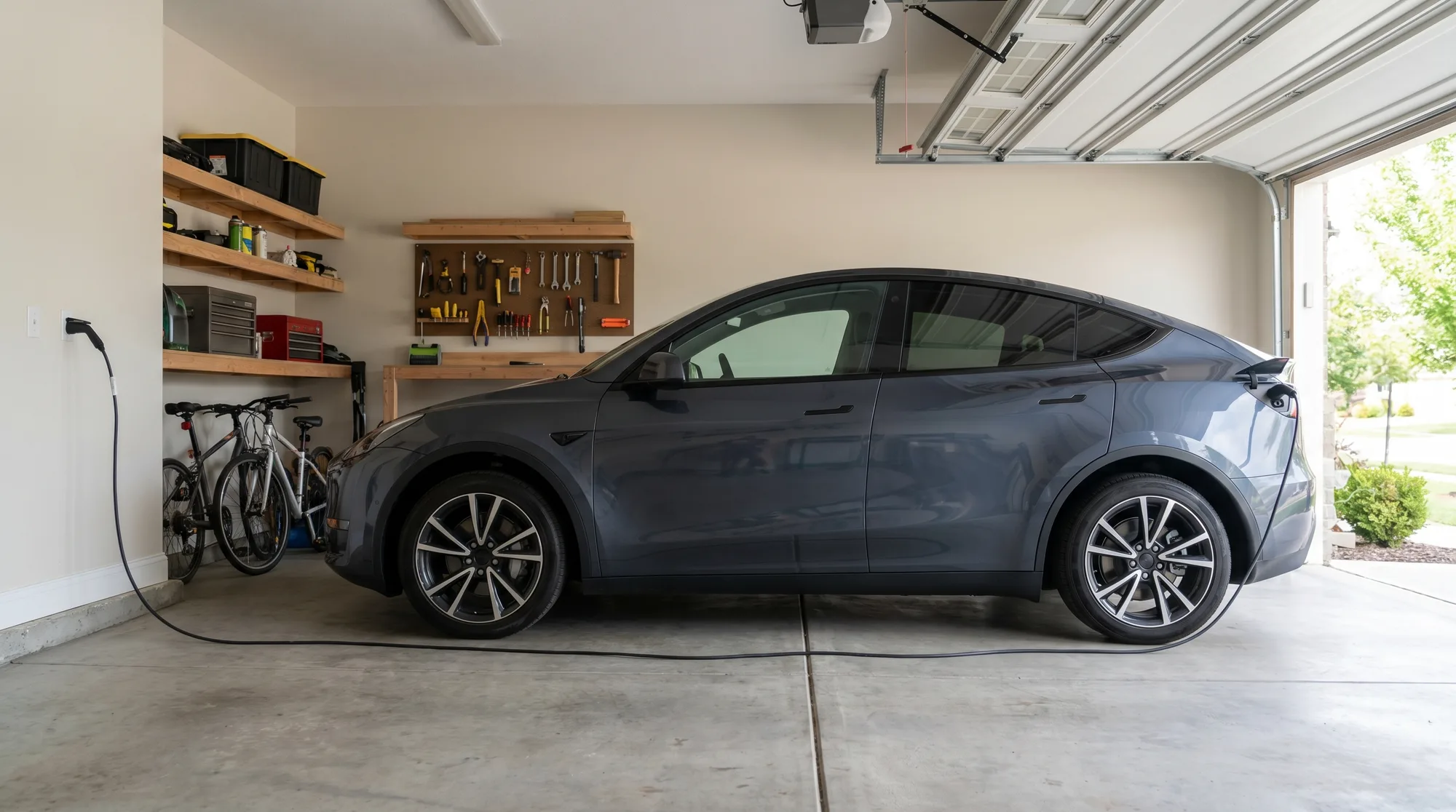
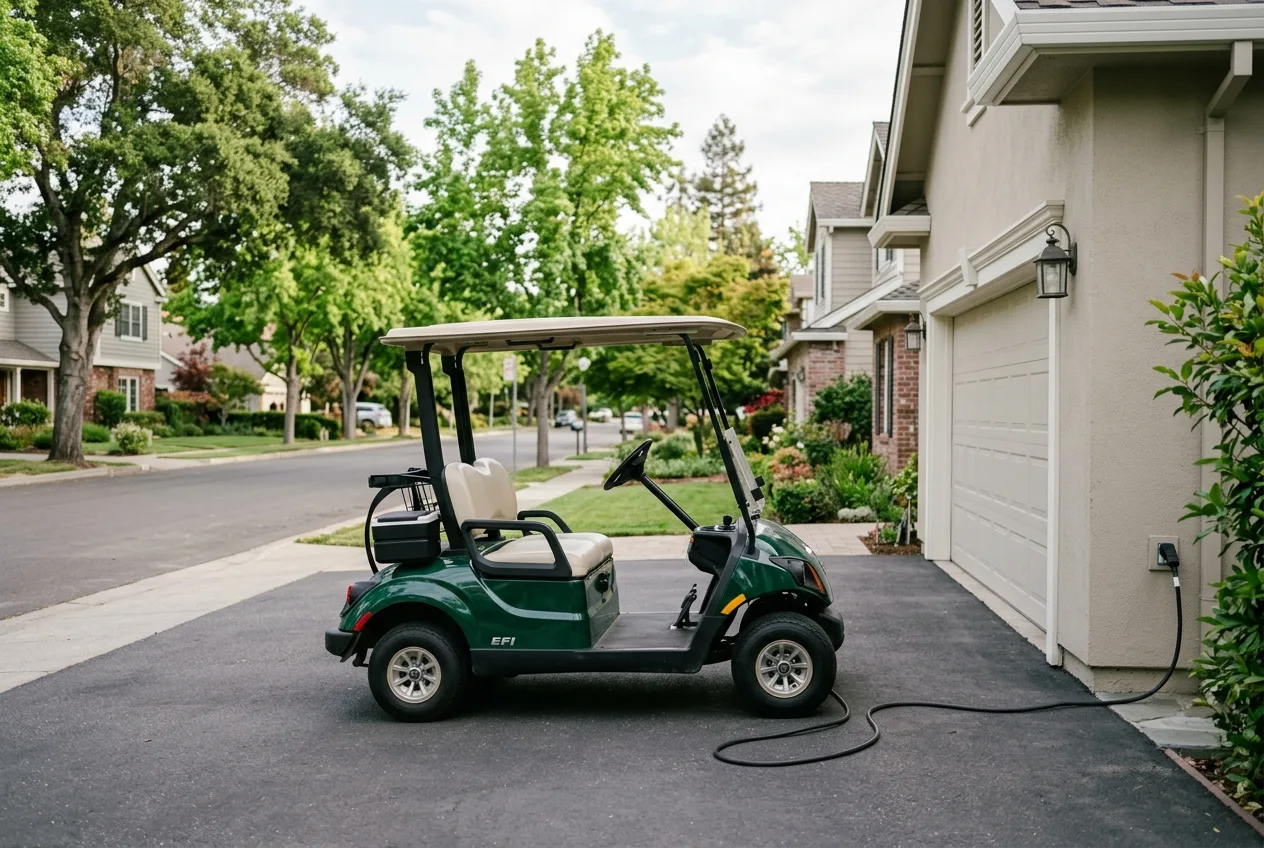
One worry people have is charging, and it is mostly unfounded for neighborhood use. Because the trips are short, you rarely use much of the battery in a day, and you simply plug in overnight at home the way you charge a phone. There is no public-charging hunt and no range anxiety inside your own area. Our home charging guide covers setting up a safe outlet for convenient daily charging.
Plain cart or street-legal? Get this right
This is the decision that makes or breaks a neighborhood runabout. A plain golf cart has very limited rights on public roads in most places. To use neighborhood streets legally you generally need either a street-legal golf cart, where local rules allow it, or a low-speed vehicle (LSV) that is titled and registered. Understanding the difference up front saves disappointment.
- 01
Check your local rules
Find out whether your town allows carts or PTVs on its streets, and on what terms. Our [street-legal LSV rules](/guides/street-legal-golf-carts-lsv-rules-us) explain the common framework.
- 02
Decide cart or LSV
If you need real road rights, an LSV is usually the answer. See [cart versus LSV](/guides/golf-cart-vs-lsv-which-to-buy-us) and [how to make a cart street legal](/guides/how-to-make-a-golf-cart-street-legal-us).
- 03
Equip and register
Fit the required lights, belts and mirrors, then title, register and insure as your area requires.
- 04
Confirm with the DMV
Rules vary by city, county and state, so confirm the specifics with your city or county and the state DMV before you drive on the road.
Safety as a daily driver
Used as everyday transport, a cart shares roads with cars, so it needs to be visible and predictable: good lights, mirrors, a horn, seat belts and steady driving. Insurance is sensible and often required for a street-legal vehicle. When kids ride along, the family safety guide is directly relevant.
The households that love their neighborhood cart are the ones who matched it to their real short trips, made it road legal properly, and let the car handle the rest.
So is a neighborhood cart right for you?
If your area is cart-friendly and a good share of your trips are short, local and slow, a street-legal cart or LSV can be a genuinely useful second vehicle that cuts fuel, parking stress and wear on your car. It is not a one-for-one car replacement, and the legality step is essential, but for the right household it earns its place quickly. Confirm your local rules, then we are happy to spec a road-ready build with honest numbers.
Build a neighborhood runabout
Tell us your area and your typical trips, and we will spec a road-ready cart or LSV with an honest price.
Frequently asked questions
Can a golf cart replace my car?+
Not entirely. A cart excels at short, local, slow trips and can replace a real share of your mileage, but it does not handle highway driving, big hauls or long journeys. It works best as a second vehicle for a defined area.
Is a golf cart cheap to run?+
Yes. Electricity to move it a few miles costs a fraction of car fuel, and there is far less maintenance: no oil or emissions service. The main long-term cost is the battery, and a quality lithium pack lasts for years.
Do I need a street-legal cart for neighborhood streets?+
Usually, yes. A plain golf cart has very limited road rights. For public-street use you generally need a street-legal cart where allowed, or a titled low-speed vehicle (LSV), with the right equipment and registration.
How do I charge a neighborhood cart?+
Plug it in overnight at home like a phone. Because local trips are short, you rarely use much of the battery in a day, so a full charge each morning covers ordinary use without any public charging.
Is it safe to use a cart as daily transport?+
It can be, with the right equipment and driving. Make it visible and predictable with lights, mirrors, a horn and belts, carry insurance, and drive steadily among cars. Confirm local rules with your city or county and the state DMV.
Related solutions
Ready to explore what we build?
See the vehicles and the setting this applies to, or get a tailored quote built around your site.

Ready to find the right golf cart?
Tell us how and where it will work and we will specify a vehicle and a tailored quote built around you. Every build comes with a 3-year warranty and a 24-hour priority call-out.