The answer, up front: a standard golf cart does not qualify for the disabled VAT relief, and HMRC says so explicitly. The department's internal VAT manual (reference VRDP17000) states that ordinary golf carts are not eligible for zero-rating because they aren't designed solely for use by disabled people, however genuinely a disabled buyer might need one.
That's not the answer most people want, and it's not the impression some sellers give. You'll find retailers whose websites imply that ticking a disability declaration routinely knocks 20% off a cart. It doesn't, and signing an eligibility declaration for a product that doesn't qualify can cause real problems later. There is a legitimate route to relief, though: a cart that has been substantially and permanently adapted for a disabled user can qualify. Where exactly that line sits is set out below.
- HMRC's manual VRDP17000 states standard golf carts are not eligible for disabled VAT relief.
- Zero-rating under VAT Notice 701/7 requires equipment "designed solely for use by disabled persons", and an ordinary cart is designed for golfers in general.
- A cart substantially and permanently adapted for a disabled user can qualify; the adaptation is what earns the relief.
- Class 2 and 3 mobility scooters and single-rider mobility golf carts designed for disabled users sit in a different, more favourable category.
- Be wary of any seller who treats the relief as routine. This is general guidance, not tax advice; check your position with HMRC or an accountant.
What does the law actually require for zero-rating?
The relief comes from the VAT Act's zero-rating provisions for disabled people, explained in HMRC's VAT Notice 701/7. To be zero-rated, goods generally have to be "designed solely for use by disabled persons" and supplied to a disabled person (or a charity serving them) for their personal or domestic use. The word doing the work is solely. It's about what the product was designed to be, not who happens to buy it.
A golf cart fails that test the moment it leaves the drawing board. It's designed to carry golfers, any golfers, around a course. Thousands of able-bodied players use identical machines every weekend. However much a cart helps someone with limited mobility enjoy their golf (and it does), helping disabled people isn't the same as being designed solely for them, and HMRC applies the distinction strictly. The same logic catches reclining chairs, spa baths and plenty of other products that are useful to disabled buyers but designed for everyone.
So why do some sellers imply the relief is routine?
Because it sells golf carts. The customer signs a declaration confirming they're chronically sick or disabled, the seller zero-rates the sale, and everyone feels 20% better. The problem is that the declaration doesn't make an ineligible product eligible. If HMRC reviews the seller's records, the VAT is still due, and buyers can be drawn into an awkward mess over a declaration made in good faith about a relief that never applied.
When can an adapted golf cart qualify?
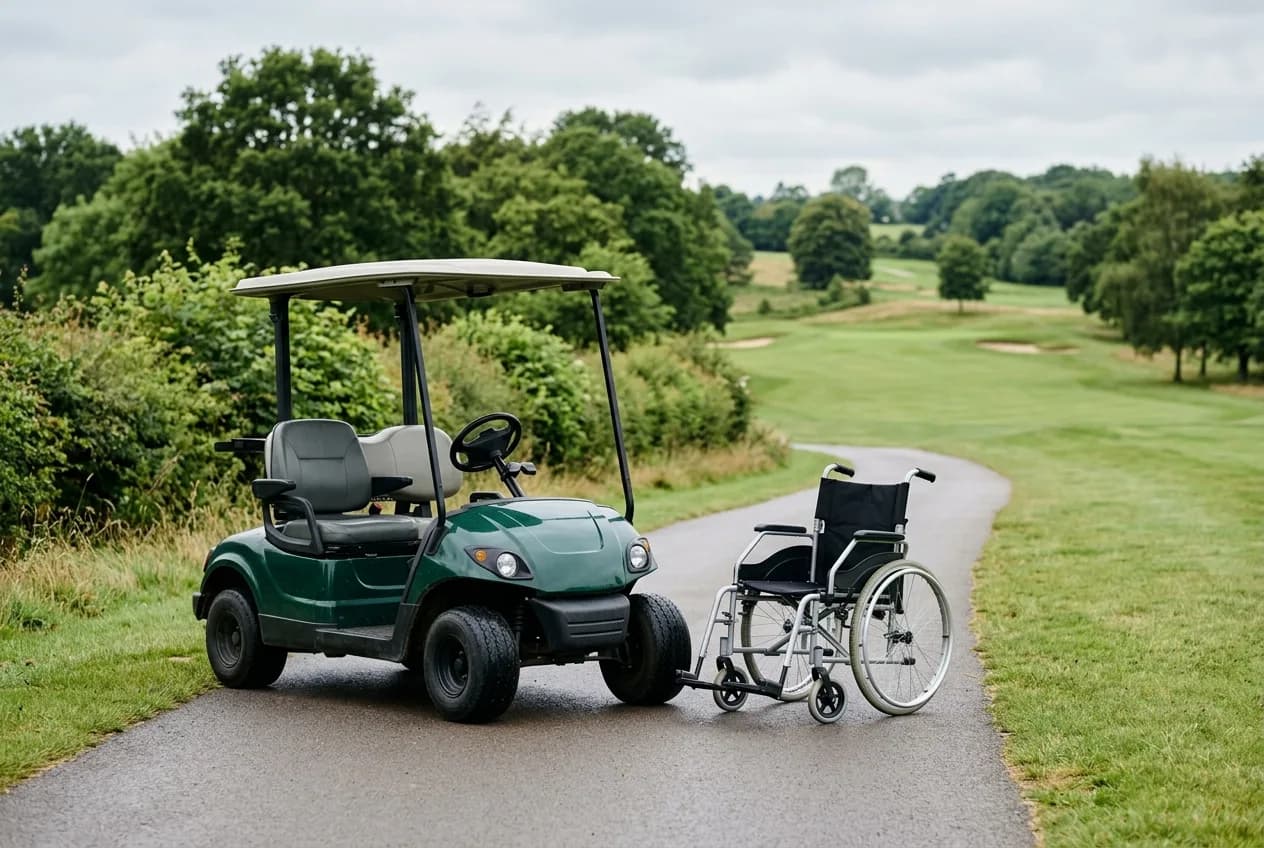
This is the legitimate route. HMRC accepts that a vehicle which has been substantially and permanently adapted for use by a disabled person can qualify for relief, and the adaptation is the whole story. Think hand controls replacing pedals for someone who can't use their legs, a swivel or lift seat engineered in for transfers from a wheelchair, wheelchair restraint systems, or a redesigned access arrangement. Bolting on a bag holder or a rain cover doesn't count. The adaptation needs to be real engineering, done before supply, that makes the vehicle suited to that user's disability.
In practice the cleanest arrangements involve the supplier carrying out or commissioning the adaptation, documenting exactly what was changed and why, and taking the eligibility declaration alongside. If you're exploring this route, raise it early in the buying conversation so the adaptation is specified into the build rather than retrofitted. Our electric golf cart buyer's guide covers the wider specification questions, and it's worth reading what size of cart you need before deciding what to adapt.
Golf cart or mobility vehicle: which are you actually buying?
Part of the confusion comes from lumping very different machines together. Class 2 and Class 3 invalid carriages (mobility scooters and powered wheelchairs) are designed solely for disabled users, and supplies of them are routinely zero-rated to eligible buyers. Single-rider golf carts built so disabled golfers can play (stand-up supports, all-terrain single seats) sit closer to the line, but the tribunals have refused relief where the same machine is marketed to able-bodied golfers too, so even here nothing is automatic. The table shows how the categories usually shake out.
- Designed solely for disabled users?
- No, designed for golfers generally
- Usual VAT position for an eligible disabled buyer
- Standard-rated at 20%; VRDP17000 rules out relief
- Designed solely for disabled users?
- Becomes suited to the disabled user through the adaptation
- Usual VAT position for an eligible disabled buyer
- Can qualify for zero-rating; documentation and declaration needed
- Designed solely for disabled users?
- Only where genuinely designed solely for disabled users; tribunals have refused relief for single-seaters marketed to all golfers
- Usual VAT position for an eligible disabled buyer
- Rarely; confirm the specific model's status with HMRC before signing a declaration
- Designed solely for disabled users?
- Yes
- Usual VAT position for an eligible disabled buyer
- Zero-rated to eligible users with a declaration
| Designed solely for disabled users? | Usual VAT position for an eligible disabled buyer | |
|---|---|---|
| Standard golf cart | No, designed for golfers generally | Standard-rated at 20%; VRDP17000 rules out relief |
| Golf cart substantially and permanently adapted | Becomes suited to the disabled user through the adaptation | Can qualify for zero-rating; documentation and declaration needed |
| Single-rider disabled golfer's cart (e.g. stand-up style) | Only where genuinely designed solely for disabled users; tribunals have refused relief for single-seaters marketed to all golfers | Rarely; confirm the specific model's status with HMRC before signing a declaration |
| Class 2 / Class 3 mobility scooter | Yes | Zero-rated to eligible users with a declaration |
What about charities?
Charities get their own reliefs, but the same design test applies to the goods. A charity buying equipment designed solely for disabled people, to make available to them, can often have the purchase zero-rated with the right declaration. A charity buying ordinary golf carts for general use at an event or venue pays VAT like anyone else, though a VAT-registered charity trading arm may be able to reclaim some of it. Golf clubs supporting disabled members sit in the same boat: the vehicle's design, not the buyer's good intentions, decides the rate.
And a note on the running costs: even where the vehicle itself doesn't qualify, disabled users sometimes assume other reliefs will apply to accessories, servicing or hire. Mostly they don't, for the same design-test reason. Budget with VAT included and treat any relief you do secure as a bonus. This is general guidance, not tax advice; a quick call to HMRC's helpline or your accountant will settle your specific case.
Frequently asked questions
Are golf carts VAT exempt for disabled users?+
No. HMRC's guidance (VRDP17000) states that standard golf carts don't qualify for the disabled zero rate because they aren't designed solely for disabled people. A substantially and permanently adapted cart can be different.
What counts as "designed solely for use by disabled persons"?+
The product's fundamental design must be for disabled users specifically, not for the general public. Powered wheelchairs and mobility scooters pass the test. Products that are merely helpful to disabled people, like ordinary golf carts or riser chairs, don't.
Is a mobility scooter treated differently from a golf cart for VAT?+
Yes. Class 2 and 3 mobility vehicles are designed solely for disabled users, so supplies to eligible buyers are routinely zero-rated with a declaration. A golf cart is a general-use vehicle and stays standard-rated.
Can an adapted golf cart qualify for VAT relief?+
It can, where the adaptation is substantial and permanent and makes the vehicle suited to the disabled user, for example engineered hand controls or a transfer seat. Cosmetic add-ons don't count, and the supplier should document the adaptation.
Do charities pay VAT on golf carts?+
Usually yes on standard golf carts. Charity reliefs still hinge on the goods being designed for disabled people (or falling within other specific reliefs), so an ordinary cart is standard-rated even when a charity buys it.
Plan your budget at the VAT-inclusive price, and if mobility is the reason you're buying, tell your supplier at the first conversation. Sometimes the right answer is a genuinely adapted cart that qualifies for relief. Sometimes it's a standard model with accessible features and no relief, bought with clear eyes. Either is better than a discount built on a form that won't survive scrutiny.
Talk to us about accessible models
Hawke golf carts can be configured with accessibility in mind, from easy-access seating to bespoke adaptations, and we'll always give you the straight answer on VAT before you order.
Related solutions
Ready to explore what we build?
See the vehicles and the setting this applies to, or get a tailored quote built around your site.

Ready to find the right golf cart?
Tell us how and where it will work and we will specify a vehicle and a tailored quote built around you. Every build comes with a 3-year warranty and a 24-hour priority call-out.
Our guides are written and reviewed by the Hawke Electric Vehicles team, the people who specify, build, deliver and support the vehicles. We focus on honest, practical advice and flag where a figure depends on the build rather than guessing.
More guides by Hawke