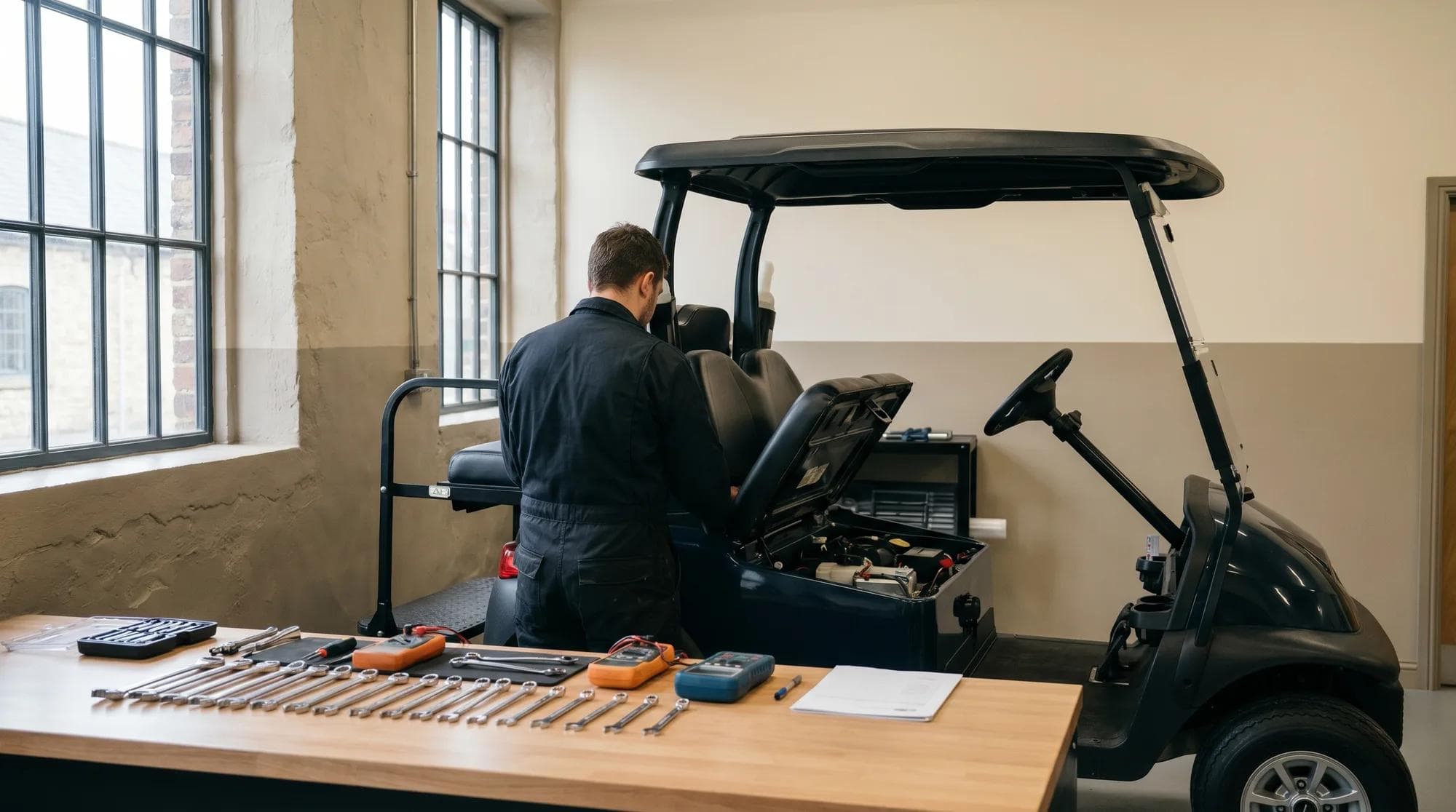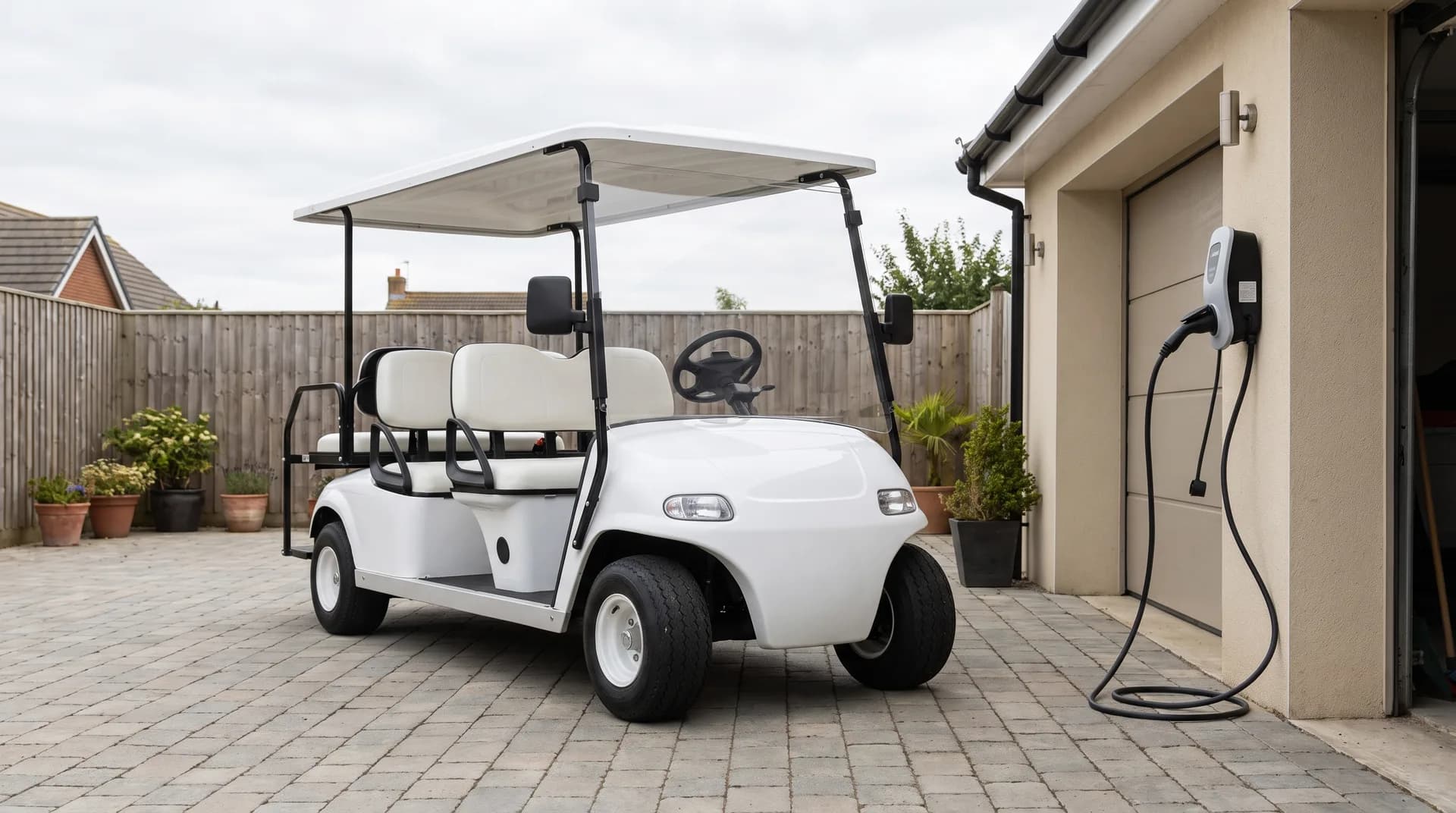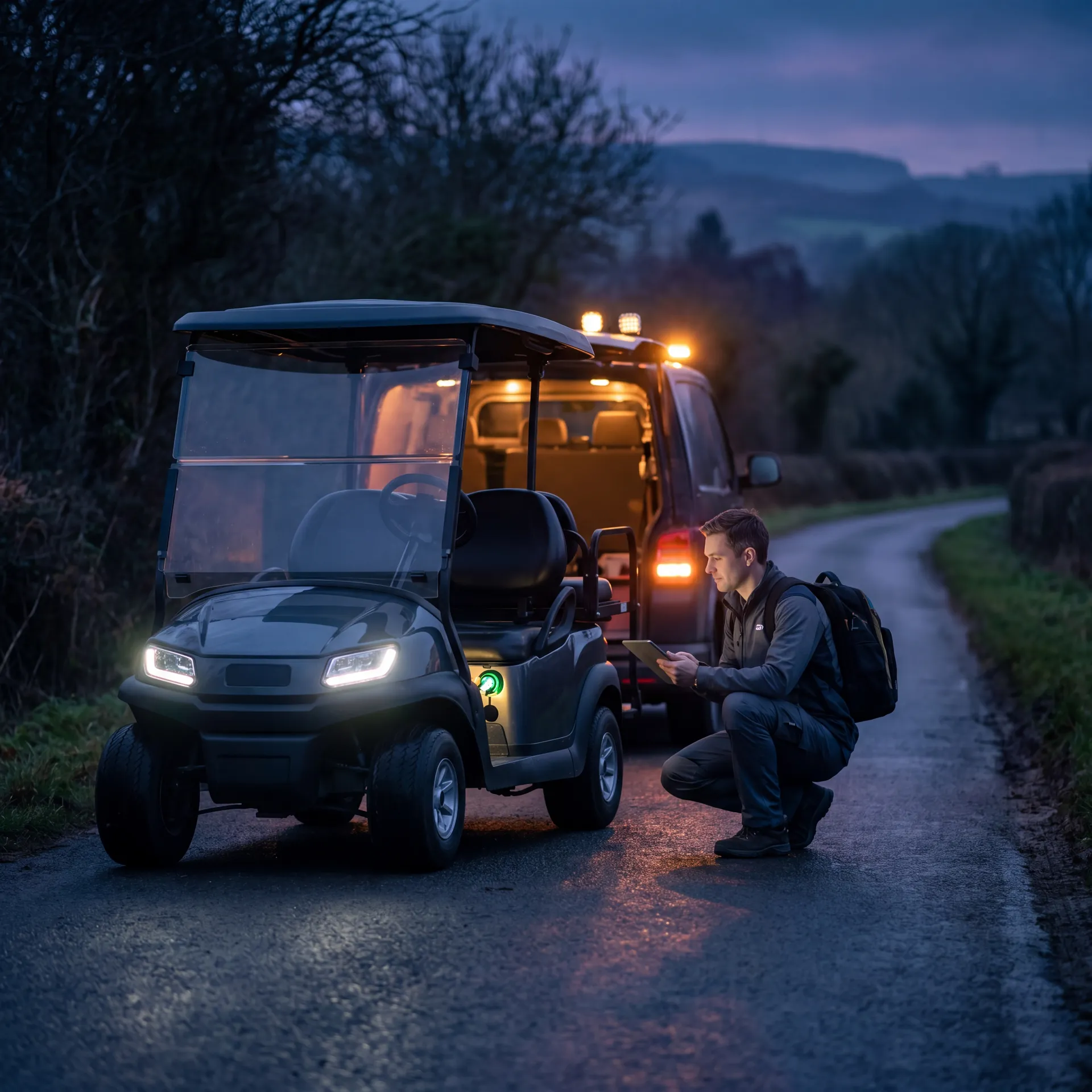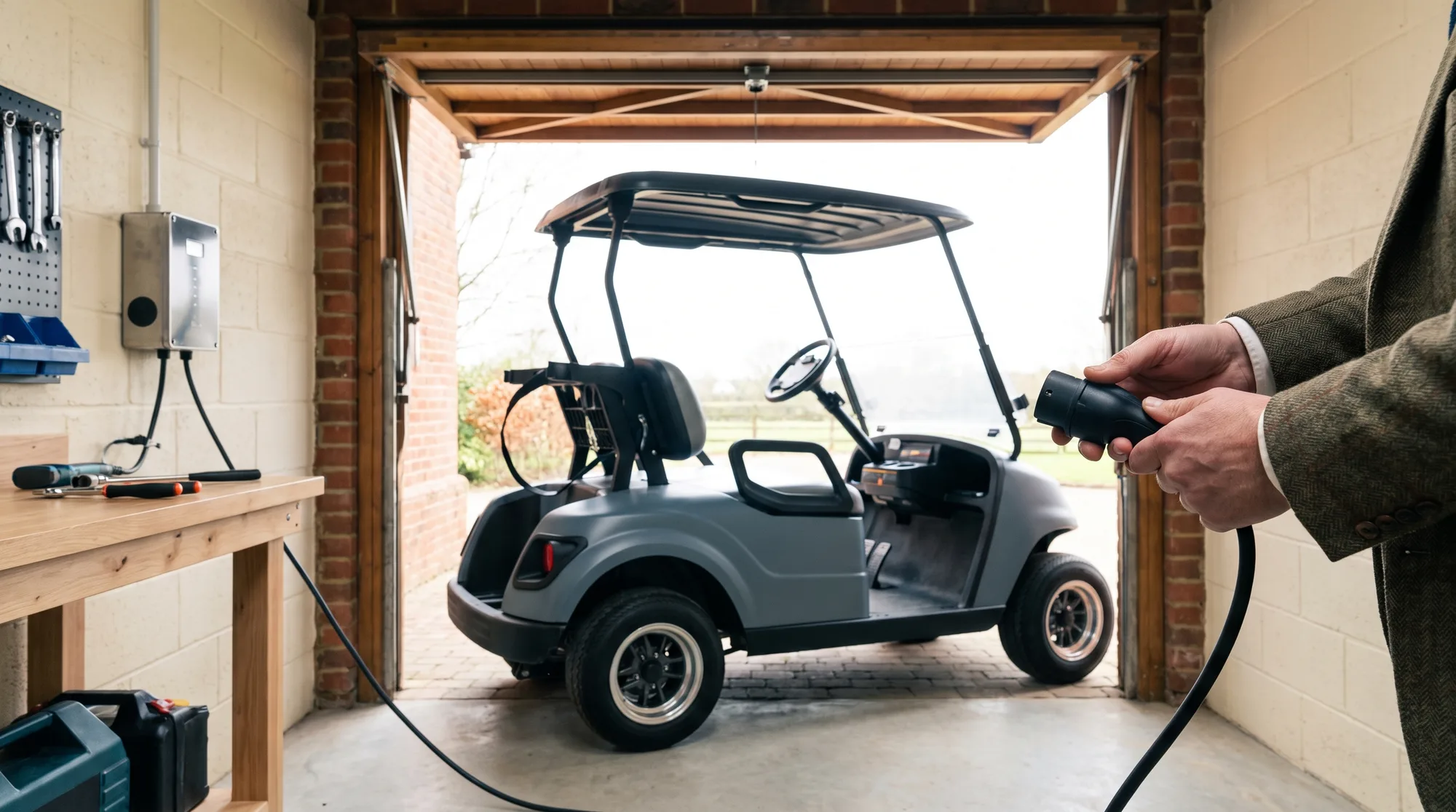
An electric cart that won't start feels like a big problem, but most of the time it is a small one wearing a big disguise. The same handful of causes come up again and again: a switch left in the wrong position, a pack that is flatter than it looks, a charger still plugged in, or a connection that has worked loose. This guide runs the 60-second checks first, because they solve the majority of cases, then works through the battery, solenoid and controller in order, and is clear about the point where an engineer should take over. The same logic applies whether you call it a cart or, as the Americans do, a golf cart.
- Check the key, run/tow switch and parking brake before anything else; in TOW the cart is deliberately dead.
- A pack that is very flat can look completely dead; put it on charge for 30 to 60 minutes before judging.
- Many golf carts will not drive while the charger is still connected, by design.
- A click with no movement points to the solenoid side; no click points to the pedal switch or selector.
- If a fuse or breaker trips more than once, stop and book an engineer rather than resetting it again.
The 60-second checks
Before you suspect anything expensive, rule out the controls. These take a minute and cost nothing.
- Key fully turned to ON, not resting between positions.
- Run/tow switch (usually under the seat) set to RUN. In TOW the cart is deliberately dead, and this is the single most common cause we see.
- Charger unplugged. Most modern golf carts lock out the drive while charging.
- Parking brake released and the forward/reverse selector firmly in gear, not sitting in a mid position.
- Battery charge. Plug the charger in for 30 to 60 minutes and look for its charging light; a very flat pack can take a minute to wake a smart charger.
Lights work but it won't drive
Lights and the display draw very little current, so a tired or partly flat pack can happily run them while having nothing left for the motor. If everything lights up but the cart will not move, charge fully and re-test before chasing anything else. If it still will not drive on a full charge, the fault sits further down the chain: the pedal switch, the solenoid, or the connections between the pack and the motor. Our guide to common golf cart faults explains why so many symptoms trace back to the battery and its connections.
It clicks but doesn't move
Listen carefully when you press the pedal. A single click from under the seat means the solenoid, the relay that connects the pack to the motor, is trying to do its job, but power is not getting through: usually a worn solenoid contact, a very low pack, or a poor connection. No click at all points earlier in the chain, to the pedal switch, the key switch or the selector. Noting which you hear is genuinely useful; it tells an engineer where to start before they arrive. Do not be tempted to bridge or bypass the solenoid; it exists to disconnect the pack safely.
It starts sometimes
Intermittent starting is almost always a connection problem: a terminal that has worked loose, corrosion building resistance, or a switch wearing out. With everything switched off and the key out, look over the battery terminals for dirt, looseness or the white and green fur of corrosion. Light surface dirt can be wiped away, but never undo high-current cables yourself. A cart that starts on some days and not others should be checked before it becomes a cart that cuts out while driving, which is the same fault in a more dangerous place.
It won't start after winter
A cart that went into the shed running and came out dead has usually just gone flat over the layup. Packs self-discharge while standing, lead-acid faster than lithium, and a deeply flat pack may be below the level at which a smart charger will engage, while a lithium pack's protection system may have switched itself off. Leave the charger connected for a few hours before concluding anything. Our guide to a cart not holding charge after winter covers the recovery steps in full.
When to call an engineer
Stop at the point the checks run out. If the cart still will not start after charging, if a main fuse or breaker trips a second time, or if you can hear the solenoid clicking without any drive, the fault is in the solenoid, controller or wiring, and that is engineer territory. Repeatedly resetting a tripping breaker risks damaging the very components you are trying to save. Switch off, remove the key, and book a visit.
Frequently asked questions
Why won't my golf cart start when the lights work?+
Lights draw far less current than the motor, so a partly flat or tired pack can run them while having nothing left to drive. Charge fully and re-test; if it still will not move, the pedal switch, solenoid or a connection needs testing.
My cart clicks but won't go. What does that mean?+
The click is the solenoid engaging, so the controls are working but power is not reaching the motor. It usually points to a worn solenoid, a very low pack or a poor connection, and it needs an engineer rather than a bypass.
Why is my cart completely dead in TOW?+
By design. The run/tow switch isolates the drive system so the cart can be towed or worked on safely. Set it back to RUN and it should wake.
It won't start after sitting all winter. Is the battery ruined?+
Not necessarily. Packs go flat while standing, and a deeply flat pack can take hours on the charger to wake, especially lithium with a protection system. If it will not recover after a few hours connected, have the pack tested.
Can I keep resetting the breaker if it trips?+
Reset it once. If it trips again, something downstream is drawing too much current, and repeated resets risk damage and heat. Stop and book an engineer.
Still won't start?
Book an engineer and we will diagnose the solenoid, controller and wiring properly, with a 24-hour priority call-out for vehicles off the road.
Related solutions
Ready to explore what we build?
See the vehicles and the setting this applies to, or get a tailored quote built around your site.

Ready to find the right golf cart?
Tell us how and where it will work and we will specify a vehicle and a tailored quote built around you. Every build comes with a 3-year warranty and a 24-hour priority call-out.
Our guides are written and reviewed by the Hawke Electric Vehicles team, the people who specify, build, deliver and support the vehicles. We focus on honest, practical advice and flag where a figure depends on the build rather than guessing.
More guides by Hawke