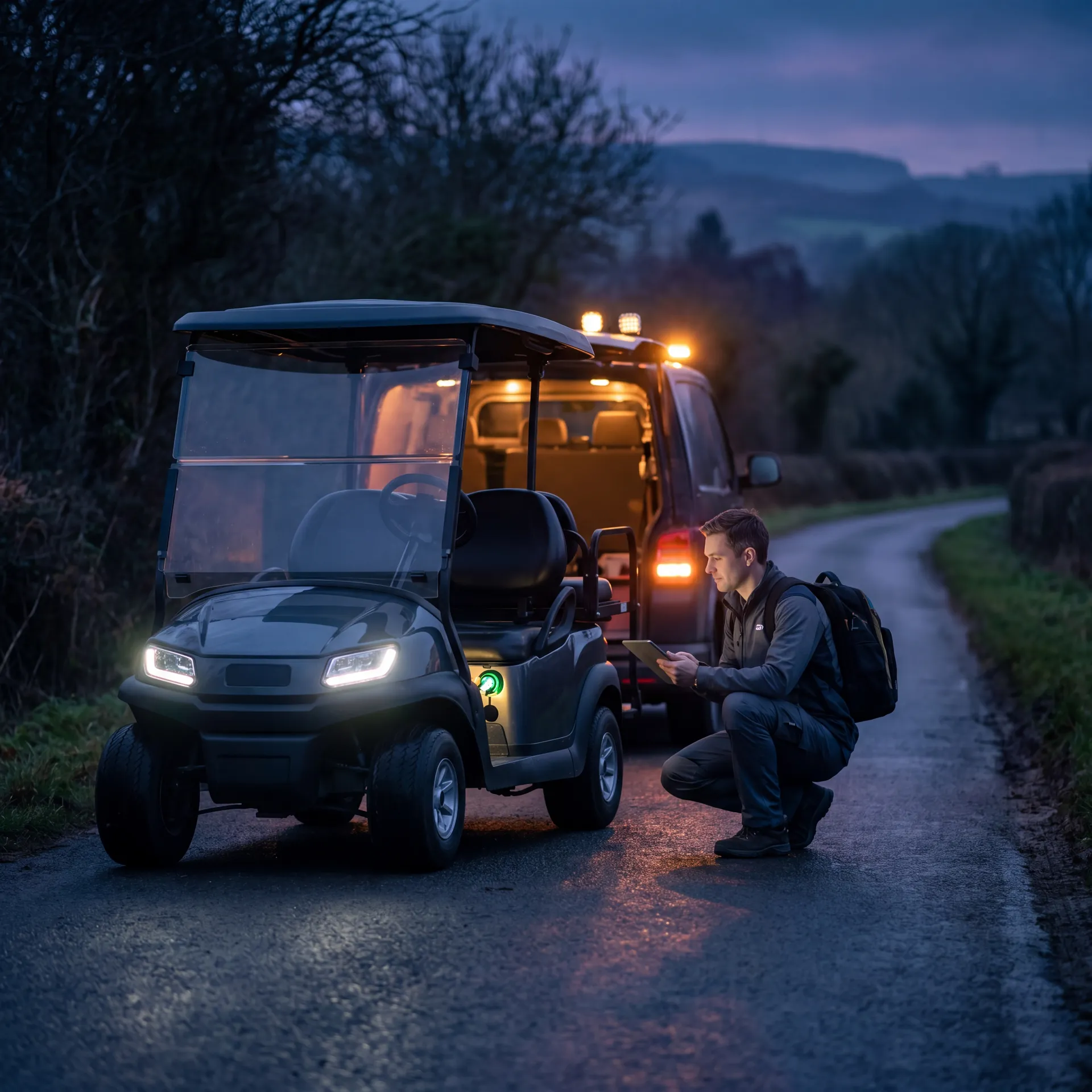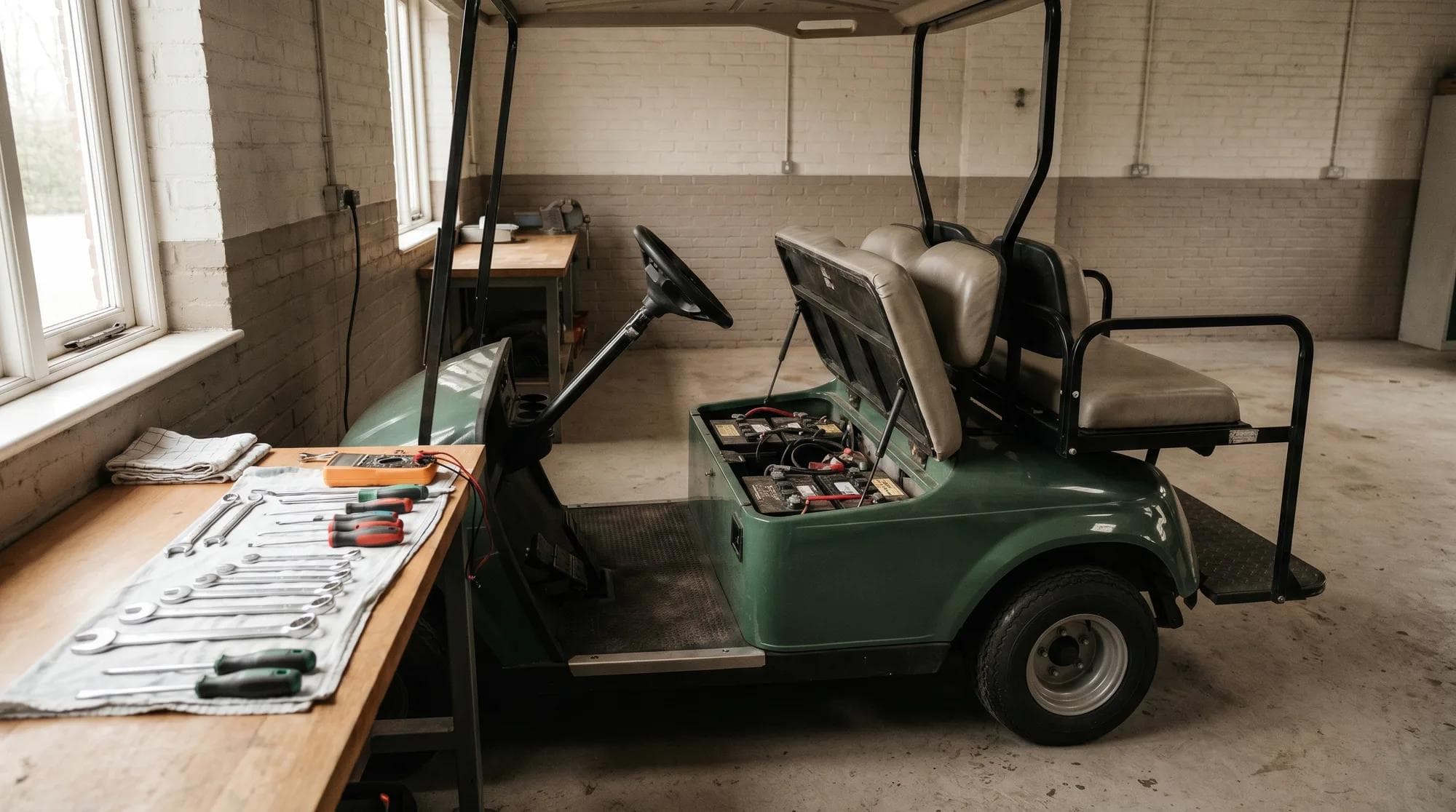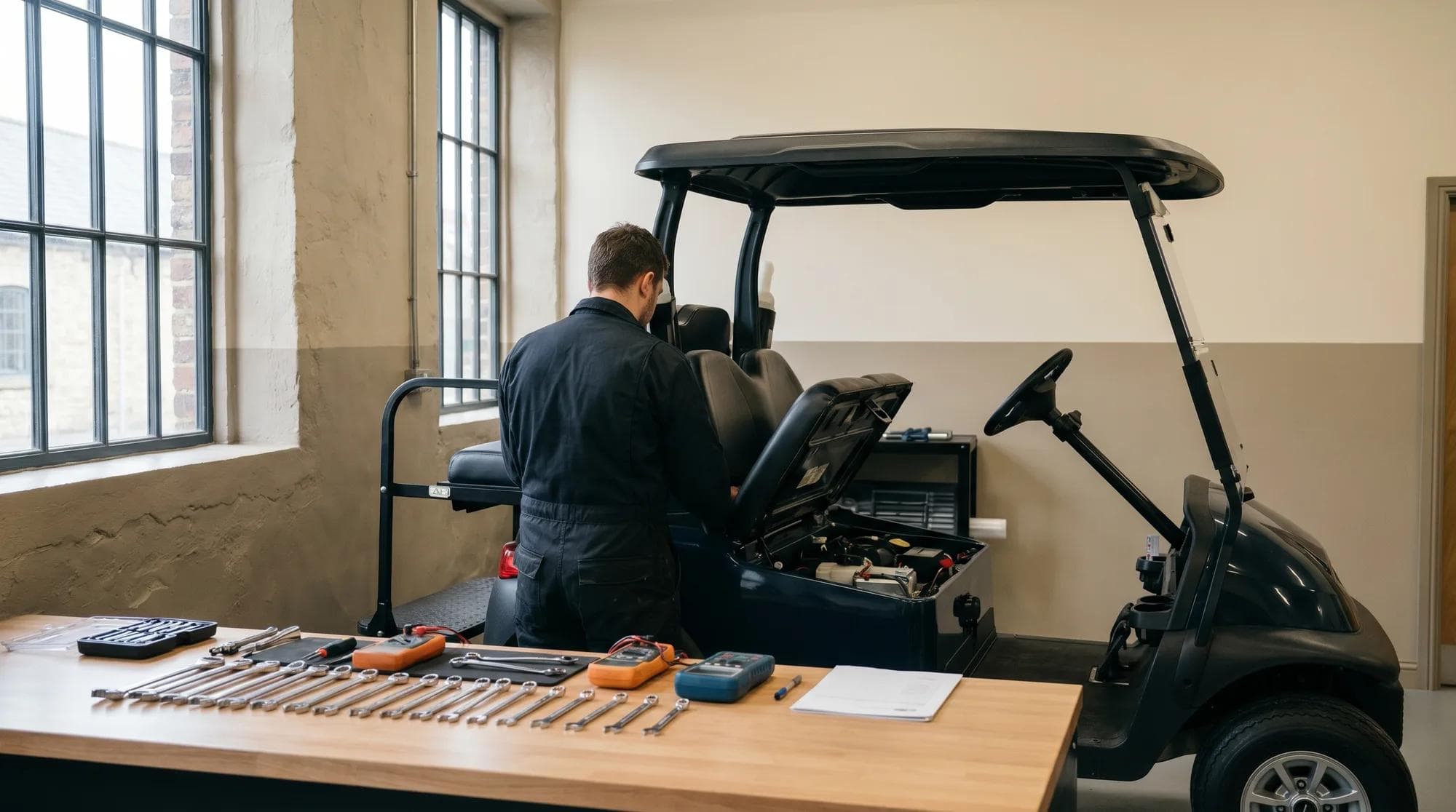
A hill is the hardest work an electric cart ever does, so it is where any weakness shows first. A cart that feels fine on the flat but slows, strains or bogs down on a climb is not necessarily broken: it may simply be under-charged, under-inflated or overloaded. But a hill is also where an ageing battery gives itself away, because a tired pack cannot hold its voltage under a heavy load. On the UK's hillier courses and sloping estates this is one of the most common complaints we hear, and it is usually straightforward to narrow down. Work through the checks below in order, from the free fixes to the ones that need an engineer.
- Charge to full and re-test first: even a slightly low battery noticeably affects hills.
- Under-inflated tires and a heavy load make every climb harder, so rule both out.
- An ageing battery sags under load, and a single weak cell drags the whole pack down.
- A speed cut on a long climb that recovers after a rest is usually normal thermal protection.
- A sudden or sharp loss of hill power is worth a battery and motor health check.
Start with charge, tires and load
Before suspecting a fault, remove the simple explanations. Charge the battery to full and repeat the same climb, because a pack that is only slightly down on charge loses hill performance long before it loses flat performance. Then check the tire pressures against the figure on the tire wall and set both sides equal: soft tires sap power everywhere, and most of all on a gradient. Finally, be honest about the load. A full complement of passengers plus bags on a steep, soft or wet surface will always feel slower than one person on dry tarmac, so compare like for like before judging the cart.
Why an ageing battery shows up on hills first
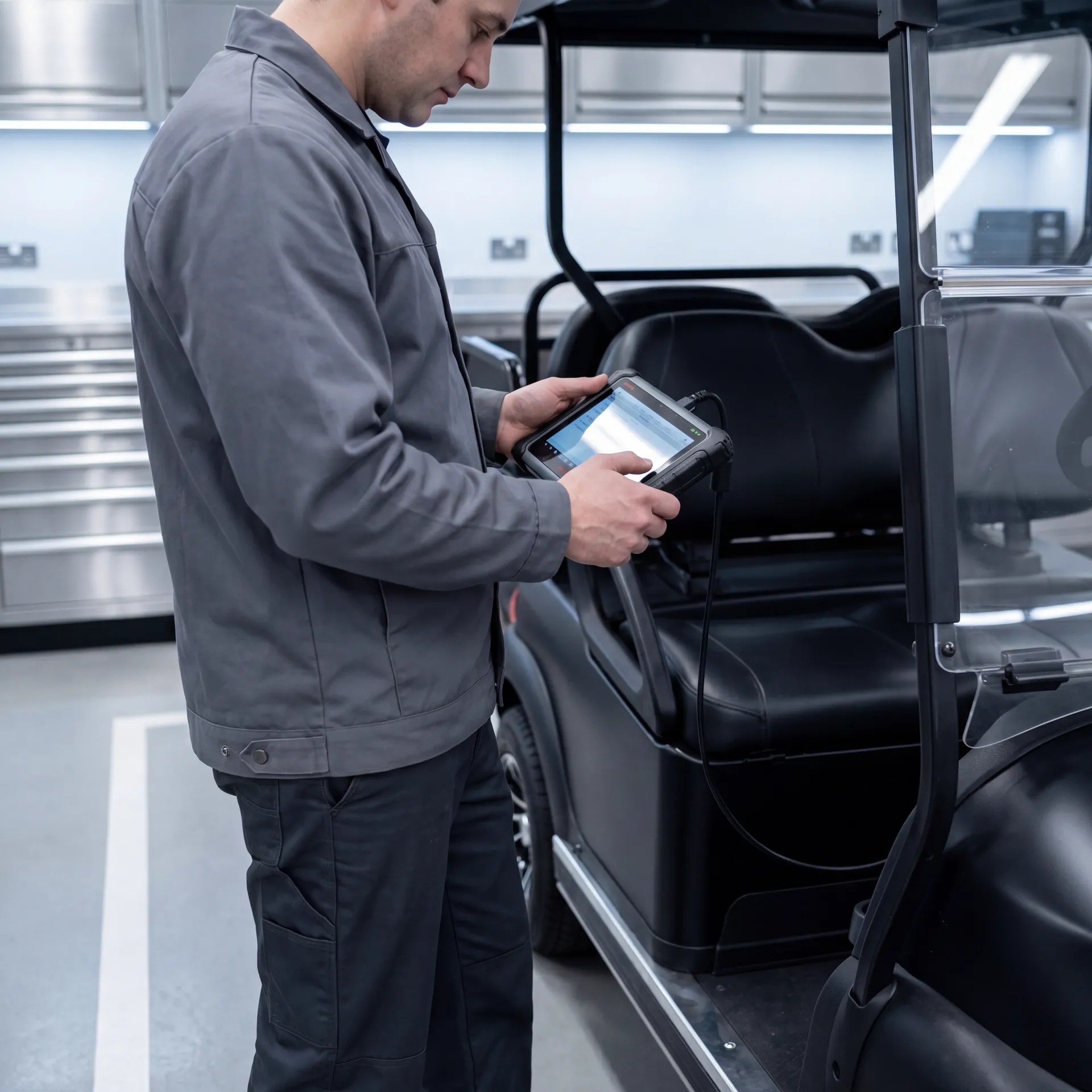
A climb demands far more current than the flat, and an older battery cannot supply that current without its voltage sagging. The controller sees the sag and delivers less power, so the cart slows exactly when you want it to pull. On a lead-acid set, one weak battery or cell is enough to drag the whole string down: the cart may charge normally and drive normally on the flat, then fall away badly the moment it works hard. If your cart is several years old and hills have gradually become a struggle, the pack is the first suspect, and a battery health check will confirm it. Our guides on when a battery needs replacing and lithium versus lead-acid cover what comes next.
Thermal cutback, motor wear and everything else
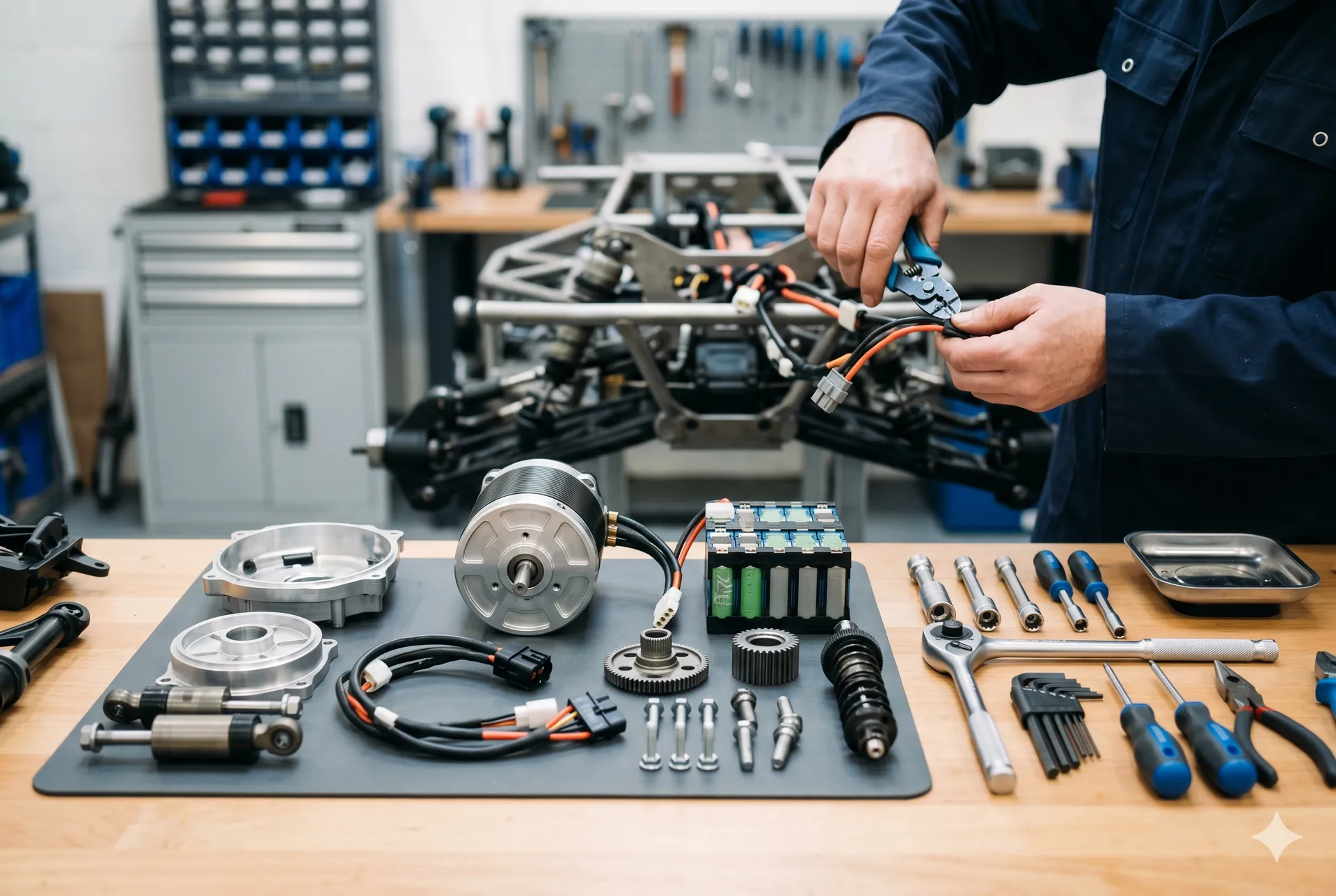
Long climbs also warm the motor and controller, and most modern golf carts protect themselves by cutting power when they get hot. If the cart slows near the top of a long gradient, then drives normally again after a few minutes' rest, that is protection doing its job rather than a fault, though a cart that hits it on modest hills may be overloaded or under-specified for the site. On older machines with brushed motors, worn brushes can also show as weak, uneven pulling under load. Both of those are engineer jobs: the motor and controller carry high currents and are not something to open up yourself.
Frequently asked questions
Why does my golf cart struggle uphill but drive fine on the flat?+
Hills demand far more current than flat ground, so anything marginal shows there first: a part-charged or ageing battery, soft tires, a heavy load, or a motor and controller warming up on a long climb. Charge fully, set tire pressures and lighten the load; if it still struggles, have the battery's health tested.
Can one bad battery cause weak hill performance?+
Yes. On a lead-acid set, a single weak battery or cell drags the whole pack's voltage down under load, so the cart can seem normal on the flat and fall away badly on a climb. An engineer can test each battery individually to find it.
My cart slows near the top of long climbs then recovers. Is that a fault?+
Usually not. Most controllers and motors reduce power when they run hot on a long climb, and performance returns once they cool. If it happens on modest hills or normal loads, though, have it checked, as the cart may be working harder than it should.
Will new tires or pressures really make a difference on hills?+
Correct pressures make a noticeable difference, and they are free. Under-inflated tires increase rolling resistance everywhere, and a gradient multiplies the effect. Check them cold, set both sides equal, and use the figure printed on the tire wall.
Hills getting harder? Have it checked
Our engineers test battery health, motor and controller and set the cart up properly for your site. Join a service plan or call us to book a visit.
Related solutions
Ready to explore what we build?
See the vehicles and the setting this applies to, or get a tailored quote built around your site.
Ready to find the right golf cart?
Tell us how and where it will work and we will specify a vehicle and a tailored quote built around you. Every build comes with a 3-year warranty and a 24-hour priority call-out.
Our guides are written and reviewed by the Hawke Electric Vehicles team, the people who specify, build, deliver and support the vehicles. We focus on honest, practical advice and flag where a figure depends on the build rather than guessing.
More guides by Hawke