An electric cart should pull away smoothly, because its controller meters power in a steady, predictable way. So when acceleration turns jerky, surging or hesitant, something in the chain between the pedal and the motor is sending a ragged signal or making a ragged connection. The good news is that the list of likely causes is short. The important caveat is that a cart which cuts in and out unpredictably is not safe to keep using, especially near slopes, water or people, so treat this as a diagnose-then-book job rather than a live-with-it quirk.
- A worn throttle sensor is the classic cause of jerky or hesitant acceleration.
- Loose or corroded battery connections cause power to drop in and out over bumps.
- Worn direction-switch contacts and controller faults produce similar symptoms.
- Note the pattern: pedal position, bumps or warmth each point to a different culprit.
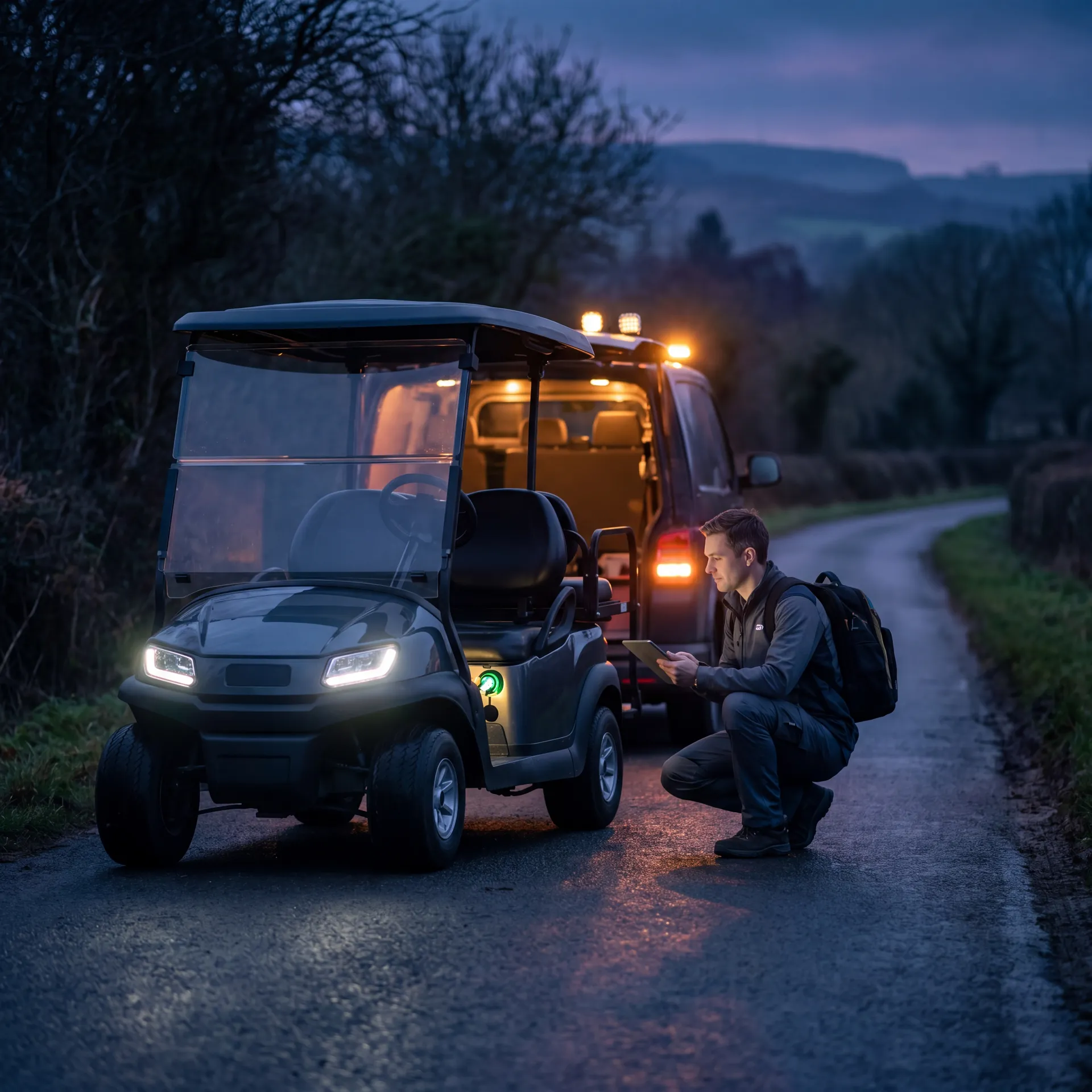
- Stop using a cart that cuts out unpredictably and book an engineer.
The throttle sensor: the usual suspect
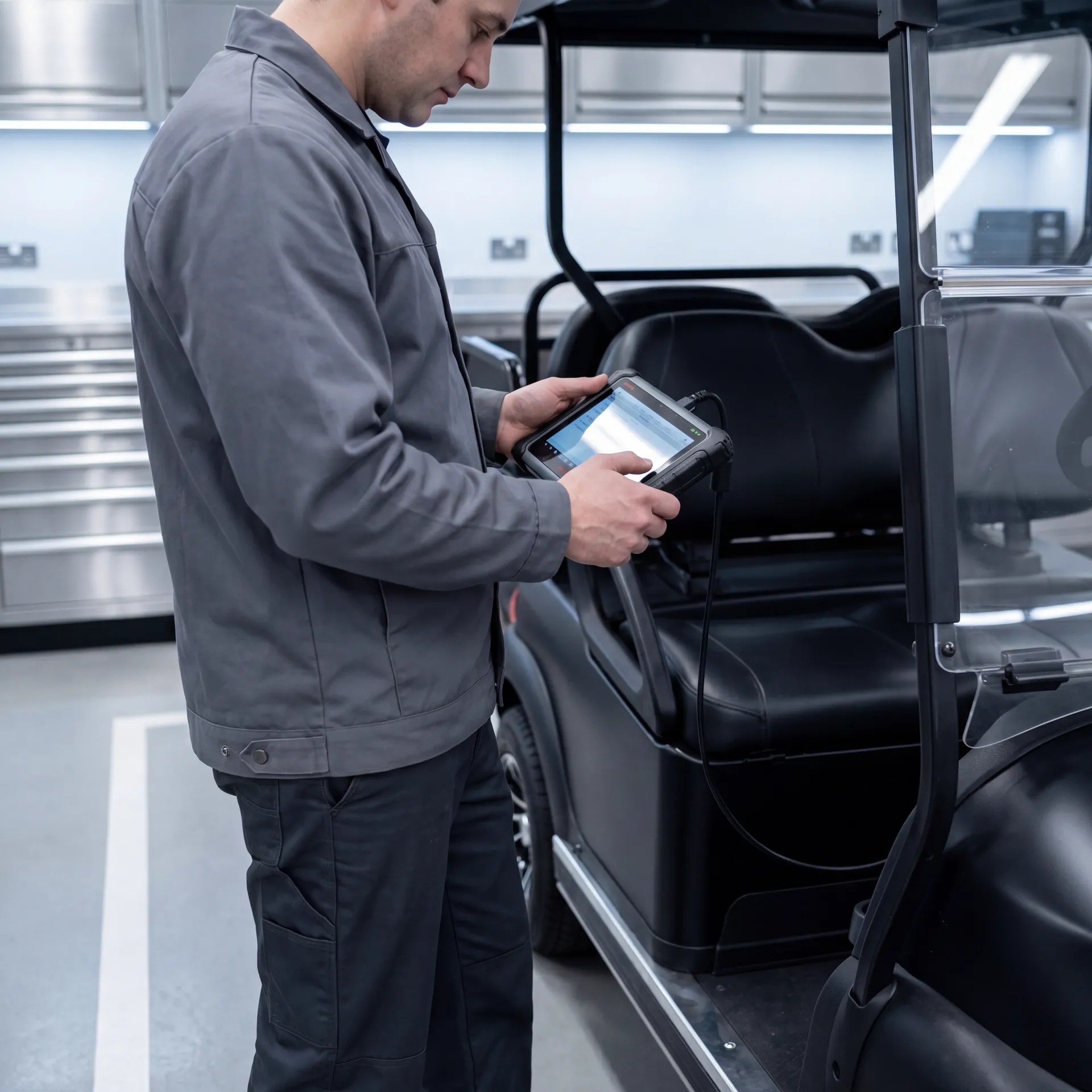
The accelerator pedal does not feed the motor directly: it moves a sensor, either a potentiometer or an inductive sensor depending on the model, which tells the controller how much power you are asking for. As a potentiometer wears it develops dead spots, so the signal jumps rather than sweeps, and the cart jerks or surges at particular pedal positions. If the jerkiness always happens at the same point in the pedal travel, the throttle sensor is the prime suspect. Replacing or adjusting it is a quick job for an engineer, but it needs setting up correctly against the controller, so it is not a guess-and-fit part.
Connections, the direction switch and the controller
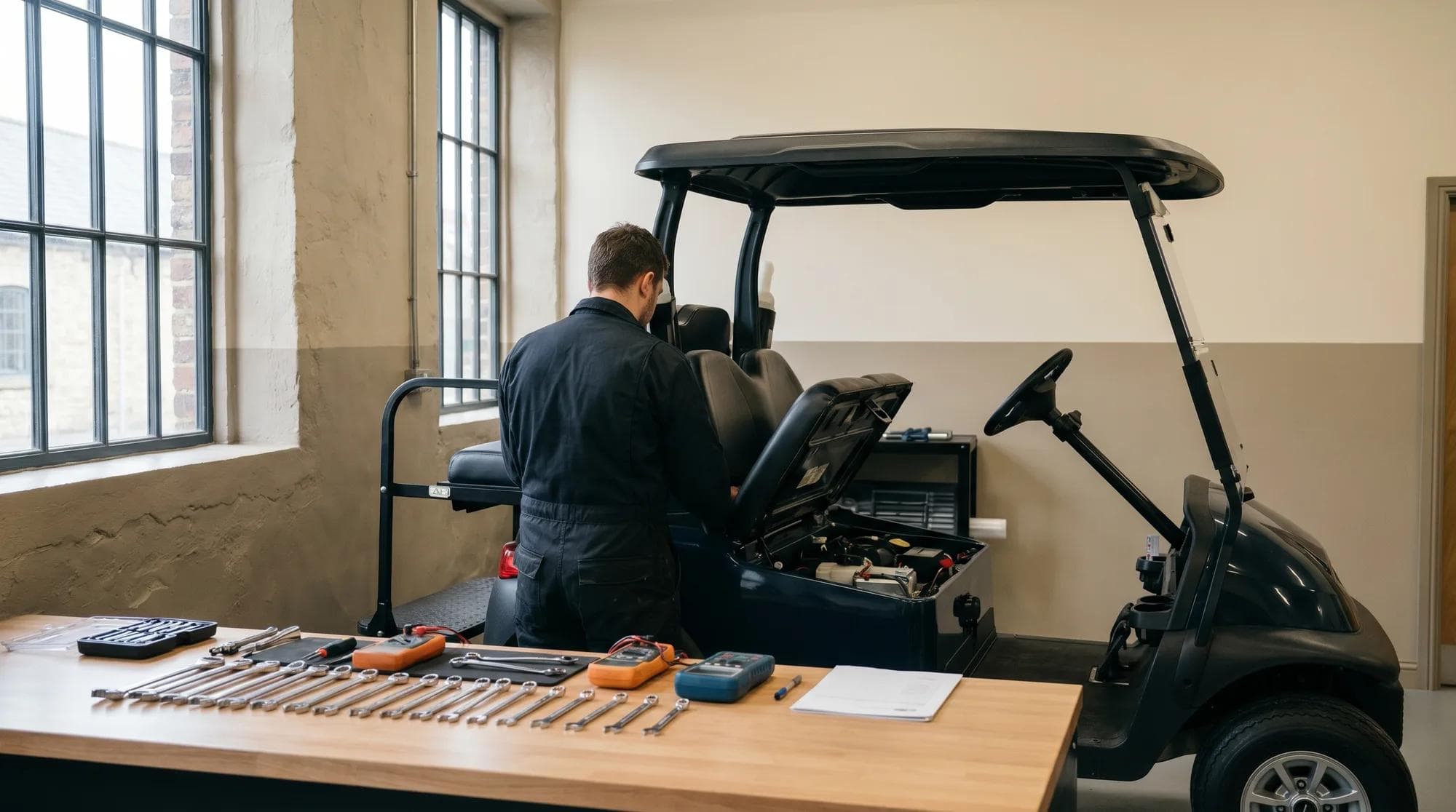
If the hesitation is random rather than pedal-related, think connections. A loose or corroded battery terminal or motor cable makes and breaks contact as the cart moves, which shows as power dropping in and out, often worst over bumps. With the cart switched off and the key removed, look over the visible connections for anything loose, dirty or green with corrosion, but do not undo high-current cables yourself: report what you find instead. The forward-reverse switch is another wear point, because its contacts carry real current on many models and burn or pit with age, giving hesitant or intermittent drive in one or both directions. And if the pedal, connections and switch all check out, the controller itself may be at fault, which is firmly an engineer's diagnosis. Our overview of common cart faults puts these in context.
Read the pattern before you call
The most useful thing you can do costs nothing: note exactly when the jerking happens. At one pedal position points to the throttle sensor. Over bumps points to a loose connection. Only when warm points to a component breaking down with temperature, often the controller. Only in one direction points to the direction switch. That one sentence of observation can save an engineer a good deal of testing time, and it is exactly what our booking form asks for.
Frequently asked questions
Why does my golf cart jerk when I press the accelerator?+
Most often the throttle sensor under the pedal has worn and is sending a jumpy signal to the controller. Loose battery or motor connections, worn forward-reverse switch contacts and controller faults cause similar symptoms. The pattern of when it jerks tells you which is likely.
Is jerky acceleration dangerous?+
It can be, because the cart may surge or lose power unpredictably. Stop using it around slopes, people or water and have it inspected. Smooth, predictable power delivery is a safety feature, and jerky drive means that chain is compromised.
Can I fix a throttle sensor myself?+
We do not recommend it. The sensor has to be matched and calibrated to the controller, and a badly set throttle can leave the cart creeping or surging. It is a quick, inexpensive job for an engineer to do properly.
Why does it only jerk going over bumps?+
That pattern points strongly to a loose connection, often a battery terminal or motor cable making and breaking contact as the cart moves. Switched off, look for anything visibly loose or corroded, but leave high-current cables to an engineer.
Jerky drive? Book it in
An engineer can test the throttle sensor, connections and controller in one visit and put the smoothness back. Join a service plan or call us to arrange it.
Related solutions
Ready to explore what we build?
See the vehicles and the setting this applies to, or get a tailored quote built around your site.

Ready to find the right golf cart?
Tell us how and where it will work and we will specify a vehicle and a tailored quote built around you. Every build comes with a 3-year warranty and a 24-hour priority call-out.
Our guides are written and reviewed by the Hawke Electric Vehicles team, the people who specify, build, deliver and support the vehicles. We focus on honest, practical advice and flag where a figure depends on the build rather than guessing.
More guides by Hawke