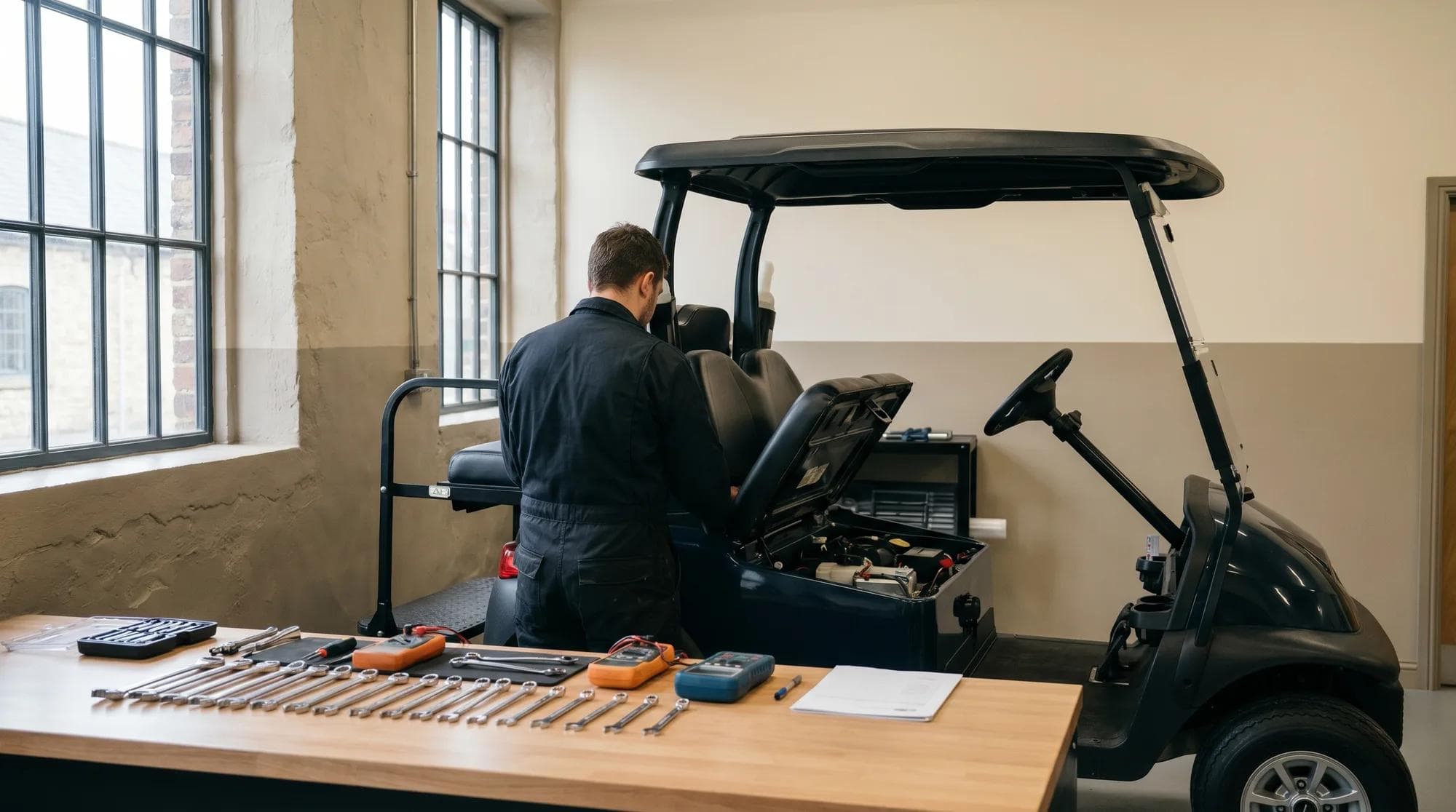
Electric golf carts are quiet machines, which makes them easy to diagnose by ear: a new noise stands out, and each kind of noise points somewhere specific. The same goes for feel through the wheel, because pulling, heaviness, shaking and bouncing each have their own short list of causes. This guide matches symptom to likely cause so you can describe the problem well and know how urgent it is. One rule sits above everything else here: brakes and steering are safety-critical, so any fault in either means stop driving and book an engineer, not adjust and hope.
- Pin down where the noise comes from and when it happens: that is the most useful diagnostic fact.
- Grinding, especially on braking, means stop driving and book an engineer immediately.
- Pulling to one side is most often tire pressures, then alignment or worn bushes.
- Shaking at speed points to tires or wheels; bouncing points to worn suspension.
- Never attempt brake or steering work yourself, and never go under a cart on just a jack.
Diagnosing by noise
Start by pinning down where the noise comes from, front, rear or under the seat, and when it happens: on drive, on braking, on turning or over bumps. A short phone video with sound is worth a page of description. Then match it against the usual suspects below. One harmless cause worth ruling out first: a stone caught in a tire tread, a loose panel or a trapped strap produces impressive noises for free, so do a quick visual check before worrying.
- Likely cause
- Motor bearings or gearbox wear
- What to do
- Book an inspection soon; note if it is getting louder
- Likely cause
- Axle or drive joint wear
- What to do
- Book an inspection; avoid tight fast turns meanwhile
- Likely cause
- Brake pads or shoes worn through, or debris
- What to do
- Stop driving now and book an engineer
- Likely cause
- Worn or glazed brake linings, or surface dust
- What to do
- Take it out of use and have the brakes inspected
- Likely cause
- Worn suspension bushes or loose mounting
- What to do
- Book an inspection; note which corner it comes from
| Likely cause | What to do | |
|---|---|---|
| Whine that rises with speed | Motor bearings or gearbox wear | Book an inspection soon; note if it is getting louder |
| Click or tick on turns | Axle or drive joint wear | Book an inspection; avoid tight fast turns meanwhile |
| Grinding, especially when braking | Brake pads or shoes worn through, or debris | Stop driving now and book an engineer |
| Squeal on braking | Worn or glazed brake linings, or surface dust | Take it out of use and have the brakes inspected |
| Clunk or knock over bumps | Worn suspension bushes or loose mounting | Book an inspection; note which corner it comes from |
Pulling, heavy steering and wandering
A cart that drifts to one side when you relax your grip is most often telling you about its tires: uneven pressures pull a cart surprisingly hard, so set both fronts equal, to the figure on the tire wall, before suspecting anything mechanical. If it still pulls on level ground, the front toe alignment is out or a steering or suspension bush has worn, both of which an engineer can measure and correct. Uneven tire wear, one edge scrubbing faster than the other, is the giveaway that alignment has been out for a while. Steering that has become heavy or notchy suggests wear or dryness in the steering gear, and a wheel with a lot of free play before the wheels respond means worn joints. Play, heaviness and pulling all get worse, not better, so book them rather than live with them.
Shaking and bouncing
Shaking or vibration that appears at speed usually comes from the wheels and tires: uneven wear, a flat-spotted or damaged tire, or a bent rim after hitting a kerb. Bouncing, where the cart keeps oscillating after a bump instead of settling, points to tired shock absorbers or suspension bushes. Neither is an emergency in the way brakes are, but both accelerate wear on everything around them and spoil the ride, and a vibration that is getting worse should be inspected before it becomes a failure. If you need to look at a wheel yourself, only ever lift the cart on proper stands or ramps on firm level ground; never rely on a jack alone.
Frequently asked questions
Why does my golf cart pull to one side?+
Check tire pressures first: uneven pressures are the most common cause and free to fix. If it still pulls on level ground, the alignment is out or a steering or suspension bush has worn, which an engineer can measure and correct. Uneven tire wear is the sign it has been out for a while.
What does a whining noise from my cart mean?+
A whine that rises and falls with speed usually points to motor bearings or gearbox wear. It is rarely an emergency, but it will get louder and dearer if ignored, so book an inspection and mention whether it has been getting worse.
My cart grinds when I brake. Can I keep using it?+
No. Grinding on braking usually means the friction material has worn through and metal is contacting metal, so stopping power is compromised. Take the cart out of use immediately and book an engineer. Brake work should never be attempted yourself.
Why does my cart bounce or feel loose over bumps?+
Continued bouncing after a bump points to worn shock absorbers, and clunks or looseness point to worn suspension bushes. Neither improves on its own, and both increase wear elsewhere, so have the suspension inspected.
What should I tell the engineer when I book?+
Where the noise or symptom comes from, when it happens, and whether it is getting worse. A short phone video with sound attached to your booking often lets us identify the fault and bring the right parts first time.
Noise or steering worry? Don't drive on it
Brakes and steering are engineer-only work. Book a call-out or join a service plan and we will diagnose it properly, with the right parts on the van.
Related solutions
Ready to explore what we build?
See the vehicles and the setting this applies to, or get a tailored quote built around your site.

Ready to find the right golf cart?
Tell us how and where it will work and we will specify a vehicle and a tailored quote built around you. Every build comes with a 3-year warranty and a 24-hour priority call-out.
Our guides are written and reviewed by the Hawke Electric Vehicles team, the people who specify, build, deliver and support the vehicles. We focus on honest, practical advice and flag where a figure depends on the build rather than guessing.
More guides by Hawke