If your staff use golf carts at work, those golf carts are work equipment under the Provision and Use of Work Equipment Regulations 1998 (PUWER), and the law expects them to be suitable for the job, maintained in efficient working order, inspected where risk demands it, and used only by people with adequate training. The chargers count too: as portable electrical equipment they fall under the Electricity at Work Regulations 1989, which is where in-service inspection and testing (what most people call PAT testing) comes in.
None of this requires a consultant on retainer. What it requires is a modest, well-kept file of records, because in health and safety law the doing and the proving are almost the same thing. What PUWER actually demands of a cart fleet, why LOLER doesn't apply, how often chargers need testing, the extra duties hire operators owe the public, and exactly what a compliant compliance file looks like: it's all below.
- Golf Carts used by employees at work are work equipment under PUWER 1998: suitable, maintained, inspected and restricted to trained users.
- LOLER does not apply to standard golf carts, because they carry rather than lift. No statutory lifting examinations are needed.
- Chargers need in-service inspection and testing (PAT) under the Electricity at Work Regulations 1989, at a risk-based frequency rather than a fixed legal interval.
- Operators hiring golf carts to the public owe duties under section 3 of the Health and Safety at Work Act 1974 and occupiers' liability law.
- A compliant file: maintenance log per vehicle, pre-use check sheets, training records, charger test records and risk assessments reviewed annually.
What does PUWER actually require of a cart fleet?
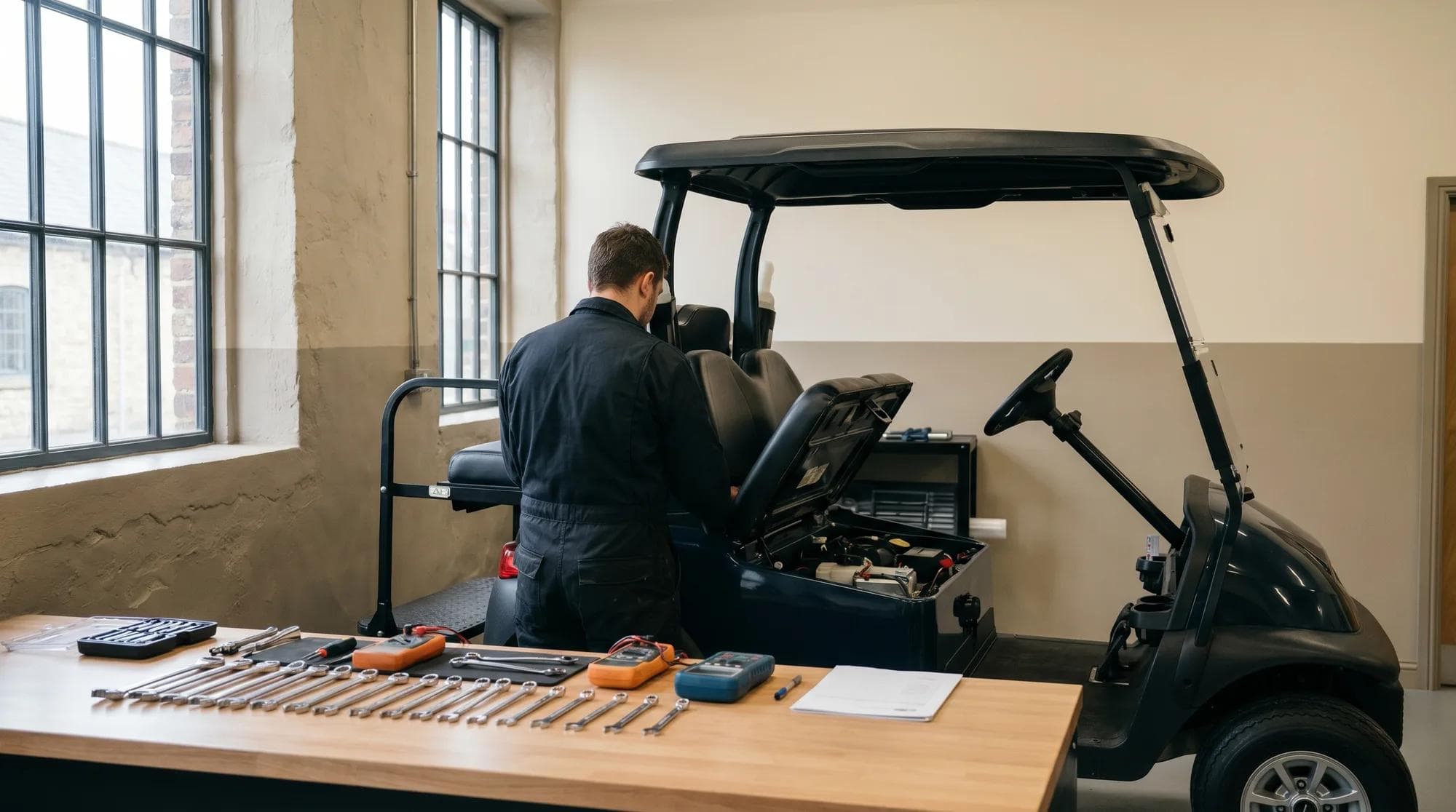
PUWER 1998 applies to any equipment provided for use at work, and a greenkeeper's cart, a hotel porter's shuttle or a marshal's cart all qualify. The regulations boil down to four duties. The equipment must be suitable for the task and the conditions (a standard cart on a 1-in-3 wet grass bank isn't). It must be maintained in efficient working order, which in practice means a planned maintenance regime rather than fix-it-when-it-breaks. It must be inspected at suitable intervals where deterioration could create danger. And its use must be restricted to people who've received adequate training, information and instruction.
Notice what's missing: no certificates, no statutory test, no government inspector signing anything. PUWER is self-managed, which is both its convenience and its trap. Nobody checks your compliance until something goes wrong, and then everything gets checked at once. The clubs that come through an HSE investigation cleanly are the ones who can put a maintenance log, a training record and a signed pre-use check sheet on the table within the hour. Common failure points to design your checks around are covered in our guide to common golf cart faults.
Does LOLER apply to golf carts?
No. The Lifting Operations and Lifting Equipment Regulations 1998 cover equipment that lifts or lowers loads, such as hoists, cranes and tail lifts. A standard cart carries people and kit at ground level; it doesn't lift, so LOLER's thorough-examination regime doesn't apply. The exception would be a vehicle fitted with lifting attachments, such as a crane arm on a utility conversion, where the attachment itself would fall under LOLER. For a normal fleet, strike it off the worry list.
Chargers and PAT: what the law really says
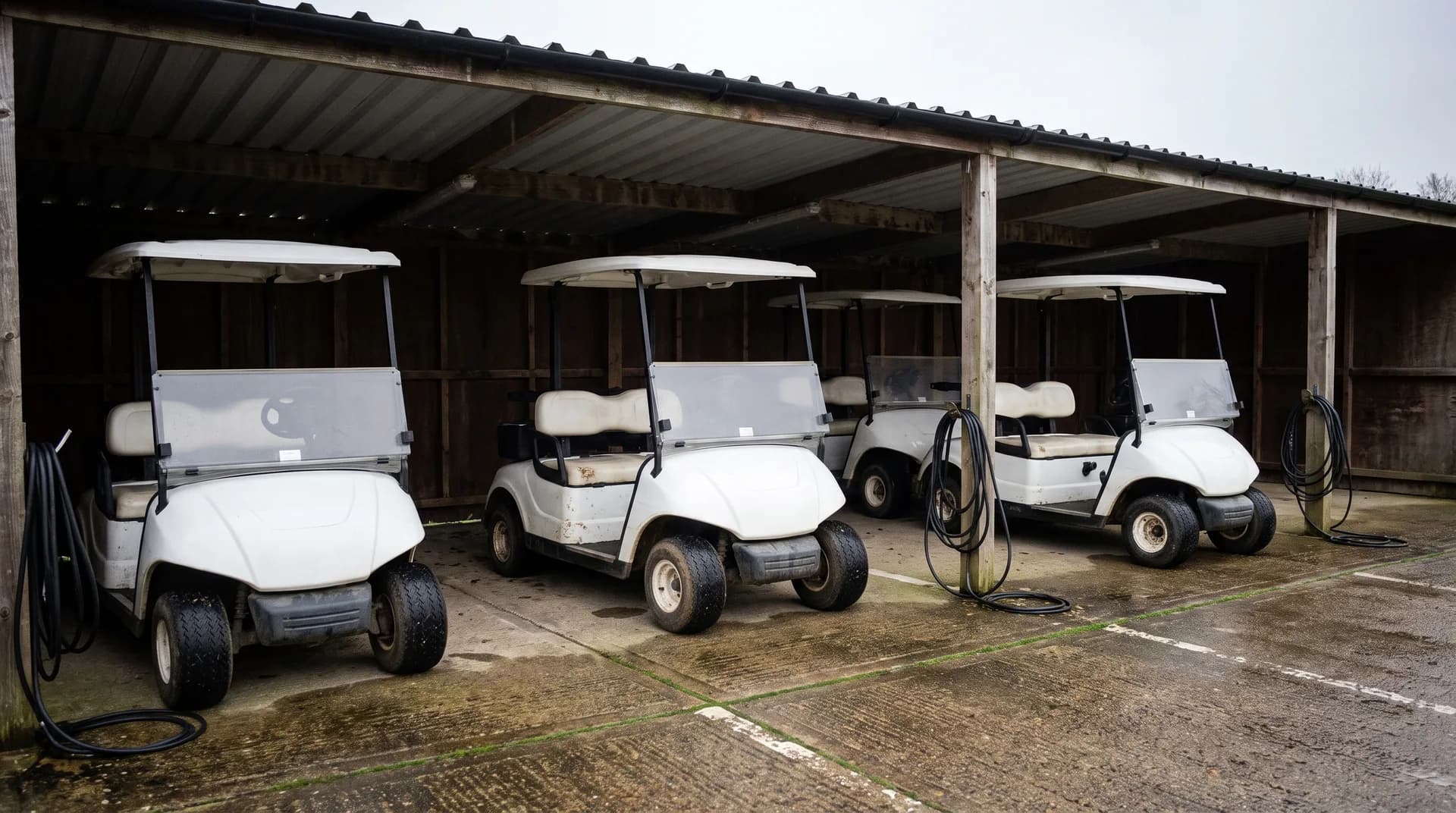
The Electricity at Work Regulations 1989 require electrical systems to be maintained so far as reasonably practicable to prevent danger, and cart chargers, being plugged-in portable equipment that lives in damp sheds and gets dragged across floors, sit squarely in scope. The familiar answer is PAT testing, though the HSE's own language is 'in-service inspection and testing', and crucially there is no legally fixed interval. Frequency is risk-based: a charger in a dry, dedicated charging room might justify formal testing every couple of years with regular user checks in between, while chargers in a busy, damp maintenance shed sensibly get a formal combined inspection and test every 6 to 12 months.
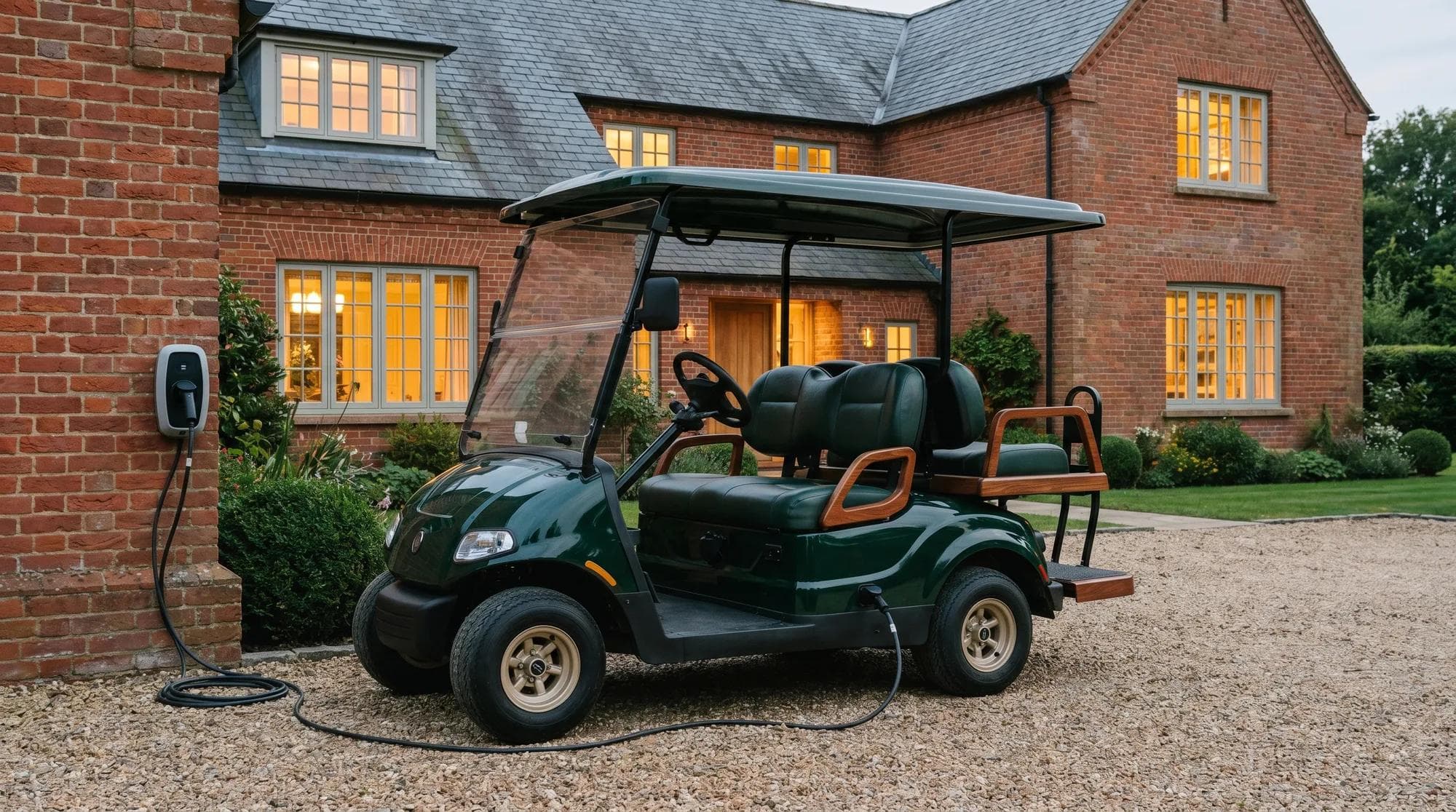
The routine that works for most fleets is a quick user check at every use (look at the cable, plug and casing before plugging in), a documented formal visual inspection periodically, and combined inspection and testing by a competent person at the interval your risk assessment sets. Label each charger with its test date, keep the register in the compliance file, and take damaged units out of service immediately with a tagged fault note. Charging areas deserve their own line in the risk assessment too: ventilation for lead-acid gassing, RCD protection and no cable runs across walkways, points we cover in our guide to charging an electric cart properly.
Hiring to the public? Your duties widen
PUWER covers your employees, but a club or operator hiring golf carts to visitors owes duties beyond the workforce. Section 3 of the Health and Safety at Work etc. Act 1974 requires you to conduct your undertaking so that people who aren't your employees aren't exposed to risks to their health and safety, and occupiers' liability law adds a duty of care to everyone on your land. In cart terms that means hire vehicles must be maintained to the same standard as staff vehicles, hirers need basic instruction (controls, braking, where not to drive), conditions like driver age and licence requirements should be applied consistently, and known hazards, such as steep banks or paths closed in the wet, need managing and signing.
- What it contains
- Scheduled servicing, repairs, defects found and closed, parts fitted, battery checks
- Typical frequency
- Serviced to schedule; every intervention logged as it happens
- What it contains
- Brakes, steering, tires, battery state, lights, seat latches; signed by the user
- Typical frequency
- Daily, or before each use in hire operations
- What it contains
- Who's authorised to drive, what training they had, refresher dates
- Typical frequency
- On induction; refreshed and reviewed annually
- What it contains
- User checks, formal visual inspections, combined test results, fault tags
- Typical frequency
- Risk-based; commonly 6 to 24 months for formal tests
- What it contains
- Cart use, charging areas, terrain hazards, public hire arrangements
- Typical frequency
- Reviewed annually and after any incident or change
| What it contains | Typical frequency | |
|---|---|---|
| Maintenance log (per vehicle) | Scheduled servicing, repairs, defects found and closed, parts fitted, battery checks | Serviced to schedule; every intervention logged as it happens |
| Pre-use check sheets | Brakes, steering, tires, battery state, lights, seat latches; signed by the user | Daily, or before each use in hire operations |
| Training records | Who's authorised to drive, what training they had, refresher dates | On induction; refreshed and reviewed annually |
| Charger test register | User checks, formal visual inspections, combined test results, fault tags | Risk-based; commonly 6 to 24 months for formal tests |
| Risk assessments | Cart use, charging areas, terrain hazards, public hire arrangements | Reviewed annually and after any incident or change |
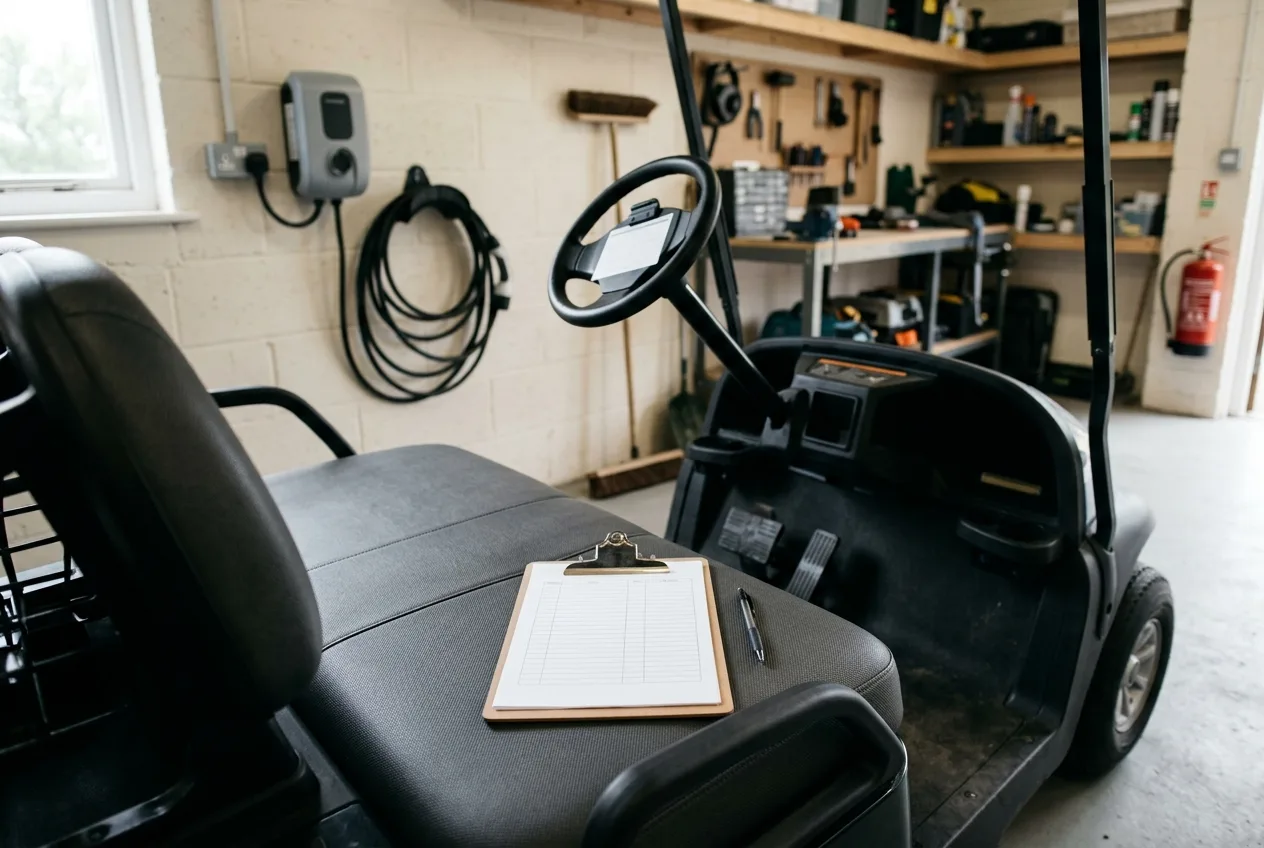
What a compliant file looks like
- One maintenance log per vehicle, identified by serial or fleet number, kept up to date
- Pre-use check sheets, signed and dated, filed by month
- Authorised driver list with training and refresher records
- Charger register: each unit labelled, test dates and results recorded
- Risk assessments for cart use, charging areas and public hire, with an annual review date
- Hire agreement template and hirer briefing sheet (hire operators)
- Insurance certificates and any manufacturer service documentation
- Defect reporting procedure: how faults are tagged, quarantined and signed back into service
Making it stick without drowning in admin
The whole regime above is perhaps ten minutes a day of checks plus a few hours a quarter of servicing and filing, and most of it you're arguably doing informally already. The gap at most venues isn't effort, it's evidence. Assign one named person to own the file, put the annual reviews in the calendar, and make the pre-use sheet physically live with the key so nobody drives without touching it. Larger operations, and clubs whose fleets work hard, often hand the maintenance and record-keeping side to a service partner; it's the model behind our work with golf clubs running electric fleets, where the club keeps the daily checks and the partner owns servicing, defects and the paper trail.
Frequently asked questions
Are golf carts covered by PUWER?+
Yes, when used by employees at work. PUWER 1998 requires them to be suitable for the task, maintained in efficient working order, inspected where deterioration creates risk, and driven only by adequately trained, authorised users.
Do cart chargers need PAT testing?+
They need in-service inspection and testing under the Electricity at Work Regulations 1989. There's no fixed legal interval; frequency is risk-based, commonly formal testing every 6 to 24 months depending on the environment, plus user checks before each use.
How often should a cart fleet be inspected?+
Daily pre-use checks by drivers, plus planned maintenance to the manufacturer's schedule and periodic documented inspections. The exact intervals come from your risk assessment; hard-worked hire fleets inspect more often than a groundskeeper's single cart.
Does LOLER apply to golf carts?+
No. LOLER covers lifting equipment, and a standard cart carries rather than lifts, so no statutory thorough examinations apply. Only lifting attachments fitted to a utility vehicle would bring LOLER into play.
What records must a hire operator keep?+
Per-vehicle maintenance logs, signed pre-use checks, hirer briefing and agreement records, charger test records, risk assessments and insurance documents. Under HSWA section 3 you owe safety duties to the public, and the records evidence you met them.
Build the file this month, not after an incident. Start with one vehicle log, one check sheet and one risk assessment review, name an owner, and let the routine bed in. If the servicing and paperwork side is the bit your team won't sustain, contract it out through a fleet service plan and keep only the daily checks in-house; that split survives staff turnover, which is where most compliance regimes quietly die.
Want the maintenance side handled?
Hawke service plans give fleets scheduled servicing, defect repair and the documented paper trail PUWER expects, with UK-wide engineers and 24-hour call-out.
Related solutions
Ready to explore what we build?
See the vehicles and the setting this applies to, or get a tailored quote built around your site.

Ready to find the right golf cart?
Tell us how and where it will work and we will specify a vehicle and a tailored quote built around you. Every build comes with a 3-year warranty and a 24-hour priority call-out.
Our guides are written and reviewed by the Hawke Electric Vehicles team, the people who specify, build, deliver and support the vehicles. We focus on honest, practical advice and flag where a figure depends on the build rather than guessing.
More guides by Hawke