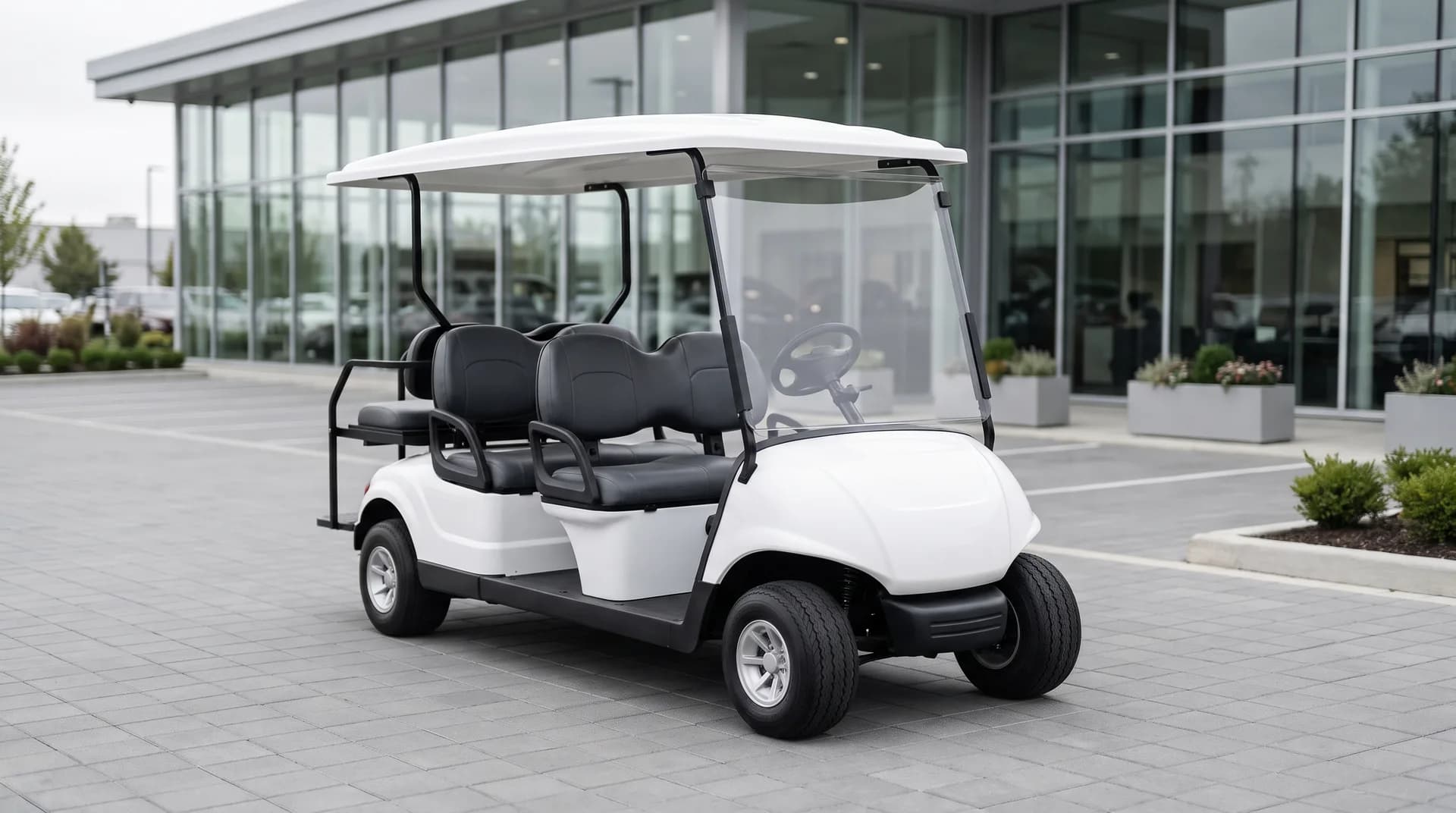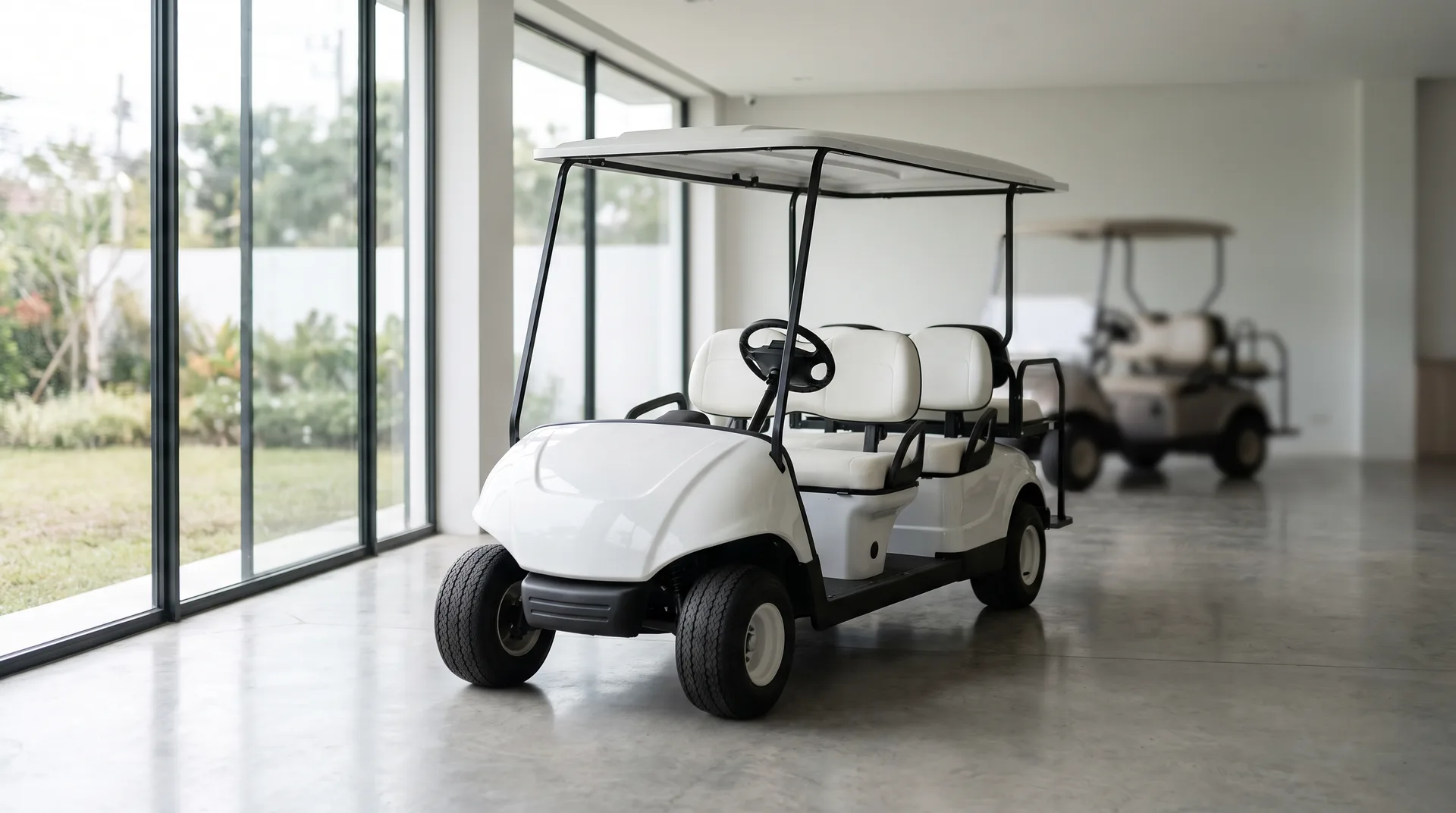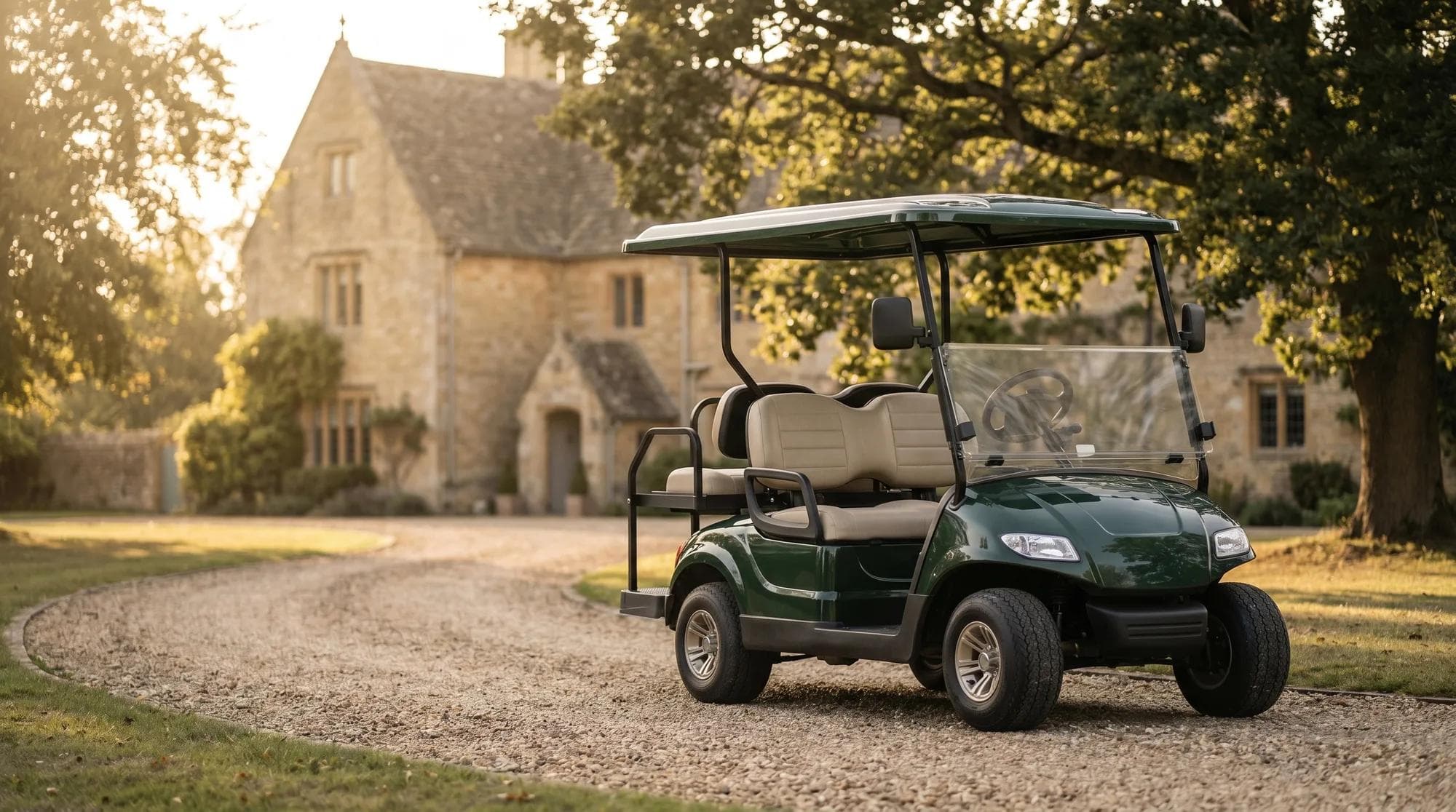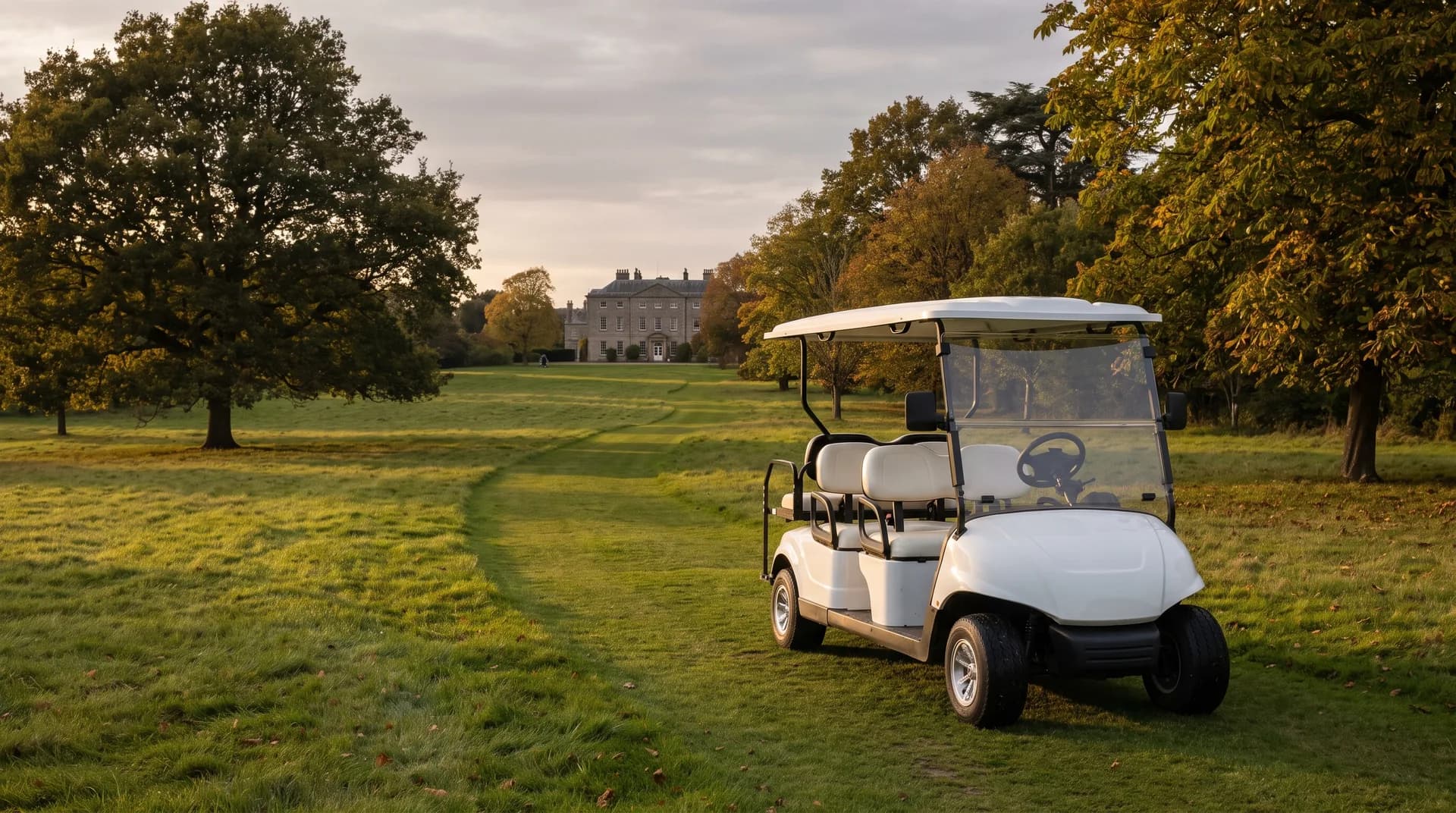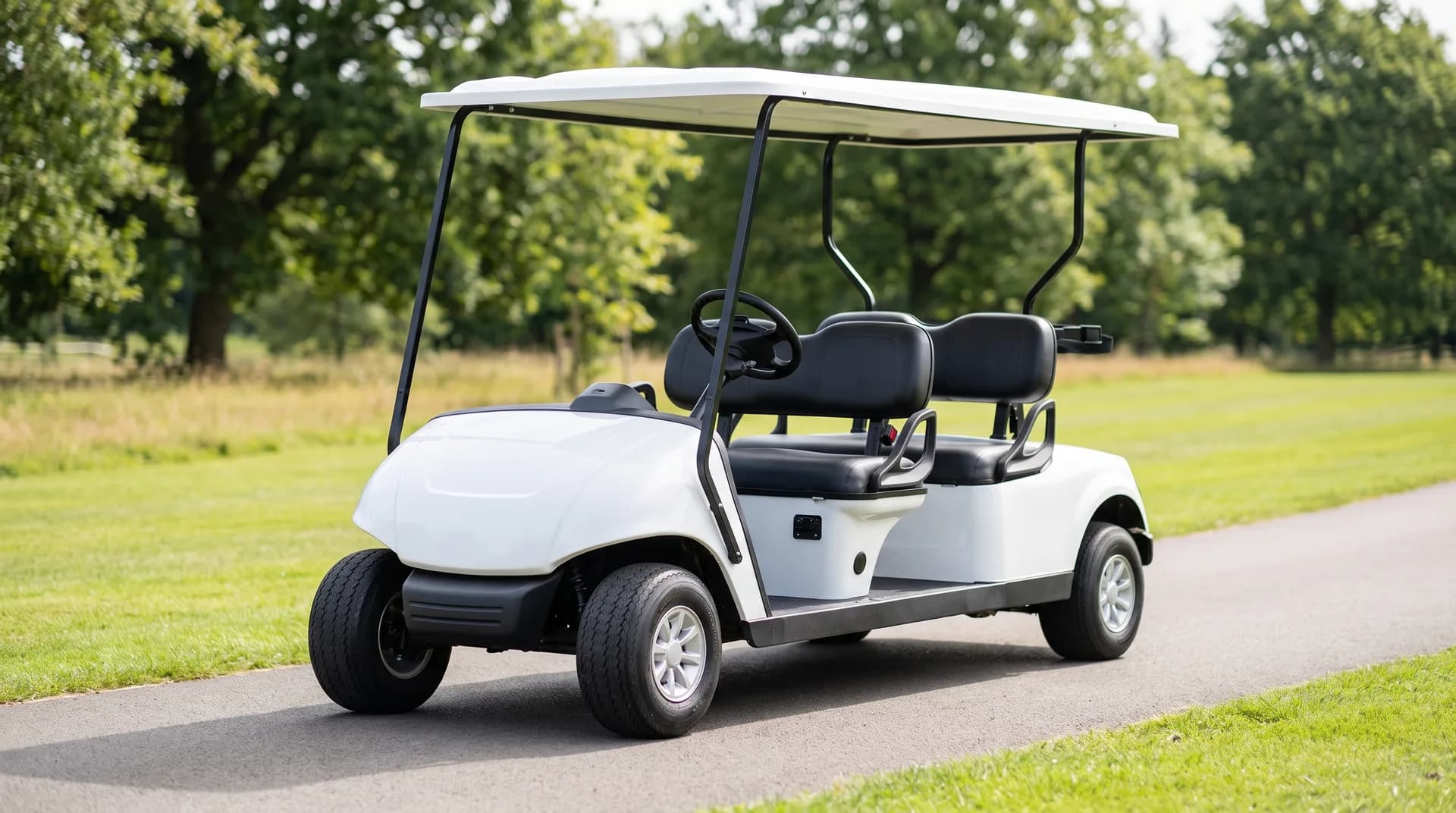
A golf cart test drive is worth more than any specification sheet, but only if you use it properly. Twenty structured minutes, covering the controls, a real gradient, tight turns, ride comfort and noise, will tell you whether a cart suits you in a way no brochure can, and the questions you ask while the demonstrator is standing beside you are worth more than a week of emails afterwards. This guide gives you that structure: what to test, in what order, what good feels like, and the questions that separate a serious supplier from a seller in a hurry.
- Never buy a cart you have not sat in: seat height, legroom and visibility cannot be judged from photographs.
- Test on a gradient if you possibly can; flat-ground demonstrations hide the differences that matter.
- Turning circle, ride quality and noise are the three things owners notice every single round.
- Use the demonstration to ask about warranty, servicing and delivery while the answers are face to face.
- Fleet and venue buyers should ask for an on-site demonstration on their own ground.
How to structure a golf cart test drive
Start stationary. Sit in the driving seat and check the basics that no drive can fix: can you get in and out easily, is there legroom for the taller of the people who will use it, can you see the front corners, and do the seat and any grab handles suit your passenger? Work the controls before you move, key or code, forward and reverse selection, lights and horn if fitted, and note whether everything falls to hand or needs a hunt. If driving a cart is new to you, our short guide on how to drive an electric golf cart is worth reading before the appointment so the demonstration teaches you about the vehicle rather than the concept. Then drive, and be deliberate about it: pull away gently and then briskly, stop from speed, reverse in a straight line and into a turn, and only then move on to the tests below. A demonstrator who hurries you through this in five minutes is telling you something about the aftercare too.
What to check during a golf cart demonstration
- What to do
- Pull away gently, then briskly; brake firmly from speed
- What good feels like
- Smooth, progressive response with no lurch, snatch or delay
- What to do
- Climb a real slope, stop on it, pull away again
- What good feels like
- Climbs without straining and holds firmly when stopped on the hill
- What to do
- Full-lock turns both ways, then a three-point turn
- What good feels like
- Tight circle, light steering, no scrub or squeal from the tires
- What to do
- Drive over rough ground, kerb edges or sleeping policemen
- What good feels like
- Absorbs bumps without crashing; seat still comfortable after 15 minutes
- What to do
- Listen at walking pace and at full speed, loaded
- What good feels like
- A quiet whine at most; no grinding, clonks or rattles from trim
| What to do | What good feels like | |
|---|---|---|
| Pull-away and braking | Pull away gently, then briskly; brake firmly from speed | Smooth, progressive response with no lurch, snatch or delay |
| Gradient behaviour | Climb a real slope, stop on it, pull away again | Climbs without straining and holds firmly when stopped on the hill |
| Turning | Full-lock turns both ways, then a three-point turn | Tight circle, light steering, no scrub or squeal from the tires |
| Ride and comfort | Drive over rough ground, kerb edges or sleeping policemen | Absorbs bumps without crashing; seat still comfortable after 15 minutes |
| Noise | Listen at walking pace and at full speed, loaded | A quiet whine at most; no grinding, clonks or rattles from trim |
The gradient test deserves special emphasis, because it is the one most often skipped. A car park demonstration on level tarmac flatters every cart ever built. Ask to climb the steepest slope available, stop halfway, and pull away again: how the vehicle holds itself on the hill and restarts under load reveals more about the drivetrain and brakes than everything else combined. Loaded matters too, a cart that feels brisk with one occupant can feel different with two adults and clubs aboard, so test it as you will use it. And use your ears throughout: an electric cart should be genuinely quiet, so any grind, clonk or persistent rattle on a new vehicle is a finish-quality warning worth taking seriously.
Questions to ask while you are there
The drive tells you about the vehicle; the conversation tells you about the ownership. While the demonstrator is beside you, ask what the warranty covers and for how long, ours is 3 years, how servicing is arranged and who actually turns up, what happens when something fails mid-season, we run a 24-hour priority call-out line, and how delivery works, we deliver and commission UK-wide. Ask what the quotation will include: it should be written and itemised, so the cart, the battery specification, accessories and delivery are all visible line by line rather than folded into one number. Our guide on questions to ask when buying an electric golf cart gives you the full list, and the supplier-choice guide explains which answers should worry you. A supplier confident in their vehicle and their aftercare will welcome every one of these questions; hesitation is itself an answer.
On-site demonstrations for fleets and venues
If you are buying for a golf club, hotel, estate or event venue, the demonstration should come to you, because your ground is the test that matters. A cart that performs on a demonstrator's tarmac may behave quite differently on your wet fairway slopes, gravel paths or tight service corridors, and an on-site demonstration lets the people who will actually drive the vehicles, greenkeepers, porters, marshals, try them on the routes they will actually cover. It also turns the specification conversation practical: payloads, weather protection, charging locations and storage can be discussed while standing in the places where they will matter. If you are at this stage, request a quote and tell us about your site, and browse the range beforehand so the shortlist is yours rather than ours.
Frequently asked questions
Can you test drive a golf cart before buying in the UK?+
Yes, and you should. A structured 20-minute drive covering controls, a gradient, tight turns, ride and noise tells you more than any specification sheet. Reputable suppliers expect the request; for fleet and venue purchases, ask for the demonstration on your own site.
What should I test on a golf cart demonstration?+
Pull-away and braking smoothness, behaviour on a real gradient including a hill stop and restart, the turning circle both ways, ride comfort over rough ground, and noise at speed. Test with the load you will actually carry, two adults and clubs feels different from one.
Why does the gradient test matter so much?+
Because flat tarmac flatters every cart. Climbing a real slope, stopping on it and pulling away again under load reveals the drivetrain, the brakes and the hill-hold behaviour, which are exactly the things you cannot judge from a car park demonstration.
What questions should I ask during a demo?+
What the warranty covers and for how long, how servicing and call-outs work, how delivery and commissioning are handled, and what the written quotation will itemise. Face-to-face answers, with the vehicle in front of you, are worth a week of emails.
Do you demonstrate golf carts on-site for fleets?+
For venues and fleet buyers, on-site demonstration is the right way to do it, on your slopes, paths and routes, with the staff who will drive the vehicles. Tell us about your site when you request a quote and we will arrange the conversation around it.
Try the right cart, not just the nearest one
Tell us how and where you will use the vehicle and we will recommend the models worth your time, with a written, itemised quotation and UK-wide delivery and commissioning when you are ready.
Related solutions
Ready to explore what we build?
See the vehicles and the setting this applies to, or get a tailored quote built around your site.

Ready to find the right golf cart?
Tell us how and where it will work and we will specify a vehicle and a tailored quote built around you. Every build comes with a 3-year warranty and a 24-hour priority call-out.
Our guides are written and reviewed by the Hawke Electric Vehicles team, the people who specify, build, deliver and support the vehicles. We focus on honest, practical advice and flag where a figure depends on the build rather than guessing.
More guides by Hawke