The short answer: a golf cart used only on private land, a course, an estate, a site, does not need an MOT, because the MOT is a test for vehicles used on public roads. The longer answer is that the picture changes if a cart is registered for road use, and that the absence of a legal test is not the same as an absence of any obligation, businesses in particular have a duty of care around the equipment their people use, and every cart repays regular servicing whether or not any test applies. This guide separates the three strands, what the law asks, what changes with road registration, and what sensible maintenance looks like regardless, in plain terms. Rules do change, so treat this as orientation and check current DVLA guidance for anything that touches road use.
- No MOT is needed for a cart used solely on private land, the MOT regime is about public-road use.
- Road-registered golf carts are a different case with their own obligations: check current DVLA guidance before assuming anything.
- No test does not mean no maintenance: brakes, steering, tires and batteries still wear, and servicing is what catches them.
- Businesses have a duty of care around work equipment, so golf carts used by staff should be inspected and maintained on a schedule.
- An annual service plus simple routine checks is the private-land equivalent of an MOT, and cheaper than the failure it prevents.
Do golf carts need an MOT? The short answer
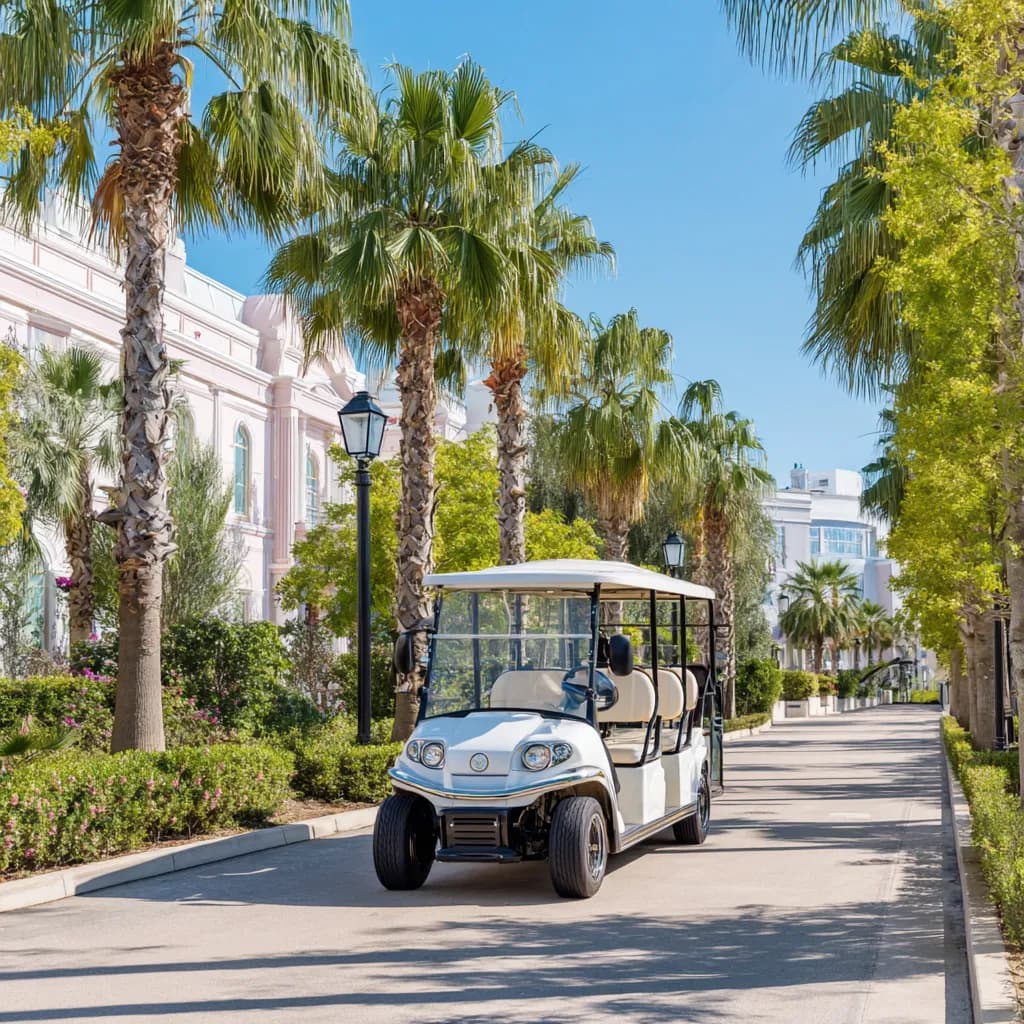
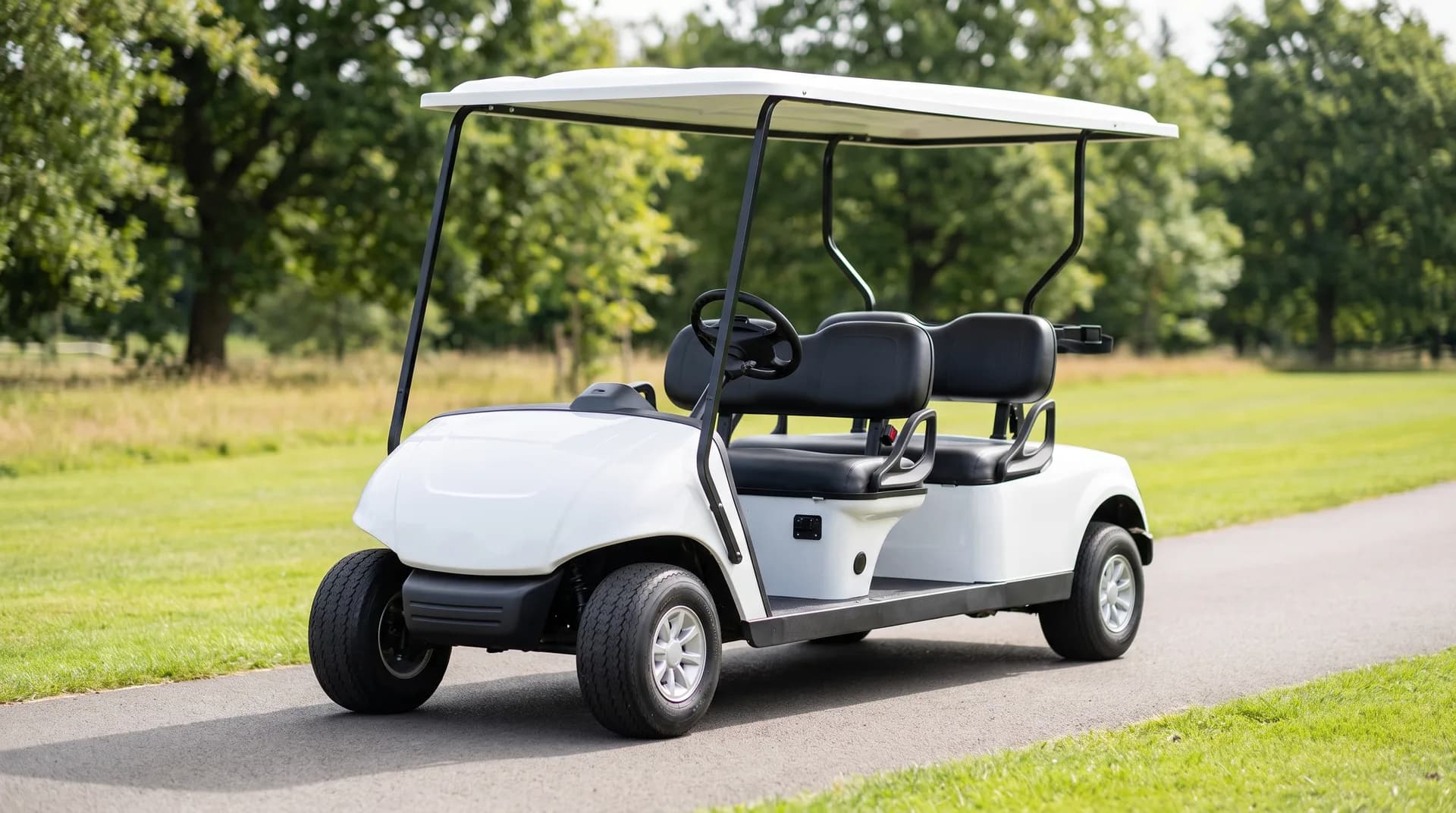
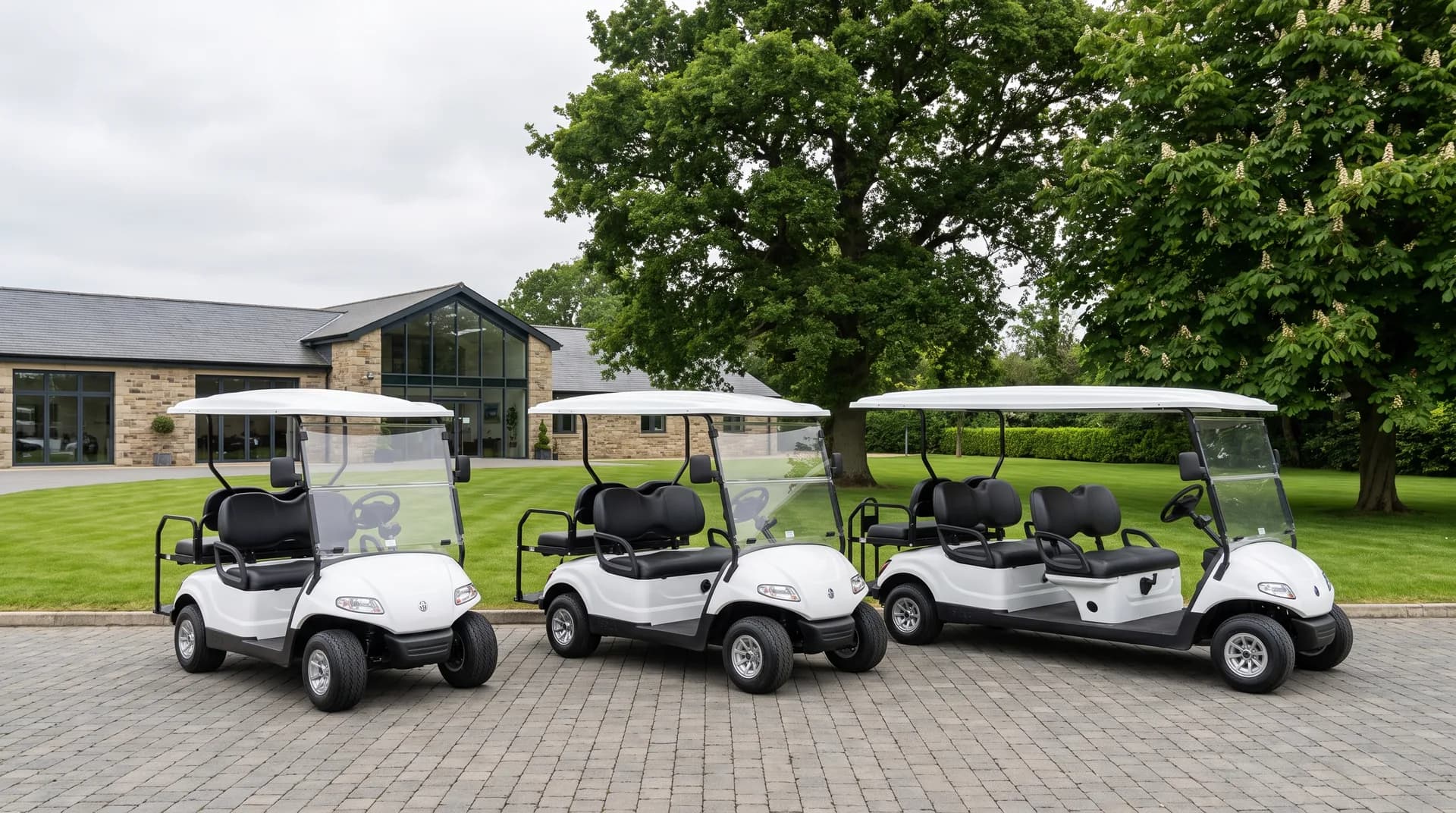
For the overwhelming majority of golf carts in the UK, the ones that live on a golf course, a private estate, a resort park or a work site and never touch a public road, no MOT applies. The MOT is a roadworthiness test for vehicles used on public roads, and a machine that stays on private land sits outside it. The same logic runs through the related paperwork: our guide to licence, tax and MOT questions walks through the full set. Two cautions belong next to that clean answer. First, private means genuinely private, the moment public-road use enters the picture, even briefly, the assumptions change, and you should check current DVLA guidance rather than rely on habit. Second, no test does not mean nobody cares: insurers, venues and employers can and do set their own maintenance expectations.
When the MOT question changes: road-registered golf carts
Some owners register a cart for road use so it can legally travel between sites or along a lane. A road-registered vehicle is a different animal: registration brings its own obligations around the vehicle's condition, equipment and paperwork, and what applies depends on how the vehicle is classified when it is registered. We will not pretend the detail fits in a paragraph, classifications differ and the rules are updated from time to time, so if road use is on your agenda, read our guide to the road registration process and costs and confirm the current position with DVLA guidance before spending money. The practical point for this guide is simpler: everything below about servicing applies to a road-registered cart with extra force, because a machine that meets traffic needs to be right.
- Private-land cart
- Not required
- Road-registered cart
- Depends on classification, check current DVLA guidance
- Private-land cart
- None for private use
- Road-registered cart
- Registered, with associated obligations
- Private-land cart
- Owner, insurer, venue, employer
- Road-registered cart
- The road-use rules, plus all of those
- Private-land cart
- Annual service plus routine checks
- Road-registered cart
- The same, treated as non-negotiable
| Private-land cart | Road-registered cart | |
|---|---|---|
| MOT | Not required | Depends on classification, check current DVLA guidance |
| Registration and paperwork | None for private use | Registered, with associated obligations |
| Who sets the standard | Owner, insurer, venue, employer | The road-use rules, plus all of those |
| Sensible servicing | Annual service plus routine checks | The same, treated as non-negotiable |
Servicing rules that make sense whether or not an MOT applies
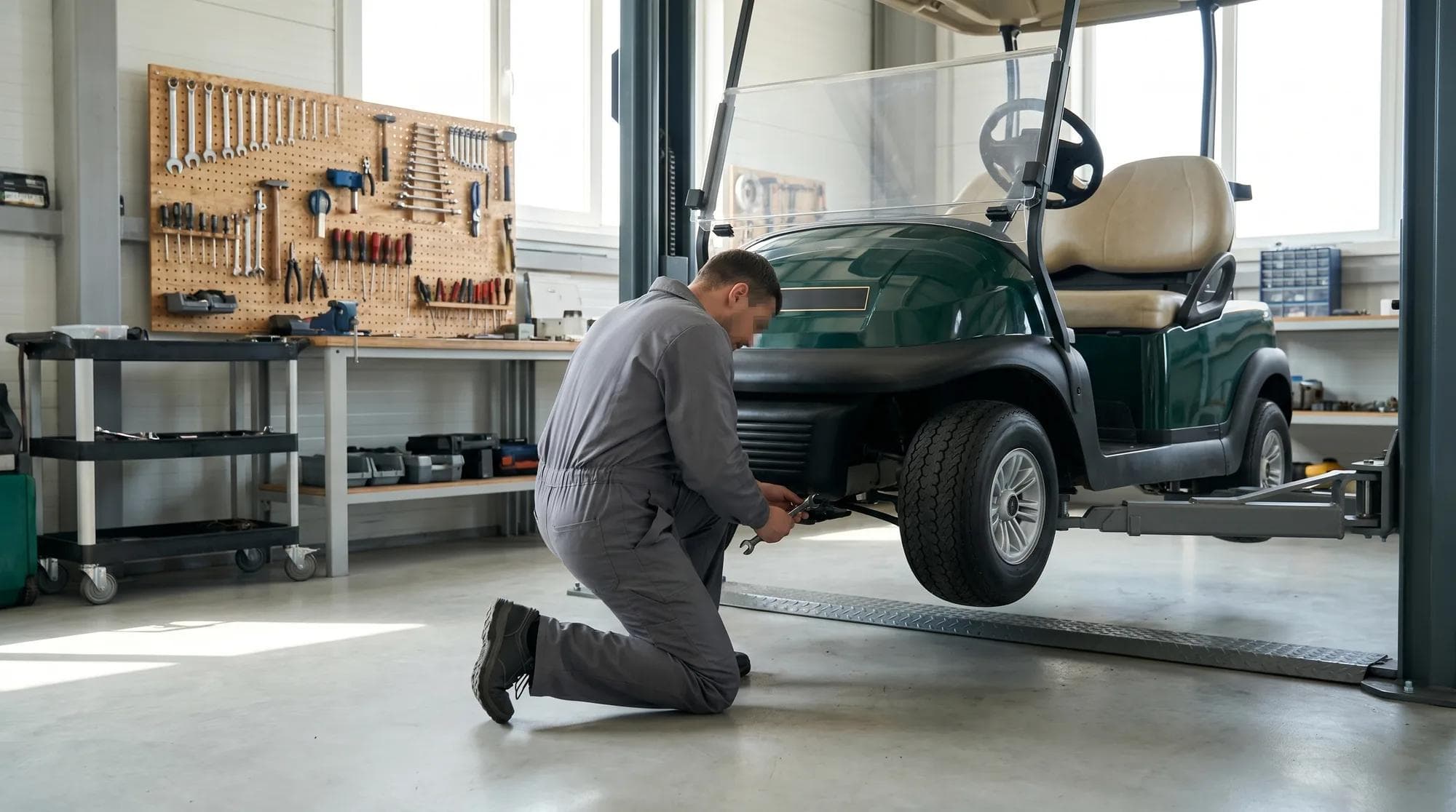
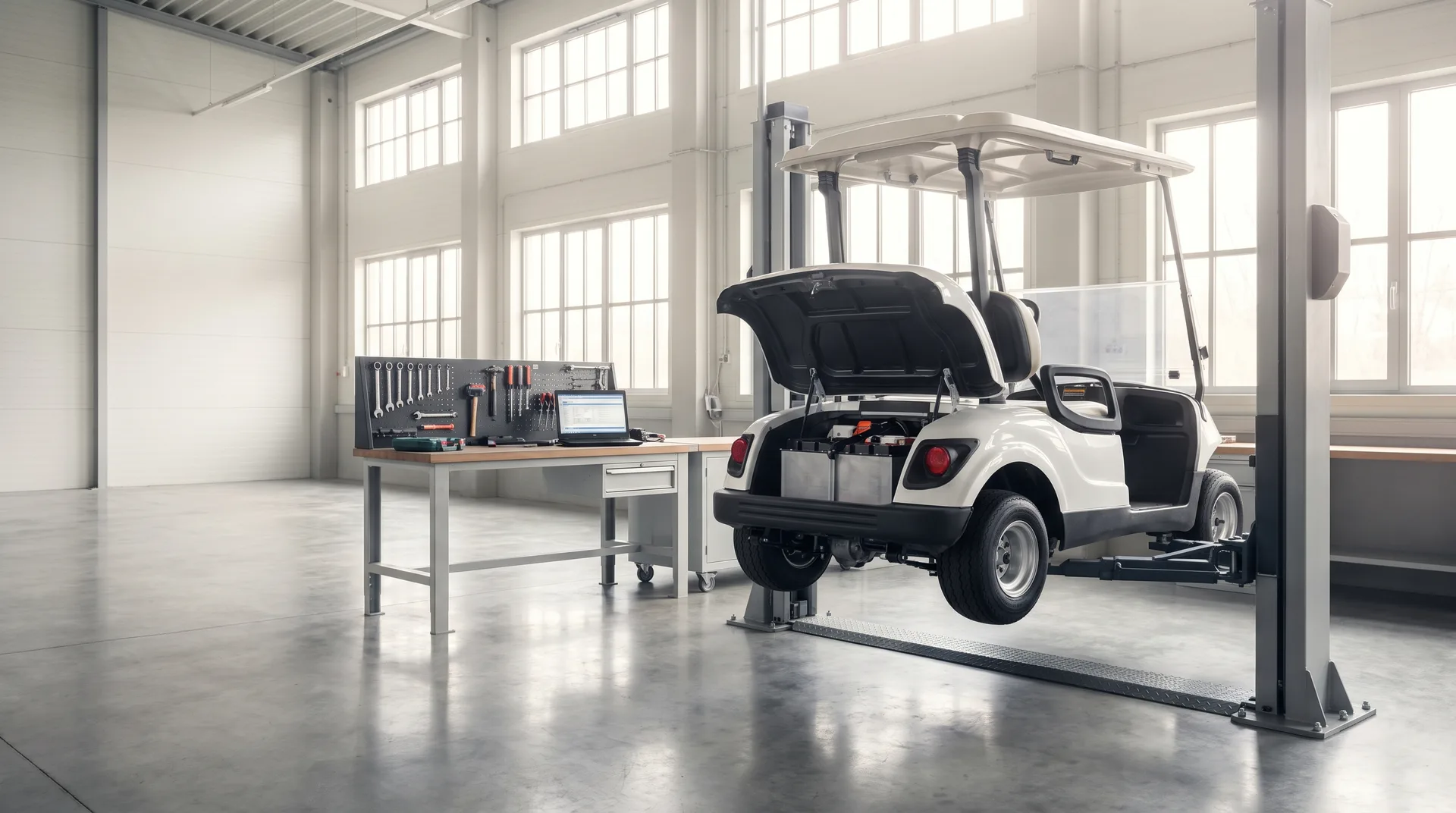
An electric cart is mechanically simple, which is exactly why owners drift into doing nothing until something fails. The sensible baseline is an annual professional service, covering brakes, steering, suspension, tires, battery condition and charging, wiring and connections, and the controller's health, with heavily used machines serviced more often. Between services, routine checks catch most problems early: tire pressures and condition, brake feel, steering play, battery charging behaviour, and anything that has started to sound or feel different. Batteries deserve particular attention because they are the most expensive component on the vehicle and the one most damaged by neglect, chronic undercharging and winter storage mistakes kill more packs than age does. Our guide to servicing, warranty and call-outs covers what a good arrangement looks like, and if a machine has already deteriorated, our repairs service exists for exactly that.
Businesses: duty of care beyond the MOT question
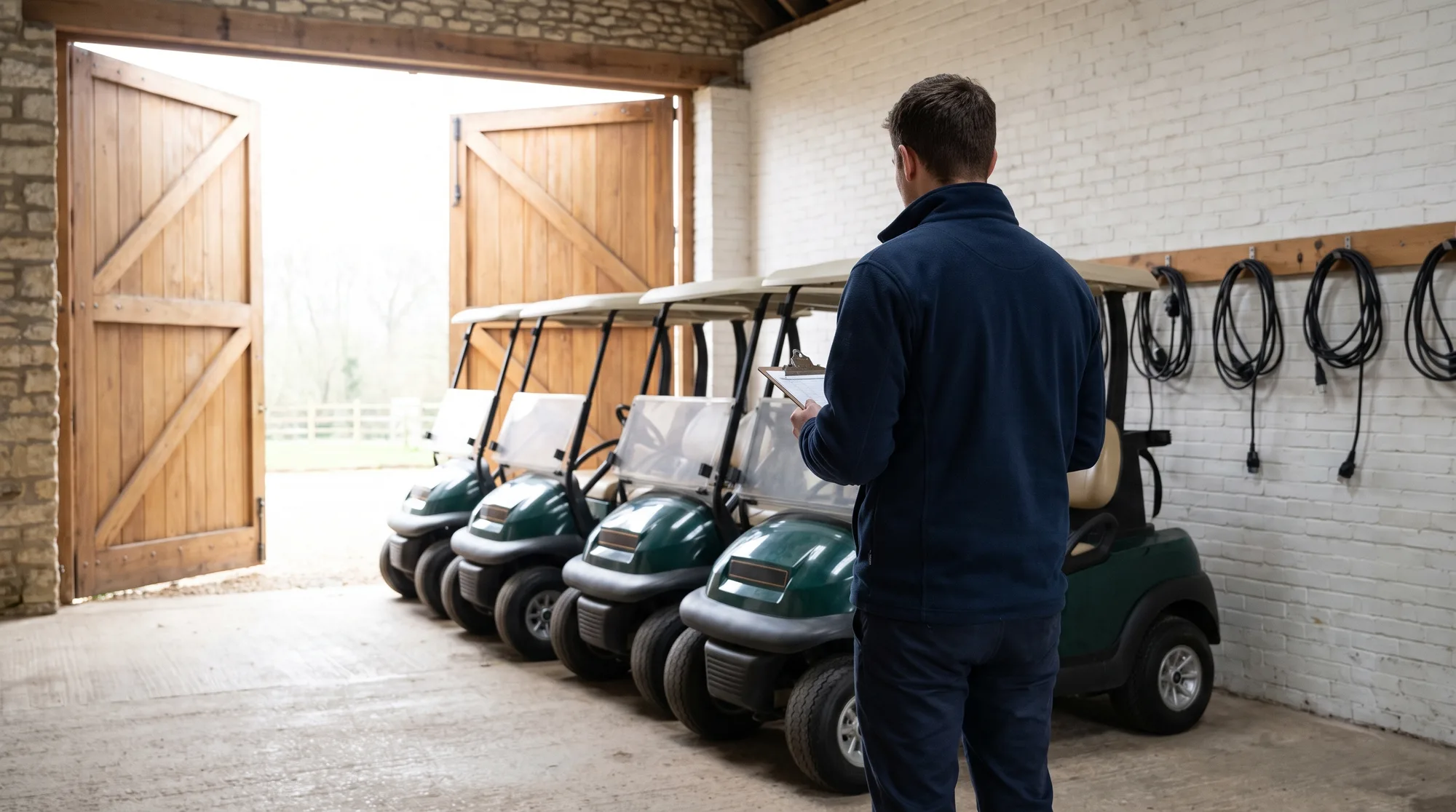
If golf carts are used by staff, a golf club fleet, a resort, an estate team, a site crew, the absence of an MOT does not remove the employer's responsibilities. Work equipment is expected to be suitable, maintained and inspected, and general workplace health-and-safety duties apply to vehicles used at work in the same spirit they apply to any other machinery. In practice that points to the things a well-run fleet does anyway: a maintenance schedule with records, daily or pre-use checks by drivers, defects reported and fixed rather than worked around, and chargers and electrical equipment included in the site's normal electrical testing regime. Our guide to fleet compliance sets out the framework in more detail. None of it is burdensome, and the records are worth their weight the day an insurer or an inspector asks how the fleet is looked after.
Frequently asked questions
Do golf carts need an MOT in the UK?+
Not when they are used solely on private land such as a course, estate or site, the MOT is a test for vehicles used on public roads. A cart registered for road use is a different case, so check current DVLA guidance if road use applies to you.
Does a road-legal golf cart need an MOT?+
It depends on how the vehicle is classified when registered, and the rules are updated from time to time, so confirm the current position with DVLA guidance. Whatever the paperwork answer, a cart that meets traffic should be serviced to a road standard.
How often should a golf cart be serviced?+
An annual professional service is the sensible baseline for a privately used machine, with hard-worked fleet vehicles serviced more often. Routine owner checks between services, tires, brakes, steering, battery behaviour, catch most problems early.
Is there a legal servicing requirement for private golf carts?+
There is no MOT-style test for private-land golf carts, but that is not the same as no obligation: insurers and venues can set conditions, and businesses have duties around maintaining work equipment. Records of regular servicing answer all of them.
What happens if a fleet cart is not maintained?+
The predictable failures are brakes, tires and batteries, and for a business the bigger exposure is being unable to show the vehicle was maintained if an incident occurs. A schedule, pre-use checks and defect reporting close that gap cheaply.
Put the servicing on a schedule
Tell us what you run and where, and we will price servicing, or a repair if things have already got away from you, alongside any new vehicles you need.
Related solutions
Ready to explore what we build?
See the vehicles and the setting this applies to, or get a tailored quote built around your site.

Ready to find the right golf cart?
Tell us how and where it will work and we will specify a vehicle and a tailored quote built around you. Every build comes with a 3-year warranty and a 24-hour priority call-out.
Our guides are written and reviewed by the Hawke Electric Vehicles team, the people who specify, build, deliver and support the vehicles. We focus on honest, practical advice and flag where a figure depends on the build rather than guessing.
More guides by Hawke