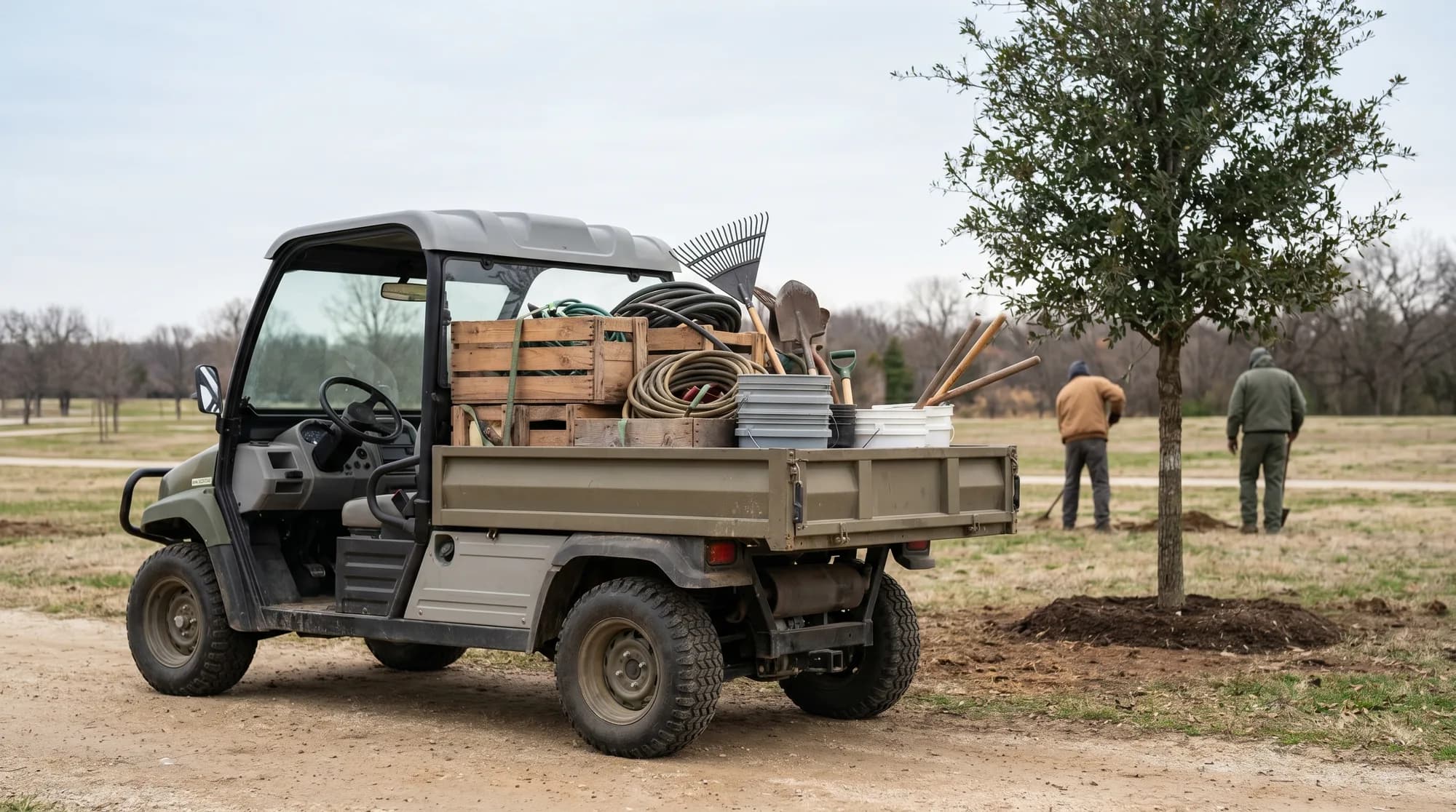
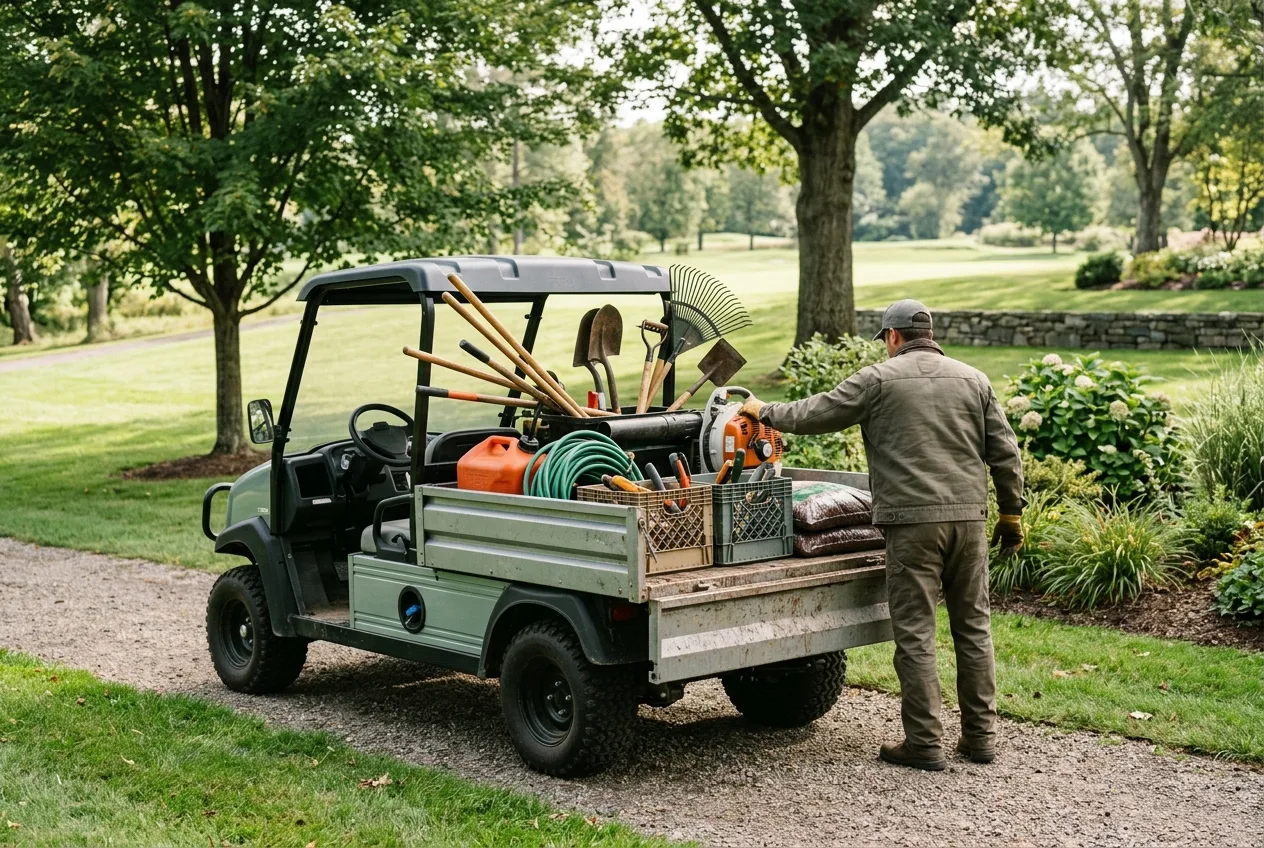
A utility vehicle is a different animal from a passenger golf cart, and the electric-versus-gas decision plays out differently when the job is work rather than transport. A UTV exists to haul, tow, carry tools and crews, and grind through a shift on a farm, a job site, a campus or a grounds crew. That changes which numbers matter: payload and bed capacity, torque for towing and grades, run-time across a full day, maintenance downtime, and how much noise the machine makes around people. Electric UTVs have closed much of the gap with gas, and in many work settings now lead, but not in all of them. This guide compares the two honestly on the metrics that decide real jobs.
First, a UTV is not a golf cart
It is worth separating the two clearly, because the buying logic is different. A passenger cart is optimized for moving people gently and quietly; the electric-versus-gas debate there leans heavily electric. A utility vehicle is built around the cargo bed and the drivetrain, designed to carry weight, tow trailers, climb grades and survive abuse. If you are choosing between electric and gas passenger carts, our electric vs gas golf carts guide covers that decision. Here the focus is work UTVs, where payload, torque and duty cycle dominate, and the answer is more nuanced.
Torque, payload and towing
For work, pulling power matters more than top speed. Electric motors produce maximum torque from zero rpm, so an electric UTV pulls strongly the instant you press the pedal, which is genuinely useful for moving a heavy load off the line, creeping up a ramp or holding a grade with a trailer. Gas engines build torque as revs rise and can sustain high-power output longer, which favors prolonged heavy towing. On payload, both can be built to carry serious loads in the bed; the deciding factor is the vehicle's rating, not the fuel, so check the bed and towing capacities of the specific machine rather than assuming.
Where electric used to fall down was sustained heavy work draining the pack fast. Modern packs have improved, but a very high continuous load, like towing heavy trailers up grades all day, still depletes a battery quicker than topping off a gas tank, which leads straight to the run-time question.
Run-time, refueling and the duty cycle
This is where gas keeps its strongest argument. A gas UTV runs as long as you keep fuel in it, and refueling takes minutes, so for a crew working a remote site far from any outlet, through a long shift with no downtime for charging, gas is hard to beat. An electric UTV runs until the pack is depleted, then needs hours to recharge unless you can swap packs or fast-charge. For an eight-hour shift within range of a charger, or work with natural breaks, electric copes fine, especially if you charge overnight and top up at lunch.
- Electric UTV
- Instant, strong from zero
- Gas UTV
- Builds with revs
- Electric UTV
- Limited by pack, needs charging
- Gas UTV
- Refuel in minutes, runs on
- Electric UTV
- Minimal, no engine service
- Gas UTV
- Oil, filters, plugs, belts
- Electric UTV
- Low, charges off the grid
- Gas UTV
- Fuel plus engine upkeep
- Electric UTV
- Near silent
- Gas UTV
- Loud, fumes
- Electric UTV
- Defined shifts near power
- Gas UTV
- Remote, continuous, high-hour
| Electric UTV | Gas UTV | |
|---|---|---|
| Torque off the line | Instant, strong from zero | Builds with revs |
| All-day run-time | Limited by pack, needs charging | Refuel in minutes, runs on |
| Maintenance | Minimal, no engine service | Oil, filters, plugs, belts |
| Running cost | Low, charges off the grid | Fuel plus engine upkeep |
| Noise | Near silent | Loud, fumes |
| Best duty cycle | Defined shifts near power | Remote, continuous, high-hour |
Maintenance and uptime
Here electric pulls clearly ahead, and for a work fleet uptime is money. An electric UTV has no engine oil to change, no filters, spark plugs, belts or fuel system to maintain, and far fewer moving parts to fail. That means less scheduled downtime, fewer surprise breakdowns and lower maintenance labor over the vehicle's life. A gas UTV needs regular oil changes, tune-ups, filter and belt replacements and fuel-system care, all of which take the machine out of service and add cost. For an operation running several vehicles, the difference in maintenance burden compounds quickly.
The flip side is the battery: an electric UTV's pack is a wear item with a finite life, and replacement is a real future cost to budget for. Good charging discipline and routine care extend that life substantially, and the practices in our fleet management guide apply directly to a work UTV fleet too. Even with eventual pack replacement, electric typically wins the total maintenance comparison.
Noise, emissions and the work environment
Where the UTV works changes the calculus. Electric is near silent and produces no exhaust at the vehicle, which is a decisive advantage indoors, in warehouses, near livestock, on early-morning grounds work near sleeping guests, or anywhere fumes and noise are a problem. A gas UTV cannot run indoors for long without ventilation, disturbs people and animals, and adds fumes to enclosed or sensitive spaces. For outdoor, remote, open work the noise and emissions matter less, which is part of why gas still suits that profile. If the machine works around people, customers or indoors, electric is often the obvious answer on these grounds alone.
Total cost and ROI
On total cost of ownership, the comparison is about more than the sticker price. Gas UTVs sometimes cost less up front, but you then pay continuously for fuel, oil, tune-ups and downtime. Electric UTVs may cost more to buy but are cheaper to run, with low charging costs, minimal maintenance and high uptime, offset by an eventual battery replacement. Over a multi-year working life, a high-use electric UTV often comes out ahead on total cost, while a low-use or remote machine may favor gas.
- Up-front: gas can be cheaper to buy; electric often costs more initially.
- Energy: electricity is generally far cheaper per hour than gasoline.
- Maintenance: electric is much lower, with less downtime and labor.
- Battery: budget for eventual pack replacement on electric.
- Uptime: electric's reliability is real money for a fleet that must keep working.
To put real figures around the decision, see how much a golf cart and utility vehicle costs and your financing options, and if you are running several machines, our fleet management guide covers charging logistics and uptime for an electric work fleet. Indicative pricing is exactly that; for a real quote on the right machine, talk to us.
The operators who get this wrong almost always bought on the sticker price or the spec sheet. The ones who get it right mapped their duty cycle first and bought the machine that fit it.
So what should you do?
Map your duty cycle first: hours per day, distance from power, load weight and whether work has natural breaks. If you run defined shifts within reach of charging, want low running costs and minimal downtime, or work indoors and near people, an electric UTV is usually the better tool, often the better total-cost choice too. If you run continuous high-duty work far from any outlet with no time to charge, gas still earns its place. Match the machine to the job, not the other way round. We are glad to help you spec the right work UTV with honest numbers.
Speccing a work utility vehicle?
Tell us your duty cycle, loads and where it will work, and we will recommend the right electric or gas-suited UTV with honest numbers.
Frequently asked questions
Are electric UTVs as powerful as gas for work?+
For pulling power off the line, electric UTVs are excellent because they deliver maximum torque instantly, which helps with heavy loads and grades from a standstill. Gas sustains high power longer for prolonged heavy towing, so the winner depends on whether your work is short bursts or continuous heavy load.
How long does an electric UTV run on a charge?+
It depends on the pack size and how hard you work it, but a typical electric UTV covers a normal shift if you can charge overnight and top up during breaks. Continuous heavy towing up grades depletes a pack faster, and unlike refueling, recharging takes hours unless you swap packs or fast-charge.
Is an electric or gas UTV cheaper to own?+
Over a multi-year, high-use life, electric often wins on total cost: cheap charging, minimal maintenance and high uptime usually outweigh the higher purchase price and eventual battery replacement. Low-use or remote machines that cannot easily charge may favor gas overall.
Can I use an electric UTV indoors?+
Yes, and that is one of its biggest advantages. Electric UTVs are near silent and produce no exhaust at the vehicle, so they suit warehouses, barns, indoor work and operations near people or animals, where a gas engine's noise and fumes are a problem.
Is a UTV different from a golf cart?+
Yes. A passenger golf cart is built to move people gently and quietly, while a utility vehicle is built around a cargo bed and drivetrain to haul, tow and work. Judge a UTV on payload, torque, run-time and uptime rather than the comfort and top-speed criteria you would use for a passenger cart.
Related solutions
Ready to explore what we build?
See the vehicles and the setting this applies to, or get a tailored quote built around your site.
Ready to find the right golf cart?
Tell us how and where it will work and we will specify a vehicle and a tailored quote built around you. Every build comes with a 3-year warranty and a 24-hour priority call-out.