The Guides
Buying Guides guides
Practical buying guides for electric and golf carts: what they cost, how to choose the right model and seat count, and what to look for before you order. Honest, expert advice for private buyers and fleets alike.
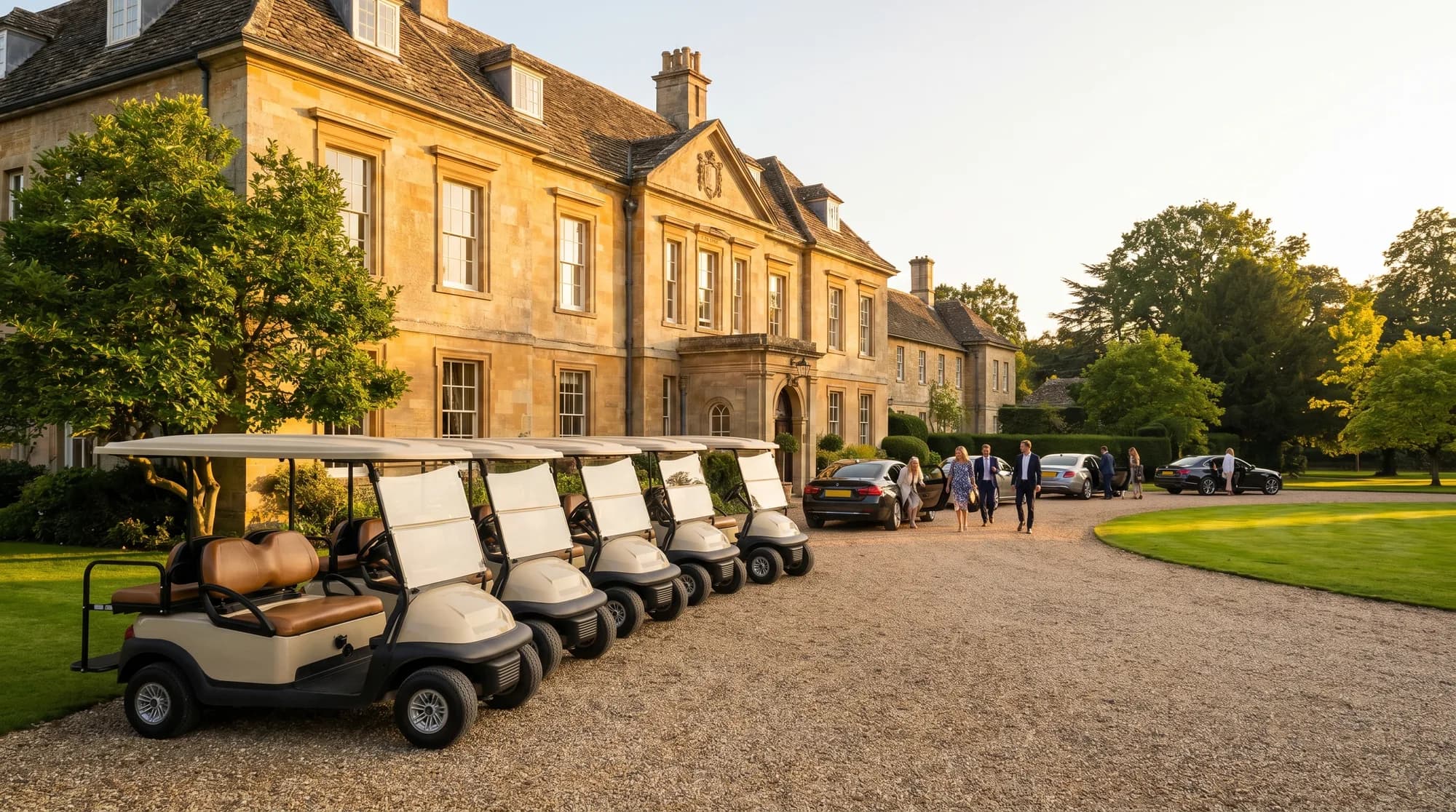
How many electric golf carts does your resort actually need?
Too few golf carts and guests wait; too many and money sits idle. Here is a simple, honest way to work out the right fleet size for your resort or estate.
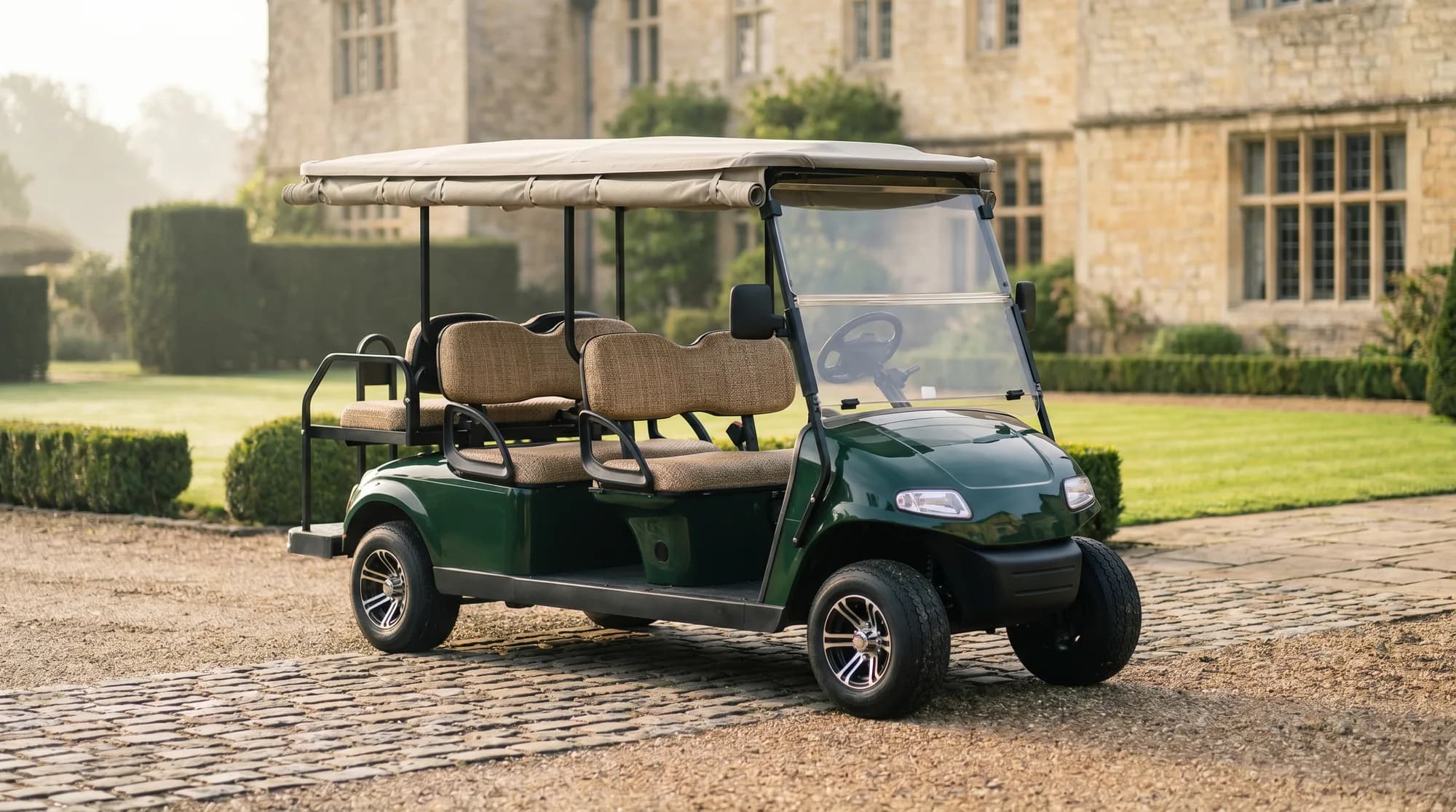
Hire or buy electric golf carts? A cost comparison for hospitality
Should a hotel or resort own its electric golf carts or hire them? We compare the real costs over three to five years and show when owning, hiring or a split makes most sense.
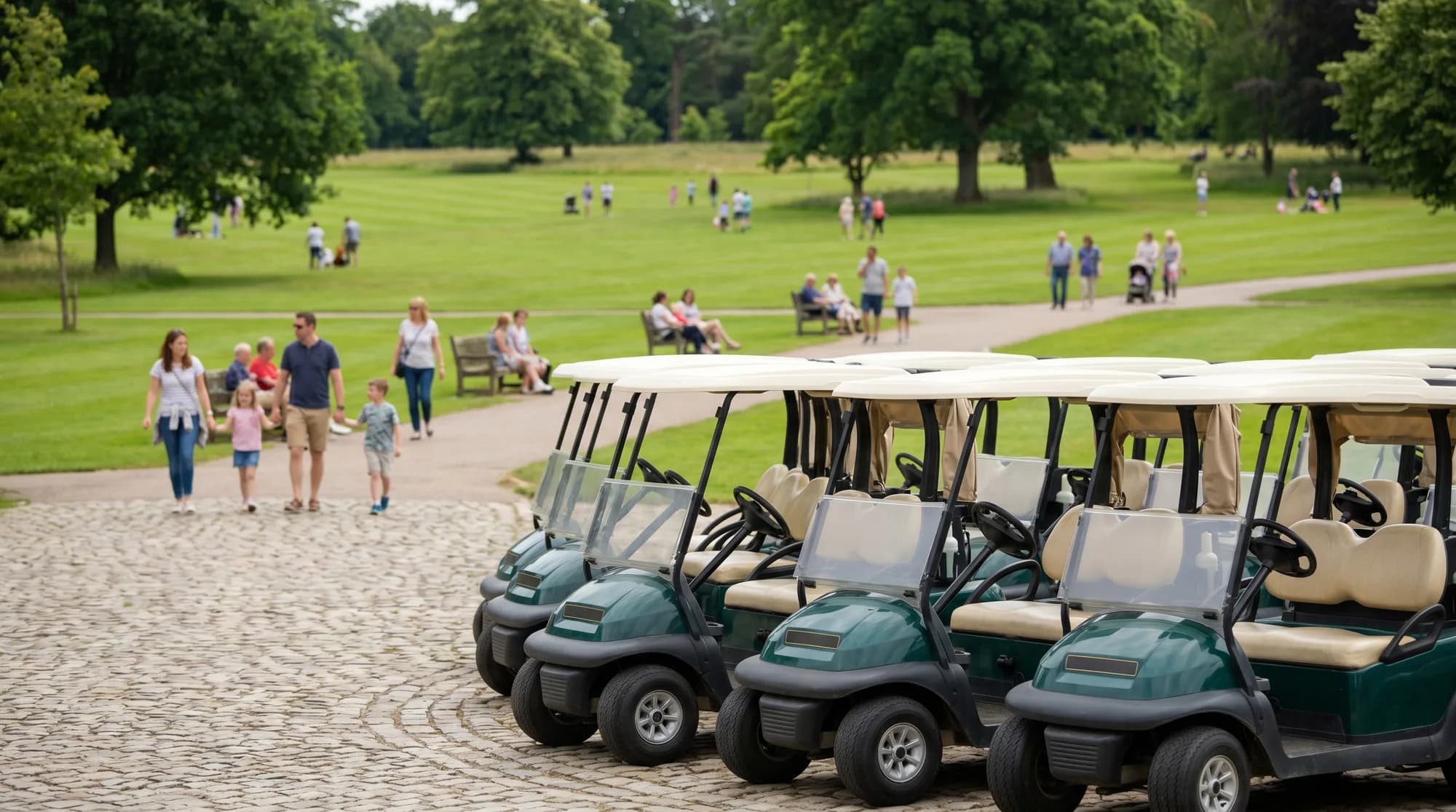
Year-round vs seasonal cart fleets: right-sizing for event season
Buying enough golf carts for your busiest fortnight ties up money for the rest of the year. Here is how to split a core year-round fleet from a hired seasonal top-up.
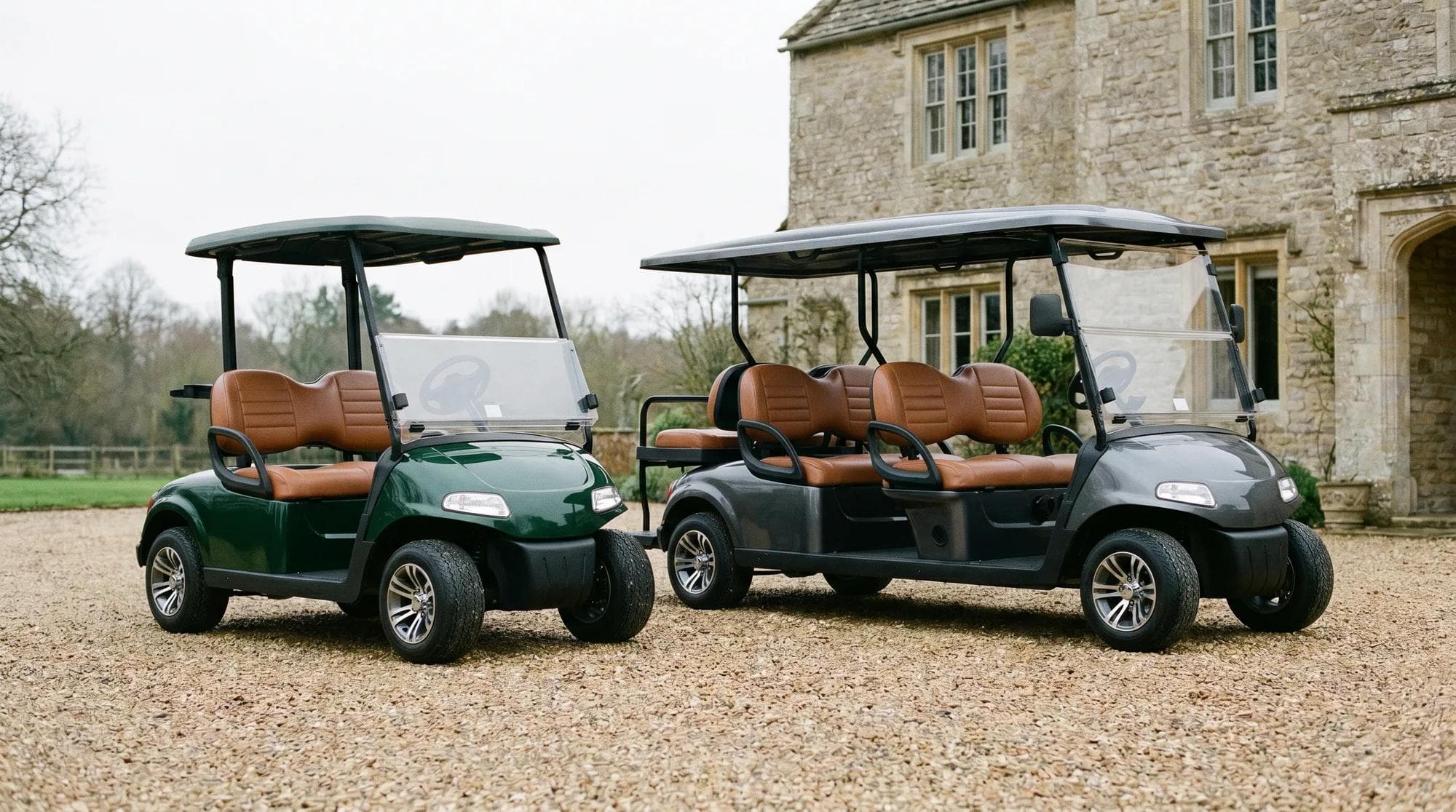
2, 4, 6 or 8 seats: which golf cart size do you need?
Match the size to your busiest regular use, not your average day. Two seats suit couples and compact sites, four seats are the all-rounder most people choose, six and eight seats move larger groups, and a utility model carries kit. If you are between sizes, go up.
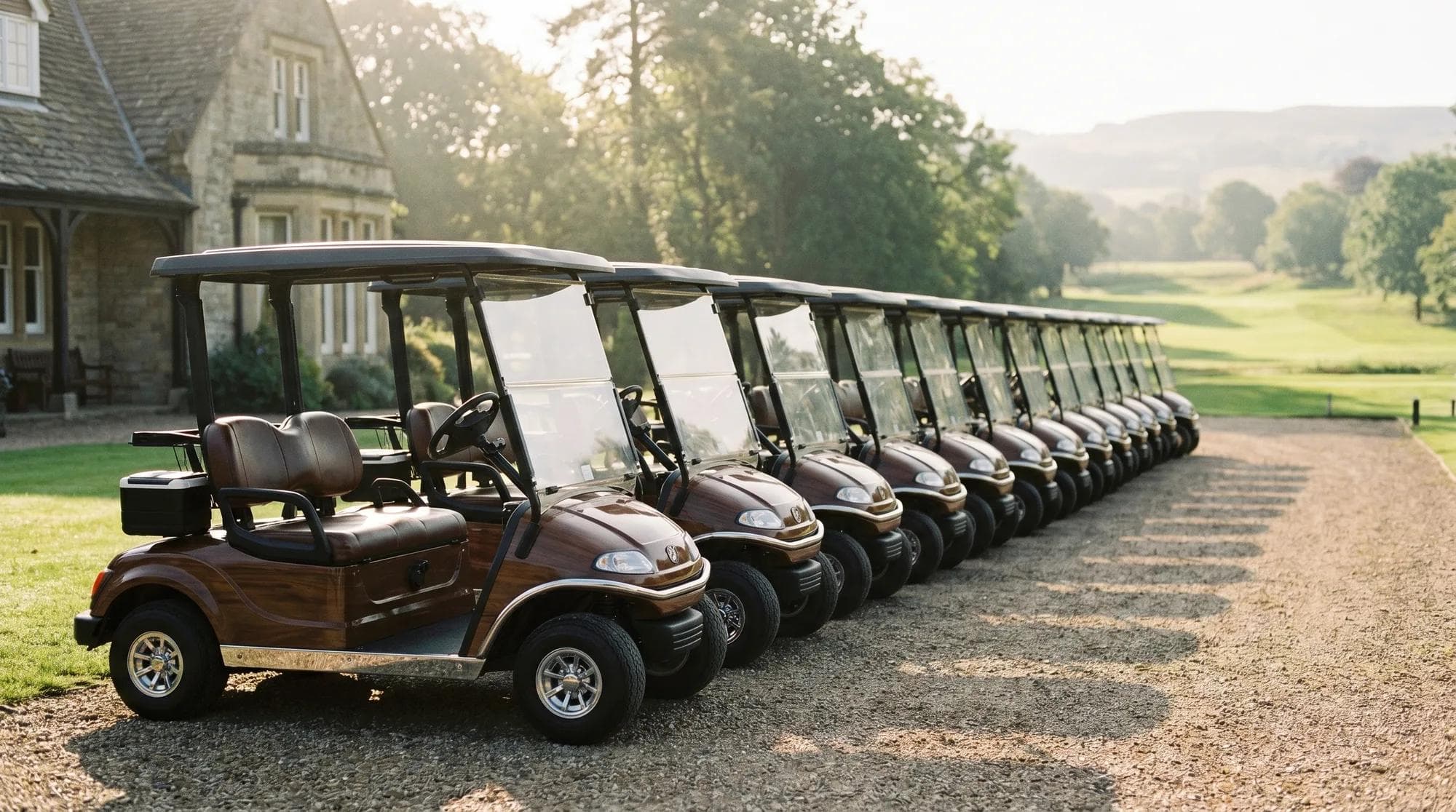
Managing a golf cart fleet: a practical guide
How to size, fund and run a golf cart fleet, from buy versus hire to branding, charging, servicing and replacement cycles, with support for clubs and estates.
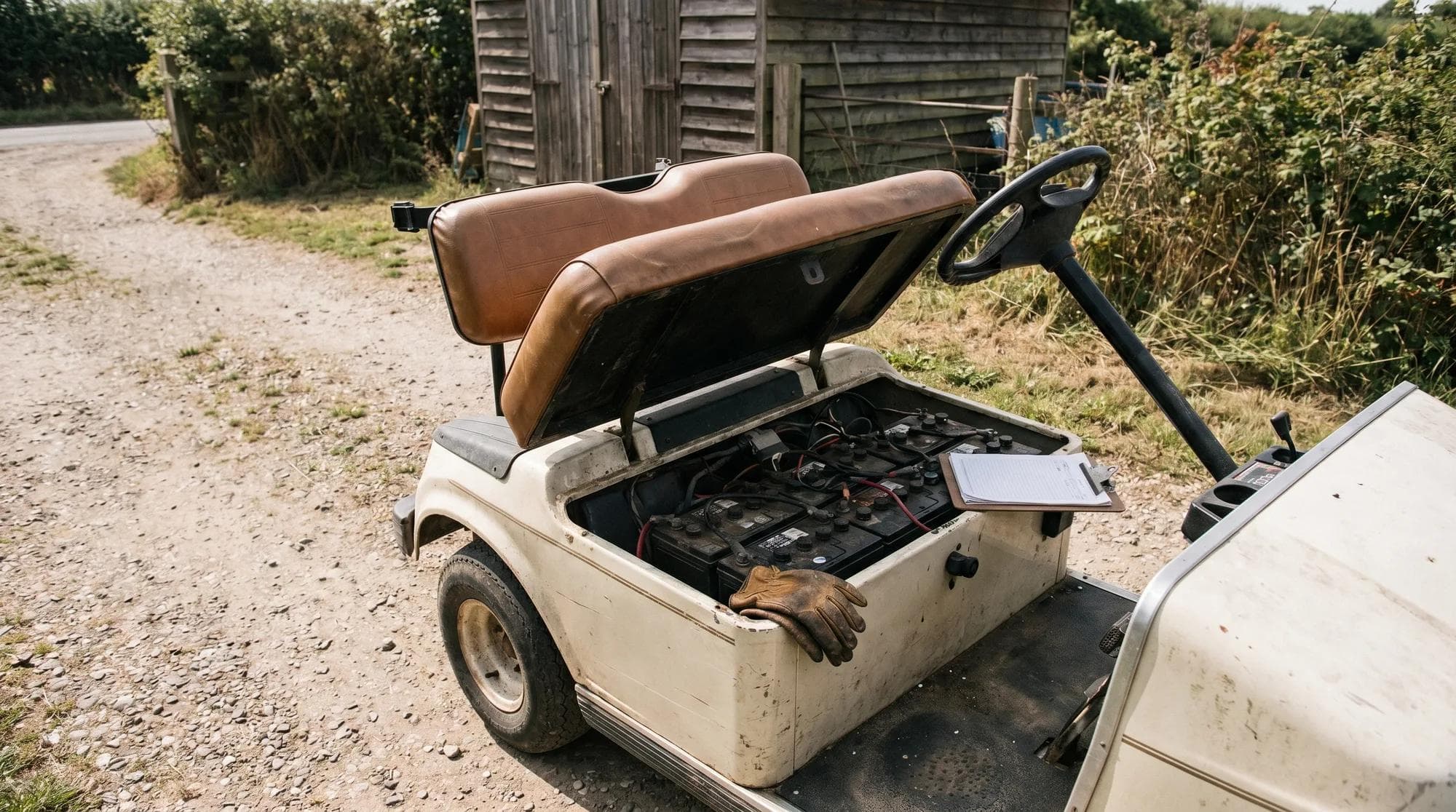
Used golf carts in the UK: a buyer's guide
What to check before buying a used golf cart in the UK, from battery age to warranty risk, and when a new bespoke build is the better long-term value.
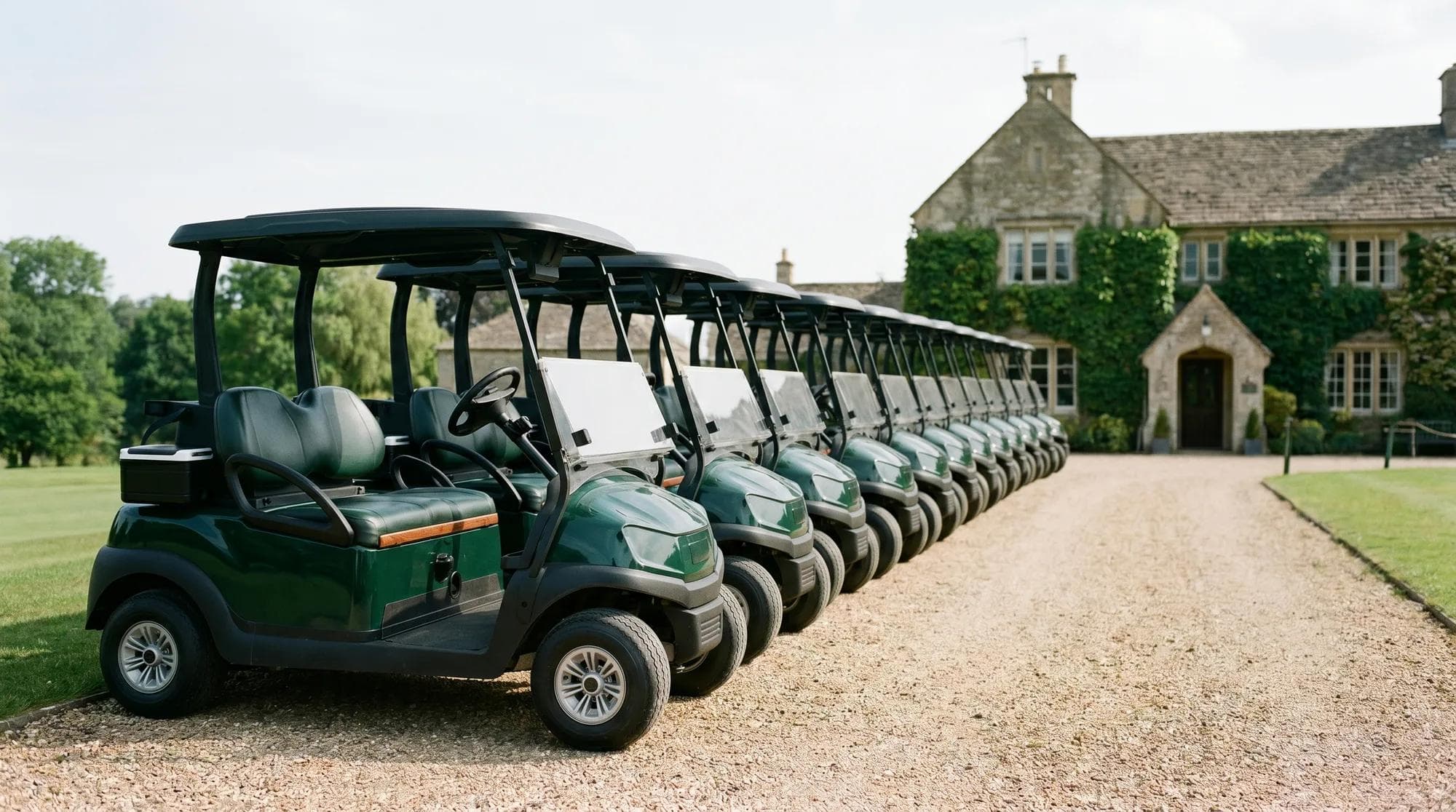
Custom fleet branding for electric and golf carts
How branded golf carts are made, from livery and wraps to upholstery and logos, and why a consistent custom fleet matters for resorts, clubs and estates.
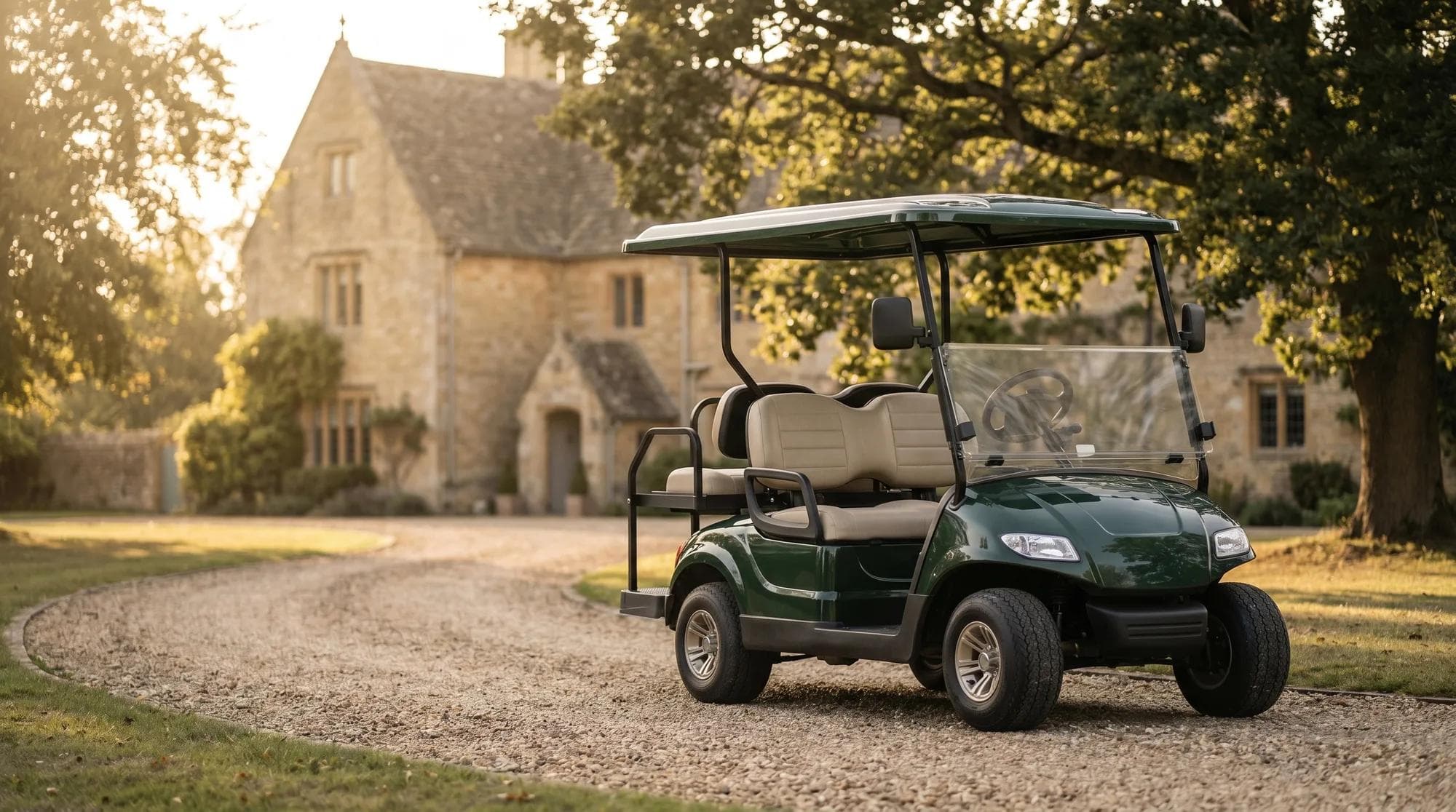
The complete electric golf cart buyers' guide
Buying an electric golf cart comes down to four decisions: how many seats you need, the battery, whether you will ever cross a public road, and your budget. Get those right and the rest follows. This guide walks through each one, with honest UK pricing from £11,500.
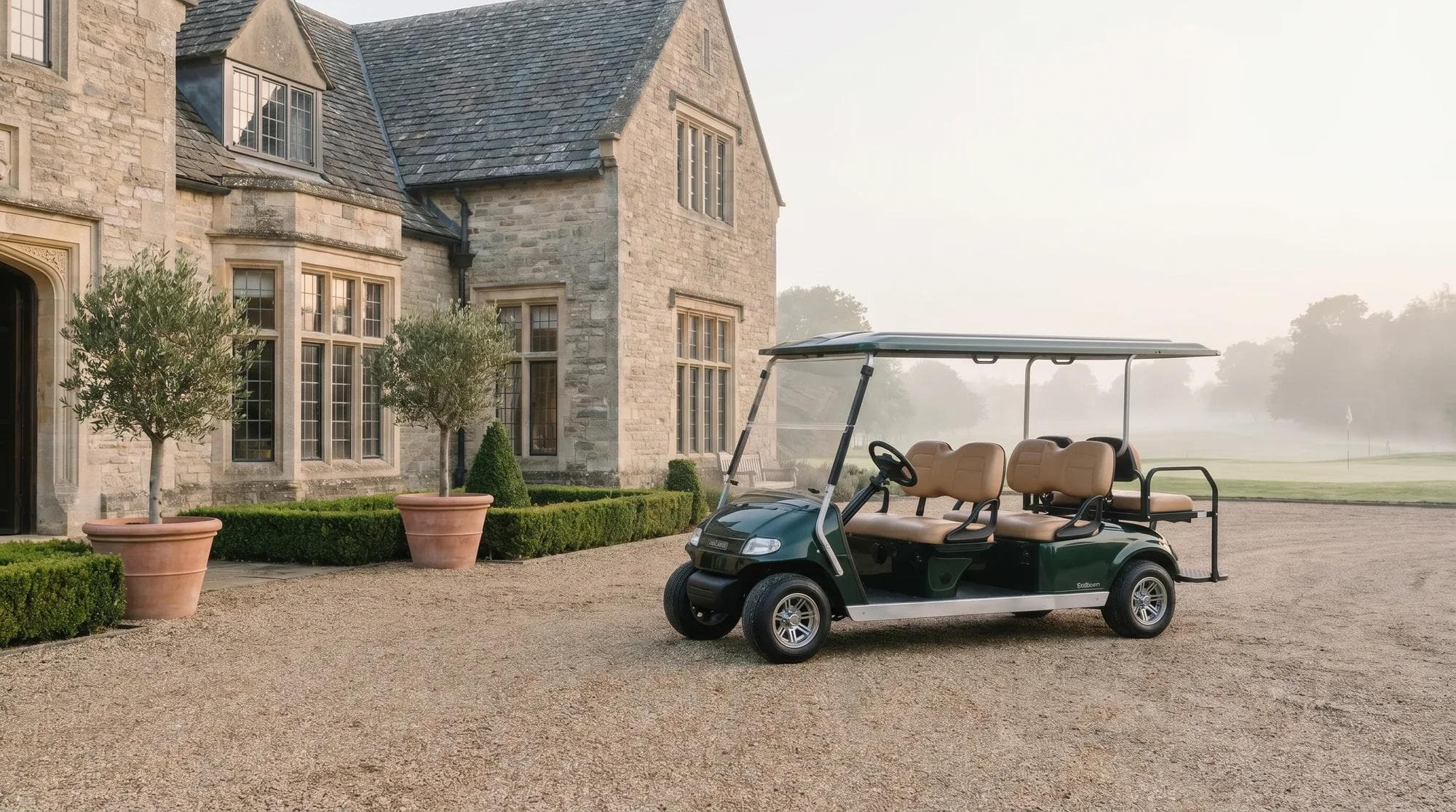
Golf cart finance and leasing explained
You don't have to buy a golf cart outright. Finance spreads the cost of owning one, while leasing rents it over a fixed term with predictable monthly payments. Which suits you depends on whether the cart is a long-term asset or a tool you'd rather expense. Here's how each works in the UK.
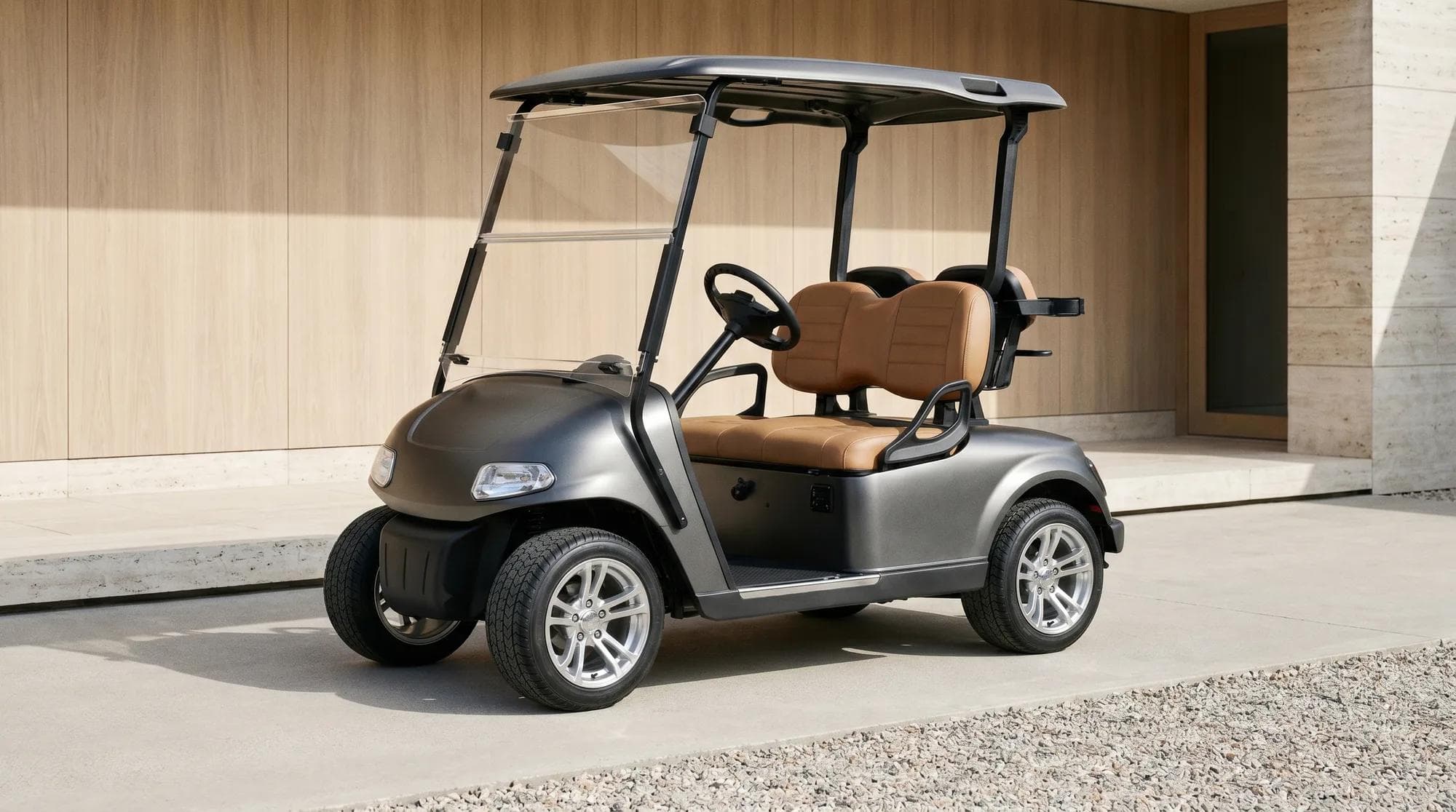
New vs used golf cart: which is the better buy?
A new cart gives you a known battery, a full warranty and a build specified for your use. A used one costs less up front but carries hidden risk, mainly the battery. For regular, long-term use, new usually wins on total cost. For light or occasional use, a good used cart can be the sensible buy.
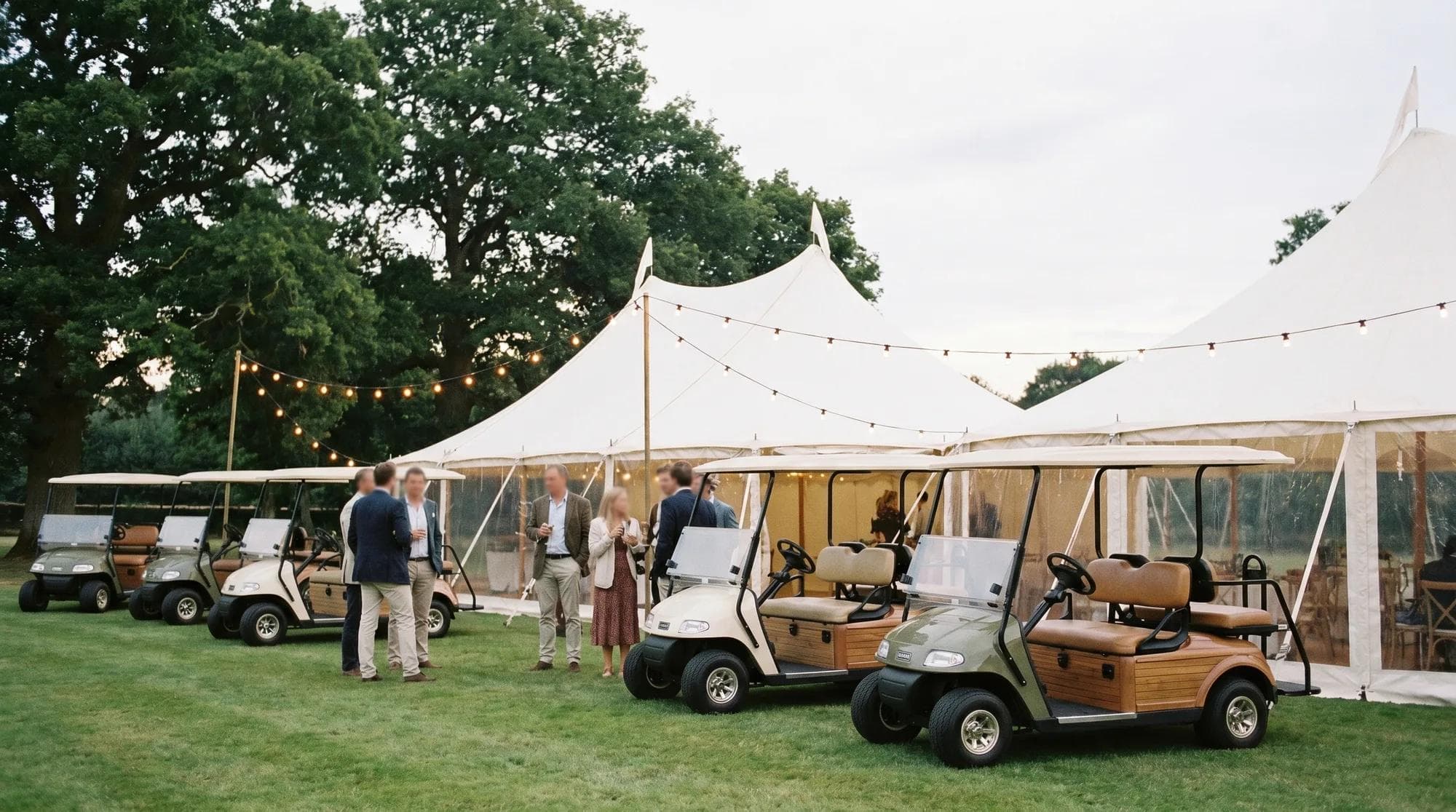
Hiring electric golf carts for events: a practical guide
Hiring electric golf carts for a wedding, festival or corporate event comes down to a few decisions: how many you need for the busiest moment, separating crew, VIP and kit duties, branding, drivers, and safe routes on a busy site. This guide walks through each so the fleet fits the day.
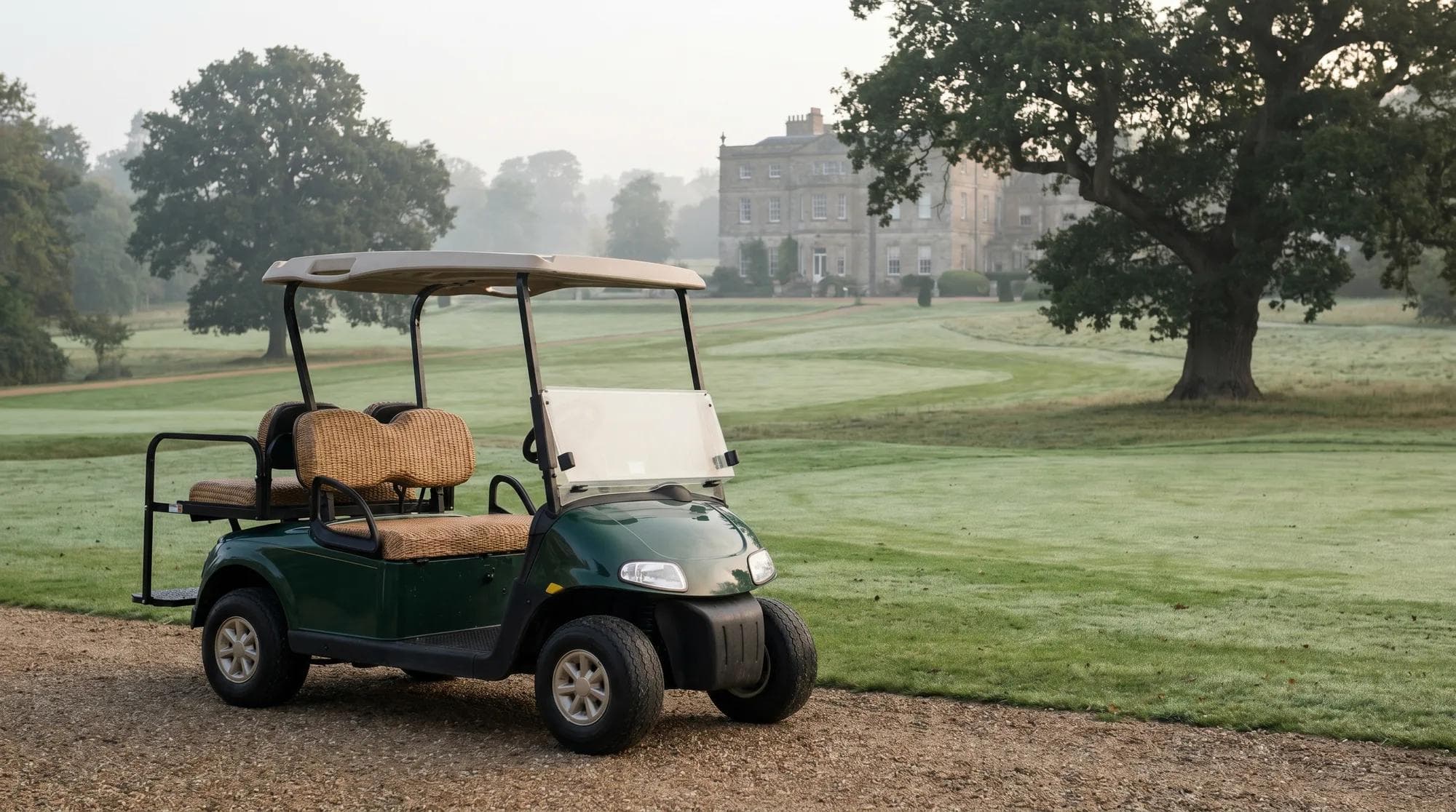
Electric vs gas golf carts: the full comparison
An electric vs gas golf cart comparison comes down to noise, maintenance, fumes, performance and cost. Electric wins on almost every count for private-land use: it's quieter, cleaner and simpler to live with. Gas only holds a narrow edge for very long, remote work with no charging.
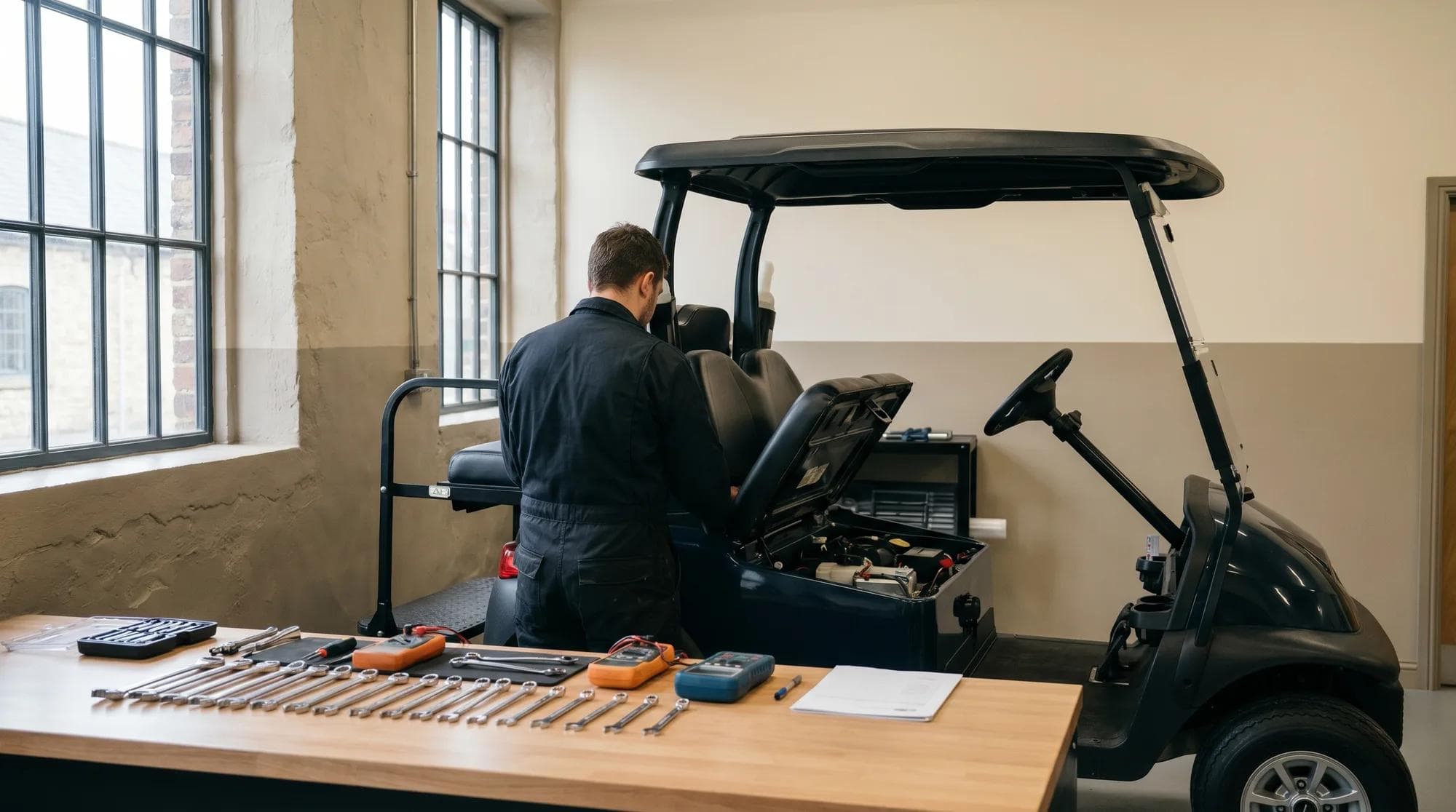
Common golf cart faults and how to fix them
Most golf cart faults trace back to one place: the battery or charger. A cart that won't go, loses power, charges slowly or feels weak is usually telling you about its pack, its connections or its charger, not anything mechanical. Start there, check the simple things first, and you'll fix most problems fast.
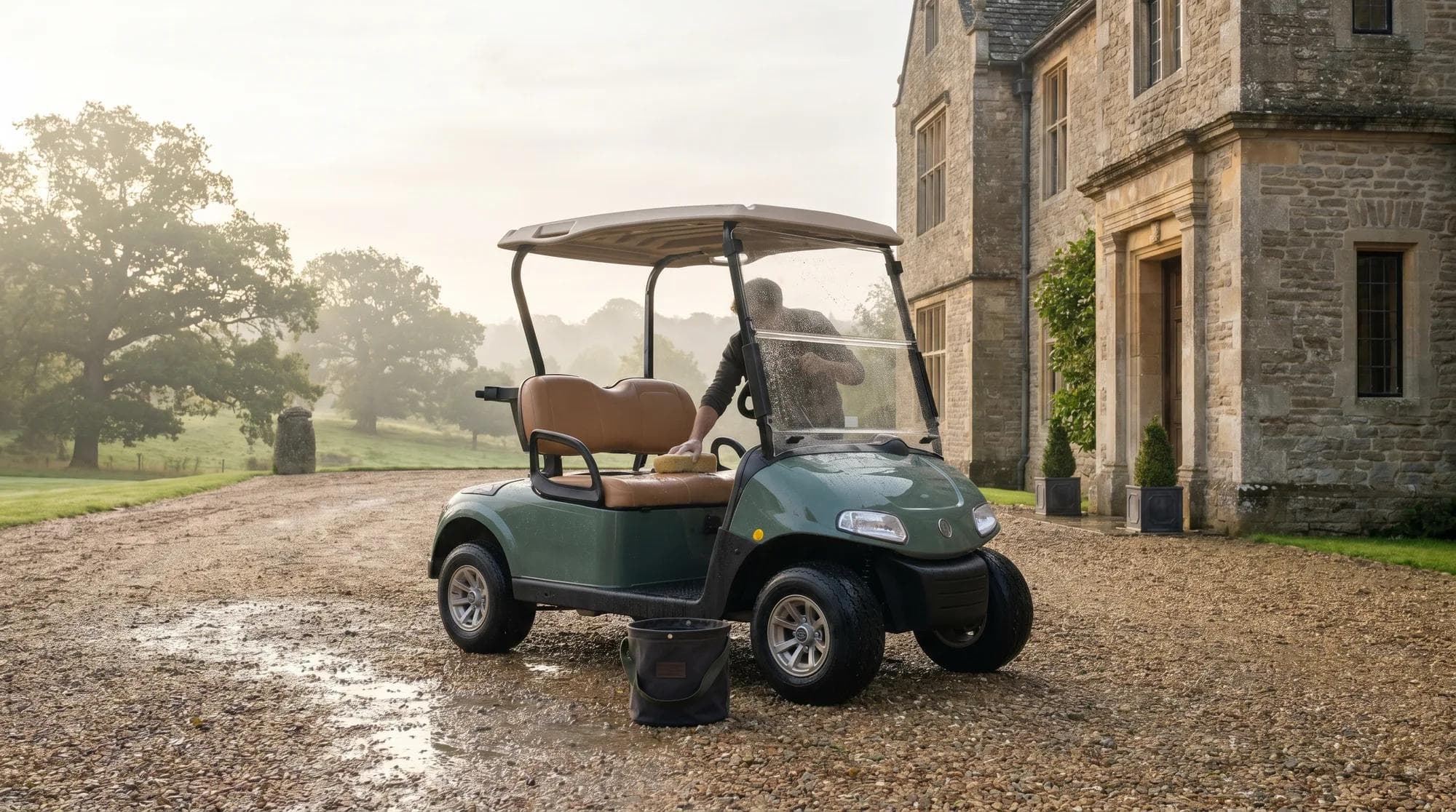
Electric golf cart maintenance checklist
Good golf cart maintenance is mostly small, regular habits: check tire pressures and brakes, keep the battery charged and clean, look after the connections, and wash off grime before it bites. Do a little weekly, a bit more monthly, and a proper seasonal check, and a cart will run sweetly for years.
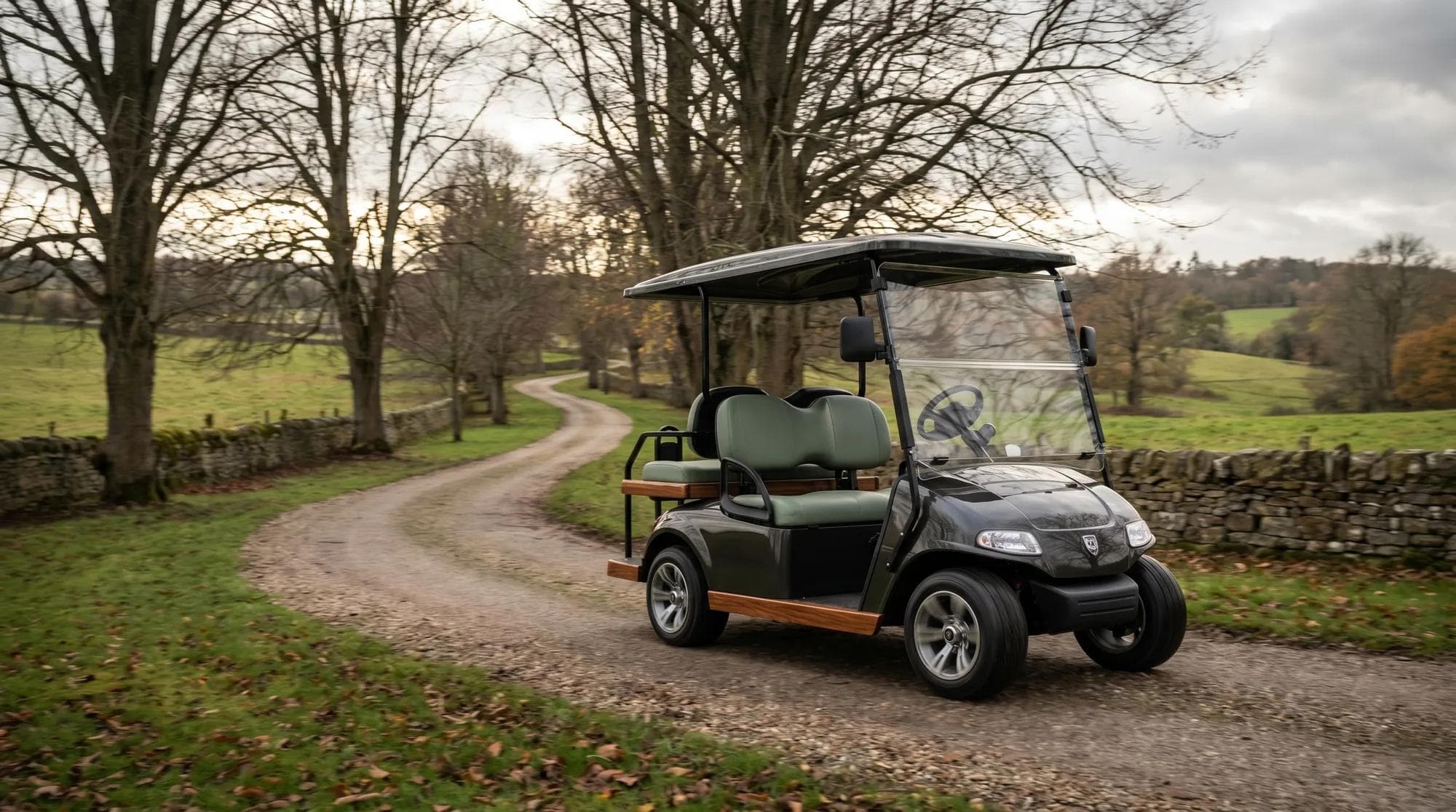
How fast does a golf cart go?
A standard electric golf cart tops out at roughly 12 to 15 mph, which is a brisk walking-to-jogging pace. Low-speed, road-going versions are built to go faster, around 20 to 25 mph. The limit is deliberate: it keeps the cart safe and legal for where it's used.
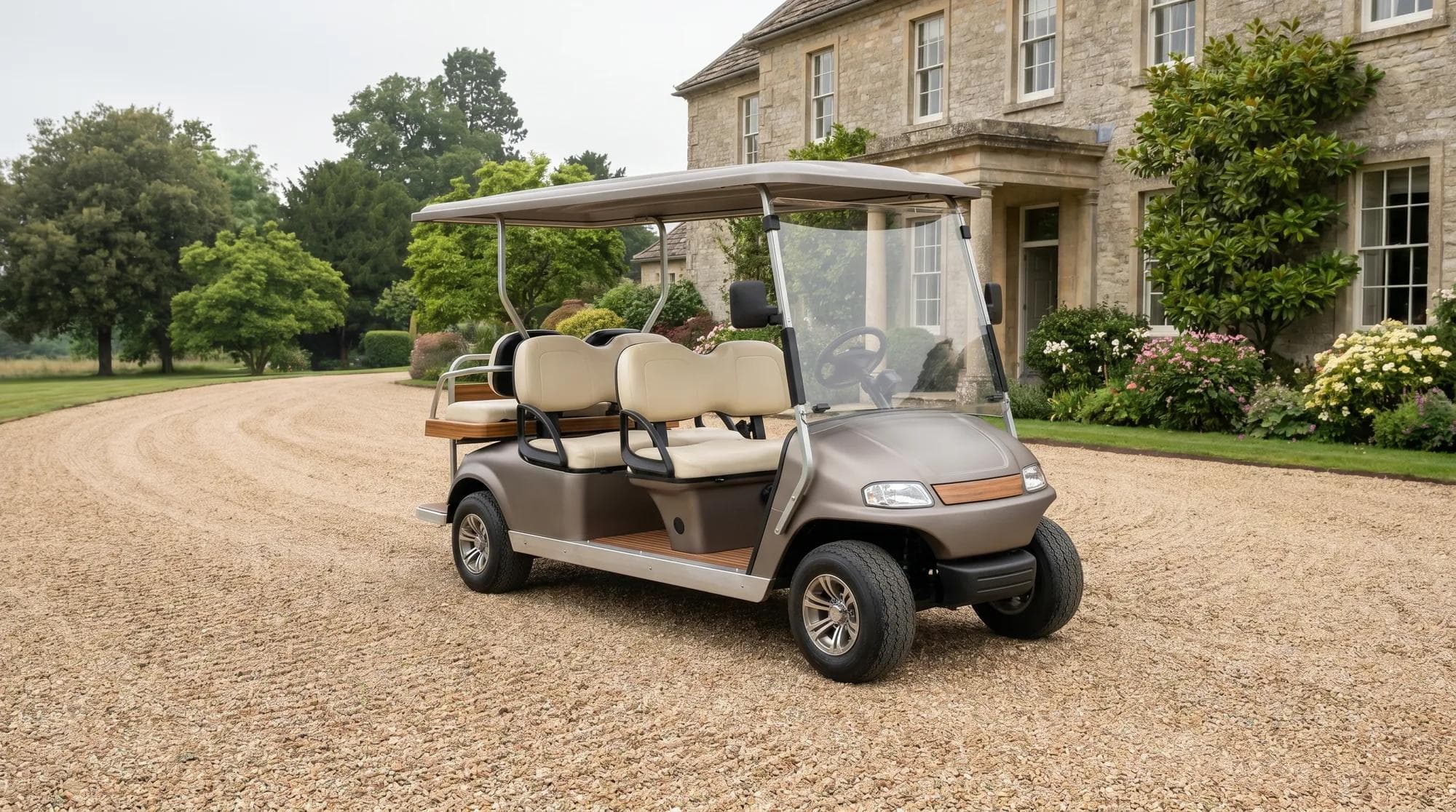
How much does an electric golf cart cost in the UK?
A clear, honest breakdown of what electric golf carts cost in the UK in 2026, from entry models to bespoke fleets, and what actually drives the price.
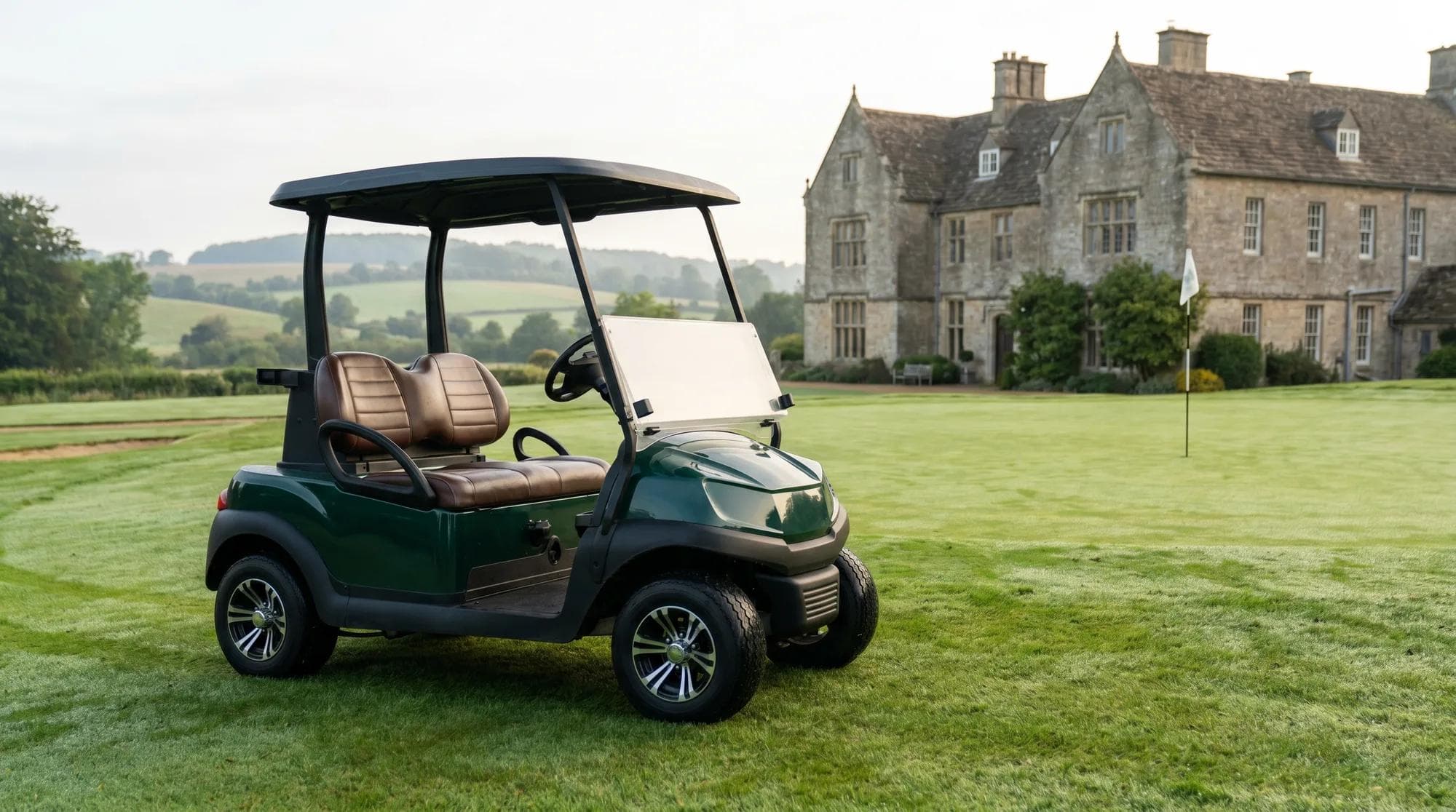
What is the difference between a golf cart and a golf cart?
Almost nothing. They're the same vehicle. "Golf cart" is the British term and "golf cart" is the American one, so most of the time the two words describe the same thing. The only wrinkle is that "cart" also gets used for utility and passenger versions, not just the golfing kind.
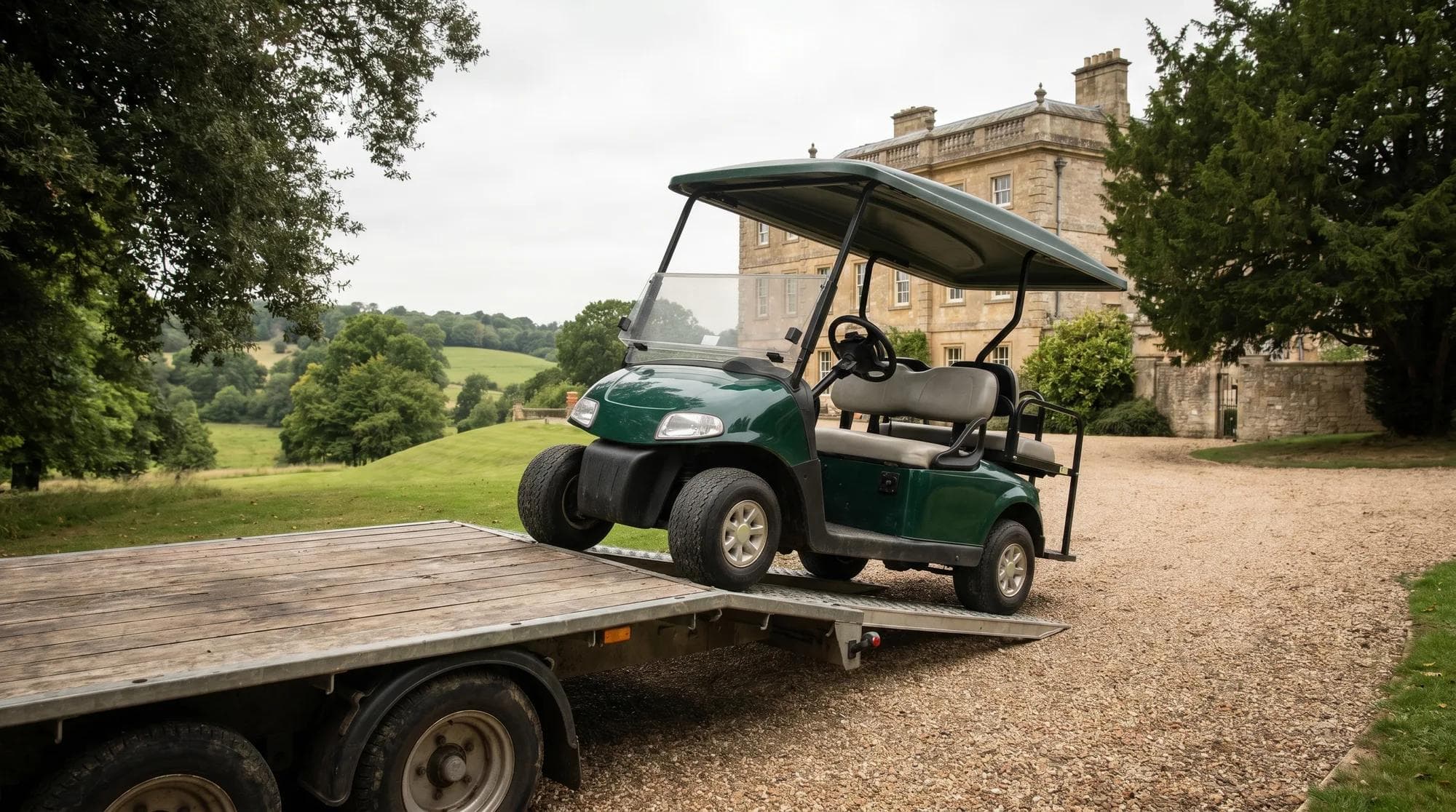
How much does a golf cart weigh?
Golf cart weight usually sits between roughly 300kg and 800kg, depending on size and battery. A two passenger is typically the lightest, an eight passenger the heaviest, and lithium shaves real weight off a lead-acid equivalent. Weight matters for towing, trailers, ground protection and transport.
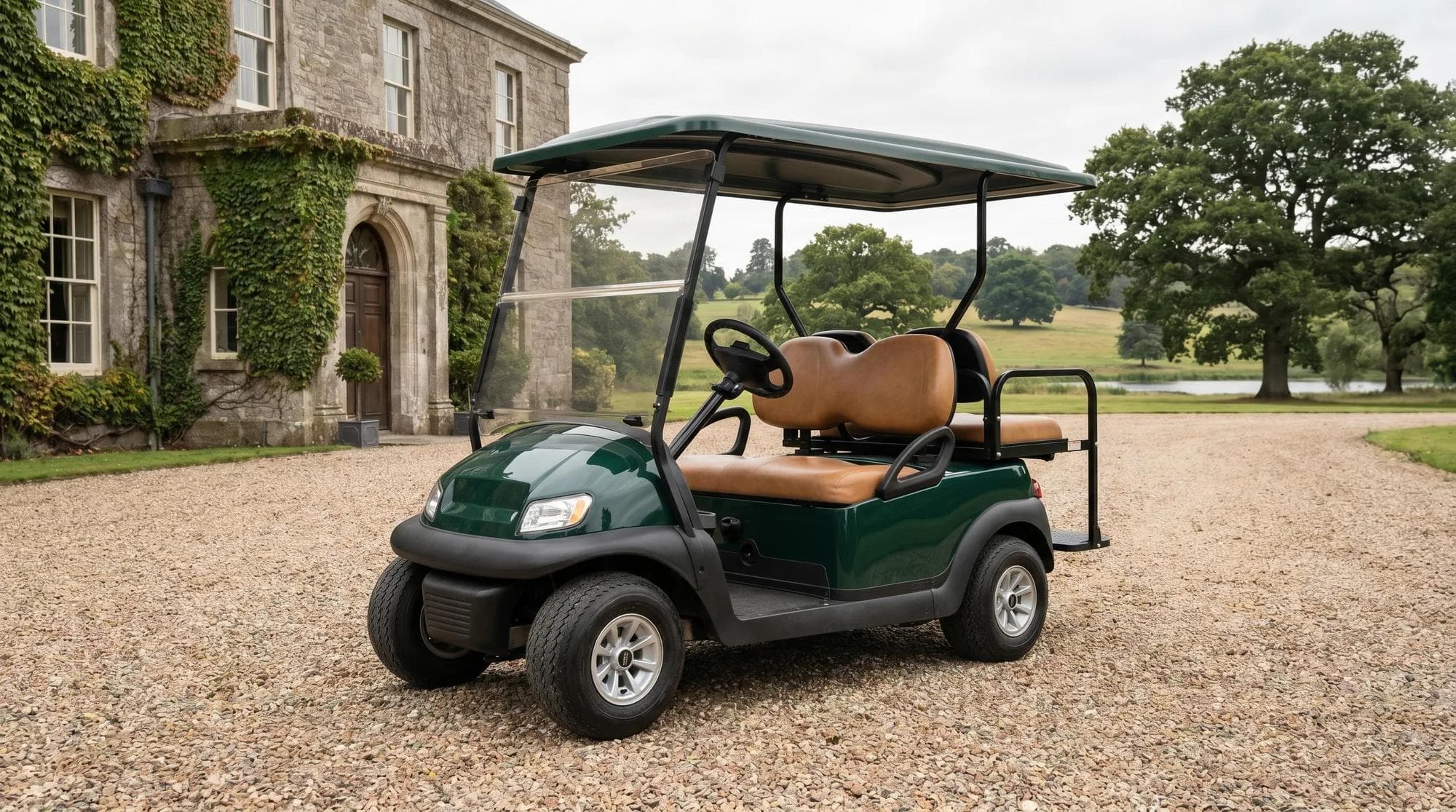
How long do golf carts last?
A well-built golf cart lasts many years, comfortably outliving several sets of batteries along the way. The body, frame and motor are the long-haul parts. Build quality, regular maintenance, dry storage and a good lithium battery all stretch a cart's lifespan, while neglect cuts it short.
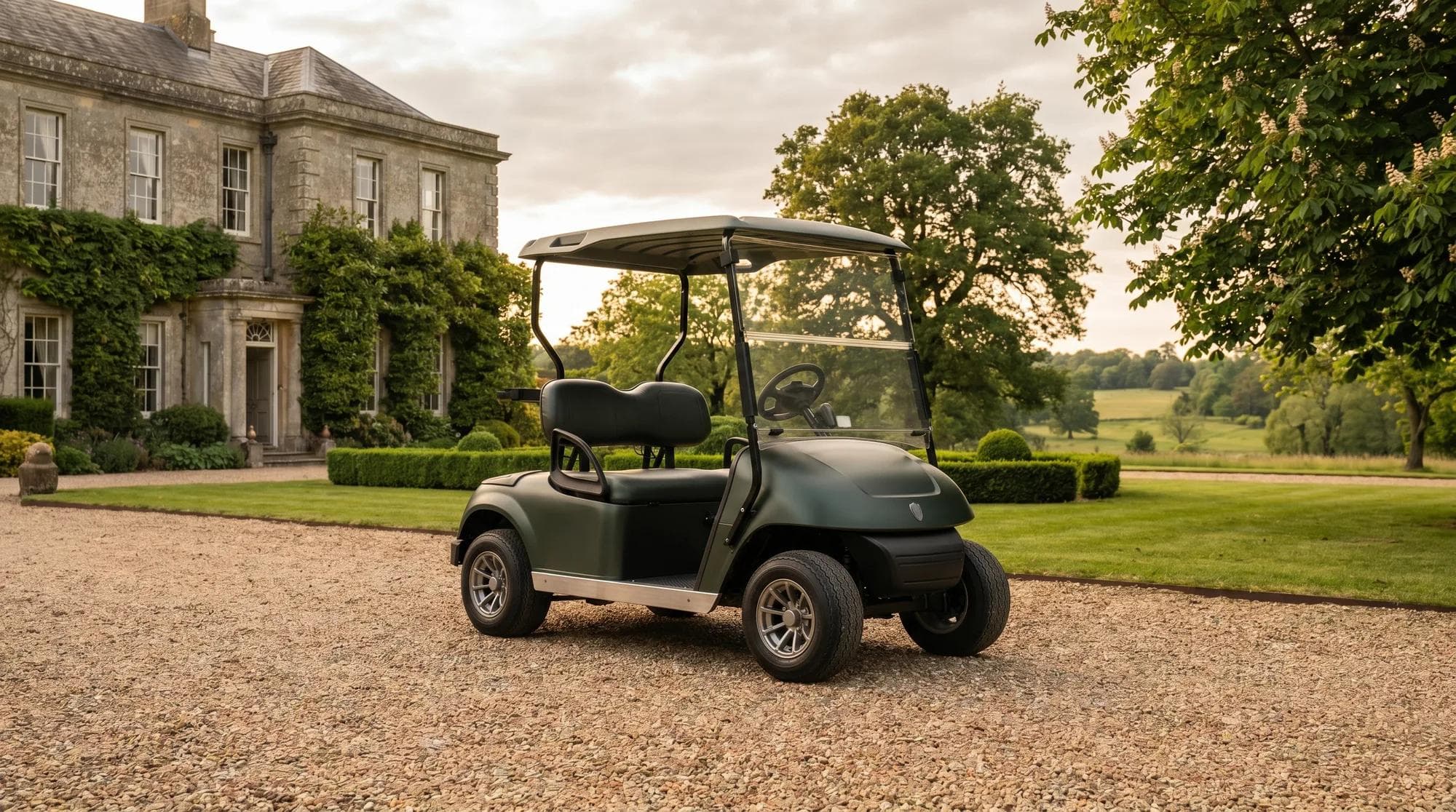
Are electric golf carts worth it?
Are electric golf carts worth it? For most people who'll use one regularly across private land, yes. They're quiet, clean, cheap to run and barely need servicing, which usually pays back the higher up-front cost over time. For very light, occasional use, the sums are closer.
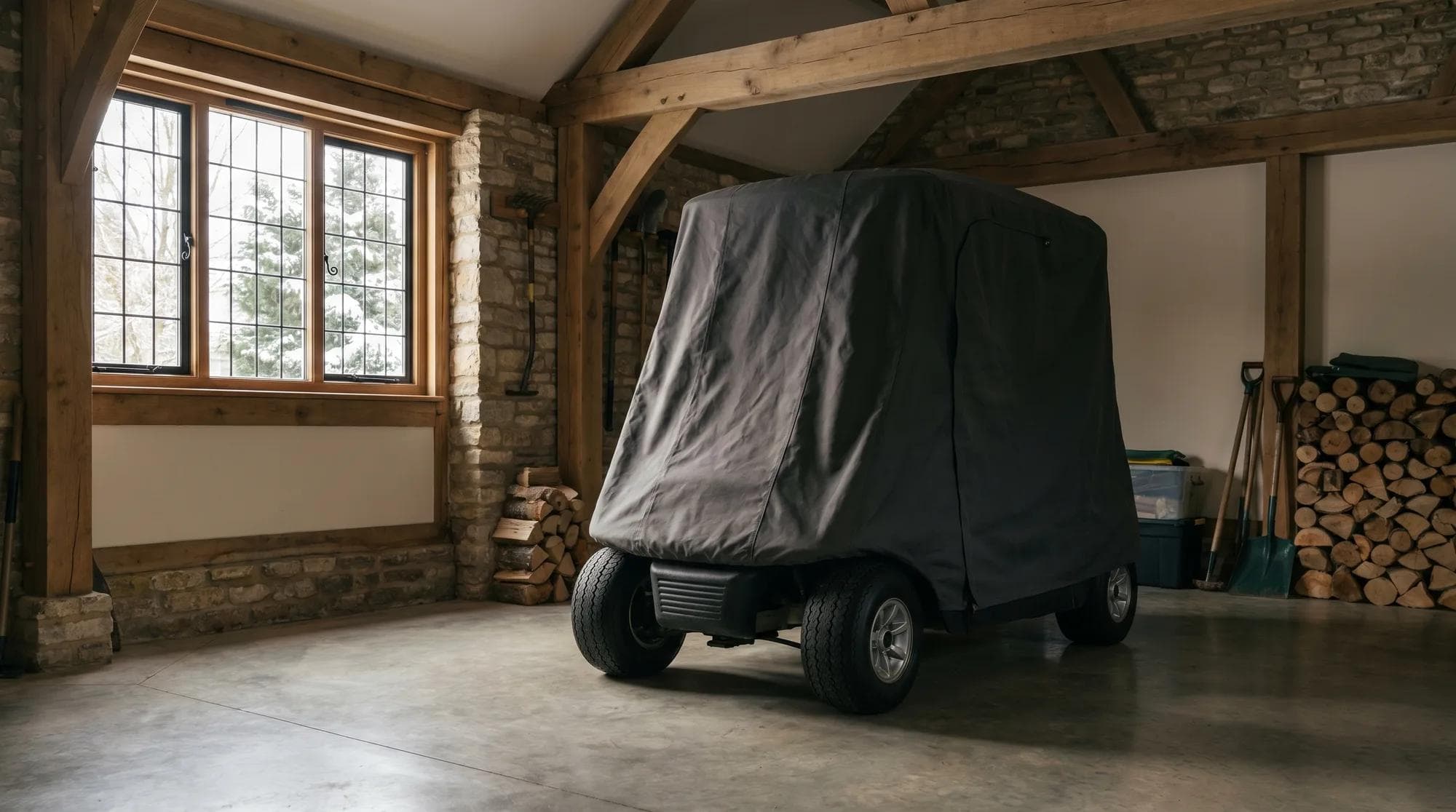
How to store a golf cart over winter
To store a golf cart over winter, clean and dry it, look after the battery and keep it charged, set the tires and brakes, then park it covered in a dry, ventilated space. Check on it every few weeks and recommission it carefully in spring.
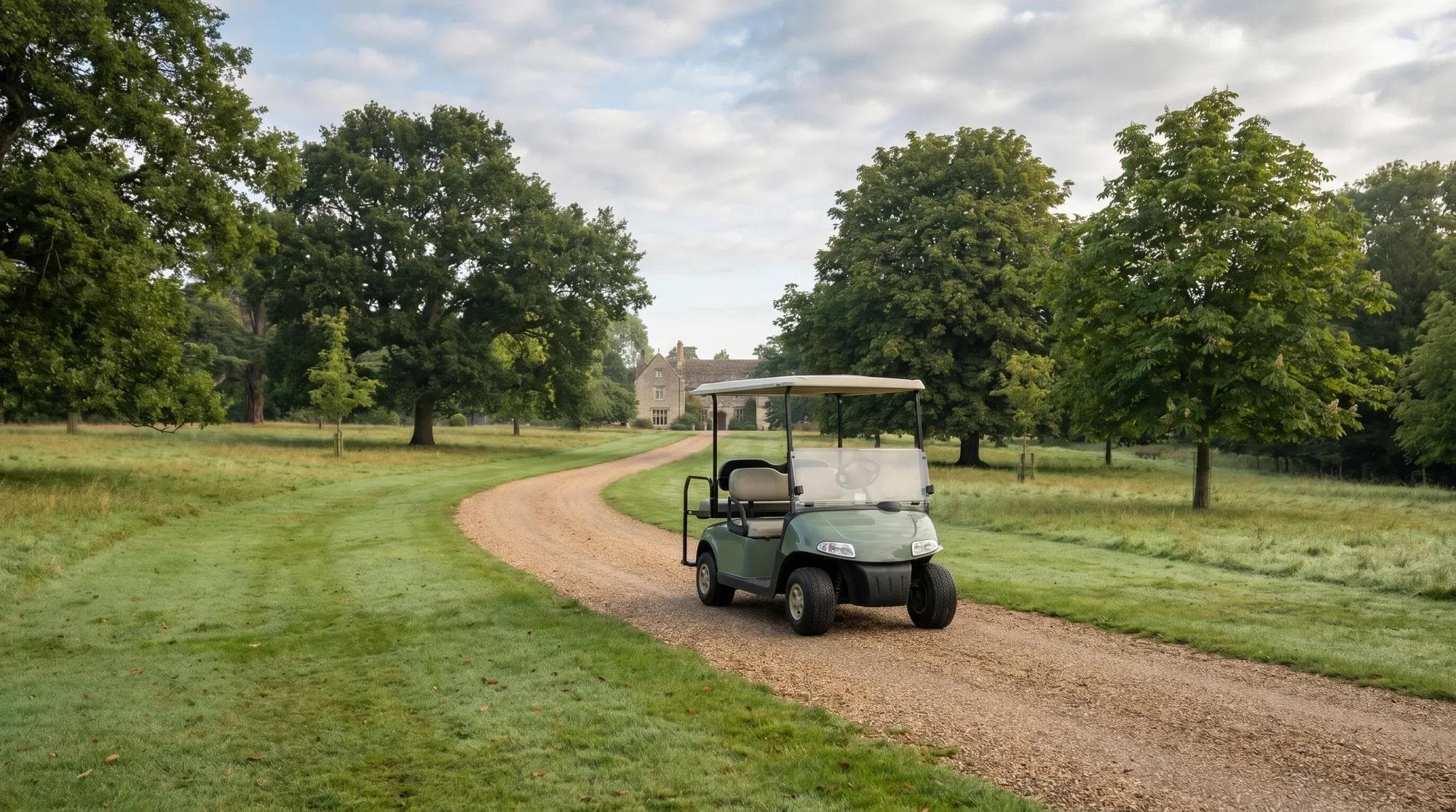
Electric golf cart environmental benefits explained
The electric golf cart environmental case is simple: no exhaust emissions where it's driven, and near-silent running, so air quality improves and noise drops across a site. For clubs, resorts, estates and councils with net-zero or guest-experience goals, that's a real, defensible win, not a marketing slogan.
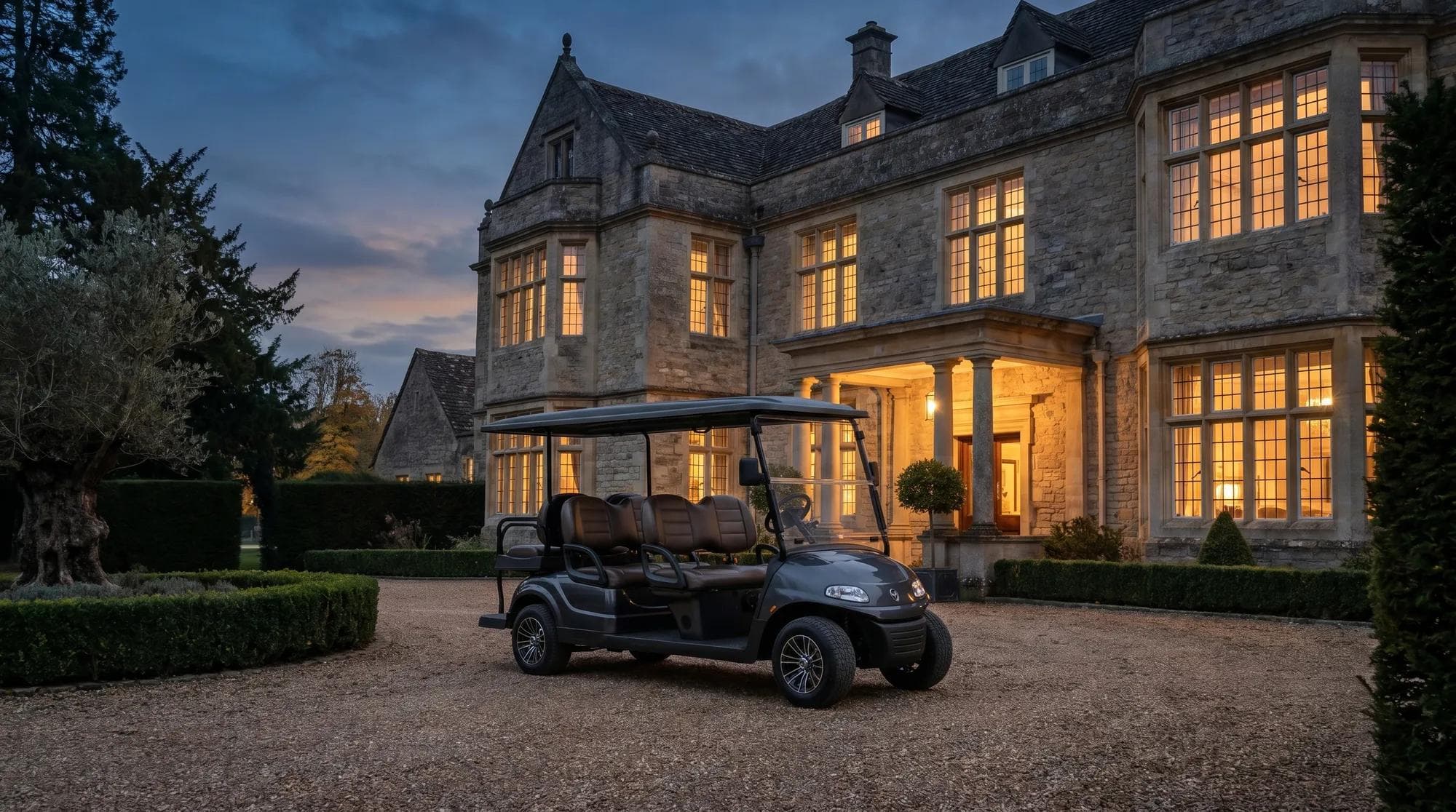
Buying electric golf carts for a resort: a buyer's guide
Which models, how many seats, and what they cost: a buyer's guide to choosing the right electric golf carts for a resort or hotel before you order.
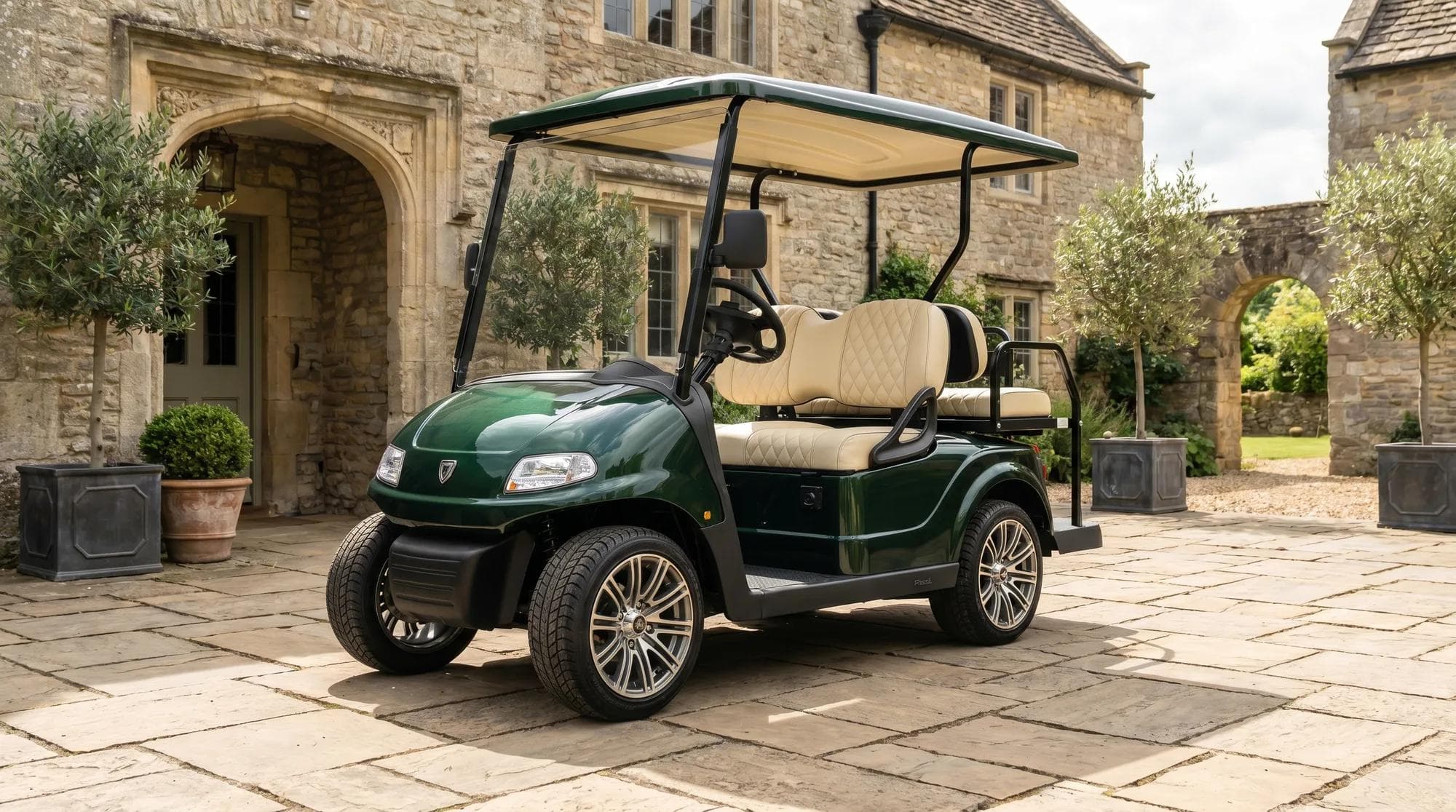
What can you customize on a bespoke electric cart?
Almost everything. On a bespoke electric cart you choose the color and finish, the trim and upholstery, the seating and layout, the roof and weather kit, the wheels, the fit-out and accessories, and any branding or livery. Special-purpose builds go further still. The only real limit is what you can picture.
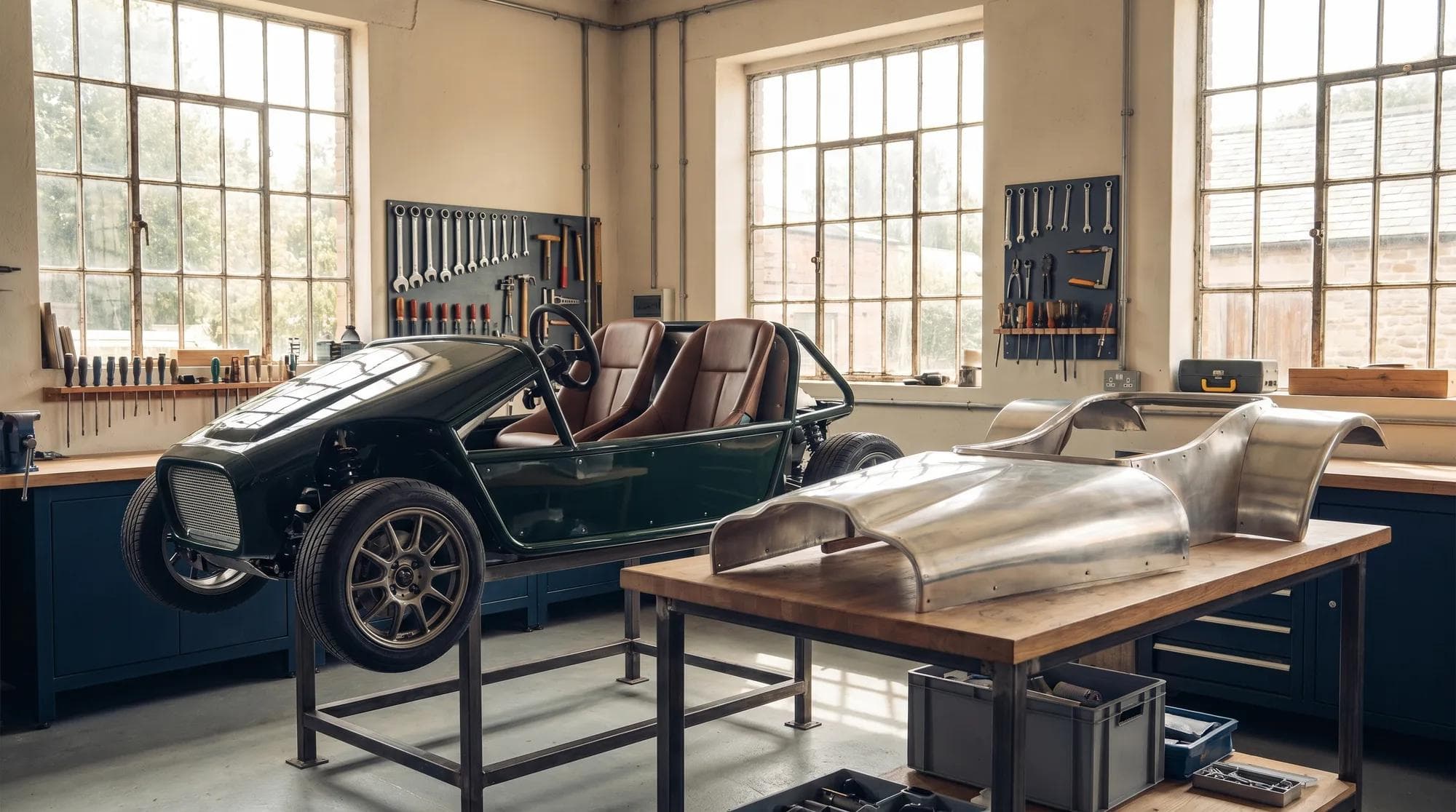
How a bespoke electric cart is made, step by step
A bespoke electric cart is made to order in clear stages: a conversation about how you'll use it, a specification and design, the build, finishing and quality checks, then delivery and commissioning to your door. Aftercare runs from there. Here's how the whole journey works.