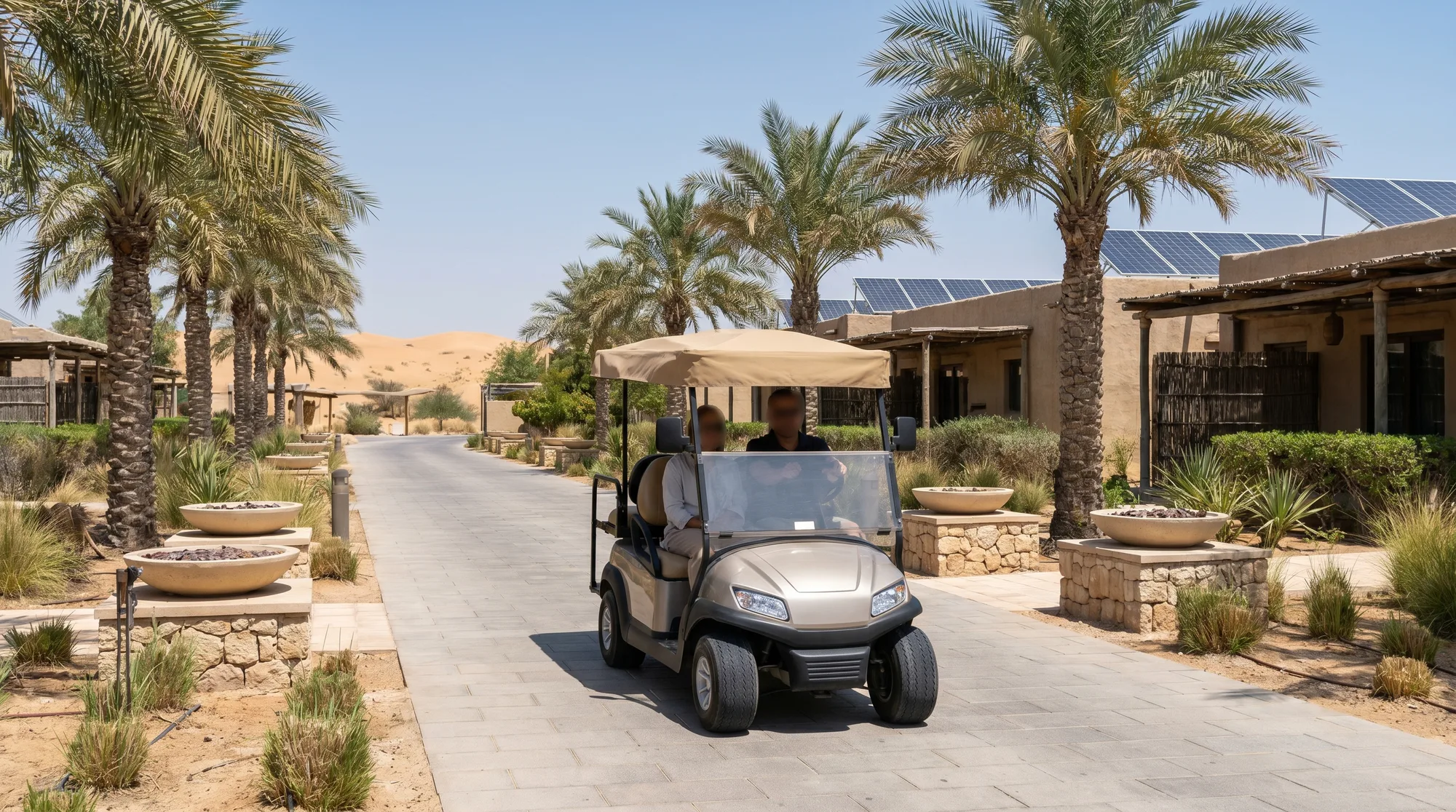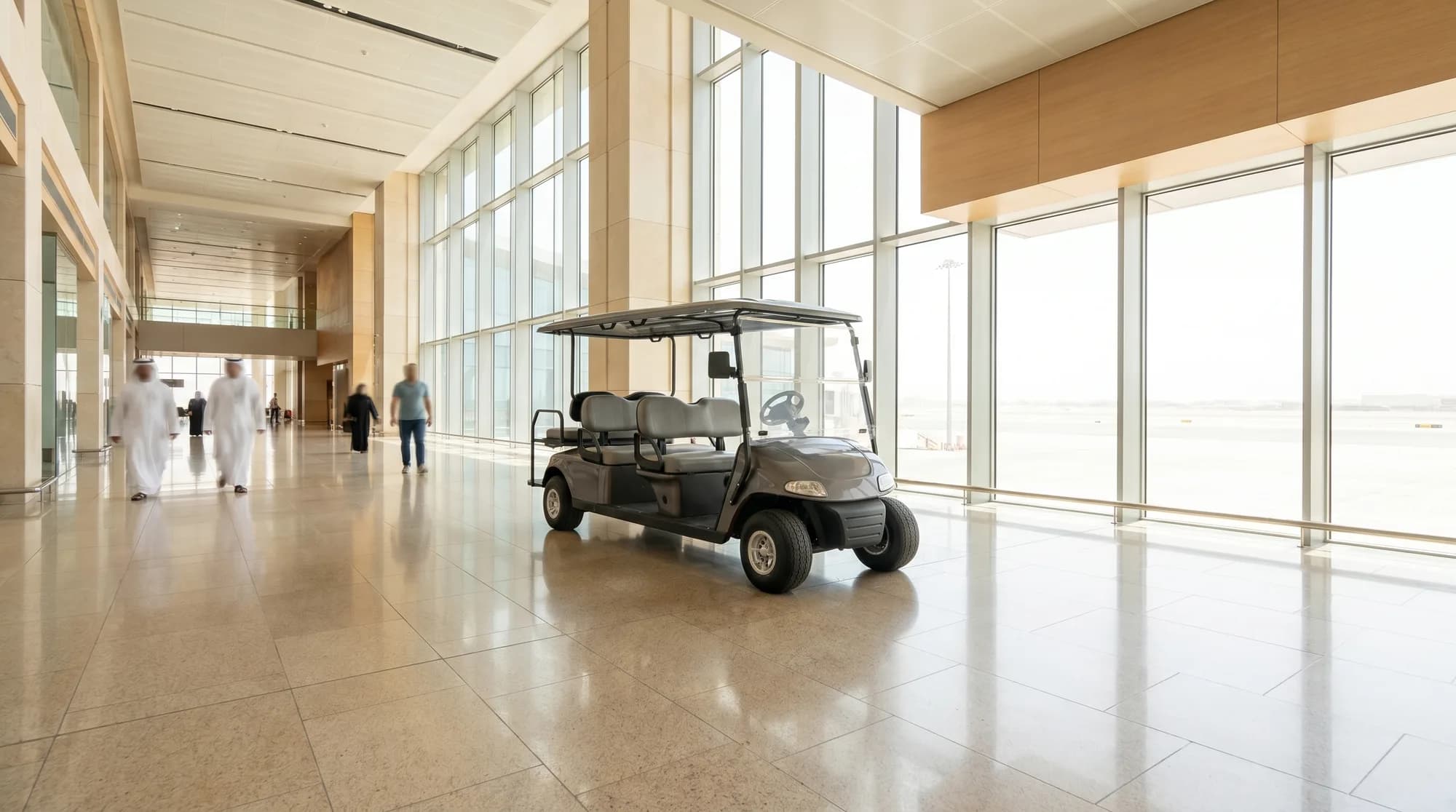
UAE airports are vast, and the distance from check-in to a far gate can defeat anyone short on time or mobility. Electric passenger buggies are how operators close that gap. Inside the terminal they carry travellers along concourses to distant gates; in assisted-travel they move passengers with reduced mobility (PRM) with dignity; and on the apron, ground-handling teams use buggies and tugs to move crew and staff between aircraft and facilities. These are operator vehicles used airside and landside, not RTA road-registered vehicles, and that distinction shapes everything about how they are specified and run.
An airport buggy programme is judged on reliability, accessibility and uptime. A buggy that fails mid-concourse during a peak bank of departures is not an inconvenience; it is a passenger who misses a flight. So the priorities here are availability, smooth assisted travel and a charging regime that keeps a large fleet ready around the clock.
Airside, landside and assisted travel
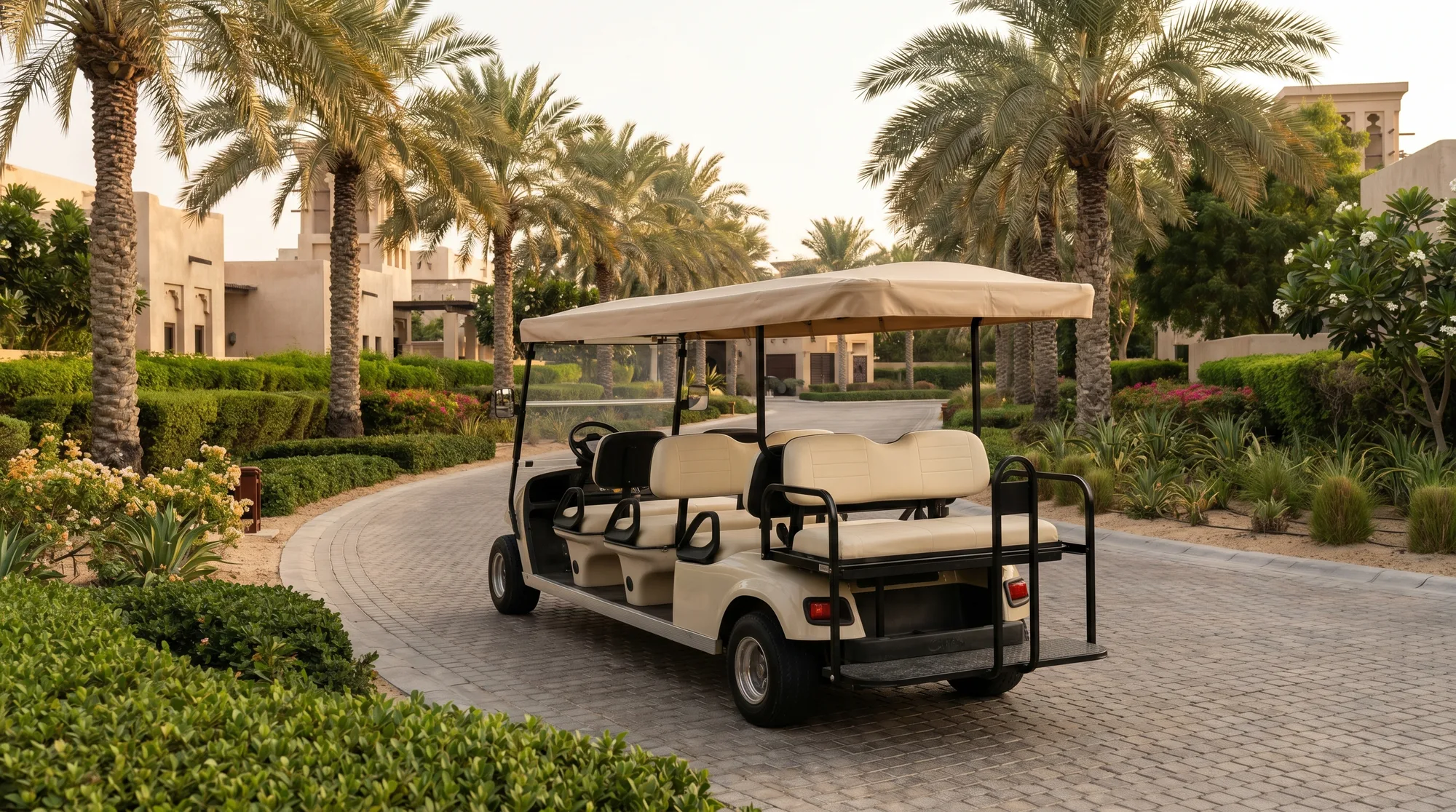
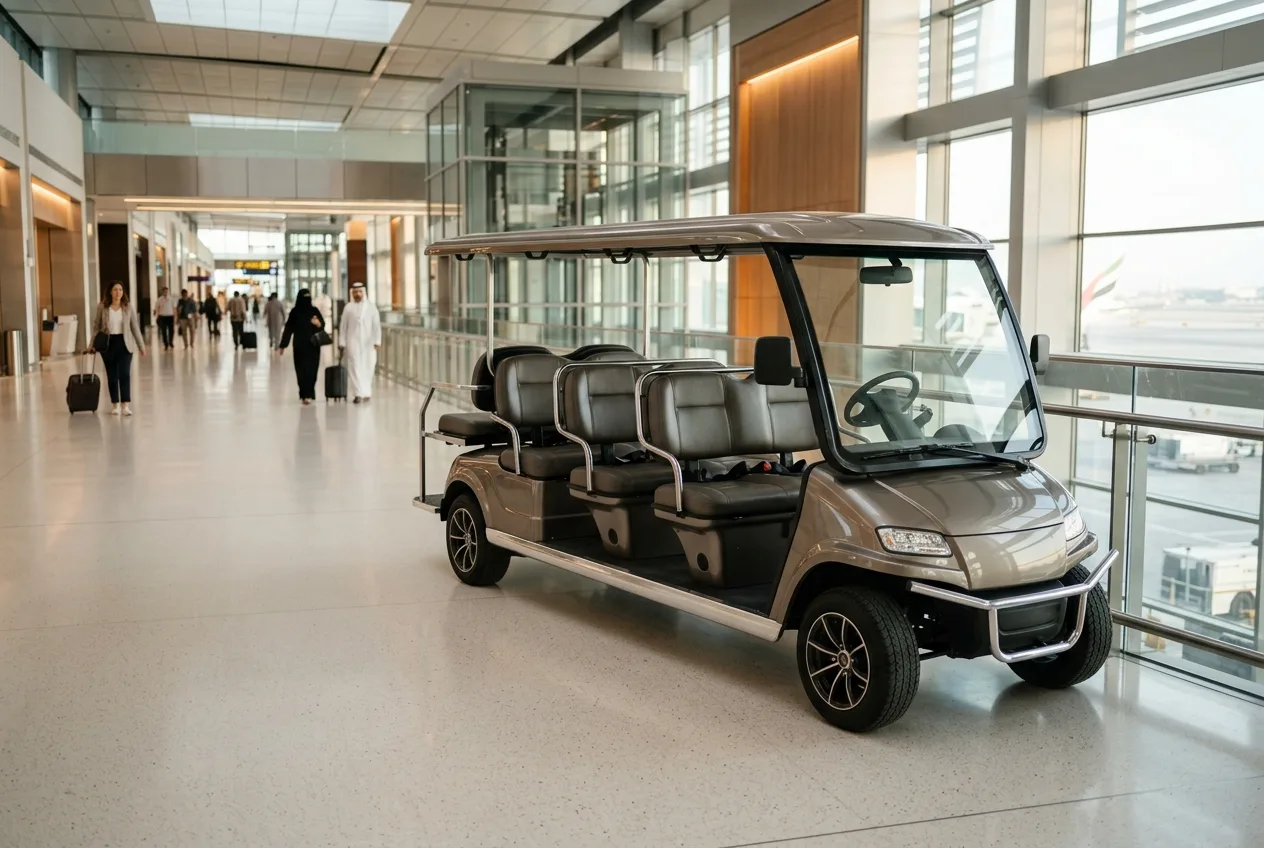
Airport buggies do three distinct jobs. Landside, in the public terminal, they shuttle travellers between check-in, security and distant gates, easing long concourse walks. In the assisted-travel service, dedicated buggies and staff move PRM passengers along the same routes with care and priority. Airside, beyond security and on the apron, ground handlers use personnel carriers and tugs to move crew, staff and equipment around aircraft stands.
Each role has different requirements. Terminal buggies prioritise smooth low-speed handling and tight manoeuvring in crowds. Assisted-travel vehicles prioritise easy boarding and stability. Apron vehicles face a tougher environment of weather, fuel proximity and strict safety rules. What unites them is that the airport operator and ground handler, not the RTA, govern where and how they run.
- Where
- Landside, public concourse
- Priority
- Smooth low-speed handling in crowds
- Where
- Landside and to the gate
- Priority
- Easy boarding, stability, dignity
- Where
- Airside, apron
- Priority
- Reliability in a controlled, safety-critical zone
| Where | Priority | |
|---|---|---|
| Terminal passenger shuttle | Landside, public concourse | Smooth low-speed handling in crowds |
| Assisted travel (PRM) | Landside and to the gate | Easy boarding, stability, dignity |
| Crew and staff transfer | Airside, apron | Reliability in a controlled, safety-critical zone |
Accessibility is the headline requirement
Assisted travel is where airport buggies matter most, and where build quality shows. A PRM passenger needs to board with the least effort, sit securely and travel without anxiety. That means a low step-in, supportive seating, grab handles, stable handling and the option to carry a wheelchair user where needed. A driver trained in assisted-travel etiquette completes the service.
- Low boarding height and grab handles for easy, dignified access.
- Stable, predictable handling at the low speeds used in terminals.
- Provision to carry a wheelchair passenger where the service requires.
- Quiet, calm operation suited to anxious or frail travellers.
Sizing the fleet to peak banks
Airports do not flow evenly. Traffic comes in banks: a wave of departures, then arrivals, then quiet. A fleet sized to the daily average leaves passengers stranded during the peaks that actually matter. Size instead to the busiest bank, when the most travellers need a ride to far gates and the assisted-travel desk is fullest, then run spares to cover charging and faults.
Charging a round-the-clock fleet
An airport that runs through the night cannot send buggies home to charge. The answer is a managed charging strategy: opportunity charging during quiet periods, a rotation so the fleet is never all on charge at once, and lithium packs that recover quickly between banks. Plan charging points near the assisted-travel base and crew rooms so vehicles top up close to where they work.
Lithium chemistry suits this profile because it tolerates frequent partial charges without harm, sustains performance through long shifts and copes with the heat of apron and service areas better than lead-acid. The goal is a fleet that is always more ready than parked.
Durability and specifying for hard use
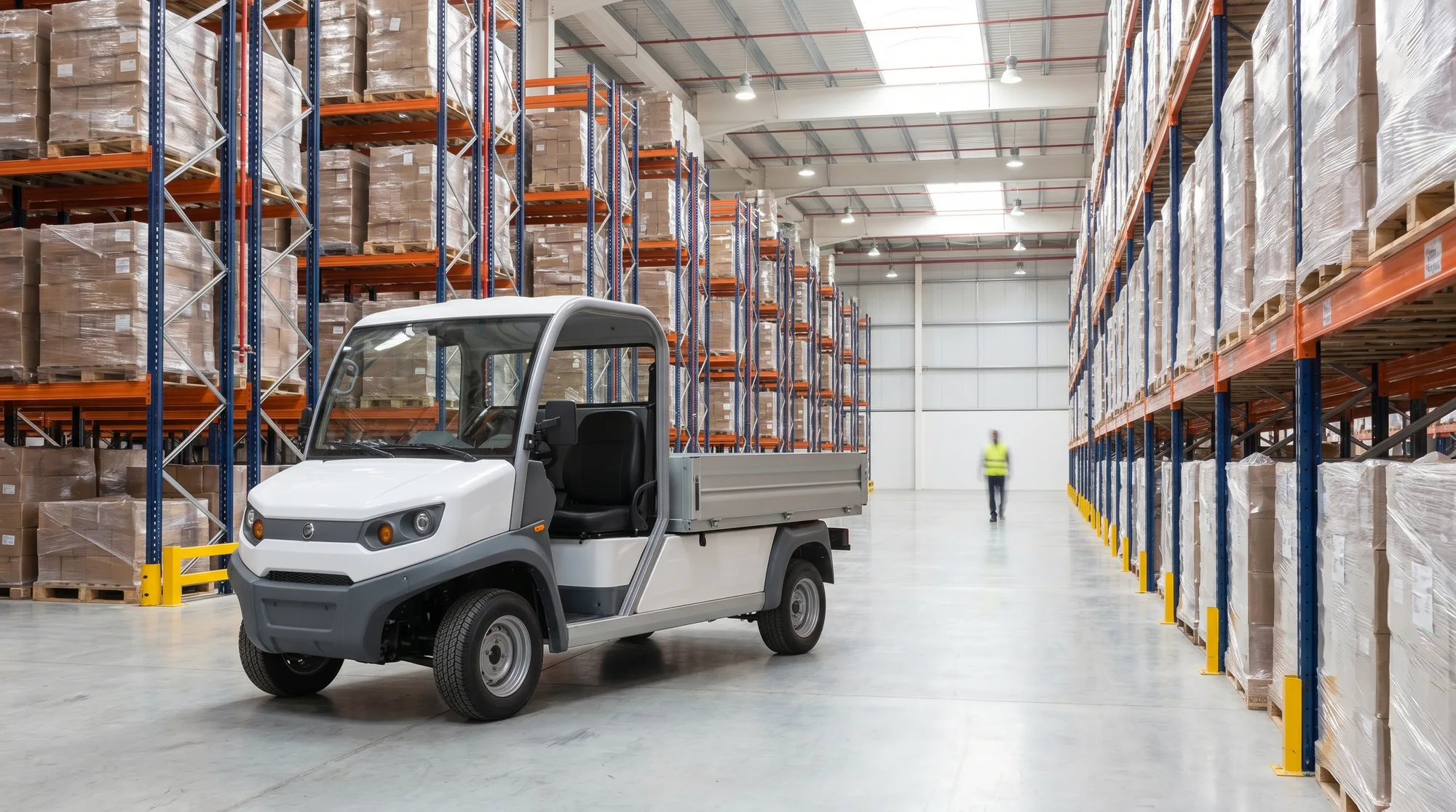
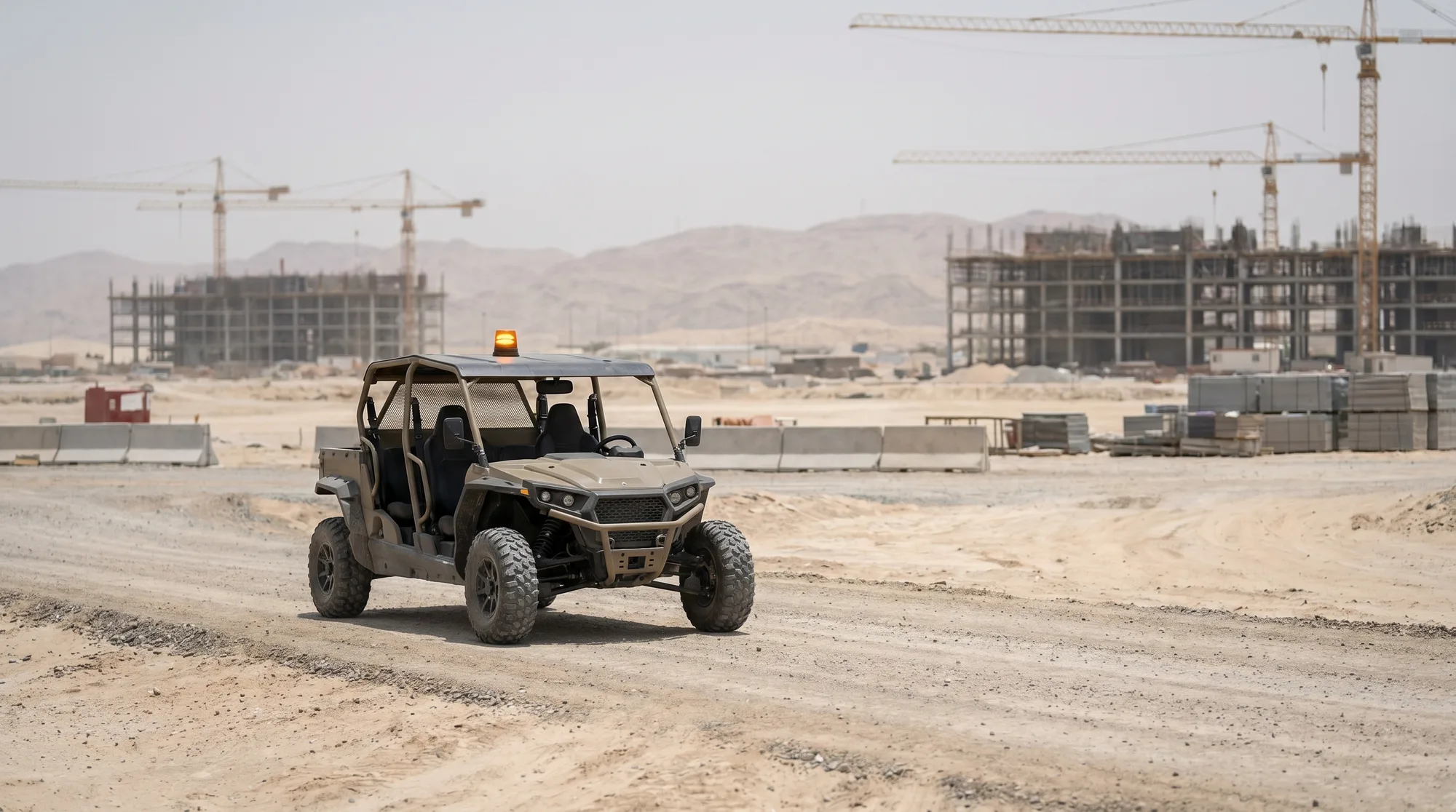
Airport buggies run almost continuously, indoors over polished floors and outdoors on the apron. They need a build that takes that punishment: hard-wearing seating, robust controls, and apron-spec protection against weather and dust. The same heavy-duty thinking applies to other operator fleets such as warehouses and logistics and construction and industrial sites, and across a wider airport estate the transport overlaps with facilities management.
Procurement is best handled as a managed fleet with parts and servicing planned in, because uptime is the metric that matters most. For indicative budgeting see how much a golf cart costs in the UAE, then specify a configuration for your terminal via /request-a-quote.
Drivers, training and the passenger experience
At an airport the buggy is only as good as the person driving it. A terminal driver works in crowds of distracted, hurried and sometimes anxious travellers, so calm, predictable driving and constant awareness matter more than speed. Assisted-travel drivers need that plus the patience and etiquette to help a frail or disabled passenger board, settle and travel without feeling rushed or handled. Good training turns a fleet of capable vehicles into a service passengers actually remember warmly.
Operationally, that means clear protocols: how to prioritise a passenger at risk of missing a connection, how to communicate with the assisted-travel desk, what to do if a buggy faults mid-route, and how to keep to a service standard across long shifts. The vehicles make all of this possible, but the operating discipline around them is what an airport authority and its airlines ultimately judge the programme on.
In a terminal, a buggy is not a convenience; it is the difference between a passenger making the gate and missing it. Reliability and accessibility are the only specifications that matter.
Plan an airport buggy fleet
Tell us your terminal layout, assisted-travel demand and operating hours, and we will specify a reliable, accessible fleet with current indicative pricing in AED.
Frequently asked questions
Are airport passenger buggies road-legal in the UAE?+
No. They are operator vehicles used airside and landside under airport rules, not registered for RTA road use. Access, speed limits and driver certification are set by the airport authority and ground handler. For public-road status see our guide on whether golf carts are road legal in the UAE.
How do buggies help passengers with reduced mobility?+
Through the assisted-travel service. Dedicated buggies with low boarding, supportive seating and trained drivers move PRM passengers along concourses to gates with priority and dignity, including carrying wheelchair users where required.
How is fleet size decided for an airport?+
By peak banks of arrivals and departures rather than the daily average, because that is when demand for far-gate transfers and assisted travel is highest. Spares are held back to cover charging and faults.
How do the buggies stay charged in a 24/7 operation?+
With managed opportunity charging during quiet periods and a rotation so the fleet is never all on charge at once. Lithium packs help because they recover quickly and tolerate frequent partial charges.
Who sets the rules for using buggies at the airport?+
The airport operator and ground-handling authority, not the RTA. Access, apron permits and certification are theirs to set, so always confirm requirements with the site operator before deployment.
Related solutions
Ready to explore what we build?
See the vehicles and the setting this applies to, or get a tailored quote built around your site.

Ready to find the right buggy?
Tell us how and where it will work and we will specify a vehicle and a tailored quote built around you. Every build comes with a 3-year warranty and a 24-hour priority call-out.