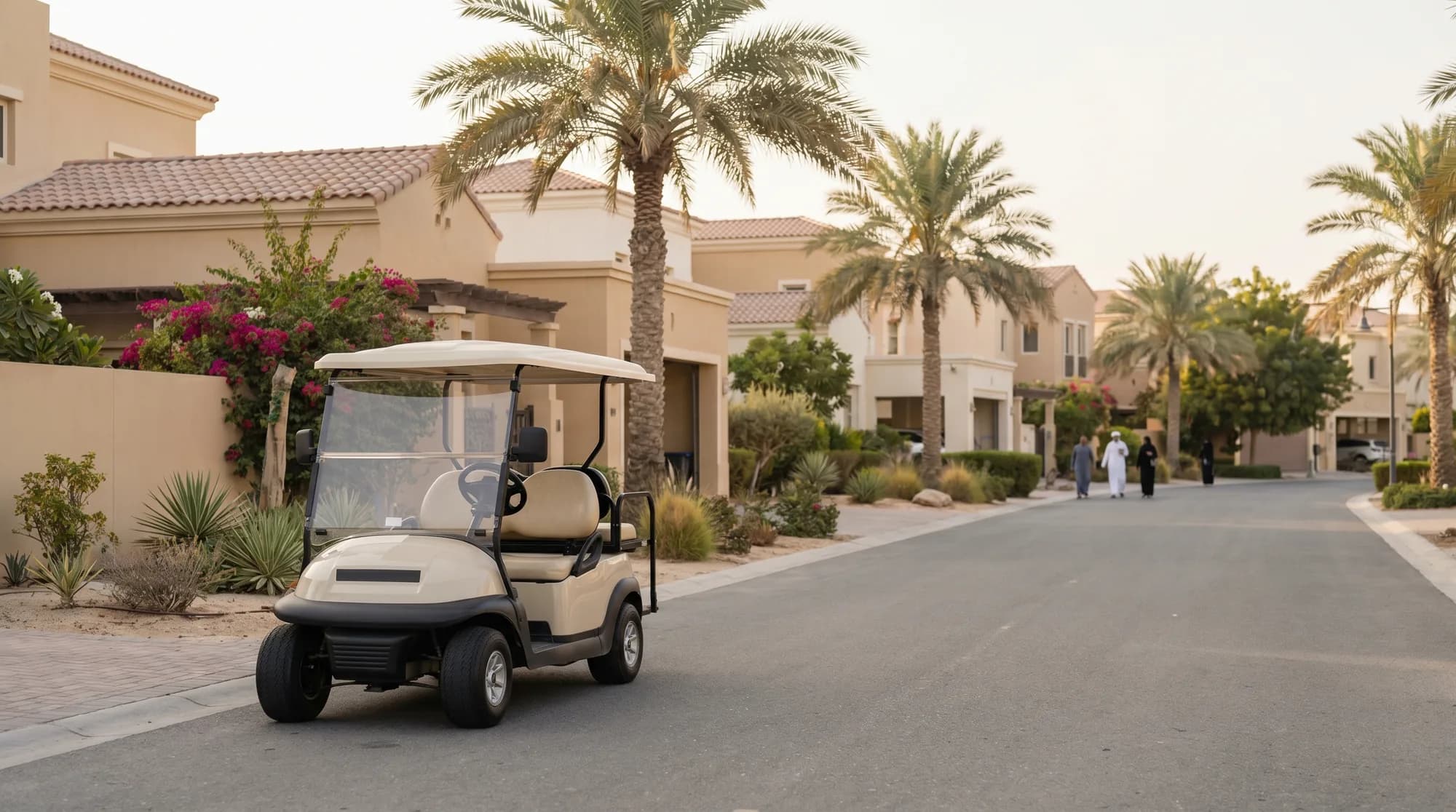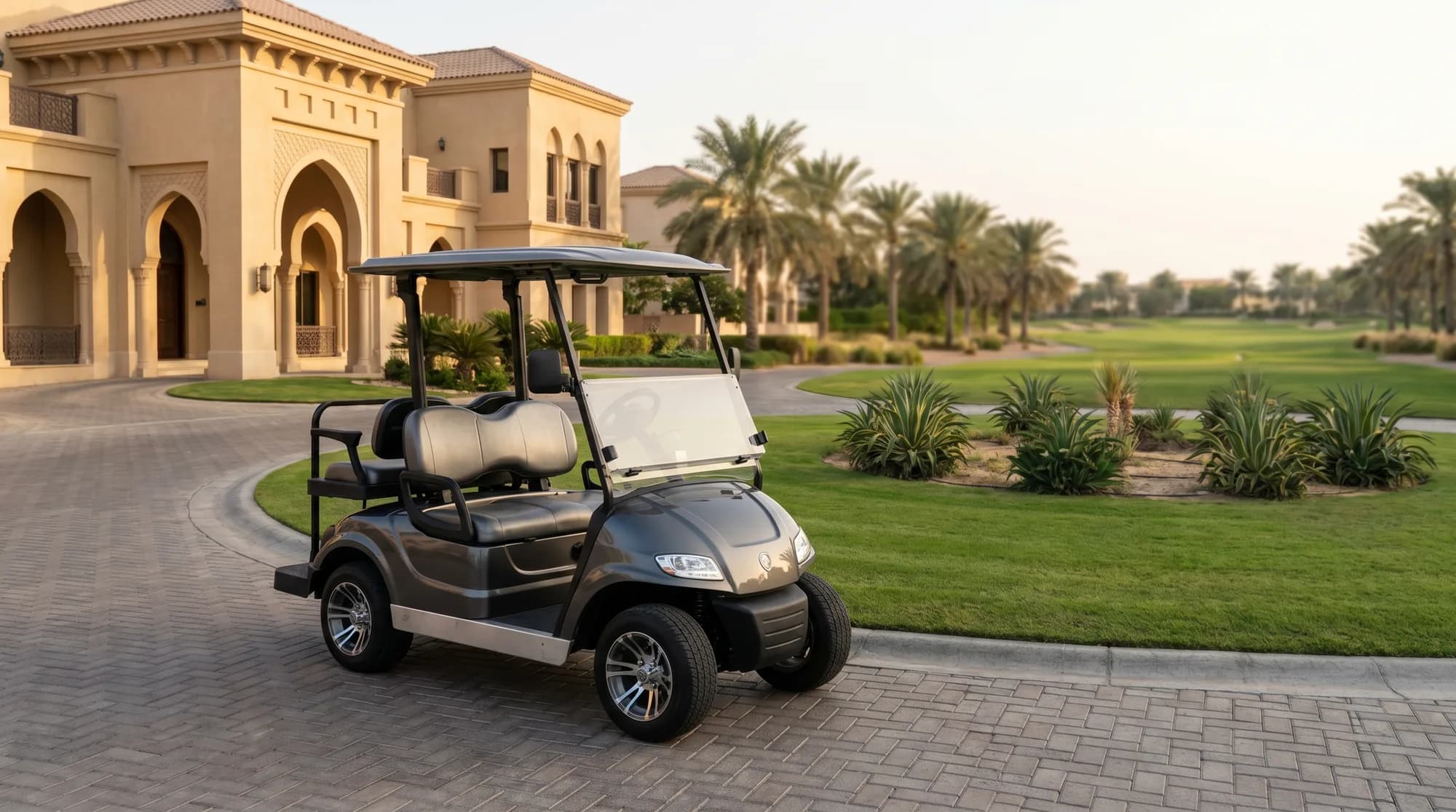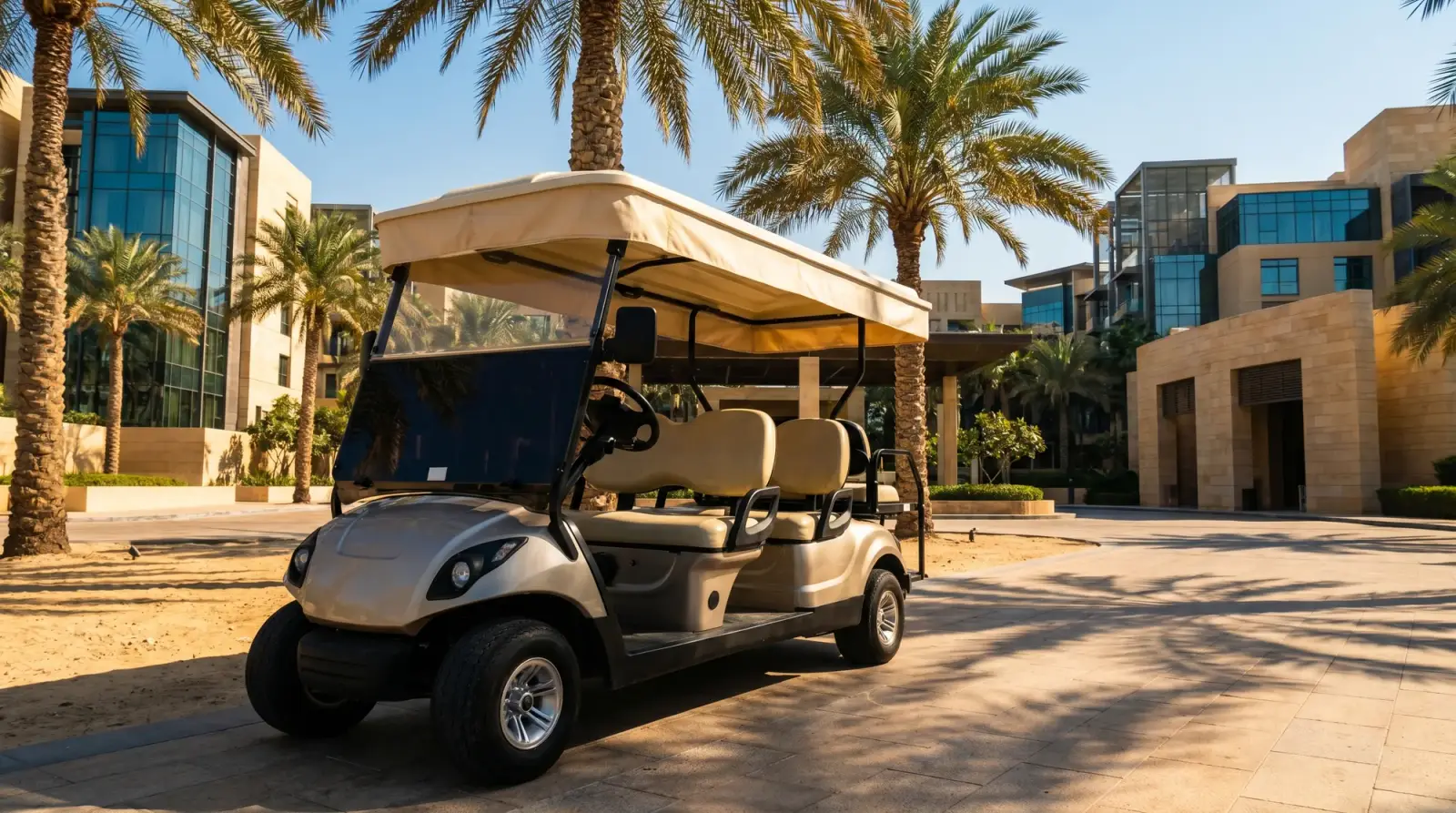
The cruel truth of buggy ownership in the Gulf is that the months you most want a quick way around the community are the months it is too hot to enjoy an open cart. A buggy that bakes in the sun, with hot seats and no shade, simply does not get used between June and September. The fix is not one big gadget; it is a stack of sensible cooling choices, starting with shade and airflow, that together make the difference between a buggy parked all summer and one the family still reaches for at five o'clock. It is one of the comfort factors we weigh when choosing the best golf carts for UAE villas.
- Shade comes first: a solid roof or canopy is the single most effective cooling measure on an open buggy.
- A tinted windscreen and side screens cut glare and radiant heat without sealing you in.
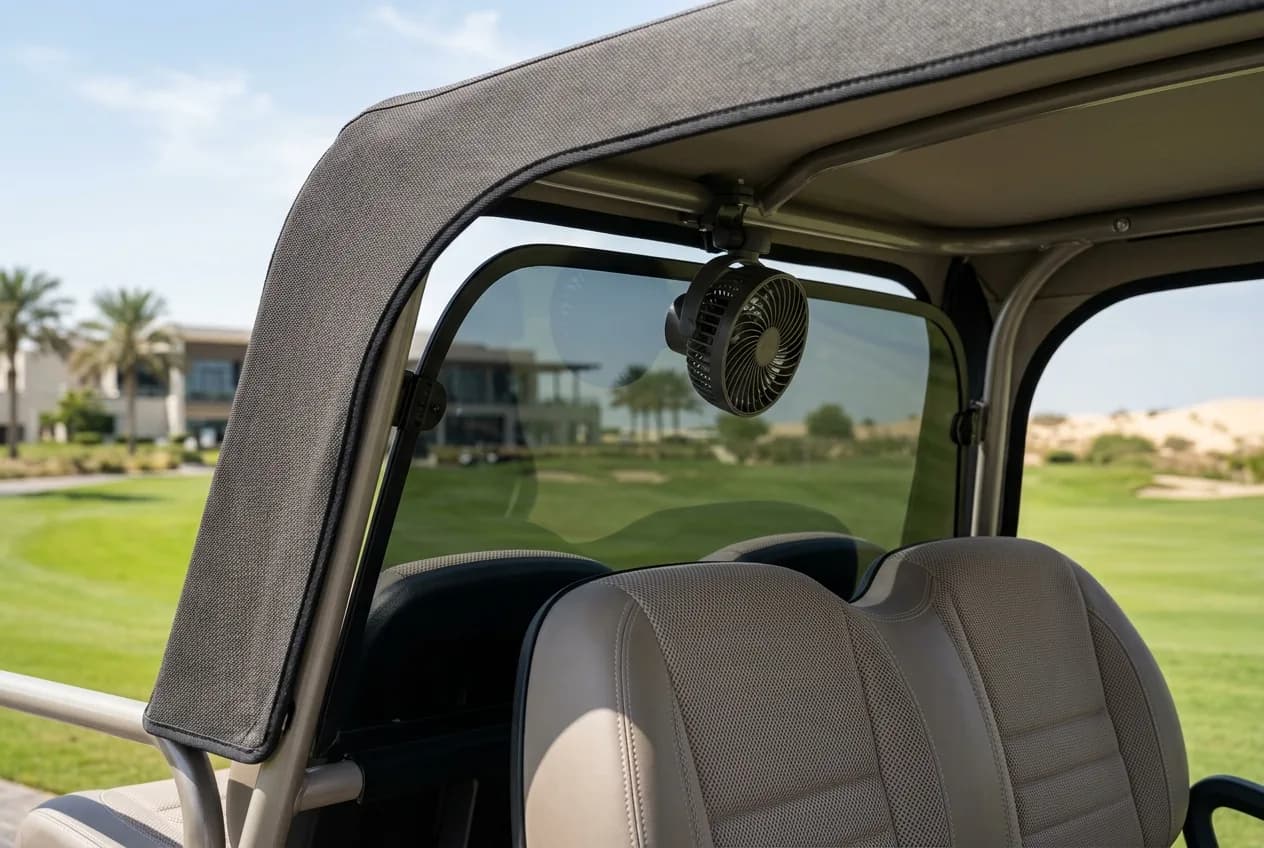
- Ventilated or breathable seats and a 12V fan move air and stop seats becoming unbearable.
- Reflective covers keep the buggy cooler while parked, so it is bearable the moment you get in.
- True air conditioning is rare on open buggies: it is heavy, power-hungry and only works in an enclosed cabin.
- Layer the options to suit your use, and remember accessories add load that affects range in the heat.
Why true AC is the wrong starting point
Buyers often ask first about air conditioning, and it is the wrong place to begin. Air conditioning only works in a sealed cabin, and most buggies are open by design. Enclosing a buggy and adding a proper AC system makes it heavier, draws significant power from the battery (cutting range, which heat already reduces), and turns a light, breezy vehicle into something far closer to a small car. There are enclosed, climate-controlled buggies for specific needs, but for the typical villa owner the smarter and far cheaper path is excellent shade and airflow. We touch on the range cost of accessories in how heat affects golf cart range in the UAE.
Shade: the canopy and roof
Getting the sun off your head and the seats is the highest-impact change you can make. A solid roof or hard canopy is the baseline for any UAE buggy; it shades the occupants and keeps the seats cooler. Beyond the roof itself, the colour and material matter: a lighter, reflective roof stays cooler than a dark one, and a roof that extends well over the occupants gives shade through more of the day as the sun moves.
- Impact
- High
- Notes
- The essential baseline; light colour stays cooler
- Impact
- High
- Notes
- Cuts glare and radiant heat; keep airflow
- Impact
- Medium to high
- Notes
- Stops seats becoming unbearable in the sun
- Impact
- Medium
- Notes
- Move air over occupants; small power draw
- Impact
- Medium
- Notes
- Keeps the buggy cool while parked
- Impact
- Cabin only
- Notes
- Heavy, power-hungry, needs an enclosed buggy
| Impact | Notes | |
|---|---|---|
| Solid roof or canopy | High | The essential baseline; light colour stays cooler |
| Tinted windscreen and screens | High | Cuts glare and radiant heat; keep airflow |
| Ventilated or breathable seats | Medium to high | Stops seats becoming unbearable in the sun |
| 12V fans | Medium | Move air over occupants; small power draw |
| Reflective parking cover | Medium | Keeps the buggy cool while parked |
| Full air conditioning | Cabin only | Heavy, power-hungry, needs an enclosed buggy |
Screens and tint
A windscreen does two jobs in the Gulf: it keeps the worst of the dust and wind off, and a tinted one cuts the glare and radiant heat that make midday driving punishing. Side and rear screens can be added for more enclosure, but there is a balance to strike, because part of what makes a buggy pleasant in heat is the breeze through it. The sweet spot for most owners is a tinted front screen and the option of side screens for the dustiest or windiest days, rather than sealing the buggy up entirely.
Seats and fans: the comfort layer
Two things ruin a summer buggy ride more than the air temperature: a seat that has been roasting in the sun, and dead, still air. Ventilated or breathable seat materials stop the seats becoming too hot to sit on and let perspiration evaporate. A simple 12V fan, or a pair of them, keeps air moving over the occupants, which is what actually makes heat bearable on an open vehicle. Neither is expensive, both draw very little power, and together they transform the experience far more than their cost suggests.
Keeping it cool while parked
Half the battle is won before you even sit down. A buggy parked in shade, ideally a garage or carport, is bearable the moment you climb in; one left in open sun needs a small eternity to become tolerable. Where indoor parking is not possible, a reflective cover keeps the seats and surfaces far cooler than bare exposure, and it doubles as dust protection. Combined with shaded charging, this also looks after the battery, as covered in charging a golf cart at home in a villa.
Building your cooling stack
The right combination depends on how you use the buggy. A short school-run hop needs less than an estate buggy out in the sun for hours. Here is a sensible way to layer the options, from the must-haves up.
- Everyone: a solid, light-coloured roof or canopy, and shaded parking.
- Most owners: add a tinted windscreen and breathable or ventilated seats.
- Frequent summer users: add 12V fans and a reflective parking cover.
- Dusty or windy routes: add side screens for enclosure when needed.
- Specific needs only: consider an enclosed, climate-controlled buggy, accepting the weight and range cost.
You do not air-condition your way to a usable summer buggy in the Gulf. You shade it, ventilate it and keep it out of the sun when parked.
Mind the range cost
Every powered accessory draws from the same battery, and heat already trims your range. Fans are a small, sensible draw; a full AC system is not. When you specify cooling, weigh comfort against the range you need on a hot day, especially if your routine includes longer trips. For most villa owners the passive measures, shade, tint and ventilation, deliver almost all the comfort with almost none of the range penalty, which is exactly why they are the foundation of a good Gulf buggy.
Get the cooling right from the start
Cooling is far easier and tidier to specify when you buy than to bolt on later, and the right stack is what keeps a buggy in daily use through the summer rather than parked. The same shaded-parking habit that keeps the seats bearable also protects the battery, as covered in summer storage for golf carts in the UAE. Tell us how and where you will drive, and how much of the year is spent in peak heat, and we will help you choose a roof, screens, seats and fans that make the buggy genuinely pleasant in the Gulf, without saddling it with weight and range loss you do not need.
Specify a buggy you will actually use in summer
Tell us your routine and how hot your parking gets, and we will recommend the right canopy, screens, seats and fans for Gulf comfort.
Frequently asked questions
Can you get air conditioning in a golf cart in the UAE?+
Only in an enclosed, climate-controlled buggy. True AC is heavy, power-hungry and needs a sealed cabin, which cuts range that heat already reduces. For most owners, shade, tint and airflow are the smarter, cheaper route.
What is the best way to keep cool in a golf buggy here?+
Start with a solid, light-coloured roof or canopy and shaded parking, then add a tinted windscreen, breathable or ventilated seats and a 12V fan. This stack handles the Gulf heat without much power draw.
Do canopies and screens reduce range?+
Passive items like roofs, screens and tint do not draw power, so they cost no range. Fans use a little; a full AC system uses a lot. Weigh powered cooling against the range you need on a hot day.
Should I fully enclose my buggy against the heat?+
Usually not, unless it has a real climate system. A sealed open buggy without AC just traps hot air. In Gulf conditions, keeping it shaded and ventilated with airflow over the occupants works better.
What helps the most when the buggy is parked?+
Shade. Park in a garage or carport where you can; where you cannot, a reflective cover keeps the seats and surfaces far cooler and adds dust protection, so the buggy is bearable the moment you get in.
Related solutions
Ready to explore what we build?
See the vehicles and the setting this applies to, or get a tailored quote built around your site.
Ready to find the right buggy?
Tell us how and where it will work and we will specify a vehicle and a tailored quote built around you. Every build comes with a 3-year warranty and a 24-hour priority call-out.
Our guides are written and reviewed by the Hawke Electric Vehicles team, the people who specify, build, deliver and support the vehicles. We focus on honest, practical advice and flag where a figure depends on the build rather than guessing.
More guides by Hawke