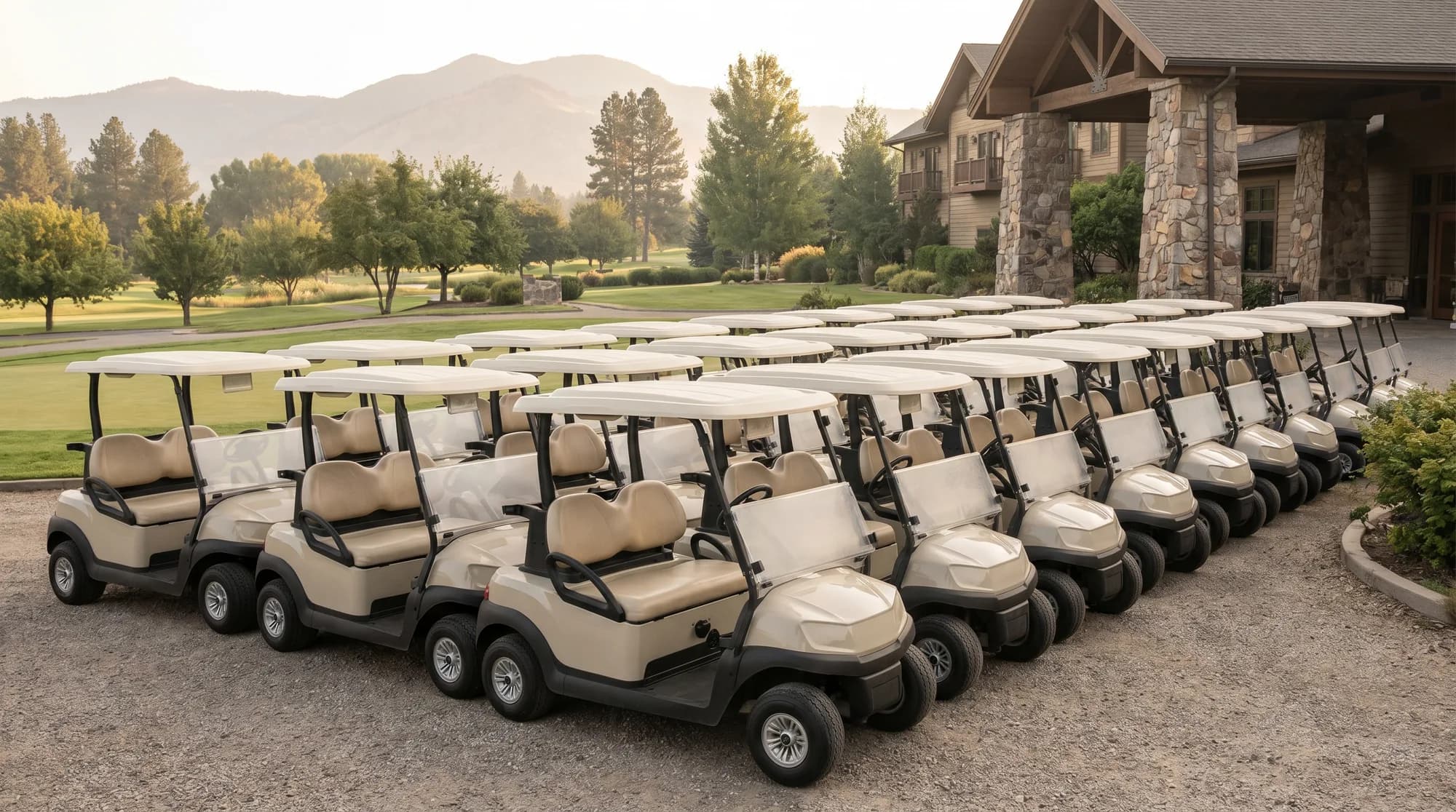
If you run a resort, a large campus, a warehouse, a municipality or any operation that needs more than a couple of carts, leasing deserves a serious look before you sign a check for a fleet. Leasing is not just financing by another name; it changes who owns the asset, who carries the maintenance burden, how the cost lands on your books and what happens when the vehicles age out. Done well, it turns an unpredictable capital expense into a flat monthly line item with the headaches handled. Done badly, it costs more than buying and locks you into tired equipment. This guide explains the structures, the tax angle and the real test of when leasing a commercial golf cart fleet beats buying one.
Operating lease versus capital lease
The first fork in the road is the type of lease, and it matters more than the headline monthly figure. An operating lease is closest to a long-term rental. You pay to use the carts for a set term, the leasing company keeps ownership and the residual risk, and at the end you typically return them, renew, or buy at fair market value. Payments are generally lower because you are only paying for the portion of the vehicle's value you use, not the whole thing.
A capital lease, often called a finance lease, is structured as a way to own the carts. The terms are written so that by the end you have effectively paid for the vehicles, frequently with a nominal buyout at the close. Payments run higher than an operating lease because you are buying the full asset, but you end up owning it. Think of an operating lease as paying for use and a capital lease as paying for ownership in installments.
- Operating lease
- Leasing company
- Capital lease
- You
- Operating lease
- Lower
- Capital lease
- Higher
- Operating lease
- Lessor carries it
- Capital lease
- You carry it
- Operating lease
- Easy, return and renew
- Capital lease
- You resell or keep old carts
- Operating lease
- Predictability, refresh cycles
- Capital lease
- Long keepers, building equity
| Operating lease | Capital lease | |
|---|---|---|
| Who owns at end | Leasing company | You |
| Monthly cost | Lower | Higher |
| Residual risk | Lessor carries it | You carry it |
| Refresh / upgrade | Easy, return and renew | You resell or keep old carts |
| Best for | Predictability, refresh cycles | Long keepers, building equity |
FMV versus $1 buyout: the end-of-term choice
Within those structures, the buyout option defines what happens when the term ends, and it is where a lot of operators get surprised. A fair market value (FMV) lease lets you purchase the carts at the end for whatever they are worth on the open market at that point. Your monthly payments are lower, but if you want to keep the fleet you pay market price on top, and that number is not known in advance.
A $1 buyout lease (sometimes a 10 percent buyout) bakes ownership into the deal. You pay a higher monthly figure, but at the end you own the carts for a token amount. This is really a capital lease wearing a friendly name. The right choice depends on whether you intend to keep the carts long term or cycle them out for fresh ones every few years.
What a good commercial lease includes
The monthly price is only half the picture. The most valuable commercial leases bundle in the things that otherwise eat your staff time and budget unpredictably. This is frequently where leasing earns its keep over buying, because a fleet that is down is a fleet that is costing you.
- Preventive maintenance and scheduled servicing, so upkeep is someone else's job and budget line.
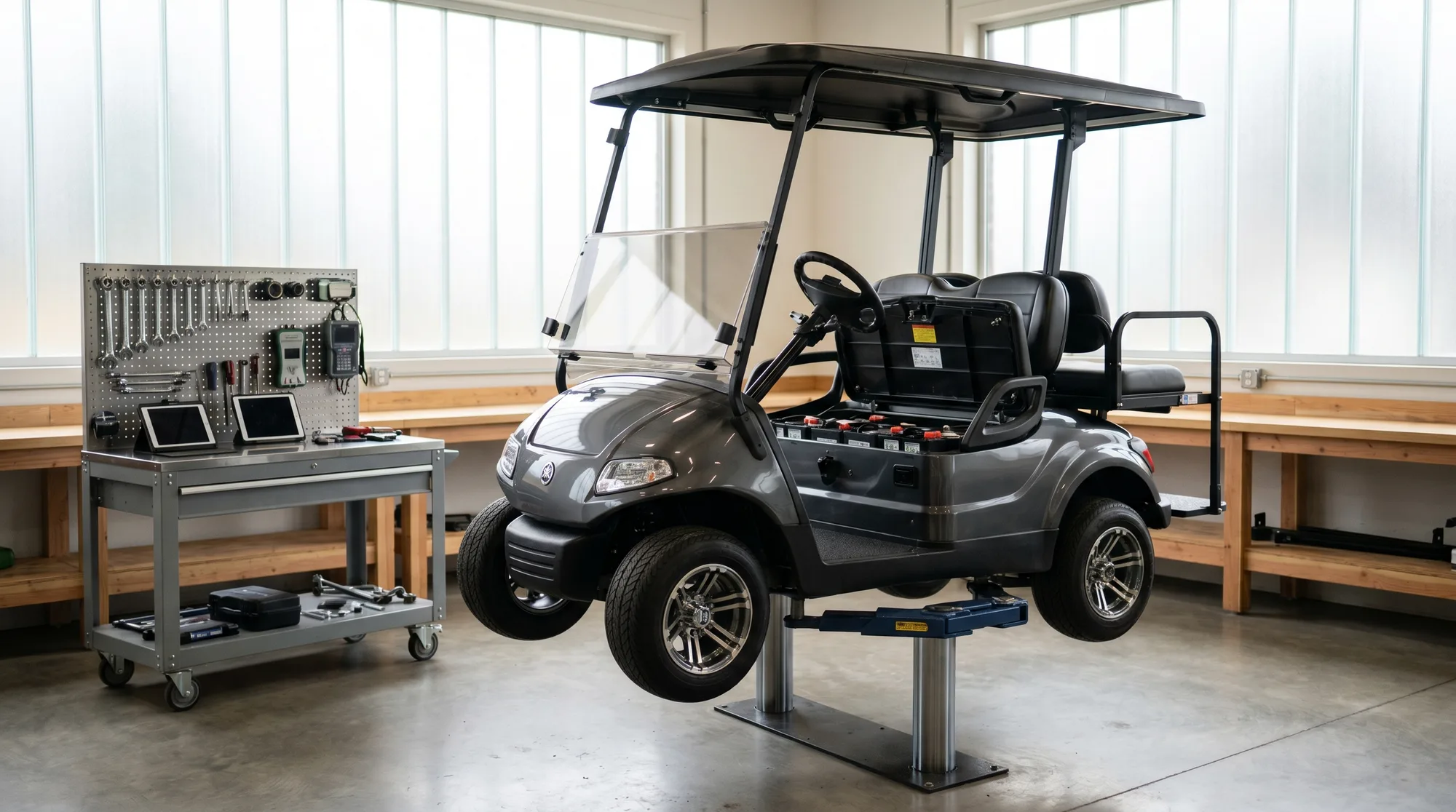
- Battery service or replacement, the single biggest running cost on an electric fleet over time.
- Loaner or swap-out vehicles when a cart is in for repair, keeping your operation running.
- Telematics or fleet tracking on larger contracts, which ties into how you manage utilization.
- An agreed refresh schedule, so your fleet never ages into the expensive end of its life.
If you are weighing how to run the fleet once it lands, our guide to golf cart fleet management covers utilization, charging logistics and maintenance scheduling, all of which a leasing partner may handle for you under the right contract.
The tax angle
Leasing and buying are taxed differently, and for many businesses that difference is part of the decision. With an operating lease, payments are generally treated as a deductible business operating expense, spread across the term. With a capital lease or an outright purchase, you typically own the asset and depreciate it over time, and you may be able to use accelerated depreciation provisions to write off a large share of the cost in the year you place the carts in service.
When leasing beats buying for a fleet
Leasing is not automatically cheaper, and over a long enough horizon buying and keeping carts often wins on pure cost. The case for leasing is strongest when predictability, cash flow and offloading hassle matter more than squeezing out the lowest lifetime price.
- 01
You want predictable monthly costs
A flat lease payment with maintenance bundled turns a lumpy capital and repair budget into one stable line, which finance teams love.
- 02
You refresh the fleet regularly
If you cycle carts every few years to stay current and avoid the costly old-age phase, an operating lease makes that routine and painless.
- 03
You want to preserve capital
Leasing keeps cash free for the core business rather than tied up in a depreciating fleet, which can matter more than the asset itself.
- 04
You do not want to carry residual risk
When the lessor owns the carts, they absorb the risk of what the vehicles are worth at the end, not you.
- 05
You lack in-house maintenance
If you have no team to service carts, a maintenance-inclusive lease buys you uptime and expertise alongside the vehicles.
By contrast, if you have a stable need, in-house mechanics and the cash to buy, purchasing and running the carts well usually beats leasing over the long haul. To frame the numbers either way, see how much a golf cart costs and your financing options, and make sure the carts are right-sized for the job with what size golf cart you need.
Operators rarely regret leasing because of the price. They regret it when they did not read what the buyout and the maintenance clauses actually said. The contract is the product.
So what should you do?
Decide first whether you want to own the fleet long term or cycle it. If you want to keep carts for years and have the means, a $1 buyout lease or an outright purchase usually wins. If you value predictability, refresh cycles and handing off maintenance, an operating lease with a strong service bundle is hard to beat. Either way, read the buyout and maintenance terms before the monthly number, and confirm the tax treatment with your accountant. We are glad to quote a fleet either way, with honest numbers and no fixed list price hidden in the small print.
Planning a commercial cart fleet?
Tell us how many carts you need and how you will use them, and we will put together honest fleet options, lease or buy, with real numbers.
Frequently asked questions
What is the difference between an operating lease and a capital lease?+
An operating lease is essentially a long-term rental: the leasing company keeps ownership and you return or buy the carts at the end, usually with lower payments. A capital, or finance, lease is structured so you own the carts by the end, with higher payments but equity in the vehicles.
What does FMV mean in a golf cart lease?+
FMV stands for fair market value. At the end of an FMV lease you can buy the carts for whatever they are worth on the open market at that time. Payments are lower than a $1 buyout lease, but the final purchase price is not known in advance.
Is leasing or buying a golf cart fleet cheaper?+
Over a long horizon, buying and keeping carts usually costs less. Leasing wins when you value predictable monthly costs, regular fleet refreshes, preserved capital and handing off maintenance, rather than the lowest possible lifetime price.
Can golf cart lease payments be tax deductible?+
Operating lease payments are generally treated as a deductible business operating expense, while purchased or finance-leased carts are typically depreciated. The exact treatment depends on your business and current rules, so confirm it with your accountant.
What should a commercial golf cart lease include?+
The most valuable commercial leases bundle preventive maintenance, battery service or replacement, swap-out vehicles when a cart is down, and an agreed refresh schedule. Always check the buyout option and the maintenance clauses before comparing monthly prices.
Related solutions
Ready to explore what we build?
See the vehicles and the setting this applies to, or get a tailored quote built around your site.
Ready to find the right buggy?
Tell us how and where it will work and we will specify a vehicle and a tailored quote built around you. Every build comes with a 3-year warranty and a 24-hour priority call-out.