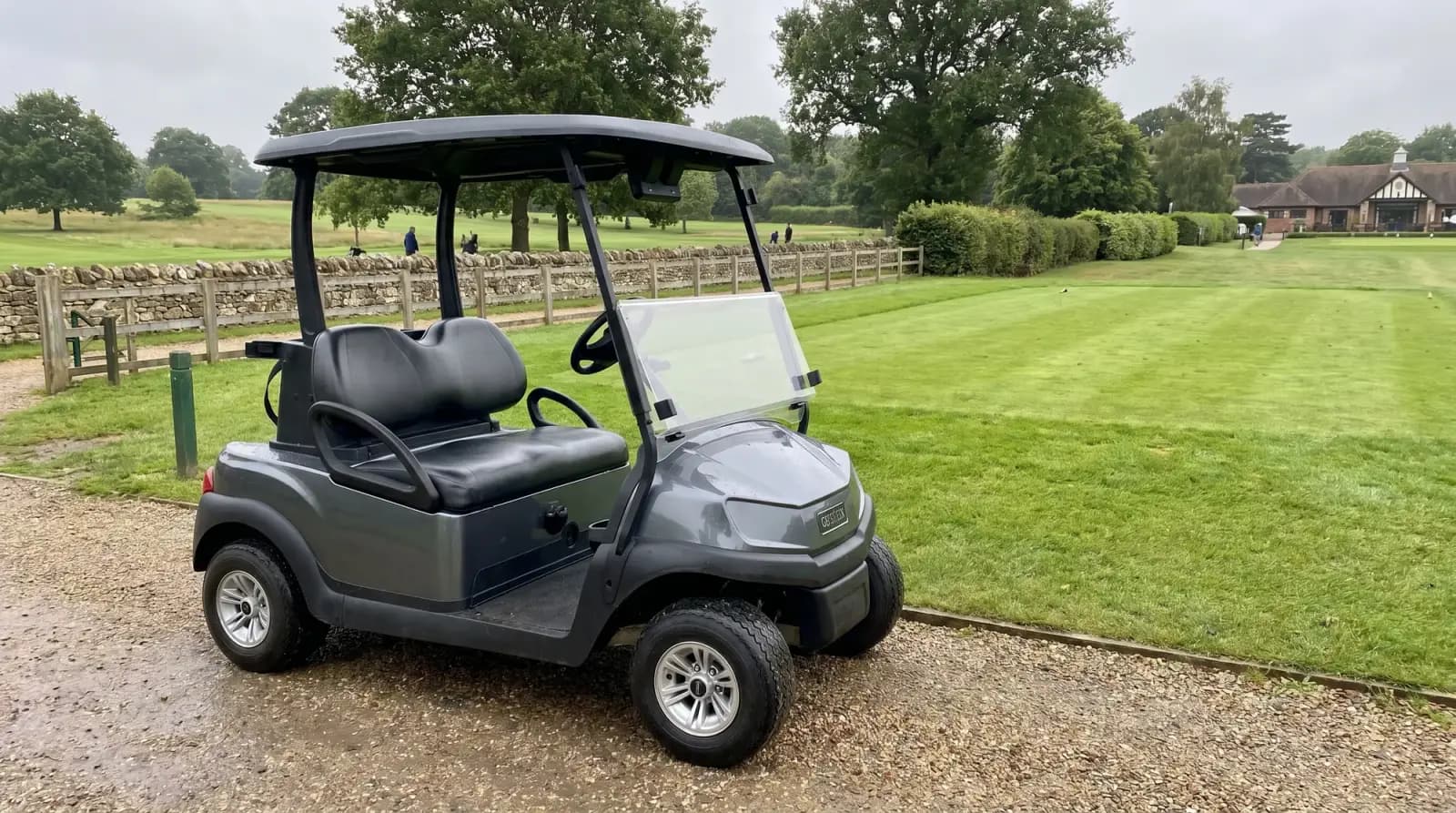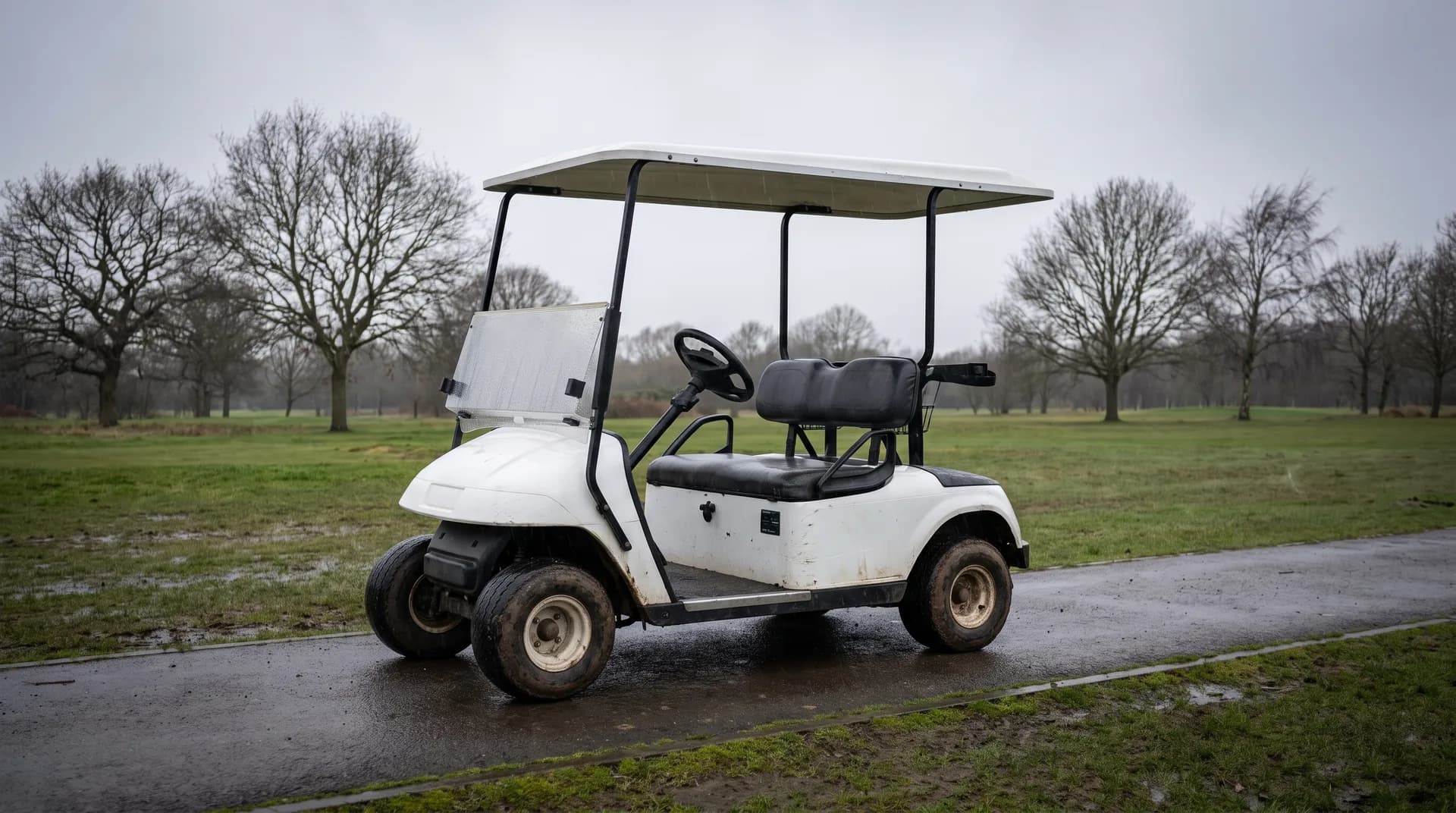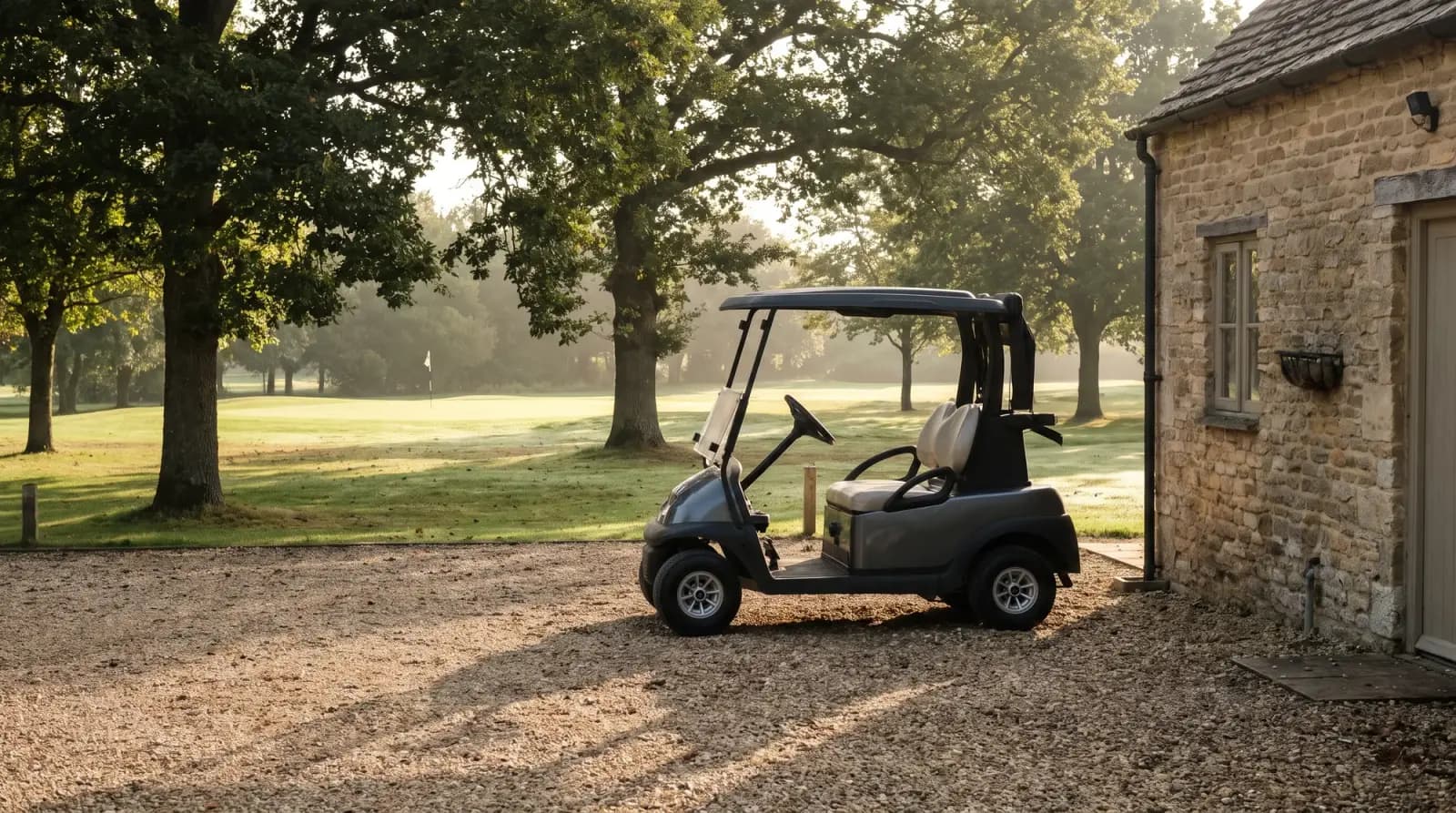
A golf cart depreciates fastest in its first two years, then the curve flattens out considerably. As a rough guide, a well-kept electric cart might shed a third of its value by year two, yet still hold a respectable share at year five if the battery is healthy. That last point is the one most sellers miss. Cart values are not really set by age at all. They are set by the battery, the hours on the clock and the life the machine has led.
Oddly, there is no established UK guide to cart values. Search for it and you drown in VW Golf car valuations instead. Clubs, dealers and private sellers all price by feel, which means the market is full of overpriced tired machines and genuine bargains sitting side by side. This guide sets out what actually drives a used cart's price in the UK, the typical shape of the depreciation curve, and when to sell if you want the strongest money.
- Depreciation is steepest in years one and two, then flattens. A quality cart with a healthy lithium pack can retain a solid share of its value at five years.
- The battery is the single biggest price factor. A lead-acid pack due for replacement knocks £600 to £1,500 or more off what a buyer will pay.
- Private, low-hours history beats ex-fleet history. Fleet golf carts work hard every day and buyers price that in.
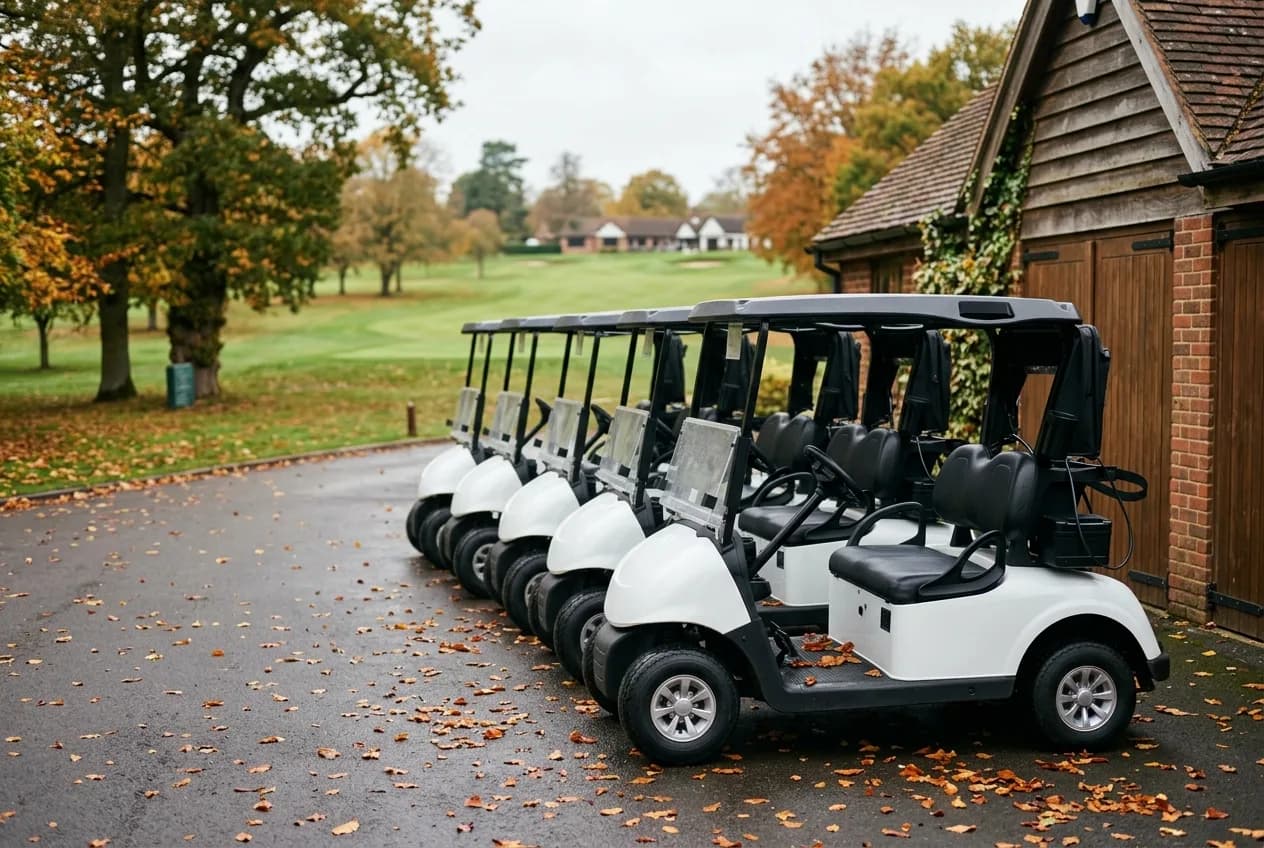
- Ex-fleet stock floods the market each autumn as clubs cycle four to five year old golf carts out, pulling used prices down seasonally.
- Spring is generally the strongest time to sell; late autumn is the weakest.
What actually drives a used cart's value?
Five things, in roughly this order: battery condition, hours and usage, ownership history, brand reputation and cosmetics. Notice what's not on that list. Age, on its own, tells a buyer very little. A gently used eight-year-old estate cart with a recent battery can be worth more than a hammered four-year-old fleet machine on its original pack.
Battery age and chemistry
This is the big one. Lead-acid packs typically last three to five years in regular use, so a cart at that point in the cycle is carrying a bill the next owner has to pay. Replacing a full lead-acid set costs £600 to £1,500 or more depending on the cart, and savvy buyers deduct every penny of it. Lithium changes the picture. With cycle lives measured in thousands rather than hundreds, a lithium cart holds its value noticeably better because the buyer isn't pricing in an imminent pack replacement. We've covered the technical detail in our guide to lithium versus lead-acid batteries.
Hours, history and cosmetics
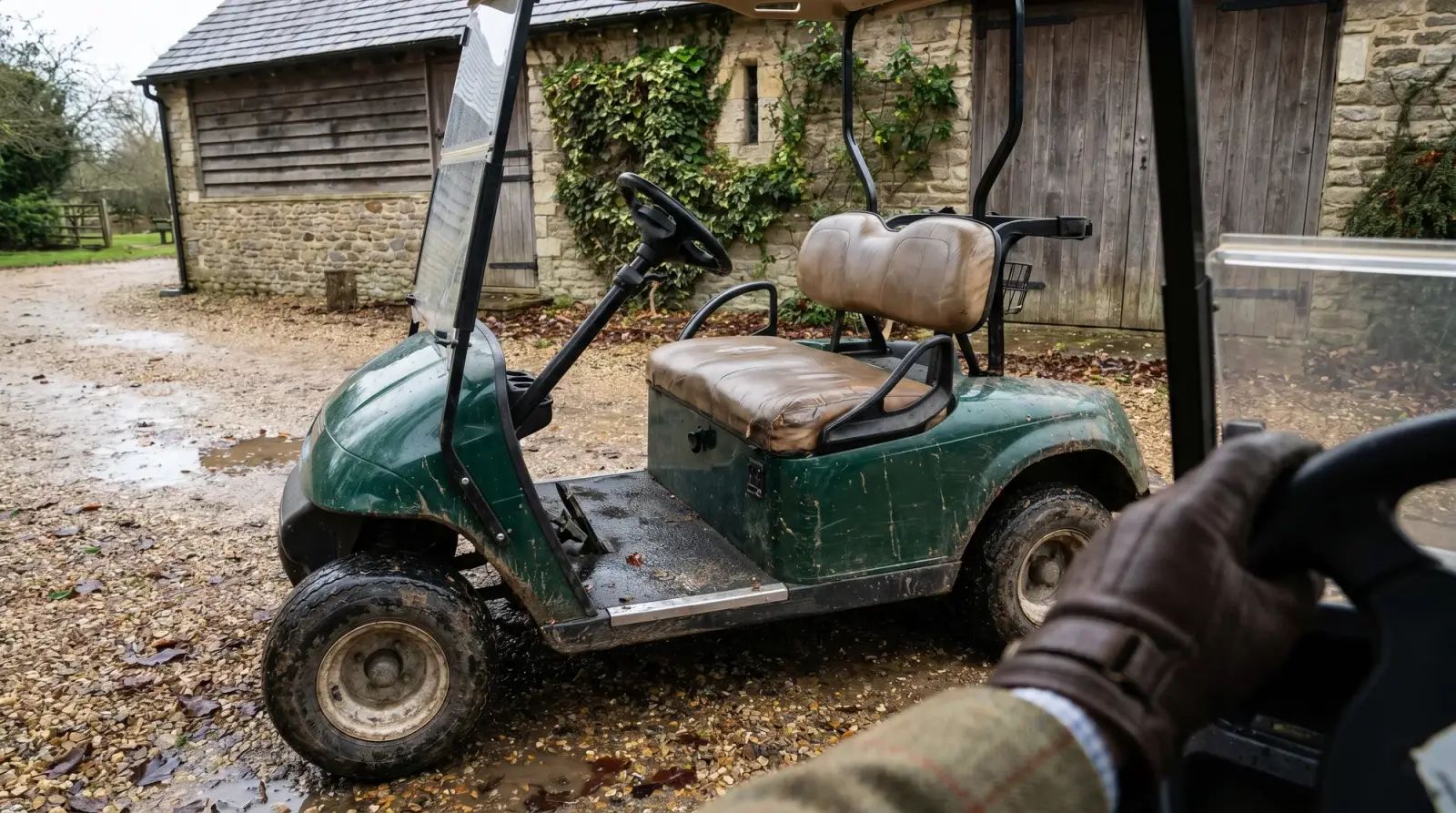
Hours matter the way mileage matters on a car. A private cart pottering around an estate might do a fraction of the work a hire or fleet machine does in a season. Fleet versus private history is therefore a genuine price divider, and buyers should always ask which one they're looking at. Brand plays its part too. Recognised makes with parts support sell faster and for more than unbranded imports, which can be nearly unsellable once something fails. Cosmetics come last but they still count. Faded plastics, torn seats and kerbed wheels all give a buyer negotiating room, and first impressions decide whether they turn up at all.
What does the depreciation curve look like?
Because there's no Glass's Guide for golf carts, any figures are estimates. Treat the table below as a rough guide to typical value retention for a decent-quality electric cart in good order, not a promise. Condition, battery and brand swing individual machines a long way either side of these bands.
- Lead-acid cart, average care
- 70-80%
- Quality cart with lithium, well kept
- 80-90%
- Lead-acid cart, average care
- 55-70%
- Quality cart with lithium, well kept
- 70-80%
- Lead-acid cart, average care
- 40-55% (battery bill looming)
- Quality cart with lithium, well kept
- 60-70%
- Lead-acid cart, average care
- 30-45%, often needs a new pack
- Quality cart with lithium, well kept
- 50-60%
- Lead-acid cart, average care
- 15-30%, condition is everything
- Quality cart with lithium, well kept
- 35-50%
| Lead-acid cart, average care | Quality cart with lithium, well kept | |
|---|---|---|
| 1 year | 70-80% | 80-90% |
| 2 years | 55-70% | 70-80% |
| 3-4 years | 40-55% (battery bill looming) | 60-70% |
| 5 years | 30-45%, often needs a new pack | 50-60% |
| 8+ years | 15-30%, condition is everything | 35-50% |
Two patterns are worth pulling out. First, the steepest drop happens early, exactly as it does with cars, so buying at two to three years old is often the sweet spot for value. Second, the lead-acid column takes a visible dip around years three to five. That's not the cart wearing out. It's the market pricing in the battery replacement everyone knows is coming.
Why do used prices dip every autumn?
Golf clubs typically run fleets on four to six year cycles, often on lease. When those deals end, usually after the summer season, a wave of ex-fleet golf carts hits the used market all at once. The result is a predictable seasonal slump. From roughly October through January, supply is high, demand is low (nobody's rushing to buy a cart in the rain) and prices soften across the board, including for private sales that have nothing to do with fleet stock.
Flip that logic and you get the seller's calendar. Spring, roughly March to May, is when golfers, resort parks and estate owners are gearing up for the season and inventory is thin. If you can choose your moment, sell then. The same machine can realistically fetch hundreds of pounds more in April than it would in November.
How do you protect resale value?
Mostly by looking after the battery. Charge lead-acid packs fully and regularly, keep the water topped up, and never leave any cart flat over winter. Keep it under cover, keep receipts for servicing and battery work, and fix small cosmetic issues before they spread. A documented history is worth real money because it answers the buyer's biggest fear, which is that they're inheriting someone else's neglect. If you're weighing up whether to buy new and take the early depreciation or buy used and skip it, our new versus used golf cart guide works through the trade-off properly.
Electric versus gas: which holds value better?
In the UK, electric. Gas golf carts are a shrinking niche here. Many clubs and venues won't allow them for noise and fume reasons, so the pool of buyers is small and getting smaller, and prices reflect that. An electric cart from a recognised brand has a far broader second-hand audience, from golfers to smallholders to resort parks. If long-term value matters to you, electric with lithium is the safest combination on today's market. Buyers hunting the other side of this trade should read our guide to buying a used golf cart before handing over any money.
Frequently asked questions
Do golf carts hold their value?+
Reasonably well after the initial drop. The first two years are the steepest, then the curve flattens. A quality cart with a healthy lithium pack can still be worth half its original price at five years, as a rough guide.
How much does a golf cart depreciate per year?+
There's no fixed rate, but as a rough guide expect 20 to 30% in year one, roughly 10 to 15% a year through the mid years, then a slower fade. Battery condition moves individual valuations more than age does.
Does battery age affect resale value?+
More than anything else. A lead-acid pack near the end of its three to five year life can knock £600 to £1,500 off the price, because the buyer is effectively buying the replacement. A recent battery, with receipts, adds real value.
Do electric or gas golf carts depreciate faster?+
Gas golf carts generally fare worse in the UK. Fewer venues allow them and the buyer pool is small, so they sit on the market longer and sell for less. Electric golf carts, especially lithium ones, hold value better.
When is the best time to sell a golf cart?+
Spring, roughly March to May, when demand is rising and stock is scarce. Avoid late autumn if you can. That's when clubs release ex-fleet golf carts in volume and used prices soften across the market.
If you're buying with one eye on resale, spend your budget on battery quality and brand rather than accessories, and keep every receipt. If your current cart is approaching a battery bill, sell in spring before the pack fails rather than after. A working cart with a tired battery still sells; a dead one is a project, and projects go cheap.
Buy the cart that holds its value
Hawke electric golf carts come with lithium power options and a 3-year warranty, the two things used buyers pay a premium for. Browse the range and get a tailored quote.
Related solutions
Ready to explore what we build?
See the vehicles and the setting this applies to, or get a tailored quote built around your site.
Ready to find the right golf cart?
Tell us how and where it will work and we will specify a vehicle and a tailored quote built around you. Every build comes with a 3-year warranty and a 24-hour priority call-out.
Our guides are written and reviewed by the Hawke Electric Vehicles team, the people who specify, build, deliver and support the vehicles. We focus on honest, practical advice and flag where a figure depends on the build rather than guessing.
More guides by Hawke