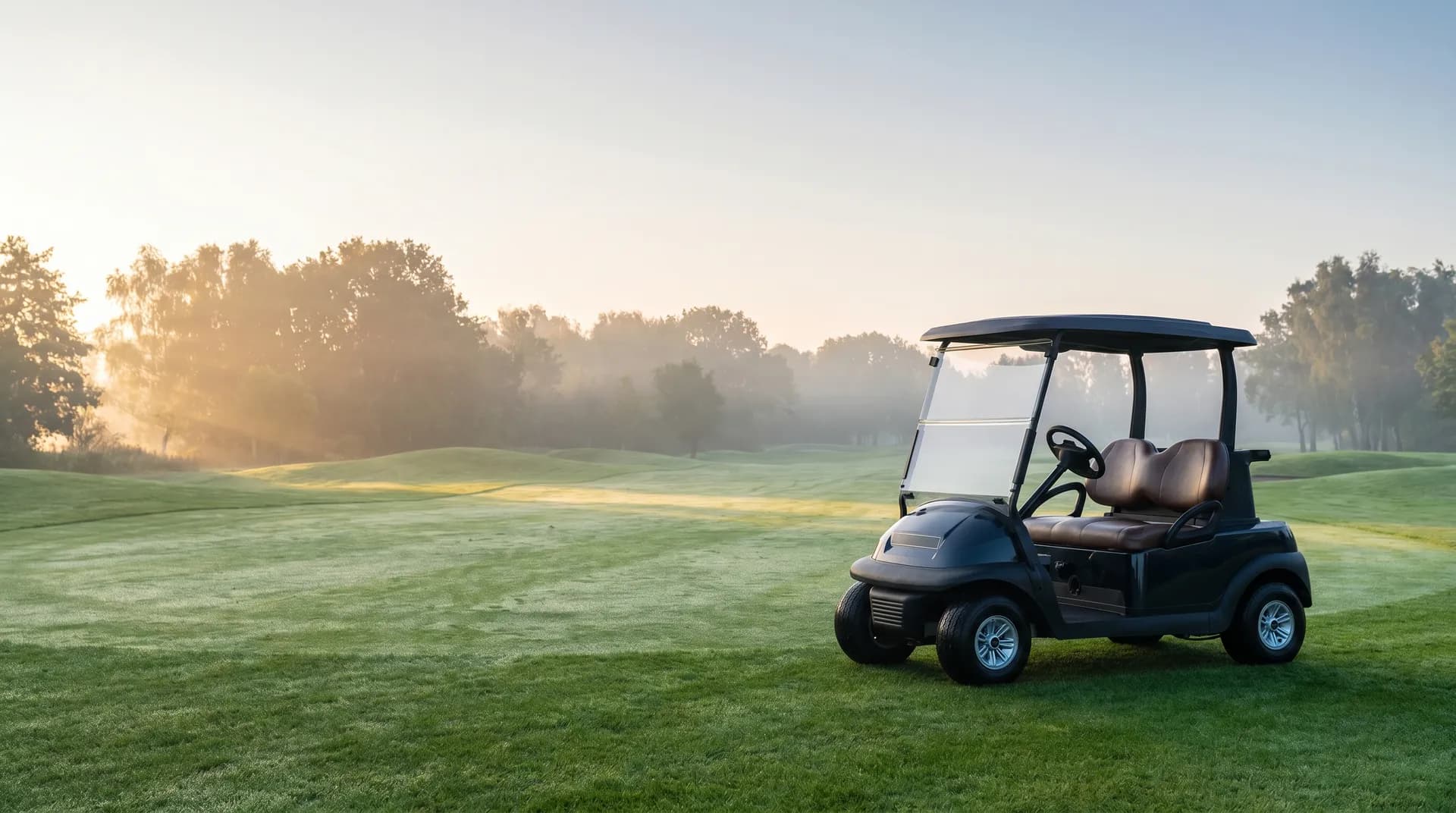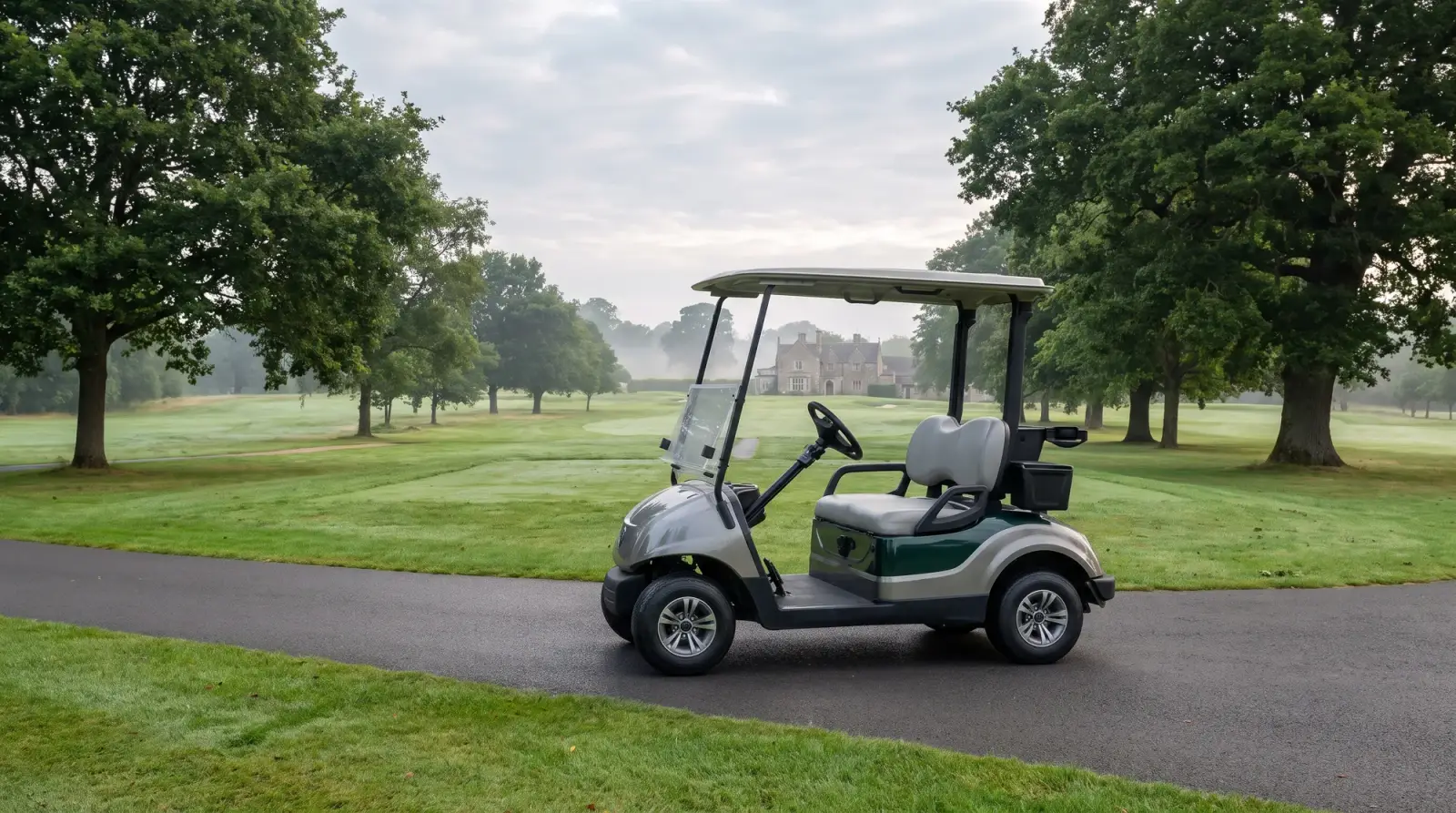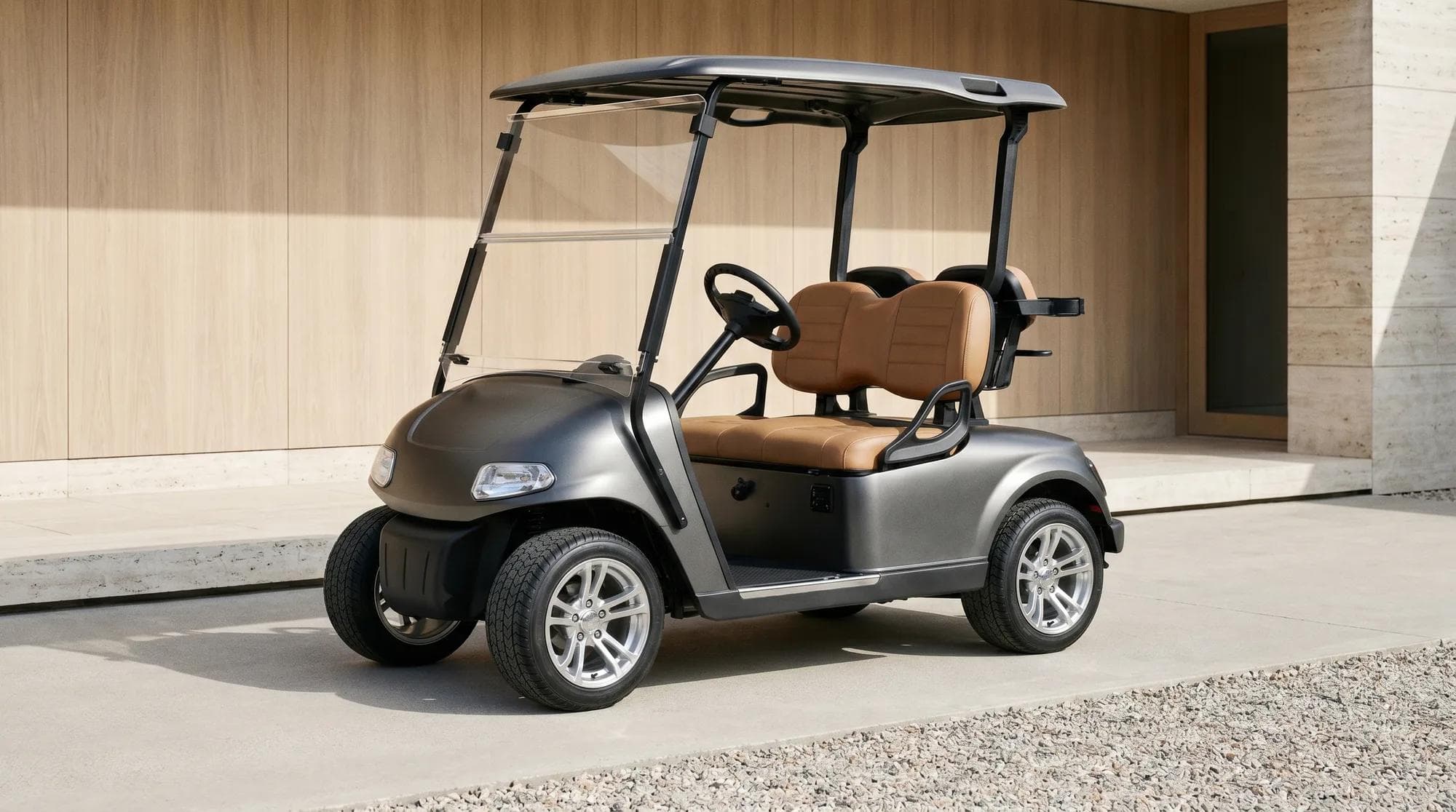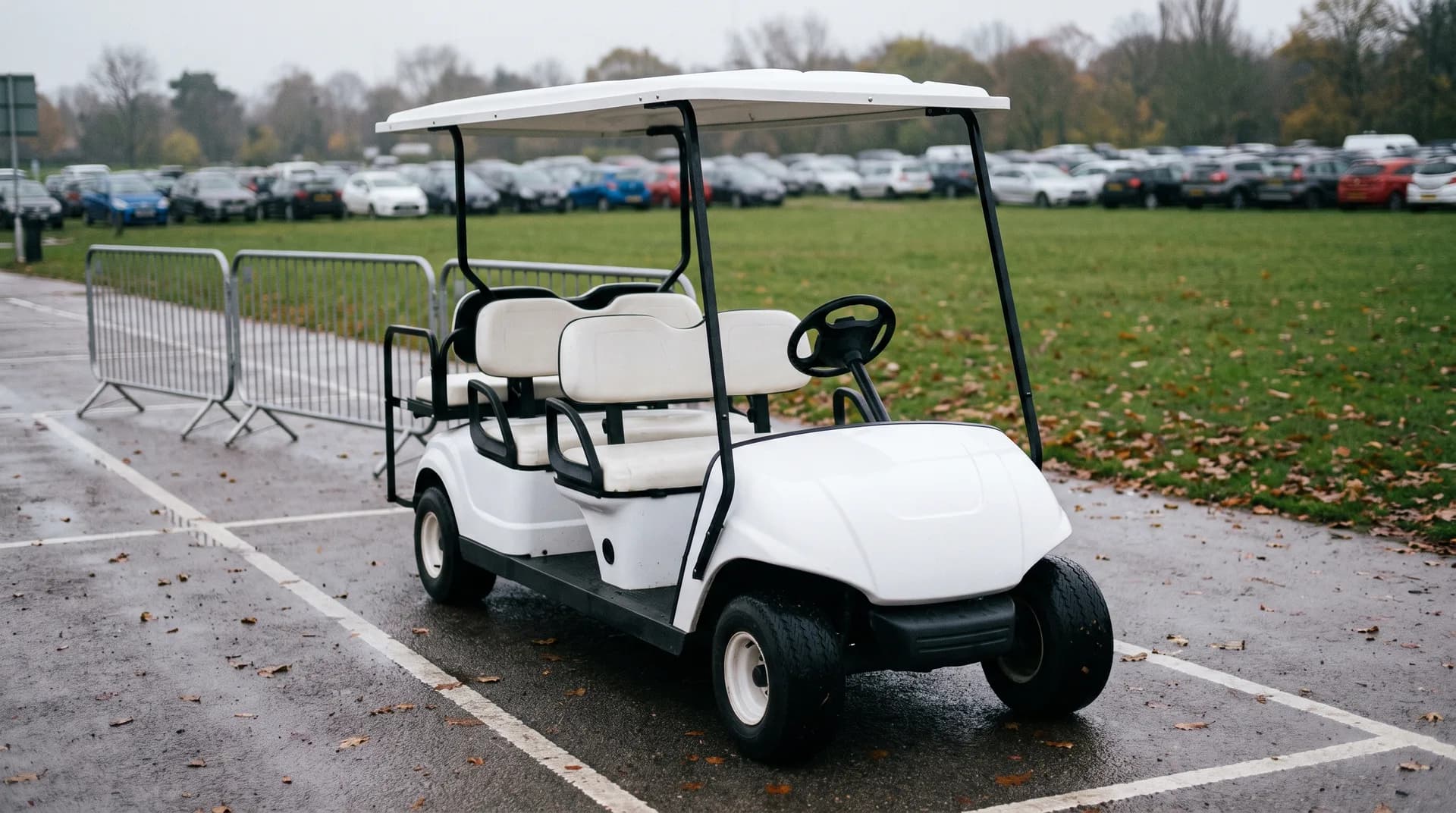
A new single-passenger golf cart typically costs between £2,000 and £5,000 in the UK, and used examples range from a few hundred pounds for tired lead-acid machines to £3,000 or so for recent lithium models. That is a wide spread for what looks like one category, and the difference is rarely the badge: it is battery chemistry, wheel count, specification and age. This guide breaks down what sits at each price point, what actually moves the number, and the two traps, battery condition and assumed VAT relief, that catch the most buyers. If you are still deciding whether a single-passenger is the right category at all, start with our single-passenger buyer's guide and come back here for the money.
- Expect £2,000 to £5,000 for a new single-passenger; used machines run from a few hundred pounds to about £3,000.
- Battery chemistry is the biggest single price lever: lithium adds cost up front and repays it in weight and lifespan.
- Four wheels, a canopy and better seating each nudge the price up, and each is usually worth it.
- Cheap used lead-acid machines often need a battery pack soon, so price that in before you celebrate a bargain.
- Standard golf carts do not qualify for VAT relief, so never budget on the VAT-free figure.
What single-passenger golf carts cost new
At the lower end of the new market, around £2,000 to £3,000, you are typically buying a three-wheeled, lead-acid machine with a basic seat and little weather protection. It will do the job on a flat course, but the weight of the batteries makes car transport hard work and the stability compromise shows on slopes. The middle of the market, roughly £3,000 to £4,000, brings four wheels, better seating and often a lithium option, and this is where most buyers should be looking. Above £4,000 you are paying for full lithium power, a canopy, suspension and the sectional designs that split into genuinely liftable pieces. None of these figures include delivery, a charger upgrade or accessories, so ask for the drive-away price rather than the headline.
What moves the single-passenger golf cart price
Battery chemistry moves the price more than anything else. A lithium pack can add several hundred pounds to a small machine, and it is usually the best money on the sheet: less weight in exactly the sections you have to lift, more consistent power late in the round, and a service life measured in many hundreds of cycles rather than a few seasons. Wheel count is next: four-wheeled machines cost more to make and are worth the premium on any course with gradients. After that come the comfort items, canopy, upgraded seat, suspension, and the engineering that lets a cart dismantle quickly without tools. Age and condition dominate the used market, and one number matters above all others there: the age of the battery pack.
- Typical price
- A few hundred pounds to £1,500
- What you get
- Working machine, tired batteries likely
- Best suited to
- Flat course, buyer happy to fit a new pack
- Typical price
- £1,500 to £3,000
- What you get
- Newer machine or fresh lithium conversion
- Best suited to
- Value hunters who check battery age first
- Typical price
- £2,000 to £3,000
- What you get
- Usually three wheels, lead-acid, basic seat
- Best suited to
- Flat courses, machine stored at the club
- Typical price
- £3,000 to £4,000
- What you get
- Four wheels, better seating, lithium options
- Best suited to
- Most buyers, and any course with slopes
- Typical price
- £4,000 to £5,000
- What you get
- Lithium, canopy, suspension, light sections
- Best suited to
- Car transport, regular play, comfort first
| Typical price | What you get | Best suited to | |
|---|---|---|---|
| Used, older lead-acid | A few hundred pounds to £1,500 | Working machine, tired batteries likely | Flat course, buyer happy to fit a new pack |
| Used, recent or lithium | £1,500 to £3,000 | Newer machine or fresh lithium conversion | Value hunters who check battery age first |
| New, entry level | £2,000 to £3,000 | Usually three wheels, lead-acid, basic seat | Flat courses, machine stored at the club |
| New, mid range | £3,000 to £4,000 | Four wheels, better seating, lithium options | Most buyers, and any course with slopes |
| New, top of category | £4,000 to £5,000 | Lithium, canopy, suspension, light sections | Car transport, regular play, comfort first |
Running costs and the battery trap
Single-seaters are cheap to run: charging one from a domestic socket costs pennies per round, and there is little to service beyond brakes, tires and an annual check. The cost that ambushes owners is the battery pack. Lead-acid packs fade over a few seasons, and replacement on a small machine commonly runs to several hundred pounds, our guide to battery replacement costs sets out the ranges. That is why a £600 used bargain on original batteries is often a £1,200 purchase in disguise, and why a used machine already converted to lithium by a reputable specializt is frequently the pick of the classifieds. Whatever you buy, ask the pack's age and chemistry before you ask anything else.
The VAT relief caution
Some buyers assume a single-passenger bought because of a mobility condition can be had VAT-free. In general it cannot: HMRC's position is that a standard golf cart, whatever its size, does not qualify for VAT relief, and only vehicles substantially and permanently adapted for a disabled person can. Sellers occasionally imply otherwise, so treat any VAT-free promise on a standard machine with care and read our guide to VAT relief on golf carts before you budget. Plan your numbers on the VAT-inclusive price and treat anything better as a bonus that must be properly evidenced.
Where the money is best spent
If your budget is fixed, spend it in this order: four wheels if your course has slopes, lithium if the cart travels in your car, and supplier substance always, because a warranty is only worth the firm behind it. If the sums for a good new single-passenger stretch you towards the very bottom of the used market instead, it is worth comparing what dealer-prepared stock looks like at similar money before accepting private-sale risk, our used golf carts page shows the approved route. And if your budget reaches £5,000 and storage is not a problem, note that you are within reach of the used two-passenger market, which buys more stability and comfort per pound for club-based golfers.
Frequently asked questions
How much does a single-passenger golf cart cost in the UK?+
Typically £2,000 to £5,000 new, with entry-level three-wheeled machines at the bottom of that range and lithium, four-wheeled, canopy-equipped models at the top. Used examples run from a few hundred pounds to around £3,000 depending on age and battery condition.
Why are some single-seaters so cheap second-hand?+
Usually the battery. Lead-acid packs fade over a few seasons and replacement costs several hundred pounds on a small machine, so a very cheap cart is often priced with a dying pack in mind. Ask the pack's age and chemistry, and price a replacement into your offer.
Is lithium worth the extra on a single-passenger?+
If the cart travels in your car, almost always: the weight saving lands in exactly the sections you lift. It also holds power better late in the round and lasts far longer than lead-acid. If the machine lives at the club and budget is tight, lead-acid remains workable.
Can I get a single-passenger golf cart VAT-free?+
Generally no. Standard golf carts do not qualify for VAT relief regardless of the buyer's circumstances; only vehicles substantially and permanently adapted for a disabled person can. Budget on the VAT-inclusive price and verify any claim to the contrary.
What running costs should I expect?+
Very little: pennies of electricity per round, tires and brakes occasionally, and an annual check. Set aside for an eventual battery pack, which is the one significant cost of ownership, and the machine is otherwise inexpensive to keep.
Get an honest number for your budget
Tell us what you want the cart to do and what you have to spend, and we will tell you what your money genuinely buys, new or used, even if the answer is not us.
Related solutions
Ready to explore what we build?
See the vehicles and the setting this applies to, or get a tailored quote built around your site.
Ready to find the right golf cart?
Tell us how and where it will work and we will specify a vehicle and a tailored quote built around you. Every build comes with a 3-year warranty and a 24-hour priority call-out.
Our guides are written and reviewed by the Hawke Electric Vehicles team, the people who specify, build, deliver and support the vehicles. We focus on honest, practical advice and flag where a figure depends on the build rather than guessing.
More guides by Hawke